Tag: general motors

  • General Motors Invests In Oculii, Radar Software Maker For Self-Driving Cars

    General Motors Invests In Oculii, Radar Software Maker For Self-Driving Cars

    General Motors Co’s venture capital arm has invested millions of dollars in Oculii, a U.S. startup maker of software for radar sensors used in self-driving cars, Oculii co-founder Steven Hong said. GM can use Oculii’s low-cost software to boost the resolution of radars and scale up its partially automated vehicles and full self-driving cars, he told Reuters in an interview.

    The investment is a “fantastic signal they’re serious about the technology and bullish about radar in general,” said the Stanford University graduate who founded Oculii with his father, Lang Hong, an engineering professor at Wright State University. He declined to disclose the financial details.

    Tesla Inc eliminated radar sensors from its volume models this year, rekindling questions about the safety and performance of its advanced driver assistant system. Radars, which measure the distance between objects, enable a car to accelerate or brake to match its speed with that of the vehicle in front. Radars also work well in adverse lighting and weather conditions. Tesla Chief Executive Elon Musk has called additional sensors like lidars and radars “crutches,” doubling down on cheaper cameras and artificial intelligence for its driving automation system.

  • General Motors To Invest $71 Million For New Design And Tech Campus In California

    General Motors To Invest $71 Million For New Design And Tech Campus In California

    General Motors said on Tuesday it would invest $71 million to establish a new campus in Pasadena, California to expand its capacity in advanced technologies such as flying cars and lunar rover vehicles.

    The campus will be used for GM’s advanced design center operations which focus on developing concepts and future mobility projects that fall outside the scope of existing production vehicle programs.

    General Motors said the campus will include an innovation lab and immersive technology capabilities, including augmented and virtual reality.

    The campus will be used for GM’s advanced design center operations which focus on developing concept and future mobility projects.

    The new site is closer to technology centers on the West Coast and creates a recruiting opportunity with its proximity to leading universities and design schools, the automaker said.

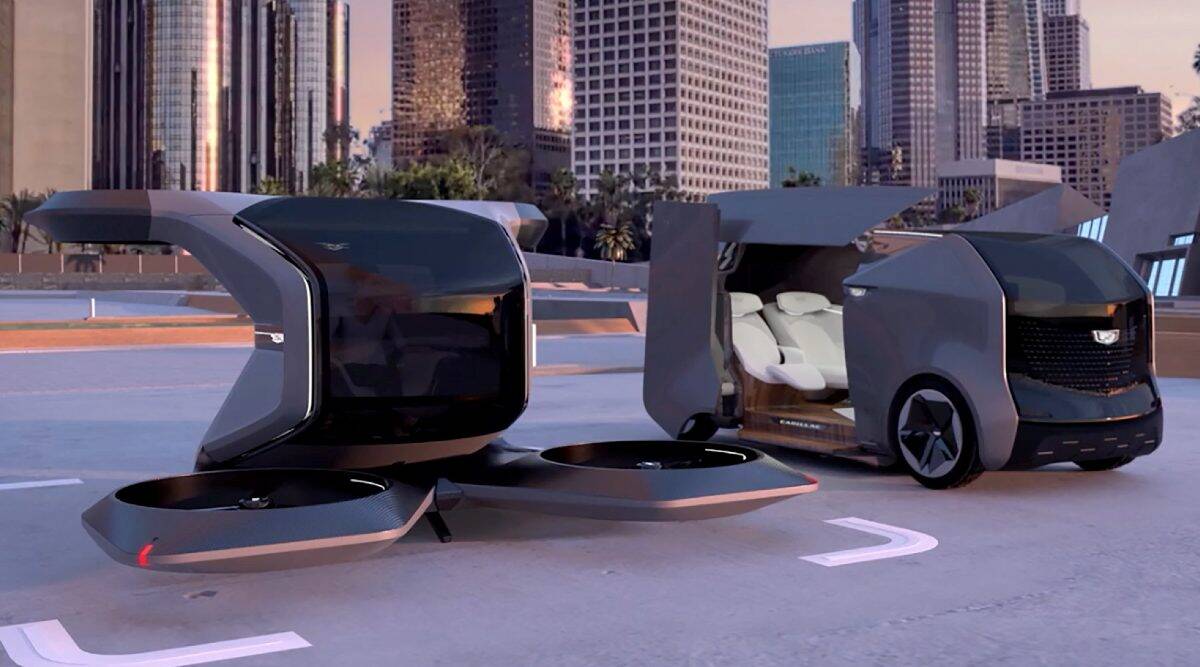
    GM presented in January a futuristic flying Cadillac – a self-driving vehicle that takes off and lands vertically and carries the passenger above the streets and through the air.

    The automaker’s other recent innovative developments include its commercial van business, BrightDrop, and the lunar rover concept developed with Lockheed Martin.

  • General Motors To Supply Electric Batteries, Hydrogen Fuel Cell Systems For Wabtec Locomotive

    General Motors To Supply Electric Batteries, Hydrogen Fuel Cell Systems For Wabtec Locomotive

    General Motors Co will supply electric batteries and hydrogen fuel cell systems for rail supplier Wabtec Corp’s locomotives, in a move extending the No. 1 U.S. automaker’s reach outside the automotive sector. Wabtec, based in Pittsburgh, is developing locomotives powered by electric batteries and hydrogen fuel cells in response to rail industry demand to eliminate carbon emissions. It has a test electric locomotive model and intends to build a second-generation version, with deliveries starting in 2023. “The rail industry is on the cusp of a sustainable transformation with the introduction of batteries and hydrogen to power locomotive fleets,” Wabtec Chief Executive Rafael Santana said in a statement.

    Under the nonbinding memorandum of understanding, GM will supply Ultium electric batteries and Hydrotec hydrogen fuel cell power cubes. Terms of the deal were not disclosed. “Wabtec’s decision to deploy GM’s Ultium battery and Hydrotec hydrogen fuel cell systems further validates our advanced technology,” GM President Mark Reuss said. Ultium is a key part of GM’s strategy to roll out efficient and cost-effective electric vehicles, and closing a deal with Wabtec would help spread development costs over a larger volume of batteries. GM is developing a hydrogen fuel-cell-powered commercial truck with truck maker Navistar.

    GM’s Ultium batteries will be built by the company’s joint venture with South Korea battery maker LG Energy Solution, which is building plants in Ohio and Tennessee. The hydrogen fuel-cell systems will be assembled by GM’s joint venture with Honda in Brownstown, Michigan.

    Last month, Wabtec announced that its FLXdrive all-electric locomotive, during a test program with BNSF Railway in California, delivered more than an 11% average reduction in fuel consumption and greenhouse gas emissions for the entire train – the equivalent of over 6,200 gallons of diesel fuel saved and about 69 tons of CO2 emissions reduced. It is also developing hydrogen fuel-cell-powered locomotives.

    The 430,000-pound electric locomotive, with a battery capacity of 2.4-megawatt hours (MWh), uses 18,000 lithium-ion battery cells, Wabtec’s chief technology officer, Eric Gebhardt, said in a recent interview. It generates its energy largely through regenerative braking.

    The company intends to build a second-generation electric locomotive with a battery capacity of more than 6 MWh, a level it says can reduce fuel consumption and carbon emissions by up to 30%. Gebhardt compared that capacity to 100 Tesla vehicles.

    Wabtec expects to begin shipments of the second-generation electric locomotive in mid-2023, he said. The company has not disclosed volume targets.

  • General Motors Unveils Futuristic Flying Cadillac Concept Vehicle

    General Motors Unveils Futuristic Flying Cadillac Concept Vehicle

    General Motor on Tuesday presented a futuristic flying Cadillac – a self-driving vehicle that takes off and lands vertically and carries the passenger above the streets and through the air. A senior GM executive described the concept as “reimagining the future of personal transportation”. The single-passenger Cadillac – technically, a vertical take-off and landing (VTOL) drone – will be able to travel from urban rooftop to urban rooftop at speeds up to 55 miles per hour.

    It is fully autonomous and all-electric, with a 90kW motor, a GM Ultium battery pack and an ultra-lightweight body with four pairs of rotors.

    The flying Cadillac was presented in a video as part of a virtual keynote presentation by Chief Executive Mary Barra, along with a family-friendly Cadillac electric shuttle.

    Barra last year revealed the automaker was exploring such alternative transportation modes as aerial taxis.

    The concepts in the CES video were introduced by GM design chief Mike Simcoe, who described the VTOL as “the Cadillac of urban air mobility”.

    “VTOL is key to GM’s vision for a multimodal future,” he said.

    The autonomous Cadillac shuttle, described in the video as “arriving soon,” features a boxy silhouette that recalls the Cruise Origin, also designed by Simcoe’s team. It features fore and aft sliding doors and a panoramic glass roof.

    The cabin has wraparound lounge-like seating, plus biometric sensors, voice control and hand gesture recognition.

    GM declined to disclose further details.

    Other automakers, including Toyota Motor, Hyundai Motor and Geely Automobile, have previously have shown concept aerial vehicles as part of their future planning.

  • General Motors Instructs Mexican Suppliers To Prepare To Resume Operations

    General Motors Instructs Mexican Suppliers To Prepare To Resume Operations

    The president of General Motors Co’s Mexican unit advised suppliers to prepare to resume operations after the Mexican government said the automotive industry could exit the coronavirus lockdown before June 1 with adequate safety measures.

    “We are now beginning a new phase given the Mexican government’s official announcement earlier this week to consider the transportation manufacturing industry as essential for the country’s economy,” Francisco Garza, president of General Motors de Mexico, wrote in an email to suppliers dated on Friday that was viewed by Reuters.

    Noting the Mexican government is due to publish final safety rules on Monday, Garza added: “Once those final guidelines are known, we will be in a position to move swiftly to comply.”

    GM is tentatively planning to restart operations at its auto assembly plant in the Mexican city of Silao on Wednesday, according to a message to workers seen by Reuters on Sunday.

    Hundreds of workers at General Motors and other auto companies have gone back to work to make face shields, surgical masks and ventilators in a wartime-like effort to stem shortages of protective gear and equipment.

    Workers at the plant in the central state of Guanajuato that has been idled for weeks due to the coronavirus outbreak had previously been told to plan to return to work on Monday.

    GM did not immediately respond to a request for comment.

    The Mexican government’s announcement, made on Friday, means that automakers from as early as this week can begin reconnecting supply chains between Mexico and the rest of North America, which depends heavily on parts made south of the U.S. border.

    Senior U.S. politicians and auto companies had pressed the Mexican government to reopen factories.

    Some politicians are wary, however, of opening too fast. Mexico registered its first case of the coronavirus weeks after the United States and Canada and the toll of daily infections and deaths in the country reached new peaks over the past few days.

    Mexico has registered 49,219 cases of the coronavirus and 5,177 deaths.

  • General Motors To Tout Its Electric Vehicles To Investors Swooning Over Tesla

    General Motors To Tout Its Electric Vehicles To Investors Swooning Over Tesla

    General Motors Co executives on Wednesday will tackle one of their toughest tasks: Persuading investors that a Detroit automaker can catch up with Elon Musk and Tesla Inc as vehicles go electric.

    Even as global markets reel from coronavirus fears, Tesla’s valuation is outpacing that of GM and most other legacy automakers. On Tuesday, Tesla’s market cap hovered around $144 billion, more than three times GM’s $45 billion.

    GM is by far the larger manufacturer by volume and generates more cash and profits. But in the electric vehicle market, Tesla is the leader.

    Carmakers unveil new models online as part of a digital press day after the cancellation of the Geneva motor show, due to the new coronavirus outbreak. Ciara Lee reports

    Last year, Tesla sold 367,500 electric vehicles globally, including 223,000 in the United States. GM sold just 16,400 Chevrolet Bolt EVs to U.S. buyers and 60,000 Baojun E-Series models in China with joint venture partner SAIC Motor.

    GM Chief Executive Officer Mary Barra and President Mark Reuss have ramped up electric vehicle development over the past three years, focusing on a proprietary battery, a low-cost flexible vehicle design and a blueprint for high-volume production, mainly in China.

    The company has revealed its electric vehicle strategy in incremental steps – announcing the Hummer brand will be reborn as an electric pickup and partnering with Korean battery maker LG Chem to build a $2.3 billion battery plant near a shuttered GM car plant in Lordstown, Ohio. GM is now trying to put the broader picture into focus for investors.

    GM has said it aims to reduce the cost of battery cells – the single greatest expense in electric vehicles – to less than $100 per kilowatt-hour. That in turn could slash the cost of battery packs for electric vehicles like the Chevrolet Bolt EV by up to 45%, experts say.

    GM is also developing an advanced battery, in partnership with LG Chem and Japan’s Honda Motor Co, that will be smaller than current EV batteries, can be charged more quickly and will provide more energy.

    Musk has told investors that Tesla has battery cost and range breakthroughs in the works that it will describe at a “Battery Day” in April.

    Barra has said GM plans to spend more on electric vehicles than on gasoline-powered cars over the next five years. But it has not put a figure on how much it will invest in its efforts to rival Tesla and traditional competitors such as Volkswagen AG or Ford Motor Co as the electric vehicle market develops.

    Barra has, however, promised that GM will make money on electric cars by 2021.

  • GM Korea’s union has plan to get workers paid

    GM Korea’s union has plan to get workers paid

    GM Korea’s union is planning to request further government support for employees who took unpaid leave after the shutdown of the Gunsan manufacturing plant last year. The decision, outlined in a follow-up document detailing a GM Korea union meeting held on Jan. 22, could go back on the original arrangement with the company to share the cost burden of supporting employees who went on unpaid leave.

    Since GM Korea’s Gunsan plant closed last year, the government provided support for six months, until November, to hundreds of workers who took unpaid leave. The company and its union decided to each cover half of the support payments, or 1.125 million won ($1,000) for every worker, for 24 months after the end of the government support. According to the document, the union will work towards gaining further government support by recategorizing unpaid-leave workers as paid-leave workers.

    According to the Ministry of Employment and Labor, companies can apply for government support for workers on paid leave to partially cover their payment. If the company pays 70 percent of the pay for employees on paid leave, the government can provide around two-thirds the amount for up to 180 accounting days.

    The document said the change would require agreement from the company and approval from the Labor Ministry. GM Korea said it has paid what it owes to workers on unpaid leave. It declined to comment on the union’s plans. Korea Development Bank completed last month injection of $750 million into the struggling company.

  • GM Korea to cut prices after disappointing sales

    GM Korea to cut prices after disappointing sales

    GM Korea, the Korean unit of General Motors, said Tuesday it has cut the prices of mainstay models in an effort to revive lackluster sales. Starting Tuesday, GM Korea revised the prices of its major models — such as the Impala sedan, Trax, and Equinox sport-utility vehicles — by up to 3 million won ($2,700). The company expects its “customer-focused pricing approach” to strengthen the position of those key Chevrolet vehicles in the Korean market, Cesar Toledo, vice president in charge of sales, customer care and aftersales at GM Korea, said in a statement.

    “Winning more customers, growing market share and sustaining trust in our brand are all crucial ingredients in building a sustainable GM Korea for the long term,” he said.

    GM Korea struggled with weak sales in Korea due to a lack of new models and labor-management disputes over jobs last year.
    In the January-November period, GM Korea’s sales fell 12 percent to 420,447 vehicles from 479,058 a year earlier. Sales figures for December are set to be released today.

    To drive up sales, the carmaker plans to introduce 15 vehicles into the local market over the next five years. It has launched the U.S.-made Equinox and the upgraded Chevy Spark since June. The Traverse SUV will be the next model to be added to its lineup.

    GM holds a 77 percent stake in GM Korea, with the state-run Korea Development Bank and SAIC Motor controlling 17 percent and 6 percent, respectively.

  • GM chairman might visit Korean facility

    GM chairman might visit Korean facility

    General Motors Chairman and CEO Mary Barra hinted at visiting Korea soon amid conflict over the spinning off of the Korean unit’s R&D division. If the trip happens, it would be Barra’s first visit to the Korean operations since she became chairman in 2016.

    GM Korea head Kaher Kazem reiterated the company’s commitment to the market during a government audit held Monday. “I would like to visit our Korea operations at some point soon,” Barra wrote in a letter sent to labor union head Lim Han-taek on Oct. 24.

    Lim had requested a meeting with Barra over GM’s decision to spin off the R&D division.

    Since July, GM has been pushing to build a separate R&D center tentatively named GM Korea Technical Center. Management says it will raise work efficiency and competitiveness.

    The labor union has opposed the idea, claiming a separate R&D center will eventually result in the ending of production in Korea, resulting in massive layoffs. On Oct. 19, the automaker approved the plan in a board meeting despite the opposition.

    In the letter, Barra emphasized GM’s dedication to its Korean operations.

    “The specialized unit will benefit from focused management, increased transparency on cost and improved operational efficiency,” Barra wrote in the letter.

    “We think the demerger is an important step to allow both the engineering services company and the manufacturing unit to stand on their own as profitable, viable businesses.”

    During a government audit held Monday at the National Assembly, GM Korea CEO Kazem said the company “has no plan to withdraw from Korea.” His comments assured lawmakers the spinoff is part of GM’s plan to stay in Korea longer than the initially promised 10 years.

    “In fact, we are establishing a long-term commitment to GM Korea. [Building a separate R&D center enables] us to not only upgrade but also introduce new models. We are committed to building a very long-term future for GM Korea,” Kazem said. “The framework agreement says 10 years, but we are looking at longer than that.”

    Kazem added that the company is engaging a number of parties on the possible redevelopment of the currently shut-down Gunsan factory, but he didn’t reveal details. He said he would “review” whether the plan for the Gunsan factory site could be included in the initial framework agreement.

    GM abruptly shut down the Gunsan factory in May. GM Korea has since been beset by speculation of completely shutting down in the country.

    The company and the Korean government have decided to jointly invest 7.7 trillion won ($6.7 billion) to save the ailing unit. GM also promised to stay in the country for the next 10 years.

    A GM Korea official said that Barra’s visit to the country is not yet confirmed.

  • China Slaps GM With $29 Million Fine

    China Slaps GM With $29 Million Fine

    China slapped a $29 million fine on General Motors for antitrust violations, a sign of the growing tensions between the U.S. and the Asian nation.

    The largest U.S. automaker is accused of setting minimum prices on some models in its SAIC General Motors joint venture. The Shanghai Municipal Development & Reform Commission, which imposed the 201 million yuan fine, alleged in a statement that GM punished dealers who sold cars for less than the prices set by the Detroit-based automaker. This is the first time China has fined GM, the second-largest foreign carmaker in China by sales.

    China-U.S. relations have become strained after President-elect Donald Trump proposed tariffs on Chinese goods, questioned the One-China policy regarding Taiwan and accused the Asian nation of stealing an American naval drone in international waters in the South China Sea. A Communist Party newspaper in November said a “tit for tat” retaliation could follow proposals by Trump for tariffs on the world’s largest trading nation, which had $627 billion in U.S. trade in 2015.

    “GM fully respects local laws and regulations wherever we operate,” Irene Shen, a company spokeswoman, said in a text message referring to the penalty. “We will provide full support to our joint venture in China to ensure that all responsive and appropriate actions are taken with respect to this matter.”

    Shares of SAIC Motor Corp. fell 1.2 percent to 23.17 yuan in Shanghai, before the penalty was announced. They have declined 3.3 percent since Dec. 14 when reported that GM’s joint venture in China was being investigated for possible antitrust violations. In trading in New York, GM shares fell 0.2 percent to $35.61 at 10:50 a.m.

    Last year, China fined Daimler AG’s Mercedes-Benz unit $56 million for monopolistic pricing practices. In 2014, the government penalized Volkswagen AG and Fiat Chrysler Automobiles NV for similar practices as well as a dozen parts makers. The auto component suppliers were fined $200 million collectively.

    Since 2011, the National Development and Reform Commission, China’s main economic planner, has pressured carmakers to cut prices as part of an investigation into the auto industry. The NDRC said the probe was meant to ensure market order and protect consumers.

    Chinese media have reported that penalties on American companies may be coming. The China Daily reported earlier this month that the government would soon penalize a U.S. automaker for price fixing, citing an interview with Zhang Handong, director of the NDRC’s price supervision bureau. The Global Times wrote in an editorial that orders for Boeing Co. planes could be replaced with models from Airbus Group SE, and that Apple Inc.‘s iPhone sales may suffer a setback.

    GM’s retail sales in China rose 8.5 percent this year through November to 3.44 million vehicles, trailing only Volkswagen among foreign automakers. Its German rival boosted deliveries 12 percent to 3.59 million units.


  • Alibaba expansion plan targets 2 billion

    Alibaba expansion plan targets 2 billion

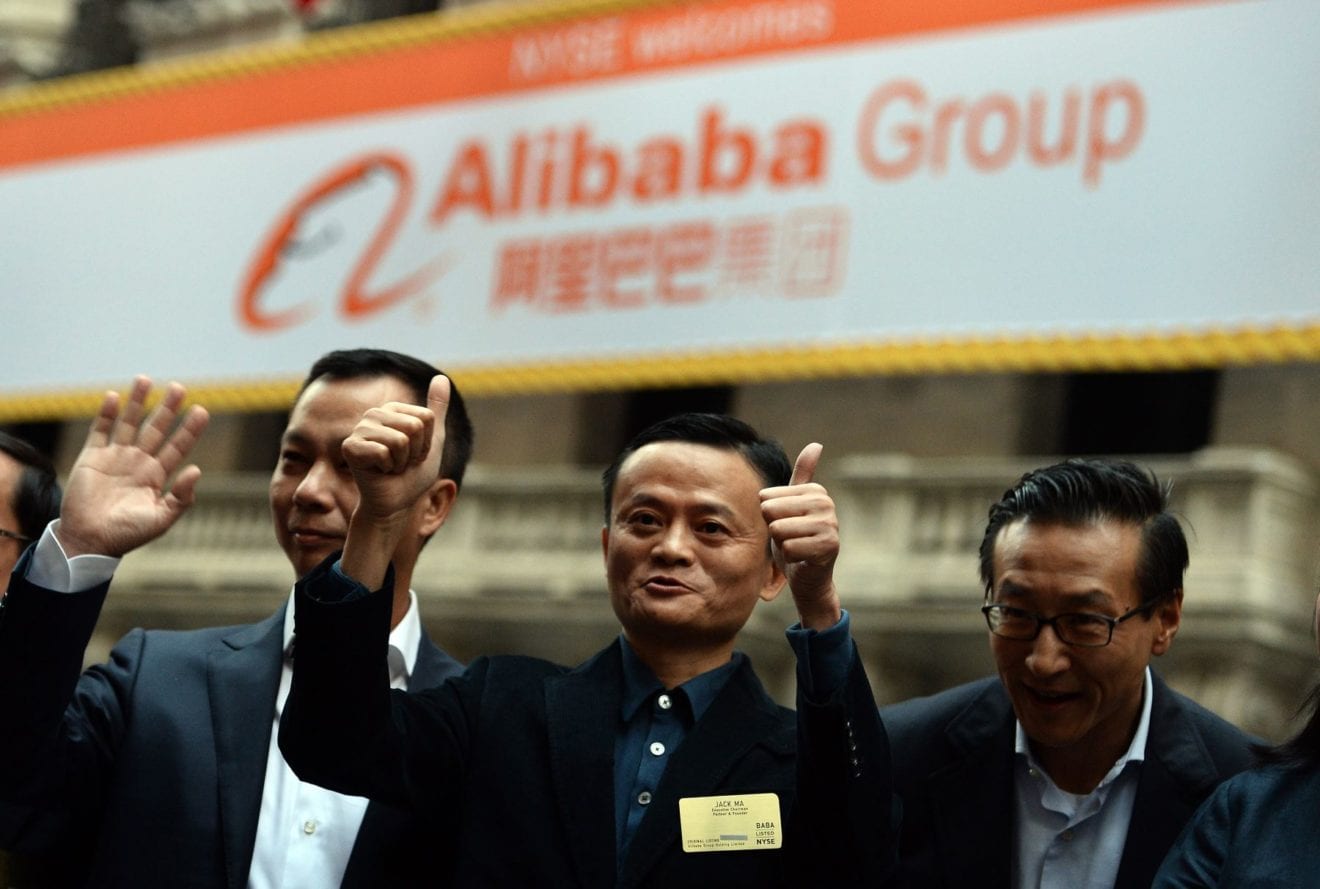
    Chinese eCommerce pioneer Jack Ma has unveiled an Alibaba expansion plan aiming to quadruple its customer numbers to 2 billion by 2036.

    Alibaba is also aiming for a record 6 trillion yuan (US$912 billion) in gross merchandise volume (GMV) in 2020 from 3.09 trillion yuan this year.

    Ma has also pledged to intensify the fight against counterfeit products and intellectual property rights violation, saying the company is more confident than ever it can solve the problem.

    Alibaba became the world’s largest retailer (by its own definition of retailer) in April, surpassing Walmart. The company says its online trading accounts for 10 per cent of all retailing in China and has generated 15 million jobs.

    Alibaba, whose gross sales totalled $9.3 billion in 2014, hit a record $14.3 billion in sales on Singles’ Day alone last year, a Chinese holiday in November. This is more than double the eCommerce sales in the US from Thanksgiving, Black Friday and Cyber Monday combined.

    The company also holds the title of the biggest IPO in history, raising $25 billion in four days in September 2014, $7 billion more than Visa and $9 billion more than Facebook and General Motors.

  • GM Korea Posts Worst-ever Net Loss of 986.8 Billion Won in 2015

    GM Korea Posts Worst-ever Net Loss of 986.8 Billion Won in 2015

    According to industry sources on April 10, GM Korea reported 594.4 billion won (US$515.30 million) in operating losses and 986.8 billion won (US$855.48 million) in net losses last year. It is the worst-ever performance since its establishment in 2002.

    Industry watchers think that it is largely due to 186.9 billion won (US$162.03 million) of the equity method loss caused by its decision to shut its local factory following the withdrawal of the Chevrolet brand from Russia. GM Korea halted sales of the Chevrolet products in Russia last year.

    Last year’s poor performance is also attributed to the fact that the automaker had sold its mid-size sedan Cruze with a 1.8-liter engine for exaggerated fuel economy claims in the domestic market for five years. As GM Korea decided to pay Cruze owners up to 430,000 won (US$373) per person to cover the difference between the stated fuel economy and the actual one, the total amount of compensation reached as high as 37 billion won (US$32.08 million) last year.

    Moreover, higher labor costs despite the decrease in car sales also added to its worst-ever performance. The automaker shipped a total of 621,872 units at home and abroad last year, down 1.4 percent from the previous year. However, its labor union has strongly protested the company’s decision to continue importing all units of its full-size sedan Impala from the United States for sales in Korea despite strong sales at home.

    GM Korea is looking for various ways to improve its financial state. The automaker has decided to organize a special task force team with staffs across the company, including labor union and management, in a bid to prepare measures to revitalize sales in the local market. Starting in January, it has introduced a direct sales system that guides individual dealerships to sign direct contracts with the automaker unlike in the past when they were in touch with regional dealers. This change has simplified the overall retail structure of GM Korea and is expected to cut tens of billions of won of annual costs.

  • General Motors China Sales Up 7.3 Percent In January 2016

    General Motors China Sales Up 7.3 Percent In January 2016

    General Motors and its joint venture partners in China reported 421,023 new retail vehicle sales during January 2016, a 7.3 percent increase on a year-over-year basis.

    “This year, GM and our joint ventures will continue to offer an unmatched choice of products across market segments along with new services to meet the needs of China’s car buyers,” said GM Executive Vice President and GM China President Matt Tsien. “Our new models, such as the Cadillac CT6 and Chevrolet Malibu XL, will be strong additions to our portfolio.”

    Increasing demand for SUVs and luxury vehicles continued to support GM’s robust sales last month. The Buick Envision and Baojun 560 led the growth in sales of GM’s SUVs in January, with demand growing 188 percent-year-over-year.

    Chevrolet

    Chevrolet sales in January declined 27 percent year-over-year to 56,133 units.

    The automaker attributes the drop to the end of the fuel economy subsidy for the Sail. Chevrolet sales are expected to improve with the arrival of several new models in 2016, including the Malibu XL on February 27.

    Buick

    Buick sales in January grew 39 percent year-over-year to 138,907 units.

    Sales of the brand exceeded 130,000 units for the first time, led by the Excelle GT and Envision SUV. Sales of the Envision more than doubled on a year-over-year basis.

    Cadillac

    Cadillac sales luxury cars increased 16 percent from a year earlier to 8,337 units, making January the sixth consecutive month of double-digit sales growth.

    Sales of the ATS-L advanced 14 percent. The Cadillac CT6 full-size prestige sedan is the full-size top-of-the-range prestige sedan was launched on January 27th and is offered at Cadillac dealerships across China. It is first model manufactured at SAIC-GM’s new Cadillac plant in Shanghai.

    Baojun

    Sales of Baojun vehicles jumped 101 percent from a year earlier to 78,367 units.

    The Baojun 730 MPV and Baojun 560 SUV led their respective segments, while the 2016 Baojun 630 family sedan with enhanced styling and upgraded performance was launched at the end of last month at a lower price.

    Wuling

    Wuling sales in the Chinese domestic market decreased 17 percent from a year earlier in January to 139,227 units. The brand was impacted by continued contraction of the mini-commercial vehicle market.

  • GM posts sales high of 3.61M vehicles in China in 2015

    GM posts sales high of 3.61M vehicles in China in 2015

    The carmaker said Wednesday that China remains the company’s largest sales market, as retail sales rose 5.2 percent from the previous high set in 2014. December 2015 sales also set an all-time monthly high at 445,227 vehicles, up 14 percent year-over-year. Industry sales improved later in the year after the stock market in China fell around mid year. The government in China in the fall also cut a tax and instituted incentives to help bolster demand for vehicles and aid sales.

    “We expect to have increased our market share in 2015 through great products and our team’s relentless effort,” GM China President Matt Tsien said in a statement. “We anticipate continued growth in 2016, as we plan to introduce 13 new and refreshed models starting with Cadillac’s all-new CT6 sedan later this month.”

    GM said SUV sales last year jumped 144 percent as SUVs accounted for 13 percent of the company’s sales in 2015 in China, up from 5.6 percent in 2014. Multi-purpose vehicle sales also increased 12 percent from 2014.

    Sales for the Cadillac luxury brand rose 17 percent from 2014 to 79,779 vehicles in 2015. Buick retail sales increased 12 percent to a record 989,167 vehicles. GM said sales were led by the Excelle GT, which sold 258,834 vehicles, followed by the Envision SUV, which had sales of 147,093. And Baojun sales surged 173 percent to a record 463,532 last year.

    Sales for Chevrolet fell 9.7 percent to 612,024 vehicles, which GM blamed mostly on vehicle model changeovers. The automaker said it expects sales in 2016 to improve with the new models such as the Malibu XL and Cruze XL. Wuling brand sales also slipped 7.5 percent to nearly 1.47 million vehicles.

    GM and its joint ventures last year added 12 new or refreshed vehicles.


  • Stimulus Does the Trick as Detroit Autos Surge in China

    Stimulus Does the Trick as Detroit Autos Surge in China

    Investors understand that General Motors generates the majority of its profit right here in the United States. However, GM sells more cars in China than in any other market, and it was worrisome for investors when new-vehicle sales slowed in China over the summer. Sales slowed to the point that it forced China’s government to dish out an incentive program that cut the purchase tax in half for consumers.

    How has that incentive program turned out? Looking at GM’s sales figures coming out of China for November, the program is working like a charm.

    By the numbers
    General Motors’ retail sales moved 14% higher to 346,671 units in November. If you’re keeping track, that’s good enough to pencil last month in as the automaker’s best November sales in China ever.

    “The market has been improving in the past two months,” said GM Executive Vice President and GM China President Matt Tsien, in a press release. “We are well positioned to achieve a strong finish to the year backed by newly launched models, including the Chevrolet LOVA RV, Buick Verano Hatchback and Buick Verano GS.”

    The vehicles responsible for driving General Motors’ sales in China higher last month weren’t a surprise. GM’s SUV sales soared 231% on an annual basis, powered by the Buick Envision and Baojun 560. Furthermore, the SUV segment accounted for 19% of GM’s sales in China last month, which was much higher than the 6.5% the segment represented a year ago.

    Looking at GM’s brands in China, Buick remains the automaker’s bright spot. Buick recorded its best-ever monthly sales in November as it exceeded 100,000 units for the second consecutive month. More specifically, Buick sales soared 45% year over year to nearly 108,000 units.

    GM’s luxury Cadillac lineup also posted healthy year-over-year sales gains of 57%, but with a far lower unit total of just under 8,000 units. Baojun sales jumped 100% on an annual basis to more than 58,000 units, and Chevrolet sales took an 11% dip year over year to 51,192 units in November.

    Through the first 11 months of 2015, retail sales from GM and its joint ventures increased 4.1% compared to the same time frame last year, to a total of 3.16 million units.

    GM isn’t the only success story
    While crosstown rival Ford Motor Company (NYSE: F) trails GM in vehicle sales by a long shot in China, it’s still making progress in a market it was late to enter. Ford’s sales totaled 106,283 during November, which was a 9% increase over last year’s November. Better yet, Ford’s sales in China are quickly approaching the 1 million mark for the year, totaling 990,356 sales through November.

    Ford’s gains were led by its Mondeo (Fusion), which posted a sales increase of 13% to 12,431 units compared to last year, as well as its Kuga (Escape) and Edge, which both sold more than 10,000 units last month in China.

    Here today, gone tomorrow?
    The major question facing investors in the automakers that operate in China is: Are these sales gains here to stay? It’s clear that after a slow summer of new-vehicle sales in China, the government’s stimulus program, which cuts the purchase tax from 10% to 5%, is definitely igniting sales. The good news is that this stimulus is slated to continue for the entirety of 2016.

    This is a development worth watching, because if sales remain accelerated, rather than only a temporary boost, it’ll be very positive news for investors of General Motors and other automakers hoping to fuel top- and bottom-line growth from its operations in China.

    The next billion-dollar iSecret
    The world’s biggest tech company forgot to show you something at its recent event, but a few Wall Street analysts and the Fool didn’t miss a beat: There’s a small company that’s powering their brand-new gadgets and the coming revolution in technology. And we think its stock price has nearly unlimited room to run for early, in-the-know investors!