Tag: geopolitical

  • Family Offices Pivot towards AI and Diversification amid Geopolitical Uncertainty: UBS Report

    Family Offices Pivot towards AI and Diversification amid Geopolitical Uncertainty: UBS Report

    Global financial markets are experiencing profound shifts due to geopolitical and structural uncertainties, leading family offices globally to reconsider their investment strategies. This emerges from UBS’s “Global Family Office Report 2026”, which surveyed 307 family offices across over 30 markets, together representing around $2.7 billion in net worth.

    Significantly, this is the first time since the start of the study that 60% of participants expressed their intention to modify their strategic asset allocation in the coming year. The focus is shifting towards a broader diversification spanning regions, currencies, and asset types, coupled with an enhanced emphasis on long-term thematic investments.

    A Growing Interest in Artificial Intelligence

    The report reveals an increasing trend amongst family offices to adjust their portfolios in a calculated, disciplined manner, as explained by Benjamin Cavalli, Head of Strategic Clients & Global Connectivity at UBS Global Wealth Management. Several investors are diminishing their U.S. dollar exposure or diversifying more widely across regions, without fundamentally reevaluating their North American positions.

    Artificial Intelligence (AI) is an area that continues to pique significant interest. As per the report, 65% of family offices have invested across the full AI value chain, starting from data centers and software platforms to semiconductor manufacturers. Despite high valuations, a considerable number of investors intend to increase or at least maintain their exposure.

    “Artificial Intelligence continues to be the defining investment theme of this decade,” stated Yves-Alain Sommerhalder, Head of GWM Solutions at UBS. Family offices are taking a more discerning approach, merging growth opportunities with a heightened risk discipline.

    Challenges in Governance and Succession Planning

    Besides AI, investments in infrastructure and energy and commodities remain the preferred areas for family offices. Cryptocurrencies, however, remain a fringe allocation, with only 44% of invested family offices considering digital assets as part of their strategic asset allocation, but actual portfolio exposures are typically limited.

    For Swiss family offices, the trend appears to be more conservative. They maintain widely diversified portfolios with a strong emphasis on Western Europe and North America, and they are making portfolio adjustments more cautiously compared to international peers. AI, energy, automation, and robotics also dominate amongst Swiss investors.

    Despite these trends, there are noticeable gaps in governance and succession planning in many family offices. Only about one-third have a clearly defined succession plan, and a mere 27% are preparing the next generation in a structured manner for future leadership roles.

    Questions & Answers

    What’s the trend in asset allocation among family offices?
    A majority of family offices are planning to adjust their strategic asset allocation in the next year, with emphasis on wider diversification across regions, currencies, and asset classes.

    What’s the investment sentiment towards artificial intelligence?
    Artificial Intelligence continues to be of high interest, with 65% of family offices having invested across the full AI value chain. Many plan to increase or maintain their AI exposure despite high valuations.

    What are the challenges being faced by family offices?
    A significant number of family offices lack clearly defined succession plans and structured methods for preparing the next generation for future leadership roles.
  • Vietnam’s VN-Index Takes Steepest Dive in a Year Amid Geopolitical Tensions and Skyrocketing Oil Prices

    Vietnam’s VN-Index Takes Steepest Dive in a Year Amid Geopolitical Tensions and Skyrocketing Oil Prices

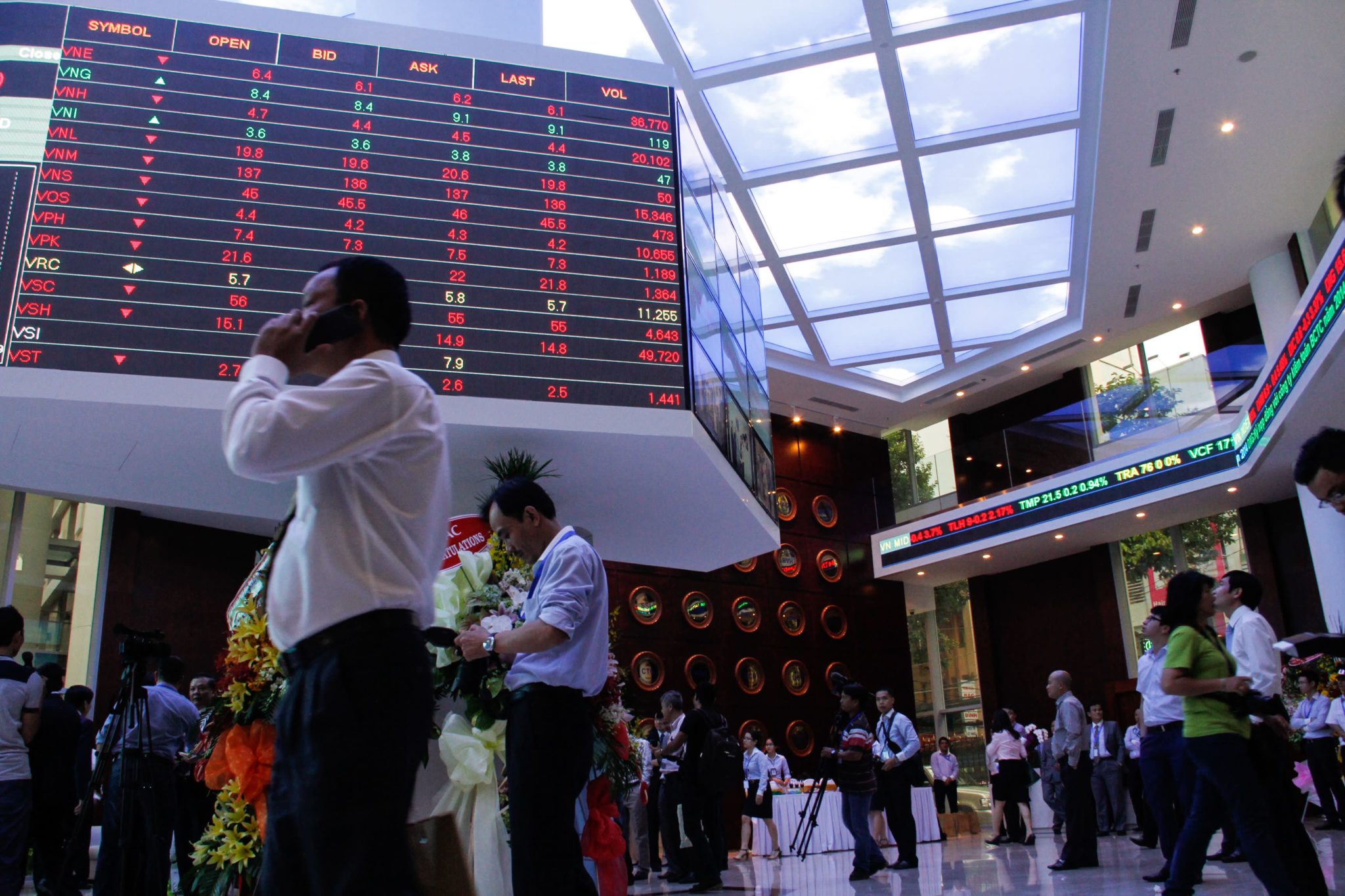
    Vietnam’s primary stock index, the VN-Index, experienced a significant drop of 5.86% during Monday morning trading, as investors initiated a sell-off due to geopolitical uncertainties and rising oil prices.

    Steep Fall of VN-Index

    On Monday, the VN-Index experienced a 6.38% fall from its reference level, marking the sharpest dip in almost a year. The last substantial drop was seen on April 8, when the index declined by 6.43%. This was a result of a prolonged market correction after the announcement of reciprocal tariffs by the U.S. President.

    Despite pessimistic predictions regarding short-term market developments from many securities companies prior to Monday’s trading, a drastic drop in the VN-Index was not anticipated. Amidst pressure from negative events at home and abroad, MBS analysts predict that the index may drop to around 1,700–1,750 points, a decline of about 20–70 points compared to the previous week’s closing level.

    Similarly, Yuanta Securities Vietnam suggested that the index could decline to a support zone of 1,715–1,740 points before a potential technical rebound occurs.

    Various Factors Influencing the Index Drop

    An MBS analyst pointed out that the domestic stock market showed strong resilience to the pressure of slightly increasing deposit interest rates before the Middle East conflict. The VN-Index had reached the 1,900-point level. However, the market now faces risks related to inflation, exports, financial instability, and supply chain disruptions due to the interest-rate pressure and the Middle East conflict.

    Tyler Nguyen Manh Dung, Senior Director of Market Strategy Research at HSC Securities, attributed the sharp market correction to a sudden increase in margin calls from securities firms. Dung warned of a potential sharp market fall tomorrow if there is a lack of capital to absorb the volume of shares waiting for forced liquidation at floor prices.

    Le Vu Kim Tinh, branch director at Phu Hung Securities, echoed Dung’s thoughts, adding that the deeper cause of the market correction is a series of negative developments related to geopolitical tensions.

    Signs of Hope Amid the Market Decline

    Despite the shocking correction, there are still some positive market signals. Tinh noted that oil and gas stocks continue to act as a market pillar due to benefits from the escalating Middle East conflict.

    Dung also highlighted that shares of some banks and many securities companies have corrected to levels that present attractive buying opportunities.

    Despite the widespread decline, 16 stocks remained in positive territory after an hour of trading on the HoSE, with oil and gas shares accounting for most of these gainers. The rally in oil and gas stocks is expected to continue as Brent crude oil prices surged nearly 20% to $111 due to escalating conflict in the Middle East raising investor concerns that supply could tighten further.

    Questions & Answers

    What was the extent of the drop in the VN-Index?
    The VN-Index experienced a significant drop of 5.86% during Monday morning trading.

    What factors led to the drop in the VN-Index?
    The drop in the VN-Index was attributed to a series of negative developments related to geopolitical tensions and a sudden increase in margin calls from securities firms.

    Despite the market decline, what positive signals were identified?
    Despite the market correction, oil and gas stocks continue to act as a market pillar, and shares of some banks and many securities companies present attractive buying opportunities.