Tag: gigabit

  • Qualcomm unveils Snapdragon 8 Gen 1, the S22 chipset, with 10 Gigabit 5G

    Qualcomm unveils Snapdragon 8 Gen 1, the S22 chipset, with 10 Gigabit 5G

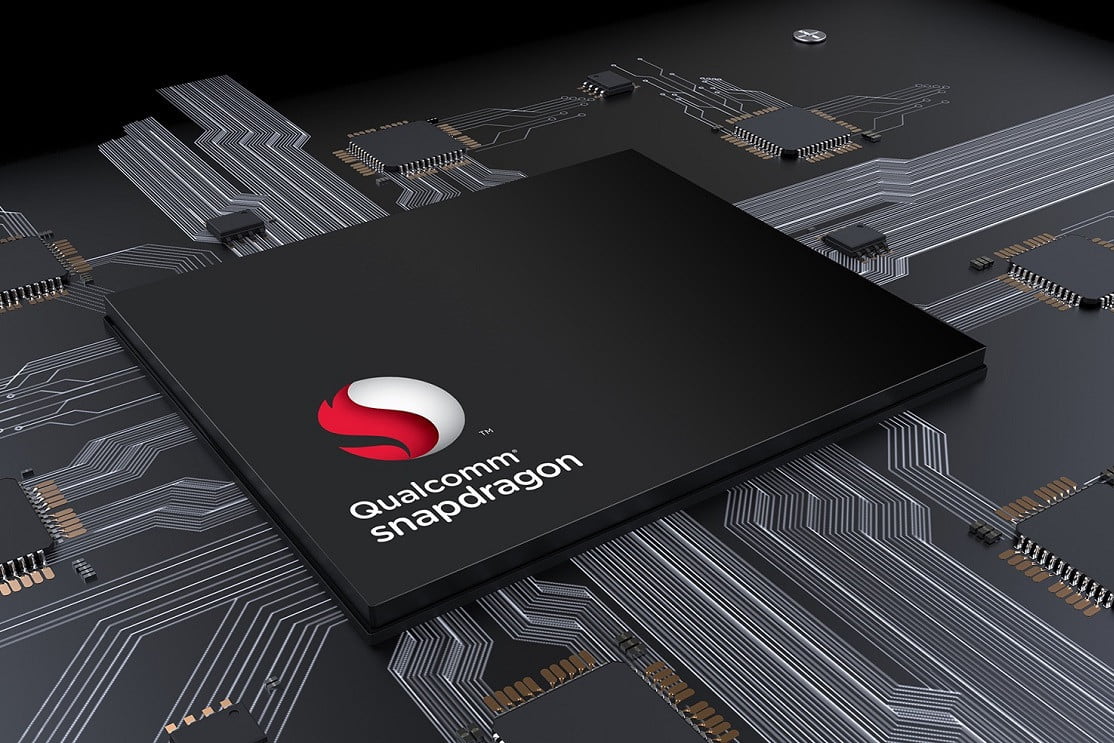
    Qualcomm just took the stage to announce the long-rumored Snapdragon 8 Gen 1 chipset that is going to power a number of Android flagships in the next year or so, including Samsung’s upcoming Galaxy S22 series phones.

    Previously rumored as Snapdragon 898, the processor got a name change, as Qualcomm decided to simplify and streamline how it calls its mobile chipsets. This, and the fact that the team from San Diego is branching out into processors for Microsoft Windows 11 devices, as well as into a gaming platform. We are most interested in mobile applications, however, so here are the most interesting Snapdragon 8 Gen 1 details.

    Here’s a list of the most important new Snapdragon 8 Gen 1 features:

    • Up to 3GHz Kryo CPU with Cortex-X2 cores.
    • 30% faster Adreno GPU with 25% lower power consumption.
    • The world’s first X65 5G modem to reach 10 Gigabit download speeds.
    • First 18-bit image signal processor for mobile.
    • First 8K HDR10+ video capture for mobile.
    • Mega low-light capture snaps 30 images and merges the best parts into one shot.
    • Always-On ISP for fast face unlocking and locking.
    • 7th Gen Qualcomm AI Engine for voice analysis and Leica Leitz Look bokeh filters.
    • Bluetooth Low Energy audio features like broadcasting, stereo recording, and voice back-channel for gaming.
    • First platform with Android Ready Secure Element support, the new standard for digital car keys or drivers’ licenses.
    As for how does the new Snapdragon 8 Gen 1 stacks up against its Snapdragon 888 predecessor and Apple’s A15 monster in the iPhone 13, here’s a quick comparison of their specs and features.
    Snapdragon 8 Gen 1 Snapdragon 888 Exynos 2100 Apple A14
    Production process Samsung 4nm EUV Samsung 5nm EUV Samsung 5nm EUV TSMC 5nm 2nd gen
    Processor cores 1xCortex-X2@3GHz

    3xCortex-A710@2.5GHz

    4xCortex-A510@1.8GHz

    1x Cortex-X1@2.84GHz

    3x Cortex-A78@2.42GHz

    4x Cortex-A55@1.80GHz

    Exynos X1@2.91GHz

    3x Cortex-A78@2.8GHz

    4x Cortex-A55@2.2GHz

    2x Avalanche@3.23GHz

    4x Blizzard@1.8GHz

    GPU Adreno 730, 30% faster and 20% more frugal Adreno 660 @ 800MHz ARM Mali-G78 Apple custom quad-core (5-core on the iPhone 13 Pro models)
    Modem X65 5G modem (integrated)

    up to 10 Gbps over 5G

    Global iSIM multi-SIM card support

    X60 5G modem (integrated)

    up to 7.5Gbps over 5G, and 3 Gbps download speeds on LTE

    Exynos 5123
    (Category 24)Downloads up to 7.3Gbps (mmWave), 5.1Gbps (sub-6GHz), or 3Gbps (4G LTE), 8xCA

    Uploads: up to 422 Mbps

    Qualcomm X60 5G modem
    AI co-processor 7th Gen Qualcomm AI Engine Hexagon 780 Tri-core NPU, up to 26 TOPS 16-core Neural Engine, up to 15.8 TOPS
    Video encode 8K HDR10+ 8K HDR at 60fps
    4K HDR at 120fps
    8K HDR at 60fps
    4K HDR at 120fps
    4K HDR+ at 120fps
    Features support QHD+ @144Hz or 4K@60Hz display refresh

    Demura and subpixel rendering for OLED uniformity

    First 18-bit ISP, mega low light capture merges 30 images in one shot for brighter, sharper pictures

    Qualcomm FastConnect 6900: Bluetooth 5.2, Wi-fi 6E (up to 3.6GBps)

    QHD+ @144Hz or 4K@60Hz display refresh

    Triple 14-bit Spectra 580 ISP, up to 200MP sensor

    4K computational HDR, low-light capture architecture

    Qualcomm FastConnect 6900: Bluetooth 5.2, Wi-fi 6E (up to 3.6GBps)

    UFS 3.1 storage support for up to 2.9GB/s speeds

    Single-camera up to 200MP

    up to 16 GB DDR5

    Variable 120Hz display refresh rate

    Computational photography

    Cinematic Mode video bokeh

    Machine learning capable of 15.8 trillion operations per second.

    As you can see, Qualcomm isn’t playing around and offers some unique 5G connectivity and other features that Apple will have to catch up with when its next-generation A16 processor hits the iPhone 14 in the fall of 2022. That one is reportedly also being done on the 4nm process, but until then the Snapdragon 8 Gen 1 may stay the undisputed connectivity king for the 5G era..

    We are also very curious to test the new 18-bit ISP and the 8K HDR10+ video capture it brings, not to mention the digital keys and cards or the integrated iSIM multi-SIM functionality. There’s is little doubt that the Galaxy S22 series will be powered by Qualcomm’s new Snapdragon 8 Gen 1, but the chipmaker also lists many other manufacturers lining up for it.
    Black Shark, Honor, iQOO, Motorola, Nubia, OnePlus, OPPO, Realme, Redmi, SHARP, Sony, vivo, Xiaomi, and ZTE are all in the Snapdragon 8 Gen 1 mix, with the first phones powered by the new chipset expected as soon as next month.
  • Nokia chosen by Allo for gigabit fiber network in Malaysia

    Nokia chosen by Allo for gigabit fiber network in Malaysia

    Nokia announced that it has been chosen by Allo, an Information and Communications Technology service provider in Malaysia, to deploy a gigabit fiber network in the states of Melaka, Johor, Negeri Sembilan, and East Coast of Malaysia.

    The deployment, which includes Nokia’s Gigabit Passive Optical Network (GPON) solution and Access Management System, will be completed by end of Q2 2021 covering nearly 150,000 home passes. When completed, the end-users will be able to enjoy a high-speed broadband network and applications that require high capacity. The future-ready fiber network will enable Allo to increase its revenue as it will be able to support new use cases like smart cities, smart poles, edge automation, 5G backhaul, and enterprise services.

    Nokia’s solution will enable Allo to better manage bandwidth in line with the requirement for different services. The fiber network will support the convergence of more services and users on the same infrastructure, allowing Allo to bring down operating expenses and enhance revenue.

    With the new network, Allo will be able to acquire relevant insights into network utilization as the network grows and new technology enablers are added. Nokia’s solution will also help Allo benefit from network simplification and easier management of the network.

    Rodzi Ahmad, Chief Executive Officer at Allo, said: “We are pleased to partner with Nokia to bring the next generation of fiber services to our enterprise and residential users. By utilizing Nokia’s expertise, we will be able to accelerate the rollout of fiber services over the next two years. This enables us to offer high-speed broadband to a greater number of people in keeping with the vision of Malaysia’s fiberization initiative. Together Allo and Nokia will continue working towards the ultimate goal of improving broadband connectivity in Malaysia.”

    Stuart Hendry, Head of Enterprise for Asia Pacific and Japan at Nokia, said: “We are excited to work with Allo on this crucial initiative for the rollout of the next-generation fiber services. Our field-proven solutions will help Allo support the growing demand for bandwidth and provide network flexibility. Nokia’s solution will enable Allo to bring down costs and offer new and exciting services to its customers. The initiative will help build a future-ready network capable of meeting the ever-growing data demand.”

    In addition to the GPON roll-out, Allo is also conducting field trials with Nokia’s next-generation XGS-PON products which could be deployed where the network requires even greater bandwidth, up to 10Gbps symmetrical.

  • China Telecom aims to make Shanghai a gigabit city

    China Telecom aims to make Shanghai a gigabit city

    China Telecom’s Shanghai branch Shanghai Telecom plans to deploy the first commercial FTTH network in China using 10G PON technologies, and aims to provide full 1Gbps fiber coverage across Shanghai over the next three years.

    Shanghai Telecom has contracted Huawei to help with the rollout, which marks an important step towards making Shanghai China’s first gigabit city, the vendor said.

    Shanghai Telecom was providing 1Gbps access for 269 communities in the city, and through the deployment aims to increase the average access rate for its network from 50Mbps to 280Mbps by the end of 2018.

    The operator is using its high-speed network to offer a range of home broadband services, such as multi-channel 4K video streaming, video calls and conferencing an video-based smart home services.

    Under the latest rollout, the company is adopting Huawei optical line terminals (OLT) and optical network terminals (ONT) capable of providing gigabit convergence, 4K video streaming to 16,000 concurrent households over a single subrack, 8K video streaming, VR applications and smart home services.

    Separately, Nokia has announced it has secured a contract to deploy millions of ONT home gateways in 29 provinces across China for China Mobile.

    China Mobile plans to deploy home gateway units based on Nokia’s solution to over 30 million users this year, and use established FTTH networks to extend internet coverage in the home and enable IoT communications between devices and sensors.

    “China Mobile is progressing fast as a converged telecommunications operator — with more than 31 million FTTH subscribers — and has proven it can successfully leverage its extensive fiber access network to deliver ultra-broadband applications such as 4K TV services and Gigabit access to customers across various provinces.,” IDATE principal analyst Roland Montagne commented.

    “With the addition of intelligent home gateway technology, China Mobile will be able to further differentiate its services, providing consumers with enhanced internet coverage in the home and a more seamless experience for connecting various devices and sensors.”

  • Telstra launches Gigabit LTE in key CBDs

    Telstra launches Gigabit LTE in key CBDs

    Australia’s Telstra has launched the world’s first commercial Gigabit LTE network in the central business districts of key state capital cities.

    The operator’s LTE-A network in these CBDs has been upgraded to support 4X4 multiple input multiple output (MIMO), three carrier aggregation and 256 quadrature amplitude modulation (QAM) on the downlink.

    The network also supports 64QAM and two carrier aggregation on the uplink for a peak upload speed of 150Mbps.

    Telstra, Ericsson, Qualcomm and Netgear jointly developed the first Gigabit-class commercially ready LTE network and Gigabit-class mobile device in October.

    Netgear’s Gigabit LTE device, the Nighthawk M1, will launch in Australia late this month, which will allow customers to use the Gigabit LTE service. The Nighthawk M1 utilizes 4×4 MIMO to support 4-way receive diversity.

    “Gigabit LTE is also an important step on our journey to 5G and demonstrates Telstra’s commitment to delivering Australians a world class network now and into the future,” Telstra group managing director for networks Mike Wright said.

    “We are well placed to evolve our 4G network and are putting the building blocks in place for Australia to be ready for 5G – this will deliver more bandwidth and lower latencies which are critical for emerging applications such as downloading 4K video, IoT, autonomous vehicles, augmented reality and shared virtual reality.”

  • Qualcomm unveils Gigabit-class connected vehicle platform

    Qualcomm unveils Gigabit-class connected vehicle platform

    Chipmaker Qualcomm has announced the launch of a new version of its connected car reference platform that incorporates a a Gigabit-class LTE modem.

    The new reference platform is designed to allow carmakers to easily integrate new wireless and networking technologies into their vehicles, including Wi-Fi, Bluetooth, BLE and global navigation satellite system (GNSS).

    Qualcomm has also developed a reference hardware module in two band configurations, one for North America and one for the rest of the world.

    The module design can support up to four antennas to take advantage of the 4×4 MIMO capabilities of the integrated modem.

    “Connected cars are becoming intelligent sensors on the road, not only using data for consumer use cases such as Wi-Fi hotspots and video streaming, but also collecting and transmitting critical, rich real-time information about road conditions, map updates and driver status,” Qualcomm SVP and GM for automative Patrick Little said.

    “As a leader in car connectivity, Qualcomm Technologies is well positioned to address the tremendous data demand, helping automakers integrate the broad set of technologies required by a new generation of connected vehicles.”

    Qualcomm separately announced it has established a new consortium with SWARCO Traffic Systems and the University of Kaiserslautern to carry out the first Cellular-V2X (Vehicle to Everything) trial based on the 3GPP Release 14.

    The trial will focus on Vehicle-to-Vehicle (V2V), Vehicle-to-Infrastructure (V2I) and Vehicle-to-Pedestrian (V2P) direct communication, as well as Vehicle-to-Network (V2N) wide area communications.

    The new Connected Vehicle to Everything of Tomorrow (ConVeX) consortium will conduct the trial with funding from the participating organizations as well as the German Federal Ministry of Transportation and Digital Infrastructure.

  • New Zealand’s Spark warned off marketing Gigabit plans

    New Zealand’s Spark warned off marketing Gigabit plans

    New Zealand operator Spark has been cautioned against advertising its high-speed fiber services as “gigabit” plans by competition regulator the Commerce Commission.

    The ISP launched its fastest fiber service yesterday, labeling it “Ultra Fast Fibre MAX” instead of the planned Gigabit name.

    The Commerce Commission held that advertising the service as a Gigabit speed would mislead consumers into expecting speeds of 1,000Mbps, whereas the Spark service will deliver speeds of between 700Mbps and 900Mbps.

    As well as Spark, the Commission also plans to get into contact with other ISPs making similar claims, noting that it has received enough consumer complaints to deem the action necessary.

    The Commission hasn’t made a formal ruling, but said Spark had recognized the concerns the regulator had raised and decided to take action accordingly.

    But the Telecommunications Users Association has criticized the decision as being “pedantic”, noting that other markets advertise similar-speed plans as Gigabit services, and that technical constraints will mean services always fall below their full potential speeds.

  • Telstra close to launching Gigabit-class LTE

    Telstra close to launching Gigabit-class LTE

    Telstra has worked with Qualcomm, Ericsson and NETGEAR to develop the world’s first Gigabit-class LTE mobile device and Gigabit-class commercially ready LTE network.

    A new NETGEAR mobile router based on Qualcomm’s Snapdragon X16 LTE modem and Wi-Fi equipment will enable download speeds of up to 1Gbps over Telstra’s upgraded LTE network, which uses equipment supplied by Ericsson.

    Telstra now plans to conduct device, network and user testing ahead of a commercial launch, which is expected within the next few months.

    Combined, the equipment is capable of delivering Gigabit-level LTE speeds through a combination of 3x carrier aggregation, 4×4 MIMO on two aggregated carriers and 2×2 MIMO on the third, as well as 256-QAM.

    “We pride ourselves on our connectivity expertise and we continue that tradition today by completing the first commercialization of a Gigabit Class LTE network and device,” Telstra group managing director of networks Mike Wright said.

    “With the world’s first Gigabit Class LTE network, we have substantially improved our network capacity and increased real-world LTE download speeds, while also gaining a distinct advantage over competitors as we can now offer an entirely new class of LTE service.”

    Ericsson head of RAN products Per Narvinger added that “Telstra’s commercial ready Gigabit Class LTE network and device is an important milestone as it paves the path to 5G.”