Tag: glass

  • IOS 26 Update: The Leap, The Controversy, And The Reinforced Apple Aesthetic

    IOS 26 Update: The Leap, The Controversy, And The Reinforced Apple Aesthetic

    The public version of iOS 26 has been available for more than a week, and numerous users have transitioned from iOS 18. However, not all of them are satisfied with their decision.

    In the modern age, most individuals turn to Google for answers to their queries. Currently, there are a multitude of searches for instructions on how to revert from iOS 26 to iOS 18.

    The issue lies in the fact that there is no quick solution for this concern. If you have already updated your device to iOS 26, there is no turning back. Therefore, it may be wise to evaluate if iOS 26 truly suits your needs before updating your device.

    A Leap in Versions

    To those who have been distant from the Apple universe, receiving an update prompt to iOS 26 may come as a surprise. However, there is no need to panic. This leap has not caused you to miss seven editions overnight. Apple has simply intended to synchronize its naming convention across all platforms.

    Now, a uniform system exists: iOS 26, iPadOS 26, watchOS 26, macOS 26, and visionOS 26. This eliminates the previous mismatched numbers such as iOS 18, watchOS 12, and visionOS 2. Apple has chosen to adopt a year-based naming strategy, thereby making iOS 26 applicable for the 2025-2026 cycle. This makes it easier for users to identify if they are utilizing the most recent operating system.

    Consider Before You Leap

    Since living with iOS 26 and iPadOS 26 for a week, I have my reservations about whether I should have waited before installing the update. The primary reason for this is the rapid battery drain that I am experiencing with the update.

    Many other users have reported similar problems, which likely accounts for the numerous searches for downgrading the operating system. However, this appears to be a temporary issue. A significant OS update initiates several background tasks on your iPhone, such as reindexing files, updating apps, and downloading assets, which could affect battery life and device performance.

    The Liquid Glass Controversy

    Liquid Glass, Apple’s new interface design, has stirred up some controversy. While some users, including myself, find it appealing in many instances, it is clearly not universally admired. Despite this, adjusting to the new user interface is not optional. The only alternative to this is enabling Reduce Transparency, which only slightly alleviates the issue.

    The Liquid Glass design has notable downsides, including visual clutter and readability issues, usability problems, and performance hits.

    Not All is Lost

    Despite its shortcomings, iOS 26 has its bright spots. Liquid Glass particularly shines in some aspects, such as the new spatial wallpapers, the fresh look of Photos and Camera, and the modern feel of the Phone app with its customizable unified layout. All these changes feel like an upgrade once the initial shock subsides.

    Apple’s New Direction

    The introduction of Liquid Glass could be the reason why some people regret installing iOS 26. However, additional features like Live Translate, Spam Filtering, and adjustable Lock Screen widgets are generally well-received.

    The main adjustment is the new design, which suggests a significant shift in Apple’s direction. Rumors indicate that future iPhones might adopt the same transparent aesthetic, and subsequent iOS versions will likely reinforce it.

    Future iOS versions might also promote greater consistency across iPhone, Mac, and Vision Pro. Regardless of personal opinions, iOS 26 represents the commencement of a new, unified Apple look.

    Questions & Answers

    Why are many users regretting their update to iOS 26?
    The primary reason appears to be the new design, specifically the Liquid Glass feature which has faced mixed reviews. Additionally, some users have reported higher battery usage since the update.

    Are there any standout features in iOS 26?
    Yes, iOS 26 introduces several new features such as Live Translate, Spam Filtering, and adjustable Lock Screen widgets which are generally well-received.

    Can users revert to the previous iOS version once they have updated to iOS 26?
    No, there is currently no solution for users to revert back to a previous iOS version once the update to iOS 26 has been made.
  • Ororo commences operation of $25m glass recycling plant in SA

    Ororo commences operation of $25m glass recycling plant in SA

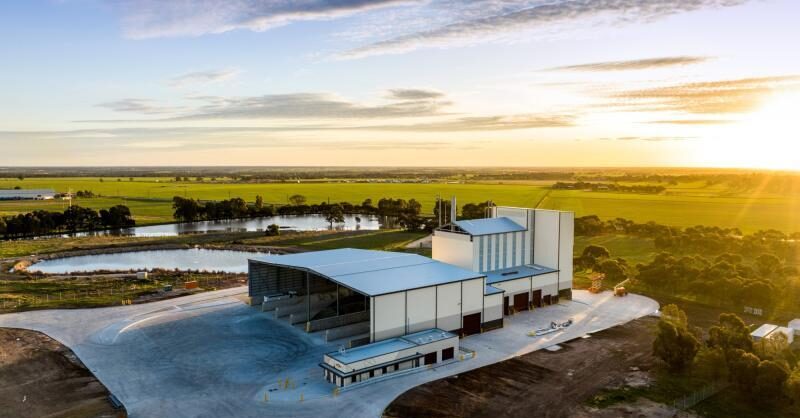
    The new Orora glass beneficiation plant in South Australia has begun operations, with the $25m facility set to recycle 150,000 tonnes of post-consumer glass each year, which will go into the company’s glass manufacturing plant next door.

    Orora CEO Brian Lowe and South Australia Deputy Premier Susan Close officially opened the highly automated plant this morning. The SA and Commonwealth governments provided some $8m of the funding for the new plant.

    With just 12 staff and the latest optical technology, the highly automated plant will remove impurities from used broken glass through crushing, cleaning and sorting, to deliver crushed contaminant-free glass, ready for manufacture into new products.

    The company says the new plant will enable the 900 million glass bottles manufactured at the company’s Gawler plant to have an average of 60 per cent recycled content by 2025. All the recycled glass will be used by Orora for its beverage products, which includes bottles for wine, beer, carbonated soft drinks, kombucha, water and olive oil.

    The new plant took just a year to build, overcoming supply chain issues, and bringing in the latest European technology for its automated sorting process.

    Orora CEO Brian Lowe described the beneficiation plant as a major milestone in the company’s sustainability journey. “Our new world-class beneficiation plant is a significant achievement as it will increase the amount of recycled glass used in our manufactured products, allowing us to process up to 150,000 tonnes each year – that’s equivalent to approximately 330 million wine bottles or 750 million beer bottles. Not only does this progress Orora’s sustainability agenda, it enhances our ability to support our customers’ sustainability goals, in turn contributing to the circular economy and the sustainability of the Australian glass industry.”

    Lowe said, “Together with our new oxygen fuelled furnace at Gawler, we are offering our customers a low emission, highly recycled product.”

    Close said, “Consumers are increasingly demanding recycled packaging, and this project makes a significant contribution to the circular economy and the sustainability of the glass industry in this state.

    “We value the investment of the Commonwealth and SA government – it aligns to the government’s focus on increasing Australia’s capacity to generate high value recycled commodities, investing in recycling and waste infrastructure, as well as creating new opportunities to recover and reuse resources.”

    Lowe said that the company saw plenty of opportunity for growth in the domestic glass business, saying, “Australia is still a net importer of glass bottles, which could be manufactured here, and would save on emissions in transport.”

    Lowe also said the beginnings of rapprochement in Australia’s trading relationship with China was good to see, but said Orora was not counting on a resumption of the wine trade, for which the company was a major glass bottle supplier. Since the wine tariffs came into play, which ended most of Australia’s wine exports to China, Orora has pivoted into new business areas, and has replaced all the lost business. Lowe said, “Any easing of restrictions would be good news, and we would be ready to supply winemakers, but we will have to wait and see.”

    A transition away from plastic bottles has not yet begun, with Lowe saying if it does happen it will more likely be to aluminium cans rather than glass bottles. The company is investing some $200m in can production over the next three to four years.

  • Apple Glass could put you anywhere in the world

    Apple Glass could put you anywhere in the world

    Apple is considering a system that will allow the wearer of Apple Glass or another Apple-made headset to choose the background that will appear when someone is standing in front of them. The technology is similar to the “green-screen” used on television shows and movies that make it look as though an actor is somewhere else rather than standing in front of a screen on a studio lot.

    Unlike the 2D system used by Skype and Zoom, Apple’s patent application envisions the use of a 3D system that lets the Apple Glass user replace the background of a subject while he or she is moving and walking around. As Apple’s patent application notes, “Low latency is a key element required to achieve great immersion (often called “Presence”). The color keying processing which is embedded in the Head-mounted display (HMD) detects the selected range of color and mixes in the virtual content coming from the HMD itself or from an external source such as a connected computer. Virtual content can also be composited on top of the color-keyed area to allow mixed-reality content occluding real-life objects.”

    The patent application was filed in February and published today by the U.S. Patent and Trademark Office (USPTO). It is titled “Low latency chroma keying embedded in a head-mounted display for mixed reality.” The low latency used with this system is important because it allows the processing to be done at a speed that prevents users from getting ill when viewing the fake backdrop stutter and lag. And the low latency is made possible by embedding the processor inside the HMD.

    Interestingly, the current thought is that at least in the early days of Apple Glass, users will need to pair the wearable with an iPhone and allow the handset’s processor to do the heavy lifting. That is what Apple first did with the Apple Watch; the latter originally required the processor from a user’s iPhone to run most features before Apple released a standalone version of the timepiece. As a result, the technology mentioned in the patent might not be employed on Apple Glass until the third-generation of the AR glasses or later.

    The patent application explains that “The system achieves mixed reality by having a user look at a display through wide-angle lenses (with a field-of-view of 110 degrees or more). Two cameras located behind the HMD display capture the environment from viewpoints located a few centimeters in front of each eye.”

    If you don’t mind the patent jargon, Apple says, “While chroma keying is usually a post-production effect or done live with dedicated equipment/software, it can be applied in the context of augmented reality (AR) headsets, also referred to as mixed reality (MR), where virtual elements are composited in real-time into the real-world environment seen by the user through the head-mounted display. One example is a crane simulator where the controls would be real objects and where a color screen would be replaced by a virtual crane and a virtual environment. Another example would be a social MR experience using a color screen that covers the whole field of view and only the user’s hands and/or body are not replaced by virtual content (unless their color is the same as the screen). This example application is sometimes classified as virtual reality (VR) but for simplicity, we here consider it as augmented reality (AR).”

    As with any patent application filed by the company, or even with a patent received by the tech giant, there is no guarantee that Apple will actually use the patented technology. Apple applies for and receives a large number of patients each year and while some are for innovative technologies actually employed by the firm, some ideas are just patented to protect Apple from the competition.

  • Apple Glass won’t need prescription lenses according to a new patent

    Apple Glass won’t need prescription lenses according to a new patent

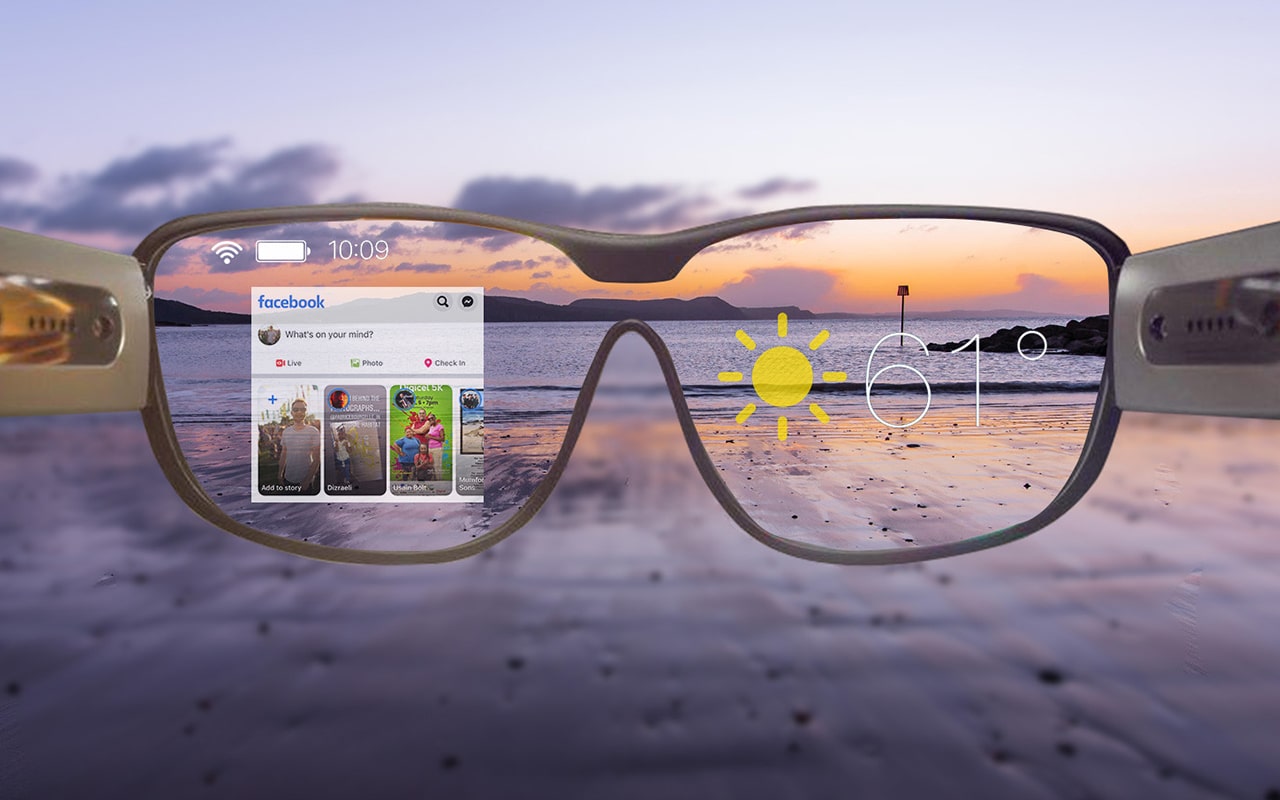
    Imagine wearing a pair of glasses that automatically adjusts to your eyes in order to correct any deficiencies; instead of wearing prescription lenses, the lenses would automatically make the necessary changes. Today, the U.S. Patent and Trademark Office (USPTO) awarded a patent to Apple for technology that would allow self-correcting lenses to be used on the rumored Apple Glass AR eyewear. The system seen in the patent illustrations shows a smartphone (like an iPhone) sliding into a frame. This would place the phone directly in front of the users’ eyes and allow it to plug into internal connectors so that it can be used as a display.

    Apple has used the title of the patent, “Head-mounted display apparatus for retaining a portable electronic device with a display,” multiple times with each use adding another change to the design. The latest version of the patent deals with a system to change the position and configuration of the device’s optical components in line with the user’s prescription. The beauty of this is that it would allow the user to wear the headset without having to put it on top of corrective lenses or contact lenses. Besides adjusting the lens configuration to make up for the user’s prescription, the display can be adjusted to make images look clearer; this can be accomplished by changing the position of images on the lens and resizing content. Right now, however, it doesn’t appear that Apple Glass will be available with tinted lenses for a sunglasses variant.

    The processing power required for the lenses to be automatically adjusted would come from a paired iPhone. In fact, like the original Apple Watch models which relied on a nearby iPhone to run many of the features on the timepiece, the first versions of Apple Glass will likewise obtain processing power from an iPhone. Eventually, it is hoped that Apple Glass users will be able to leave their iPhones at home and still have the AR shades handle tasks using on-demand processing.

    Apple Glass is expected to be unveiled next year. Last month, tipster Jon Prosser disseminated some leaks revealing that Apple Glass will look like a traditional pair of glasses with options for prescription lenses. This would indicate that the self-adjusting lenses won’t be offered by Apple for the first version of the device. Prosser says that the device will cost $499 and while prototypes of the glasses have a plastic build, a version with metal frames will eventually be available. While there will be no cameras mounted on Apple Glass, the wearable will have a LiDAR time-of-flight depth sensor. First employed by Apple on the 2020 iPad Pro models, the sensor computes how long it takes for infrared light to bounce off of a subject and return to the device. With this information, more precise depth measurements can be calculated and used for enhanced bokeh blurs on portraits, improved AR capabilities, and more.

    The camera available on Google Glasses became a controversial topic since users could snap photos of people without their knowledge. This led some bars to throw out patrons wearing Google Glasses and owners of the device were unceremoniously given the nickname “Glassholes.” Additionally, several movie chains, afraid that Google Glasses were being used to record bootlegs of newly released films, would not allow anyone wearing Google Glass to enter the theater. To prevent a repeat of this happening, Apple is reportedly going to employ a depth sensor only on Apple Glass.

    Prosser says that Apple Glass buyers will get a plastic stand right out of the box for wireless charging. A dedicated UI called “Starboard” will use gestures on the frames or via the LiDAR sensor.

  • Docomo, Ericsson complete 5G glass antenna trial

    Docomo, Ericsson complete 5G glass antenna trial

    Japanese operator NTT Docomo and glass solution provider AGC Group have collaborated with Ericsson to complete what the companies believe to be the world’s first trial of 5G communications using a glass-embedded antenna.

    The trial used an antenna embedded in synthetic fused silica glass to transmit and receive 28-GHz 5G radio signals.

    Validation testing used a vehicle fitted with multiple antennas and traveling about 30 km/h. Using the antenna, the companies achieved downlink speeds averaging 1.3Gbps within a 100 meter range, and maxing out at 3.8Gbps at 400 MHz.

    The glass antenna prototype has the potential to overcome challenges associated with high-band 5G spectrum being unable to adequately penetrate windows, the companies said.

    It could potentially be attached to window surfaces in buildings, vehicles and railway cars to enable stable, high-speed 5G communications under challenging indoor and in-vehicle conditions.

  • Focals smartglasses could give us a glimpse at Apple’s next big thing

    Focals smartglasses could give us a glimpse at Apple’s next big thing

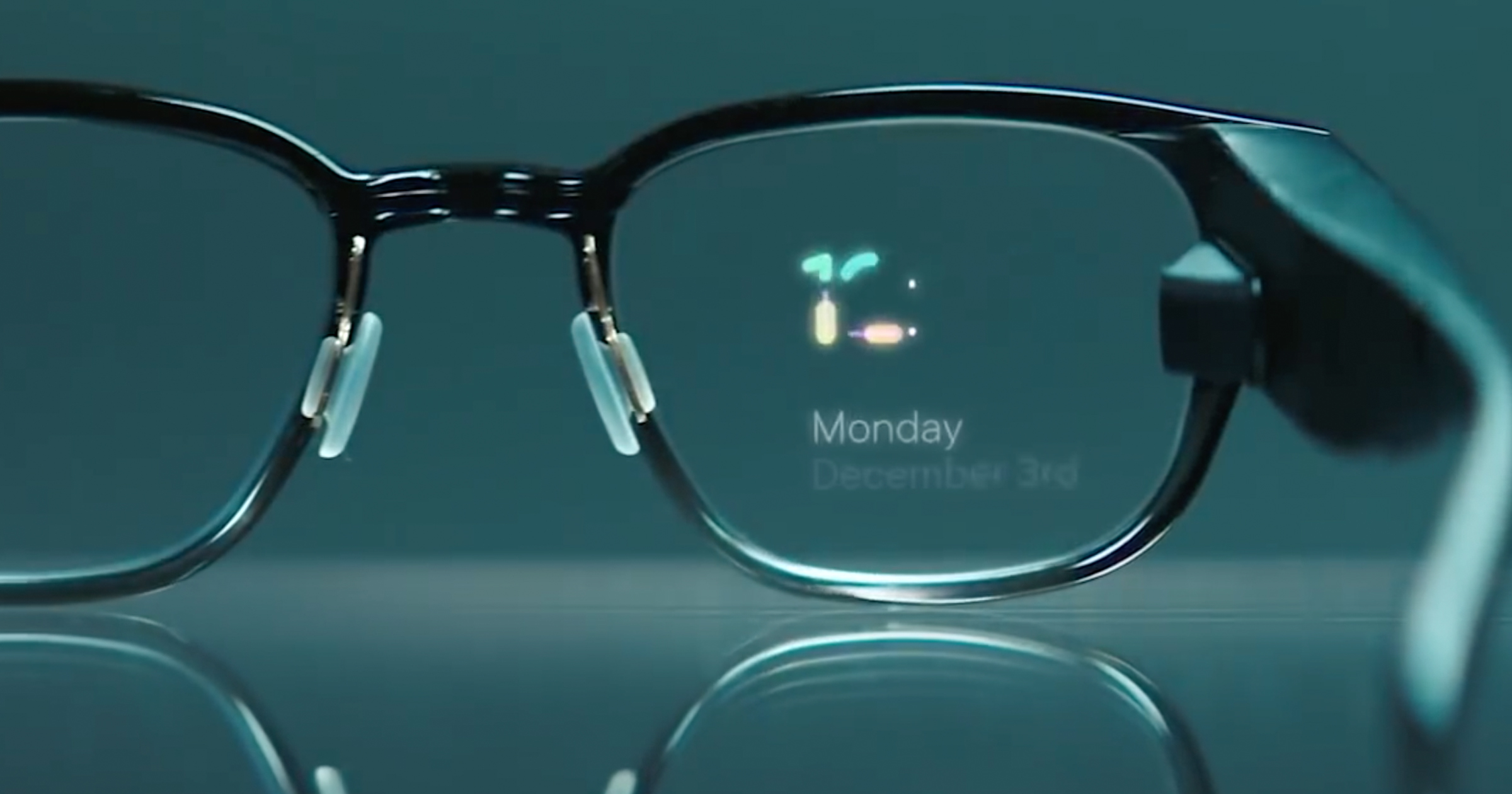
    North’s Focals smartglasses look nothing like the original version of Google Glass, which is a good thing. In fact, if you didn’t know any better, you’d think that they were just an ordinary pair of spectacles. But Focals feature Alexa integration allowing you to hear the latest news, view the weather forecast, stream music, control the smart appliances in your home, and more. The glasses will also show you upcoming appointments from your calendar, let you arrange for an Uber, send a text and navigate with turn-by-turn directions. Focals can be controlled through the use of the ring-like “Loop” which is a four-directional joystick that you wear on your finger to interact with the glasses.

    Focals were launched last October and are priced at $599 and up. Prescription lenses cost an additional $200. Personal sizing is required, which means that if you want to buy a pair, you will have to visit one of the company’s showrooms in Brooklyn or Toronto. There are also pop-up locations where this can be done. For example, from today through April 9th, the company can fit you in San Francisco. April 10th and 11th, a pop-up location will be open in Santa Clara. You can book an appointment for any of the locations through the Focals web site.

    The Focals smartglasses have limited functionality; the company says that it did this so that users won’t be distracted from the things right in front of them. But that doesn’t mean that new functions aren’t being added. Thanks to a new update, when a Focals wearer is listening to streaming music from Spotify, he/she can now skip a song, adjust the volume of a connected device like a phone or speaker, and see the title of the song and the name of the artist. And the volume of the music can be controlled even when the display is off, by using the Loop. The update also gives Focals the ability to recommend the fastest transit route for a user’s morning and evening commutes, and the it will also show any delays. The device will calculate an Estimated Time of Arrival (ETA) and share it with the user’s contacts.

    With a feature called Rewind, the Focals smartglasses can be used to make a voice recording of a meeting. Afterwards, North will send out an email containing a transcript of the meeting along with a recording of the get together. Since Focals are made to the exact specifications of the wearer, it isn’t easy just to take them off and give the glasses to a friend to check them out. So North came up with something it calls Lenscast. The latter puts your Focals’ display on top of the live camera feed from your smartphone to show others how Focals work. The glasses use Bluetooth to pair with your iOS or Android phone, and charge using a special carrying case.

    Last month, reliable Apple analyst Ming-Chi Kuo of TF International said that he expects mass production of the company’s AR glasses to begin no later than the second quarter of 2020. At least with the first version of the device, Apple is reportedly going to play it safe by having its glasses access the processor, GPS, memory chip and other components belonging to a user’s iPhone.

    Many consider smartglasses to be the next big thing. Nearly two years ago, analyst Gene Munster said that the wearable will be bigger than the iPhone.