Retail News CRM

Tag: Global Blue

  • Global Blue links with EuroPass,WeChat to boost Chinese tourist spend in Europe

    Global Blue links with EuroPass,WeChat to boost Chinese tourist spend in Europe

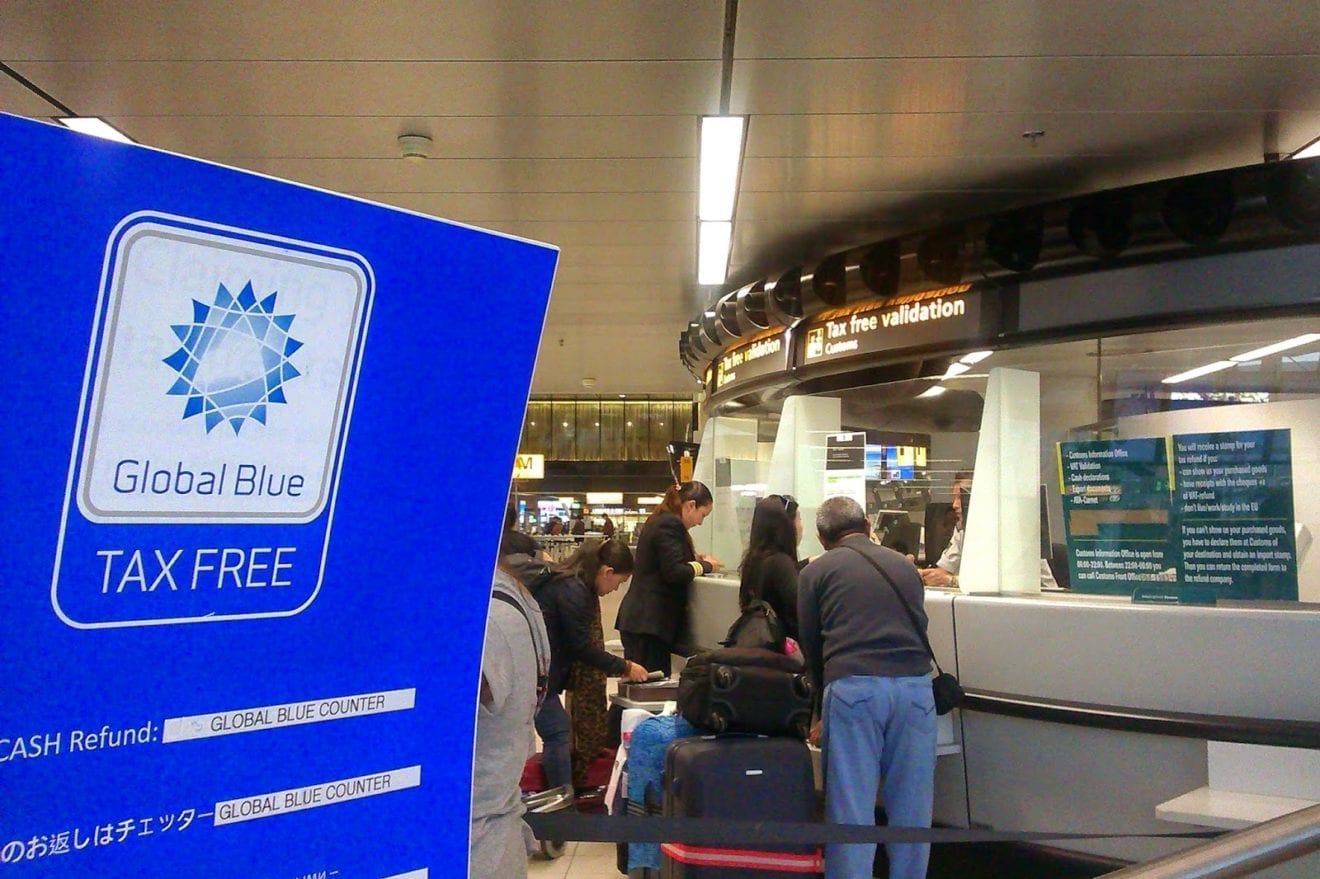
    Global Blue has inked a deal to make it easier for Chinese tourists to claim tax refunds on goods they buy in UK and European stores by linking up with major mobile payments specialist EuroPass. And the deal has a major WeChat social media element too.

    Chinese shoppers now have more options for claiming back the VAT when they shop in Europe

    Anything that makes it easier for Chinese shoppers to spend has to be good news with the consumer group particularly important for fashion and luxury stores in key European cities.

    London in particular has seen a Chinese surge of late. According to the Global Blue tax-free spend figures last month, with 21% of the total tax free sales, Chinese shoppers made up the biggest share of tax-free spend in the UK and they also showed the biggest growth in spend since last year.

    The company, which handles sales tax refunds, said this week it has acquired a stake in EuroPass, the European WeChat payment specialist. It has signed an exclusive contract to introduce retailers to the firm’s mobile payment solution to directly deliver tax refunds to Chinese shoppers.

    EuroPass has developed a mobile payment solution for WeChat, the social network that’s hugely popular in China with over 938 million active users. The solution allows Chinese travellers to use their apps to pay for transactions in Europe.

    Global Blue said the deal will help it to further develop its offering to Chinese travelling shoppers and enable it to offer affiliated merchants access to WeChat’s payment ecosystem in Europe.

    Aside from payments, EuroPass also offers a WeChat mobile ticketing solution and a European marketplace, helping drive WeChat customers to European merchants.

    Global Blue’s affiliated merchants will now be able to accept WeChat Pay in their stores, as well as other payment systems as, in recent months, the company has made major investments in this area with  new refund solutions with Alipay and UnionPay.

    As Global Blue’s exclusive tax-free partner, in the future EuroPass will also allow tax refunds from transactions to be paid directly to travellers’ AliPay and WeChat Pay wallets.

    CEO Jacques Stern said: “Chinese Globe Shoppers are vital to the retail industry worldwide. WeChat is the number one social network in China and an increasingly important player in the global payments space, so it is a natural platform for us to focus on.”

  • Global Blue collaborates on Chinese VAT refund scheme

    Global Blue collaborates on Chinese VAT refund scheme

    Tax-free specialist Global Blue has partnered with the Bank of China to launch a VAT refund service to overseas tourists in Shanghai.

    Travellers in Shanghai are now able to save 9% on their purchases as China has introduced its first tax-free shopping scheme for foreign visitors. The scheme will be among the first of its kind in mainland China, allowing eligible travellers to reclaim the VAT imposed by the Chinese government, when making purchases within the country.

    For travellers, eligibility for VAT refunds will be based on a set of simple criteria. These include possession of a non-Chinese passport (or specified ID from Hong Kong, Macau and Taiwan), receipt of purchase showing spend of over RMB500 ($72) in one store on the same day, and proof that the traveller has remained in mainland China for no more than 183 consecutive days.

    If these eligibility criteria are met, merchants simply have to provide a VAT invoice, then issue the shopper with a Tax Refund Application form provided by the Chinese Government, which includes the description of purchased goods and the traveller’s details.

    Global Blue will work with Bank of China to encourage local retailers to sign up to the scheme. It will also provide licensed retailers with ongoing training to sales staff and consult on the processes surrounding the issuing and completion of VAT refunds.

    Already almost 200 stores in Shanghai have already signed up to the tax-free shopping scheme, including major department stores [e.g. Takashimaya, Pacific, Parkson and Bailian (Group) Department Stores], luxury brands (e.g. Chanel, Hermes, Tiffany and Louis Vuitton), high street names (e.g. Zara, Bershka and Marks & Spencer) and local retailers (e.g. Silk King, Lao Feng Xiang Jewellery and Chow Tai Fook Jewellery).

    Global Blue CEO Jacques Stern commented: “We are excited about launching this partnership with Bank of China, a true market leader in the international banking space. The VAT refund service represents a great opportunity for merchants in Shanghai to attract high-spending international travellers and encourage higher spend in-store. For visitors to the city, this scheme will bring obvious benefits, allowing them to shop and spend with leading Chinese merchants for less.”

    Bank of China vice president Mr. Wang added: “This is a very exciting period for Shanghai’s retail sector and we are confident the introduction of these services will be a powerful tool in helping businesses connect with valuable international shoppers. Global Blue’s experience of promoting and supporting Tax Free services around the world make it a valuable partner and we look forward to a long and happy working relationship.”

    In addition to merchant support, Global Blue will manage marketing activities inside and outside of China to increase traveller awareness of the VAT refund scheme. Promotional channels will include Global Blue’s website, app and a wide range of traveller focused collateral including SHOP Maps and point-of-sale materials. The partnership will also see Global Blue collaborating closely with local governments’ tourism departments.

    In addition to VAT refund services in Shanghai, Global Blue has also named Bank of China as a banking refund partner for returning Chinese shoppers across the country. Bank of China will operate refund counters from 10 branches throughout China, making it easier for Chinese consumers to claim overseas refunds back home.

  • Tax free shopping spend drops in Asia and Europe

    Tax free shopping spend drops in Asia and Europe

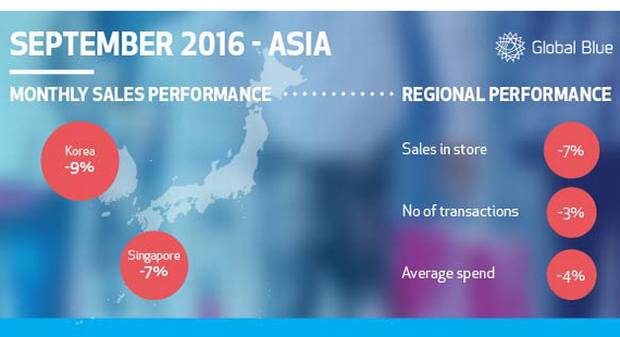
    Tax free shopping sales in Asia fell -7% year-on-year in September, compared to declines of -13% in August, according to Global Blue. The number of transactions dropped -3%, while average spend was also down -4% over the same period. Global Blue said Singapore, Japan and South Korea all saw declining tax free sales for the first time in three years.

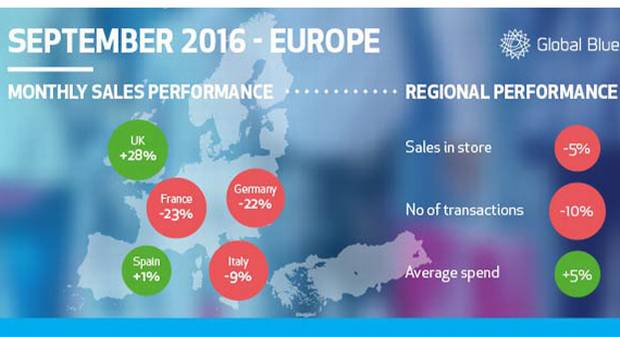
    In Europe, tax free shopping declined -5% year-on-year during September, compared to -3% in August.

    European transactions were down -10%, but average spend was up +5% year-on-year.
    asia_600x300

    Asian countries

    Global Blue said the increase in arrivals by middle-class Chinese travellers supported growth in tax free sales and the number of regional transactions, but was not enough to offset the decline in spend in Singapore, Japan and South Korea.

    Both Japan and South Korea saw a -9% dip in sales, while in Singapore sales fell -7%.

    The positive momentum seen earlier in the year has now gone, Global Blue said, reflected by the deep drop in average spend in Japan of -30% year, and the -13% fall in South Korea.

    In these two countries, the rise in arrivals was offset by the decline in average spend as a result of the strengthening currency in both countries. In September, the Japanese yen was +21% and the Korean won was +10% against the Chinese yuan, Global Blue noted.

    A shift in the Chinese traveller profile towards value seekers and experiential Free Independent Travellers is becoming the “new normal” across the region, the retail intelligence company said, which also had a negative impact on sales.

    Global Blue said it was witnessing a change in shopper profile in Japan’s department stores, as Millennials and Free Independent Travellers look beyond the country’s department stores and head to more niche or independent fashion and luxury retailers outside the Global Blue merchant network.

    With increasing numbers of less affluent Chinese arriving in Singapore from second- and third-tier cities, the country’s duty free retailers have been slow to offer a more diverse retail mix, Global Blue said.

    Chinese travellers are using Singapore as a departure point for cheaper shopping over the border in Malaysia.

    The number of travellers entering Singapore by land is rising (up +55% according to the latest Singapore Tourism Board figures reported in Jing Daily). Some of these tourists are on overland tours and therefore take in cheaper markets as well as Singapore’s high-end malls, unlike the higher-spending visitors who arrive by air.

    Singapore is also facing a challenge this quarter due to health concerns over the Zika virus outbreak, which is reducing visitor numbers, Global Blue noted.

    Chinese shopping across South Korea and Singapore saw tax free sales declines of -15% this month.

    While the tough comparison with 2015’s MERS-hit summer period has ended in South Korea, the Chinese are not returning in any great numbers due to the political tensions between the two countries, Global Blue noted.

    Hong Kongese tax free sales in South Korea and Singapore significantly declined in September (-77% and -98% respectively). While the local currency is strong, the legal context for the largely daigou traders is negatively impacting on sales, according to the company.

    Indonesians and Thais are now making up for the tax free spend at both destinations. In Singapore, Indonesian tax free sales are up +7% year-on-year, fuelled by positive currency exchange rates. In South Korea, Thais contributed to a massive sales spike of +87% year-on-year. Singaporean sales were also up +17% in September, a result of high net worth individuals who are regular shoppers in the region.
    eu-600x300

    European countries

    The tax free shopping decline in Europe is a slight improvement compared to the first half of the year, the company said, although countries hit by terrorism last year saw a reduction in sales.

    France and Germany continued to feel the effects of the downturn in visitors from Asia, with tax free sales down -23% and -22% respectively in September.

    The most serious decline in spending in France came from the Chinese, at -40%, while in Germany, Chinese spending was down -26%.

    Spain and southern European countries continued to outperform the continental Europe average of duty free sales, Global Blue said. Spain saw an increase in tax free sales of +1% compared to last September, while Greece increased total sales by +18%.

    The UK benefited from the fall in the pound and currently remains the best value luxury destination for duty free shoppers. The pound is now around -14% down on the euro since the Brexit vote, and almost -20% against the US dollar, Global Blue said.

    However, this situation is unlikely to last beyond next spring, the company noted, as most luxury goods are imported into the UK. From next season price increases on all imported goods will inevitably lead to higher prices in UK stores.

    The UK also benefited from the end of Ramadan and the annual back to school period for Chinese students, characterised by visiting families’ gift spending.

    The Chinese are the most valuable nation of shoppers for UK retailers, and they increased their spending by +25% during September.

    Saudi Arabia, Qatar, the UAE and Kuwait contributed to a +8% uplift in European sales in September.

    Cutbacks by the Saudi government, where well over half the population are state-employed, will put pressure on Saudi citizens’ outbound travel plans and spending in the medium term, Global Blue noted.

    Morocco posted a +28% rise in total sales in Q3 year-on-year, as shoppers avoided destinations that have suffered terrorist attacks. Cyprus saw a +11% uptick during the same period; Global Blue attributed this to an increase in Russian shoppers.
  • Penang outlet mall Design Village about to launch

    Penang outlet mall Design Village about to launch

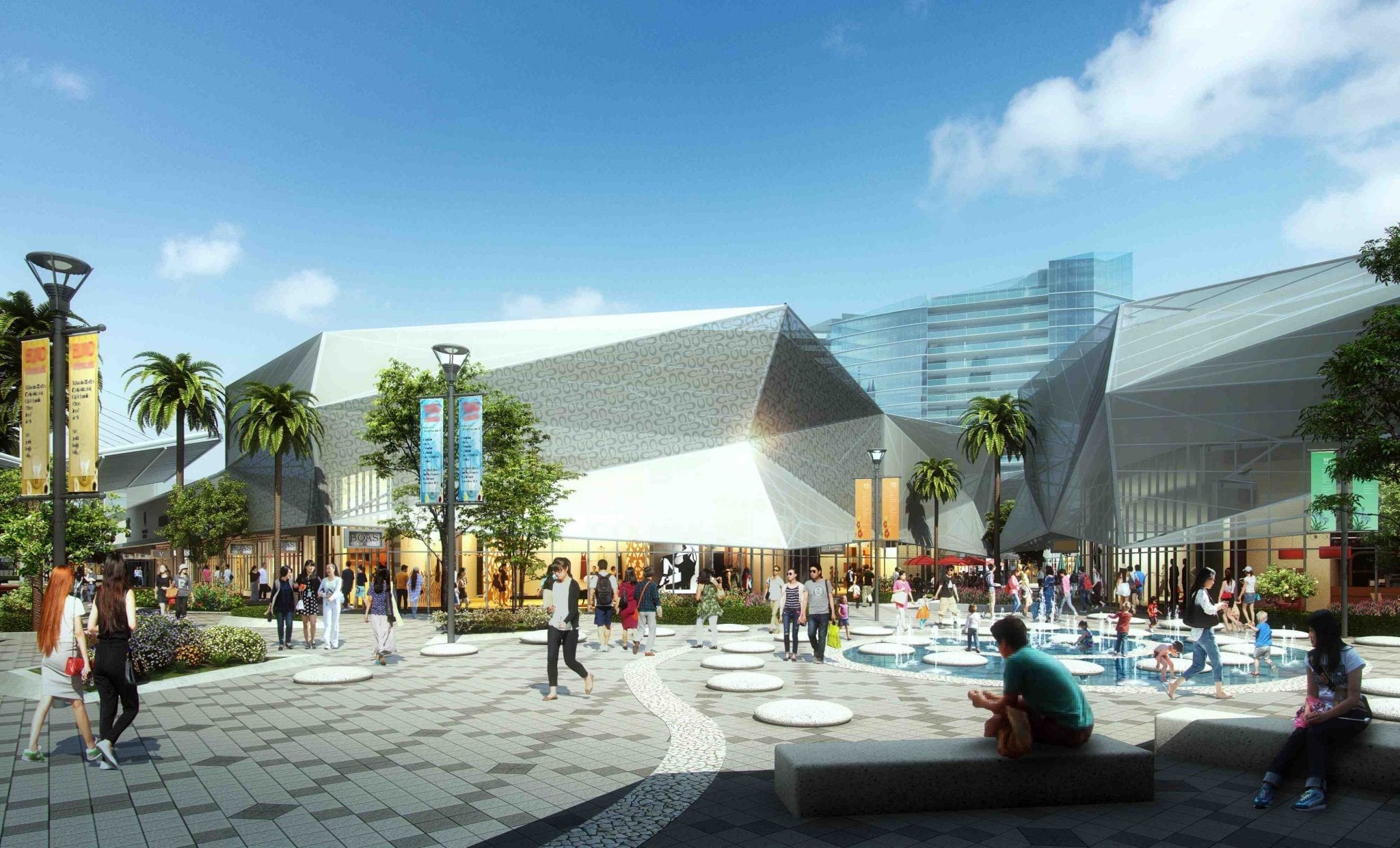
    Penang will gain its first premium outlet mall, Design Village, next month.

    In Batu Kawan in mainland Penang, it will be the biggest outlet mall in Malaysia. It was developed by PE Land, which owns and runs The Spring shopping mall in Kuching.

    The outlet mall is on a mixed-use site that will include a hotel and high-end condominiums. The single-storey mall has a net leasable space of 400,000 sqft (37,161 sqm) for 150 stores.

    There are more than 80 brands already committed to the mall, which is aiming for up to 100, says Savills Malaysia MD Allan Soo. The company is the international leasing and retail development adviser for Design Village.

    Design Village Malaysia 1

    The mall’s retail mix will be 20 per cent large-format stores, 15 per cent F&B, 7 per cent sports outlets and 5 per cent children’s stores, with 25 per cent new tenants and 28 per cent others.

    It will include the biggest Adidas outlet in Malaysia, plus the first outlet stores for Aldo and Bata. Other retailers include Banana Republic, Guess, Padini Concept Store, Sacoor Brothers, Samsonite and Starbucks.

    The mall will provide daily shuttle services to and from hotels and the airport.

    Design Village GM Aileen Tay says the mall is also working with tour companies to bring in tourists who will be offered rebates through tax-free shopping network Global Blue.

    PE Land is the retail and property development arm of Borneo-based conglomerate Pan Sarawak Holdings.

  • Are low spending Chinese shoppers a new normal?

    Are low spending Chinese shoppers a new normal?


    August shopping data from tax refund specialist, Global Blue, indicates a downward trend in tax-free in-store sales of -13% (year-on-year) – the worst decline since the start of the year and a big fall compared with July’s 0% change.

    global-blue-august-asia-3-markets
    There are stark differences in August tax-free sales, largely because of the beneficial ‘MERS effect’ in Korea.

    While transactions rose significantly in August by +25%, the decline of average spend at -30% clearly shows that individual travellers are spending less and this is probably due to a combination of factors ranging from China’s customs clampdown, a different passenger profile, and currency influences.

    Global Blue says: “The rise of less affluent middle class Chinese travellers continues to bring down the average spend of tax-free shopping globally, with a sizeable impact in Asia. Across the region more ‘value seekers’ from second-tier and third-tier cities are growing their transactions, but with less affluent spending patterns.”

    Duty free and travel retailers can take comfort from the rising number of travellers in Asia, which correlates with higher numbers of transactions in South Korea, Japan and Singapore. But, says Global Blue, the overall sales performance in the region is significantly limited by the headwinds of a stronger yen in Japan and Chinese spending in the region increasingly being driven by value-seeking shoppers who spend less.

    COMMON THEME IS LOWER SPEND POTENTIAL

    The travel boost is not compensating for the spending fall in key duty free and travel retail locations such as Singapore and Japan – while Hong Kong (downtown) does not even have the benefit of rising traveller numbers.

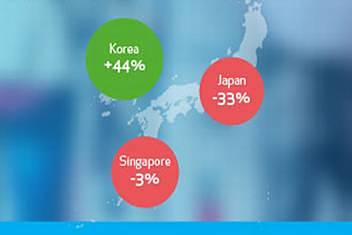
    All Global Blue’s Asia tax-free shopping destinations rely on increased arrivals and traffic, yet the common theme is lower spend potential. With -33% sales in August, Japan has been affected by the strong currency, which has negatively impacted the number of transactions.

    Global Blue August Asia

    Transactions are strongly up but average spending is even more strongly down.

    Global Blue estimates that 23% of Japan’s negative sales performance this month is driven by the softer yen and the other 10% is due to increased numbers of less affluent Chinese shoppers arriving in Japan (+20 to +30% more in the first half of the year at Narita airport) from second-tier and third-tier cities.

    South Korea’s sales performance of +44% this month (versus an impressive triple-digit growth of +215% for July) is on the back of highly beneficial comparisons to last year when the MERS virus took a big toll on traffic.

    ASIA YEAR-TO-DATE DOWN -21%

    Transaction numbers are significantly up across all globe shopper nationalities in Asia, except for Hong Kong (-10%), reflecting the increase in air arrivals across Japan and South Korea. Taiwanese globe shoppers (+43%) showed the highest transactions growth in the region in August, followed by Chinese (+28%), with Thais and Indonesians up too. However, the decline in average spend per transaction is a long-term trend.

    Global Blue estimates that the new Chinese value seekers are having a negative impact of between -6% and -10% across Asia as their demand for regional travel increases, driven by the Chinese government’s strategy of strengthening the economy by localising discretionary spending.

    Year to date tax-free sales performance across the region is flat and average sales are down -21%. A less favourable economic situation in mainland China is also not helping travel spending: for example Japan’s current picture YTD is a +26% increase in transactions and a decline of -25% in average sales.

  • Despite Slowdown, China’s Outbound Tourists Reach 242 Million

    Despite Slowdown, China’s Outbound Tourists Reach 242 Million

    As Chinese tourists head across the globe for Golden Week this week, luxury retailers are worried that an ailing stock market and devalued yuan will lead to muted growth compared to holiday seasons of the past. But according to newly released figures, long-term growth prospects remain strong for Chinese travelers, who are expected to double in number over the next decade.

    Some destinations may be in for a Chinese spending slump when it comes to luxury shopping over the holiday. According to recent figures released by Global Blue, UK luxury retailers are especially expected to feel the pain of China’s current economic woes during Golden Week.

    The retail tourism firm reported that the devaluation of the yuan in June led to a 2 percent year-on-year decline in Chinese tourist spending in August for the UK, down from 8 percent growth in spending between January and July.

    According to an official statement, “Global Blue is anticipating the Golden Week rush will be significantly weaker this year, and the decline could continue throughout the fourth quarter as Chinese are left disinclined to book trips abroad.”

    But retailers shouldn’t fret too much about long-term prospects, as a recent study published by HSBC found that outbound Chinese traveler numbers are expected to hit 242 million by 2024—a number more than double last year’s amount, which was estimated by HSBC to be 116 million. In addition, a recent report by the Fung Business Intelligence Center and China Luxury Advisors found that outbound Chinese traveler spending will hit $422 billion by 2020, up from an estimated $200 billion this year.

    Even as retailers fret about their sales prospects for this Golden Week, not everyone is expected to lose out. A weak euro still makes Europe a popular destination despite the devalued Chinese currency, and Global Blue found that Chinese shopper numbers in Europe rose by 74 percent in the first half of this year.

    Online travel agency Ctrip still expects outbound tour bookings to double for the period, and has reported that Hong Kong, Tokyo, and Bangkok are the top three holiday destinations for Chinese tourists. While luxury retailers in some destinations may be noticing the slowdown much more than others, those that keep their eye on the prize when it comes to Chinese travelers are more likely to have a fruitful decade to come.