Retail News CRM

Tag: Global Brands

  • Global Brands Group posts massive US$598 million loss

    Global Brands Group posts massive US$598 million loss

    Global Brands Group has reported a net loss attributable to shareholders of US$598 million in the year to March.

    That followed a loss of $400 million the prior year, but the company claims its restructuring program involving axing brands and stores is paying off, citing a pre-tax profit of $151 million for the year.

    Group sales fell 28.5 percent to $US1.082 billion, but the company cut $209 million in operating costs

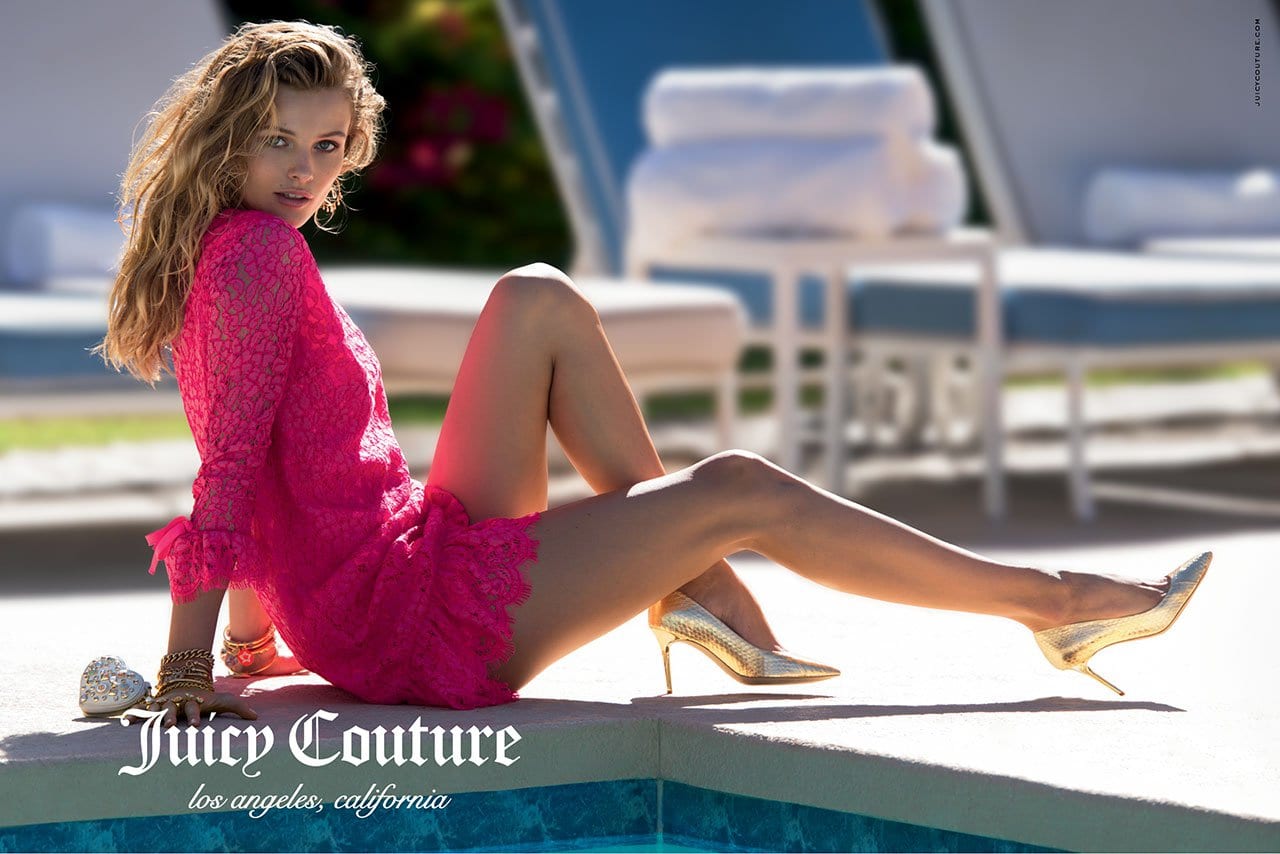
    Last year, Global Brands ditched a raft of brands in the US, including Copper Fit, Kenneth Cole, Juicy Couture, Jones New York, BCBG, Goats and Taryn Rose and also shuttered brick-and-mortar stores there.

    But it noted, “exciting progress” of new and emerging brands including B New York, Magna Ready, which produces clothes for people with disabilities, and sports & swimwear labels Saga (pictured above) and Dakine.

    “During the reporting period, we have experienced one of our most rewarding and yet, one of our most challenging years,” said CEO Rick Darling. “Throughout the fiscal year 2020, we have diligently focused on executing our restructuring program, and this dedication has resulted in strengthening our balance sheet and in improving our performance despite the unprecedented impact of Covid-19.”

    The brand shake-up, reduced low-margin sales, and negotiation of new supply agreements helped boost the company’s gross margin by more than 640 base points from 30.2 percent last year to 36.6 percent this year. Another factor in the improved margin was a focus on expanding its direct-to-consumer business model.

    Darling said the rapid spread of Covid-19 in February and March negatively impacted the group’s sales during the last quarter. But he believes the restructuring process the company has been through during the last two years has equipped the company to face the ongoing challenges of the pandemic, leaving it “well-positioned for growth going forward”.

  • David Beckham splits with H&M

    David Beckham splits with H&M

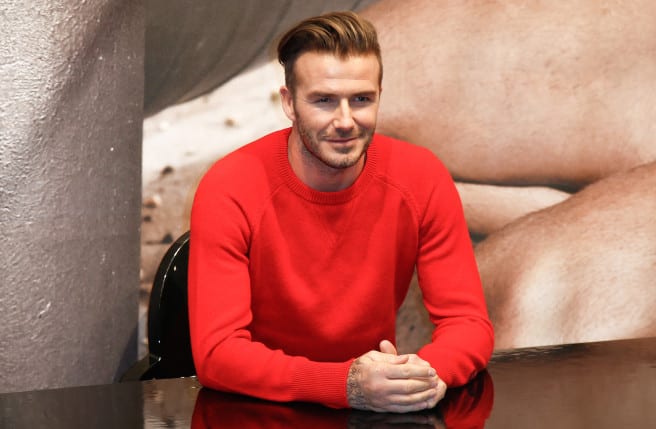
    David Beckham has split with fashion retailer H&M – and he’s being upstaged by a Canadian pop star with a hairdo worse than Donald Trump’s…

    H&M introduced its first Beckham Bodywear collection featuring form-fitting underwear in 2012 and expanded the partnership to include a broader range of garments including jerseys and light summer suits dubbed Modern Essentials in March 2015. There’s even been a Beckham raincoat.

    But now the brand believes it is time for a change. It has signed up Grammy-winning R&B artist Abel Tesfaye, 26, who performs under the deliberately misspelled name The Weeknd, for a one-off menswear collection which will go on sale from March. The chain believes the new signing will appeal to younger shoppers than Beckham, now 41.

    According to Bloomberg, H&M said it would not rule out future collaborations with Beckham, who also has partnerships with Hong Kong-based Global Brands, endorses Adidas shoes, Breitling watches and Samsung smartphones.

    An H&M spokeswoman told Bloomberg there was no direct link between the end of the Beckham partnership and the signing of Tesfaye.

    The singer will choose his favourite items for an H&M collection to be called Spring Icons Selected by The Weeknd.

    Queuing for Kenzo

    Meanwhile, H&M’s collaboration with fashion label Kenzo launched yesterday, leading to queues outside two stores in Singapore where the collection was on sale – in the Orchard Building and at Ion Orchard.

    The Orchard Building store opened at 8am and by 7.30am about 100 people were lined up outside the store. Some at the front of the queue had reportedly arrived on Tuesday morning, presumably holding the place in shifts.


  • Revenue up but profit down for Fast Retailing Group

    Revenue up but profit down for Fast Retailing Group

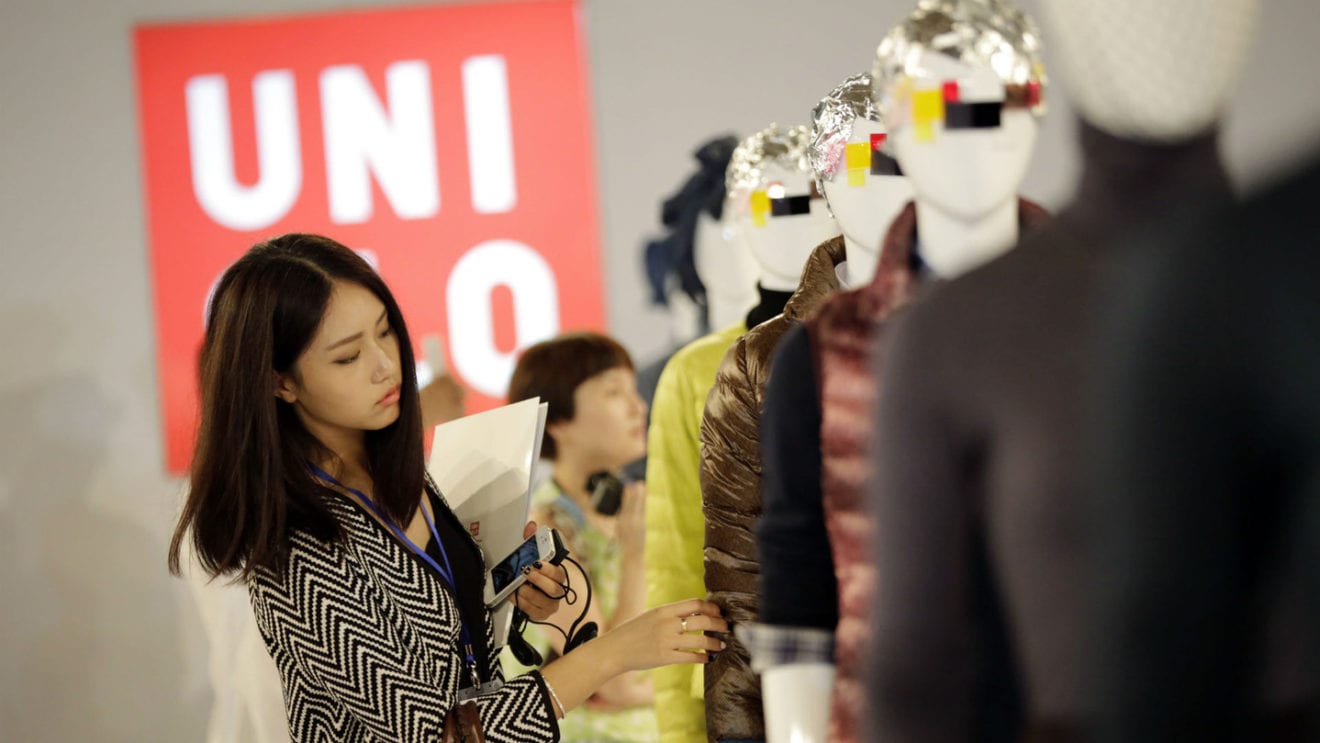
    Revenue rose but profit fell for Uniqlo parent The Fast Retailing Group for the first nine months of its latest fiscal year, from September 1 last year to May 31.

    Consolidated revenue for the group reached ¥1.4346 trillion (US$215 billion), a rise of 6.4 per cent year-on-year.

    For its three business segments, Global Brands saw both revenue and profit rise, while both Uniqlo Japan and Uniqlo International had more revenue but less profit.

    Foreign-exchange losses were down ¥43.4 billion to ¥23.4 billion, resulting in consolidated profit before income taxes dropping by a considerable 41.9 per cent.

    However, consolidated revenue rose 6.2 per cent and consolidated operating profit grew by 18.6 per cent, thanks to a recovery in performance at both Uniqlo Japan and Uniqlo International.

    The group continued to boost Uniqlo store numbers, opened global flagship stores and large-format stores in major cities, and also expanded its low-priced GU casual fashion brand.

    On the product side, Fast Retailing sought to boost awareness and visibility of the Uniqlo brand through collaborations with designers and artistic directors from other brands.

    In April, the company launched a next-generation distribution centre in Tokyo, and is pressing ahead with plans to open distribution centres elsewhere in Japan as well as internationally, starting in China and the US.

    There are also plans to accelerate GU store openings outside Japan.

    In Japan, the eCommerce segment continued to grow strongly, with online sales rising 40.6 per cent to 5.5 per cent of total sales. On-ground stores increased by two to 846 at the end of May, including 39 franchise stores.

    Recovery

    Uniqlo International’s revenue for the nine months reached ¥532.8 billion (up 10.6 per cent) while its operating profit of ¥42.2 billion was an 18.7 per cent fall. However, both revenue and profit grew in the third quarter (March to May) by 5.3 and 41.1 per cent respectively.

    Profits recovered for Uniqlo Greater China (including Hong Kong and Taiwan) while Uniqlo Southeast Asia and Oceania (Australia, Indonesia, Malaysia, Singapore, Thailand and the Philippines) continued both revenue and profit growth.

    Uniqlo South Korea continued to struggle, losing profits in the face of a sluggish economy and increasingly fierce competition.

    The total number of Uniqlo international outlets grew by 161 to 928 stores.

    Under its CSR policy, Uniqlo joined the Nippon Foundation opening the Tsurumi Children’s Hospice in Osaka in April. This is for children with life-threatening illnesses and is the first community children’s hospice in Japan.

    Following the Kumamoto earthquake this year, Fast Retailing provided emergency clothing for victims, donating 13,600 items such as underwear, socks and loungewear.

    WIth its global partnership with the United Nations High Commissioner for Refugees (UNHCR), helped collect clothing for refugees and displaced persons on World Refugee Day. A special project exceeded its goal of collecting 10 million articles of clothing with a total of 12.81 million items. This involved 112 affiliated companies in 846 locations, 238 educational institutions, 28 student organisations, and communities in 16 countries and regions in which Uniqlo has business.

  • Denim brand joins Global Brands portfolio

    Denim brand joins Global Brands portfolio

    Hong Kong-based Global Brands Group has signed a 10 year licensing agreement covering two North American denim brands.

    In a joint venture between Iconix Brand Group and Buffalo International Global for the Buffalo David Bitton and i Jeans by Buffalo labels.

    Under the agreement, Buffalo David Bitton and i Jeans by Buffalo will join Global Brands’ portfolio of fashion and lifestyle brands, with Global Brands to design, produce and distribute products across both brands’ core categories.

    Global Brands CEO and vice chairman Bruce Rockowitz said with the addition of the Buffalo brands, “we have taken another significant step to establish Global Brands as a leader in the denim category”.

    “We are focused on categories where we want to be a key player and achieve scale.  Denim is one such category which we are excited about and where we see excellent potential for growth. We’re seeing a revival of denim as a fashion essential and believe that it will continue to trend strongly,” he said.

    Founded in Montreal, Canada and with a 30-year heritage, the Buffalo brands are known for a long-standing tradition of trend right, quality clothing and accessories. The brands are leaders in their respective channels of distribution, offering multiple denim styles and a full fashion collection that spans a range of men’s, women’s and children’s products, including denim jeans, pants, shirts, sweaters, jackets, dresses and other apparel, as well as accessories, suits, bags, sleepwear and small leather goods. The products are distributed through multiple channels, including better department stores, as well as fine specialty stores throughout North America.

    Gaby Bitton, chairman, Buffalo International, said: “This long term strategic partnership with Global Brands will strengthen the Buffalo David Bitton and i Jeans brands around the world. The JV will continue its extensive marketing support that have helped make the brands leaders in the category.”

    This is the second long-term licensing agreement signed by Global Brands in the denim space, following a similar agreement with the Joe’s brand this month.

  • Global Brands in talks with Alibaba, JD.com

    Global Brands in talks with Alibaba, JD.com

    Global Brands Group is discussing a possible “strategic alliance” with Chinese eCommerce companies Alibaba and JD.com.

    The two e-tailers are declining to comment on the matter, but based on comments by Global Brands CEO Bruce Rockowitz, Bloomberg reports the alliance “could involve online sales of brand-name children’s wear, among other products, through Alibaba’s Tmall and JD.com, and co-operation offline”.

    Rockowitz said a formal announcement is likely later this year.

    “We are working with JD and Alibaba on a strategic alliance, joint venture,” he said. “It’s a relationship or joint venture together that can create a solution online, offline and mobile that none of us can do by ourselves.

    “Both of them want to do something. They don’t have the content, just platforms, but they want to go to the next level.”

    The comments came in the wake of Global Brands’ first full year results announcement earlier this week when it reported stronger margins as it continues to shed non-performing brands in favour of higher end products.

    Last December, Global Brands announced a joint venture with David Beckham and his business partner Simon Fuller. The joint venture, Seven Global, focuses on the continued development of the brand around David Beckham as well as on creating large scale brands in partnership with a select number of high‐profile sports and entertainment icons. The venture will cover all major consumer product categories.

  • Global Brands chases higher margins

    Global Brands chases higher margins

    Li & Fung spinoff Global Brands has reported stronger margins as it continues to shed non-performing brands in favour of higher end products.

    The group’s total margin continues to rise, growing as a percentage to turnover from 29.7 per cent to 31.7 per cent in the first half of the current financial year.

    Turnover of US$1.282 billion was down five per cent due to “the tail end of the discontinuation of underperforming businesses” and a weak euro. Excluding those factors, turnover actually grew by about six per cent.

    CEO Bruce Rockowitz said as the company marked its first year as a standalone, listed business it continued to build on a solid foundation “as the partner of choice for American power brands in the affordable luxury space”.

    “We have sharpened our organisational focus around our product categories, as we continue to improve our business mix towards higher margin areas while at the same time driving operational synergies across the organisation. Today, we have a strong portfolio of brands and an excellent platform to take them global through either licensing, ownership or brand management,” he said in a statement.

    Global Brands’ business is always stronger in the second half of the year due to back-to-school sales and a higher concentration of holidays during this period, and the fact that some of the brands, such as Frye and Spyder, together with product categories like winter accessories, are more skewed towards the fall and winter seasons.

    “We continue to invest in and strengthen our business,” said Dow Famulak, president and COO. “Within Licensed Brands, the characters and kids fashion areas continued to perform well. This strong performance comes as we leverage our unrivalled global platform and our position as one of the largest licensees of all major kids entertainment franchises.

    “On the Controlled Brands side, we have added Jones New York to further strengthen our women’s fashion and apparel brands portfolio. We also continue to grow our key Controlled Brands, such as Frye, Spyder and Juicy Couture and have bolstered our management teams across several brands.”

    Added Rockowitz added: “Consumer appetite for leading American affordable luxury brands remains strong, especially as consumers’ demand for these brands has been fuelled by the widespread access to the online arena that makes these brands more popular than ever globally. Looking ahead, we expect our leading businesses to continue to perform well and maintain the course of their growth trajectory. At the same time, we will continue to increase our geographic footprint and look for strategic opportunities to add to our existing platforms, through both licenses and acquisitions.”

  • Global Brands revels in maiden result

    Global Brands revels in maiden result

    Global Brands, the listed Li & Fung spinoff, has reported its first trading result – reveling in a 37 per cent profit rise.

    The Hong Kong based company listed as an independent business on July 9, a move CEO and vice chairman Bruce Rockowitz says afforded it the freedom to fully build its brands business and pursue its own distinct and focused strategy. That strategy includes a direct-to-consumer business,, which would not have been possible under the Li & Fung business model. “At the same time, we continue to enjoy the benefit of being a member of the Fung Group.”

    Group sales in the second half totalled US$2.105 billion, up 7.5 per cent on the same period the previous year, while profit rose 36.6 per cent to $217 million.

    Merging the half years under the two ownerships into one set of figures, annual sales reached $3.454 billion and profit $154 million .

    Rockowitz says the business will continue to primarily concentrate on ‘American power brands’ through Licensed Brands and Controlled Brands divisions.

    “On the Licensed Brands side, we continue to sharpen the focus of our platform in terms of both the product categories that we offer and the brands that we work with, while expanding the platform globally.

    “One notable achievement of our efforts is that today we are among the largest licensed brand companies within the kids sector, a success that is based upon our leadership position in characters as well as in kids fashion. We have a truly global platform in the kids area, and we are working hard to further strengthen our prominent position in key categories and geographies worldwide.

    “In the US, notable achievements include the master licensing agreement that we signed with Disney in the sleepwear category in August. In Europe, our focus has been to integrate our businesses across major markets to strengthen our leadership across the region. In China, we have successfully established a strong platform for the kids fashion and character businesses.”

    Global Brands is also building its licensed brands portfolio , securing deals with major American brands in footwear and accessories: a new global accessory licensing relationship was signed with Cole Haan last year, and in January 2015, with Kate Spade.

    “In addition, we renewed our global footwear license agreement with Coach. These are all highly successful affordable luxury brands with strong growth momentum,” said Rockowitz.

    The company exited its private label jewellery business post listing and consolidated its home and women’s apparel offers to ensure each is run more efficiently.

    On the Controlled Brands side, the company made special mention of Frye, an American brand with a strong heritage.

    “Our Frye retail stores delivered strong results, while sales through our eCommerce portal Frye.com also recorded significant growth. Looking ahead, we see the further expansion of our retail footprint, growing online sales and extending our product offering as being the key drivers to building Frye into a global lifestyle brand. We have also made a number of key hires to accelerate growth.”

    Spyder has established itself as “a high end, high performance” skiwear brand in the US and Europe.

    “We are working to expand its presence in other geographies as well as in other product categories. In particular, we believe this is an opportune time to make a big push for Korea (the host country for the winter Olympics in 2018) and China. We believe the brand’s edgy aesthetics and high performance will resonate well in these key Asian markets.”

    Juicy Couture has started with very strong sales momentum and retail partners are actively working on a plan for new store openings globally.

    Aquatalia, though much smaller in scale than Frye, has proven its brand appeal, and expanded into menswear with a Fall 2015 collection.

    In December, Global Brands announced a joint venture with David Beckham and his business partner Simon Fuller. The joint venture, Seven Global, focuses on the continued development of the brand around David Beckham as well as on creating large scale brands in partnership with a select number of high‐profile sports and entertainment icons. The venture will cover all major consumer product categories.

    “We are extremely excited about the prospects that lie ahead for Seven Global,” said Rockowitz. “With our strong global platform of TLC, one of the world’s leading brand management companies that we acquired in January 2014, we are confident we can establish Seven Global as a trendsetting enterprise in the sports and entertainment space.”

    Rockowitz said although the macroeconomic environment remains complex, the company expect its margins will continue to trend upwards due to its growth in scale, improvement in gross margins and an improving business mix in favor of higher‐margin businesses, and an ongoing focus on integrating its businesses and rationalising the cost structure, while exiting unprofitable and non‐core businesses.

    “As we continue to grow and strengthen our business, one strategic priority is to extend our global reach. We have established a leading platform in our space in the US, which will remain our largest geography for the foreseeable future, and we believe we can successfully replicate this in Europe and Asia.”