Tag: Globe Telecom

  • Philippine Telcos Commit over USD 2.2 Billion in 2026 Capital Spending

    Philippine Telcos Commit over USD 2.2 Billion in 2026 Capital Spending

    Philippine telecommunications operators have budgeted more than USD 2.2 billion in capital expenditure for 2026 to expand mobile networks, fiber connectivity and digital infrastructure across the country.

    Filings and guidance compiled by the Department of Information and Communications Technology put the combined baseline for the three largest networks at USD 2.21 billion. Total industry spending will rise to between USD 2.4 billion and USD 2.45 billion once DITO Telecommunity figures are added.

    Carrier Budgets and Network Expansion

    Globe Telecom leads the spending group with a guidance ceiling set below PHP 59.4 billion for 2026. PLDT has committed approximately PHP 55 billion to fund its mobile and fixed-line networks, while Converge ICT Solutions plans to deploy between PHP 17 billion and PHP 20 billion for fiber rollout.

    DITO Telecommunity plans to scale back outlays from its 2025 level of PHP 15 billion to PHP 18 billion. DICT did not release a specific 2026 allocation for the third major mobile operator, but department officials confirmed the group will maintain active network expansion.

    “Crossing the USD 2 billion mark sends a clear message: the telecommunications industry believes in the Philippines,” said DICT Secretary Henry Aguda. He noted that the capital programmes will direct resources toward data centers, cloud platforms, e-commerce support and artificial intelligence capacity.

    Policy Shifts and Network Competition

    For consumer brands and retailers across Southeast Asia, sustained telecommunications spending underpins the shift toward digital payments, omnichannel commerce and last-mile logistics. Carriers in Manila spent heavily over the past five years to establish basic 5G footprints, and the 2026 budgets shift capital toward data density, subsea links and enterprise connections rather than speculative coverage builds.

    The investment cycle aligns with market reforms under the Konektadong Pinoy Act alongside public investment in the National Fiber Backbone. The next milestone for the sector comes with third-quarter company earnings reports in November, when operators will release finalized 2026 project timelines and vendor procurement contracts.

  • KDDI Expands Starlink Direct Satellite Access to the Philippines and New Zealand

    KDDI Expands Starlink Direct Satellite Access to the Philippines and New Zealand

    Japanese carrier KDDI and Okinawa Cellular expanded their au Starlink Direct satellite service on August 31 to cover the Philippines and New Zealand.

    The cross-border rollout adds two Asia-Pacific destinations to an international coverage footprint that previously included only the United States and Canada.

    Direct satellite links for travellers

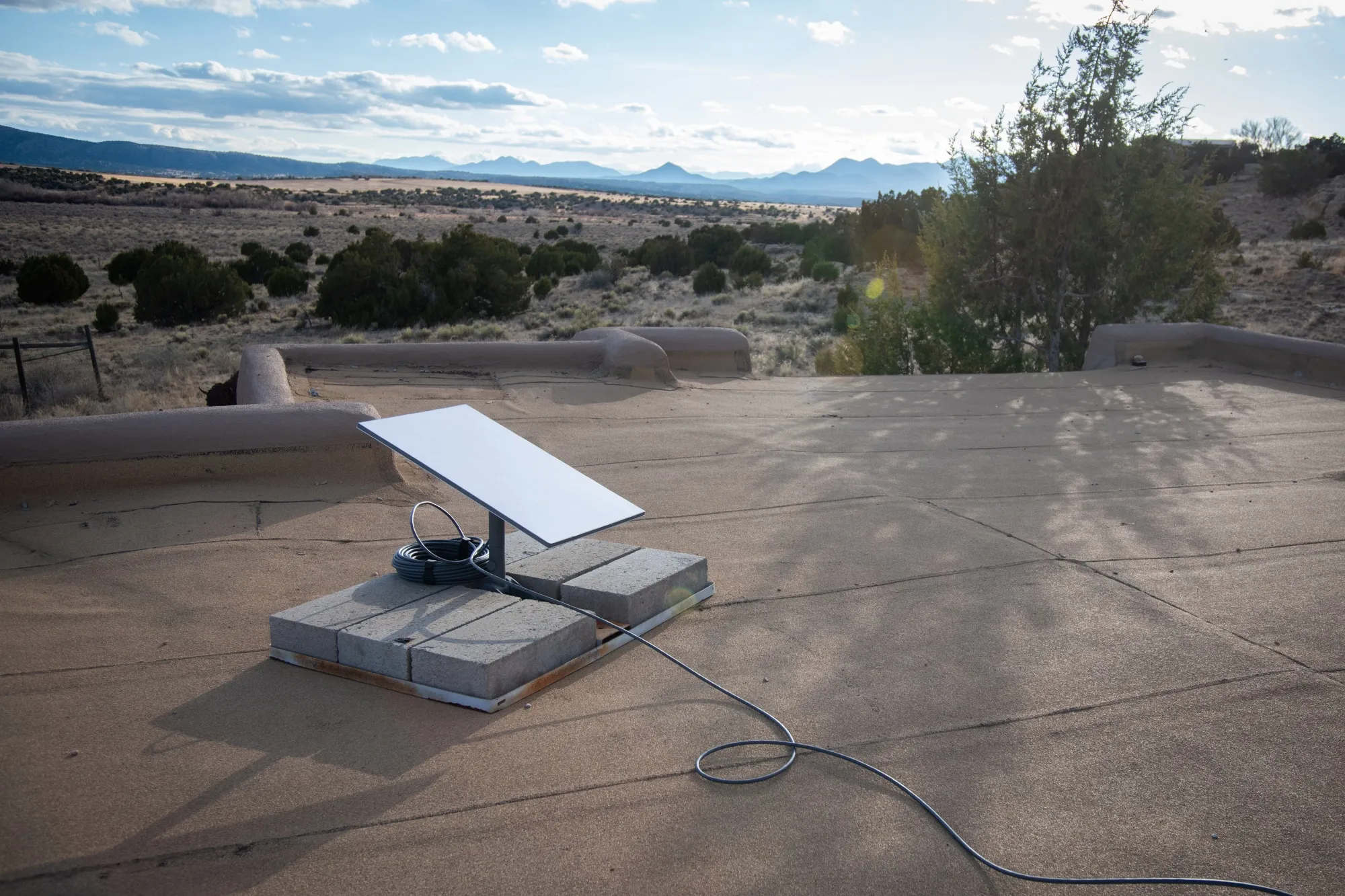
    Subscribers to KDDI’s satellite service in Japan can now access low-Earth orbit connectivity in remote areas across both partner markets without paying extra fees or filing advance applications. The service links directly with Starlink Mobile technology when users have a clear view of the sky, enabling text messaging, location sharing, and supported light data applications in regions where terrestrial cellular networks do not reach.

    Local carriers Globe Telecom in Manila and Spark in Auckland are serving as the operational partners for the rollout. Philippine coverage targets remote island corridors and dive destinations such as El Nido on Palawan Island, while New Zealand access focuses on national parks and backcountry wilderness areas.

    “By enabling access to Starlink Mobile’s satellite-powered text and light data services when overseas, we’re helping travelers stay connected in places where traditional mobile coverage isn’t available,” Spark Chief Customer Officer Mark Beder said.

    Regional race for direct-to-cell coverage

    Mobile operators across the Asia-Pacific region are increasingly turning to low-Earth orbit satellite constellations to eliminate dead zones across archipelagos and rugged terrain without building expensive land towers. By routing signals directly between standard consumer smartphones and satellites in orbit, carriers can maintain emergency contact channels for inbound tourists and rural communities without requiring dedicated satellite handsets.

    Globe and Spark are working to expand two-way satellite roaming for their own domestic customers as Starlink prepares broader direct-to-cell capabilities across the wider region.

  • Globe Telecom picks Canvas for automation

    Globe Telecom picks Canvas for automation

    Globe Telecom in the Philippines has turned to Canvas to become the platform that integrates service functionalities and help Globe automate its office processes.

    This move is expected to reduce costs, increase operational efficiency, and further enhance the operator’s commitment to environmental protection and conservation.

    More importantly, this will enable Globe to take on a bigger role in providing digital services such as billing, logistics and customer service as well as opening more avenues for access to the Internet of Things (IoT) for its customers, the telco said.

    In the near-term, as it streamlines internal processes, Globe expects to save more than 1.5 million administrative hours company-wide each year by digitizing various processes such as customer relationship management, billing and other administrative services.

    As part of their partnership agreement, Globe also intends to make Canvas more widely available to its business customer base, building on the early high adoption among some of the Philippines leading companies. Globe’s business customers are already using Canvas to realize benefits for their own customers such as an increased level of customer care and reduced costs for services.

    “As an enterprise, the digital transformation we have undertaken is part of our continuing commitment to adopting efficient and viable IT solutions that will improve the experience of our employees and customers,” said Ernest Cu, president and CEO of Globe.

    “This strategic partnership with Canvas allows us to offer our millions of business customers in the Philippines a chance at a transformation of their own with similar productivity gains and green benefits.”

  • Singtel and Globe launch Tustwave MSS in Philippines

    Singtel and Globe launch Tustwave MSS in Philippines

    Singapore’s Singtel is bringing its Trustwave portfolio of managed security services to the Philippines, in collaboration with Globe Telecom.

    Under the collaboration, Globe is providing Trustwave’s services through its advanced security operations center (ASOC) in Manila, a new facility operated by Singtel’s Trustwave subsidiary.

    Globe’s ASOC will combine threat intelligence from Globe with global threat visibility from the global network of nine Trustwave ASOCs.

    The services will be supported by an ecosystem of global cyber security providers including Palo Alto Networks, FireEye and Arbor Networks.

    Singtel acquired a 98% stake in Trustwave for $810 million in a deal announced in 2015. In December that year, Singtel and Globe also signed a memorandum of understanding to strengthen Globe’s cyber security capabilities.

    Singtel and its managed security services business unit Trustwave also recently expanded their collaboration with Palo Alto to bring managed security services to multi-national businesses and government agencies, and the new agreement extends Singtel and Trustwave’s partnership.

    “As the leading cyber security services provider in the region, our deep global capabilities allow Trustwave Managed Security Services to monitor, assess and defend our customers’ operations round-the-clock against cyber attacks,” Singtel CEO group enterprise and Trustwave chairman Bill Chang said.

    “The launch of Trustwave Managed Security Services is timely as it complements the Philippine government’s National Cybersecurity Plan 2022.”

    The government’s plan is aimed at safeguarding the Philippines’ critical information structures, as well as governments, businesses of any size and all citizens using the internet.

  • Ayala buys stake in Zalora Philippines

    Ayala buys stake in Zalora Philippines

    Ayala Corporation has stepped into eCommerce by acquiring a 49 per cent stake in BF Jade E-Service Philippines, which owns and runs fashion platform Zalora Philippines.

    The conglomerate has announced it is buying 43.3 per cent of BF Jade, while in a separate disclosure Ayala Land says it will own 1.91 per cent. BPI Capital Corporation and Kickstart Ventures also acquired minority stakes in BF-Jade. BPI and Kickstart are wholly owned subsidiaries of BPI and Globe Telecom respectively.

    Ayala’s involvement is part of its strategy to invest in new disruptive businesses offering innovation to evolving markets, the conglomerate says.

    “This investment demonstrates how we at Ayala look at innovation and growth opportunities,” says chairman/CEO Jaime Augusto Zobel de Ayala.

    “We see the potential of eCommerce in the country, and believe the Ayala group can benefit and add tremendous value to Zalora. With resources in banking, real estate and telecommunications, the investment presents new opportunities for Ayala to generate synergies throughout the eCommerce value chain.”

    Zalora Philippines was co-founded in 2012 as part of the global network of the Zalora Group, which is 100 per cent owned by the Global Fashion Group.

  • Nokia to supply Globe Telecom in the Philippines

    Nokia to supply Globe Telecom in the Philippines

    Nokia and Globe Telecom, a leading telecom operator in the Philippines, on 24 October signed two Memoranda of Confirmation frame agreements – one for wireless technologies and the other for IP, Optical and SDN technologies – under which Nokia will transform Globe Telecom’s current fixed and mobile networks into a more robust network that will help Globe meet the country’s burgeoning and future digital demands.

    This will enable Globe Telecom’s move to Cloud and IoT-ready networks and 5G.

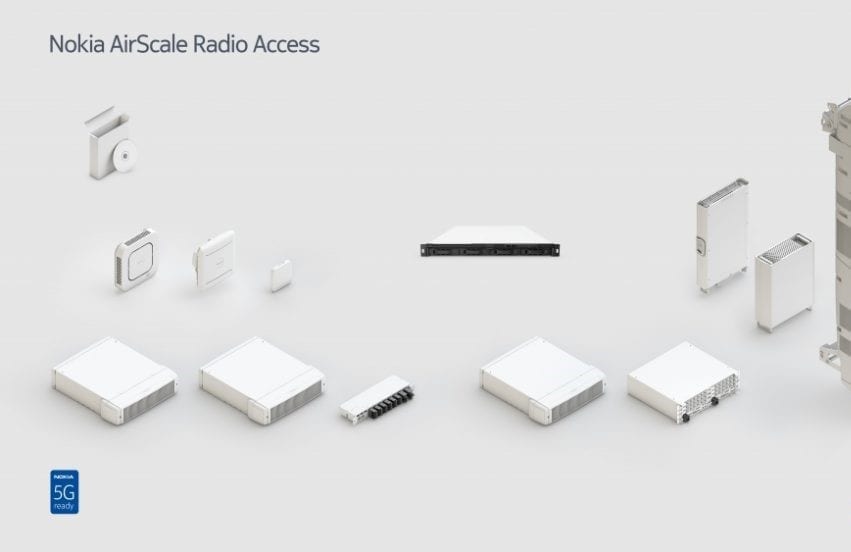
    Under the agreements, Globe Telecom will transition to a flexible cloud-based network infrastructure, with Nokia’s 5G-ready AirScale radio access and IP, optical and carrier SDN technology solutions providing seamless connectivity to consumers and enterprise customers. The modernized Globe network will also allow it to support the Philippine government’s initiative to further expand the availability of broadband services in the country.

    The mobile network frame agreement between Nokia and Globe Telecom follows the operator’s recent access to new LTE spectrum. Nokia will deploy its 4.5G Pro technology using the 5G-ready AirScale Base Station and Flexi Zone small cells, managed by NetAct, in the Visayas and Mindanao regions, providing broadband access to some areas in these regions for the first time. Globe will also be enabled to use Mobile Edge Computing and advanced carrier aggregation techniques to deliver virtually unlimited scalability and dramatic improvements in speeds and capacity that will deliver compelling new services. The technology will also enable lower power consumption, reduced operating costs, more network automation and enhanced network performance as it transforms Globe Telecom’s customer experience for a subscriber base growing at 10 percent annually, as well as meeting increasing demand from IoT devices.

    In the second frame agreement, Nokia will deliver its integrated IP and optical networking and carrier SDN technologies across the Philippines to enhance the agility, quality, performance, coverage and capacity of Globe Telecom’s enterprise data services network. This will allow Globe to deliver coverage to more regions including in the ARMM, such as Lanao del Sur, Maguindanao, Basilan, Sulu and Tawi-Tawi. Using Nokia’s carrier SDN platform, Globe will also be able to provide flexible data services such as bandwidth-on-demand nationwide, and expand its offer to thousands of enterprise customers, global service providers and local government agencies as well as those serving the Information Technology-Business Process Outsourcing (IT-BPO), hospitality, education, manufacturing, retail, healthcare, logistics and finance industries.

    “As the Philippines’ leading fixed and mobile service provider, we are devoted to improving people’s connected lives day-by-day. With Nokia’s innovative technologies, we are confident to lead the 5G and cloud network evolution,” said Ernest L. Cu, president and CEO of Globe Telecom.

    “This is a significant agreement with a longstanding technology partner, and strengthens Nokia’s position as Globe Telecom’s premier provider of end-to-end technology solutions. We are committed to delivering technologies that allow operators to transition smoothly to intelligent, future-proof networks, offering seamless connectivity and changing how people communicate and connect,” said Mike Wang, head of the joint management team in China at Nokia.

  • Globe Telecom expands Cartoon Network app in Philippines

    Globe Telecom expands Cartoon Network app in Philippines

    Globe Telecom in the Philippines is providing a major enhancement to its Cartoon Network Watch and Play app, allowing customers to livestream Cartoon Network and on-demand content via a new authenticated service.

    Globe customers will soon be able to log in to the free app using their username and password to unlock an array of value-added services, which includes livestreaming the channel on devices, games and access to full episodes on demand.

    In addition, Cartoon Network Anything – a micro-network that presents short-form content – is now offered as part of the Globe app bundle.

    “This partnership creates a truly unique and enjoyable second-screen brand experience for kids to enjoy and for parents to trust,” said Phil Nelson, Turner’s managing director in Southeast Asia.

    Both apps let kids enjoy their favorite characters and shows whenever. Fueling their imagination, they allow them to be a hero with Ben 10 and the Omnitrix, rule the Candy Kingdom with Princess Bubblegum, flip out with The Powerpuff Girls, or embark on mathematical adventures with Finn and Jake whenever they want.

    “Together with Turner, we are able to give our customers a more wonderful digital entertainment experience on mobile,” said Dan Horan, Globe senior advisor for consumer business.

    Dedicated data usage for the apps will be offset via a data wallet system, available via users’ subscription plans, meaning they won’t have to worry about eating into their monthly allowance.

  • AirAsia’s Tune Labs, rewards program startup ZAP form JV

    AirAsia’s Tune Labs, rewards program startup ZAP form JV

    The partnership will see AirAsia BIG, the loyalty program for AirAsia and the Tune group of companies, leverage on ZAP’s platform to allow BIG members to earn and redeem points from daily purchases at physical stores with just a mobile number.

    Based in Kuala Lumpur, Malaysia, Tune Labs was launched last April 2015 as a startup incubator and accelerator program aimed mostly at the Southeast Asia region. Its goal is to identify, fund and nurture early stage companies in the travel, finance and retail sectors.

    The advanced AirAsia BIG loyalty program will be launched in the third quarter of this year tartegeting over 100 partner establishments in Kuala Lumpur, Malaysia before expanding to neighboring countries in Southeast Asia. Partners will include restaurants, services, and retail shops in commercial centers.

    AirAsia BIG has over 17 million members across the Asia-Pacific region and was recently named Loyalty Programme of the Year at the 2016 Loyalty & Engagement Awards.

    AirAsia BIG CEO Eddy Leong said customer loyalty is a large part of AirAsia’s success and the joint venture is part of their retail strategy.

    “ZAP is the tech partner to help AirAsia BIG achieve our goal of having loyal customers earn BIG points and redeem for their flights faster and easier than ever, by rewarding members’ everyday life,” Leong said.

    According to ZAP CEO Dustin Cheng, the partnership will fast-track ZAP’s expansion through the region.

    “The joint venture allows us to leverage on millions of AirAsia’s customers,” Cheng said. “Our goal in ZAP has always been to empower merchants of all sizes with an easy-to-use loyalty and CRM platform.”

    Founded in 2012, as a mobile number-based loyalty program for brick-and-mortar merchants, ZAP is one of 26 digital tech startups funded by Kickstart Ventures Inc, a wholly-owned venture capital subsidiary of Globe Telecom Inc.

    ZAP today caters to over 300,000 members and works with close to a thousand partner establishments within Metro Manila in the Philippines.

    Kickstart president Minette Navarrete said the ZAP co-founders have the high energy and agility to expand across the region, and the joint venture capitalizes on AirAsia BIG’s scale and ZAP’s growth momentum.

    “AirAsia and the Tune group of companies are among Southeast Asia’s success stories, with an ethos we truly admire. The ZAP founders have proven their ability to effectively drive customer and revenue growth, and adoption of a technology platform in a high-touch retail environment,” Navarrete said.


  • Globe defends need for 700-MHz to ISOC

    Globe defends need for 700-MHz to ISOC

    Globe Telecom has challenged the Internet Society-Philippines Chapter (ISOC) move to oppose Globe and PLDT’s proposed joint acquisition of San Miguel Corporation’s telecoms assets, including its 700-MHz spectrum holdings.

    ISOC recently wrote to the Philippine Competition Commission opposing the planned acquisition on grounds including the argument that there is nothing special about the 700-MHz band in particular.

    Globe chief technology and information officer Gil B. Genio has written his own letter to the society to clarify what the company called “erroneous facts” presented in the society’s objections.

    He said the 700-MHz band would allow the operator to expand its LTE footprint to areas that were previously unserved even by 3G.

    “The 700-MHz provides an additional capacity layer over existing 3G and LTE capacity layers using frequencies on the 1800-MHz, 2100-MHz band and the 2500-MHz bands. As a result of this layer, customers at the cell edge coverage of the high frequency capacity layers are served by the 700 MHz providing better experience to these customers,” he said.

    “As an off-shoot of these, the 3G and 4G layers using high frequency band are offloaded, providing additional capacity for better mobile data experience of our customers. Aside from its ability to carry information, the use of the 700-MHz band provides better coverage versus higher frequency bands (such as 2300 or 2600), and therefore mobile service providers can support more high speed users using the same tower or cell site footprint that currently exists today.”

    In response to ISOC’s argument that it is possible to deliver strong wireline connectivity without specturm assets, Genio said Globe has been seeking to aggressively roll out fiber in key cities.

    But he added that these efforts have been hampered by bureaucratic red tape as well as the challenges of providing effective backhaul to an archipelagic country.

    “We want to underscore the fact there has been a history of underinvestment in fixed broadband infrastructure in this country, which is why we are on catch up mode to lay down as much fiber optic cables in our primary cities and key development areas as we can,” he said.

    “Our situation in the Philippines is different compared to others as our primary means of broadband access remains wireless (mobile) broadband for now. In using wireless technology, it is more pervasive, however over the long term, it will have difficulty in matching the throughput rates or speed of fixed broadband network. Hence our desire to build more infrastructure as fast as we can.”

  • Globe expands operations in Japan, refocuses Europe retail operations

    Globe expands operations in Japan, refocuses Europe retail operations

    Globe Telecom announced that it has expanded its operations in Asia with the establishment of GlobeTel Japan, Inc.  With this office in Tokyo, the company is in a better position to serve the communications needs of customers in the Philippines as well as the 180,000 overseas Filipinos in Japan.

    globe logo

    “We will continue to provide affordable and high-quality telecom services to our kababayans in Japan. We will also be adopting new business models to deliver meaningful products to overseas Filipinos,” said Nikko Acosta, Globe SVP for International Business.

    With the changing competitive landscape in Europe, Globe also announced it will close its offices in the UK, Italy, and Spain.  However, to continue serving its customers in the said countries, Globe maintained its popular telebabad service, DUO International, in the said markets through existing partnerships with telecom providers.

    The three offices are UK Globetel Limited and Globe Mobile Italy s.r.l., both opened in 2013, and Globete Internacional European Espana S.L. which started operations in 2014.  They are all members of the Globe Group of Companies.

    In accordance with its international business alignment, Globe will retain its offices in the USA, Singapore, and Hong Kong, as well as retail presence across key markets such as the Kingdom of Saudi Arabia and the United Arab Emirates. For more information on the international services of Globe, visit www.globe.com.ph/international.


  • Globe Telecom launches media content studio

    Globe Telecom launches media content studio

    The Philippines’ Globe Telecom has entered the entertainment production business with a new studio and content partnerships aimed at developing content tailored for mobile consumption.

    The operator has announced the launch of Globe Studios, which will develop original video productions for modern audiences accustomed to consuming and sharing content through social media via mobile pones.

    Globe Studios is backed by local and Asian media houses including Viva Films, Reality Entertainment, Quantum Films, Spring Films and Astro of Malaysia.

    “Consumption of mobile entertainment has grown exponentially over the past years. Today, customers no longer wait for their favorite shows on their TV screens. Instead, they dictate what they want to watch when and where they want to,” Globe chief commercial officer Albert de Larrazabal said.

    “With Globe Studios, we will now produce our own clips, series and even movies. Backed up with the biggest director partners and entertainment companies in the industry, we are set to show what customers want today.”

    In addition, Globe has announced the launch of Globe Live, which will produce live shows and events. Globe Live’s first production will be a Philippine staging of the Broadway musical Green Day’s American Idiot.

    To support its media ambitions Globe has formed new content partnerships, including becoming the first mobile and broadband Philippine partner for Netflix.

  • Filipino telco unveils new retail concept

    Filipino telco unveils new retail concept

    Globe Telecom has simultaneously opened the first three stores in a new retail format named Generation 3.

    The Globe Gen3 format was designed by Tim Kobe, founder and CEO of Eight, Inc, whose most famous work is the Apple Store in New York.

    Globe says the colourful stores designed to engage with customers, set a new global standard in telco retail experience. The first three opened in SM North Edsa, Quezon City, Manila and in Limketkai Mall, Cagayan de Oro.

    “The Globe Gen3 stores will further engage and delight customers by fueling their passion in the areas of music, entertainment, productivity, and life,” the company said in a statement.

    “Globe is proud to bring to Filipino consumers another world-standard differentiated experience. Our passion for our customers inspires us to end the year on a high note by bringing innovation a notch higher in our stores, one of our key customer touch points, allowing us to truly empower our customers’ digital lifestyles,” said Ernest Cu, Globe president and CEO.

    Apart from reconfigured store displays, customers can also check out the Play Bar to explore the different featured apps and sit through one-on-one service consultations. Self-service tools are available that allow better interaction with customer representatives through a video hotline.

    “Exciting, unexpected, and experiential are the words to describe our Gen3 Stores. The concept and design of the Gen3 Stores have undergone intense research and consultation with the world’s top-notch designers and architecture experts. We are inviting customers to explore and be inspired by the stores’ four zones—music, entertainment, productivity, and life so they can fully enjoy a wonderful world,” said Joe Caliro, Globe head of retail transformation and management.

    The Globe Gen3 stores are home to various lifestyle zones with stories and exciting features for customers to experience and enjoy. These zones feature latest trends in product, people and even in business. Various lifestyle vignettes illustrate mobile and broadband technologies as connected solutions – featuring the latest devices, apps, digital connectors gadgets and services that contribute to the total interactive customer experience.

    The lifestyle zones will also highlight the stories of brand ambassadors every quarter. The store is a platform for the introduction of “must-watch personalities who are blazing new trails in their respective Art, Community and Technology spaces”.

    For the first quarter of 2015, with Music as the main theme, Globe Gen3 will feature four popular DJs: DJ Badkiss, Callum David, Mars Miranda, and Eric Capilli – who all have inspiring success stories in their chosen career. In the coming months, it will also feature the inspiring story of JR Dela Paz, a Globe myBusiness ambassador and owner of fast-rising restaurant chain Size Matters.

    The Globe Gen3 Store will also serve as a venue to introduce the latest products, devices, and services offered by Globe. To start, it is the first retailer in Asia to introduce and carry Google Cardboard, the fold-your-own virtual reality headset.

    On his design plan for Gen3, Tim Kobe shared: “The space is dynamic. It changes with new stories and experiences that support different events and moments. We have elements that move and reconfigure, the way entertainment venues support great concerts or shows.

    “Retail is one touch point where brands build relationships and sell products and services. It is important today to have a place to demonstrate what you stand for. More than 50 per cent of the reason why someone engages with a brand comes from word of mouth. Interestingly, 80 per cent of word of mouth comes from direct experience. Designing the experience is critical to building brand advocates.”

    Leading up to the launch of the Gen3 Stores, Globe collaborated with homegrown Philippine artists who took part in one of the telco’s biggest transformation projects to better serve its customers. Led by multi-awarded artist Ross Capili, the artists turned their design inspirations into live art galleries, showcasing murals exhibiting Globe’s brilliant vision, complementing the look, feel, and experience of its Gen3 Stores.

    By 2015, Globe is set to convert more of its existing stores into the Gen3 format.