Retail News CRM

Tag: Go Jek

  • Indonesia’s Go-Jek invests in online media startup

    Indonesia’s Go-Jek invests in online media startup

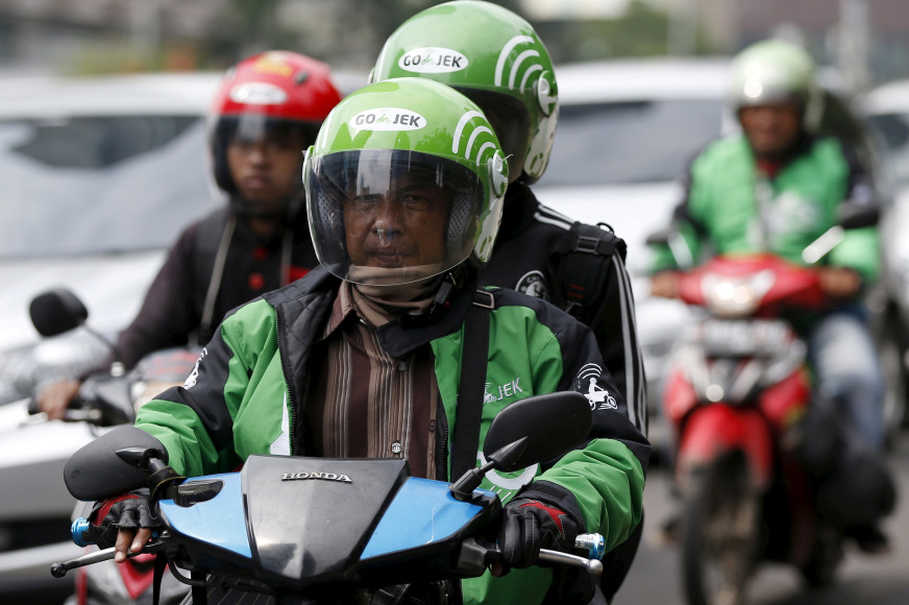
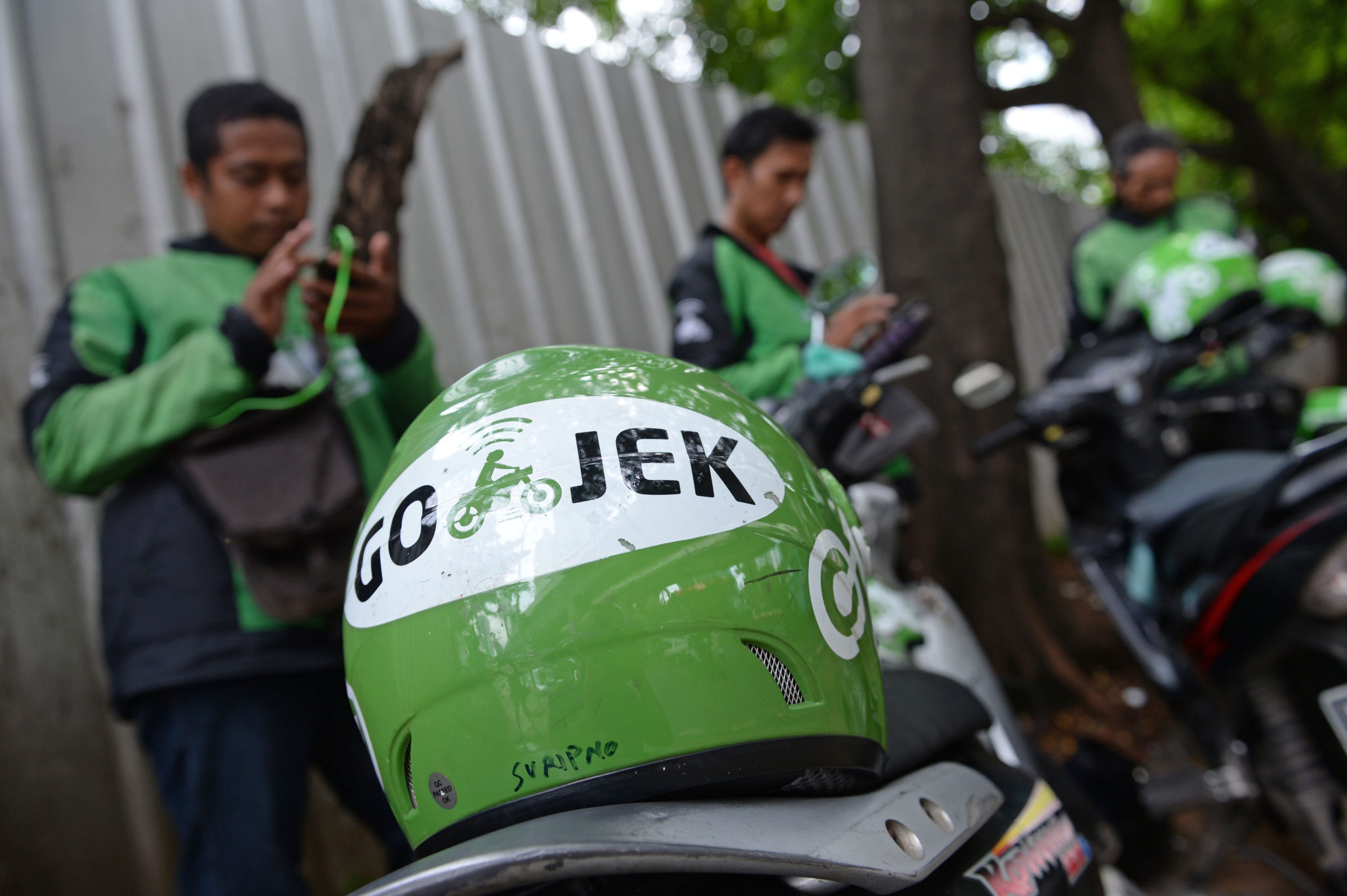
    Indonesian ride-hailing and online payment company Go-Jek has invested in digital media startup Kumparan as part of its expansion into online content, it said.

    Go-Jek, whose backers include Alphabet’s Google and China’s Tencent Holdings, has grown rapidly since launching eight years ago in Indonesia, a country with a population of more than 250 million people.

    The company already offers a wide range of app-based services outside ride-hailing, such as food delivery and movie tickets, as it competes with the other main ride-hailing app operating in Indonesia, Singapore-based Grab, which bought the Southeast Asian business of Uber this year.

    Go-Jek said the investment in Jakarta-based media startup Kumparan had been done through its recently launched venture capital arm Go-Ventures, but did not disclose the size of its funding.

    Kumparan is a hybrid news and social media platform that enables users to create content. “There will be a series of strategic collaborations that we are exploring with Kumparan in supporting Indonesia’s technological developments,” said Go-Jek’s corporate affairs chief Nila Marita.

    Go-Jek is betting heavily on becoming an online multimedia content provider for Indonesia and set up its own in-house studio in 2018 to produce original films, in partnership with local film production houses. The company plans to eventually launch a subscription-based original content service.

    “At present, we are still in the exploration phase of the concept related to the creation of creative content,” a spokesperson for Go-Jek said. “As a local company, Go-Jek will continue to support local content creators.”
  • Go-Jek Aims to Raise $2b for Southeast Asia Expansion

    Go-Jek Aims to Raise $2b for Southeast Asia Expansion

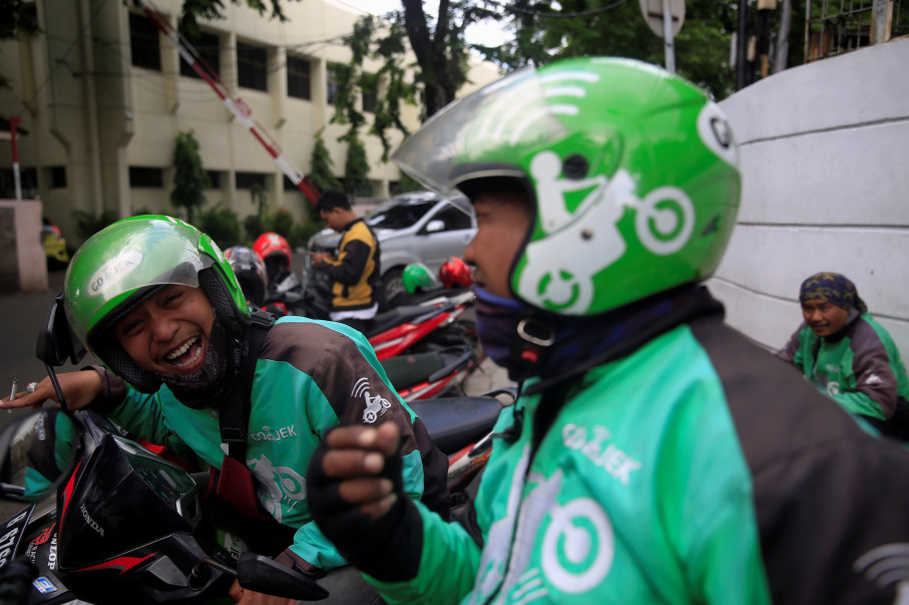
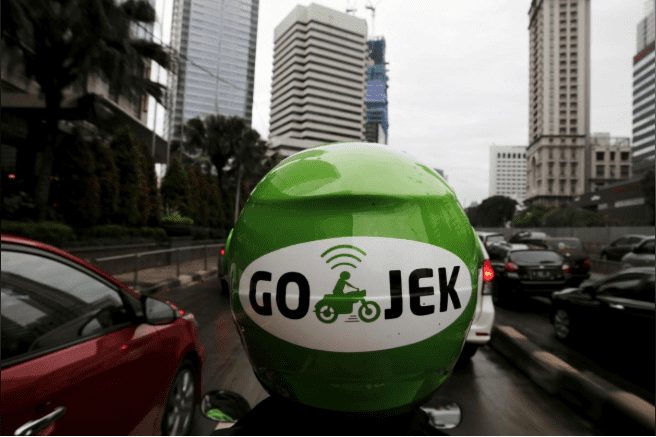
    Indonesian ride-hailing firm Go-Jek is seeking to raise about $2 billion from existing investors, including Tencent Holdings and JD.com, to fund its expansion plans in Southeast Asia, sources familiar with the matter said on Monday (17/09).

    Go-Jek’s fundraising comes as its main rival Singapore-based Grab is also building a war chest to transform itself into a consumer technology group and aggressively grow in Indonesia, Southeast Asia’s biggest economy.

    Both Go-Jek and Grab are raising billions of dollars and investing hundreds of millions of dollars in the race to gain dominance in Southeast Asia. More and more of the region’s 640 million consumers are going online, and starting to make use of smartphones to shop, commute and make payments.

    “Chinese investors have very, very deep pockets but the total amount depends on how demand shapes up,” said one source who was not authorised to speak to the media. Go-Jek’s other existing investors include private equity firms Warburg Pincus and KKR.

    Indonesia — home to 250 million-plus people — is shaping up as a battleground for global tech giants such as Alibaba , Tencent, JD.com, Google and Softbank Group in the fight for market share in ride-hailing, online payments and e-commerce.

    Launched in 2011 in Jakarta, Go-Jek — a play on the local word for motorbike taxis — has evolved from a ride-hailing service to a one-stop app through which its customers can make online payments and order everything from food, groceries to massages.

    Go-Jek said in May it would invest $500 million to enter Vietnam, Singapore, Thailand and the Philippines, after Uber struck a deal to sell its Southeast Asian operations to Grab.

    Go-Jek was last estimated to have a valuation of about $5 billion when Google, Singapore state investor Temasek Holdings and others came in as investors in its $1.5 billion funding earlier this year.

    The new funding is set to be completed later this year, the sources said.

    Go-Jek and JD.com declined to comment. There was no immediate response from Tencent.

    Go-Jek founder and CEO Nadiem Makarim said last month the company was seeing strong funding interest from its backers as it targets an aggressive expansion.

    Go-Jek is a dominant force in Indonesia, where it processes more than 100 million transactions for its 20-25 million monthly users.

    Ride hailing services in Southeast Asia are expected to surge to $20.1 billion in gross merchandise value by 2025 from $5.1 billion in 2017, according to a Google-Temasek report.

    Bloomberg reported news of Go-Jek’s fundraising late on Sunday.

  • Go-Jek Close to Profit in All Segments, Except Transportation

    Go-Jek Close to Profit in All Segments, Except Transportation

    Go-Jek, Indonesia’s first billion-dollar startup, is “extremely close” to achieving profitability in all its segments, except transportation, its founder and chief executive, Nadiem Makarim said.

    Launched in Jakarta in 2011, Go-Jek – a play on the local word for motorbike taxis – has evolved from a ride-hailing service to a one-stop app allowing clients in Southeast Asia’s largest economy to make online payments and order everything from food, groceries to massages.

    “We’re seeing enormous online-to-offline traction for all of our businesses and are close to being profitable, outside of transportation,” the 34-year old chief executive said.

    The startup is expected to be fully profitable “probably” within the next few years, Nadiem added.

    Already a market leader in Indonesia, where it processes more than 100 million transactions for its 20-25 million monthly users, Go-Jek is now looking to expand in Southeast Asia.

    Ride-hailing services in Southeast Asia are expected to surge to $20.1 billion in gross merchandise value by 2025 from $5.1 billion in 2017, according to a Google-Temasek report.

    Go-Jek said in May that it would invest $500 million to enter Vietnam, Singapore, Thailand and the Philippines after Uber struck a deal to sell its Southeast Asian operations to Grab – the bigger player in the region.

    Go-Jek is seeing strong funding interest from its backers as it targets an aggressive expansion, Nadiem said.

    “Since its Aug. 1 launch, the app has already grabbed 15 percent of market share in Ho Chi Minh,” Nadiem said. The firm this week opened recruitment for motorcycle drivers in Thailand.

    The startup expects anti-monopoly concerns swirling around the Grab-Uber deal, which Singapore said had substantially hurt competition, to help clear a path for its expansion.

    “We’re bringing back choice. The Singapore government is particularly eager to bring back competition,” Nadiem said, adding that the order of overseas rollouts had not been set.

    Overseas Push

    Go-Jek’s offshore push comes at a time when Singapore-based Grab is stepping up funding to expand in Indonesia and transform itself into a consumer technology company, starting with a partnership with online grocer HappyFresh.

    “Mimicking Go-Jek’s strategy is the highest form of flattery,” Nadiem laughed.

    “The super app strategy has been around for a while now and no Southeast Asian player can claim to have pioneered it,” Grab said in a statement. The company also said Grab has not lost market share in Ho Chi Minh City since August, but declined to provide market share data.

    Nadiem believes Go-Jek’s understanding of food merchants will give it an edge over Grab, which counts investors such as Chinese ride-hailing firm Didi Chuxing and Japan’s SoftBank Group among its backers.

    Nadiem, who sees food delivery as Go-Jek’s core business, said he was not concerned about funding, without giving details.

    Go-Jek was reported in June as being in talks to raise $1.5 billion in a new funding round and was valued at about $5 billion in a prior fundraising, sources said. The firm had said in March it was considering a domestic initial public offering.

    Nadiem noted Go-Jek’s backers were sharing both capital and expertise. The company is collaborating with Google on platform mobility, Tencent on payments strategy, JD.com on logistics operations and Meituan Dianping on merchant transactions and deliveries.

    Go-Jek has set up a venture capital arm, Go-Ventures, to invest in startups in Southeast Asia “with strategic importance to our business,” the chief executive said.

  • Go-Viet perks up competition in Vietnam’s ride-sharing market

    Go-Viet perks up competition in Vietnam’s ride-sharing market

    Go-Viet’s attractive perks for drivers are motivating many to shift from Grab, and the market leader is responding.

    He’s one of the first drivers to sign up with ride-sharing service Go-Viet, but Thanh Hung is still wearing the well-recognized green GrabBike uniform.

    “Too many drivers have just signed up for Go-Viet so there are not enough jackets,” Hung said.

    The 40-year-old motorbike driver said he was able to make VND800,000 ($34) in a day and a half since he began driving for Go-Viet, much higher than the VND500,000 ($21) he would get from GrabBike for the same work duration.

    Hung said he is also attracted by the tax exemption Go-Viet promises for the first six months and the bonus he’ll get if he finishes nine trips a day.

    Go-Viet, a Vietnamese version of Indonesian service Go-Jek, entered the Vietnamese market early this month, seeking its slice of the market pie that Grab has been dominating after the departure of Uber.

    Aiming to tailor its service to Vietnam with a different name and local teams, one of the first goals of Go-Jek in the country is to recruit drivers.

    “The company hopes to bring a stable income to tens of thousands of drivers through technology,” Nguyen Vu Duc, CEO of Go-Viet said in June.

    The company had contacted potential drivers months before the launch, either by meeting face to face or talking to them online, its communication representative Huong Cung said.

    Grab did not comment on the ploys Go-Viet is using to attract drivers, but it’s also deploying its own strategies.

    The company has just launched a campaign to reward drivers with five percent of the total revenue they make in a week, said Nguyen Thu An, communication director of Grab Vietnam.

    In early June, Grab also announced a plan to have over 100 stops for Grab drivers with free wifi, coffee and even vehicle washing service in Ho Chi Minh City and Hanoi.

    “There is a large number of drivers who don’t like Grab and want to work for Go-Viet,” said Vu Hoang Tam, a mobile app expert and one of the founding members of GrabBike in Vietnam.

    This creates a good supply of drivers for Go-Viet, which has learned a lot from the “previous battle,” Tam said, referring to the competition between Grab and Uber earlier this year.

  • Indonesian Conglomerates-Backed Tech Fund to Be Launched in 6 Months

    Indonesian Conglomerates-Backed Tech Fund to Be Launched in 6 Months

    An Indonesian tech venture capital fund backed by the country’s largest conglomerates will be launched within the next six months, Communications Minister Rudiantara said.

    “We, Indonesian investors, must immediately enter the tech market,” the minister said on Thursday (05/07).

    He said the fund, which would be pooled from Indonesian conglomerates, was supported by his ministry, with its structure being discussed with the Financial Services Authority (OJK).

    The size of the fund has not been disclosed.

    Rudiantara said he held discussions with local conglomerates on how they should unite and support “series A, B and C” as well as “unicorns,” a term used for startups worth at least $1 billion.

    The Sinar Mas Group, one of Indonesia’s largest conglomerates, previously said that it would invest in a pooled venture fund supported by the government.

    The country’s startup sector has witnessed a boom as investors are lured by the youthful demographic in the nation of more than 250 million people, who resort to online shopping for everything from tickets to electronic gadgets.

    “While two national conglomerates such as Djarum and Astra became investors in a ‘unicorn’ such as Go-Jek, it is not enough,” the minister said.

    The country has four “unicorns,” including ride-hailing service Go-Jek, travel site Traveloka and market places Bukalapak and Tokopedia.


  • Go-Jek to launch ride-hailing services in Vietnam

    Go-Jek to launch ride-hailing services in Vietnam

    Indonesian ride-hailing app Go-Jek will officially launch in Vietnam this July under the brand name of Go-Viet.

    The firm will be run by a group of Vietnamese managers.

    Go-Jek will provide Go-Viet with financial and technological backing, as well managerial inputs.

    “We believe that these in-country teams have the knowledge and experience to make the businesses in Vietnam a huge success,” said Nadiem Makarim, Go-Jek CEO and founder.

    He said local teams will have in-depth knowledge and expertise to operate in Vietnamese market.

    The app would first offer ride-hailing and on-demand logistics services to customers in HCMC before expanding to other cities and provinces with food delivery and other services.

    The launch of Go-Viet in Vietnam is part of Go-Jek’s plan to expand to Southeast Asian markets, including Vietnam, Thailand, Singapore and Philippines.

    Founded in 2010, Go-Jek has raised over $1.5 billion from investors like Google and China’s Tencent Holdings.

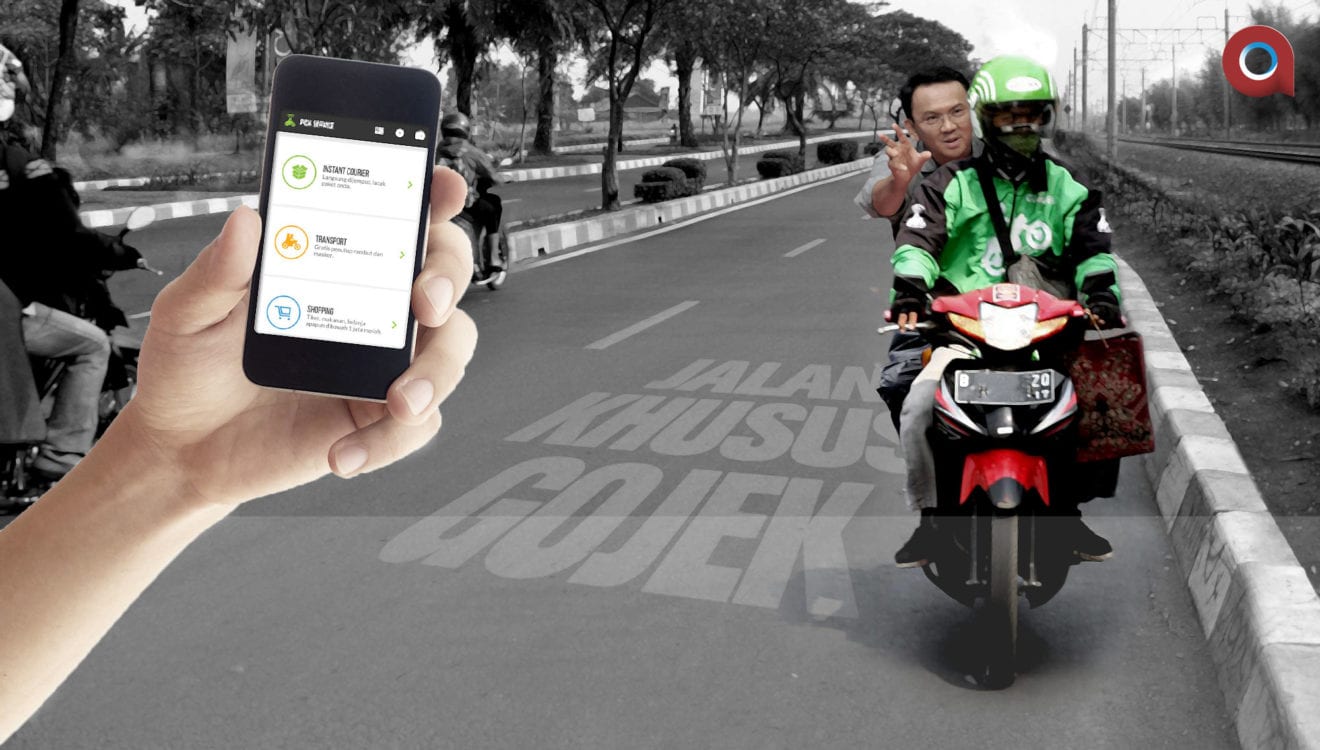
    Starting out as a phone-based motorbike ride-hailing app, Go-Jek is now a digital platform which offers transportation, logistics and delivery services.

    Go-Jek isn’t the only firm vying for a spot in Vietnam’s transport market. Singapore based blockchain-powered ride-hailing app MVL is also on the verge of entering.

    Ever since Uber left Vietnam in April, Grab has dominated the local market, and authorities are investigating possible breaches of anti-trust laws.

  • Ride-Hailing Firm Go-Jek to Expand Abroad

    Ride-Hailing Firm Go-Jek to Expand Abroad

    Indonesian ride-hailing and online payment firm Go-Jek on Thursday said it would enter Vietnam, Thailand, Singapore and the Philippines in the next few months, investing $500 million in its international push.

    The move will start with ride-hailing services before expanding to other sectors, Go-Jek said in a statement.

    “People in Vietnam, Thailand, Singapore and the Philippines don’t feel that they’re getting enough [choice] when it comes to ride-hailing,” chief executive Nadiem Makarim said in the statement.

    The announcement comes after Uber Technologies Inc sold its Southeast Asian operations to local competitor Grab.

    Go-Jek said it was working with regulators and other stakeholders across the region to prepare for the new operations.

    The expansion follows Go-Jek’s latest round of fundraising, which brought investment from companies including Astra International, JD.COM, Tencent and Temasek.

  • Indonesia’s Go-Jek Poised for Imminent Southeast Asia Expansion

    Indonesia’s Go-Jek Poised for Imminent Southeast Asia Expansion

    Indonesian ride-hailing and online payment company Go-Jek is set to announce its first expansion to another country in Southeast Asia in the “next few weeks,”.

    Go-Jek also plans to expand to three other Southeast Asian countries by the middle of this year, the email quoting Go-Jek chief executive Nadiem Makarim said.

    News of the plans come after Uber Technologies agreed this week to sell its Southeast Asian business to regional rival Grab.

    The industry’s first big consolidation in Southeast Asia, home to about 640 million people, could put pressure on Go-Jek, which is backed by Alphabet’s Google and China’s Tencent Holdings.

    Nadiem described that Uber deal as a “great opportunity” because “fewer players means a smoother path to continued and deepened market leadership” for Go-Jek in Indonesia.

    Ride-hailing companies throughout Asia have relied heavily on discounts and promotions, driving down profit margins and increasing pressure for sector consolidation.

    Go-Jek, a play on the local word for motorbike taxis, has grown rapidly since the startup launched eight years ago in Indonesia, a county with a population of more than 250 million people.

    Customers can get drivers to deliver everything from meals and to cleaners and hairdressers, via a smartphone app – helping it become a crucial workaround in cities such as Jakarta with some of the worst traffic in the world.

    Nadiem did not name the countries targeted for expansion in the email, but Go-Jek’s chief technology officer has previously said it aimed to set up operations in the Philippines this year.

    “Preparations are well under way and within the next few weeks our first new country launch will be announced,” the email quoted Nadiem as saying.

    “This will be followed by three other countries in Southeast Asia by the middle of the year.”

    Citing the financial and strategic backing of its local and global partners, he added: “We are confident that we have more than enough support to take one of the most amazing growth stories in the world from being an Indonesian phenomenon to a global one.”

    Google, Singapore investor Temasek and China’s Meituan-Dianping are among investors in Go-Jek as part of a major fund-raising round.

    Makarim said that a “significant portion” of capital raised has been set aside for international expansion.

  • Indonesia’s Go-Jek Considering IPO, Timeframe Undecided

    Indonesia’s Go-Jek Considering IPO, Timeframe Undecided

    Indonesian start-up Go-Jek is considering an initial public offering, president Andre Soelistyo said on Monday (05/03), but details on timing and float size haven’t been decided yet.

    Andre met with Indonesia Stock Exchange chief executive on Monday to discuss the potential share sale, including a regulatory requirement to be profitable within two years of listing.

    “We discussed what technology companies need [to do an IPO] and how [the exchange] can provide access,” he said.

    Andre also raised the possibility of a dual-listing after Indonesia, but said a decision on where hasn’t been made.

    Go-Jek is yet to appoint an underwriter for the plan, Andre said, in a sign that details around IPO size, company valuation and how much of the firm will be listed are some way off.

    Go-Jek delivers everything from meals and groceries to cleaners, masseuses and hairdressers across Indonesia’s capital city Jakarta, all at the touch of a smartphone app — helping it become a crucial workaround in a city with some of the worst traffic in the world.

    Bankers have listed Go-Jek’s potential IPO as a key float to track in Asia’s ride-hailing and mobile payments market, which has caught the attention of global investors.

    Go-Jek raised a higher than targeted $1.5 billion in a fundraising round from several investors including Google, Temasek Holdings and Chinese technology giants Tencent Holdings and JD.com, sources said last month.

    The latest round of investments valued Go-Jek at about $5 billion, the sources said.

    Rivals Grab and Uber are backed by Japan’s SoftBank Group.

    Go-Jek plans to expand its business beyond Indonesian borders by setting up operations in the Philippines in early 2018, with other Southeast Asian countries to follow later that year, it’s chief technology officer said in December.

    On top of that, Go-Jek has said it will roll out new services soon, including installing charging stations in retail outlets that users can access through their app. The company also plans to launch a laundry pick-up and delivery service to their already extensive services.

  • Google, Temasek Coming in as New Investors in Indonesia’s Go-Jek

    Google, Temasek Coming in as New Investors in Indonesia’s Go-Jek

    Google, Singapore state investor Temasek Holdings and Chinese online platform Meituan-Dianping are investing in a fundraising round of Indonesian ride-hailing startup Go-Jek, sources familiar with the matter said.

    Go-Jek’s existing investors, such as global private equity firms KKR & Co and Warburg Pincus, are also participating in the funding round, which is raising about $1.2 billion in total, the sources said.

    They said the funding round opened last year and is expected to close in a few weeks.

    The funding by prominent investors including Google gives Go-Jek greater firepower to tackle competition at home from Grab and Uber Technologies, which are viewing Indonesia, Southeast Asia’s most populous country, as a large potential market.

    “As a strategic investor, Google can add a lot to Go-Jek’s business,” said one source.

    It was not immediately clear how much the investors are pumping in individually.

    Google, KKR, Warburg and Temasek declined to comment. Meituan-Dianping and Go-Jek did not immediately respond to requests for comment. The people declined to be identified as they were not authorized to speak to the media.

    Go-Jek, which began as a ride-hailing app for motorcycle taxis, operates mainly in Indonesia but is developing a food delivery business. Its mobile payment business, Go-Pay, is also growing rapidly.

    Reuters reported last year that JD.com was investing about $100 million in Go-Jek. This followed an investment by Chinese social media and online entertainment firm Tencent Holdings, which is also an investor in JD.com.

  • China’s JD.com Eyes Indonesia with Investment of Go-Jek

    China’s JD.com Eyes Indonesia with Investment of Go-Jek

    The move by China-based tech firms into Southeast Asia continues apace. But the ranks of Alibaba and Tencent, so far the most aggressive to expand into the region, are now being joined by Alibaba’s largest ecommerce rival in China, JD.com.

    Over the weekend, JD.com confirmed that it had invested in Indonesia-based ride-hailing service Go-Jek after news outlet The Information reported the development last week. According to Reuters, JD.com’s investment in the firm is around $100 million, and will be part of a funding round of about $1 billion.

    Go-Jek got its start in 2010 as an on-demand transportation platform for motorbikes, a common way for urbanites in Indonesia to navigate streets choked with traffic. However, Go-Jek’s portfolio of services has been broadly expanded since then to include grocery delivery, courier services, home cleaning, massages and even online ticketing.

    Go-Jek appears to be mimicking the success messaging platform WeChat has seen in China, by gaining a user base for one service—online ride-hailing—and then branching out. Go-Jek is also smartly pushing its users to pay for its expanding suite of services using its own digital payment service, Go-Pay.

    JD.com was once largely overshadowed by China’s ecommerce giant, Alibaba. But that has changed as the company’s model of using a business-to-consumer (B2C) ecommerce model—a contrast to Alibaba’s popular consumer-to-consumer (C2C) marketplace Taobao—has found success among a growing middle class in China that’s moving upmarket in the quality of goods it wants to purchase.

    According to data from iResearch Consulting Group, JD.com was responsible for 24.7% of retail ecommerce sales share in China in 2016, behind only Alibaba’s B2C platform Tmall.

    But JD.com is also clearly eyeing the potential in emerging markets like Indonesia. eMarketer estimates there will be 36.2 million digital buyers in the country this year, when retail ecommerce sales will total $8.21 billion. However, the ranks of buyers will swell to nearly 74 million by 2021, when $18.07 billion will be spent on retail ecommerce.

    JD.com is set on making sure it doesn’t get left behind in the market through its Go-Jek investment. In return, Go-Jek is likely to gain from JD.com’s expertise in managing the nuts and bolts of the ecommerce business, including shipping logistics and inventory management, should it decide to expand its efforts in that sector.

    Meanwhile, Go-Jek is given some more cash to fend off rivals Uber and Grab, a similarly Southeast Asia-focused ride-hailing app based in Singapore. Go-Jek can use all the money it can get its hands on; Grab, which operates in 65 cities in seven markets across Southeast Asia, closed a funding round worth $2.5 billion in late July from investors that include Japan-based telecom SoftBank Group and China-based ride-hailing giant Didi Chuxing.

  • Indonesia sets tariff ranges for online car-hailing services

    Indonesia sets tariff ranges for online car-hailing services

    Indonesia set minimum and maximum tariffs for online car-hailing services in a bid to ensure comparable pricing with conventional transport providers and address complaints of undercutting, sending shares of the nation’s top two taxi firms soaring.

    Ride-hailing services such as US group Uber Technologies Inc, Southeast Asia’s Grab and Indonesia’s GO-JEK have heavily subsidised their drivers in Indonesia in order to gain market share in the country of 250 million people, analysts say.

    The transport ministry said in a statement on Sunday that it had set a tariff range for online car-hailing services of 3,500-6,000 rupiah (S$0.35-S$0.62) per kilometre for the islands of Java, Bali and Sumatra.

    For Kalimantan, Sulawesi, Nusa Tenggara, Maluku and Papua, the range is 3,700-6,500 rupiah per kilometre.

    The regulation kicked in on July 1 and will be evaluated in the next six months, the ministry said. “There has to be a balance between conventional and online transport, so that has to be regulated,” Pudji Hartanto Iskandar, director-general of land transport at the ministry, told by phone.

    The news sent shares of Indonesia’s two biggest taxi operators, PT Blue Bird Tbk and PT Express Transindo Utama Tbk, surging on Monday.

    By 0340 GMT, Blue Bird shares jumped as much as 10.7 per cent, while Express gained as much as 4.3 per cent. The broader Jakarta stock exchange was 0.7 per cent higher.

    Drivers of Blue Bird and Express have called for a ban on ride-hailing services, claiming they were subject to less stringent requirements than conventional taxis.

    Uber said in an emailed statement it had yet to receive a copy of Indonesia’s regulations. “However, we remain committed to working with the government to find a path forward that accommodates the interests of riders and driver partners and supports innovation, competition and customer choice,” Uber said.

    Grab said it is ready to cooperate with the transport ministry and to comply with regulations. “After receiving direction from the government, we will review the policy and make the necessary adjustments to ensure that our driver-partners will still earn the best incomes when using the Grab platform,” it said in an email.

    GO-JEK did not provide an immediate comment. Blue Bird and Express did not immediately respond to requests for comment.

  • Indonesia’s Uber rival Go-Jek raises $1.2 billion led by Tencent at a $3 billion valuation

    Indonesia’s Uber rival Go-Jek raises $1.2 billion led by Tencent at a $3 billion valuation

    Go-Jek, the motorbike on-demand startup that is battling Uber and Grab in Indonesia, has closed a new round of $1.2 billion led by Chinese internet giant Tencent, two sources close the company told. The deal, which we understand was signed last week, values the company at $3 billion post money. It is expected to be officially announced “soon.”

    Go-Jek raised $550 million as recently as August 2016, when it commanded a valuation of $1.3 billion so this new deal has pushed that figure up considerably over a short period of time. The Information previously reported that Tencent was considering an investment in Go-Jek. Other investors in the round are not clear at this stage, but we believe them to be from the existing pool of backers.

    One source told that Alibaba and its financial services spin-out Ant Financial held talks with the startup, but were ultimately unsuccessful. Ant Financial has since partnered with media firm Emtek to enter Indonesia. Alibaba and Tencent are fierce rivals that are not known for co-investing in deals, although both hold equity in Didi Chuxing after investing separately in Didi Kuaidi and Didi Dache which ultimately merged to create Didi (and is buying Uber’s China business).

    Go-Jek claims to have over 200,000 drivers across some 25 cities in Indonesia. It started out as a pure bike taxi player — because two wheels are an efficient way to navigate the congested streets of Asian mega-cities like Jakarta — but it has since expanded into four wheels with its GoCar private car service and a partnership with taxi firm Blue Bird. In contrast, Uber and Grab have both introduced motorbike taxi services in Indonesia to crank up the competition.

    Focused on the Indonesian market only, Go-Jek is involved in a dog fight with Uber and Singapore-headquartered Grab. Uber has, of course, raised more than $8 billion from investors — at a valuation that has surpassed $60 billion — while Grab is reportedly working on a new $1.5 billion funding round. Its most recent raise was $750 million at a $3 billion valuation in September 2016, but you can expect that figure to increase in the near future. Our sources told us that Go-Jek’s new fundraising is principally focused on increasing its war chest in order to continue to battle Uber and Grab on driver and passenger subsidies, develop its mobile payment business — Go-Pay — and expand its services business, which allows customers to get services such as shopping, massages and more on demand.

    Last year, Go-Jek hinted that it would expand its business overseas, but to date it has remained in Indonesia. One source told us that Go-Jek has considered partnerships or investments to expand to markets where other bike on-demand services exist, such as India or Sri Lanka, but it is staying focused on the battle in Indonesia. Aside from being Southeast Asia’s largest economy and population — Indonesia is home to over 250 million people — the country is tipped to be Southeast Asia’s largest internet economy by some margin.

    The region’s ride-sharing market itself is predicted to grow from $2.5 billion in 2015 to $13 billion by 2025, according to a report co-authored by Google. Indonesia’s share of that segment is forecast to jump from an estimated $0.8 billion to $5.6 billion over that same period.

    Grab is making a big push to win the opportunty. The company recently pledged to invest $700 million into its Indonesia operations, which includes building out its team, localizing its tech and making investments. Grab recently snapped up Kudo Payments in an undisclosed deal which sources told us is in the region of $80 million to $100 million. The acquisition is designed to boost Grab’s own payment platform, GrabPay, which is following GoPay’s footsteps and taking Grab into services beyond just car rides.

    The new Go-Jek deal also marks Tencent’s first investment in Indonesia, and the latest in a flurry of startup deals from the company, which is best known for operating China’s top messaging platform, WeChat. Tencent bought five percent of Tesla in March for just over $2 billion, and it has since done deals with Chinese streaming service Kuaishou and cross-border payment provide Airwallex.

  • Go-Jek secures title sponsorship right for Indonesia’s top soccer league

    Go-Jek secures title sponsorship right for Indonesia’s top soccer league

    Local online transport and services app Go-Jek announced on Tuesday its partnership with PT Liga Indonesia Baru to become the title sponsor for the country’s top professional soccer league for the 2017 tournament season.

    The company expects the partnership will help popularize its distinctive service solutions to cater activities related to the soccer league, such as providing transport to and from games using its Go-Ride and Go-Car and purchase of game tickets through Go-Tix.

    “We are excited to become part of Liga 1’s management, as we feel that soccer has become a widely loved sport that is able to unite all layers of Indonesian society,” Go-Jek CEO Nadiem Makarim said in a statement.

    “We also see the economic enthusiasm by the people surrounding the tournaments themselves, which is in line with our mission to empower Indonesia’s micro-entrepreneurs and small businesspeople.”

    Liga 1, previously known as the Indonesia Super League, will kick off this year’s season on April 15, with 18 participating teams, including Arema FC, Bali United, Barito Putera, Madura United, Mitra Kukar, Persib Bandung and Persija Jakarta.

  • Uber agreed to, then scrapped, a non-compete deal with Indonesian unicorn Go-Jek

    Uber agreed to, then scrapped, a non-compete deal with Indonesian unicorn Go-Jek

    Uber may have a reputation for steamrolling its competitors, but it can be conciliatory at times. In 2015, a year before its retreat from China via the sale of its Chinese business to rival Didi, the U.S. company agreed to a non-compete deal with Go-Jek, a fast-growing on-demand service from Indonesia that’s valued at over $1 billion, TechCrunch has learned.

    In a bid to strengthen their collective battle against Grab, the Singapore-based firm represent in six countries, the two companies floated a collaboration that would ensure they didn’t compete directly in Indonesia, the largest economy in Southeast Asia, according to a person who was involved in discussions. In practical terms, it meant Uber would stick to offering private cars in the country, while Go-Jek would focus only on two-wheeled motorbikes on-demand.

    The agreement fell apart when Uber CEO Travis Kalanick was made aware of the arrangement. Our source said the Uber chief didn’t want to miss out on potential marketshare and thus scrapped the deal. It wasn’t long before they did invade each other’s spaces: Uber introduced ‘Motor,’ its bike taxi service, in Indonesia in April 2016, while Go-Jek announced its GoCar service the following month.

    Uber declined to comment. Go-Jek did not respond to multiple requests for comment.

    Indonesia, and its capital city Jakarta, has become a hot battleground for Uber, Grab and Go-Jek. The country is the largest in Southeast Asia with a population of 250 million people, and it is currently estimated to account for one-third of the region’s ride-sharing market based on revenue, according to figures from a report co-authored by Google. The same study predicts that ride sharing across Southeast Asia will grow by more than five-fold to reach $13.1 billion by 2015, with Indonesia alone worth $5.6 billion.

    Agreeing to an alliance might have made sense for a young Go-Jek, but times have changed. The company, which specializes in motorbike taxis on-demand, had a breakout 2016 in which it attracted investment dollars from major firms Warburg Pincus, DST and Sequoia Capital, all of which took part in its recent $500 million financing round. Now valued at $1.3 billion, the company’s stock has continued to soar as it fends off the challenge from Grab and Uber, two vastly larger companies that have raised billions of dollars more. Today, Go-Jek is arguably Indonesia top ride-sharing firm, and it is reported to be in talks with Chinese tech giant Tencent over a new investment that could bring in as much as $1 billion at a pre-money valuation of $2 billion.

    Beyond imitating its business by expanding into motorbikes, Uber and Grab have also taken a leaf out of its monetization playbook. Grab has copied Go-Jek’s by introducing non-transportation services via motorbike and developing its own mobile payments service, which is designed to seed its platform beyond the initial early adopters that have registered and used it thus far.