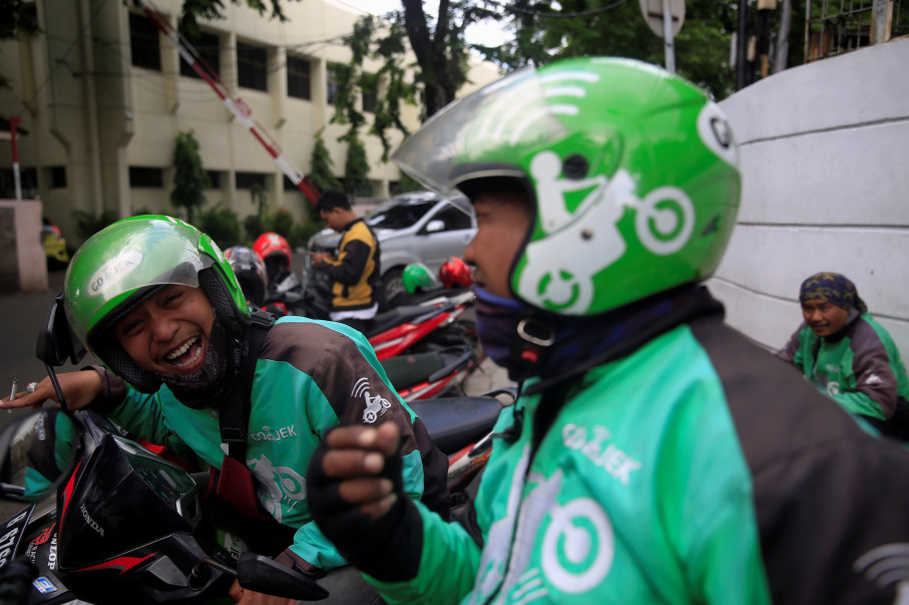
Tag: go-viet

  • Go-Viet revolving door sees new general manager quit after five months

    Go-Viet revolving door sees new general manager quit after five months

    Le Diep Kieu Trang has become the second top honcho to leave ride-hailing firm Go-Viet in less than a year.

    Making the announcement Wednesday, Go-Viet said that Trang, also known as Christy Le, had decided to choose her own career path and the company “regretted it.”

    However, the company did not reveal the exact time that Trang is leaving.

    “After five months at the company, Christy has decided to take a different path. We always work hard to find a mutually agreeable way forward, but were unable to do so in this instance,” Go-Viet said in a release.

    The company made no mention of her replacement.

    Trang was appointed general manager of Go-Viet last April. She said her new job “was unique and interesting.”

    In an interview with KrASIA, a technology business media site based in Singapore earlier this month, Trang expressed her ambition to bring the platform to all Vietnamese consumers.

    This is the second leadership change for Go-Viet in less than a year. Her predecessor, Nguyen Vu Duc left last March along with deputy general director Nguyen Bao Linh.

    Their resignation came amidst increasing competition in Vietnam’s ride-hailing market, with current leader Grab on an expansion spree and new players like Be Group fighting hard for a bigger share of the pie.

    According to a report by market research firm ABI Research, Go-Viet has 10.3 percent of the ride-hailing market in the country, compared to Grab’s 72.9 percent.

    Go-Viet, an affiliate of Indonesian Go-Jek Group, has said it has completed millions of trips since it was launched in September last year. The company offers transport and food delivery services.

    Trang had became the director of Facebook’s operations in Vietnam in March last year and resigned from the position in December, citing “family reasons.”

  • Two execs quit ride-hailing firm Go-Viet

    Two execs quit ride-hailing firm Go-Viet

    Go-Viet has confirmed that its general director and deputy general director have quit their positions. General director Nguyen Vu Duc and deputy general director Nguyen Bao Linh have resigned from their positions, the Vietnamese ride-sharing firm announced Friday.

    The two would continue to work as advisors for Go-Viet and its Indonesian counterpart Go-Jek from Vietnam, while the management of Go-Viet’s day-to-day work will be handled by the company’s remaining leaders, it said.

    Phung Tuan Duc, Go-Viet’s managing director, said the company would continue working closely with Duc and Linh to help develop the platform.

    According to Deal Street Asia, the news of Duc and another of Go-Viet’s senior directors resigning was already announced internally earlier this week. The news site also claimed the two had demanded large sums of money in compensation upon resigning, but the company did not comment on this.

    Nguyen Vu Duc graduated from Harvard University, the U.S., with a master’s degree in business administration and worked for nearly a decade at a major bank in Vietnam. In 2014, he helped deploy ride-hailing firm Uber’s services in Vietnam and went on to launch a fintech firm in 2015-2018.

    Duc eventually returned to the ride-sharing market as co-founder and CEO of Go-Viet, which began operations last August. At press meetings, he has said that Go-Viet was a Vietnamese startup with funding and technology support from Go-Jek.

    Duc and Linh’s resignations have come at a time when Go-Viet has been stagnating in all its services – ride-sharing, food delivery and package delivery. Since the start of this month, the company has cut its drivers’ revenue to 20 percent, prompting many drivers to consider switching to another ride-sharing service.

    Meanwhile, its main competitor Grab has been expanding its food delivery service and its cashless payment service GrabPay by Moca, which now has new features allowing users to pay electricity, water and phone bills.

    The Be Group, the latest ride-sharing market entrant in Vietnam, has announced it has recruited over 15,000 drivers in just three months and is planning to expand its presence to 22 provinces and municipalities this year.

  • Vietnamese platform FastGo expands to Myanmar

    Vietnamese platform FastGo expands to Myanmar

    FastGo, Vietnam’s first ride-hailing service, has kicked off operations in Myanmar as part of its Southeast Asia expansion plans. Its joint venture with Myanmarese conglomerate Asia Sun Group began offering services on December 28. CEO Nguyen Huu Tuat said at the launch that Myanmar is a promising market with the e-commerce, travel and retail sectors all growing rapidly. With a population of 50 million, transport demand in the country is expected to rise, he said.

    FastGo targets major cities and provinces and expects to sign up two million users and 100,000 drivers.

    It pursues the same business model as in Vietnam, only taking a fixed service cost from drivers and not commissions on each ride and guaranteeing them higher fares during rush hour and bad weather.

    It allows users to tip drivers, and offers a priority service for certain customers.

    Tuat said FastGo has tied up with Asia Sun because the group has experience in various sectors, deep pockets and an understanding of the local market and culture.

    He expected the venture to benefit Myanmar’s digital economy.

    FastGo was launched in Vietnam last June and now has over 40,000 partner drivers in 10 provinces and cities.

    It aims to be more than just a ride hailing app, offering other services such as food delivery.

    FastGo Vietnam Joint Stock Company was established in April 2018 with its headquarters in Hanoi. The company belongs to a wide network of services provided by Nextech, a leading tech firm in Vietnam.

    The Nikkei Asian Review reported that the company hopes to make its service available in 20 cities in Vietnam and five other Southeast Asian markets, including the Philippines, Cambodia and Thailand, by the end of 2019.

  • FastGo can’t go, say Vietnamese authorities

    FastGo can’t go, say Vietnamese authorities

    Vietnamese ride-hailing firm FastGo, at odds with authorities over its legal status, asserts it is going by the book. According to the Ministry of Transport and the Ministry of Industry and Trade, FastGo is not yet eligible to be approved for a pilot phase, nor is it registered as a tech platform.

    In a written reply to the Da Nang Department of Transport’s proposal to permit FastGo to operate, the Ministry of Transport has said that the application falls under the category of “electronic contract service based – management support platform.”

    But, the ministry adds, it is yet to receive a proposal to launch the app directly from FastGo Vietnam JSC, which means the application is not yet ready to be approved for a pilot phase.

    The ministry has also requested the Da Nang Department of Transport to inform cab companies not to use FastGo if the app is offered to them. Furthermore, FastGo is not allowed to provide its services directly to taxi drivers, it says.

    However, Nguyen Huu Tuat, FastGo CEO, is adamant that the app is not violating any law. He said that he has not received a written response the ministry or from the Da Nang Department of Transportation.

    Tuat clarified that FastGo does not provide transport support management services to individual drivers in Da Nang. It only services drivers of local transport cooperatives.

    “FastGo has filed the information and sent a request for approval for a pilot phase, but has not received a response from the Ministry of Transport,” said Tuat.

    He said Fastgo is neither defined as a transport service provider nor is it a transport cooperative. It is merely an application connecting drivers with customers. Tuat said that he was waiting for new transport regulations on this issue, following which the company will determine the specific business category for registering its app.

    FastGo has been functioning in Vietnam’s major cities since June. It is only after six months that regulators have backtracked and declared that its registration is incomplete.

    A representative of the Department of E-Commerce and Digital Economy under the Ministry of Industry and Trade said: “FastGo has not registered its tech platform with the Ministry of Industry and Trade. Therefore, it is unlawful for FastGo to engage with drivers or operate a transport management platform.”

    In response to this comment, Tuat asserted that he has submitted this proposal, but is yet to receive a reply.

    Launched in June 2018, FastGo now operates in Hanoi, Ho Chi Minh City and Da Nang with more than 30,000 drivers. At the end of August, the local company received funding from VinaCapital, and is planning to mobilize up to $50 million for a second expansion phase that will target Indonesia and Myanmar.

    FastGo Vietnam Joint Stock Company was established in April 2018 with its headquarters in Hanoi. The company belongs to a wide network of services provided by Nextech, a leading tech firm in Vietnam.

    A Nikkei Asian Review report quoted the company as saying it hopes to make its service available in 20 cities in Vietnam and five other Southeast Asian markets, including the Philippines, Cambodia and Thailand, by the end of next year.

  • Yamaha to invest $150 million in Grab Vietnam

    Yamaha to invest $150 million in Grab Vietnam

    Yamaha Motors has announced a $150 million investment in Grab to collaborate on motorcycle ride-haling. The collaboration will be for Southeast Asia in general and Indonesia in particular. Through this partnership, Yamaha Motors and Grab aim to “develop next-generation mobility services by implementing solutions and innovations,” Grab said in a press release issued Thursday.

    The two companies aim to leverage Yamaha Motor’s technology and knowhow to boost safety as well as make it easier for Grab’s driver partners to buy motorbikes.

    Yamaha Motors also aims to leverage Grab’s customer base in Southeast Asia and knowledge of the motorcycle ride-hailing business for future product development.

    The Southeast Asian ride-hailing firm is teaming up with global investors to expand its reach after forcing Uber out of Southeast Asia earlier this year.

    Toyota Motor Corp. had said in June it was investing $1 billion in Grab, and Hyundai Motor Co. last month agreed to put an additional $250 million into the company as well as sell Grab a fleet of electronic vehicles.

    The focus on Indonesia may mean that Grab is intensifying its push against local ride-hailing platform Go-Jek. Both companies now compete in the Vietnamese market after the Jakarta-based start-up commenced operations in Vietnam under the name Go-Viet some months ago.

    Grab entered Vietnam early in 2014, but is currently under an antitrust investigation after acquiring Uber’s services in March.

  • Go-Viet, Grab Vietnam to face tight competition

    Go-Viet, Grab Vietnam to face tight competition

    Vietnamese technology startup Be Group Corporation officially launched its ride-hailing platform Thursday, with beBike and beCar. The latest entrant to a market dominated by the likes of Grab and Go Viet has set an ambitious target of partnering with 10,000 drivers in a few weeks, by the end of 2018, and 100,000 drivers next year. Unlike the current ride-hailing firms, Be Group has registers its service as a transportation business.

    “We have gathered a lot of talent, and I personally have experience running start-ups for many years. With thousands of billions of dong ($1= VND23,287) mobilised, we are confident our platform can compete in this fierce market,” Be Group CEO Tran Thanh Hai said at the launch.

    Be Group apps will start operating in Hanoi and Ho Chi Minh City from December 17. The company has announced an initial 25-percent royalty for beBike and beCar drivers, while specific prices and discount schemes for customers have not been revealed.

    Be Group hopes to become a big player like Grab or Go Viet with a comprehensive super-app. In 2019, the company plans to roll out delivery and payment services. It aims to attract tens of millions of users in the next three years.

    Vietnam’s ride-hailing market has seen new entrants after Uber’s departure early this year, including Vietnamese firm FastGo, GoViet – a subsidiary of Indonesia’s Go-Jek, Aber and the latest Be Group.

    Grab, which counts Chinese ride-hailing firm Didi Chuxing and Japan’s SoftBank Group Corp among its backers, had 175,000 drivers and bikers in Vietnam as of September and is the most prominent player in Vietnam after it pushed out Uber, according to Reuters.

    Rival GoJek entered Vietnam in August eyeing to grab a share of the fast-growing market. Vietnam has 95 million people and many use smartphones.

    A number of local taxi companies in Vietnam have come together to compete against ride-hailing firms, while Grab has been in a legal battle for more than a year with local taxi firm Vinasun Corp.

  • FastGo drives into provincial markets in Vietnam

    Vietnamese ride-hailing app FastGo has expanded its services to provinces in Vietnam like Dong Nai and Binh Duong, provinces neighboring HCMC. FastGo aims to cater to high travel demand within the southern provinces and for commutes between the provinces and Ho Chi Minh City

    Nguyen Huu Tuat, general director of FastGo Vietnam, said that Bien Hoa City in Dong Nai and Binh Duong were two municipalities next to HCM City with large traffic flows and number of commuters.

    The introduction of the app in these localities will make it more convenient for customers to travel, as well as reduce wasteful ‘empty miles’ for local cabs, he added.

    Currently, FastGo has about 1,000 drivers operating in these two cities.

    The company plans to expand its presence into Ha Long City in the north and Nha Trang City in the center early next month. By the end of the year, it will also introduce food delivery and “On Demand Shopping” services.

    Launched in June 2018, FastGo now operates in Hanoi, Ho Chi Minh City and Da Nang with more than 30,000 drivers. It has already completed “over one million kilometres of service.”

    At the end of August, the company received funding from VinaCapital, and is planning to mobilize up to $50 million for a second expansion phase that will target Indonesia and Myanmar.

    FastGo has three core services: Fast Car – a four-wheel drive app for private contractors wanting to make additional income; Fast Taxi – a service linked with existing taxi companies who can receive orders on the app; and Fast Luxury – a semi-luxury car service.

    FastGo last month said it has 15,000 taxi and motorbike partner drivers in Hanoi and Ho Chi Minh City, but they are still not a common sight on the streets, unlike the ubiquitous red and green uniforms of Go-Viet and Grab drivers.

    Tuat said he wants FastGo to become one of Southeast Asia’s top 3 ride-hailing apps in the future.

    A report quoted the company as saying it hopes to make its service available in 20 cities in Vietnam and five other Southeast Asian markets, including the Philippines, Cambodia and Thailand, by the end of next year.

    FastGo Vietnam Joint Stock Company was established in April 2018 with its headquarters in Hanoi. The company belongs to a wide network of services provided by Nexttech – a leading tech firm in Vietnam.

  • Aber ride-hailing service hits the road in Hanoi

    Aber ride-hailing service hits the road in Hanoi

    Aber, the second Vietnamese ride-hailing service, launched its Hanoi operations Friday, four months after making its HCMC debut. The ride-hailing market has seen new entrants after Uber’s departure, including Vietnamese firm FastGo, GoViet – a subsidiary of Indonesia’s Go-Jek, and the latest Aber. Aber estimates it will attract 5,000 taxi drivers and 5,000-10,000 motorbike drivers in Hanoi this year.

    In HCMC, the company is working with 7,000 drivers serving  more than 60,000 customers. Aber general director Huynh Le Phu Phong said the company was not afraid of major competitors such as Grab because it offers a wide variety of transport services.

    The firm will offer similar rates as other competitors, but give better benefits to its drivers, he said.

    “We do not force drivers to only work for Aber. They can also work for other companies to increase their income and improve their lives,” Phong said.

    In its latest update, Aber has added new features including a navigation system and accurate positioning to each alley, village, district and province in Vietnam.

    Vietnamese engineers designed the software.

    Next year, the company will focus on expanding its services, including Aber Express for delivery services, Aber Track for freight services, Aber Business for companies and Aber Travel for travel services, Phong said.

    Aber focuses on serving individual customers to help them save money, as well as drivers, when their vehicles are vacant, he added

    Instead of having to drop off items at the post office or delivery centers, drivers will come and pick things up right at the customer’s house.

    Current market dominator Grab has expanded its service to include GrabFood and GrabCar Business, the latter targeting the corporate sector. These moves pose further challenges for local long-standing taxi firms like Mai Linh, Taxi Group and Vinasun.

  • Taxi or not? Vietnam debate rages over Grab status

    Taxi or not? Vietnam debate rages over Grab status

    Transport authorities and taxi associations have reiterated that ride-hailing firm Grab should be treated as a taxi service, but experts disagree. Nguyen Cong Hung, vice chairman of the Vietnam Automobile Transportation Association (VATA), said at a recent meeting that it was incorrect to identify Grab as an electronic contract service firm.

    Hung said that legal experts have affirmed that Grab and other ride-hailing services are taxi services, and ordering a car service via a phone call or a phone app are only superficially different modalities.

    While some people believe that calling Grab a taxi service will hinder the development of technology, Hung disagreed.

    “Identifying a car service as traditional taxi or technology taxi will guarantee authorities management power and fairness in terms of their responsibilities. Whichever service applies technology will have higher profits,” he added.

    Echoing Hung, chairman of the Ho Chi Minh City Taxi Association, Ta Long Hy, said that any service which sets transport fees collects money and spends a large amount of money on discounts is a transportation service, and not merely a software company.

    Hy said that all car services that are 9-seaters or lower are taxi services in nature. “The Ministry of Transport should not create an exclusive playing field for a service that is basically a taxi service.”

    He proposed that 9-seater or lower car services, whether Grab or traditional taxis, be identified by a mark on their license plates or a larger registration label on the car’s windshield.

    Earlier this month, the Transport Ministry released the latest draft of a transportation management decree under which under 9-seater car services be registered as taxi firms before they can apply ride-hailing technologies.

    This means that Grab and other ride-hailing firms would have to register their services again as a taxi business and comply with corresponding legal responsibilities regarding their operating licenses, drivers’ profiles and tax duties.

    Should the decree be passed, Grab and other ride-hailing cars will have to put a sticker labeled “taxi” on their windshields and carry a taxi legend on the top.

    The draft goes against many experts’ requests to treat ride-healing services as a new business model that is different from traditional taxi service.

    Nguyen Dinh Cung, director of the Central Institute of Economic Management (CIEM), had said earlier that firms that primarily used software cannot be called a transportation business.

    Cung said that the government should encourage new investment forms or business models with an open and fair environment in keeping with Industry 4.0 trends.

    Lawyer Truong Thanh Duc said that the Ministry of Transport has been making changes with recent drafts without having a consistent viewpoint.

    The fact the ministry wants to identify ride-hailing services as taxi firms is against the government’s policy of prioritizing technology development in the Fourth Industrial Revolution, he said.

    Marketing expert Do Hoa said that Grab and other ride-hailing services should be managed under a new law specifically written for technological services.

    Traditional regulations related to taxi firms are not appropriate for Grab, as it is not a transport company, he said.

    The heated debates and struggles between ride-hailing cars and traditional taxis have not cooled after the exit of Uber from the Southeast Asian market in March. Taxi firms have continued to complain about the unfair competition they are facing.

    They have also joined hands to fight the market onslaught of ride-hailing firms.

    Grab has consistently been denying that it is a taxi firm, saying it only provides technological solutions to transport services.

    The debate over Grab’s status as transport company is hardly new in Vietnam. Vietnam’s top taxi company Vinasun sued Grab for $1.84 million in losses, citing “unhealthy competition”.

    In Vietnam, local cab firms like Mai Linh and Vinasun have to pay value added tax (VAT) of 10 percent and corporate income tax of 20 percent, while Grab only have to pay some 3 percent.

    The ride-hailing market in Vietnam has seen new entrants after Uber’s departure, including Fastgo and GoViet, which is an affiliate of Indonesia’s Gojek.

    Current market dominator Grab has expanded its services to include GrabFood, a food delivery service, and GrabCar Business, targeting the corporate sector.

    These moves pose further challenges for long-standing taxi firms like Mai Linh, Taxi Group and Vinasun.

  • Competition heats up in third-party merchandise, food delivery market

    Competition heats up in third-party merchandise, food delivery market

    With huge demand driving Vietnam’s merchandise, food delivery market, investors are keen on a piece of the action.

    After operating for a year in HCMC Lalamove, a logistics company headquartered in Hong-Kong specialising in same-day delivery and courier services, came to Hanoi Wednesday.

    A day earlier Grab had released its food delivery app, GrabFood, after a period of testing.

    The food delivery market looks extremely lucrative, and businesses want to cash in, industry insiders said.

    “By 2020 Vietnam will have over 50 million customers shopping online,” Phillippe Rambaud, head of Lalamove’s Hanoi market development division, said. “This will be a large market for on-demand delivery services.”

    Nguyen Duc Loi, CEO of Lalamove Vietnam, said the firm aims to have 10,000 contracted drivers on a permanent basis.

    Grab Vietnam CEO Jerry Lim claimed GrabFood’s growth has been very impressive, with the number of its contractors increasing eight-fold in just a month of testing in Hanoi.

    “GrabFood is the next major step for Grab in becoming a super-app which meets all the essential needs of people’s daily lives,” he said.

    “The way each individual service interconnects and complements each other allows us to build an ecosystem that delivers real benefits not only to our customers and drivers but also to our business partners and vendors,” Jerry Lim added.

    Go Viet has launched Go Send as a complementary service, but also aims to develop it into a super-app like Grab. It also plans to launch a food delivery service later this year.

    Last year Go Send delivered over 800,000 fashion products and handled 2.3 million food orders for 203,000 small-scale online vendors.

    But despite their major success in the online delivery market, the three entrants have to face the difficulties that come when competing with established incumbents popular in the market such as Delivery Now (Foody), and Vietnammm.

    Besides, many of their drivers are reluctant to make advance payments to vendors and take on the risk of wrong delivery and customers not accepting goods.

    Lalamove for instance has a policy of having drivers make advance payments for food/goods of up to VND3 million ($130.4) in HCMC and VND2 million ($86.95) in Hanoi.

    Many vendors still do not focus on delivery through third party applications as an important income stream.

    A representative of a milk tea chain in Hanoi told VnExpress that revenues still come mainly from direct sales and phone orders as well as the chain’s own digital app.

    Its response times are still much faster than using third party apps, he said.

    As more and more providers of delivery services emerge, he believed the most important factors vendors would look for are effective support systems and prices.

    The intense competition means consumers will benefit increasingly from the variety of choices and the discounts and improvements in service competitors constantly make to gain market share.

    Companies like Grab, Go Viet and Lalamove uniformly claim competition is good for the market, consumers and the businesses themselves.

    One of them said the Vietnamese market would see even more competitors in future.

    Analysts said this boom would soon spark a struggle between digital delivery platforms and traditional services just like the ongoing between Uber and Grab and traditional cabs.

    Do Xuan Quang, deputy head of Vietnam Logistics Business Association, said Vietnam was the fastest growing e-commerce market in Southeast Asia, and along with the strong growth of the logistics industry at 15-20 percent, a similar movement in the delivery market is not surprising.

    In 5-10 years, the delivery market in Vietnam will be valued at around $10 billion, he said.

    U.K.-based market research firm EuroMonitor International values the food delivery market in Vietnam at around $33 million this year and at more than $38 million in 2020.

    It also puts the annual growth rate of the market at 11 percent.

  • Experts fear foreign rivals too strong for Vietnam ride-hailing firms

    Experts fear foreign rivals too strong for Vietnam ride-hailing firms

    Vietnamese ride-hailing services are struggling to compete with foreign firms Grab and Go-Viet due to a lack of resources.

    FastGo last month claimed to have 15,000 taxi and motorbike partner drivers in Hanoi and Ho Chi Minh City, but they are not a common sight on the streets unlike the ubiquitous red and green uniforms of Go-Viet and Grab drivers.

    VATO, which received funding of $100 million from local transportation firm Phuong Trang, is also having trouble expanding after launching in May, its CEO Tran Thanh Nam admitted to the media.

    Another competitor, Aber, run by a group of young Vietnamese based in Europe, had said August 10 it would “temporarily cease app operations for an upgrade.” It has not made a return so far.

    Bui Danh Lien, former chairman of the Hanoi Transport Association, said operators need to give drivers a steady income to keep them and at the same time offer customers plenty of discounts and cheap fares, and “this is a tough challenge.”

    Economist Do Hoa told local media that the ride-hailing market is “a race to spend money”, and those without deep pockets won’t be able to compete.

    Grab and Go-Viet are willing to charge their customers as low as VND1,000 (4.3 cents) for a ride, he pointed out.

    “Vietnamese ride services are not financially capable of sustaining such losses like the foreign companies.”

    Even major players like Grab and Uber report big losses in Vietnam. According to the General Department of Taxation, Grab, with a total registered capital of only VND20 billion ($881,000), has incurred losses of nearly VND1 trillion ($43.48 million) during its three years in Vietnam.

    But this cash burn strategy is how Grab and Uber are eating up traditional taxi firms’ market share. In 2014-15 they launched promotion after promotion, including free rides and discounts, to attract customers. They expanded their driver networks by offering subsidies and big rewards based on performance.

    Other options

    Though the lack of funding is a weakness of local ride-hailing firms, there are other ways for them to grow, Dr Nguyen Duc Thanh, head of the Vietnam Institute for Economic and Policy Research said.

    “Since the lack of resources is a disadvantage for Vietnamese ride-hailing apps, they should not enter the cash burn race.”

    Going head-to-head with bigger rivals is not the right strategy to follow, he said.

    “They can enter niche markets like delivery, car rentals and long-distance ride services. Instead of trying to divide market share in the beginning, newcomers should think of a long-term strategy to build a solid foundation.”

    Nguyen Manh Hung, former chairman of the Vietnam Automobile Transport Association, was quoted by Tuoi Tre newspaper as saying local firms are unable to compete with Grab and Go-Viet because they are divided.

    If they join hands they could compete, he said.

    Go-Viet, the Vietnamese operation of Indonesia’s Go-Jek, came early last month seeking a share of the market that Grab has been dominating after the departure of Uber.

    Go-Jek founder and chief executive Nadiem Makarim said Go-Viet has grabbed a 35 percent share of the motorbike ride-hailing market in HCMC within six weeks of its launch on August 1.

  • Go-Viet perks up competition in Vietnam’s ride-sharing market

    Go-Viet perks up competition in Vietnam’s ride-sharing market

    Go-Viet’s attractive perks for drivers are motivating many to shift from Grab, and the market leader is responding.

    He’s one of the first drivers to sign up with ride-sharing service Go-Viet, but Thanh Hung is still wearing the well-recognized green GrabBike uniform.

    “Too many drivers have just signed up for Go-Viet so there are not enough jackets,” Hung said.

    The 40-year-old motorbike driver said he was able to make VND800,000 ($34) in a day and a half since he began driving for Go-Viet, much higher than the VND500,000 ($21) he would get from GrabBike for the same work duration.

    Hung said he is also attracted by the tax exemption Go-Viet promises for the first six months and the bonus he’ll get if he finishes nine trips a day.

    Go-Viet, a Vietnamese version of Indonesian service Go-Jek, entered the Vietnamese market early this month, seeking its slice of the market pie that Grab has been dominating after the departure of Uber.

    Aiming to tailor its service to Vietnam with a different name and local teams, one of the first goals of Go-Jek in the country is to recruit drivers.

    “The company hopes to bring a stable income to tens of thousands of drivers through technology,” Nguyen Vu Duc, CEO of Go-Viet said in June.

    The company had contacted potential drivers months before the launch, either by meeting face to face or talking to them online, its communication representative Huong Cung said.

    Grab did not comment on the ploys Go-Viet is using to attract drivers, but it’s also deploying its own strategies.

    The company has just launched a campaign to reward drivers with five percent of the total revenue they make in a week, said Nguyen Thu An, communication director of Grab Vietnam.

    In early June, Grab also announced a plan to have over 100 stops for Grab drivers with free wifi, coffee and even vehicle washing service in Ho Chi Minh City and Hanoi.

    “There is a large number of drivers who don’t like Grab and want to work for Go-Viet,” said Vu Hoang Tam, a mobile app expert and one of the founding members of GrabBike in Vietnam.

    This creates a good supply of drivers for Go-Viet, which has learned a lot from the “previous battle,” Tam said, referring to the competition between Grab and Uber earlier this year.

  • Go-Jek to launch ride-hailing services in Vietnam

    Go-Jek to launch ride-hailing services in Vietnam

    Indonesian ride-hailing app Go-Jek will officially launch in Vietnam this July under the brand name of Go-Viet.

    The firm will be run by a group of Vietnamese managers.

    Go-Jek will provide Go-Viet with financial and technological backing, as well managerial inputs.

    “We believe that these in-country teams have the knowledge and experience to make the businesses in Vietnam a huge success,” said Nadiem Makarim, Go-Jek CEO and founder.

    He said local teams will have in-depth knowledge and expertise to operate in Vietnamese market.

    The app would first offer ride-hailing and on-demand logistics services to customers in HCMC before expanding to other cities and provinces with food delivery and other services.

    The launch of Go-Viet in Vietnam is part of Go-Jek’s plan to expand to Southeast Asian markets, including Vietnam, Thailand, Singapore and Philippines.

    Founded in 2010, Go-Jek has raised over $1.5 billion from investors like Google and China’s Tencent Holdings.

    Starting out as a phone-based motorbike ride-hailing app, Go-Jek is now a digital platform which offers transportation, logistics and delivery services.

    Go-Jek isn’t the only firm vying for a spot in Vietnam’s transport market. Singapore based blockchain-powered ride-hailing app MVL is also on the verge of entering.

    Ever since Uber left Vietnam in April, Grab has dominated the local market, and authorities are investigating possible breaches of anti-trust laws.