Retail News CRM

Tag: gofood

  • Apps race to attract customers with sweet deals

    Apps race to attract customers with sweet deals

    E-wallets, food-delivery and online shopping apps are offering a range of Tet (Lunar New Year Festival) promotions to widen their customer base. On January 21, e-wallet cashless payment platform MoMo experienced a temporary freeze of its network shortly after launching a promotion that gives customers a chance to receive gifts when using the app to send money.

    Shortly after the promotion was launched, MoMo recorded an additional 500,000 downloads and registrations of its app, forcing the platform to upgrade its capacity immediately.

    At the time of the freeze, MoMo reported a record of over 1 million customers who had logged on at the same time for a chance to receive something from MoMo’s pool of gifts worth over VND100 billion ($4.32 million).

    About 2 days later, ZaloPay, another e-payment platform also entered the race by encouraging users to make deposits, payments and money transfers to receive bonus points and redeem vouchers from a pool of VND10 billion ($431,995).

    The promotion heat has also spread to the food delivery industry, where Grab, the Singaporean-based ride hailing and food delivery app, has announced its expansion to an additional 12 provinces and cities, to make “food ordering easier during Tet“.

    Tet, or Lunar New Year Festival, will be celebrated from February 2-10 this year.

    Demi Yu, GrabFood regional director for Thailand, Malaysia, Vietnam and Philippines, revealed that the number of GrabFood orders increased has increased 25 times since it was launched in Vietnam last October.

    “With our extensive driver partner network, we’ve been able to lower average delivery time to 20 minutes in central Hanoi and HCMC, making us the fastest food delivery service in Vietnam,” she said.

    A survey published by Vietnamese market research firm GCOMM earlier this month showed that 99 percent of those surveyed said they used online food ordering services at least 2-3 times per month. 39 percent said they ordered through these apps 2-3 times a week.

    According to this survey, the 6 most popular apps are GrabFood, Foody, GoFood, Lala, Vietnammm and Lixi. However, because of the fierceness of competition, just a few days before the study was announced, Lala withdrew from the food delivery market to focus on providing software solutions to restaurants.

    “Demand for delivery is growing in Hanoi and HCMC. I think in the next 5 years, it will thrive in the 10 largest cities. There are about 100,000 delivery orders each day in HCMC and Hanoi combined, whereas there was virtually no demand for this service 3 years ago.

    The delivery market is now worth $500 million, but is expected to grow to $2 billion in 5 years,” said Luong Duy Hoai, founder of GHN, a courier service with over 7,000 staff.

    According to a recent report by South Korean commercial giant Lotte, the number of orders and visits by online shoppers rose by 80 percent and 200 percent respectively in 2018.

    Kim Kyou Sik, general director of Lotte.vn, the group’s online outlet, said: “Late 2019 will be a major battle for all e-commercial sites to establish market share. We aspire to become one of Vietnam’s top 4 e-commerce sites by the end of the year.”

    According to research by Nielsen Vietnam, with 53 percent of the population using the Internet, nearly 50 million numbers registered on smartphones, most online shoppers being from 25-29 years old, the e-commerce market in Vietnam is full of potential despite growing at 22 percent per year.

    The e-Conomy SEA 2018 report by Google and Singaporean investment firm Temasek also revealed that e-commerce, along with three other areas, namely online advertising, online travel and ride hailing dominate Vietnam’s Internet economy.

    In 2018, the Internet economy had an estimated total worth of $9 billion. Earlier this year, the two companies collaborated in a report which revealed that gross merchandise volume of Vietnam’s Internet economy amounted to 4 percent of its GDP.
  • Rivalry heats up in Vietnam’s food delivery market

    Rivalry heats up in Vietnam’s food delivery market

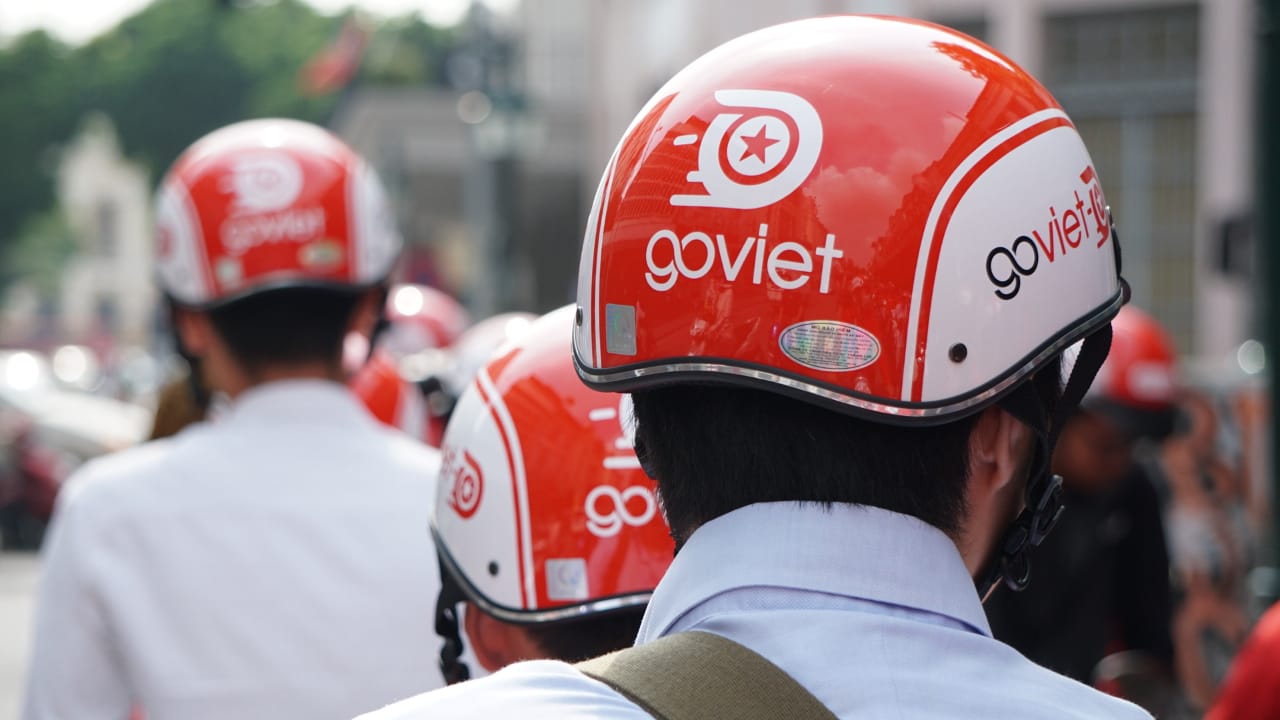
    Last week, a sea of red filled the inside of a milk tea shop in Ho Chi Minh City instead of regular young customers usually found in such places. GoViet drivers were queuing up to purchase food ordered by customers over its online delivery app Go Food, which was running a 50-percent discount program along with free delivery within 5 kilometers.

    The very next morning, the shop was filled with green shirts of Grab drivers. Grab had launched a free delivery promotion for the first 999 cups of milk tea ordered.

    Gradually, the green shirt – red shirt war is becoming visible on the streets.

    Despite being new entrants in the online food delivery market, both Go Viet and Grab are using various measures to attract and capture customer habits. Everyday, these two tech companies spend big on promotions across a wide range of food and drinks.

    They are also recruiting stars from the entertainment industry to endorse their service.

    From the get go, Go Viet had announced a partnership with singer Son Tung M-TP, who broke the record of Asia’s most viewed music video in 24 hours last May, as the company’s brand ambassador.

    Similarly, Grab’s start-studded ads feature diva My Tam, goalkeeper Bui Tien Dung and striker Nguyen Quang Hai of the national football team.

    While having large financial and technological capabilities, both Grab and Go Viet face many challenges after entering the market later than competitors like Delivery Now by Foody, Vietnammm, and Lala, which are apps well known to many customers.

    Delivery Now offers a wider range of food on its menu than Grab and Go Viet, had has a dense network of partners from large restaurants to small pavement stalls, industry insiders say.

    Delivery Now is a product of Foody Corporation, a Vietnamese food service startup that was acquired by Singapore-based internet firm Sea LTD last year; Vietnammm.com is a subsidiary of Takeaway.com, one of the world’s largest online food ordering websites based in the Netherlands; and Lala is invested by Ho Chi Minh City-based Scommerce Group, an information technology and services firm.

    Many experts believe that the race for market share between Go Viet and Grab will resemble that of Grab and Uber when they first entered Vietnam.

    Both Grab and Go Viet are aspiring to become super apps, for which food delivery is an indispensable keystone. In addition to attracting users with incentives and advertising, the two companies are spending a lot of money on reward policies to incentive drivers and expand their network of partner restaurants.

    Grab Vietnam CEO Jerry Lim claimed GrabFood’s growth has been very impressive, with the number of its contractors increasing eight-fold in just a month of testing in Hanoi. GrabFood was released in the city early last month, after a period of testing.

    In Vietnam, Grab is reaching delivery speeds of under 25 minutes and aims for a further reduction to 20 minutes per order, the fastest in regional markets.

    Grab Food is available in both Hanoi and Ho Chi Minh City, while Go Food is only present in the latter.

    Go Viet, however, remains confident that it will meet the needs of customers, aiming to partner up with thousands more restaurants nationwide in casual dining, fast food or luxury dining.

    “Food delivery and e-wallets are promising market segments,” GO Viet CEO Nguyen Vu Duc said after a few months of competing against Grab.

    However, these delivery apps also have certain limitations. For some items on their menu, drivers have to pay up front when ordering for customers in non-partner restaurants.

    Not all drivers are happy to buy food this way as waiting is time consuming, they have to make advance payments and risk the customer not accepting delivery.

    Do Xuan Quang, deputy head of Vietnam Logistics Business Association, said Vietnam was the fastest growing e-commerce market in Southeast Asia, and along with the strong growth of the logistics industry at 15-20 percent, a similar movement in the delivery market was not surprising.

    In 5-10 years, the delivery market in Vietnam will be valued at around $10 billion, he said.

    U.K.-based market research firm EuroMonitor International values the food delivery market in Vietnam at around $33 million this year and at more than $38 million in 2020. It also puts the annual growth rate of the market at 11 percent.