Tag: Golden Pin

  • Sneak peek at Golden Pin Concept Design Award 2017 “crazy” design entries to date

    Sneak peek at Golden Pin Concept Design Award 2017 “crazy” design entries to date

    With less than one month to go until the close of the 2017 call for entries period for Taiwan’s international Golden Pin Concept Design Award on June 28, executive organizers, the Taiwan Design Center, are offering a sneak peek at some of the wildest, weirdest, and weightiest designs submitted into the competition so far.

    Inspired by a nostalgic revival in the popularity of older methods of music recording like vinyl and cassette tapes, Lithuanian designers Andrius Žemaitis and Marius Paulikas of audiovisual art and design organization, BrainMonk, have created a portable cassette player for the digital age. Unlike traditional players, Elbow Cassette Player uses a single pulley to drive the tape coupled with a sensor to maintain consistent playback. A biaxial arm offers a unique solution to the insertion of the cassette and the control of play direction. The player can be attached to clothing or other objects using a small push-pin.

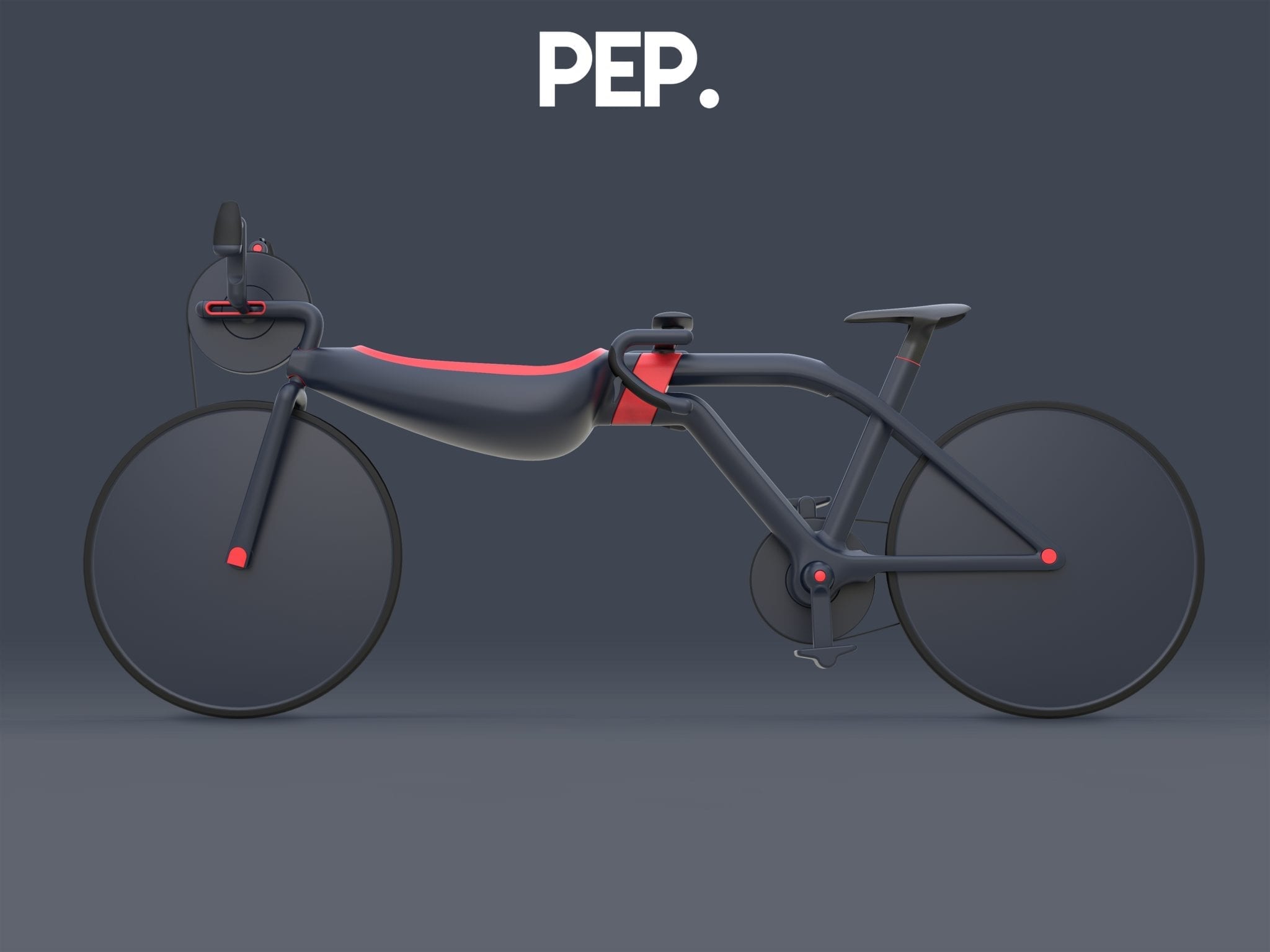
    Turkish designer Emre Özsöz has found a way to solve some of today’s most pressing problems through bicycle design. Pep combines features of a tandem bicycle and handcycle to allow people with visual impairment or a physical disability to compete together across multiple categories in the Paralympic Games. Not wanting to wait for governments to catch up with the current transport issues faced by cities across the world, Horsy allows commuters to get from place to place quickly with a lightweight, foldable urban bike that can easily be carried and stored.

    From Taiwan comes Plastico by designers Liang-Chih Chen, Chi-Huan Yang, and Le-Chi Lai; the design team is seeking to reduce plastic pollution by creating an attractive line of stationery out of discarded plastic bags, which they aim to market under the brand name Plastico. Cecilia Chen, the designer behind accessories brand SYChen.Shoes, has submitted a highly conceptual series of fashion footwear that takes inspiration from origami, architecture, and her own life journey.

    In 2017, the Golden Pin Concept Design Award is themed on the phrase, “In craziness lies genius,” which was conceived by locally renowned graphic designer Aaron Nieh. The award encourages entries from students, individual designers, and companies of all experience levels around the world who hold society changing ideas and are devoted to innovative design development. Entries have been received from Taiwan, China, Hong Kong, Lithuania, Macao, Malaysia, Singapore, Turkey, and the United States so far this year.

    The Golden Pin Concept Design Award offers a total of more than NT$ 1 million (approx. US$ 32,700) in cash prizes to its Best Design and Award winners. Winners are invited to attend the Golden Pin award ceremony in Taipei in December, and can also access a plethora of free promotional and exhibition opportunities. Entries can be submitted in four award categories–Product Design, Visual Communication Design, Packaging Design, and Spatial Design–and are assessed in three stages by a carefully selected jury made up of local and international design industry innovators.
  • Golden Pin Design Award 2016 reveals Design Mark recipients

    Golden Pin Design Award 2016 reveals Design Mark recipients

    The Golden Pin Design Award–an annual award organized by the Taiwan Design Center that seeks to raise global awareness for design created for and within huaren (Chinese-speaking) communities–today reveals its Design Mark recipients for 2016.

    After gruelling Secondary Selection judging rounds held in China and Taiwan, a total of 457 entries from Taiwan, China, Hong Kong, Macau, Malaysia, Singapore, Japan, and England, and Switzerland have received a Golden Pin Design Award 2016 Design Mark and are now in the running for a coveted Best Design trophy.

    Contemporary ideas of refined living dominated entries from Hong Kong. For TUVE, a boutique hotel located east of Victoria Park, Design Systems Ltd used natural and relatively common materials such as concrete, galvanized steel, brass, oak, and wired glass to create a surprisingly sophisticated yet relaxing space for visitors. When homegrown jewelry brand Chow Tai Fook wanted to reach out to a younger market, Noiseless Design Limited drew inspiration from the card game poker to create a visual aesthetic that plays into the new generation’s mix-and-match approach to fashion.

    Malaysian entries typically put a twist on what could be considered traditional huaren culture, such as in Dot Creative Design’s iPack, which added an element of play to the celebratory Chinese red envelope. Among entries from Macau was a plethora of thoughtfully designed posters for cultural events, including advertising by Untitled Lab for a tenth anniversary exhibition held by Centro De Estudos Permanentes Pos-Laboral and by Bilioteca Pública de Macau for the Macau Library Week 2016.

    Among entries from China were a proliferation of unusual or highly specialized smart products for living, including Yourpet Smart Bowl by inDare Design Strategy Limited, which allows pet-parents to regulate their fur baby’s food intake via their smartphones, and Intelligent Frying Pan by Hangzhou Hotdesign Co. Ltd, which uses an app and bluetooth technology to teach users how to cook better, faster, and smarter. Ancient ideas about nature also featured heavily as design inspiration among visual communication products from the country. About Trees, an aptly named Chinese font design by Hanqingtang Design, was influenced by the rings and trunks of trees, and Book of Freedom by independent designer Sihan Chou references a story from Chinese mythology that documents the struggle of a fish adapting to the life of a bird.

    It was clear that designers in Taiwan had thought carefully about the needs of those living in local or huaren communities: located in Taipei’s sublime Mandarin Oriental Hotel, restaurant Bencotto by Tony Chi & Associates embodies the best of contemporary huaren living; leading local homewares brand JIA Inc.’s Four Seasons Glass Set, designed by astute independent Taiwanese designer Pili Wu, portrays a glass bowl set as a Chinese ink painting for the table; new packaging for the nostalgically named soy sauce brand Grandpa Sauce incorporates traditional sisal rope to instil a sense of the past; and commuter bike Pick-Up Sliders adapts European practicality for life in bustling Taiwanese cities.

    Groundbreaking concepts both large and small in scale abounded in the Spatial Design category. HEX-SYS by China-based firm OPEN Architecture is a reconfigurable and reusable building system that attempts to address the problems created by the country’s decades-old building frenzy. The Kaohsiung Public Library, a joint project by the Kaohsiung City Government and Ricky Liu & Associates Architects + Planners, is a public building designed to economize on resources without sacrificing access to necessary public amenities or the beatification of the neighborhood in which the building sits. At the other end of the scale, Formo Design Studio in Taiwan combines a laundrette with a sleek coffee shop, ensuring laundry doers can wile away the hours in style and comfort; the facility is aptly named Travelled 9000 km.

    Overall, the 2016 entries into the Golden Pin Design Award received high praise from Secondary Selection judges. “You can really see the efforts of participants, as this year’s entries demonstrated an understanding of the importance of finding the balance between the market and huaren cultural values. In particular, spatial design entries have greatly improved, showing a balance between huaren culture elements and mainstream spatial aesthetics,” noted Shikuan Chen, Compal design director, educator, Icsid board member, and Jury Chair of the Secondary Selection judging round in Taipei.

    The Golden Pin Design Award–Taiwan’s longest-running and most prestigious design award–opened its doors to entries from and for huaren (Chinese-speaking) communities around the globe in 2014. This year sees a 27% growth in number of entries submitted into the Golden Pin Design Award: in 2015, the award received 2,360 entries compared with this year’s record-breaking 3,005 entries. Final Selection–the jury of which will be chaired by world-leading Japanese-Canadian designer Oki Sato, Chief Designer and founder of the famed Tokyo-based studio Nendo–will held in Taipei on September 28, with Best Design of the Year recipients announced on December 1 at a grand award ceremony, also held in Taiwan’s capital city.

  • Entrant results are in for the Golden Pin Concept Design Award 2016

    Entrant results are in for the Golden Pin Concept Design Award 2016

    Taiwan’s international Golden Pin Concept Design Award wrapped up its call for entries for 2016 on 15 June, and the award has once again broken the record for the number of entries received.

    Of the 3,380 entries received from 11 countries in 2016, design concepts from China and Taiwan make up the bulk of the participation figures. New countries spotted on the entry list in 2016 include Australia, Israel, and Thailand. Malaysia and South Korea, countries with marginal representation in 2015, saw a significant jump in their entry numbers in 2016, an indication of the award’s growing reputation.

    The Golden Pin Concept Design Award, launched in 2015, is an annual award that offers a total of NT$900,000 (more than US$27,000) in cash prizes. Entrants are encouraged to consider philosophies, ideologies, principles, or areas of thought attributable to huaren culture or lifestyles in their submitted concepts, as well as the Chinese concept of zhongguan (中觀). While separately the words mean ‘center’ or ‘middle’ (zhong 中) and ‘to observe’ or ‘to watch’ (guan 觀), the meaning of the combined phrase is much deeper–something akin to ‘mastery gained from the perspective afforded those at the center of things.’

    While philosophical Chinese concept of zhongguan may seem difficult for someone unfamiliar with Chinese language to understand, this year, entries from international participants revealed some surprising and perceptive interpretations.

    • Designer Noa Razer from Israel entered a series of ceramic Chinese stools adorned with decorative motifs from cultures around the world. Named “Stoolim,” the series explores integration, influence, and synthesis between cultures.

    As with last year, designers from countries and areas outside of Taiwan with large huaren (Chinese-speaking) populations were once again keen participants in the award.

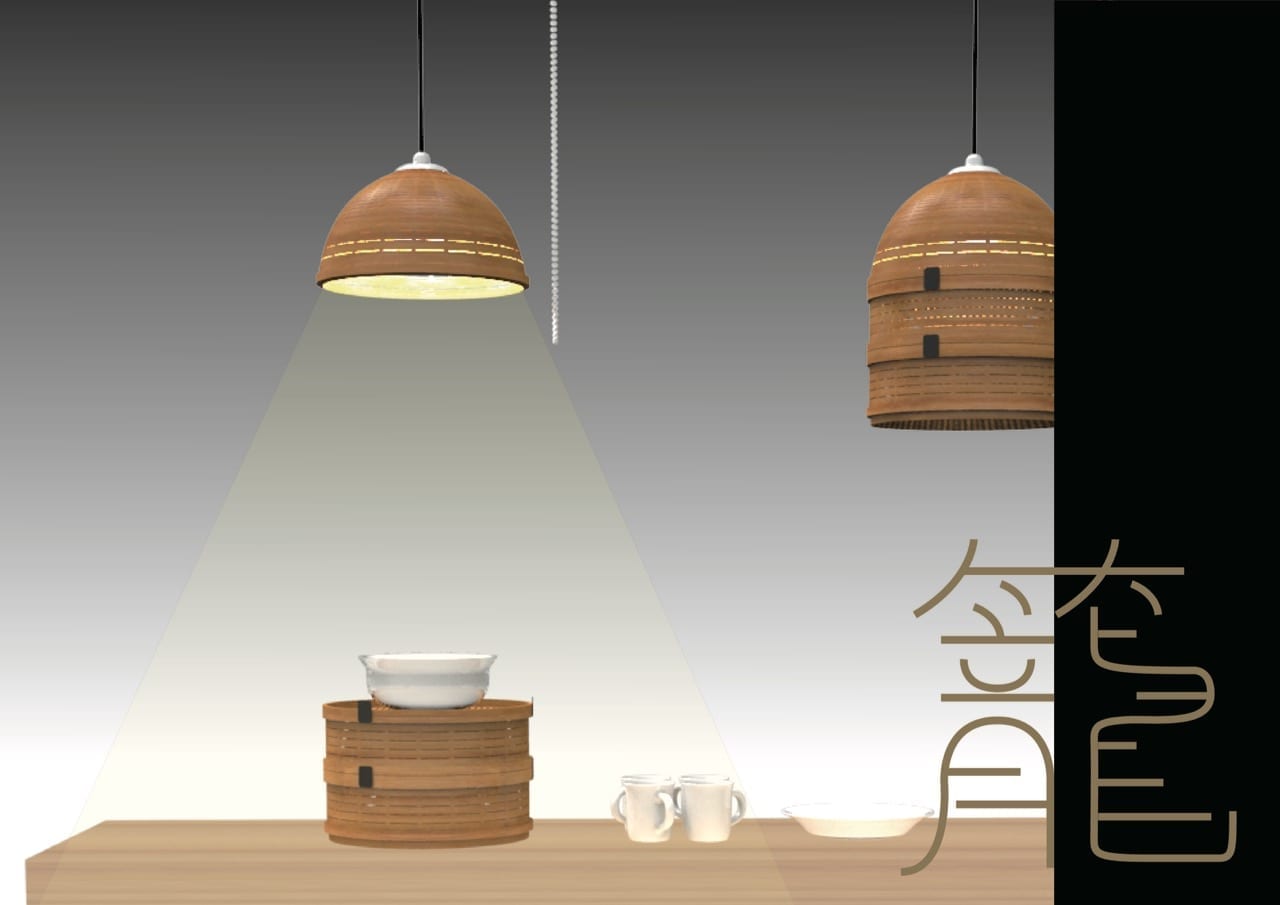
    • Guan-Yu Chan from Malaysia took the woven dish covers commonly used by Chinese families living in the southern parts of the Greater China region and adapted them into a modern pendant light-dish cover combo. The resulting work, called “CAGE–Dish Cover Design” by the creator, adds a touch of contemporary luxury to a once utilitarian object and ensures it is no longer relegated to the kitchen cupboard or market stall table.
    • Jiahui Tan of Fable, a boutique design agency in Singapore, entered “PLAY,” a cultural book commissioned by the National Heritage Board (NHB) for a community exhibition. The work, which takes the structure of DNA for its visual language, plays on the meanings and structures of the English letter ‘Y’ and the Chinese character ren (人), which means ‘man’ or ‘person’ in English, as well as a famous Chinese idiom (前人种树, 后人乘凉) that encourages people to appreciate the efforts of their predecessors in providing the comforts people enjoy today.
    • From Hong Kong, Yiu Hoi Lun’s poster “Migrant Worker” attempts to highlight the suffering many migrant workers in China face during the Chinese New Year holiday when they attempt to leave the cities and return to their family homes in the countryside. The designer was inspired by images she saw on TV and the internet of people breaking down in tears as they waited in endlessly long lines in the rain, snow, freezing temperatures just to buy their train tickets.
    • Calvin Sio of Hylé Design Macau entered “Fond of Shar[ing]–Food Serving Board” into this year’s award. The platter is inspired by the Chinese dining custom of sharing food from multiple dishes placed in the center of a table. The platter also comes with a set of interchangeable handles. Inspired by the shape of the armrests and backs of Ming Dynasty chairs, the handles allow for easy gripping of the platter from multiple angles around a table.

    Perhaps unsurprisingly, entries from Taiwan and China offered some of the most complex and deeply considered fusions of contemporary design and zhongguan.

    • Through the tableware series, “Home Craft,” Taiwanese designer Yu-Rui Liang attempts to create a contemporary use for the traditional craft of Chinese joss paper, also known as ghost or spirit money. The forms of the cups, plates, candle holders, and other utensils in the series are also inspired by objects found in religious shrines and temples in Taiwan.
    • “Roaming Through [the] Garden,” a typography system created by Chinese designer John Yan, incorporates architectural elements of the Classical Gardens of Suzhou–a UNESCO World Heritage Listed historical site–into the character design. He hopes that as readers take in the font, they will feel as though they are walking in a classical Chinese garden.

    While most entries were received in the Product Design category, as was the case in 2015, the number of entries submitted into the Spatial Design and Packaging Design categories rose by over 50%. Entries into the Visual Communications category remained more-or-less stable.

    Running since 2015, the Golden Pin Concept Design Award is one among three awards in the Golden Pin design award group. The annual competition is open to submissions from students, professionals, and corporations from around the world, and accepts product and project design concepts in four design disciplines: Product Design, Visual Communication Design, Packaging Design, and Spatial Design. Concept designs must not be available in the market, nor may they be produced within the year of the award.

    In 2016, entries will be assessed in three stages by a carefully selected international jury. All entrants that pass the second round of selections will be awarded a Golden Pin Concept Design Award Design Mark and a certificate. Best Design of the Year winners will receive one of three cash prizes awarded at a grand ceremony in Taipei, Taiwan in early December, each worth NT$300,000 (approx. US$9,800).

    The Golden Pin Concept Design Award is executed by the Taiwan Design Center and organized by the Industrial Development Bureau, Ministry of Economic Affairs. The Ministry of Economic Affairs acts in an advisory capacity.

  • Golden Pin Design Award Releases Stunning 2016 Call For Entries

    Golden Pin Design Award Releases Stunning 2016 Call For Entries

    As the call for entries deadline for Taiwan’s premier international design competition, the Golden Pin Design Award, draws close, organizers have teamed up with innovative local motion graphics studio, Bito, to create an insightful call for entries promotion video.

    The stunning production provides local and international entrants with invaluable insight into the concept of huaren design, or design created for and within Chinese-speaking communities, as they prepare to submit their design works by June 30, 2016.

    The video, dubbed “Earth.Heaven” by Bito, explores the Golden Pin Design Award’s 2016 theme of “Heaven and Earth” (天地 or Tian Di in Chinese), which is derived from the Chinese cosmological framework of the three universal elements of Heaven, Earth, and Humanity as highlighted in the ancient Chinese divination text, I Ching (also known as the Book of Changes in English). The dot (.) in the studio’s highly abstract creation represents the huaren designer flowing between the realms of Heaven and Earth on a constant search for inspiration.

    “Design exists in our everyday life, and so in turn, design exists inside these ancient concepts of Heaven and Earth,” says Keng Liu, Founder of Bito. “In Chinese culture, we emphasize that Heaven, Earth, and Humanity must coexist in harmony. We wanted to make a video that was very fluid in its motion, and this relates to the way in which deeper aspects of huaren culture are expressed in everyday life. We didn’t want to create a realistic vision of Heaven and Earth; instead, we wanted to create something very abstract that would explain this complex idea of ‘Heaven.Earth’ in a simple way.”

    Bito is intimately connected to the Golden Pin Design Award. In 2015, the undeniably successful studio took home five coveted Golden Pin Design Award Design Marks for their work for Acer, TedxTaipei, TedxTianhe, Planet Gift International, and their own animated company Chinese New Year message. Despite also being honored by numerous leading international award organizations, receiving recognition from the huaren community was particularly inspirational. “The criteria for the Golden Pin Design Award is born from the huaren perspective, which makes this award very special and very different to other design awards,” says Liu.