Tag: gps

  • Mapmaker TomTom Lowers Forecasts As Chips Shortage Weighs

    Mapmaker TomTom Lowers Forecasts As Chips Shortage Weighs

    Dutch navigation and digital mapping company TomTom on Thursday cut its 2021 outlook, amid a global shortage in semiconductor chips that has disrupted auto supply chains and could eat into its revenues from carmakers. TomTom now anticipates revenues of 500-530 million euros ($592-$627 million), compared to the 520-570 range it had previously guided, and cut its free cash flow guidance from around 6% to around 5%.

    The company, which has posted a quarterly net loss for the last two years, reported a loss of 23.6 million euros – deeper than the 15 million analysts had predicted.

    “When we gave our guidance early this year we knew the semiconductor shortage could have an effect, but it is very difficult to know when the worst part is over and we start to see recovery,” finance chief Taco Titulaer told Reuters in an interview.

    Titulaer now expects it will take until at least the end of the year for automotive supply chains to start normalizing, though the situation should improve from the third quarter.

    The shortage has had the twin effect of cutting car production, he added, and pushing manufacturers to prioritize simpler cars that use fewer chips.

    In the second quarter, TomTom nevertheless saw revenues from its automotive business jump 18% compared to last year, when the first wave of lockdowns shut down large parts of the industry.

    Major carmakers have again had to cut back production this year due to the coronavirus-sparked chips shortage – including major TomTom customers such as Stellantis.

    Titulaer said that though volumes of car sales were showing strong improvement on 2020, the previous year had been “quite dire”.

    With volumes still below 2019 levels, he said it could take a couple quarters for these to get back to normal.
  • Google Maps returns to the Apple Watch

    Google Maps returns to the Apple Watch

    Back in 2017, Google Maps no longer worked with the Apple Watch. The reason why Google pulled it from the Apple Watch reportedly had something to do with the app’s limited capabilities on the watch compared to the iPhone app. At the time that Google made this announcement, it promised that Maps would return to the Apple Watch. And that apparently is what is happening. After a new update, Google Maps is once again available for Apple Watch wearers providing them with directions and the estimated time of arrival.

    Users cannot input a new destination directly on the watch and Google directs wearers to enter a location using the phone app and then moving to Apple Watch. Using Google Maps on Apple Watch will allow those walking, driving, taking public transportation, or riding a bicycle from point “A” to point “B” to receive step-by-step directions and show the Estimated Time of Arrival. The primary screen on the Apple Watch shows the user’s current trip with travel times to other destinations such as work and home. Icons show when a turn needs to be made and also identify the current mode of transportation being used. Haptics help users know when they need to make a turn and there is a complication on the Apple Watch that shows the Google Maps icon and opens the app.

    Live Google Maps are not available on the Apple Watch (although live Apple Maps are). Version 5.5.2 of Google Maps is available for the Apple Watch through the App Store.

  • Android Auto is getting a redesigned interface and Dark Mode

    Android Auto is getting a redesigned interface and Dark Mode

    Google last month announced an update for Android Auto that would change the way the app looks and works, and it is now finally rolling out to some regions. Google says that the refreshed interface was “built to help you get on the road faster, show more useful information at a glance and simplify common tasks while driving.”

    To streamline the experience and to make common tasks even easier to perform while driving, the latest Android Auto update introduces a redesigned bottom navigation bar. It allows users to control apps and media, manage incoming calls and notifications, and get directions on the same screen, with fewer taps required than before.

    The redesigned bottom bar also offers a way to better utilize screen real estate. Since Android Auto is a scalable experience, made to work on many types of displays with different sizes, aspect ratios, and resolutions, the UI design changes are aimed at making the app a consistent and well-optimized experience across the board.

    Speaking of UI changes, Dark Mode is also a thing now in Android Auto. It’s more of a visual change, rather than functional, but it should make using the app during the night a bit easier on the eyes. Google says that the new dark theme was designed to utilize more colorful accents and easier to read fonts to further improve visibility and reduce eye strain.

    The update seems to depend on a server-side switch, as is often the case with Google services, and not on the app version you’re running. Still, you can check if you’re on the latest version by heading to the Google Play Store.

    The new Android Auto update has started rolling out in the UK and US, so other regions where the service is available should start receiving the new features in the coming days/weeks.

  • Waze is getting a new celebrity voice for driving directions

    Waze is getting a new celebrity voice for driving directions

    If you’re a long time Waze user, then you’re probably familiar with the app’s habit to bring in celebrities to give you driving directions. Of course, if you haven’t tried out the popular navigation app yet, this is a great chance to give it a go since the hip hop musician DJ Khaled is going to give you all the warnings about hazards and advises while you’re driving.

    Starting May 22 and until June 30, Waze users will be able to set DJ Khaled as the new navigation voice for the app. Aside from lending his voice to Waze, DJ Khaled will also provide drivers with precious advises like “Stay focused,” “Don’t play yourself,” and “The top’s off the Mayback!”

    We are beyond excited to launch the DJ Khaled voice in partnership with our friends at Deezer. DJ Khaled has one of the most recognizable voices in the industry and is beloved by many of our 115+ million users around the world, so we can’t think of anyone better to safely and entertainingly guide Waze drivers on their journeys.

    Obviously, you’ll be getting DJ Khaled’s voice on both Android and iOS versions of the app, so regardless of what smartphone you’re using, make sure to head to Settings / Voice Directions, and select DJ Khaled to be blown away.

  • New iPhones to feature new antenna structure For Better Indoor Navigation

    New iPhones to feature new antenna structure For Better Indoor Navigation

    With just over four months to go until Apple’s next-gen iPhones are officially introduced, renowned analyst Ming-Chi Kuo is back today with his latest research note which focuses on the antenna technology Apple will use.

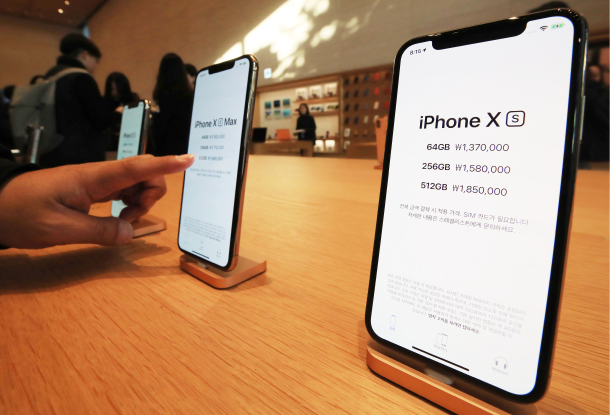
    Inside the iPhone XS, iPhone XS Max, and iPhone XR there are currently two upper antennae and two lower ones, all of which are manufactured from Liquid Crystal Polymer (LCP). According to Kuo, though, the 2019 iPhone series will introduce some major changes to this structure. Specifically, it’s predicted Apple will use a single LCP and modified polyamide (MPI) unit for the upper antenna and three MPI units for the lower ones.

    The reason for this sudden switch to MPI technology reportedly has something to do with production. In his research note, Kuo explains that the current-gen iPhones are being held back by LCP manufacturing issues which cause problems for high-frequency cellular transmission and ultimately affect yield.

    The focus on the modified-PI structure this year should result in similar 4G LTE performance and fewer production problems. Theoretically, the technology is also cheaper to produce, although Kuo believes the overall antenna production costs will rise between 10% and 20% due to new ultra-wideband upgrades that will improve indoor navigation performance. Speaking of which, recent Apple patents suggested the company was working on a feature that’d allow individual store and mall apps to integrate indoor mapping and location tracking.

    Another benefit that’ll come from the switch is a more diverse set of suppliers – Apple will apparently go from having just two suppliers to a total of five. Murata, who is already one of Apple’s suppliers, will continue to supply LCP for the upper antenna, while Flexium, Avary, and ZDT will split orders for the MPI part. Regarding the bottom MPI units, orders look set to be split between Avary, ZDT, and DSBJ. Current LCP supplier Career has been cut from Apple’s order list, according to Kuo, and will not receive new orders for the iPhone, iPad, or Apple Watch this year.

    The focus on MPI this year is a pretty major move for Apple, but according to Ming-Chi Kuo, it’s only temporary. In fact, come next year the Cupertino giant will reportedly switch back to LCP once materials have been improved and production issues resolved. This technology will then be used inside the next-gen iPad Pro models that are due to arrive in Q1 2020 and Apple’s first 5G iPhones later on in the year.

    While on the topic of 5G iPhones, it’s worth pointing out that the modem situation for these has changed quite drastically over the past month. Following Apple’s legal battle with Qualcomm which resulted in the latter refusing to supply the former with modems for its 2018 iPhone series, the expectation was that the Silicon Valley-based company would continue to use Intel modems as it introduced support for the next-generation networks next year.

    Towards the middle of April, however, Apple and Qualcomm surprisingly announced that they had reached a six-year agreement for chips. This quickly led to Intel’s exit from the mobile 5G modem market and now, according to Kuo, Apple will use both Qualcomm and Samsung 5G modems next year.

    Eventually, support for the next-gen networks will also be expanded to the iPad Pro lineup. However, Kuo believes this won’t happen until the tablets are refreshed in 2021.

  • Garmin expands Forerunner line with five new GPS models

    Garmin expands Forerunner line with five new GPS models

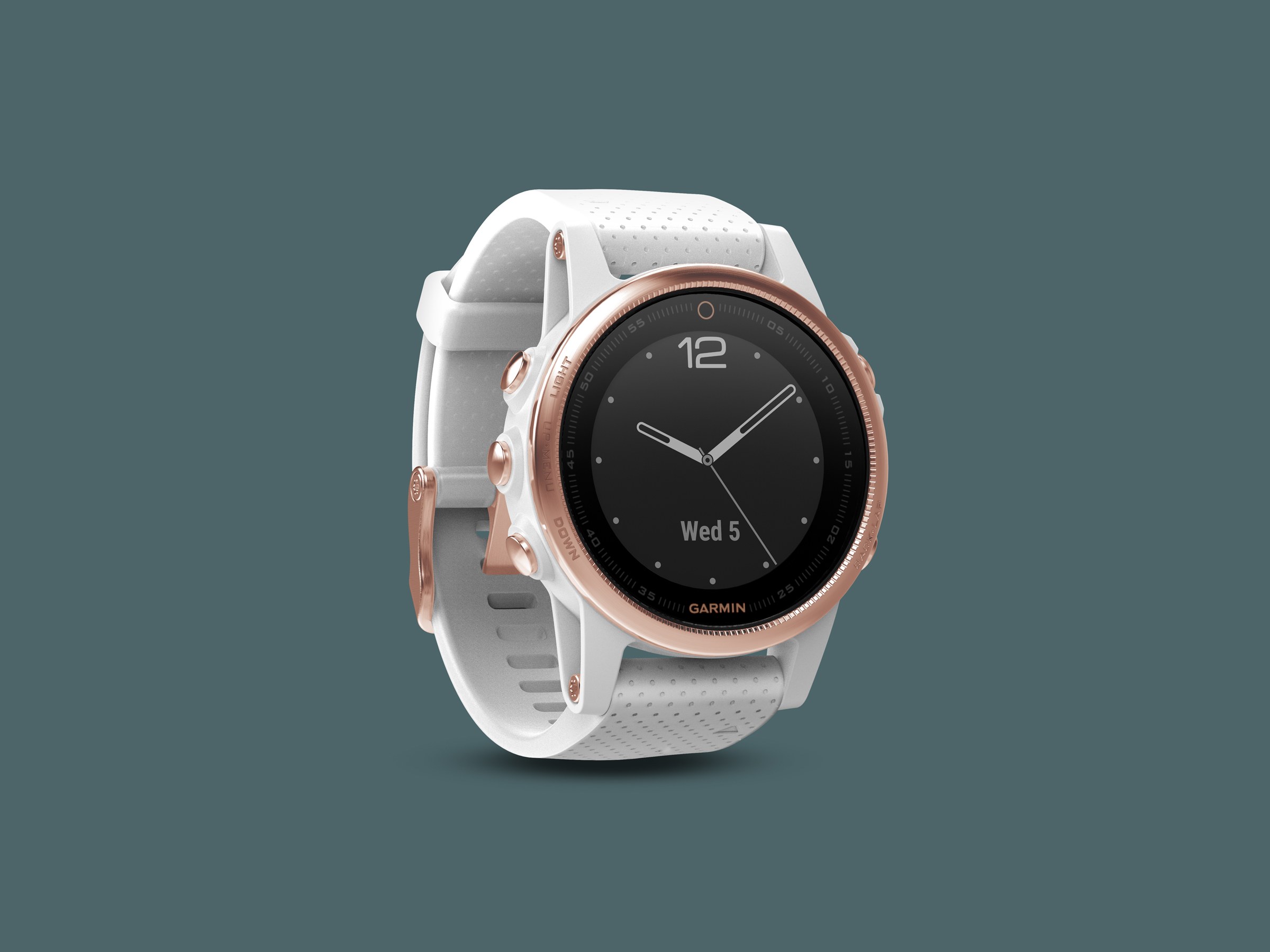
    While Garmin makes all kinds of wearable devices, ranging from super-basic activity trackers to luxury smartwatches, its central focus remains on so-called GPS running watches, designed to take on the likes of the Fitbit Versa rather than the global market-leading Apple Watch family.

    But not all athletes have the same passion, drive, and needs, which is why Garmin is today vastly expanding the Forerunner lineup with five new models ranging in price from $199.99 to $599.99. These are joining the entry-level $100 Forerunner 25, mid-range $350 Forerunner 735XT, and a $450 Forerunner 645 Music that lets you store your favorite tunes directly on your wrist, as well as supporting contactless payments.

    Obviously, the newly unveiled Garmin Forerunner 45 and Forerunner 45S come with no such advanced features, although their built-in heart rate monitor and standalone GPS functionality are arguably enough to justify a $200 price tag. In case you’re wondering, the main difference between these two models is the smaller 39 mm case of the 45S (compared to a 42-milimeter “standard” Forerunner 45 variant).

    Not exactly the world’s most stylish wearable products, the Forerunner 45 series also comes with “chemically strengthened” glass, a silicone strap, relatively small display, top-notch water resistance, lengthy battery life (up to 7 days in “smartwatch mode”), and all the elementary fitness tracking features a casual runner would ever need.

    At $350, the Garmin Forerunner 245 Music adds the ability to hold up to 500 songs into the equation, as well as more “advanced features to help runners improve.” Basically, you can get personalized recommendations on smarter ways to train and recover after intense workouts, not to mention a larger and sharper screen, stronger Gorilla Glass 3 lens protection, and improved battery life in “GPS mode.” There’s also a non-Music Forerunner 245 version available in exchange for $299.99.

    Last but certainly not least, the $600 Garmin Forerunner 945 is purportedly “made for the driven, the qualifiers, and the elite”, holding up to 1,000 songs (with both Spotify and Deezer support), while aiming to take your training to the next level with all the state-of-the-art activity tracking technologies and sensors available today, from VO2 Max to Pulse Ox and a bunch of complex performance monitoring tools.

    The Forerunner 945 can keep the lights on for up to two weeks on a single charge with the GPS switched off, while supporting wrist payments and boasting an extra-robust body with Gorilla Glass DX protection.

  • Docomo, Itochu Logistics test IoT for delivery-fleet management in US

    Docomo, Itochu Logistics test IoT for delivery-fleet management in US

    Japan’s NTT Docomo and Itochu Logistics are planning to trial an IoT solution for delivery fleet management in the US.

    The solution uses devices compatible with low-power, wide-area LTE-M technology to track the status of outsourced trucks in their fleets.

    The trial will begin in the United States on May 1, 2019.

    According to the companies, the solution involves placing hand-held, battery- or solar-powered devices in trucks to collect data, such as truck locations and frequency of sudden braking, which will be sent through an LTE network to a dedicated website.

    The solution can also provide temperature, humidity, brightness, etc. data depending on delivery needs, as well as notify customers via email when the trucks approach their destinations.Itochu Logistics USA expects to save time using the solution compared to the conventional method of manually phoning drivers to confirm their locations and estimated delivery times.

    The solution will be tested for its effectiveness in supporting the management and safety of truck fleets at Itochu Logistics USA’s delivery-trick network and logistics system.

    “While most delivery trucks are equipped with GPS devices, the location data typically is available to the owner but not to logistics/transport companies that retain the trucks on an outsourced basis,” the companies said.

    “The solution’s easily deployed LTE-M devices, however, will give logistics/transport companies dedicated access to location and other useful information about trucks operating temporarily in their fleets.”

    The trial is part of the Globiot global-IoT initiative that Docomo launched on July 2, 2018.

    The Japanese mobile giant said it expects the solution will be marketed widely throughout US, Japan, and Asia.

  • Will last night’s GPS date-based rollover ?

    Will last night’s GPS date-based rollover ?

    Most likely you won’t be affected, but due to the strange way that Global Positioning Systems (GPS) measure time, some devices were at risk of being reset yesterday at 7:59 pm EDT. GPS systems affected could be reset back to January 6th, 1980. This is a risk because devices using GPS measure time by counting weeks, but they only have enough storage to count 1,024 weeks (nearly 20 years).

    The last time GPS systems were in this position was back in August 1999. Most of the public had never even heard of GPS back then, and it wasn’t until apps like Google Maps brought GPS into consumers’ hands that the public became aware of it.

    We wouldn’t be too consumed with angst. The Department of Homeland Security’s Cyber and Infrastructure division says that as long as your device is less than ten years old, or if you have updated this device over the years, your GPS driven app should be safe to use. In other words, if you are using a 2008 T-Mobile G1 as your daily driver for some reason, and never installed any Google Maps updates, the app might not be of much help today. Mapping and navigation firm TomTom said on its website that those who frequently update their devices have nothing to worry about, but others could find it impossible to navigate using GPS.

    The DHS’ Cyber and Infrastructure unit notes that “A nanosecond error in GPS Time can equate to one foot of position (ranging) error.” In other words, if you are counting on a GPS driven device or app to get you from point “A” to point “B,” blindly following the directions on an affected device could land you at point “C.”

    Many industries depend on GPS these days, including some that weren’t around ten years ago like ride sharing (Uber, Lyft). Considering how much more important GPS is to the global economy these days, newer devices have been updated and can now count weeks using 13 bits of data instead of 10. This means that you shouldn’t have to worry about the GPS on your mobile device resetting until 2176.

  • TomTom IQ Maps Makes Global Premiere In India With MG Hector

    TomTom IQ Maps Makes Global Premiere In India With MG Hector

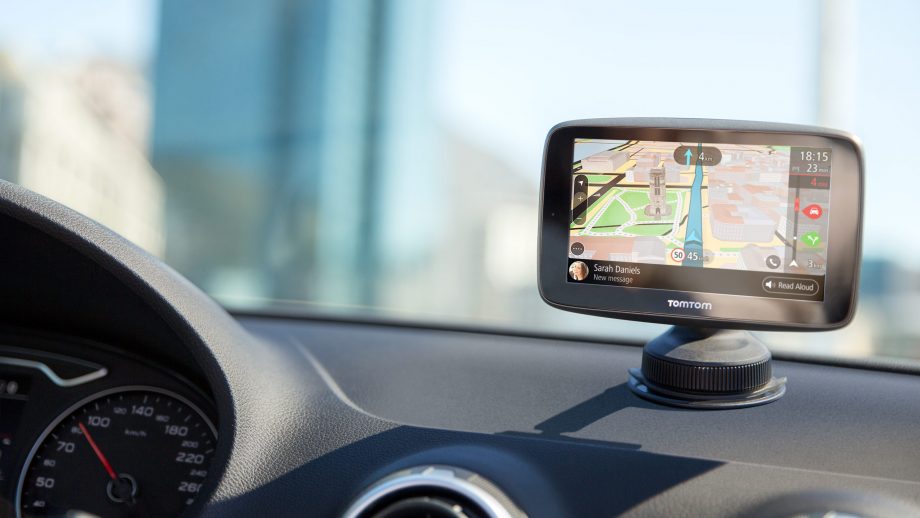
    The MG Hector is still a few weeks away from hitting the market but the SAIC-owned brand has taken the wraps off the car’s connectivity and IT services. In a bid to offer a first-in-segment connected car, the MGHector sees the company bring several big names in IT and services together to create its i-smart platform. Besides Microsoft, Cisco, Nuance et al, there is also the world’s leading name in navigation systems – TomTom. And a unique offering from the Netherlands based player is an immediate area-only self-updating new navigation system called IQ Maps. Speaking carandbike Tsjerk-Friso Roelfzema, VP Automotive – Europe & Asia, TomTom said, “You don’t have to do anything, plug in a new CD or DVD, a USB, or go to a dealer. It’s automatically updated in the background, and not just only automatically updated, but only what is relevant to the driver. So we are here in Delhi today, you don’t want to have the updates of your map let’s say in Pune, it’s not relevant. So we update what is relevant to you.”

    TomTom’s self-updating new navigation system called IQ Maps will be introduced with the MG Hector

    The IQ Maps idea is simple. The car will have embedded maps for the whole country as is. But these maps get outdated quickly; especially in a country like India here our road systems are constantly undergoing detours or changes due to fresh construction or improvements in infrastructure. IQ Maps helps the car to provide you with updated and current maps, without worrying about those kinds of changes. And yes the system is in-dash – and will work through the big 10.4″ screen on MG’s i-smart unit.

    It also gives you real-time traffic updates, and will reroute your guidance if there is a traffic jam for instance. It also takes into account any last minute road closures or other changes like say, construction activity. The map is updated accordingly, and is fed with a combination of live and historical data inputs to achieve its levels of accuracy. This has been made possible not just because of the innovation at TomTom’s research centres in Europe and also in Pune, India.

    Of course the enabler here is also the vehicle itself, which would have to provide connectivity, since this is an in-car navigation system and not an external device or phone app. And that connectivity on the MG Hector will come courtesy the embedded eSim card the car will have from the start. This in turn will provide data services to not just update maps and conduct live searches for destinations or points of interest, but also stream music, browse the net or access your email. The eSim will also be the way to contact MG’s call centre where a concierge service can hep you find destinations, or more importantly provide first response in the case of an emergency. And the good news is MG has said the data plan for the buyer if the car will be free.

    TomTom plans to develop the product further both in terms of offering even more layers of sophistication, and also see if it can be offered in standalone navigation devices or as a phone app. But there is another potential area where it could be even more relevant. Roelfzema says, “It is very important today in normal navigation, but especially when you talk about autonomous driving, you really want to know if the road has changed if your car is driving itself. And that’s really important. We need to see when the rest is following, but it is a very exciting moment also for us.”

  • TomTom loses Volvo contract

    TomTom loses Volvo contract

    Dutch navigation firm TomTom said on Tuesday it had lost a contract with automaker Volvo. The company said the contract to provide location and navigation services to Volvo, which was announced in 2016, had been ended before it was due to go into force in 2019. That fed into concerns of critics who said a deal Google made last month with Renault, another TomTom customer, meant the company risked being relegated to third place in its main market, with lower margins.

    Volvo could not immediately be reached for comment on the contract. ING analysts said in a trading note that they believe the Swedish automaker had switched to Google, rather than the current leading player in the navigation market, HERE.

    “Now that Google is making inroads, the mapping business has become a three-player market with TomTom, HERE and Google, which is clearly less attractive for TomTom than the two-player market it was before,” they said.

    TomTom shares lost a quarter of their value in one day on Sept. 18 after Google announced a far-reaching supply deal with a group of automakers including Renault, Nissan and Mitsubishi.

    Though the Volvo news knocked shares lower, TomTom reported better than expected third-quarter results on Tuesday, with core earnings rising to €62.4 million euro ($72.2 million) from $41.1 million a year earlier.

    Group sales were slightly higher at $254 million euros, from $253 million in the third quarter of 2017.

    While sales of the company’s traditional satellite navigation devices continued to fall, that was offset by sales to automakers and map licensing to customers Apple and Uber. The company also raised its full-year revenue outlook to $984 million from $955 million.

    TomTom this month announced plans to sell its fleet management business, saying it would instead focus its energy on making digital maps used in highly automated driving — the business on which it has pinned its future.

    It said it has seen “strong interest” for the fleet subsidiary, valued at roughly $810 million.

    Harold Goddijn, CEO and co-founder, said recent new deals with PSA Group and BMW showed the viability of the company’s products.

  • TomTom wins deal to provide Volvo Cars with maps, data

    TomTom wins deal to provide Volvo Cars with maps, data

    TomTom, the Dutch navigation company, said on Wednesday it had won a contract to provide Volvo Cars with real-time maps and traffic data for its vehicles.

    Terms were not disclosed, but the contract is a major win for TomTom, which competes with Google Maps and HERE, the former Nokia unit now owned by Audi, BMW and Daimler.

    TomTom, once known mostly for dashboard-mounted GPS systems, has won a string of contracts for its mapping technology, which it believes will play an important role as car driving becomes increasingly automated.

    Other TomTom customers include Volkswagen, Uber and Apple.

    TomTom’s shares are down more than 30 percent so far this year, declining sharply during the January market sell-off and again in February after issuing a forecast for 5 percent sales growth in 2016 that fell short of market expectations.