Tag: grab taxi

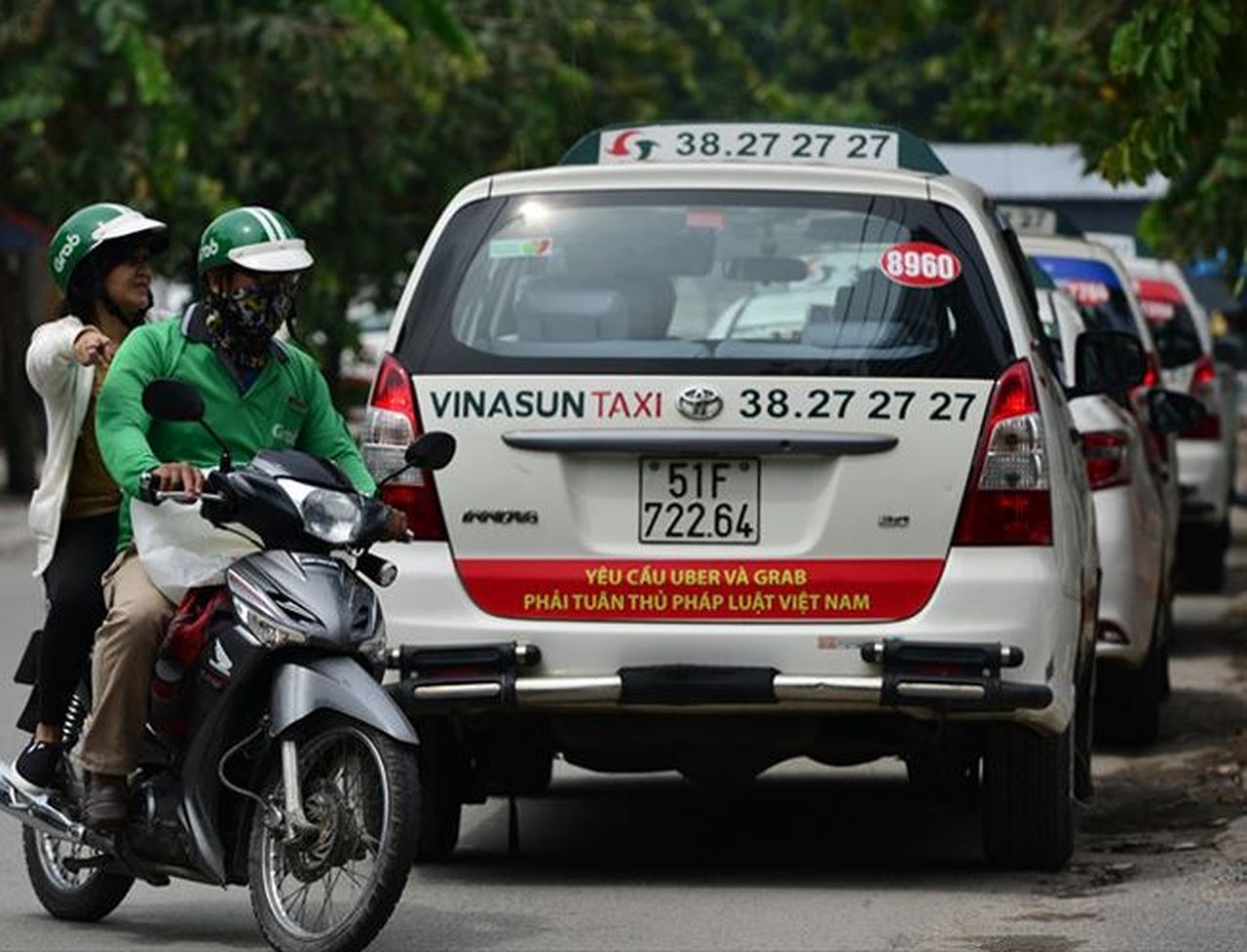
  • Grab, Vinasun to negotiate $1.8 million compensation dispute

    Grab, Vinasun to negotiate $1.8 million compensation dispute

    Top taxi firm Vinasun and ride hailing firm Grab have told the court that they’ll negotiate a compensation dispute. The People’s Court of Ho Chi Minh City on Friday approved the litigants’ wish to ‘sit together,’ and temporarily suspended the trial. The suspension of trial is for no longer than a month, and the reopening date will be announced later, the court said.

    “The lawsuit has dragged on for over a year, but the claimant was not able to prove the damage, as well as the causal relationship with Grab’s influence. The defendant is also very worn out wasting time defending a wrong it did not commit,” said Luu Tien Dung, Grab’s lawyer.

    “This is one of the reasons why both sides have decided to negotiate,” he added.

    Vinasun filed the suit against Grab in June last year, accusing the Malaysia-based firm of abusing the Ministry of Transport’s pilot scheme and committing violations.

    It said Grab’s illegal activities were responsible for nearly VND42 billion (nearly $1.8 million) of the VND76 billion ($3.25 million) in losses that it suffered in 2016 and the first half of 2017.

    The trial began last February, but was adjourned a month later to allow for more evidence to be gathered. Grab protested the valuation of Vinasun’s losses.

    Last October, prosecutors asked the court to accept Vinasun’s petition for compensation of nearly VND42 billion (nearly $1.8 million) in one payment, dismissing Grab’s claim that it was a tech firm and not a taxi company.

    Grab responded by sending a letter to Prime Minister Nguyen Xuan Phuc, saying that identifying Grab as a taxi firm would be “a step backwards from Industry 4.0.”

    Under the latest draft of a decree prepared by the Transport Ministry, transport firms offering services with under 9-seater cars should be registered as taxi firms before they can apply ride-hailing technologies.

    This means that Grab and other ride-hailing firms would have to register their services again as taxi businesses and comply with corresponding legal responsibilities regarding their operating licenses, drivers’ profiles and tax duties.

  • Grab in Hiring Spree to Support Financial Services

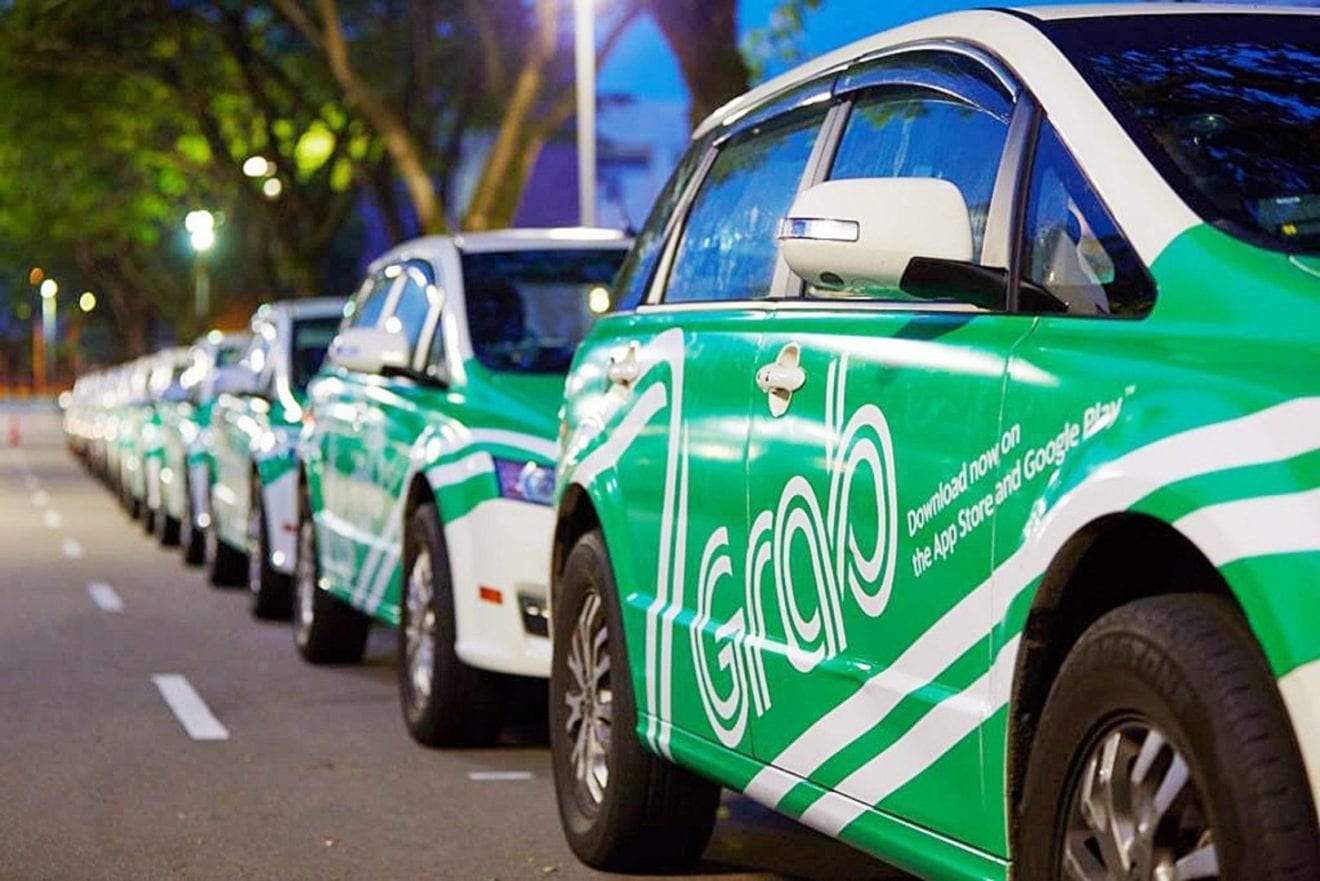
    Grab in Hiring Spree to Support Financial Services

    The super app is looking to create around 350 new jobs in Singapore this year to support its growth plans.

    The new hires will support Grab’s plans to help micro SMEs digitalize, deliver digital financial services across Southeast Asia, and develop the Grab-Singtel digibank, according to an announcement on its website.

    The hiring drive was announced at a signing of a memorandum of intent with the Infocomm Media Development Authority and Digital Industry Singapore to support the development of Singapore’s tech ecosystem, through the development of its tech talent and R&D capabilities here.

    The vacancies are from fields including artificial intelligence, cybersecurity, data science, software engineering, product management and design. There will also be employment opportunities in areas such as finance, operations, legal, public affairs and business development, Grab said.

    We are building products that positively impact millions across Southeast Asia, and we want to continue deepening our R&D capabilities and push the boundaries of innovation, right here at our strategic base, Tan Hooi-Ling, Grab co-founder, said in the statement.

    Grab previously said it would be pushing into retail wealth by focusing on accessible, convenient, and transparent investment products and solutions while broadening its wealth management offerings that feed into its goal of strengthening its open fintech ecosystem.

    The company has grown its suite of financial products in the past year, rolling out e-money, lending and insurance distribution on its platform, and moved into wealth management with the acquisition of Singapore-based robo-advisor Bento, which was relaunched as GrabInvest.

    It also led a $100 million Series B fundraising round for LinkAja, an e-wallet in Indonesia, where the ride hailer has been vying with competitor Gojek for the top spot in digital payments.

  • New Hanoi taxi merger to fight Grab on the streets

    New Hanoi taxi merger to fight Grab on the streets

    Three Hanoi operators have banded together to create the largest taxi business in the capital and compete with Grab. The union, named G7 Taxi, has been able to undercut the fares of Grab, at least over short distances, and it may be looking to bring still more players into its group.

    G7 was formed in October by Thanh Cong, Ba Sao, and Sao Hanoi. Together, they have about 3,000 cars, accounting for around 20 percent of taxis in the Hanoi area.

    The G7 base fare is VND9,900 (43 U.S. cents) for the first one km, while Grab charges VND20,000 (86 U.S. cents) for the first two km.

    The entrance of the new brand is expected to increase competition between traditional taxis and raid hailing firms like Grab.

    Earlier, Nguyen Cong Hung, chairman of the Hanoi Taxi Association, had said: “Traditional taxis, each with their own app, are now trying to compete with Grab. But we are divided, therefore we need to unite.”

    Before Thanh Cong, Ba Sao, and Sao Hanoi teamed up, annual sales at the three companies had declined by 10-15 percent on average over the past few years.

    The number of taxi companies in Hanoi has also fallen down to 70 taxi now, from 115 in 2010.

    Joining the fight

    The taxi trio is not alone in pushing back against the ride-hailing industry.

    In March, southern taxi firms ComfortDelgro Savico and Vinataxi had merged with the same purpose.

    Vinataxi, the third largest taxi firm in HCMC, was confident the merger would increase its growth six-fold this year.

    Mai Linh, Vietnam’s No. 1 taxi operator, has developed a smartphone app similar to that of Grab. Meanwhile, second-ranked Vinasun has launched a ride-hailing service using Facebook’s Messenger app, enabling customers to hail cars and make complaints and requests directly, much like Grab.

    But Grab, the dominant player in the ride-hailing business in Vietnam, is also working on strategies to compete better with local taxi firms.

    Several months ago, it introduced Grab for Business in Vietnam, a service that helps a company track the trips its employees make to limit unnecessary trips and control expenses.

    Grab is also deploying various policies to attract drivers by offering bonuses and opening stops with free wifi and coffee.

  • Vietnam slams brakes on GrabTaxi plan to expand operations

    Vietnam slams brakes on GrabTaxi plan to expand operations

    The Transport Ministry has shot down a GrabTaxi plan to extend its services to provinces like Ninh Thuan, Dong Thap and Gia Lai.

    The ride-hailing firm now is allowed to operate in the five cities and provinces of Hanoi, Ho Chi Minh, Da Nang, Khanh Hoa and Quang Ninh.

    However, the firm said its GrabTaxi service is quite different from the GrabCar, so GrabTaxi should be allowed to operate nationwide.

    Both GrabTaxi and GrabCar operate under the same Grab application, but GrabTaxi offers a run-of-the mill taxi service, while GrabCar is a service which connects customers with private cars for ride-hailing purposes.

    In January, a GrabTaxi representative said: “The firm always abides the law and we do not allow GrabCar to operate outside the Ministry of Transport’s designated cities and provinces.”

    Grab is currently under an investigation by Vietnamese authorities after its acquisition of Uber’s Southeast Asia operations shows signs of breaching local antitrust laws.

    The investigation, which began on May 18, is estimated to take 180 days and can be extended by another 120 days, said the Vietnam Competition Authority (VCA) under the Ministry of Industry and Trade.

    Prior to the statement, a VCA investigation had found that Grab’s market share in Vietnam had exceeded 50 percent since its ride-hailing rival Uber left the Southeast Asian market in April.

    Vietnam’s 2004 Competition Law requires that all mergers and acquisitions (M&As) that result in a company gaining over 30 percent of market share must be reported to competition authorities.

    M&As that result in a company gaining over 50 percent of market share are restricted.

  • Indonesian ride-hailing firm Go-Jek needs more funds in market fight-CEO

    Indonesian ride-hailing firm Go-Jek needs more funds in market fight-CEO

    Indonesian online ride-hailing service Go-Jek is in talks with potential investors to raise fresh funds to expand the business, as the heavy subsidies it gives to drivers to keep rates competitive are unsustainable in the long run, its chief executive said on Friday.

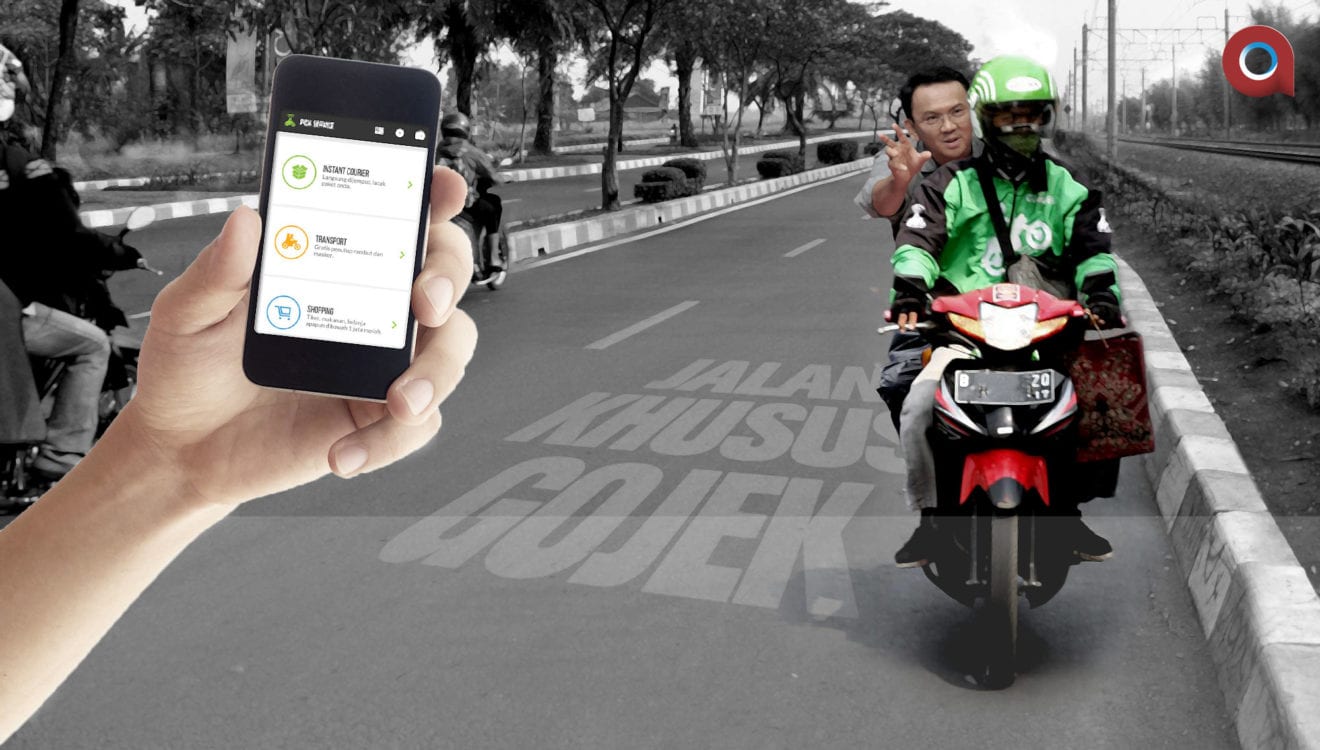
    Go-Jek, a play on the local word for motorbike taxis, has become popular among commuters on the traffic-clogged streets of Jakarta as its phone app removes much of the hassle of finding a driver and negotiating fares.

    Go-Jek, which has a network of more than 200,000 motorbike taxi drivers, is battling aggressively with other ride-hailing apps such as Grab and Uber [UBER.UL], driving rates lower to gain market share in the country of 250 million people.

    But Go-Jek cannot afford to continue relying on subsidies as “you end up where you run out of money”, Go-Jek founder Nadiem Makarim told on the sidelines of an e-commerce industry conference in Jakarta.

    Raising funds from investors to expand the business is part of the solution, the Harvard Business School graduate said, adding that several venture capital and private equity firms have expressed an interest in Go-Jek because of its size and potential.

    Founded in 2010, Go-Jek has since increased its services to food deliveries, cleaning and even massages. The company, which already operates in big Indonesian cities like Bandung and Surabaya, also plans to broaden its reach and add more drivers.

    Its ambition, however, has been met with regulatory obstacles and strong resistance from established taxi operators such as PT Blue Bird Tbk and PT Express Transindo Utama Tbk.

    Taxi drivers’ protests turned violent in the Indonesian capital last month, when they called for ride-hailing apps to be banned. Government ministers had also said the tech firms should be subject to the same regulatory and tax requirements as conventional public transportation companies.

    Yet Go-Jek’s Makarim told a packed conference that regulations and demonstrations were not his “biggest headaches”.

    “For me, the number-one challenge is building something to scale,” he said. “It’s the technology part that I think is the hardest, it’s what keeps me up at night.”

  • Indonesia Asks Ride-Hailing Apps Like Uber, Grab To Register Cars By May

    Indonesia Asks Ride-Hailing Apps Like Uber, Grab To Register Cars By May

    Indonesia asked ride-hailing apps such as Grab and Uber to partner with a transport business and register their cars by the end of May if they want to continue to operate in the country, Indonesia’s Transportation Minister Ignasius Jonan.

    “Uber, Grab are app companies. If they want (to operate), they have to partner with a transportation business entity, like a car rental company,” Jonan told reporters.

    Traffic in the capital Jakarta came to a complete halt Tuesday as taxi drivers caused traffic jams by blocking off several main roads to protest in response to the Indonesian government’s apparent refusal to regulate or outright ban ride-hailing services.

    Local news footage as well as videos posted on social media sites reportedly showed enraged taxi drivers pulling fellow drivers who were not part of the protest out of their vehicles and assaulting them on Tuesday.

    Similar protests have erupted against ride-hailing apps such as Uber in London, Paris, the U.S. and parts of Brazil among other places as the apps have ushered in cheap taxis and threatened the business model of traditional taxi drivers.

    “Even before the demonstration, we had started the process to help our drivers form a cooperative unit and meet the requirements,” Ridzki Kramadibrata, managing director of Grab Indonesia.

    Donny Sutadi, Uber Indonesia’s commissioner, reportedly said that they would partner with a car rental company.

  • Kadin Allows Uber and Grab Taxi to Operate in Indonesia

    Kadin Allows Uber and Grab Taxi to Operate in Indonesia

    The Indonesian Chamber of Commerce and Industry (Kadin) has approved the operation of online-based transportation services, such as Grab Car and Uber. However, Kadin had put out several requirements that must be fulfilled by online-based transportation services before they can operate in Indonesia.

    “We, [the members of] Kadin appreciates technology that can facilitate and promote [a business]. However, its implementation must comply with the same rules,” said Adrianto Djokosoetono, Chairman of the Committee on Land Transportation of Kadin on Tuesday, March 15, 2016.

    Adrianto stated that currently, there is no clear and binding regulation on transportation industry, especially to regulate companies from overseas like Uber and Grab Car. Therefore, Kadin requested the government to issue a regulation that applies to both online and offline transportation services.

    In addition, said Adrianto, Kadin also requested the government to establish a clear tax system for foreign transportation companies.

  • Indonesia U-turn on taxi app ban after online fury

    Indonesia U-turn on taxi app ban after online fury

    Indonesian authorities backed down on Friday (Dec 18) from attempting to enforce a ban on ride-hailing apps and motorbike taxis after the move sparked online fury in a country where millions rely on the services.

    Transport Minister Ignasius Jonan announced on Thursday he had ordered police to properly implement an existing law that gives a narrow definition of public transport, meaning apps such as Uber and motorbike taxis known as “ojek” should be illegal.

    But as anger mounted on Friday, Jonan did a U-turn, announcing in a statement that motorbike taxis and app-based transport can continue operating “until there is decent and reliable public transport”.

    Uber and other services, including the popular motorbike taxi app Go-Jek, have been able to operate in Indonesia despite the law, becoming immensely popular in traffic-choked cities with little public transport.

    Jonan’s move, which followed pressure from traditional transport operators, triggered a flood of online anger, with #SaveGojek becoming a top trending topic on Twitter.

    He was also summoned by President Joko Widodo, who voiced his support for transport apps.

    “Hindering innovation and progress for the sake of bureaucratic red tape? Moronic,” said Twitter user Marhadiasha.

    “Our government is dumb!”, tweeted Indonesian film director Joko Anwar.

    Go-Jek has more than 200,000 drivers across the country, also providing courier, food delivery and even house-cleaning services. A flurry of other motorbike taxi-hailing apps have appeared following its success.

    Uber is also popular but has faced difficulties, with some of its cars seized in Jakarta.

    Public transport in Jakarta and other Indonesian cities is notoriously bad, with buses poorly maintained and trains old and often overcrowded.