Tag: GrabBike

  • GrabBike riders strike over increased commission rate

    GrabBike riders strike over increased commission rate

    Hundreds of GrabBike riders on Monday turned off their app and gathered at the company’s office to protest its increased commission rate after the government raised tax.

    The office of ride-hailing firm Grab in Hanoi’s Cau Giay District was swamped by large, green-clad-rider crowds demanding the company reimpose its previous rate of commission.

    The gathering came after Grab increased its commission on each GrabBike trip from 20 percent to 27.27 percent starting December 5 following the government’s newly-imposed 10 percent value-added tax per general ride-hailing trip, a move seeking to create a level playing field for traditional tax firms.

    The Grab riders said they had called for a strike via Facebook over the weekend and on Monday morning shut down their apps, traveling around Hanoi in groups to protest the increased commission rate.

    Hung, a rider who asked to be identified by his first name only to avoid company retribution, called the new commission rate “cruel” since after fuel costs are taken into account, he only retains around 50-60 percent of the fare for each trip compared to the previous 70 percent.

    Son, who partnered with Grab last year, works 15-16 hours a day in Hanoi to be able to transfer VND6-7 million a month to his family in central Thanh Hoa Province.

    “I’m worried the increased commission rate will make it impossible to take care of my family. I support paying taxes but I want Grab to share the tax burden with drivers.”

    Before the new tax policy took effect, Grab drivers got to keep around 80 percent of the fare, while the company only paid 10 percent tax on its 20 percent income. The driver paid 3 percent VAT on his 80 percent.

    Although the new tax policy no longer requires drivers to pay their 3 percent VAT, they said their actual income per trip has dropped because Grab has raised its commission to make up for the higher VAT.

    Grab’s calculations show drivers’ income would have been reduced by around 7.3 percent with the new tax policy.

    However, a Grab spokesperson said the company on Dec. 5 had hiked its fares by 5-6 percent to reduce drivers’ loss of income to around 1 percent.

    “The new fares still ensure Grab’s competitiveness on the market. Grab already bears a part of VAT to share the burden with customers and driver partners during this difficult time,” the spokesperson stated.

    Vietnamese officials have long been pondering whether ride-hailing companies are technology service providers or transport companies, but the new decree makes it clear they are the latter.But this hike in rates does not satisfy drivers, who said the increase might see customers opt for competing services and make their income fall even more.

    Ta Thi Phuong Lan, deputy head of the department of tax administration for small and medium enterprises and individuals, said VAT rates for companies like Grab and Gojek have hitherto been too low and tax authorities need to raise it to the correct level.

    Although Lan said the new tax rate is not aimed at drivers, the latter say they are victimized now Grab raised the commission rate.

    “We just want Grab to go back to the 20 percent commission rate, maybe an increase of 2 percent or 3 percent would be fine, but over 7 percent is too much,” Hung said.

    The rider said he and his colleagues would continue to boycott the app and drive around Hanoi in the next couple of days, hoping to “put a dent” in the company’s revenues and urge it to lower the commission.


  • GrabBike drivers slam on the brakes in Hanoi to strike against pay cut

    GrabBike drivers slam on the brakes in Hanoi to strike against pay cut

    Some drivers are trying to stall the ride-hailing app by making false bookings. GrabBike drivers in Hanoi are encouraging each other to switch off the ride-hailing app in protest to a pay cut the company announced last weekend.

    Some are even hijacking the service by making false bookings to make life difficult for both passengers and other drivers who have not joined the picket line.

    Grab Vietnam has said starting September 5 it will deduct up to 20 percent of the fares that drivers receive from passengers instead of the current 15 percent.

    “The new payment poses a serious problem for us because the current fares that Grab charges are already very low, and more and more people are applying to work as GrabBike drivers,” said a driver named Binh in Cau Giay District.

    “The cost for fuel and phone cards is on us; the company does not cover those expenses,” he added, saying he and other disgruntled drivers have stopped working in the hope that the company would change its policy.

    A driver named Nam who has not switched off his engine said the situation is affecting customers because they can’t find a driver as easily and quickly as before.

    “I received three false bookings yesterday and I think they all came from GrabBike drivers,” he said.

    These bookings get canceled shortly before the drivers arrive, leaving real customers waiting and the drivers without a job.

    “The 20 percent deduction is fine with me. I think I just need to work harder. This job is still better than others because I can control my own schedule,” he said.

    Nam added that GrabBike fares have increased slightly recently.

    On their online forum, some drivers are telling others to switch from Grab to U.S.-based Uber, currently the firm’s only rival in Vietnam.

    Malaysia’s Grab Vietnam said the company has not decided what to do about the strike or the false bookings, and has just asked drivers to play by the company’s rules.

    “Grab started applying the 20 percent fee for new GrabBike drivers in Ho Chi Minh City in early May, and we will do the same for all GrabBike drivers in HCMC and Hanoi from September 5,” said Nguyen Thi Thu An, media director of Grab Vietnam.

    GrabBike drivers told us on Tuesday that they used to earn from VND150,000 ($6.6) to VND350,000 each day, but with more drivers joining the company, they only make around VND100,000 now.

    Several drivers told us a similar story in June, saying they are earning less and less now that they are having to compete with fellow drivers in the same network.

  • Grab rides up Indonesia with $700M investment

    Grab rides up Indonesia with $700M investment

    Grab has announced plans to invest US$700 million in Indonesia over the next four years, as part of efforts to increase its footprint in a market where it has seen growth.

    The Southeast Asian ride-sharing operator said Thursday the new investment would support the Indonesian government’s ambition of becoming the region’s largest digital economy by 2020. It would include plans to set up a research and development (R&D) facility in the capital city of Jakarta, focused on developing technology innovations for the local market.

     Latest news on Asia

    A US$100 million funding initiative also would be introduced to support startups and entrepreneurs keen on driving “financial inclusion” in smaller communities.

    Grab added that its investment followed “a strong year of growth” in the country, with its GrabCar and GrabBike businesses each clocking more than 600 percent growth in 2016. Its range of ride-sharing services were available in several Indonesian cities, including Bali, Bandung, Medan, and Surabaya.

    According to Grab, one in three of its customers in the country used more than one of its services. It said its drivers earned 40 to 70 percent more per hour than the average transport or delivery driver in Indonesia, where it helped generate more than US$260 million in income for its driver partners.

    Indonesia’s Minister of Communication and IT Rudiantara said: “We want all Indonesians to benefit from IT to improve their lives, develop new skills, and build the next wave of global leaders in technology. Grab’s investment to train and hire more ICT professionals and mentor young entrepreneurs will accelerate the growth of Indonesia’s digital economy. This kind of app has to be positioned as a tool to spur and empower people and the economy.”

    Coordinating Minister for Maritime Affairs Luhut Binsar Pandjaitan added that Indonesia’s growth would require the continued development of its infrastructure, including its public transport network. Stressing the role of technology, he said services that tapped data analytics would better enhance the efficiency and reliability of the national transportation infrastructure.

    According to Grab, the R&D facility in Jakarta would hire 150 engineers over the next two years and focus on developing localised services, including algorithms to support new road regulations as well as a bike-pooling service for nearly 1.4 million commuters in the city. Engineers also would be offered training in Grab’s other R&D centres in Singapore, Beijing, and Seattle.

    By pumping up to US$100 million into the investment fund, Grab said it hoped to nurture Indonesian startups and technopreneurs focused on mobile and financial services, with the aim to better serve smaller cities and communities that had yet to experience the digital economy.

    The ride-sharing operator also would be looking to launch mobile services to bolster access to mobile payments across Indonesia, expanding its own mobile payment services through GrabPay Credits.

    This would further build on its announcement last July to extend its partnership with Indonesian consumer services company, Lippo Group, and enable the payment of retail goods and services its mobile app. With more than 50 million customers between the two companies, the new e-payment platform would allow these consumers to tap their mobile phones or the Grab mobile app to pay for goods and services under Lippo’s retail network, which included department stores, hypermarts, cinemas, coffee shops, and e-commerce portals. Nobu Bank also was participating in this initiative.

    Grab currently operated a network of more than 630,000 drivers across the Southeast Asian region.

  • Lunar New Year surge pricing enrages GrabBike users

    Lunar New Year surge pricing enrages GrabBike users

    Treble fares and heavy traffic add up to the Tet holiday stress in Vietnam. The week before Vietnamese people ring in the Year of the Rooster has been the busiest time of the year for ride-sharing services.

    Due to the rising demand, GrabBike, a mobile hailing app for motorcycle taxi services, has applied what is known as “surge pricing”, meaning that fares have more than tripled over the past week. The company says the move is aimed at ensuring there are enough drivers on the road, but customers are not impressed.

    Long, an office worker in Ho Chi Minh City’s financial district, headed home for the Lunar New Year holidays on a late night coach trip, leaving the city at 9 p.m. It usually costs him only $2.6 to travel the 7 kilometers by motorbike taxi from his apartment to the coach station. However, this time he was shocked to find that GrabBike had nearly tripled the fare to $7.1.

    The inflated cost annoyed Long who felt like he was getting fleeced by the service when he needed it the most.

    He decided to return to traditional motorcycle taxi drivers who pick up passengers on every corner in the city.

    “After negotiating, the driver agreed to take me for $3.5,” said Long, who had ditched old-fashioned motorcycle taxis for GrabBike thanks to its convenient booking service and lower fares offered by the app.

    The arrival of hailing mobile apps like Uber and Grab to Vietnam in recent years has put traditional motorcycle taxi drivers under great pressure with a rapidly shrinking market share.

    Many traditional motorcycle taxi drivers who are usually unable to compete with Grab have suddenly made a strong comeback over the past week as Grab’s surge pricing scares away customers.

    It usually costs Phuong, a resident in District 7, only $3 to get to Tan Son Nhat Airport. The price surged to $8 last Saturday despite her effort to avoid the rush hour by booking the trip at noon. Phuong agreed to the inflated fare, but after more than 30 minutes, there were still no GrabBike drivers in sight. She had no choice but take a cab to the airport.

    Higher prices are supposed to keep more drivers on the road during the busiest times. However, Long, a GrabBike driver, said the higher fares had made little difference to his income due mainly to heavy traffic that slows journey times.

    “A pick-up point was just 1.5 kilometers away but it took me more than 25 minutes to get there the other day,” said Long, adding that when he arrived at the pick-up point the passenger had already cancelled the trip.

    Ngo Nguyen Hoang, chief executive of Grab, said despite the higher fares leading up to Tet, the company has been unable to meet the demand.

    “We simply can’t reach our customers,” he said. “Before passengers book their trips, they will see the total cost of the rides in advance with upfront fares.”

    He confirmed that there will be no more unwelcome surprises heading into the holidays.

    “We are still offering discount coupons. There is no way we are fleecing our customers in the week leading up to Tet,” Hoang continued.

  • Ride-hailing app Grab brings GrabBike services to Bali

    Ride-hailing app Grab brings GrabBike services to Bali

    Watch out Gojek, competitor GrabBike has come to Bali. Ride-hailing app Grab has announced that it launched both GrabBike and GrabExpress services in Bali, as of Oct. 22. 

    Like Gojek, GrabBike allows you to order motorbike taxis, while GrabExpress is Grab’s courier service. Also in common with Gojek, the app’s drivers use black and green colors.

    Similar to Uber, the app has provided its GrabCar driver services in some time in Bali (they launched in 2015)—to the frustration of competing taxi and other drivers operating on the island. 

    As with GrabCar, the GrabBike and GrabExpress options will be most available in Badung and Denpasar. 

    Grab started in Malaysia but has quickly spread throughout the region, with notable success in Jakarta, its first Indonesian city. 

    “Bali is dominant in growth and tourism potential, so we saw an opportunity to improve the quality of daily trips in Denpasar and Badung. The launching of two-wheel services in Bali will complement GrabCar, which previously launched in 2015.

  • Grab adopts Adyen for payment platform

    Grab adopts Adyen for payment platform

    Ride hailing platform Grab has adopted Adyen to extend the capabilities of its payment platform in Indonesia, Philippines, Thailand and Vietnam.

    The two companies aim to deliver a consistent, frictionless payment experience for customers traveling across markets regardless of device or payment method.

    Grab customers will be offered both traditional cards and, over time, country-specific payment methods, using Adyen’s expertise and data to expand payment options. Adyen supports around 250 payment methods globally.

    “As part of Grab’s drive to make ride-hailing even safer, easier and more accessible to everyone in Southeast Asia, providing trusted, seamless mobile payments is crucial for the overall customer experience. Grab wanted a partner who could support a variety of traditional and alternative payment methods to support our growth across the region,” Grab head of payments and commerce Joel Yarbrough said.

    Business travelers who work within the region can also easily tabulate their business ride spending with Grab through the Grab for Work portal, and companies can automatically pay for their employees’ rides through the use of corporate cards.

    “Southeast Asia is a diverse and highly fragmented region and there is no one preferred method of payment. However, mobile penetration in the region remains high and drives several key trends including the rise of mobile payments and platforms as a service,” Adyen president Warren Hayashi said.

    “Partnering with a fellow innovator and disruptor such as Grab, we are eager to empower commuters in Southeast Asia with the same convenience of hailing a ride seamlessly as paying for their Grab ride with equal ease.”

  • GrabBike Indonesia Records 300% Growth

    GrabBike Indonesia Records 300% Growth

    Online app-based transportation service GrabBike recorded a growth of 300 percent (year to date) until the first half of 2016.

    “Our growth has been outstanding since last January when Grab did a rebranding as the service provider with the most complete vehicle reservation platform,” Public Relations Manager for Grab Express and Grab Bike Dewi Nuraini said in a statement on Thursday, July 14, 2016.

    Dewi says Grab’s machine learning technology and data analytic capabilities are the significant driving growth factors and allow major efficiency.

    In addition, the company also gradually reduces subsidy for every trip completed by 50 percent. “This indicates the high involvement of the users on Grab’s multi-service platform,” Dewi said.

    One of Grab’s four monthly active users in Indonesia averagely uses more than one Grab services. Besides the app-based motorcycle taxi or GrabBike, Grab has a private car rental, taxi order, and courier service.

    Dewi said Indonesia has become the largest market for Grab, based on the number of trips completed on the entire platform. Therefore, Grab specifically focuses its business in Jakarta.

    “Grab also plans to expand its multi-service platform to more than eight major cities in Indonesia,” said Dewi.

  • Jakarta’s motorcycle startup game has another contender in the form of Wheel Line

    Jakarta’s motorcycle startup game has another contender in the form of Wheel Line

    With the evident popularity of Jakarta’s motorcycle startups like Go-Jek and HandyMantis, it’s fair to say that the city’s transport and delivery nervous system has potential to be rewired. Now, those two firms see another competitor in the form of Wheel Line.

    Wheel Line is an on-demand courier and transportation company that utilizes motorcycle taxis, or “o-jeks” as they’re called in the archipelago. The company is brand new compared to its competitor Go-Jek, which has been around for a few years already, as it just launched in early January.

    “I have a wine business that requires delivery to our customers which are located in diverse part of Jakarta, Depok, Tangerang, and Bekasi, and I found it hard to find a reliable courier service that can be trusted with the goods,” explains Wheel Line’s founder Chris Wibawa as he recalls the startup’s inception. “What is awesome about Wheel Line is that we stand by our motto, to deliver within two hours and also, we handle one order at a time to ensure care and precision.”

    Wibawa says one strength his company has is that, at this stage, Wheel Line can pay close attention to each individual customer. The startup also offers customizable orders that can include additional requests. For example, a customer could order several different items in a single delivery parcel. These can also include things like delicate objects and perishable foods, not unlike the offerings of Wheel Line’s competitor HandyMantis.

    Wheel Line charges customers based on the delivery zone they’re located in. According to Wibawa, there are eight zones. The first zone costs Rp 30,000 (US$2.30) and the price goes up to Rp 120,000 (US$9.25). The zones are calculated based on a radial distance from Wheel Line’s office in Muara Karang.

    Wibawa didn’t comment on the details of his startup’s revenue, but he did say:

    This market still has a lot of room to explore and expand…We provide A to Z services for our customers, not only in delivering goods or merchandise but also buying movie tickets, exchanging invoices, and more.

    Currently, Wheel Line does not have a mobile app, as it simply takes orders via email and telephone. The same goes for its running mate HandyMantis. This is something the startup will need to create if it hopes to stay competitive with Go-Jek, a company that already has apps for Android and iOS, and claims more than 2,500 drivers.

    Currently, Wheel Line is a fully bootstrapped operation and all marketing to date has been done through word-of mouth. However, Wibawa says he is open to hear about opportunities and potential partnerships. “For now we have a centralized process which is effective since it allows us to supervise more closely and provide the best service to our customers,” says Wibawa.

  • GrabBike is officially launching in Bangkok

    GrabBike is officially launching in Bangkok

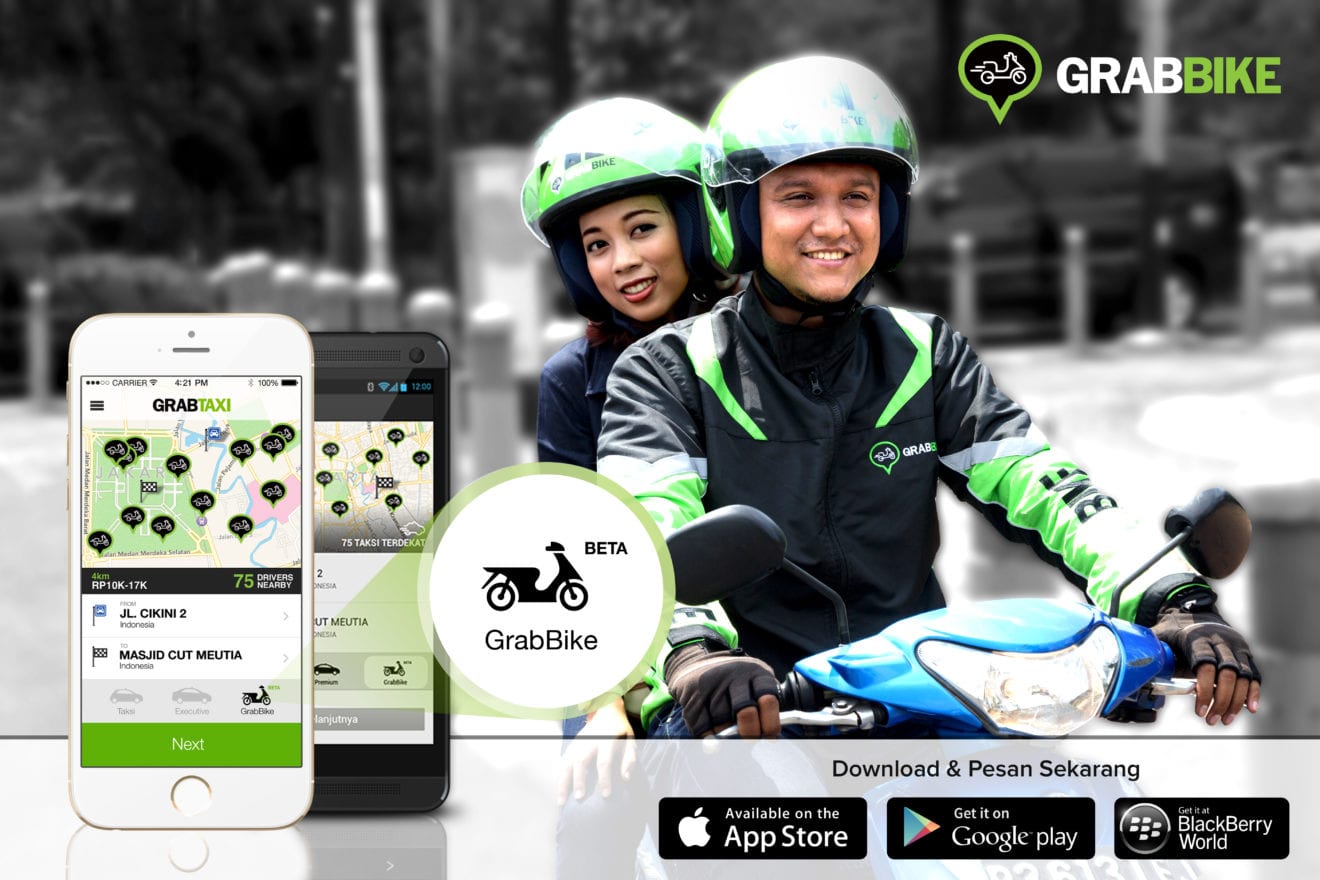
    GrabBike – a part of GrabTaxi – is an on-demand service for motorcycle taxis. GrabBike is officially launching in Bangkok on August 5th, which makes Thailand the third country on GrabBike’s expansion across Southeast Asia, after Vietnam and Indonesia. However the company itself, GrabTaxi, is no stranger to Thailand. Its regular taxi-hailing service has been around since October 2013.

    In Indonesia, GrabBike competes with a similar local service called Go-Jek., but as far as I know, GrabBike will be the first to offer app-based motorcycle hailing in Thailand. (Please correct me if I’m wrong.)

    GrabBike-Bangkok-launch

    Thailand vs. Indonesia

    There’s one key difference in the “motorcycle-taxi market” in Thailand vs. Indonesia:

    Most moto-taxis in Thailand are registered with the government, wear a yellow vest and have an ID card. I wonder if GrabBike will work in some form of partnership with them, and whether they got full government approval?

    In Indonesia, the legal status of services like GrabBike and Go-Jek is still debated. Motorcycle taxis have so far not been regulated in any way. And Go-Jek and GrabBike drivers are even getting bullied by motorcycle taxi drivers who prefer the old ways.

    We’ll report more on how the service is received in the “Big Mango” after the launch.


  • Jakarta Motorcycle Taxis Get an App Lift

    Jakarta Motorcycle Taxis Get an App Lift

    Motorcycle taxis, known as ojeks, have long offered a fast way for residents to cheaply zigzag through gridlocked roads in Jakarta, a city knocked for having the world’s worst traffic.

    But, until recently, they were informal and inefficient – ojek drivers would queue at taxi lines or troll streets to negotiate fluctuating fares with potential riders. Some joined courier companies or delivery fleets working with restaurants to zip around fried noodles, chicken sate and other food orders.

    Now startups are trying to capitalize on those inefficiencies, launching mobile applications that connect those needing a ride to available motorcycle taxis.

    New app-based ojek businesses like Go Jek and GrabBike see huge potential in the world’s second-largest city, with 10 million people, whose road commuters log the most stops and starts anywhere—33,240 a year, according to a ranking by Castrol in February.

    Once these companies enlist them, they hand out jackets, helmets and smartphones so they can receive ride requests through their apps. They also set base fares and provide insurance. The system is good for customers and companies, which don’t have to buy fleets of motorcycles, and the ojek drivers, who end up making more money by getting more business and a set part of each fare.

    Venture capitalists have begun pumping money in, and Jakarta Gov. Basuki Tjahaja Purnama is so taken by the possibility of reducing some of the city’s congestion that he is in talks with Go Jek to feed commuters into the public bus system or coming light rail.

    Go Jek is  a “very smart solution for the city,” Gov. Purnama told reporters this week, adding the city might provide ojek drivers with special parking near bus stations.

    App-based motorcycle taxis also operate in other low-cost labor markets with intractable traffic, such as Hanoi and Uganda.

    It’s a market with huge potential given the growing number of cars and the lack of public transportation.

    While it’s difficult to quantify the number of ojeks on the road, groups of them gather on almost every corner of the city. Blue Bird, which runs the largest taxi fleet in the country with 37% of market share, has 16,000 cars in Jakarta. Its app gets between 8,000 and 12,000 orders each day, said President Director Noni Purnomo.

    Greg Lindsey, a senior fellow with the New Cities Foundation mobility initiative, says these startups are bringing hidden resources to the surface. “Every vehicle in the city is potentially part of its transportation network.”

    It helps that most urbanites have access to apps through their smartphones.

    Go Jek says glitches have arisen since it launched its app back in January. The app sometimes malfunctions. Customers complain they’ve gotten wrong food orders or had to deal with rude drivers. And fares are still being set by the market. Go Jek, for example, recently raised its starting price from $1.87 (25,000 rupiah) to $2.63 during peak hours over complaints by drivers.

    Jakartans like Amalia, who like many Indonesians goes by one name, feel the app-based ojeks are safer and more reliable than pickup versions. “It’s faster” than a standard taxi, she said, as she climbed off the back of an ojek summoned on her smartphone.

    For now, only a few motorcycle transport companies are competing in Jakarta with their apps: Go Jek, believed to be the largest and the first to launch, says it has recorded more than 250,000 app downloads since January and has expanded its network of drivers from 300 to 6,000 in the past year.

    It offers rides, as well as personal shopping and, as of March, food delivery. The starting price is a bit more than a standard cab – around $1.80 versus 60 cents —but ends up being much cheaper.

    “We are essentially a one-stop shop for transport and logistics and personal shopping in Jakarta,” said its founder and CEO, Nadiem Makarim.

    Grab Bike, launched on May 20 by the taxi-booking app from Malaysia Grab Taxi, valued at $1 billion, so far offers only rides. But Cheryl Goh, its marketing vice president, sees “a lot of opportunity” for expansion in Jakarta.

    The company said it recorded more than 8,000 rides in its first week. Go Jek declined to say how many rides it averages a week.

    Other players trying to provide convenience through two-wheeled delivery include Happy Fresh, which launched in March, offering personal shopping that could eventually compete with Go Jek’s soon-to-launch Go Cart. Antar.id is getting off the ground and the app-less HandyMantis both offer rides as well as courier services.

    “If I take a bus, it takes too long to get through the traffic,” said Musrifah Kuswadinata, who works at a souvenir shop in a central Jakarta mall. Before she took the bus and then had to take a car the last few miles to  home. “If I take a Go Jek, I can take it straight home,” she said.