Tag: GrabCar

  • Hanoi ride-hailing services struggle to cope with Tet demand

    Hanoi ride-hailing services struggle to cope with Tet demand

    Hanoians are struggling to book ride-hailing and delivery services during the runup to Tet (Lunar New Year holidays).

    Hoang Viet of Nam Tu Liem District had an interminable wait before he could get a motorbike on a ride-hailing app on January 15 evening.

    He said: “The apps kept saying all drivers nearby were busy. It took me nearly an hour for a motorbike driver to accept my trip.”

    On the morning of January 16, Nguyen Linh of Tay Ho District had to wait longer than usual to get a GrabCar and the fare had nearly doubled from just a few days ago.

    On January 15 morning, Phuong Anh, who sells Tet gifts, could not find drivers to deliver goods to her customers though fares were higher than usual amid.

    Seeing the surging demand, more ride-hailing and delivery firms have decided to apply surcharges during Tet, Vietnam’s biggest festival, which this year is celebrated from January 20-26.

    Grab has a surcharge of VND5,000 ($0.21) on motorbike rides and delivery orders and VND15,000 on taxi rides.

    Other ride-hailing companies Be and Gojek charge VND5,000-20,000 extra, and delivery service provider Baemin charges VND10,000.

  • Singapore Watchdog Fines Ride-Hailing App Grabcar $10000 For Data Privacy Violation

    Singapore Watchdog Fines Ride-Hailing App Grabcar $10000 For Data Privacy Violation

    Singapore’s privacy watchdog fined ride-hailing app Grabcar S$10,000 ($7,310), saying a 2019 update put the data of some users at risk of unauthorized access in what the watchdog said was the fourth breach of data privacy regulations and “a significant cause for concern”. In a filing published on Sept. 10, the Personal Data Protection Commission (PDPC) said the update risked the personal data of 21,541 drivers and passengers, including profile pictures, names and vehicle plate numbers, related to carpooling service GrabHitch.

    Grabcar, a unit of Southeast Asia’s largest startup Grab Holdings, rolled back the app to the previous version within about 40 minutes and took other remedial action, the PDPC said.

    “Given that the organization’s business involves processing large volumes of personal data on a daily basis, this is a significant cause for concern,” the PDPC said.

    The regulator also directed Grab to put in place data protection by design policy, where data protection measures are considered and built into tech systems as they are being developed.

    In a statement, Grab said: “To prevent a recurrence, we have since introduced more robust processes, especially pertaining to our IT environment testing, along with updated governance procedures and an architecture review of our legacy application and source codes.”

  • FPT, Grab team up to develop 4.0 tech solutions

    FPT, Grab team up to develop 4.0 tech solutions

    Vietnamese tech giant FPT and Singaporean ride-hailing firm Grab will work together on smart city solutions, AI and smart payments. The two companies signed a strategic partnership agreement to this effect Friday. Specifically, they will cooperate on piloting a traffic signal monitoring system in Ho Chi Minh City. FPT will provide the traffic light monitoring software, while Grab will provide data and traffic analysis from its ecosystem. Based on data transferred from GrabCar and GrabBike vehicles, the two sides will jointly develop a real-time traffic monitoring portal to be used in several major cities.

    Grab and FPT also plan to develop electric vehicle charging stations in Vietnam and explore multimodal transport solutions that can integrate FPT’s digital public transport schedule with Grab’s network.

    “We hope the application of 4.0 technology by the partnership will bring new experiences and conveniences to the Vietnamese people. The two sides will share data and solutions to solve traffic challenges in big cities,” said Le Hong Viet, technology director of FPT.

    Jerry Lim, Grab Vietnam director, said that with available traffic data, analysis capacity and experience of public transport in Vietnam and Southeast Asian countries, Grab will work closely with FPT to develop smart city solutions, thereby making commuting easier, more convenient and safer for Vietnamese people.

    FPT has also committed to integrate the GrabPay by Moca e-wallet platform into its e-payment ecosystem in 2019, while Grab will cooperate with its international financial partners to provide suitable financial services to Vietnamese users.

    Grab’s loyalty programme, called GrabRewards, will also be available across FPT’s network. Users will be able to accumulate points by purchasing FPT products.

    Grab and FPT will also develop AI technologies in areas such as facial recognition, authentication and real-time communication in order to increase safety and security for drivers, passengers and business partners.

    FPT is currently the first and only enterprise in Vietnam to own a comprehensive artificial intelligence platform – FPT.AI.

    This platform allows programmers to create interactive language interfaces, such as chatbots, which help with customer engagement; voice recognition used in automatic switchboards; and image recognition used for processing ID documents along with face recognition.

    FPT is the largest information technology service group in Vietnam with its core business focusing on the provision of IT-related services.

    Grab, a Singaporean transport network company, provides ride-hailing services in Singapore, Malaysia, Indonesia, the Philippines, Vietnam, Thailand, Myanmar, and Cambodia. It is Southeast Asia’s first “decacorn”, a startup with a valuation of over $10 billion.

  • Vietnam leads Southeast Asia in digital economy development

    Vietnam leads Southeast Asia in digital economy development

    Vietnam’s internet economy is the largest relative to GDP in terms of gross merchandise volume in Southeast Asia this year. A study by Google and Temasek, a Singaporean holding company owned by the Government of Singapore, said gross merchandise volume (GMV) traded over the Internet in Vietnam was 4 percent of GDP. The study encompasses ride-hailing, e-commerce, online travel and online media.

    In second place was Singapore with 3.2 percent, according to the study which covered Indonesia, Malaysia, the Philippines, Singapore, Thailand, and Vietnam. Indonesia’s digital economy had the fastest absolute growth and looks set to reach $100 billion in 2025.

    In the last few years online businesses have been booming in Vietnam, with last year the digital economy growing by more than 25 percent, a rate that can be sustained for the next two or three years, according to the Vietnam E-Commerce Association.

    It said online sales are set to hit $10 billion by 2020, accounting for 5 percent of total retail sales.

    A Financial Times report last April cited Bain, a U.S.-based global management consulting firm, as estimating that Southeast Asia had 200 million digital consumers, or people who bought goods or services online, out of an adult population of 405 million. Vietnam, with a population of 93.7 million, accounted for 35 million.

    Vietnam’s youthful population is among the keenest users of mobile devices in the region, while the country’s consumers spend more time online than most of their neighbors, several studies have found.

    Research firm Nikkei estimated Vietnamese spend nearly 25 hours online per week, on a par with or just behind Singapore and the Philippines.

    In the ride-hailing sector, many players are expanding investments. Vietnam recently saw new entrants such as local firm FastGo, GoViet, a subsidiary of Indonesia’s Go-Jek, and Aber.

    Current market leader Grab has expanded to offer GrabFood and GrabCar Business, the latter targeting the corporate sector.

    But experts say Vietnam and many other countries in the world face a slew of challenges in the digital economy such as upgrading the skills of the workforce and adapting to rapidly changing technologies.

  • Grab adopts Adyen for payment platform

    Grab adopts Adyen for payment platform

    Ride hailing platform Grab has adopted Adyen to extend the capabilities of its payment platform in Indonesia, Philippines, Thailand and Vietnam.

    The two companies aim to deliver a consistent, frictionless payment experience for customers traveling across markets regardless of device or payment method.

    Grab customers will be offered both traditional cards and, over time, country-specific payment methods, using Adyen’s expertise and data to expand payment options. Adyen supports around 250 payment methods globally.

    “As part of Grab’s drive to make ride-hailing even safer, easier and more accessible to everyone in Southeast Asia, providing trusted, seamless mobile payments is crucial for the overall customer experience. Grab wanted a partner who could support a variety of traditional and alternative payment methods to support our growth across the region,” Grab head of payments and commerce Joel Yarbrough said.

    Business travelers who work within the region can also easily tabulate their business ride spending with Grab through the Grab for Work portal, and companies can automatically pay for their employees’ rides through the use of corporate cards.

    “Southeast Asia is a diverse and highly fragmented region and there is no one preferred method of payment. However, mobile penetration in the region remains high and drives several key trends including the rise of mobile payments and platforms as a service,” Adyen president Warren Hayashi said.

    “Partnering with a fellow innovator and disruptor such as Grab, we are eager to empower commuters in Southeast Asia with the same convenience of hailing a ride seamlessly as paying for their Grab ride with equal ease.”

  • Jakarta taxi drivers protest against Uber and Grab

    Jakarta taxi drivers protest against Uber and Grab

    Thousands of Indonesian taxi drivers have brought parts of the capital, Jakarta, to a standstill in a protest against transport apps.

    The drivers say ride-hailing apps, such as Uber and Grab, have severely reduced their salaries.

    Footage from Jakarta showed some protesters attacking vehicles and apparently threatening taxi drivers not taking part in the strike.

    The drivers have been joined by bus and “bajaj” motorbike drivers.

    Mobile apps like Grab and Uber have disrupted the transportation industry across Asia, and other parts of the world.

    Taxi drivers say they’ve been disadvantaged because the apps do not face the same costs and regulations as they do.

    ‘They are destroying us!

    The protest is far bigger than similar action taken last week. She said it was impossible to get a taxi in the city centre.

    The protesters have blocked roads outside the parliament, the city administration offices and the ministry of communication, causing massive traffic jams across the already heavily congested city.

    Commuters have expressed frustration at the demonstrations, which also saw tires set on fire.

    “This protest is so terrible. They really are rude and overbearing. I was very hurt,” Dewi Gayatri, who missed her flight for a business trip, told the Associated Press.

    “I still like Uber, and hope the government protects Uber, because it’s so easy to order and cheaper,” she said.

    But for the drivers, many of whom moved to Jakarta to work, the price wars have eroded their ability to support their families,

    “They are destroying us,” Salahuddin, who uses one name like many Indonesians, told the BBC. “We pay tax but because Uber uses private cars they don’t. I am fighting for my survival.”

    Ahmad Rahoyo who operates a bajaj taxi said he used to earn up to 100,000 rupiah ($10; £7) a day, “but since the apps entered Indonesia just covering my costs is hard”

    One man, Hans, said he saw drivers blocking a bus lane.

    “When they saw a taxi driver accepting a passenger they straight away ran over to the vehicle and told the passengers to get out of the taxi,” he said.

    “They threatened them with rocks. I didn’t see them hit anyone but they destroyed the rear vision mirrors of one taxi.”

    Indonesia’s government has appeared divided over the issue.

    The transport ministry has said it is in favour of a ban on ride-hailing apps, since the online and mobile app-based services are not registered as public transport.

    However the communications ministry, which oversees such companies, has said they are legitimately allowed to operate.

    President Joko Widodo has said new technology should be embraced and not banned.

    Global resistance

    Uber, which has sparked conflict with regulators and traditional taxi companies in many US and European cities as well, has expanded aggressively in recent years.

    Its success has led to a slew of localised transport-app companies with similar business models.

    This includes Malaysia-based Grab, which claims to be Southeast Asia’s largest, and Indonesian startup Go-Jek which specialises in motorcycle taxis.

    To try and claim market share, Grab for example, has offered commuters 20 free rides on their motorcycle taxi service.
  • GrabTaxi launches its Uber-like GrabCar in Jakarta

    GrabTaxi launches its Uber-like GrabCar in Jakarta

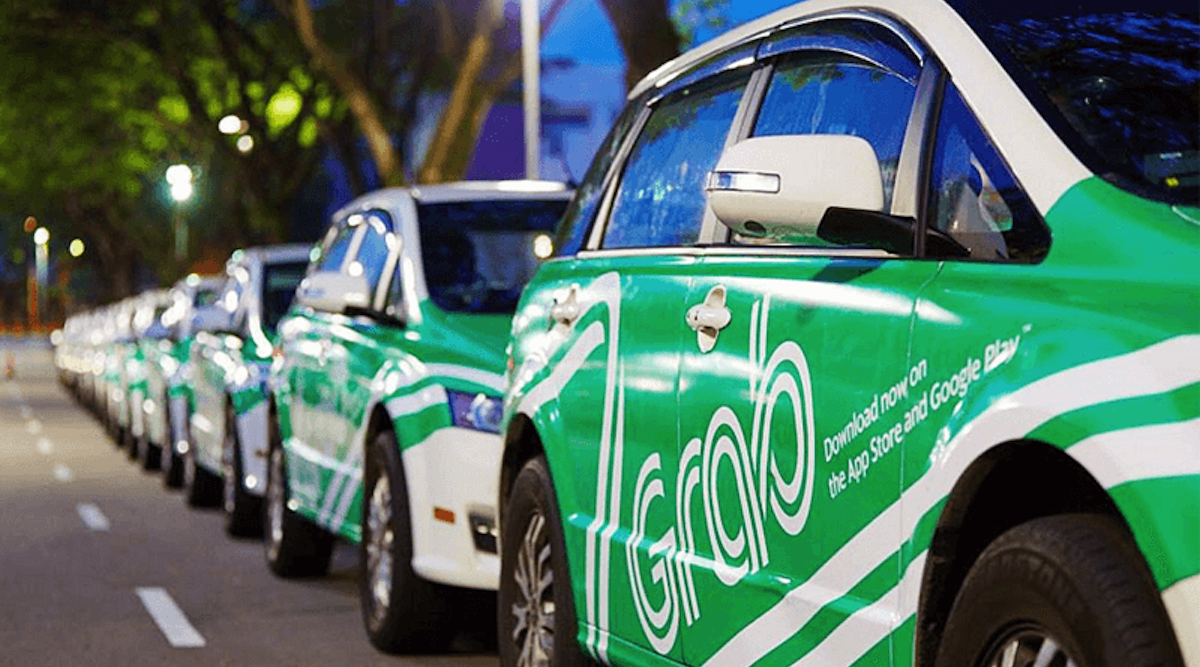
    More than a year after its initial launch, GrabTaxi’s Uber-like GrabCar is now available in Jakarta, Indonesia’s capital.

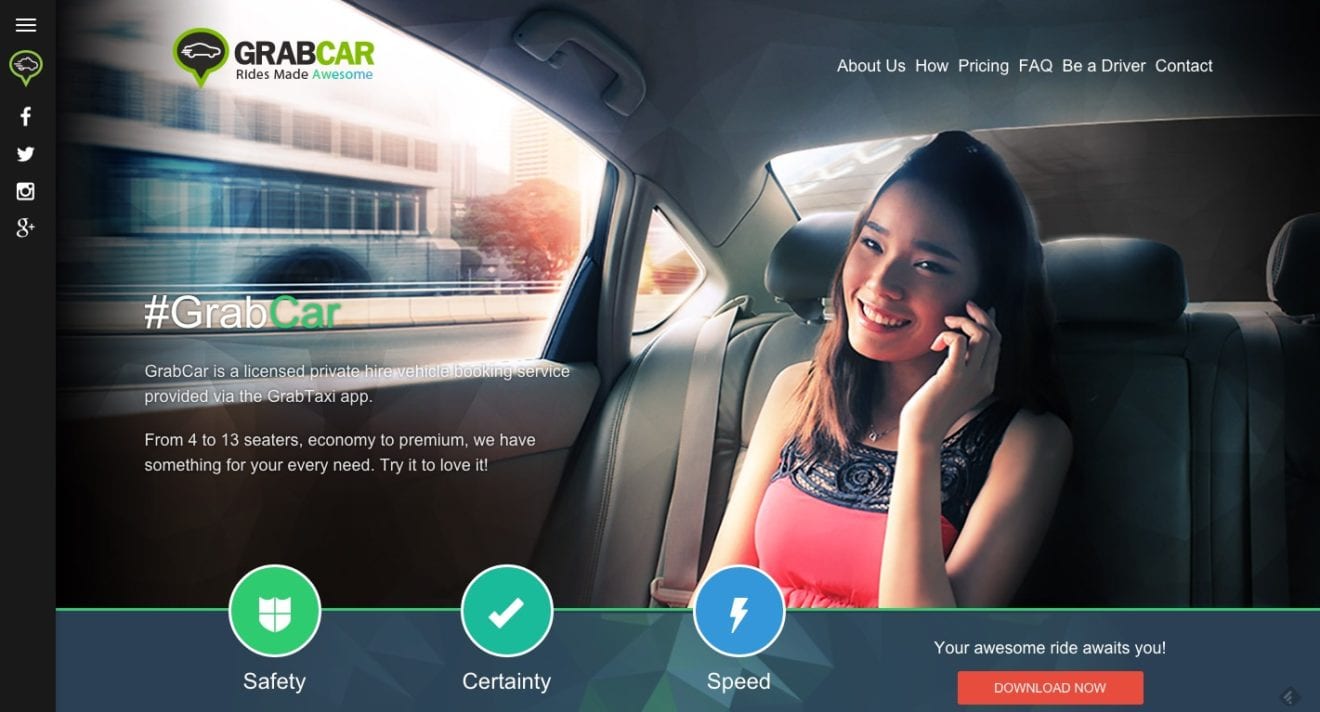
    GrabCar signs up car owners to become part of their on-demand fleet. It’s the newest transportation option from GrabTaxi, which now covers regular taxis, premium cars, and motorcycle taxis in Jakarta.

    Price-wise, a GrabCar ride is cheaper than a regular taxi in the city. In contrast to a metered taxi, the rate will be fixed. GrabCar is available as a new tab within the GrabTaxi app, and interested users can calculate the fare for their usual routes. But for now, actual rides are only available for trips between two vicinities: Semanggi and Kemang.

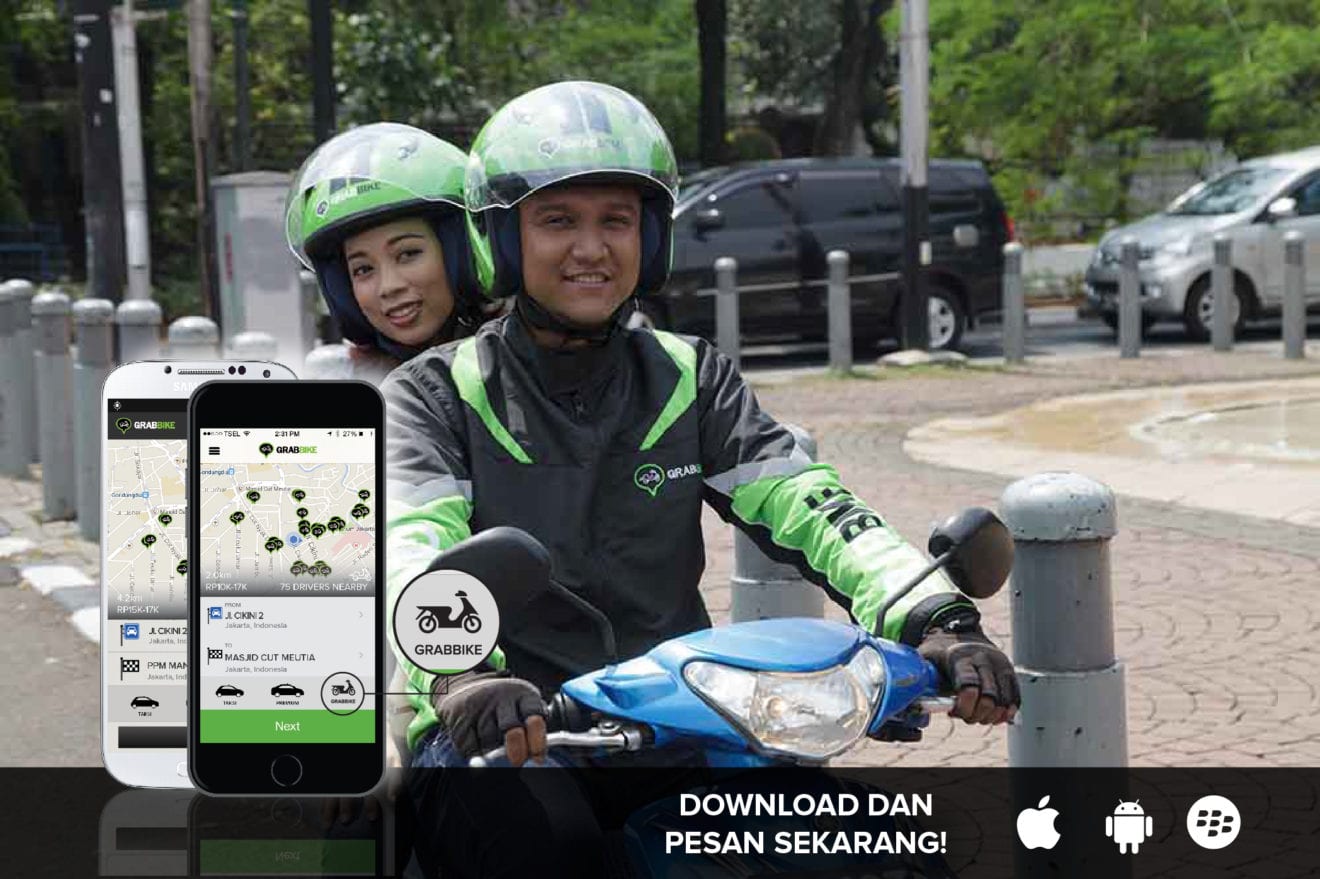
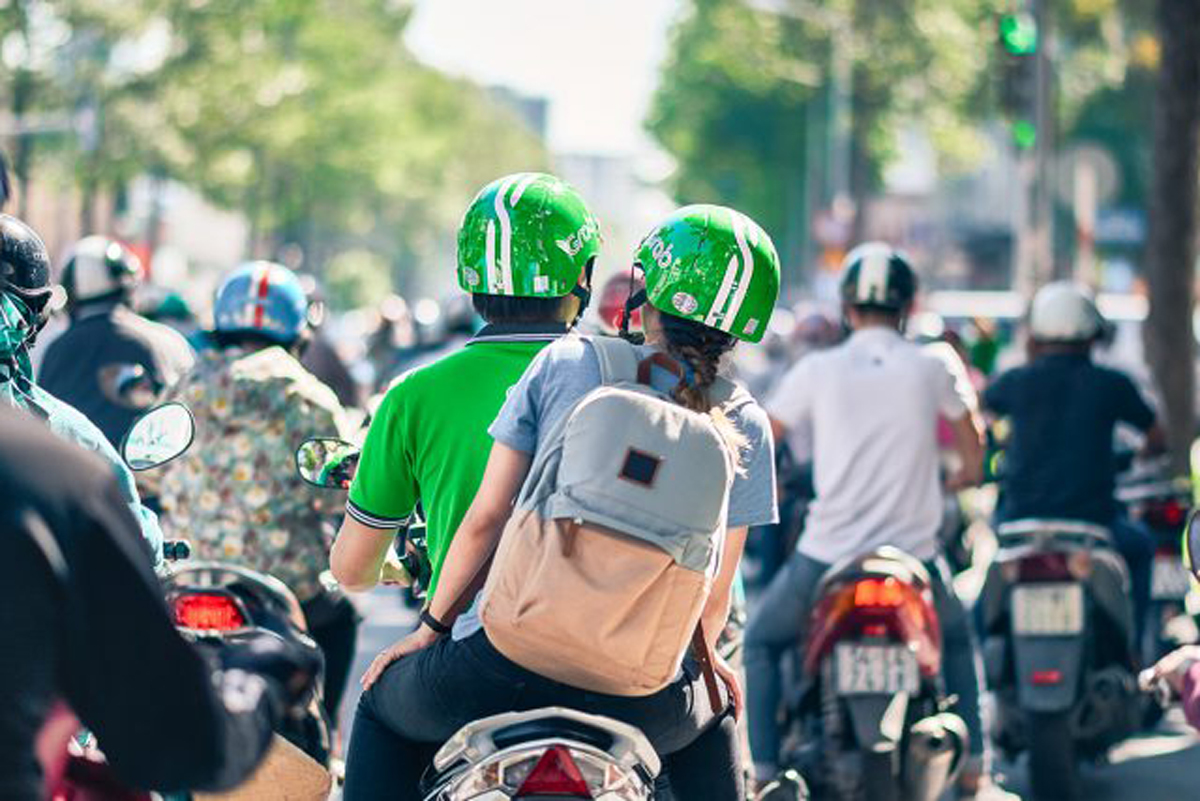
    To introduce the new service, GrabBike offers rides for free from August 9 to August 31.

    GrabCar is a direct competitor to Uber, which has been available in Jakarta since mid-2014, offering either UberBlack for premium cars or UberX for cheaper rides. Uber’s cars are available everywhere in the city, yet GrabCar has one large advantage over Uber in Indonesia at this point: it allows cash payments. Few Indonesians have credit cards, which poses a challenge to Uber’s growth. But since Uber has already introduced cash payments elsewhere, it might follow suit in Indonesia as well.

    GrabCar, which is part of the Malaysian startup MyTeksi, is already available in countries like the Philippines and Singapore.