Tag: grabfood

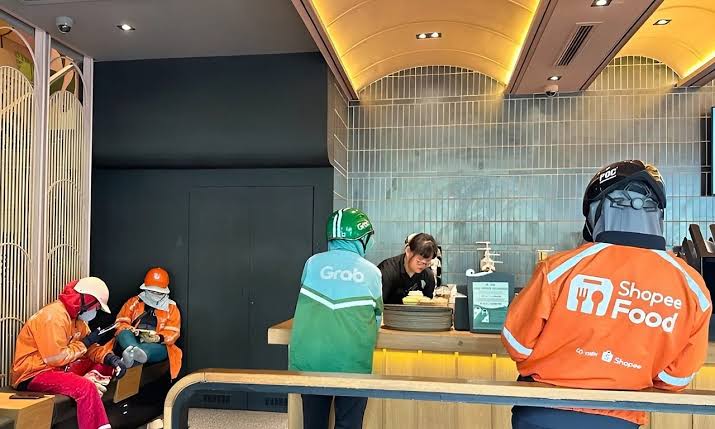
  • ShopeeFood Launches in the Philippines Across Metro Manila

    ShopeeFood Launches in the Philippines Across Metro Manila

    Shopee launched its food delivery service ShopeeFood in the Philippines on September 16. The country is now its fifth market in Southeast Asia.

    The service is starting in Metro Manila. It embeds restaurant ordering straight into the main Shopee app to reach millions of existing e-commerce shoppers.

    Integration inside the main platform

    Instead of releasing a standalone app, the company built food delivery directly into its primary interface. Users can browse menus, track couriers, and complete orders without leaving the core app. The feature links to the ShopeePay digital wallet. It also lets diners spend and earn Shopee Coins on meals.

    Early restaurant partners include McDonald’s, Pizza Hut, Domino’s, Taco Bell, Dairy Queen, Krispy Kreme, and Potato Corner. For now, the rollout covers only selected areas and user groups across the capital region.

    Challenging the delivery duopoly

    ShopeeFood enters an urban market long dominated by GrabFood and foodpanda. Housing food delivery inside a high-traffic retail app lowers customer acquisition costs. But moving meals demands tighter dispatch networks and faster rider fulfillment than parcel logistics.

    Restaurant operators gain immediate use on merchant commission fees with a third major delivery platform in play. The real test will be rider retention and delivery speeds during peak lunch and dinner hours, when rivals already run dense fleet networks.

    The regional playbook

    This Philippine debut mirrors the operational strategy Sea Limited used in Indonesia and Vietnam. In those markets, the parent firm tied food delivery to e-commerce to boost daily active users and drive transactions through its digital finance channels.

    Pilot testing began in early September ahead of the official September 16 release. The service will expand to more districts across Metro Manila in the coming weeks before determining rollouts outside the capital.

  • Airasia halts food delivery service in Singapore

    Airasia halts food delivery service in Singapore

    Airasia’s food delivery ambitions seem to have halted in Singapore. The brand’s web-based platform informed users that addresses within Singapore were outside its coverage area. This was the case for 12 consecutive days from 20 December 2022 to 31 December 2022.

    Airasia’s food app was launched in Singapore in February 2021. As part of the launch in the Singapore market, airasia food was on the hunt for F&B operators to sign up as merchants, offering a special sign-on rate as low as 8% for the month of March.

    Compared to other food delivery platforms, such as FoodPanda, Deliveroo and GrabFood, airasia’s food delivery service initially charged eateries a lower commission rate of 15% without any hidden fees or charges to the F&B operators. This allows for eateries to keep their profits favorable.

    When the app initially launched in Singapore, an airasia spokesperson said, “Our strength in technology and logistics infrastructure, plus deep insights to our customers’ preferences will allow us to remain the preferred choice for Singapore customers. We are not distracted by competitive forces and will continue to stay focused on bettering our delivery speed to under 30 minutes, product and service offerings.”

    The food delivery service was part of airasia foray into digital services and superapp ambitions. In November 2022, airasia’s parent company, Capital A enhanced the brand’s Super App by introducing airasia chat, games and the newly launched airasia gifts – allowing the community of airasia members to connect, play and share.

  • Indonesian F&B startup Dailybox enters Singapore

    Indonesian F&B startup Dailybox enters Singapore

    An Indonesian-based online restaurant startup, Dailybox, opened a new kitchen in Singapore. Various Indonesian dishes can now be ordered through GrabFood delivery service in Singapura.

    Dailybox Group CEO Kelvin Subowo explained that they decided to expand business to Singapore due to dependence of the SIngporean toward food delivery services. Survey showed that nearly half of the Singapore population, or around 2.5 million people, used food delivery services in the country in 2021.

    The number is expected to increase to 3.6 million in 2025. In additio, consumers in the west area of the city-state reportedly want more variations of non-local food.

    “Jurong is one of the densely populated areas. Unfortunately, F&B merchant in this location does not vary. To meet the consumers need, Dailybox joins and becomes one of the  F&B merchants in Supply Chain City area,” Kelvin said Friday, Oct. 21.

    Dailybox Group head of product, Arcad Fadillah, said that through the new opening, his side could introduce to the Singaporean public that Indonesian dishes are not only nasi goreng or sate ayam (chicken satay). “A number of best Indonesian cuisines from Padang, Manado, Bali, Lombok, and Java areas have become featured dishes at Dailybox Jurong,” he said.

    Dailybox is available in Supply Chain City, Jurong. It offers more than 20 menus from various Indonesian regions, namely tongseng kambing of Central Java, ayam woku and rica-rica from Manado, gulai ikan from Sumatra, until bakwan sayur and tempe mendoan with various traditional sambals.

    “For the people of Singapore who like vegetables, we introduce Pecel dish with Javanese peanut sauce. We also have Ayam Taliwang from Lombok that will definitely be favored by spicy food lovers,” Arcad said.

    Established in 2018, Dailybox created rice menu with Indonesian and international dishes. It debuted as a rice box provider before adopting a cloud kitchen business and partnering with food delivery service providers.

  • ShopBack users can now enjoy extra savings on all GrabFood orders

    ShopBack users can now enjoy extra savings on all GrabFood orders

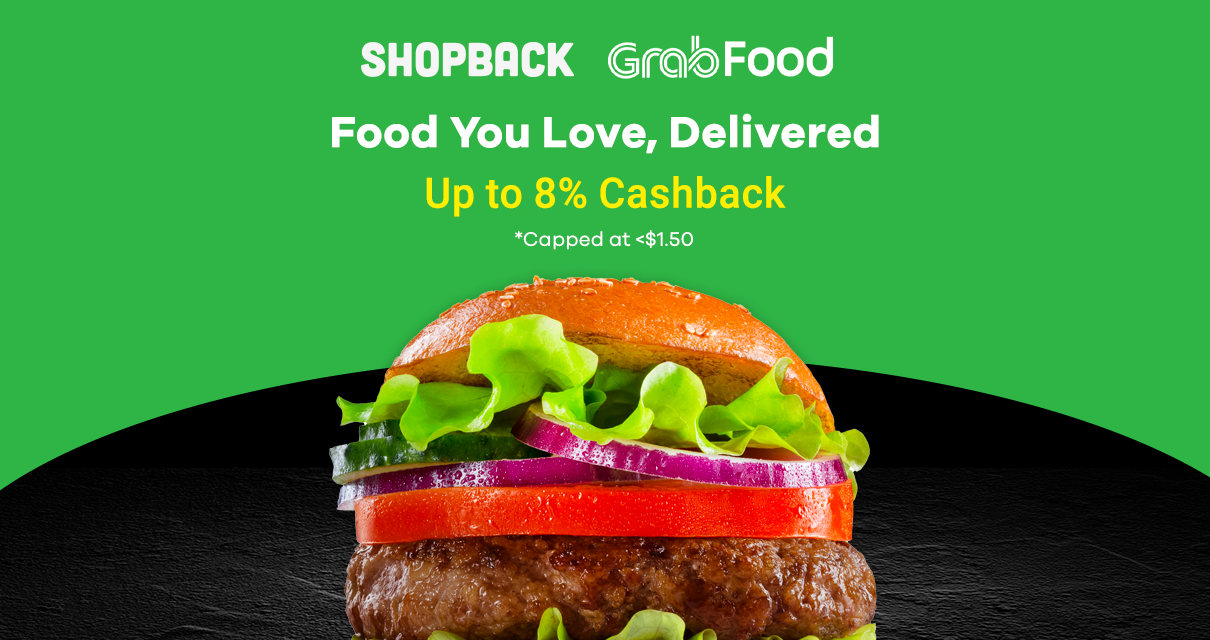
    GrabFood has officially launched on ShopBack, enabling 1.5 million ShopBack users in Singapore to enjoy cashback on their GrabFood orders. Users can now save a little extra when they are placing a food delivery order from their favorite F&B outlets, including McDonalds, Playmade, and Din Tai Fung.

    • New GrabFood customers will get 8% cashback (capped at $1.50)

    • Existing GrabFood customers will get 2% cashback (capped at $0.40)

    To access these rewards, users have to first launch the ShopBack app, then type in “GrabFood” in the search bar or click on “GrabFood” under the New Stores on ShopBack section. This will redirect the user from the ShopBack app to the GrabFood app, allowing for the cashback to be tracked. The user should have the latest version of Grab installed.

    “We are thrilled to add GrabFood to our growing line-up of merchants. The pandemic has resulted in many preferring to consume their meals from the safety of home, and this partnership will help to facilitate the shift in consumer behavior from restaurant dine-in to pick up, takeaway, and delivery. We have also received many requests from our users to on-board GrabFood, and today, we are happy to be able to make this a reality and bring even more cashback options for our users,” said Joel Leong, Co-founder of ShopBack.

    A recent report by Facebook and Bain & Company found that there has been a shift to value-for-money purchasing across Southeast Asia as conservatism sets in, as 57% of survey respondents cited ‘value’ among their top-three purchasing considerations. This is more pronounced in Singapore, where around 70% cite ‘value’ as a top consideration.

    “Singaporeans are passionate about food and appreciate the convenience. Also, true to our kiasu nature, we never want to miss out on a good deal and we are constantly seeking out value. As such, this partnership with GrabFood has all the right ingredients for success,” added Leong.

    “As one of the leading digital lifestyle apps in Singapore, we are always finding new ways to create more value for our customers with every dollar they spend on our products and services. We are therefore pleased to be able to launch GrabFood on ShopBack. At a time when consumers increasingly seek out apps and platforms that empower their digital lifestyles, we are confident that this partnership can serve their evolving needs,” said Gillian Ang, Head of Marketing for Grab Singapore.

    ShopBack is available for download on the App Store and Google Play for free.

  • Grab now has more rivals than ever before in Vietnam

    Grab now has more rivals than ever before in Vietnam

    From an e-hailing app, Grab has made great steps forward, providing many different services. Most recently, it started the payment service GrabPay and lending service Grab Financial. The consumer lending market in South East Asia is very large. As estimated by the World Bank, about 2 billion people in the world cannot access bank services, and most of them are in Asia Pacific.

    The non-cash payment market, according to Grab, is worth $500 billion in South East Asia. An analyst commented that Grab is wise taking a ‘roundabout’ approach to consumer lending (it conquered the transport market first before aiming for the consumer credit market).

    Consumer lending is a fertile business field for Chinese e-commerce firms. The firms offer online payment apps to users to ‘learn’ about their financial capability.

    Grab, as an app, quickly attracted users, especially investors. Just within six years, Grab became an unicorn company, i.e. an unlisted technology firm with valuation of $1 billion and higher, in South East Asia. Analysts estimate that Grab is valued at $6 billion.

    The challenges

    The total number of Grab downloads has reached 95 million all over South East Asia. This could serve as the launch pad for it to conquer the consumer lending market.

    “GrabPay e-wallet will be used for both transport and food delivery services, two of the most used services in South East Asia,” said Jerry Lim, director of Grab Vietnam.

    However, the analyst said, by expanding its business, Grab would have to compete with more rivals who are ‘powers’ in their fields. In online payment, for example, it will have to compete not only with AirPay (Sea) and Alipay (Alibaba Group), but also with local firms such as ZaloPay (VNG) and MoMo.

    In Indonesia, Grab bought an e-commerce platform, Kudo, in April 2017. Grab believes that this is the factor which can help expand GrabPay. However, in Vietnam, Grab’s two big rivals – Sea and Alibaba — both have strong support from two popular e-commerce floors – Shopee Vietnam and Lazada Vietnam.

    Similarly, GrabFood has rivals in the food delivery sector, where Sea’s Now, which inherited the large custom from Foody, is the leader.

  • GrabFood grabs pole position in Vietnam food delivery market

    GrabFood grabs pole position in Vietnam food delivery market

    Despite being a new entrant, GrabFood has experienced rapid growth in the online food delivery market. GrabFood recently announced that it has grown 25 times since June 2018, in terms of orders received. A survey by Kantar TNS in January 2019 found that GrabFood was the most often used food delivery service in Hanoi and Ho Chi Minh City, as cited by 68 percent of respondents.

    The GCOMM market research company, which polled 600 people in Hanoi and Ho Chi Minh City, said in a recent report that 98 percent were satisfied with GrabFood’s service.

    This was a surprising outcome, given that GrabFood is a new entrant in Vietnam’s food delivery market, which is witnessing fierce competition with the likes of Foody.vn, Now and Vietnammm all in the fray.

    Grab’s ecosystem with a large network of driver-partners has greatly contributed to this success. More than 175,000 driver-partners in 15 cities and provinces have joined GrabFood’s network within seven months. The problem of recruiting a huge number of partners, which demands a large recruitment team and financial resources and yet takes many years, has been overcome.

    Driver-partners also saw a 20 percent increase in income from delivering food and parcels, according to latest statistics from Grab.

    Instead of offering a slew of discounts and other promotional programs to attract customers, GrabFood competes based on creative strategies, adapting to the diverse demands and tastes of customers in the various regions. GrabFood has also focused on building a network of merchant-partners. According to a Grab representative, an expansion in the number of merchant-partners was imperative for further growth. GrabFood cares about its partners’ growth and wants to build a win-win relationship so that they can grow together, the representative said.

    For example, GrabFood has many exclusive menus of well-known restaurants with “GrabFood Signatures”. These co-created dishes and drinks are constantly in the top three of most ordered items at big partners like Gong Cha and MeetFresh.

    In addition, GrabFood has reduced the average delivery time to just 20 minutes, which means customers can enjoy their favorite food delivered fresh and delicious. This, in turn, means that merchant-partners can retain customer loyalty. At the same time, marketing campaigns undertaken in cooperation with GrabFood help them increase their customer base.

    The Grab representative also said that on average, merchant-partners earn up to 300 percent in incremental revenue within two to three months of being on the platform.

    GrabFood has the advantage of being a technology mobile platform to which smart functions have been integrated, including locating the nearest restaurants, updating status of orders and chatting with drivers via GrabChat.

    Cashless payment for food delivery via GrabPay by Moca has been beta tested in Hanoi, and will soon be expanded to all three cities GrabFood currently operates in.”Our goal is to become the number one on-demand food delivery service in Southeast Asia and Vietnam in 2019,” the representative said.At the beginning of 2019, GrabFood announced that it was expanding its network to 15 cities and provinces.

    “On the whole, Grab’s management has made good moves. Expanding into payments and food delivery are smart, synergistic moves,” said Nitin Pangarkar, Associate Professor, Department of Strategy and Policy at the National University of Singapore (NUS) Business School.

  • Rivalry heats up in Vietnam’s food delivery market

    Rivalry heats up in Vietnam’s food delivery market

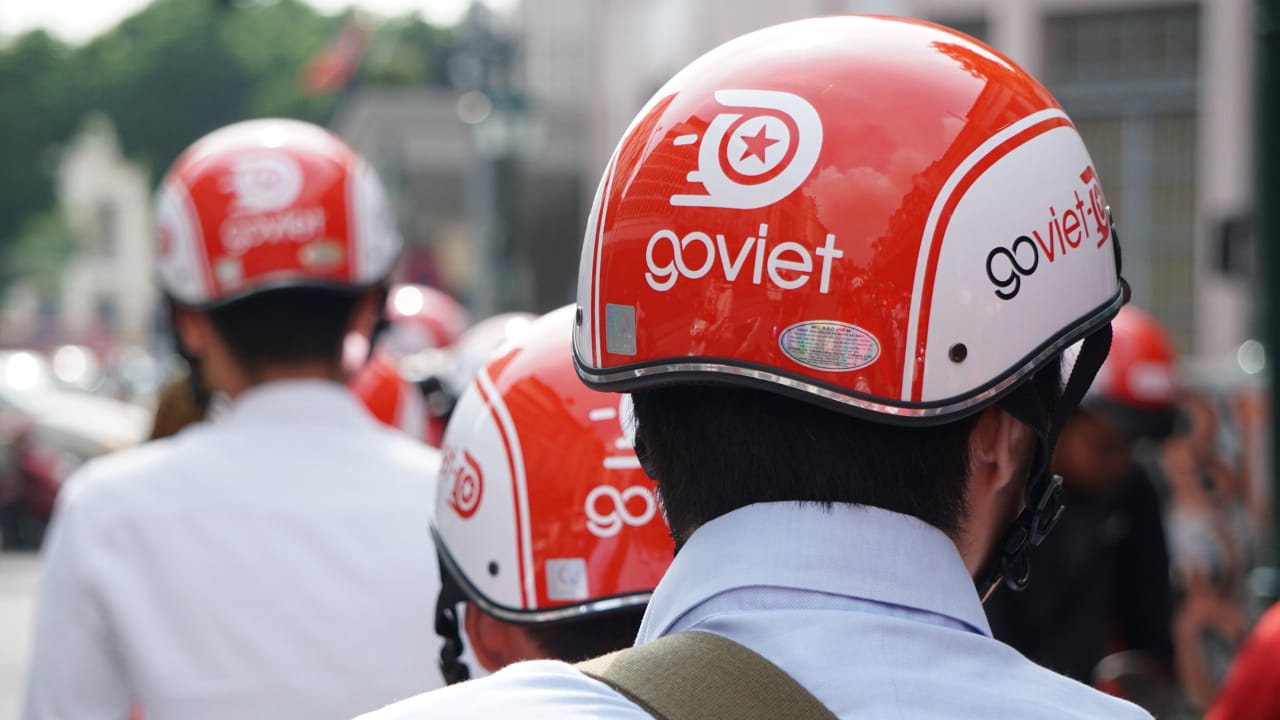
    Last week, a sea of red filled the inside of a milk tea shop in Ho Chi Minh City instead of regular young customers usually found in such places. GoViet drivers were queuing up to purchase food ordered by customers over its online delivery app Go Food, which was running a 50-percent discount program along with free delivery within 5 kilometers.

    The very next morning, the shop was filled with green shirts of Grab drivers. Grab had launched a free delivery promotion for the first 999 cups of milk tea ordered.

    Gradually, the green shirt – red shirt war is becoming visible on the streets.

    Despite being new entrants in the online food delivery market, both Go Viet and Grab are using various measures to attract and capture customer habits. Everyday, these two tech companies spend big on promotions across a wide range of food and drinks.

    They are also recruiting stars from the entertainment industry to endorse their service.

    From the get go, Go Viet had announced a partnership with singer Son Tung M-TP, who broke the record of Asia’s most viewed music video in 24 hours last May, as the company’s brand ambassador.

    Similarly, Grab’s start-studded ads feature diva My Tam, goalkeeper Bui Tien Dung and striker Nguyen Quang Hai of the national football team.

    While having large financial and technological capabilities, both Grab and Go Viet face many challenges after entering the market later than competitors like Delivery Now by Foody, Vietnammm, and Lala, which are apps well known to many customers.

    Delivery Now offers a wider range of food on its menu than Grab and Go Viet, had has a dense network of partners from large restaurants to small pavement stalls, industry insiders say.

    Delivery Now is a product of Foody Corporation, a Vietnamese food service startup that was acquired by Singapore-based internet firm Sea LTD last year; Vietnammm.com is a subsidiary of Takeaway.com, one of the world’s largest online food ordering websites based in the Netherlands; and Lala is invested by Ho Chi Minh City-based Scommerce Group, an information technology and services firm.

    Many experts believe that the race for market share between Go Viet and Grab will resemble that of Grab and Uber when they first entered Vietnam.

    Both Grab and Go Viet are aspiring to become super apps, for which food delivery is an indispensable keystone. In addition to attracting users with incentives and advertising, the two companies are spending a lot of money on reward policies to incentive drivers and expand their network of partner restaurants.

    Grab Vietnam CEO Jerry Lim claimed GrabFood’s growth has been very impressive, with the number of its contractors increasing eight-fold in just a month of testing in Hanoi. GrabFood was released in the city early last month, after a period of testing.

    In Vietnam, Grab is reaching delivery speeds of under 25 minutes and aims for a further reduction to 20 minutes per order, the fastest in regional markets.

    Grab Food is available in both Hanoi and Ho Chi Minh City, while Go Food is only present in the latter.

    Go Viet, however, remains confident that it will meet the needs of customers, aiming to partner up with thousands more restaurants nationwide in casual dining, fast food or luxury dining.

    “Food delivery and e-wallets are promising market segments,” GO Viet CEO Nguyen Vu Duc said after a few months of competing against Grab.

    However, these delivery apps also have certain limitations. For some items on their menu, drivers have to pay up front when ordering for customers in non-partner restaurants.

    Not all drivers are happy to buy food this way as waiting is time consuming, they have to make advance payments and risk the customer not accepting delivery.

    Do Xuan Quang, deputy head of Vietnam Logistics Business Association, said Vietnam was the fastest growing e-commerce market in Southeast Asia, and along with the strong growth of the logistics industry at 15-20 percent, a similar movement in the delivery market was not surprising.

    In 5-10 years, the delivery market in Vietnam will be valued at around $10 billion, he said.

    U.K.-based market research firm EuroMonitor International values the food delivery market in Vietnam at around $33 million this year and at more than $38 million in 2020. It also puts the annual growth rate of the market at 11 percent.

  • Vietnam leads Southeast Asia in digital economy development

    Vietnam leads Southeast Asia in digital economy development

    Vietnam’s internet economy is the largest relative to GDP in terms of gross merchandise volume in Southeast Asia this year. A study by Google and Temasek, a Singaporean holding company owned by the Government of Singapore, said gross merchandise volume (GMV) traded over the Internet in Vietnam was 4 percent of GDP. The study encompasses ride-hailing, e-commerce, online travel and online media.

    In second place was Singapore with 3.2 percent, according to the study which covered Indonesia, Malaysia, the Philippines, Singapore, Thailand, and Vietnam. Indonesia’s digital economy had the fastest absolute growth and looks set to reach $100 billion in 2025.

    In the last few years online businesses have been booming in Vietnam, with last year the digital economy growing by more than 25 percent, a rate that can be sustained for the next two or three years, according to the Vietnam E-Commerce Association.

    It said online sales are set to hit $10 billion by 2020, accounting for 5 percent of total retail sales.

    A Financial Times report last April cited Bain, a U.S.-based global management consulting firm, as estimating that Southeast Asia had 200 million digital consumers, or people who bought goods or services online, out of an adult population of 405 million. Vietnam, with a population of 93.7 million, accounted for 35 million.

    Vietnam’s youthful population is among the keenest users of mobile devices in the region, while the country’s consumers spend more time online than most of their neighbors, several studies have found.

    Research firm Nikkei estimated Vietnamese spend nearly 25 hours online per week, on a par with or just behind Singapore and the Philippines.

    In the ride-hailing sector, many players are expanding investments. Vietnam recently saw new entrants such as local firm FastGo, GoViet, a subsidiary of Indonesia’s Go-Jek, and Aber.

    Current market leader Grab has expanded to offer GrabFood and GrabCar Business, the latter targeting the corporate sector.

    But experts say Vietnam and many other countries in the world face a slew of challenges in the digital economy such as upgrading the skills of the workforce and adapting to rapidly changing technologies.

  • OVO lead in Cashless Payment Race in Indonesia

    OVO lead in Cashless Payment Race in Indonesia

    Lippo-backed cashless payment service OVO has announced a partnership with Tokopedia, Indonesia’s largest e-commerce platform. OVO said in a statement on Wednesday that the deal would help it cement its position as the country’s largest mobile payment platform in terms of transaction volume and reach.

    “The partnership will add Tokopedia’s close to 80 million active monthly users to OVO’s existing userbase of 60 million. It will also add more than 4 million Tokopedia merchants to what is already a market-leading merchant network, covering malls, smaller retailer, as well as GrabFood partners and Kudo agents,” the company said in the statement.

    OVO has been partnering with online-based ride-hailing service Grab since December last year, while also targeting brick-and-mortar shops and restaurants across Indonesia.

    “We see this landmark partnership as a validation of our strategy to enable payments for all Indonesian companies, both online and offline. Cash is a very difficult habit to break and consumers will only switch to cashless if it’s easier and safer than cash,” said Harianto Gunawan, director of enterprise payments at OVO.

    OVO chief executive Jason Thompson said the company expects a surge in new users and additional transactions from the e-commerce platform.

    “We have a very bullish outlook as we close out 2018. Having established ourselves as the No. 1 mobile payment platform by transaction volume, this partnership with Tokopedia and our push into e-commerce will further accelerate our growth,” Thompson said.

    The company said OVO is now available in 90 percent of shopping malls across the country, offering cashless payment options to customers at hypermarkets, department stores, coffee shops, cinemas, parking operators, hospital chains and food and beverage outlets.

    It has also set a target to expand QR-code payments to 100,000 small and medium enterprises by the end of this year.

    OVO’s online-to-offline business comprises its partnerships with Grab and Kudo, a service that allows individual agents to sell digital products, such as phone credit, tickets or insurance, to customers. Kudo currently has about 1.7 million agents in its network.

    OVO said its latest deal with Tokopedia would allow it to reach 93 percent of districts in Indonesia currently served by the e-commerce platform. It also plans to secure more deals with other e-commerce platforms.

  • Aber ride-hailing service hits the road in Hanoi

    Aber ride-hailing service hits the road in Hanoi

    Aber, the second Vietnamese ride-hailing service, launched its Hanoi operations Friday, four months after making its HCMC debut. The ride-hailing market has seen new entrants after Uber’s departure, including Vietnamese firm FastGo, GoViet – a subsidiary of Indonesia’s Go-Jek, and the latest Aber. Aber estimates it will attract 5,000 taxi drivers and 5,000-10,000 motorbike drivers in Hanoi this year.

    In HCMC, the company is working with 7,000 drivers serving  more than 60,000 customers. Aber general director Huynh Le Phu Phong said the company was not afraid of major competitors such as Grab because it offers a wide variety of transport services.

    The firm will offer similar rates as other competitors, but give better benefits to its drivers, he said.

    “We do not force drivers to only work for Aber. They can also work for other companies to increase their income and improve their lives,” Phong said.

    In its latest update, Aber has added new features including a navigation system and accurate positioning to each alley, village, district and province in Vietnam.

    Vietnamese engineers designed the software.

    Next year, the company will focus on expanding its services, including Aber Express for delivery services, Aber Track for freight services, Aber Business for companies and Aber Travel for travel services, Phong said.

    Aber focuses on serving individual customers to help them save money, as well as drivers, when their vehicles are vacant, he added

    Instead of having to drop off items at the post office or delivery centers, drivers will come and pick things up right at the customer’s house.

    Current market dominator Grab has expanded its service to include GrabFood and GrabCar Business, the latter targeting the corporate sector. These moves pose further challenges for local long-standing taxi firms like Mai Linh, Taxi Group and Vinasun.

  • Grab, Fave form strategic partnership to boost growth

    Grab, Fave form strategic partnership to boost growth

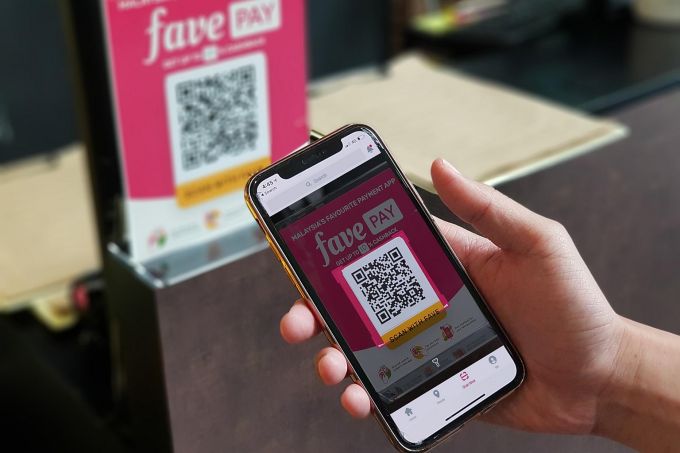
    Prominent O2O services Fave and Grab have announced a strategic partnership to accelerate growth for both platforms across the region.

    The partnership combines the strengths of Fave’s broad merchant network and FaveDeals platform with Grab’s large user base and growing ecosystem.

    Starting this week, Fave’s merchant sales team will onboard merchants for GrabFood and GrabPay in Singapore and Malaysia, aiming to further accelerate the growth of both firms’ respective food delivery and mobile wallet services in these countries. Later in October, Fave will expand its platform with GrabPay mobile wallet.

    Fave customers can already spend their GrabPay balance at restaurants and retailers in the Fave network and deals available on Fave. Users may spend their credits across multiple categories and receive discounts and cashback offers. As a result, Fave merchants will now be able to access Grab’s Asean-wide customer base of more than 110 million app downloads.

    The integration of the GrabPay wallet was done through GrabPlatform, a suite of APIs that enables partners to access components of Grab’s technology like logistics and payments. This is the first of its kind integration in a partner app for the Grab Platform.

    Grab Financial’s senior MD Reuben Lai said” “We’ve always believed that in order for the region to go cashless, we would need a collaborative approach and are happy we can now count Fave, one of the fastest growing O2O platform in Southeast Asia as a strategic partner. As the region’s leading fintech platform, we will increasingly offer integrations through GrabPlatform. This allows more local and global partners to tap into previously untapped consumers and grows the Grab ecosystem as an everyday app.”

    Founder of Fave Joel Neoh added: “This collaboration with Grab provides a valuable win-win situation for both merchants and consumers. By providing GrabPay wallet as a payment option on the Fave platform, our merchants will immediately benefit from additional customer traffic from the millions of people who use the Grab platform daily. For customers, we have just made life easier for paying at our Fave merchants by partnering with the leading mobile wallet in the region.”

    The two partners are exploring additional ways to collaborate and help small and medium-sized enterprises grow their business. Further collaborative efforts will be focused on integrating more services on both platforms.

  • Competition heats up in third-party merchandise, food delivery market

    Competition heats up in third-party merchandise, food delivery market

    With huge demand driving Vietnam’s merchandise, food delivery market, investors are keen on a piece of the action.

    After operating for a year in HCMC Lalamove, a logistics company headquartered in Hong-Kong specialising in same-day delivery and courier services, came to Hanoi Wednesday.

    A day earlier Grab had released its food delivery app, GrabFood, after a period of testing.

    The food delivery market looks extremely lucrative, and businesses want to cash in, industry insiders said.

    “By 2020 Vietnam will have over 50 million customers shopping online,” Phillippe Rambaud, head of Lalamove’s Hanoi market development division, said. “This will be a large market for on-demand delivery services.”

    Nguyen Duc Loi, CEO of Lalamove Vietnam, said the firm aims to have 10,000 contracted drivers on a permanent basis.

    Grab Vietnam CEO Jerry Lim claimed GrabFood’s growth has been very impressive, with the number of its contractors increasing eight-fold in just a month of testing in Hanoi.

    “GrabFood is the next major step for Grab in becoming a super-app which meets all the essential needs of people’s daily lives,” he said.

    “The way each individual service interconnects and complements each other allows us to build an ecosystem that delivers real benefits not only to our customers and drivers but also to our business partners and vendors,” Jerry Lim added.

    Go Viet has launched Go Send as a complementary service, but also aims to develop it into a super-app like Grab. It also plans to launch a food delivery service later this year.

    Last year Go Send delivered over 800,000 fashion products and handled 2.3 million food orders for 203,000 small-scale online vendors.

    But despite their major success in the online delivery market, the three entrants have to face the difficulties that come when competing with established incumbents popular in the market such as Delivery Now (Foody), and Vietnammm.

    Besides, many of their drivers are reluctant to make advance payments to vendors and take on the risk of wrong delivery and customers not accepting goods.

    Lalamove for instance has a policy of having drivers make advance payments for food/goods of up to VND3 million ($130.4) in HCMC and VND2 million ($86.95) in Hanoi.

    Many vendors still do not focus on delivery through third party applications as an important income stream.

    A representative of a milk tea chain in Hanoi told VnExpress that revenues still come mainly from direct sales and phone orders as well as the chain’s own digital app.

    Its response times are still much faster than using third party apps, he said.

    As more and more providers of delivery services emerge, he believed the most important factors vendors would look for are effective support systems and prices.

    The intense competition means consumers will benefit increasingly from the variety of choices and the discounts and improvements in service competitors constantly make to gain market share.

    Companies like Grab, Go Viet and Lalamove uniformly claim competition is good for the market, consumers and the businesses themselves.

    One of them said the Vietnamese market would see even more competitors in future.

    Analysts said this boom would soon spark a struggle between digital delivery platforms and traditional services just like the ongoing between Uber and Grab and traditional cabs.

    Do Xuan Quang, deputy head of Vietnam Logistics Business Association, said Vietnam was the fastest growing e-commerce market in Southeast Asia, and along with the strong growth of the logistics industry at 15-20 percent, a similar movement in the delivery market is not surprising.

    In 5-10 years, the delivery market in Vietnam will be valued at around $10 billion, he said.

    U.K.-based market research firm EuroMonitor International values the food delivery market in Vietnam at around $33 million this year and at more than $38 million in 2020.

    It also puts the annual growth rate of the market at 11 percent.
  • Online Food Order Vietnam Rally

    Online Food Order Vietnam Rally

    The Association of Vietnam Retailers says that there has been an exponential increase in the number of people ordering food online in Hanoi and HCMC in the last few years, and it is foreign firms that are cashing in on delivering it.

    The food delivery market is now dominated by Delivery Now, and Vietnammm.com.

    Delivery Now is a product of Foody Corporation, once a Vietnamese food service startup that was acquired by Singapore-based internet firm Sea LTD last year, while Vietnammm.com is a subsidiary of Takeaway.com, one of the world’s largest online food ordering websites based in the Netherlands.

    Invested in by Ho Chi Minh City-based Scommerce Group, an information technology and services firm, Lala is considered a rising star in food delivery sector by industry insiders, having the advantage of hi-tech knowhow from its parent firm.

    Lala connects its users directly with restaurants before its shippers from Ahamove, also a child of Scommerce Group, delivers food.

    Delivery Now has already gained great popularity in the country and GrabFood poses a serious threat, Vu Hoang Tam, co-founder and director of Lala, said.

    “Obviously, GrabFood is already equipped with an army of drivers, which makes it so easy for its delivery service” he said.

    Two months ago, Malaysia-based ride-hailing firm Grab launched GrabFood in Ho Chi Minh City.

    Apart from Malaysia and Vietnam, GrabFood is now available in six others countries in Southeast Asia: Singapore, Indonesia, Cambodia, Myanmar, the Philippines and Thailand.

    GrabFood has partnered with more than 1,000 restaurants around HCMC and is expected to expand its service to Hanoi in late September and Da Nang later this year.

    But GrabFood also has certain weaknesses as it does not link customers with restaurants. Its drivers are simply hired to go to the restaurants and bring back the food requested by customers.

    There is an element of risk involved for the drivers, who have to pay for the food first and collect payment from customers later.

    Currently invested in by Hanoi-based tech firm VCCorp, eat.vn and chonmon.vn are the two names getting known in the food delivery market these days.

    While chonmon.vn targets local customers, eat.vn focuses on serving expats and foreign visitors to Vietnam.

    “If a fierce battle started around 4 years ago for the ride-hailing service in Vietnam, it is time now for a yet another battle in the food delivery market,” a company representative said.

    However there are fears that despite the strong growth of the industry, local firms could be pushed out of the game, leaving the field exclusively for foreign investors.

    Do Xuan Quang, deputy head of Vietnam Logistics Business Association, said Vietnam was the fastest growing e-commerce market in Southeast Asia, and along with the strong growth of the logistics industry at 15-20 percent, a similar movement in the delivery market is not surprising.

    In 5-10 years, the delivery market in Vietnam will be valued at around $10 billion, he said.

    This is clearly a fertile ground for businesses but if Vietnamese firms do not prepare themselves for the race, they will repeat the failure of the logistics sector, allowing foreign companies to take over the market, he added.

    U.K.-based market research firm EuroMonitor International values the food delivery market in Vietnam at around $33 million this year and at more than $38 million in 2020.

    It also puts the annual growth rate of the market at 11 percent.
  • HAWKR launches healthy ‘grab-and-go’ in heart of Quarray Bay

    HAWKR launches healthy ‘grab-and-go’ in heart of Quarray Bay

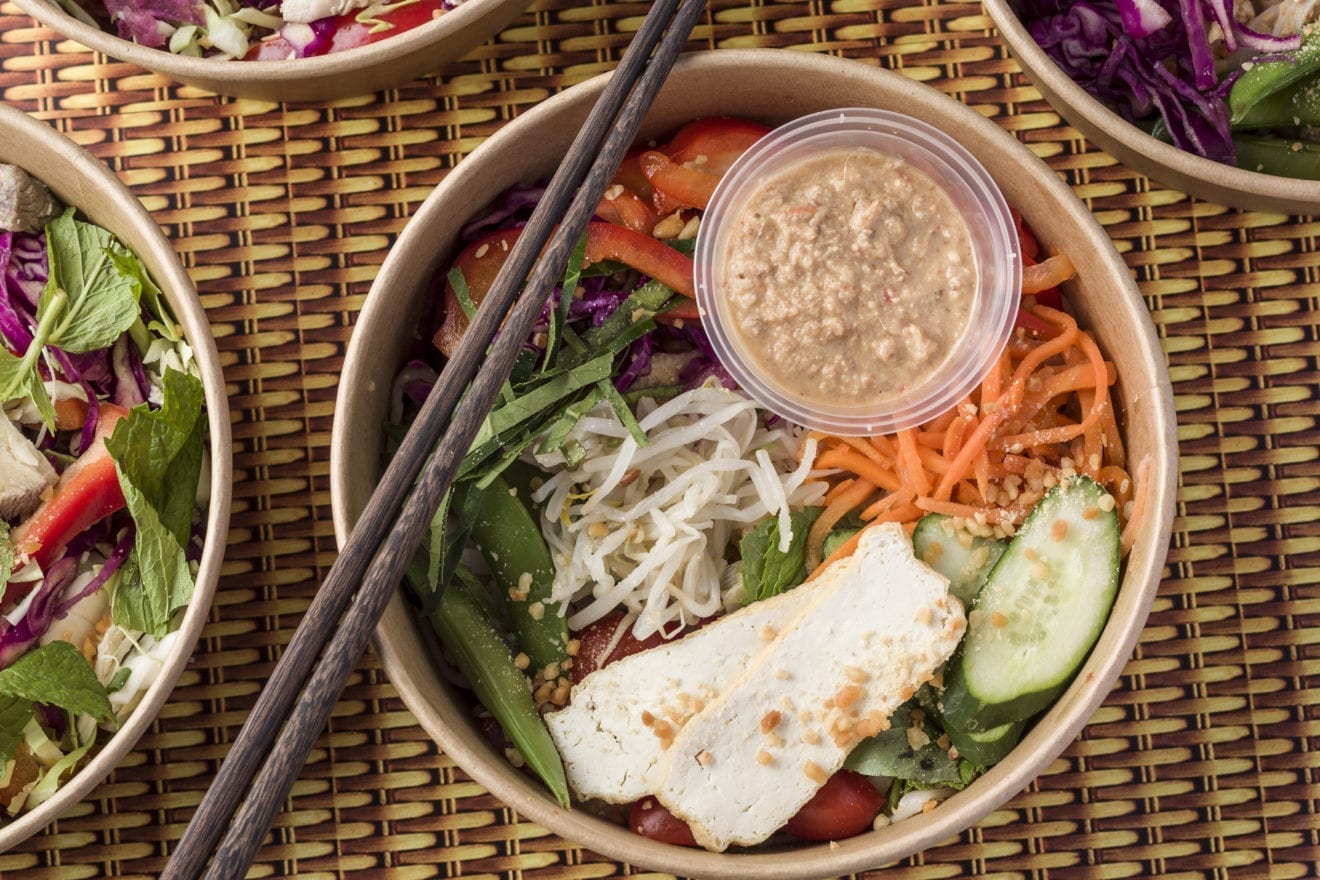
    Using the freshest ingredients and authentic flavours, HAWKR has reconceived Southeast Asian favourites for grab-and-go eating. Curries, soup noodle pots, Vietnamese and Thai baguettes and wraps, healthy breakfasts, bespoke HAWKR juices and tailored, house-blend coffees are on the menu at HAWKR’s new outlet in Quarry Bay.

    Inspired by the hawker food centres of Southeast Asia, serving a variety of regional dishes, HAWKR is newly opened on the ground floor of 36 Hoi Kwong Street, on the corner of Tong Chong Street and opposite the commercial complex of Taikoo Place.

    The contemporary grab-and-go takes on the region’s vibrant food culture from Singapore and Malaysia to Vietnam, Myanmar, Thailand and Indonesia, and brings an innovative and much needed takeaway concept to Hong Kong’s culinary scene.

    In partnership with the founder of Myanmar based lifestyle concept Pun+Projects and restaurateur, Ivan Pun, and consumer private equity professional Jake Astor, pop-up dining and private kitchen chef Mina Park’s nutritious, fresh take on Southeast Asian street food is appealing to time-pressed young professionals and office workers amid the commercial mini-metropolis of Taikoo Place.

    Each dish has been conceived by Mina using the freshest ingredients and HAWKR’s own recipes. No MSG, artificial flavours or preservatives are used in any of the menu items.

    The day-long menu starts with light breakfasts including healthy superfood sabja and chia seed puddings, with fresh fruit, yoghurts and pastries.

    HAWKR is also standing out from the ‘grab-and-go’ crowd by developing its own bespoke coffee blends using only the highest quality beans. Each blend, developed by their resident barista, has an Indonesian coffee base, as well as a mixture of other beans, including Ethiopian and Brazilian.

    HAWKR’s beans are roasted to order by local artisan roaster, Happy Bean Roastery.

    HAWKR avoids MSG and artificial flavouring, and strives to use only ingredients that “we would feel comfortable eating ourselves every day,” said Mina Park.

    “We have worked hard to create dishes that highlight the flavours of Southeast Asia and incorporate the gorgeous herbs and spices that I love.”