Retail News CRM

Tag: GrabTaxi

  • GrabTaxi reiterates Vietnam-wide operations completely legal

    GrabTaxi reiterates Vietnam-wide operations completely legal

    Ride-hailing firm Grab Vietnam insists that its GrabTaxi service is legally allowed to operate nationwide.

    Grab Vietnam countered that GrabTaxi is an app for an e-commerce platform, so its operations would be in accordance with the government’s e-commerce laws.

    Grab Vietnam made the statement after the Transport Ministry has recently shot down a GrabTaxi plan to extend its services to provinces like Ninh Thuan, Dong Thap and Gia Lai. The ride-hailing firm now is allowed to operate in the five cities and provinces of Hanoi, Ho Chi Minh, Da Nang, Khanh Hoa and Quang Ninh.

    However, the firm said its GrabTaxi service is quite different from the GrabCar, which operates in the five above-mentioned provinces and cities, as a part of the ministry’s pilot plan for tech-based transportation services.

    Both GrabTaxi and GrabCar operate under the same Grab application, but GrabTaxi offers a run-of-the mill taxi service, while GrabCar is a service which connects customers with private cars for ride-hailing purposes.

    Therefore, GrabTaxi should be allowed to operate nationwide, stressed the firm.

    This isn’t the first time the ride-hailing firm has clashed with the Transport Ministry. In January, when Grab Vietnam wanted to extend its GrabTaxi service to provinces like Thua Thien Hue, Ba Ria – Vung Tau and Lam Dong, the firm also released a similar statement.

    Grab is currently under an investigation by Vietnamese authorities who say that its acquisition of Uber’s Southeast Asia operations shows signs of breaching local antitrust laws.

    A Vietnam Competition Authority (VCA) investigation found that Grab’s market share in Vietnam had exceeded 50 percent after its ride-hailing rival Uber left the Southeast Asian market in April.

    Under Vietnamese law, mergers and acquitions that result in a company gaining over 50 percent of the market share are restricted in Vietnam.

    The investigation, which began on May 18, is estimated to take 180 days and can be extended for another 120 days.

  • Grab launches carpool services & GrabShare in Indonesia

    Grab launches carpool services & GrabShare in Indonesia

    GRAB on March 13 launched GrabShare in Indonesia, making it the fourth Asean country to offer the service after Singapore, Malaysia, and the Philippines. It was launched in the three countries in December 2016.

    GrabShare will pair two different passenger orders with similar routes in a single trip. This feature allows for a maximum two stops and each passenger may only bring one person with them. There will then be four people in one car and drivers will wait up to three minutes for each passenger at pick-up points.

    “We seek the chance to optimise the use of cars to address Indonesia’s heavy traffic congestion. After it was launched in Singapore, Malaysia, and the Philippines, GrabShare has been effective in attracting more new riders to the Grab platform. We tailored GrabShare to suit drivers and passengers’ needs and made it a seamless and responsive experiences,” says Grab Indonesia managing director Ridzki Kramadibrata.

    Conceptualised, designed and engineered across Grab’s three research and development centres in Singapore, Seattle and Beijing, GrabShare’s matching algorithm ensures that passengers get to their destinations in the shortest possible time.

    The algorithm calculates and determines a match by factoring in the closest available drivers, travel time, overlap of trip routes, detour distance and current traffic conditions before intuitively sequencing pick-ups and drop-offs.

    “Commuters in Jakarta indicated that they are open to carpooling as it offers a more pocket-friendly fare and enables them to socialise with new friends. Drivers had the same feedback and wanted the option of taking short breaks between trips,” adds Ridzki.

    This launch in Indonesia will impact Grab users and drivers. For drivers, GrabShare has the potential to double their income since they will earn the fare for two trips at one go as well as saving on costs and time.

    For passengers, GrabShare will be priced up to 50% cheaper than GrabCar Economy fares and users can bring a friend on the rides at no additional cost, as long as both share the same pick-up and drop-off locations. Grab also provides insurance for drivers and users.

    Local market strategy

    Every city’s traffic conditions and transportation patterns are different. Grab came up with a strategy where all their features have to provide specific solutions for particular cities.

    “At Grab, we embrace and implement a hyperlocal approach to every single aspect of our business. We value the genuine meaning behind local Indonesian words therefore the name of our service, GrabShare, comes from careful consideration as the word ‘share’ holds a deep cultural meaning for Indonesians.

    “Indonesians are known to be very sociable and friendly with smiley greetings and mutual assistance as part of their core values and identity, as well as common etiquette. Through this campaign, we want to rejuvenate this cultural value and evoke the simple joy of sharing stories as well as rides with others,” explains Grab Indonesia marketing director Mediko Azwar.

    GrabShare is currently available in Jakarta, Bogor, Depok, Tangerang and Bekasi.

  • Grab adopts Adyen for payment platform

    Grab adopts Adyen for payment platform

    Ride hailing platform Grab has adopted Adyen to extend the capabilities of its payment platform in Indonesia, Philippines, Thailand and Vietnam.

    The two companies aim to deliver a consistent, frictionless payment experience for customers traveling across markets regardless of device or payment method.

    Grab customers will be offered both traditional cards and, over time, country-specific payment methods, using Adyen’s expertise and data to expand payment options. Adyen supports around 250 payment methods globally.

    “As part of Grab’s drive to make ride-hailing even safer, easier and more accessible to everyone in Southeast Asia, providing trusted, seamless mobile payments is crucial for the overall customer experience. Grab wanted a partner who could support a variety of traditional and alternative payment methods to support our growth across the region,” Grab head of payments and commerce Joel Yarbrough said.

    Business travelers who work within the region can also easily tabulate their business ride spending with Grab through the Grab for Work portal, and companies can automatically pay for their employees’ rides through the use of corporate cards.

    “Southeast Asia is a diverse and highly fragmented region and there is no one preferred method of payment. However, mobile penetration in the region remains high and drives several key trends including the rise of mobile payments and platforms as a service,” Adyen president Warren Hayashi said.

    “Partnering with a fellow innovator and disruptor such as Grab, we are eager to empower commuters in Southeast Asia with the same convenience of hailing a ride seamlessly as paying for their Grab ride with equal ease.”

  • Jakarta taxi drivers protest against Uber and Grab

    Jakarta taxi drivers protest against Uber and Grab

    Thousands of Indonesian taxi drivers have brought parts of the capital, Jakarta, to a standstill in a protest against transport apps.

    The drivers say ride-hailing apps, such as Uber and Grab, have severely reduced their salaries.

    Footage from Jakarta showed some protesters attacking vehicles and apparently threatening taxi drivers not taking part in the strike.

    The drivers have been joined by bus and “bajaj” motorbike drivers.

    Mobile apps like Grab and Uber have disrupted the transportation industry across Asia, and other parts of the world.

    Taxi drivers say they’ve been disadvantaged because the apps do not face the same costs and regulations as they do.

    ‘They are destroying us!

    The protest is far bigger than similar action taken last week. She said it was impossible to get a taxi in the city centre.

    The protesters have blocked roads outside the parliament, the city administration offices and the ministry of communication, causing massive traffic jams across the already heavily congested city.

    Commuters have expressed frustration at the demonstrations, which also saw tires set on fire.

    “This protest is so terrible. They really are rude and overbearing. I was very hurt,” Dewi Gayatri, who missed her flight for a business trip, told the Associated Press.

    “I still like Uber, and hope the government protects Uber, because it’s so easy to order and cheaper,” she said.

    But for the drivers, many of whom moved to Jakarta to work, the price wars have eroded their ability to support their families,

    “They are destroying us,” Salahuddin, who uses one name like many Indonesians, told the BBC. “We pay tax but because Uber uses private cars they don’t. I am fighting for my survival.”

    Ahmad Rahoyo who operates a bajaj taxi said he used to earn up to 100,000 rupiah ($10; £7) a day, “but since the apps entered Indonesia just covering my costs is hard”

    One man, Hans, said he saw drivers blocking a bus lane.

    “When they saw a taxi driver accepting a passenger they straight away ran over to the vehicle and told the passengers to get out of the taxi,” he said.

    “They threatened them with rocks. I didn’t see them hit anyone but they destroyed the rear vision mirrors of one taxi.”

    Indonesia’s government has appeared divided over the issue.

    The transport ministry has said it is in favour of a ban on ride-hailing apps, since the online and mobile app-based services are not registered as public transport.

    However the communications ministry, which oversees such companies, has said they are legitimately allowed to operate.

    President Joko Widodo has said new technology should be embraced and not banned.

    Global resistance

    Uber, which has sparked conflict with regulators and traditional taxi companies in many US and European cities as well, has expanded aggressively in recent years.

    Its success has led to a slew of localised transport-app companies with similar business models.

    This includes Malaysia-based Grab, which claims to be Southeast Asia’s largest, and Indonesian startup Go-Jek which specialises in motorcycle taxis.

    To try and claim market share, Grab for example, has offered commuters 20 free rides on their motorcycle taxi service.

  • Indonesia just banned a $100 million Uber-like startup, and it is suddenly worth nothing

    Indonesia just banned a $100 million Uber-like startup, and it is suddenly worth nothing

    Go-Jek, the $100 million Indonesian start-up which provides an Uber like service with motorbikes has just been made illegal.

    Indonesian media is reporting that the Ministry of Transportation has asked local police to take action against the operators of internet based transport services as well as prohibit drivers of the service due to their effect on other forms of public transport.

    The government is claiming that their reasoning behind the bans of the services are due to the motorbikes not meeting the requirements needed for a public transport vehicle.

    Go-Jek currently has around 20,000 drivers in Indonesia across major cities such as Jakarta, Bandung and Bali, with many driving as their sole source of income.

    Just yesterday Google announced that Go-Jek was the most searched term in Indonesia in 2015.

    Uber and other local app based transport services such as Grab Taxi have also been banned in Indonesia as part of the ruling.

  • GrabTaxi launches its Uber-like GrabCar in Jakarta

    GrabTaxi launches its Uber-like GrabCar in Jakarta

    More than a year after its initial launch, GrabTaxi’s Uber-like GrabCar is now available in Jakarta, Indonesia’s capital.

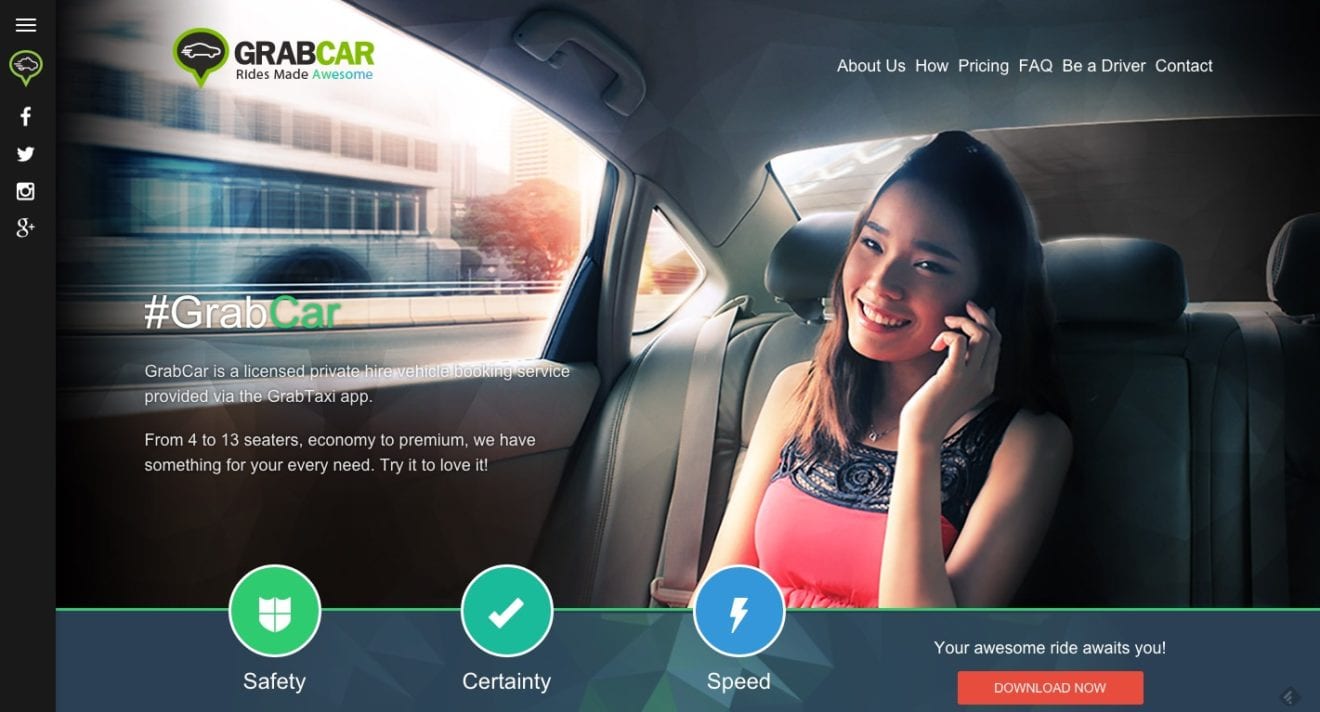
    GrabCar signs up car owners to become part of their on-demand fleet. It’s the newest transportation option from GrabTaxi, which now covers regular taxis, premium cars, and motorcycle taxis in Jakarta.

    Price-wise, a GrabCar ride is cheaper than a regular taxi in the city. In contrast to a metered taxi, the rate will be fixed. GrabCar is available as a new tab within the GrabTaxi app, and interested users can calculate the fare for their usual routes. But for now, actual rides are only available for trips between two vicinities: Semanggi and Kemang.

    To introduce the new service, GrabBike offers rides for free from August 9 to August 31.

    GrabCar is a direct competitor to Uber, which has been available in Jakarta since mid-2014, offering either UberBlack for premium cars or UberX for cheaper rides. Uber’s cars are available everywhere in the city, yet GrabCar has one large advantage over Uber in Indonesia at this point: it allows cash payments. Few Indonesians have credit cards, which poses a challenge to Uber’s growth. But since Uber has already introduced cash payments elsewhere, it might follow suit in Indonesia as well.

    GrabCar, which is part of the Malaysian startup MyTeksi, is already available in countries like the Philippines and Singapore.

  • Jakarta Motorcycle Taxis Get an App Lift

    Jakarta Motorcycle Taxis Get an App Lift

    Motorcycle taxis, known as ojeks, have long offered a fast way for residents to cheaply zigzag through gridlocked roads in Jakarta, a city knocked for having the world’s worst traffic.

    But, until recently, they were informal and inefficient – ojek drivers would queue at taxi lines or troll streets to negotiate fluctuating fares with potential riders. Some joined courier companies or delivery fleets working with restaurants to zip around fried noodles, chicken sate and other food orders.

    Now startups are trying to capitalize on those inefficiencies, launching mobile applications that connect those needing a ride to available motorcycle taxis.

    New app-based ojek businesses like Go Jek and GrabBike see huge potential in the world’s second-largest city, with 10 million people, whose road commuters log the most stops and starts anywhere—33,240 a year, according to a ranking by Castrol in February.

    Once these companies enlist them, they hand out jackets, helmets and smartphones so they can receive ride requests through their apps. They also set base fares and provide insurance. The system is good for customers and companies, which don’t have to buy fleets of motorcycles, and the ojek drivers, who end up making more money by getting more business and a set part of each fare.

    Venture capitalists have begun pumping money in, and Jakarta Gov. Basuki Tjahaja Purnama is so taken by the possibility of reducing some of the city’s congestion that he is in talks with Go Jek to feed commuters into the public bus system or coming light rail.

    Go Jek is  a “very smart solution for the city,” Gov. Purnama told reporters this week, adding the city might provide ojek drivers with special parking near bus stations.

    App-based motorcycle taxis also operate in other low-cost labor markets with intractable traffic, such as Hanoi and Uganda.

    It’s a market with huge potential given the growing number of cars and the lack of public transportation.

    While it’s difficult to quantify the number of ojeks on the road, groups of them gather on almost every corner of the city. Blue Bird, which runs the largest taxi fleet in the country with 37% of market share, has 16,000 cars in Jakarta. Its app gets between 8,000 and 12,000 orders each day, said President Director Noni Purnomo.

    Greg Lindsey, a senior fellow with the New Cities Foundation mobility initiative, says these startups are bringing hidden resources to the surface. “Every vehicle in the city is potentially part of its transportation network.”

    It helps that most urbanites have access to apps through their smartphones.

    Go Jek says glitches have arisen since it launched its app back in January. The app sometimes malfunctions. Customers complain they’ve gotten wrong food orders or had to deal with rude drivers. And fares are still being set by the market. Go Jek, for example, recently raised its starting price from $1.87 (25,000 rupiah) to $2.63 during peak hours over complaints by drivers.

    Jakartans like Amalia, who like many Indonesians goes by one name, feel the app-based ojeks are safer and more reliable than pickup versions. “It’s faster” than a standard taxi, she said, as she climbed off the back of an ojek summoned on her smartphone.

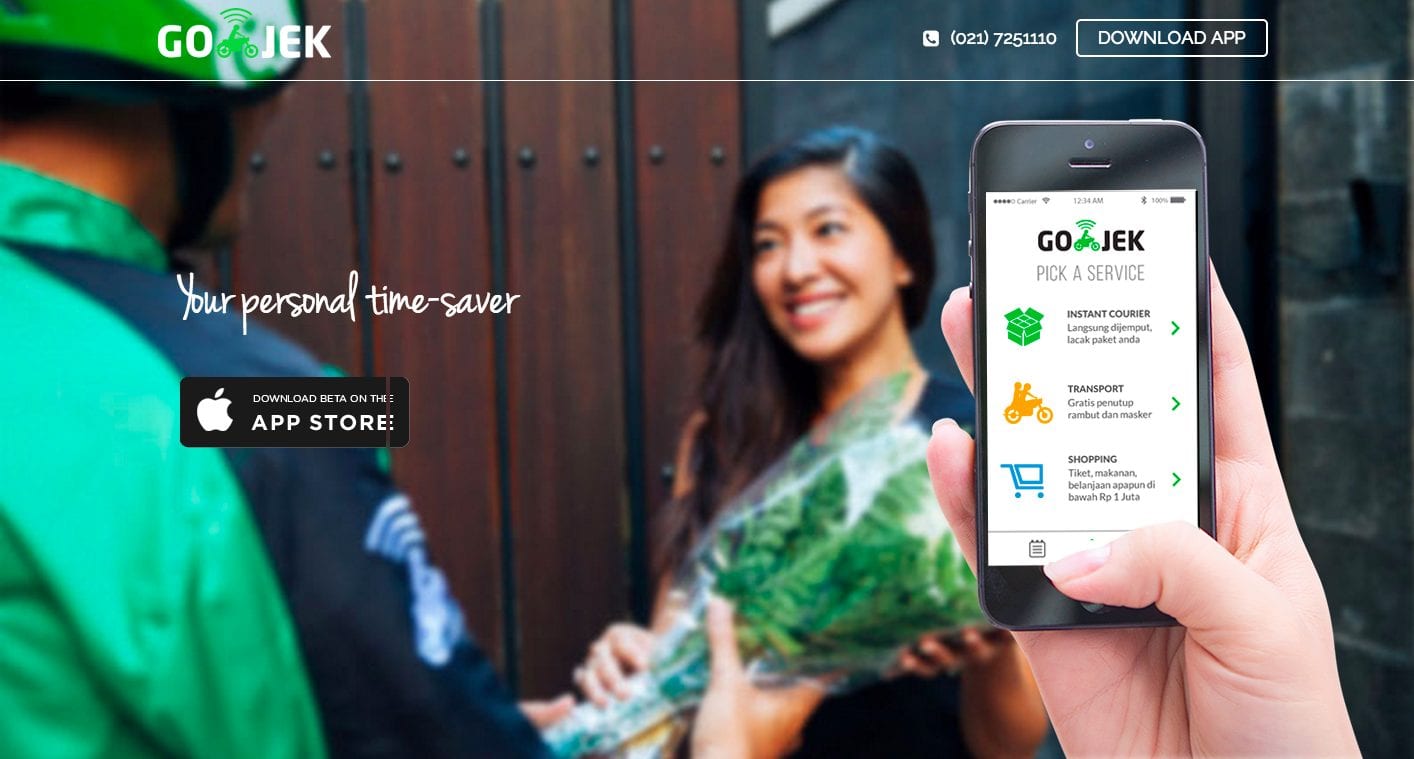
    For now, only a few motorcycle transport companies are competing in Jakarta with their apps: Go Jek, believed to be the largest and the first to launch, says it has recorded more than 250,000 app downloads since January and has expanded its network of drivers from 300 to 6,000 in the past year.

    It offers rides, as well as personal shopping and, as of March, food delivery. The starting price is a bit more than a standard cab – around $1.80 versus 60 cents —but ends up being much cheaper.

    “We are essentially a one-stop shop for transport and logistics and personal shopping in Jakarta,” said its founder and CEO, Nadiem Makarim.

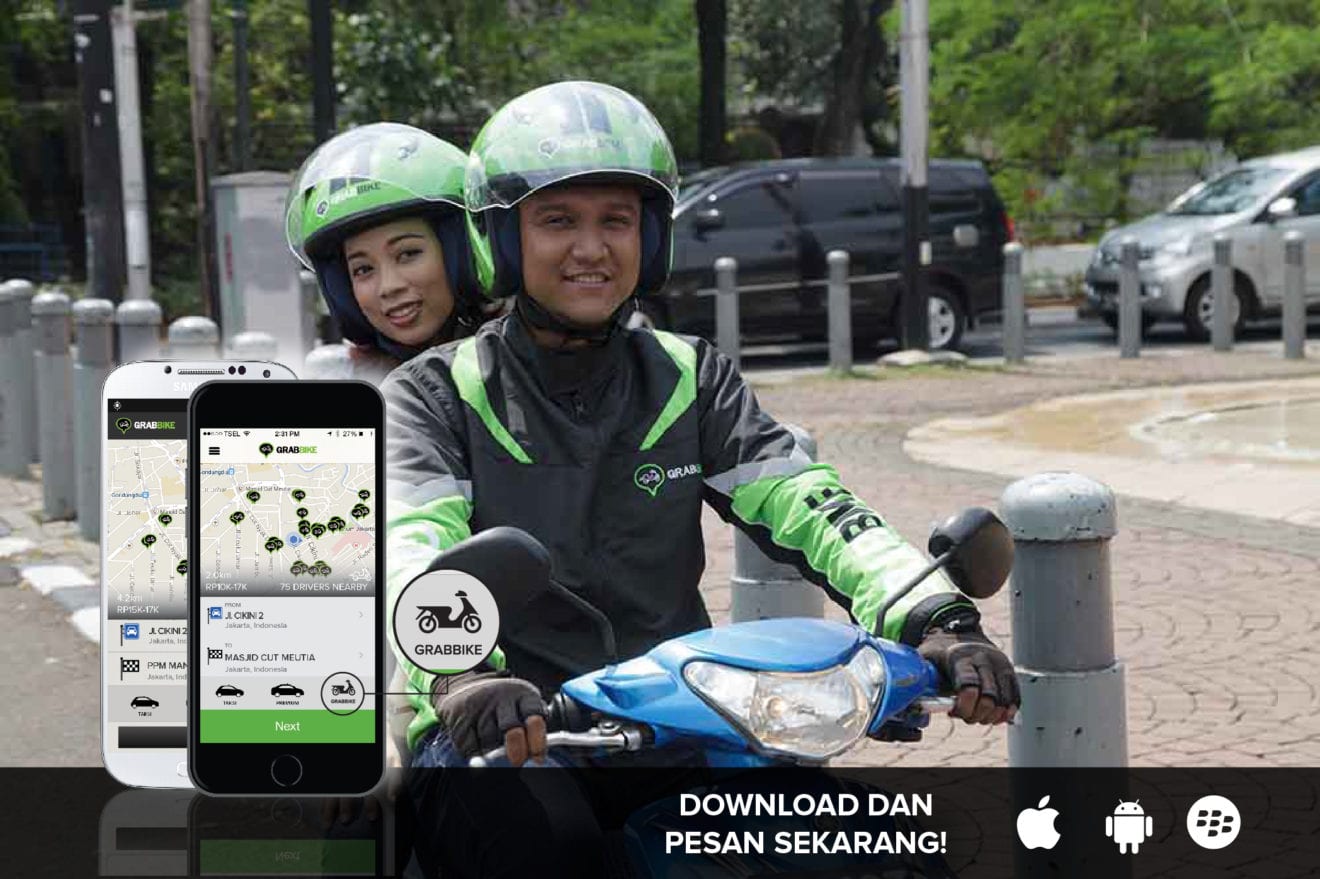
    Grab Bike, launched on May 20 by the taxi-booking app from Malaysia Grab Taxi, valued at $1 billion, so far offers only rides. But Cheryl Goh, its marketing vice president, sees “a lot of opportunity” for expansion in Jakarta.

    The company said it recorded more than 8,000 rides in its first week. Go Jek declined to say how many rides it averages a week.

    Other players trying to provide convenience through two-wheeled delivery include Happy Fresh, which launched in March, offering personal shopping that could eventually compete with Go Jek’s soon-to-launch Go Cart. Antar.id is getting off the ground and the app-less HandyMantis both offer rides as well as courier services.

    “If I take a bus, it takes too long to get through the traffic,” said Musrifah Kuswadinata, who works at a souvenir shop in a central Jakarta mall. Before she took the bus and then had to take a car the last few miles to  home. “If I take a Go Jek, I can take it straight home,” she said.