Retail News CRM

Tag: Great Singapore Sale

  • Shopping patterns in Singapore shift amid slowdown

    Shopping patterns in Singapore shift amid slowdown

    And yet, amid this gloom, consumers continue to spend – though there is a shift in the pattern and quantum of their spending.

    In June, the first month of the Great Singapore Sale, retailer sales were down 3 per cent compared with the same month last year. It is not just tourists who are staying away, but local consumers are also looking more closely at price tags.

    The mood has not been helped by the fact that about 4,800 people were laid off in the second quarter, 48 per cent more than in the same period last year.

    Landlords are feeling the pinch as well. Average monthly gross rents for prime first-storey speciality retail shops dipped 1.2 per cent in the three months to September from the previous quarter, said property consultancy Edmund Tie & Company recently.

    Vacancies in the Orchard planning area rose again in the second quarter to 9.2 per cent, after reaching what was then a five-year high of 8.8 per cent in the first quarter.

    ANZ economist Ng Weiwen pointed out that home prices have fallen for 12 consecutive quarters, while bank lending has shrunk for 11 straight months. This has translated into weaker spending.

    However, the decline has been gentle across the board and there have been some bright spots. Those who find this surprising should look at the unemployment rate. While it rose from 1.9 per cent in March to 2.1 per cent in June, it remains quite low. Said OCBC economist Selena Ling: “When unemployment rate is anything below 3 per cent, it is effectively at full employment.”

    It could be one reason why consumers continue spending on mid-range goods and services, such as travel and at cafes, even as they cut back on luxury items and seek better deals for necessities.

    ANZ’s Mr Ng said: “For the different tiers of consumer spending, the high-end consumer segment will be more sensitive to changes in consumer income, so it’s not surprising.

    “The mid-range segment will still hold up in the near term as wages are still holding up.”

    In fact, more are paying their credit card bills on time. Only 32.25 per cent of card holders did not pay their bills in full for the second quarter, down from 33.91 per cent in the first quarter. Ms Ling said: “People have been turning slightly more cautious with spending.”

    They may spend less on fashion. And malls could take a hit if their offerings are the same as the ones available on Taobao and the like, she added.

    But cheaper options like house brands at supermarket chain FairPrice are seeing stronger demand.

    This is what a slowing economy looks like – in Singapore.
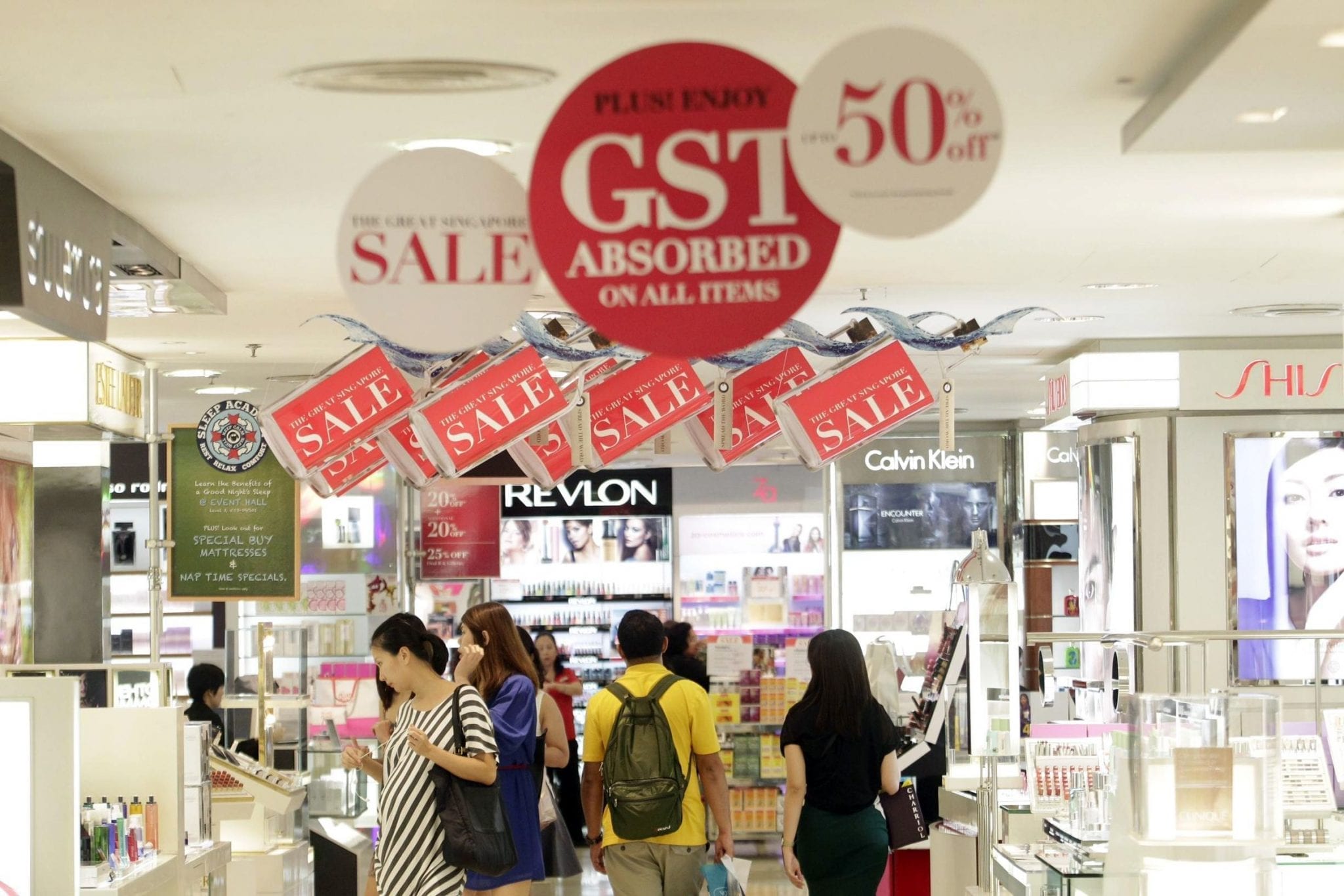
     

  • Making Great Singapore Sale great again

    Making Great Singapore Sale great again

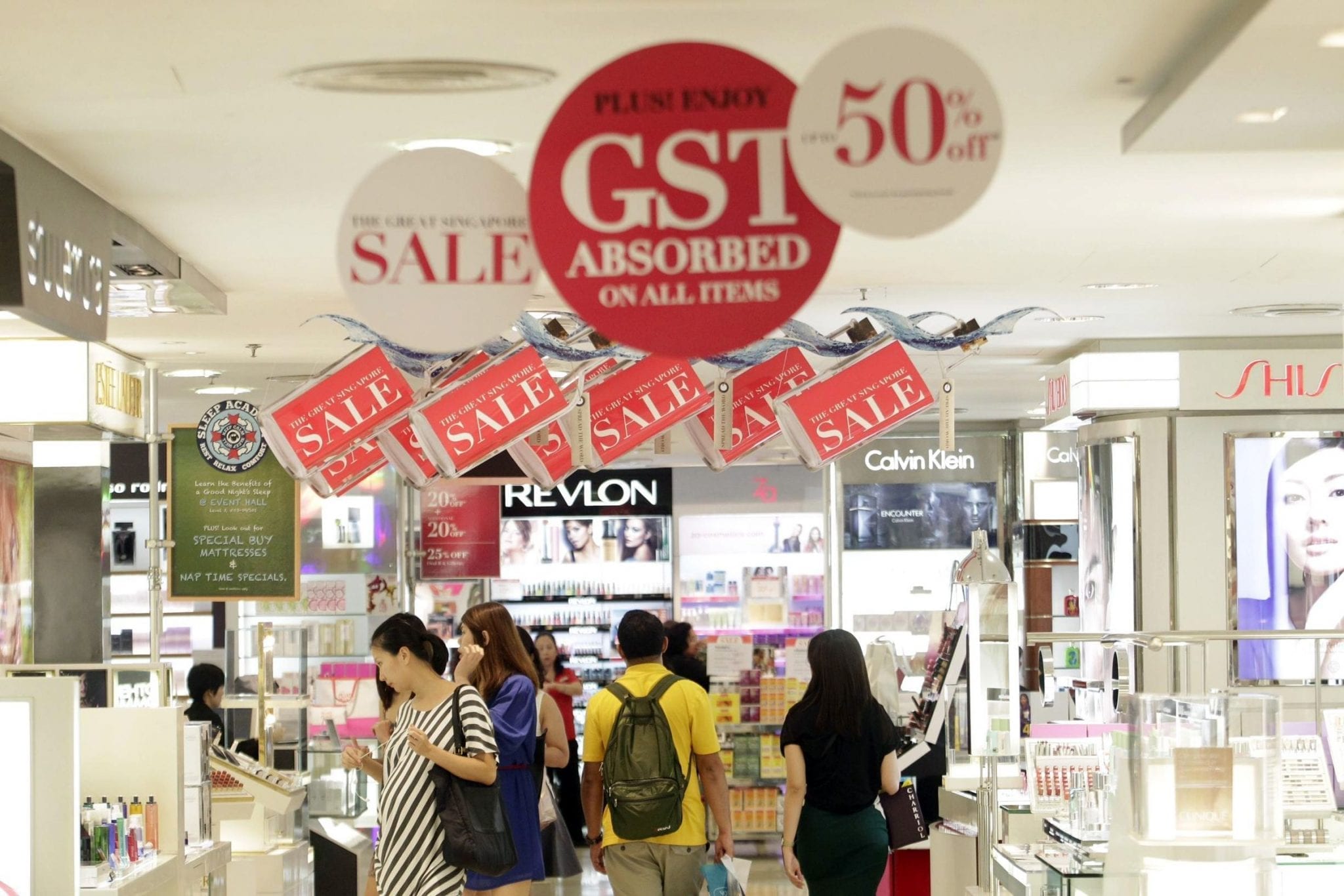
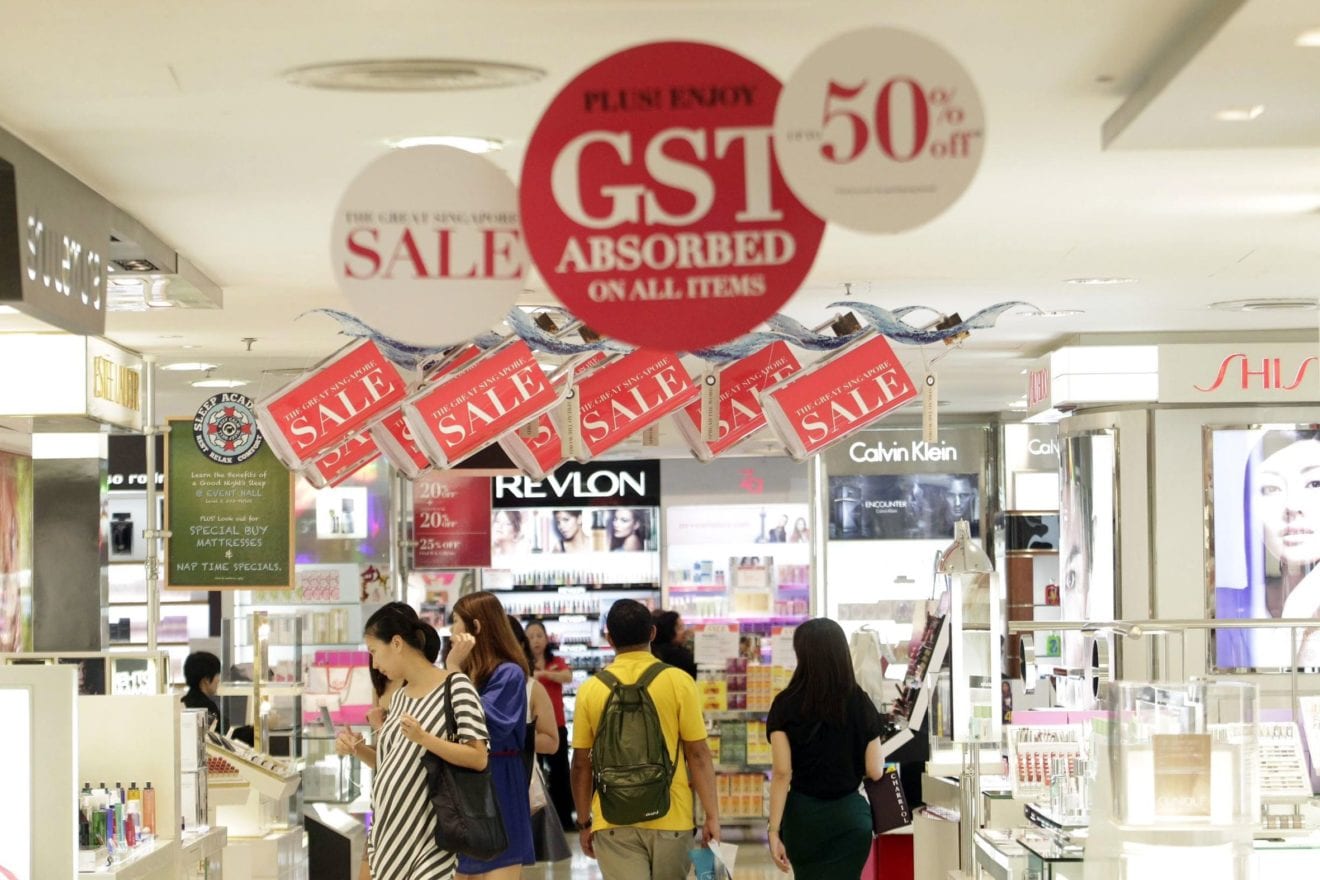
    With the relevance of the Great Singapore Sale (GSS) in doubt, going by falling retail sales, questions have been raised about what went wrong with the sale.

    Many consumers have pointed out that the annual sale of 23 years is not that great, as the discounts offered here are not as steep compared with those in sales overseas.

    They also lamented that the discounts are mostly for older merchandise. A possible reason for this is that Singapore has no seasons.

    Associate Professor Prem Shamdasani, from the National University of Singapore Business School’s marketing department, said the summer sales in Tokyo and Hong Kong tend to be more successful than the GSS due to the seasonality of the products sold.”(This) encourages (their) retailers to offer deep discounts to clear inventory and make room for new arrivals, which are also attractively marked down to entice local shoppers and tourists,” he said.

    Offering steep discounts is also not sustainable for businesses here, said Singapore Polytechnic senior retail lecturer Sarah Lim.

    “(This) will eat into the retailer’s overall profit, and with rental and manpower costs all added in, the retailer may not be able to sustain the business,” she said.

    Singapore Retailers Association (SRA) president R. Dhinakaran previously said holding sales to clear old stock is common worldwide.

    The retail scene has been slow in recent months. Latest official statistics show that retail sales excluding motor vehicles in June and July each fell 3 per cent over the same months last year.

    This is despite the attempts for this year’s GSS – which took place from June 3 to Aug 14 – to draw tourists and residents with an extended sale, more payment options and a more targeted focus on tourists from China. The poor showing, and similar sales declines in June last year and 2014, prompted the SRA, which organises the GSS, to suggest a need to discuss with the Singapore Tourism Board about continuing the event or revamping it.

    Retailers and retail experts have pointed to the slowing economy here and overseas as a key factor for the slump this year, but there are other concerns as well.

    One issue raised about this year’s GSS is its length and timing.

    The event started in June – a week later than last year – and was extended to 10 weeks to cover the bulk of China’s summer holidays.

    In the past 12 years, the annual sale stretched over eight weeks.

    But a 10-week sale might have led to sale fatigue among Singaporeans inundated with “end-of-season sales” or “anniversary sales” year round, said retail experts.

    Research suggests that local consumers with strong spending power are disciplined spenders and tend to spend more during the early weeks of the GSS, said Dr Guan Chong, head of marketing programme at SIM University’s School of Business. “Thereafter, their spending pattern should likely stay low for the rest of the GSS period,” she said.

    GSS’ new sale period also clashes with big sales elsewhere such as Tokyo’s famous end-of-summer sales, which start around the third week of July, she noted.

    Then, there is the perennial problem of retailers holding their own sales earlier to beat their rivals, dampening the effect of the GSS.

    Department stores Robinsons, Metro and OG started their GSS sales in May this year, while baby supplies store Mothercare and hardware chain Home-Fix held pre-GSS sales. Robinsons said this was done in line with shoppers’ expectations for the GSS to start in May, as in previous years. Mothercare did so because its competitors were also holding their sales early.

    SRA cannot stop retailers from holding their sales earlier, or dictate the duration of their sales.

    There also appears to be a lack of awareness of the GSS and whether it was still going on, in part because of its length, said experts.

    Given this, events could be held every weekend during the GSS period to highlight store promotions by themes – such as food or children – to create buzz and remind people the sale is ongoing, said Mr Steven Goh, executive director of the Orchard Road Business Association.

    Another suggestion is not to focus on only discounts. Dr Lynda Wee, an adjunct associate professor at Nanyang Business School, said the GSS should add a lifestyle spin and combine shopping and dining promotions with leisure deals, such as those for spa sessions, movies and cooking lessons.

    Dr Chong said merchants can ride on the digital marketing wave to connect with an international audience, such as using popular social media platforms.

    Still, lower retail sales should not be blamed on the GSS alone, said Ms Lim, adding: “Orchard Road, Raffles City, Marina (Bay) and Suntec (City) lack strong positioning. Can our malls be differentiated so that tourists desire to visit each one of them because they are different?”

  • GSS most attractive to travellers from Japan, China

    GSS most attractive to travellers from Japan, China

    Japan and China holds the potential to be the strongest source market for Singapore during the Great Singapore Sale (GSS) period, which comes to a close this weekend, according to findings by market research consultancy Kadence Singapore.

    Respondents from Japan and China indicated they were “highly likely” to fly to Singapore during the period. The two markets also showed greatest awareness, with 85 per cent and 84 per cent of people, respectively, indicating their knowledge of the retail event.

    Explaining the findings, Patrick Young, Kadence Singapore’s insight director said that the Japanese are more avid travellers in general. The fact that many airlines ply between Japan and Singapore also contributed to the result.

    Additionally, the price of airfares may also be factored in seeing as travellers for the GSS are likely to be deal-savvy individuals. This means the availability of low-cost flights could also affect traveller decision making processes.

    The appointment of UnionPay as the official card for this year’s GSS shows that the Singapore Retailers Association, organisers of the event, are stepping up efforts to lure more Chinese shoppers to the city-state as well.

    However, the retail scene in Singapore has been sluggish, with year-on-year retail sales figures for June, the month when the GSS usually begins, being on the decline over the past two years, according to Singapore’s Department of Statistics.

    Retail business outlook is also dim. While the July-December period is expected to see an improvement of 7 per cent over the April-September period in terms of net weighted balance, the July-December period is predicted to see a sector performance of negative 8 per cent compared to the same time last year.

    Young suggests taking into account “certain nuances between the countries” so that brands taking part in the GSS can better cater to individual markets and thus boost their allure.

    “For the Japanese there is a big focus on omiyage, which is a culture of taking home a souvenir for friends and family. So how much is the GSS tailored to these small but significant items that the Japanese will buy?”

    “It’s not so much tying in with UnionPay or a similar brand, it’s more about having in your portfolio products which can relate to that market,” he added.

    Young also cited the upcoming Singapore Grand Prix as a good example of how an event is able to better lure visitors by going beyond its core demographic.

    The annual racing event attracts not just sporting fans but a large number of international visitors by staging concerts, parties and family activities. The GSS could do something similar to lure arrivals beyond shoppers alone.

    “What else can we do to broaden the GSS beyond sales?” he said.

    GSS 2016 runs for 10 weeks from June 3 to August 14 this year, the longest sale period for the annual event to date.

  • 10-week Great Singapore Sale starts last Friday

    10-week Great Singapore Sale starts last Friday

    The Great Singapore Sale (GSS), which starts on Friday (June 3), has been extended from eight to 10 weeks this year to cater to tourists from the region.

    And for the first time, UnionPay International cardholders will get extra perks during the sale, under a new three-year partnership between the payment network and GSS’ organiser, the Singapore Retailers Association (SRA).

    SRA said the sale, now in its 23rd year, has grown into an “all-encompassing” event with offers at both online and offline stores, ranging from fashion and dining to beauty and wellness, hotel stays, sightseeing tours and visits to attractions. The sale also stretches from Orchard Road to Marina Bay, Sentosa Harbourfront and the heartlands.

    There are no “official” participants of the GSS, as merchants do not need to formally register or sign up with SRA to take part. All merchants who offer special deals during the sale period are considered participants of GSS, said SRA.

    The extension of the sale period to 10 weeks – for the last 12 years, GSS stretched over eight weeks – is to better cater to tourists from Asia-Pacific countries whose summer holidays fall in the June to August period, said SRA’s executive director Anthony Gan.

    He added that the sale, which ends Aug 14, will still coincide with the school holidays in June and the regional peak travel seasons in July, as with previous years.

    UnionPay International also replaces MasterCard Singapore as the new official card of GSS. This means UnionPay cardholders can get exclusive privileges at over 100 retailers here during this year’s sale.

    “With a base of over 5.4 billion UnionPay cards issued worldwide and an acceptance rate of over 80 per cent at various retail, lifestyle and food and beverage establishments in Singapore, we are confident that our partnership with UnionPay International will bring substantial benefits to the GSS, participating merchants and consumers,” said Mr Gan.

    Consumers who shop at GSS stand to win a record of over $200,000, with SRA giving out $100 each – in the form of a UnionPay prepaid card loaded with the cash – to five shoppers daily, while those who pay with UnionPay cards stand to win an additional $500.

  • GSS shoppers spent $2b using MasterCard this year

    GSS shoppers spent $2b using MasterCard this year

    Despite slowing tourism growth and competition from online re- tailers, shoppers shelled out a five-year high of $2.12 billion using their MasterCard cards at the Great Singapore Sale (GSS) this year.

    The amount spent during the eight-week event, held from May 30 to July 26, was a 2.2 per cent increase from last year, the credit card company said on Monday.

    The number of transactions made during the sale between its cardholders and Singapore merchants also rose by 7.3 per cent to hit more than 14.5 million.

    The growth was fuelled mainly by tourists, who spent 15.3 per cent more and used their cards 21.8 per cent more than they did last year.

    This was despite falling tourist numbers. According to Singapore Tourism Board figures, visitor arrivals from January to June this year were 7.26 million, down 3.4 per cent from the same period last year.

    In contrast, Singapore-based cardholders spent slightly less than they did last year – $1.41 billion, down from last year’s $1.46 billion – although transaction numbers grew 2.6 per cent to 10.5 million.

    Nonetheless, these cardholders made up two-thirds of the amount spent in all by MasterCard users.

    Singapore Polytechnic senior retail lecturer Sarah Lim said the sale, now in its 22nd year, may have lost its shine among Singaporeans.

    “Some retailers hold sales throughout the year. So to locals, GSS may not be something special,” she said. “But to tourists, the GSS is quite established and is something they look forward to, so their objective is to spend when they are here.”

    The top five countries where most of the shoppers came from remained the same as those last year. Australia, Malaysia and China retained the top three positions, while Indonesia overtook Japan to take the fourth spot.

    Of the five, those from Indonesia spent the most at department stores, while the rest splurged at restaurants and eating places.

    Local online merchants were not left out, with Singapore-based cardholders spending $303.5 million online during the sales period, a 5.6 per cent increase from last year.

    Rakuten, which held a one-week sales campaign during the GSS, saw revenue rise by over 350 per cent, while site traffic was up by nearly 90 per cent. “Rakuten is definitely keen to participate in next year’s Great Singapore Sale,” said Mr Masaya Ueno, general manager of Rakuten Singapore online shopping.

    The growth in spending shows that the annual GSS remains attractive to tourists, said MasterCard Singapore group head and general manager Deborah Heng, adding: “What’s interesting is that, this year, we are seeing dining places emerge consistently as a top spend category for visitors, an indication that fine dining may be growing in appeal for travellers to Singapore.”

    Said Ms Jannie Chan, president of the Singapore Retailers Association, which organises the GSS: “With its well-established branding, the GSS has remained an essential pillar in driving spending and generating a positive impact on our economy.”

    Filipino accountant Charmaine Garcia, 37, who visits Singapore twice a year, said she looks forward to the GSS for its good deals. “I like to shop for shoes, clothes and bags and, during the sale, there are discounts not just on the old stock, but on the newer range of items, too.”

  • Tourists spend up at Great Singapore Sale

    Tourists spend up at Great Singapore Sale

    While this week’s retail sales figures data may have subdued expectations of Singapore’s retail sector, another set of figures just out will do little to change the mood.

    Spending data from MasterCard suggests the Great Singapore Sale has delivered a significant increase in retail spending by tourists, especially in the food and beverage sector.

    According to MasterCard, the value of goods and services spent by tourists using its cards rose 9.9 per cent year on year, to S$350.6 million during the first month of the promotion.

    The number of transactions rose 17.8 per cent to 2.01 million, compared with 1.7 million last year.

    But Singaporeans failed to respond. Spending by locals fell 12.7 per cent in 5.1 million transactions, about 7.2 per cent less than last year. Spending on Singapore-issued MasterCards represented about double the amount of tourists, or $684.9 million.

    By card origin, Australia was the biggest source of spending during the Great Singapore Sale period from May 29 to June 28, with $39.5 million splurged, mainly at restaurants.

    Malaysians were next, spending mainly on electronics, followed by Chinese in speciality retail stores and Japanese – up from sixth in 2014 – mostly on restaurant meals.

    So while local spending was disappointing the increased cashflow from offshore shows Singapore is retaining its regional appeal as a tourist destination.