Tag: Great Wall Motor

  • GWM Launches 2027 Tank 500 Starting at 335,000 Yuan

    GWM Launches 2027 Tank 500 Starting at 335,000 Yuan

    GWM launched the 2027 Tank 500 on Friday, October 23, setting prices between 335,000 yuan ($49,866) and 375,000 yuan as the off-road brand works through tightening sales pressure.

    Brand deliveries dropped 29.21 per cent year-on-year in September to 15,178 vehicles, according to data compiled by CnEVPost. Cumulative sales fell 13.53 per cent to 142,796 units across the first nine months of the year.

    The updated lineup spans three powertrain options and five trims. GWM maintained pricing identical to the preceding August 2025 facelift while integrating 296 hardware, software and safety redundancy upgrades across the vehicle.

    Hardware and Software Changes Across Trims

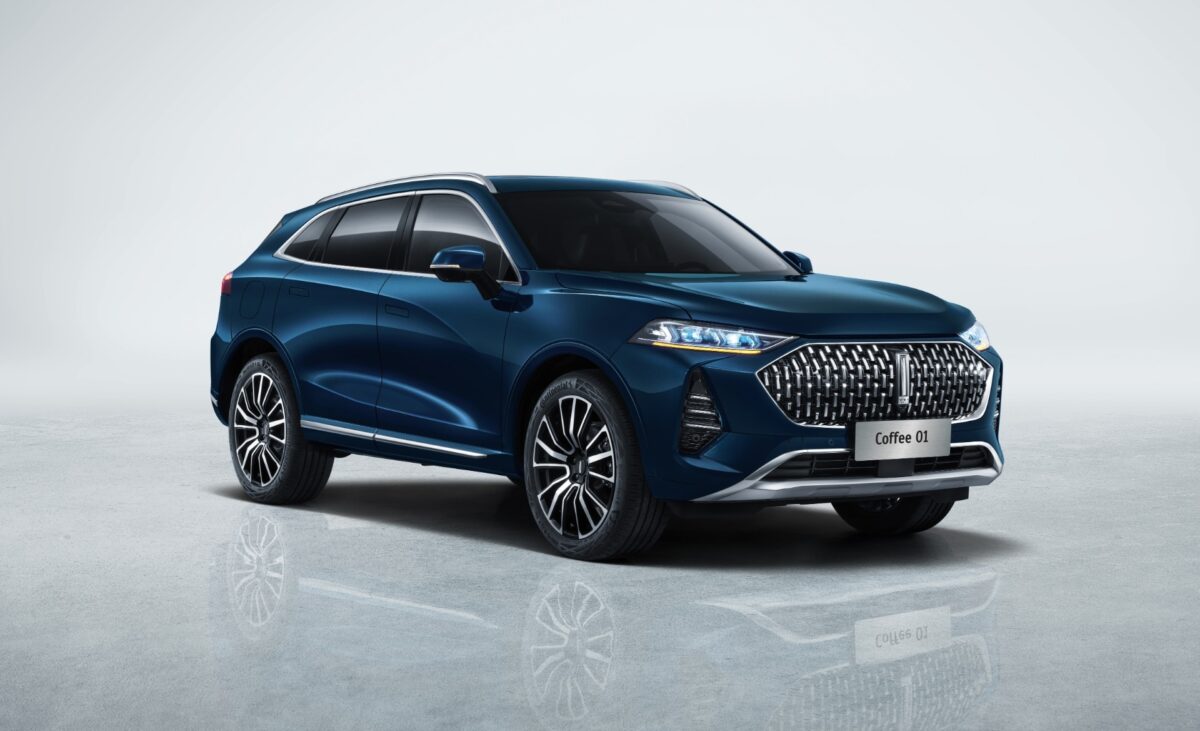
    The headline technical change sits inside the plug-in hybrid Zhixiang variants. Both the 355,000 yuan Hi4-T Zhixiang and the 375,000 yuan Hi4-Z Zhixiang adopt the Coffee Pilot 4 operating suite, running on Nvidia’s Thor-U processor with a Vision-Language-Action architecture model.

    The Thor-U unit produces 700 TOPS of processing power, supported by a sensor array comprising one LiDAR unit, three millimeter-wave radars, 12 ultrasonic sensors, and 11 optical cameras. That suite enables point-to-point Navigation on Autopilot across urban streets and motorways, automated parking bay transitions, and direct voice intervention. The base Hi4-T and the conventional petrol variants retain the simpler Coffee Pilot 2 package without LiDAR.

    Powertrains Retain Previous Specifications

    Great Wall Motor left the mechanical underpinnings intact. The base 335,000 yuan Hi4-T pairs a 2.0-litre turbocharged petrol engine with a single electric motor and a nine-speed hydraulic automatic transmission, generating 310 kW.

    Electrical energy for that version comes from a 37.1 kWh battery pack, delivering a pure-electric range of 110 kilometres under the WLTC testing cycle. The 375,000 yuan Hi4-Z trades the heavy-duty transfer system for dual electric motors and a three-speed dedicated hybrid gearbox, lifting total system output to 635 kW. A 59.05 kWh traction pack stretches WLTC electric range to 201 kilometres.

    Buyers seeking non-hybrid powertrains can choose a 3.0-litre turbocharged engine with a 48-volt mild-hybrid system. That variant costs 355,000 yuan for the five-seat configuration and 363,000 yuan for the seven-seat edition, retaining the only multi-row seating layout in the 2027 roster.

    Cabin Redesign and Passenger Comfort

    Interior revisions address passenger expectations in China’s premium SUV category. The cabin now houses twin 15.6-inch console screens, a 22-speaker sound setup, motorised front leg rests, aircraft-style fold-down tables in the second row, and fold-flat seating that creates a sleeping surface.

    These amenities push the Tank 500 further from utilitarian off-roading toward executive transport. Chinese buyers increasingly cross-shop rugged sport utility models against luxury electric minivans and full-size urban hauliers.

    Holding price levels unchanged while grafting high-cost silicon and premium acoustic equipment onto existing frames erodes manufacturing margins. Great Wall Motor had little alternative. Chinese consumers in the 350,000 yuan bracket now treat high-level driver assistance as basic equipment rather than an optional indulgence.

    The Mounting Pressure on Off-Road Margins

    The product revision follows the rollout of the budget-oriented H10 SUV on August 6, 2026, which GWM discounted to 201,800 yuan to stabilise mass-market dealership traffic. That vehicle sought volume at the lower boundary of the portfolio.

    The Tank division, conversely, delivers the higher profit margins that support GWM’s technical development. A 13.53 per cent drop in nine-month sales indicates that novelty has worn off the retro-styled off-road formula that once dominated domestic sales charts.

    Rival brands have crowded the niche with extended-range alternatives and aggressive price reductions. RetailNews Asia views the inclusion of 700 TOPS Nvidia computing as a defensive concession: GWM must prove its off-road flagships can match executive sedans in autonomous navigation or watch domestic buyers abandon the platform entirely.

    Deliveries of the revised 2027 editions will test whether software upgrades can stem monthly retail declines before GWM closes its final-quarter vehicle tally.
  • BYD Teases Shark Pickup China Launch After Selling 29,997 Units Overseas

    BYD Teases Shark Pickup China Launch After Selling 29,997 Units Overseas

    BYD began promoting the domestic launch of its Shark plug-in hybrid pickup truck on September 24, after selling 29,997 units across international markets in the first eight months of 2026.

    The carmaker released official promotional images across its social media channels under the slogan “The overseas champion returns,” assigning the model to its specialized Fang Cheng Bao sub-brand. The campaign follows two years of sales abroad, reversing the standard practice among Chinese vehicle manufacturers of establishing domestic volume before attempting foreign distribution.

    Export track record and platform specifications

    Overseas deliveries of the Shark reached 4,300 units in August alone. BYD first introduced the pickup in Mexico in May 2024, followed by rollouts in Australia, Brazil, Cambodia and Pakistan.

    Built on the company’s off-road dual-mode platform, the truck pairs a 1.5-litre turbocharged petrol engine with two electric motors. Regulatory filings published by the Ministry of Industry and Information Technology in July show peak motor outputs of 170 kW at the front axle and 150 kW at the rear. The vehicle uses lithium iron phosphate packs produced by BYD’s battery manufacturing division, FinDreams Battery.

    Dimensions submitted to regulators match the export specification. The body measures 5,457 mm in length, 1,971 mm in width and 1,925 mm in height, riding on a 3,260 mm wheelbase.

    The domestic utility vehicle landscape

    Entering the domestic pickup segment pits BYD directly against Great Wall Motor, the long-standing market leader in Chinese commercial haulers, and Geely Auto’s electric utility brand Radar. Retail buyers in China have historically treated pickups as commercial workhorses rather than lifestyle vehicles, constrained by municipal traffic bans that restrict light trucks from entering major downtown cores.

    Those regulatory limits keep the overall category small relative to passenger cars. Chinese buyers purchased 455,000 pickup trucks between January and August 2026, according to figures from the China Passenger Car Association. By comparison, total retail passenger car volume reached 11.7 million units over the same eight months, of which 7.78 million were plug-in hybrids or pure battery-electric models.

    Electrification trends in commercial light trucks

    New energy pickups remain a small slice of commercial sales, but demand is expanding faster than the wider commercial truck market. Electrified pickup sales climbed 18 per cent year on year to 62,000 units through August. Commercial fleet buyers and municipal contractors in regional provinces have adopted plug-in models to cut operational fuel costs and comply with local emissions caps.

    Assigning the Shark to Fang Cheng Bao indicates BYD intends to market the truck to private off-road enthusiasts rather than commercial fleet buyers alone. Fang Cheng Bao general manager Xiong Tianbo confirmed the model’s inclusion in the brand portfolio earlier this year, aiming to broaden a lineup that previously focused on rugged sport utility vehicles.

    Regulatory steps and launch timeline

    The consumer promotional push marks the final marketing stage before open sales begin. Li Yunfei, general manager of branding and public relations at BYD, first outlined plans for a Chinese release in October 2025, followed by the formal MIIT filing three months ago.

    Dealership distribution timelines and domestic retail pricing remain unannounced. The Ministry of Industry and Information Technology has yet to release battery capacity and pure electric driving range figures for the localized configuration.

  • Chinese Automakers See Thailand EV Boost From Government Incentives

    Chinese Automakers See Thailand EV Boost From Government Incentives

    Chinese automaker Great Wall Motor has signed an agreement with Thailand’s government to slash retail prices of its electric vehicles, an executive said on Tuesday, a move aimed at boosting domestic EV sales and production.

    The agreement, which involves a government subsidy and reduction in value-added tax, could save customers up to 160,000 baht ($4,779) per unit, Michael Chong, General Manager of Great Wall Motor Thailand told Reuters.

    That would apply to vehicles typically priced 1 million baht, representing a saving of about 13-15%.

    “This is very beneficial for our customer because this price is more affordable,” he said at the annual Bangkok International Motor Show.

    A similar agreement has also been signed with the rival automaker, SAIC-CP Motor, the Thai unit of SAIC Motor Corp, the finance ministry said on Monday.

    Those come as Thailand tries to incentivize EV use and preserve its status as a major regional automaker. The government is targeting the production of 725,000 EV units a year, or 30% of the output by 2030.

    Chong said other factors like rising energy prices were also driving EV demand.

    “Oil prices keep increasing, so people who buy ICE (internal combustible engine) will feel it’s more expensive,” Chong said, adding that EVs would help make air cleaner, something Thailand’s capital has struggled with.

    Great Wall Motor in 2020 took over the General Motors plant in Thailand, Asia’s fourth-largest auto assembly and export hub.

    Auto manufacturing accounts for about 10% of Thai gross domestic product and manufacturing jobs.

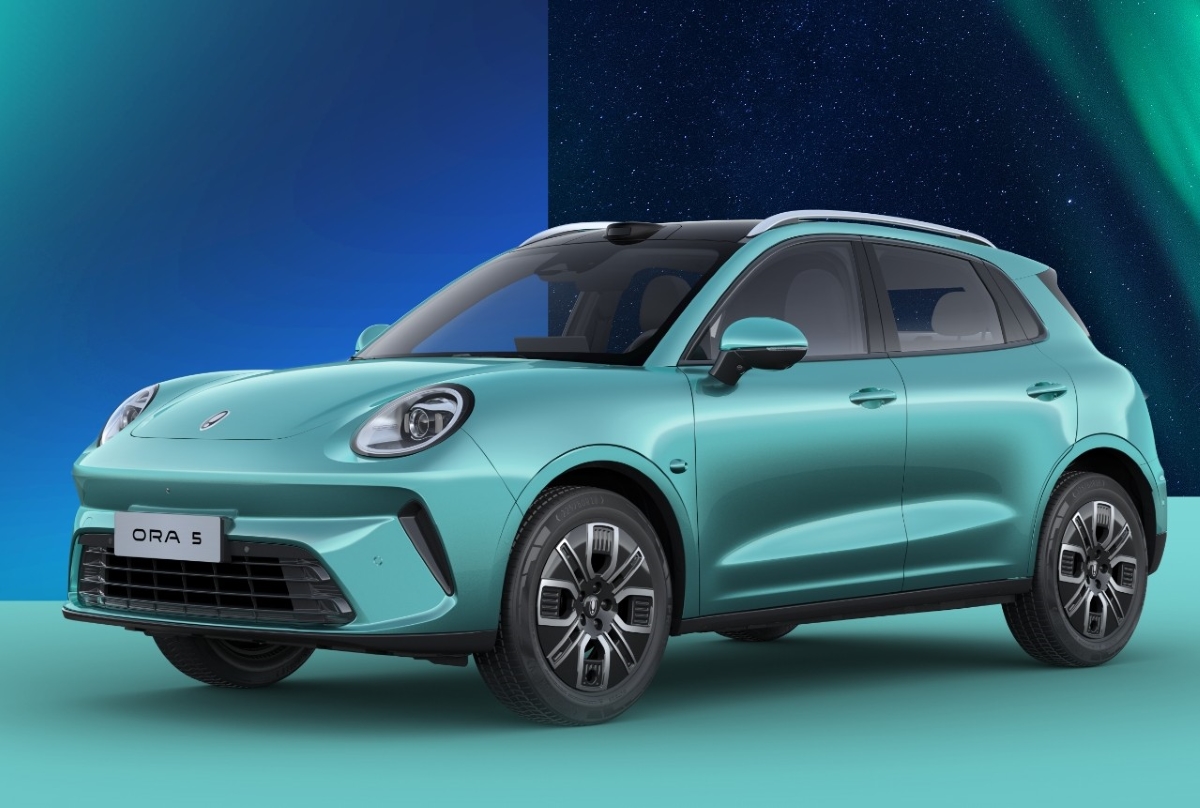
    This year the firm plans to sell 20,000 units in Thailand between its two brands, the BEV Ora Good Cat and Haval SUVs, Chong added. It plans to locally produce EVs in 2024.

    But the transition will take time, however, with less than 4,000 fully-electric vehicles registered in Thailand last year, and manufacturing investments still being made in conventional engines.

    These include U.S. automaker Ford, which invested $900 million to upgrade its Thai factories to build its Ranger pickup truck and Everest SUV.

    “ICE is going to be around for a while,” said Andrea Cavallaro, Ford Operations Director, International Market Group, adding EV technology and infrastructure has yet to be adopted across Southeast Asia.