Tag: green light

  • Fonterra Farmer Shareholders Green-Light $4.22 Billion Consumer Division Sale to Lactalis

    Fonterra Farmer Shareholders Green-Light $4.22 Billion Consumer Division Sale to Lactalis

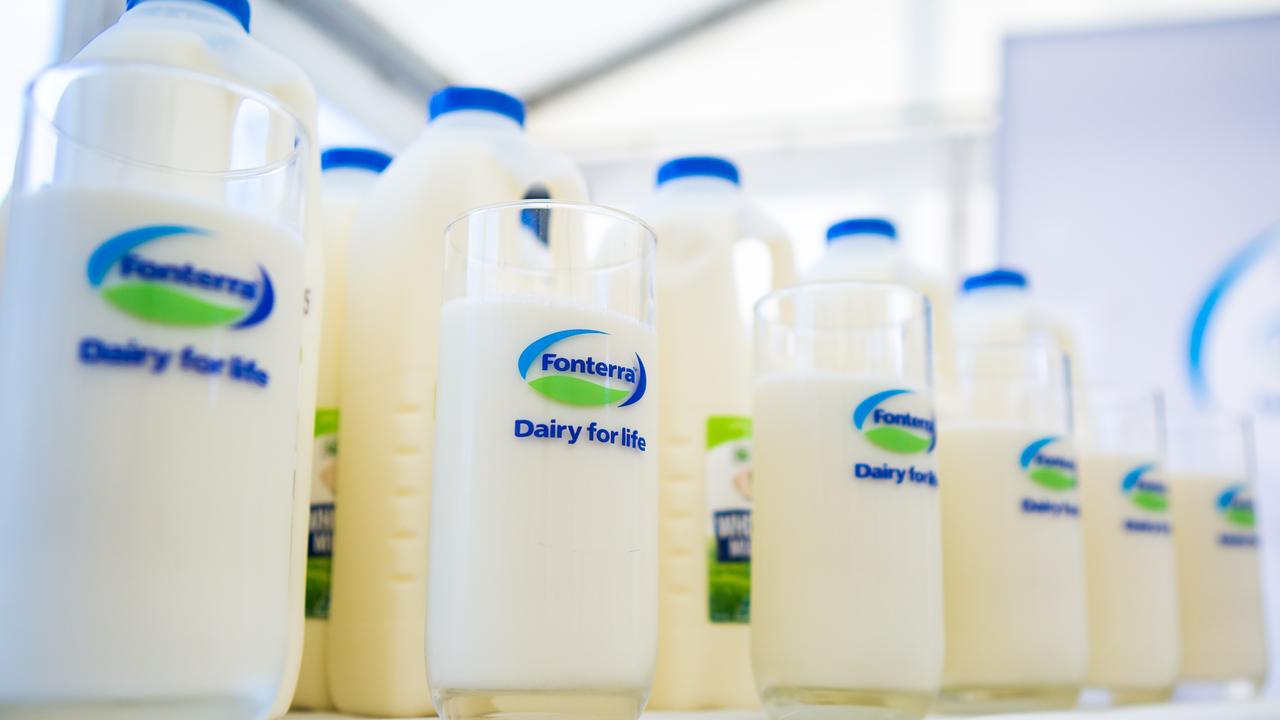
    Fonterra’s farmer shareholders have granted approval for the company’s proposal to divest its consumer products division. The Mainland Group and its associated businesses are set to be sold to Lactalis for a sum of $4.22 billion.

    High Support for Divestment

    A resounding 88.47% of farmer shareholders voted in support of this divestment decision in a special virtual meeting. The company asserts that this level of shareholder support exemplifies one of the core principles that sets Fonterra apart from other processors in the market.

    Fonterra Chairman Peter McBride voiced his appreciation for the active participation of the farmer shareholders throughout the decision-making process. Since the exploration of divestment options was initiated in May of the previous year, and especially over the past few weeks when the full details were made available, there has been a significant uptick in discussion and engagement from the farmers.

    McBride commented on the strategic implications of the divestment, stating, “We have thoroughly examined our strategic context, our strengths, and the way we create value for our farmer owners as a cooperative. This divestment will result in a more simplified and focused business, the value of which cannot be overstated.”

    To approve the sale, Fonterra required more than half of the total votes, a condition that was met with ease due to the high percentage of votes supporting the divestment.

    Final Steps and Future Investments

    The divestment process of Mainland Group’s business from Fonterra is now pending regulatory approvals. These approvals are currently underway, and the completion of the transaction is expected to occur in the first half of the coming year.

    In addition, Fonterra has revealed plans to make a significant investment in its dairy operations. The company intends to allot NZ$75 million ($66 million) towards expanding butter production at its Clandeboye site located in South Canterbury.

    Questions & Answers

    What percentage of Fonterra’s farmer shareholders voted in favour of the divestment?
    Approximately 88.47% of Fonterra’s farmer shareholders voted in favour of the divestment.

    What will the divestment result in for Fonterra?
    The divestment will lead to a more simplified and focused business for Fonterra.

    What significant investment has Fonterra planned following the divestment?
    Fonterra has planned to invest NZ$75 million ($66 million) in expanding butter production at its Clandeboye site in South Canterbury.

  • Tesla’s Long-Delayed German Gigafactory Gets Conditional Green Light

    Tesla’s Long-Delayed German Gigafactory Gets Conditional Green Light

    Tesla Inc received a conditional go-ahead for its German gigafactory near Berlin on Friday, the state of Brandenburg said, ending months of delay for the 5 billion euro ($5.5 billion) landmark plant. The gigafactory, which is crucial to Tesla Chief Executive Elon Musk’s ambitions to vanquish European market leader Volkswagen, was initially supposed to open last summer. Germany’s largest automaker has the upper hand in Europe, with a 25% share of electric vehicle (EV) sales to Tesla’s 13%.

    First Counsellor of the Oder-Spree district Sascha Gehm, Brandenburg Economy Minister Joerg Steinbach, Brandenburg State Premier Dietmar Woidke, Brandenburg Environment Minister Axel Vogel, and Gruenheide Mayor Arne Christiani attend a news conference following a court hearing on the Tesla car plant, in Potsdam, Germany

    Brandenburg state premier Dietmar Woidke told a news briefing that the development marked “a big step into the future”, adding that the Tesla plant would be a major industrial and technological driver for Germany and the region.

    Around 2,600 of the plant’s expected 12,000 workers have been hired so far, unions said last month, and Tesla is in talks with numerous parts suppliers in the region to source as much as possible locally, lowering waiting times and costs.

    Underlining the intense competition facing Tesla, Volkswagen said on Friday it would spend about 2 billion euros on a new factory near its Wolfsburg headquarters to make the Trinity, the first of a new generation of electric vehicles for the German carmaker, with construction due to start next year.

    Friday’s 536-page conditional building permit for Tesla does not mean the U.S.-based EV pioneer can start production right away. It must first prove that it fulfils numerous conditions, including in water use and air pollution control.

    Only then will Tesla get its long-awaited operating permit and actually start rolling out the 500,000 battery-powered vehicles it wants to produce each year at the new plant, located in the small community of Gruenheide.

    Another hurdle to secure the site’s water supply emerged late on Friday, when a Frankfurt Oder administrative court sided with environmental groups who had challenged a licence given to a local water utility to supply the Tesla site.

    But the court said the procedural errors made in the licencing decision could be remedied by the water utility, leaving open the door for the water supply arrangement to be salvaged.

    Kickstarting production in Germany would mean Tesla can deliver its Model Y cars to European customers faster and more cheaply, after meeting orders in Europe from its Shanghai factory in recent months as it awaited approval for the site.

    Tesla plans to show that it meets the imposed conditions within the next two weeks, Brandenburg’s environment minister Axel Vogel said, while objections can be filed over the next month.

    Tesla’s next challenge will be to scale up production as quickly as possible, which Musk said at a fair on-site in October would take longer than building the factory.

    Local environmental groups have long feared that the plant will negatively impact local habitat. Numerous public consultations, focusing primarily on that aspect, delayed the process, with Musk expressing irritation on multiple occasions over German bureaucracy.

    The factory, which Tesla has begun constructing under pre-approval permits, will also include a battery plant capable of generating more than 50 gigawatt hours (GWh) per year – outstripping European competitors.

    Batteries for cars produced on-site will initially come from China, Musk said, but he intends to reach volume production at the German battery plant by the end of next year.