Tag: greenhouse

  • Heartland 66 Adds Fresh Retail Flavors: 24KR Korean Trend Zone and Greenhouse by Edgestreet Sprout in Wuhan Mall

    Heartland 66 Adds Fresh Retail Flavors: 24KR Korean Trend Zone and Greenhouse by Edgestreet Sprout in Wuhan Mall

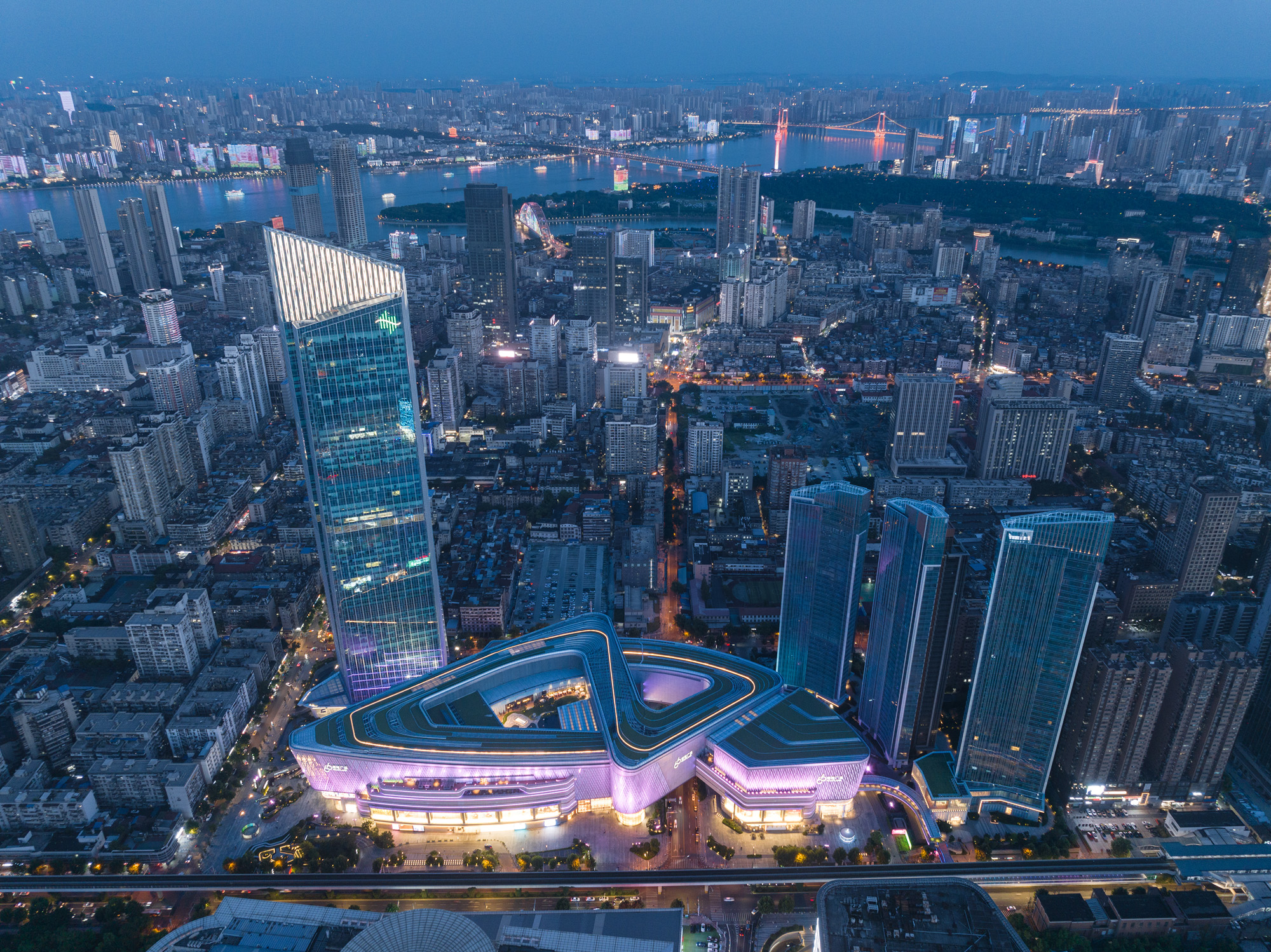
    Heartland 66, located in Wuhan, China, is broadening its retail landscape with the introduction of two novel concepts: the 24KR Korean Trend Zone and Greenhouse by Edgestreet. This move is part of a larger strategy to transition away from conventional retail, and instead focus on integrating immersive retail experiences, Korean fashion and culture into a more lifestyle-oriented hub.

    Introducing the 24KR Korean Trend Zone and Greenhouse by Edgestreet

    Occupying an expansive area of 10,400 square meters, both the 24KR Korean Trend Zone and Greenhouse by Edgestreet are set to showcase over 150 brands from diverse sectors such as lifestyle, fashion, and home living. The 24KR Korean Trend Zone is designed to tap into the ongoing fascination for Korean culture among the younger demographic. On the other hand, Greenhouse by Edgestreet, with its botanical-themed retail concept, will offer a range of products encompassing fashion, pet items, and homeware.

    In its inaugural phase, the 24KR Korean Trend Zone will serve as a host to 11 brands making their first appearance in China and another 15 brands penetrating the Central China market for the first time. Meanwhile, Greenhouse by Edgestreet will welcome 20 brands opening their debut stores in Wuhan.

    Harvey Ye, General Manager of Heartland 66, suggests that these launches are geared towards attracting a younger clientele and enhancing the retail mix offered by the brand. According to Ye, the simultaneous launch of 24KR Korean Trend Zone and Greenhouse by Edgestreet signifies a pivotal step towards engaging this demographic and stimulating the rejuvenation and advancement of their retail spaces. He further emphasizes the enormous potential of the emerging consumer market and the booming economic vigor of Central China.

    Questions & Answers

    What are the new concepts introduced by Heartland 66?
    Heartland 66 has launched two new concepts: the 24KR Korean Trend Zone, which will focus on the Korean culture popular with younger consumers; and the Greenhouse by Edgestreet, a botanical-themed retail concept offering a range of fashion, pet, and homeware products.

    What is the significance of these launches?
    The launch of these novel concepts represents a crucial step in Heartland 66’s strategy to engage younger consumers, revitalize their commercial spaces, and transition the shopping center into a lifestyle-focused hub.

    How many brands will be featured in the 24KR Korean Trend Zone and Greenhouse by Edgestreet?
    Both the 24KR Korean Trend Zone and Greenhouse by Edgestreet will feature over 150 brands across lifestyle, home living, and fashion categories.


  • Besi APac Partners with DHL Express to Slash Greenhouse Emissions through Sustainable Aviation Fuel

    Besi APac Partners with DHL Express to Slash Greenhouse Emissions through Sustainable Aviation Fuel

    Besi APac Sdn. Bhd., the Malaysian unit of top semiconductor assembly equipment manufacturer BE Semiconductor Industries N.V., has entered into a partnership with DHL Express by joining their GoGreen Plus programme. This programme aims to lower the emissions generated from Besi APac’s urgent global deliveries through the utilization of sustainable aviation fuel (SAF). The partnership is projected to result in a reduction of over 400 tonnes in Well-to-Wheel (WTW) CO₂e emissions.

    Reducing Emissions Through Responsible Practices

    Besi APac is dedicated to the energy transition and acknowledges the importance of decreasing operational emissions through responsible business operations. Henk Jan Jonge Poerink, Managing Director of Besi APac and Senior Vice President of Global Operations at Besi N.V., stated that the company’s sustainability strategy extends to its supply chain activities. They are striving to incorporate environmental considerations into their procurement processes. SAF is seen as one of several methods that can assist in reducing aviation-related emissions. The company eagerly anticipates the opportunity to support the expansion of renewable alternatives.

    Introduced in 2023, GoGreen Plus allows its clients to utilise SAF to decrease their indirect Scope 3 emissions, which arise from upstream and downstream transportation and distribution. This service is made possible through numerous SAF contracts that DHL has signed with its partners.

    SAF, which is made from sustainable feedstocks like used cooking oil and other residues, can lower lifecycle greenhouse gas emissions by approximately 80% compared to standard jet fuel. The ‘book & claim’ approach enables DHL to replace fossil fuels with sustainable fuels within its network directly and assign the associated lifecycle emission reductions to clients like Besi APac.

    Besi APac’s Commitment to Sustainability

    Besi APac’s subscription to GoGreen Plus is applicable across its international trade routes, covering major markets in the Asia Pacific, Europe, Americas, and Middle East. The initiative is aligned with the company’s 2025-2029 strategic plan, which includes minimising its environmental impact as a primary goal. Besi APac has significantly reduced its Scope 1 & 2 emission intensity ratio, fuel consumption intensity ratio, and increased electricity usage from renewable sources since 2019.

    Alex Lee, Vice President of Commercial at DHL Express Malaysia, stated that DHL is committed to increasing the availability of emissions-reduced logistics solutions. Partnerships like this one showcase the practical application of this commitment.

    DHL is one of the largest global users of SAF. The company increased the percentage of SAF in its own aircraft fleet to 10 percent in 2025, a significant increase from the 3.5 percent the previous year. DHL currently uses SAF at airports worldwide.

    Questions & Answers

    What is Besi APac’s strategy to reduce emissions in their operations?
    Besi APac is committed to decreasing operational emissions through responsible business practices. This includes integrating environmental considerations into their procurement processes and using SAF to reduce aviation-related emissions.

    How does DHL’s GoGreen Plus programme help to reduce emissions?
    GoGreen Plus allows its customers to utilise SAF to reduce their indirect Scope 3 emissions arising from upstream and downstream transportation and distribution. It replaces fossil fuels with sustainable fuels within its network, attributing the associated emission reductions to its customers.

    What progress has Besi APac made in reducing its environmental impact?
    Besi APac has made significant strides in reducing its environmental impact. The company has greatly reduced its Scope 1 & 2 emission intensity ratio and fuel consumption intensity ratio. Additionally, it has increased its electricity usage from renewable sources to 99 percent since 2019.

  • PepsiCo to support Aussie farmers’ greenhouse gas reduction efforts

    PepsiCo to support Aussie farmers’ greenhouse gas reduction efforts

    PepsiCo has unveiled the third year of its Positive Agriculture Outcomes (PAO) accelerator, a global initiative to address critical agriculture challenges while advancing its pep+ (PepsiCo Positive) agenda.

    As part of this program, the company supports eight innovation projects across nine countries, including a project with Australian grain growers to test and validate soil health management practices to reduce greenhouse gas emissions on farms.

    PepsiCo’s PAO accelerator will provide co-investment to local farming communities to accelerate diverse and results-driven positive agriculture projects and funding for ag-tech startups that offer proven products or technology with the potential to scale.

    “With this latest round of projects, we’re not only fostering a powerful network of innovators across global farmland but growing closer to achieving a more regenerative future, with farmers’ insight at the forefront,” said Margaret Henry, VP of sustainable and regenerative agriculture, PepsiCo.

    Since its launch in 2021, the PAO accelerator has supported various projects, including adopting efficient irrigation systems in response to increased drought, developing kilns to turn agricultural waste into fertiliser, and improving soil health.

    PepsiCo said it will continue to offer funding to diverse projects that build resiliency through climate-related analysis, improve soil health, and strengthen farms’ climate resilience.

  • Nike global warehouses goes carbon neutral

    Nike global warehouses goes carbon neutral

    A Nike warehouse in Melbourne’s Altona North suburb has become the first facility in Australia to receive a ‘whole-of-building’ carbon-neutral certification from the National Carbon Offset Standard.

    The certification is the latest recognition for the site, which has also received a Green Star Performance rating and was named the ‘Best Industrial Project’ at the National Energy Efficiency Awards in 2017.

    The 18,000sqm warehouse, which is owned by the Stockland property group and was custom-built for Nike by Toll, was designed with environmental efficiency in mind.

    Some of the site’s unique features include translucent roof sheeting to maximise daylight so warehouse lighting can be switched off when ambient light is sufficient, roof insulation to assist with temperature control and an optimised conveyor system, which was rewired and reprogrammed to operate in relation to product volumes, eliminating unnecessary movement.

    The retrofitting of 1300 light fixtures with high-efficiency LEDs also helped the site to halve its total electricity consumption, exceeding the greenhouse reductions required by NCOS.

    Toll and Nike offset the remaining greenhouse emissions generated by the building by investing in forest conservation projects in Tasmania as well as in an energy recovery waste water treatment plant in Thailand. These projects protect local biodiversity and native species support jobs in local communities and reduce greenhouse gas emissions, according to a statement from the comp

    Nike’s operations director Marie Varrasso said the success of the facility reflects its commitment to reducing its carbon footprint whilst delivering efficient solutions and savings which can be passed on to its customers directly.

    “Through this collaboration, continuous improvements have been introduced into the supply chain, which ultimately benefits Nike’s footwear, apparel and equipment customers. It’s a unique relationship, with innovation at the heart of everything we do,” she said.

    Stockland’s general manager of logistics and business parks Tony D’Addona said the project has has been a worthwhile education process for the property group’s warehousing and logistics business and helped to improve its management approach to sustainability.