Retail News CRM

Tag: grofers

  • Indian grocery startup Zepto raises new funds at $900 million valuation

    Indian grocery startup Zepto raises new funds at $900 million valuation

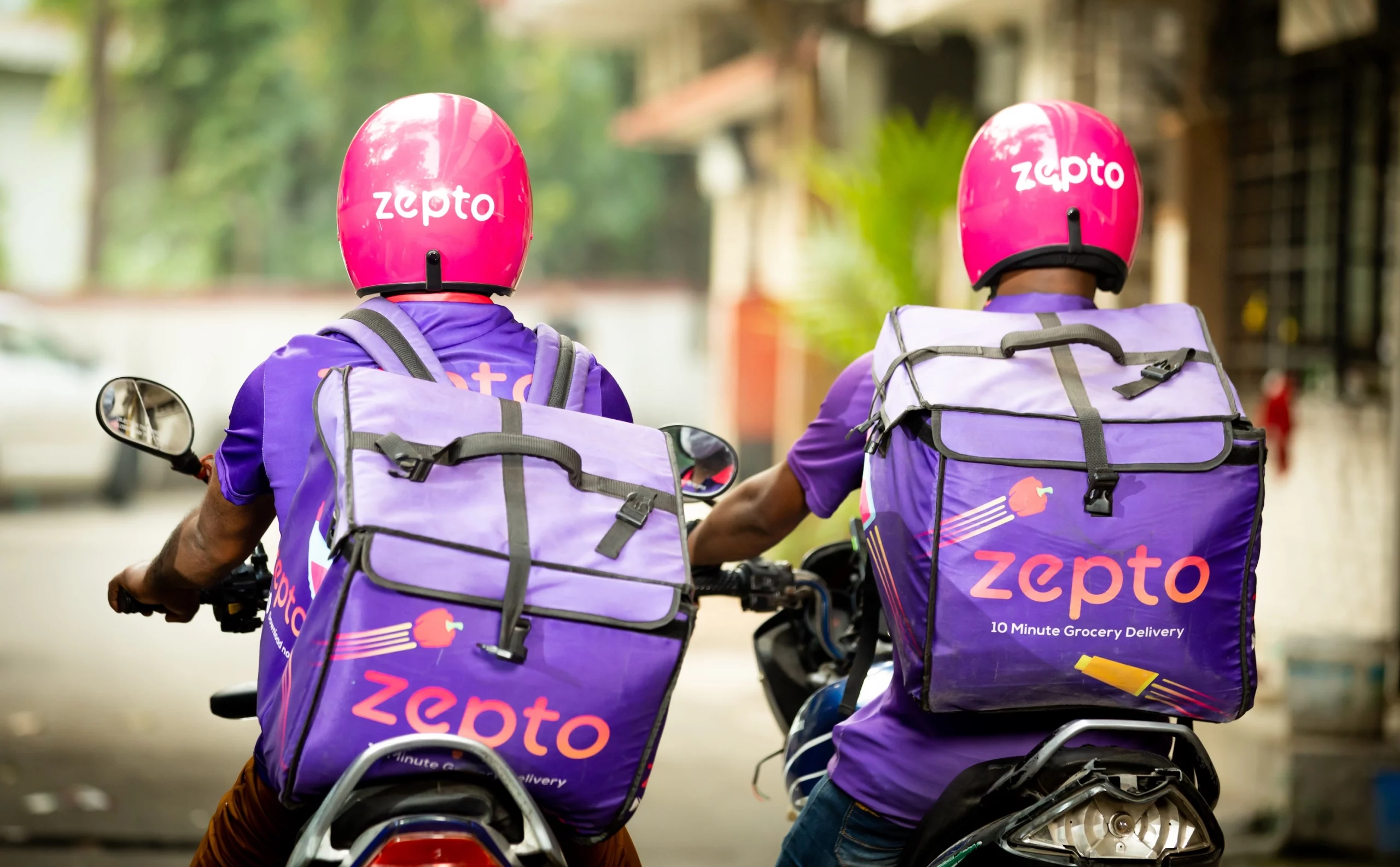
    Instant grocery startup Zepto has raised $200 million in a new financing round as it looks to expand its 10-minute delivery service to more cities in India and grow its network of dark stores.

    Existing backer Y Combinator Continuity led Zepto’s Series D round, valuing the Mumbai-headquartered startup at about $900 million, up from $570 million in its December Series C round and $225 million in a round unveiled in late October.

    Kaiser Permanente, the giant healthcare firm, which also operates a venture arm, as well as all key existing investors including Nexus Venture Partners, Glade Brook Capital, Contrary Capital and Lachy Groom, participated in the new round, the startup said Monday evening.

    There’s no secondary transaction in the new round, which brings the startup’s to-date raise to $360 million.

    At 19, Aadit Palicha and Kaivalya Vohra co-founded Zepto. The duo, who had previously worked on a number of projects, including a ride-hailing commute app for school kids, and dropped out of Stanford two years ago, took Zepto out of stealth mode in November last year.

    Its 10-minute delivery service is today operational in 11 cities across India and it processes hundreds of thousands of orders each day, Palicha, who serves as Zepto’s chief executive, told TechCrunch in an interview.

    The startup’s current annualized revenue is between $200 million to $400 million, he said, a figure he is determined to grow to “at least $1 billion” by the quarter ending March next year.

    The surge in revenue comes as the startup has consistently grown by over 50% each month in recent months, he said. In the most recent quarter, the startup grew its revenue by 800% while slashing its expenses per order by more than five times, he said.

    In India, Zepto is among the earliest startups attempting to prove the quick commerce model, a category that has taken off in several markets, including North America and Europe. However, a number of startups operating in the space have either scaled down their efforts or shut down completely, as many venture investors lose appetite for fast delivery.

    Zepto competes with Swiggy, India’s most valuable food delivery startup and one that has committed to investing more than $700 million on its quick commerce service, called Instamart.

    A number of other players, including Blinkit, formerly known as Grofers, are also attempting to win a slice of the market. The SoftBank-backed startup recently agreed to an acquisition offer by larger food delivery firm Zomato, TechCrunch reported earlier, which in recent months has expressed interest in expanding to the quick commerce category, an area where it has historically performed poorly.

    Zomato last month began a pilot of 10-minute delivery of food items in its home city of Gurugram. Zepto is also piloting a service to deliver a range of prepared food items, including hot beverages and snacks within its signature 10-minute promise in select areas in Mumbai, it said.

    At stake is a $45 billion market, according to analysts at Sanford C. Bernstein. In a report earlier this year, the firm’s analysts reported that India is leading other global markets in the adoption of quick commerce.

    The analysts said customers’ increasing willingness and ability to a pay premium for superior quality products and the growing market for home delivery have contributed to the growth of quick commerce in the country.

    The average size of an order placed on an instant delivery service is currently about $6 in India, compared to $12 to $15 for traditional online grocery orders, they said. “But recent cohorts have shown improving stickiness, with basket size increasing with increase in usage. Quick commerce models have seen improving monthly order frequency (mature cohorts at 3-4 times a week, with healthy AOV of 400-500 Indian rupees). Quick commerce players are focused on driving a high frequency basket which will drive better economics,” they added.

    For Zepto, instant grocery delivery is just the beginning in a decade-long journey ahead, said Palicha. Though he declined to reveal the startup’s audacious plans for the future, he said it’s fair to assume Zepto will expand to categories beyond grocery in the long-term, especially those that are currently underserved by giant e-commerce players.

    The startup plans to expand to an additional 12 to 20 cities in the next 12 months and set up a few hundred more dark stores, which it uses to store inventory. These dark stores are optimized for fast delivery, said Palicha. There, the startup stores the most commonly ordered items and a catalog of SKUs in different price ranges. The startup also plans to nearly double its workforce to 2,000 by the end of this year.
  • India’s Grofers to convert 200 partner stores into its own brand network

    India’s Grofers to convert 200 partner stores into its own brand network

    Indian online grocer Grofers will convert around 200 service-partner stores into its own offline branded outlets.

    The move is intended to expand Grofers’ business without affecting online sales, and has already been put into effect in around 100 such “kirana” outlets, providing training in point-of-sale, retention and loyalty schemes, among other areas. Plans are also underway to expand the network into southern Indian markets.

    “We have converted several grocery stores into our own branded offline stores,” said Grofers VP and offline business head Yeshu Bansal, “around 100 kirana stores in Delhi-NCR have been a part of this effort that started somewhere in November last year. Our target is to have 200 such stores in the coming few months.”

    The firm is aiming to double sales to ₹5000 crore (US$726.7 million) this financial year and is planning an IPO within three years.

    “Using our forecasting tools and data science, we help the offline stores understand what items are selling more and what should he stock for,” added Bansal. “We are taking our experience and tech to the offline store … We are entering kirana stores in residential areas that has middle and the lower middle class population. The goal is to help the retailer scale up his business by getting more footfalls, and for us, it helps push their homegrown brands (private label products) as well.”

    Grofers partners with more than 6000 stores that deliver groceries to its customers.

  • Grofers crosses Rs 300 cr sales in single month

    Grofers crosses Rs 300 cr sales in single month

    Grofers, the low price online supermarket, announced the record revenue of Rs 310 crore in January 2019. With this, Grofers became the first online grocer to cross Rs 300 crore in monthly sales and also became the largest e-grocery company in the fast growing space. Aligned with its aim to drive the next wave of growth for e-commerce sector, the company has brought 2.5 lac new customers to its platform in January. The brand is eyeing a revenue target of Rs 2,500 crore for FY 2019.

    On the back of the industry’s biggest grocery sale – Grand Orange Bag Days, Grofers recorded an average of 14 lakh visits per day on the app. During this period, a total of 1.81 crore items worth Rs 207.5 crore were sold. With an average ticket size of Rs 2,640 and 20 items per cart, Grofers recorded highest customer engagement in Delhi NCR followed by Mumbai and Bengaluru.

    Speaking on the success Albinder Dhindsa, Co-Founder and CEO, Grofers said, “We are excited to emerge as India’s favourite e-grocer. We have received a tremendous response in the Grofers Orange Bag Days sale and we will sustain the momentum going forward. We are geared to bringing better priced grocery products to 100 million customers and this is just the start.”

    Customers received jaw dropping offers during Grofers Grand Orange Bag Days sale. Grocery and staples were the highest selling items followed by household items (detergents and dishwash bars) and personal care products. During this time period, Grofers recorded a 80 percent increase sales of Grofers branded products as well.

  • Grofers eyes $2.5 billion in revenue by 2020

    Grofers eyes $2.5 billion in revenue by 2020

    SoftBank-backed Grofers aims to garner $2.5 billion (approximately Rs 17,500 crore) in revenue by 2020 as it scales up its private label offerings in the country and focusses on expanding repeat purchases in its platform. The company, which has recently completed five years of its operations, has a revenue run rate of $360 million (about Rs 2,500 crore) currently.

    Grofers Co-Founder and CEO Albinder Dhindsa said Grofers has been witnessing over 30 percent month-on-month growth.

    “While we do not sell gourmet products that usually offer higher margins, we have been able to create a set of dedicated customers that usually promote our brand as well… We will continue to ramp up our business and we aim to clock $2.5 billion revenue by 2020,” he said.

    Outlining the expansion strategy, Dhindsa said about 40 percent of the selection on its platform now comprises of private label products.

    “There are a number of local manufacturers, who have great products but can’t compete with the FMCG giants and therefore, their products often don’t find shelf space in retail stores…we continue to grow the number of manufacturers that we work with,” he said.

    He further explained that putting these private labels on its own platform has helped the company provide aspirational products like muesli, peanut butter at more affordable prices.

    These private labelled products are also making their way on retail shelves at Grofers’ over 1,500 partner stores, which the company aims to ramp up to one million in the next two years.

    Asked about competition, especially with Walmart-backed Flipkart and Amazon expanding their presence aggressively in the online grocery segment, Dhindsa said the company is not worried.

    “Grocery is not the same as books and electronics. We may carry a smaller selection but the focus for us is on affordability. Consumers are very conscious when it comes to the grocery buying and that is what we want to ensure for our customers,” he said adding that Grofers is focussing on further enhancing its coverage of the cities it operates in.

    In March 2018, Grofers had announced raising Rs 400 crore in funding led by SoftBank, Tiger Global and Apoletto Asia. It has raised funding of $226.5 million till now. Its average daily order volumes were over 35,000 per day in June this year.

    Grocery segment accounts for a significant portion of the unorganised retail segment in the country. With people becoming comfortable buying even milk and bread online, the online grocery segment is projected to witness a strong growth over the next few years in India.

    As per the estimates, e-tail is just 0.5 percent of the total grocery market in India, which is pegged at $400 billion or 70 percent of all retail.

    In a recent interview, Flipkart CEO Kalyan Krishnamurthy had said grocery is one of the key focus areas for the company currently and, the segment will play an important role in getting access to the next 200 million customers.

    Amazon India, too, has been aggressively ramping up selection and focussing on speedier delivery to consolidate its position in the segment. In February this year, Grofers’ competitor Bigbasket had raised USD 300 million led by Chinese e-tailer giant Alibaba and others.

  • Grofers eyes over Rs 2,500 cr revenue in FY19

    Grofers eyes over Rs 2,500 cr revenue in FY19

    Online grocery firm Grofers expects its revenue to cross Rs 2,500 crore this fiscal on the back of strong addition of new customers along with increasing cart sizes of existing users.

    According to a report, The SoftBank-backed company, which competes with the likes of Alibaba-funded BigBasket as well as e-commerce majors like Flipkart and Amazon, currently has a monthly revenue run rate of about Rs 150 crore (translating into Rs 1,800 crore for the year).

    “We had launched a loyalty programme — Smart Bachat Club (SBC) — earlier this year and that has given a strong fillip to out business. It’s a subscription offering, where the customer is paying in advance for special pricing on items and we have seen huge uptake for it, we have crossed half a million subscribers already. By December, we expect to reach one million,” Albinder Dhindsa, Co-founder and CEO, Grofers said.

    He added that the frequency of shopping for SBC members is 2.5 times that of non-members, while their carts are 30 percent larger.

    “SBC is playing an important role in our business and we will continue to focus on growing the membership as it also gives us predictability of demand… Overall, we expect to close the fiscal with a monthly revenue run of Rs 215 crore (which translates to Rs 2,580 crore on annual basis),” he further said.

    Asked about competition, especially with Walmart-backed Flipkart and Amazon expanding their presence aggressively in the segment, Dhindsa said the company isn’t worried.

    “Giants have been there but we have been growing despite of that. We have been focussed on our performance, the categories we play in and in offering value to users. And so far, it has worked well for us,” he said.

    He added that the company is focussing on enhancing its coverage of the cities it operates in rather than adding more names to the list.

    In March this year, Grofers had announced raising Rs 400 crore (around US $62 million) in funding led by SoftBank, Tiger Global and Apoletto Asia. It has raised funding of US $226.5 million till now. Its average daily order volumes were over 35,000 per day in June this year.

    Grocery segment accounts for a significant portion of the unorganised retail segment in the country. With people becoming comfortable buying even milk and bread online, the online grocery segment is projected to witness a strong growth over the next few years in India.

    As per estimates, e-tail is just 0.5 per cent of the total grocery market in India, which is pegged at US $400 billion, or 70 percent of all retail.

    Earlier this month, Flipkart had said it plans to expand its online grocery service ‘Supermart’ to 5-6 major Indian cities by the end of the year. In May, Amazon India had re-branded its groceries service to ‘Amazon Now’ and has been aggressively ramping up selection and focussing on speedier delivery to consolidate its position in the segment.

    Also, in February this year, Bigbasket has raised US $300 million led by Chinese e-tailer giant Alibaba and others. It had said it plans to use the money to build farmer networks, expand deeper into existing cities, and to hire new hands.

  • Grofers India to enter FMCG segment; targets Rs 2,500 crore revenue by FY19

    Grofers India to enter FMCG segment; targets Rs 2,500 crore revenue by FY19

    Grofers closed FY 18 with Rs 950 crore of sales and is targeting for a stronger growth trajectory in 2019, with a 50 percent contribution from its private brands.

    The company has launched seven new brands under two categories Budget and Popular G-Brands.

    “With this, Grofers’ private labels expands to 250 food and non-food products for its consumers. With this significant business expansion, Grofers aims to drive the next wave of growth for e-commerce sector by bringing the next 100 million customers to its platform,” it said in a statement.

    Grofers’ range of private label is priced approximately 5 to 50 percent lower than the market price for popular brands in these categories, it claimed.

    The brand is bullish on growth with a revenue target of Rs 2,500 crore and roll out of over 500 SKUs for FY19, it added.

    Its presence would be in food products including tea, fruit jam, muesli, tomato ketchup, corn flakes, rose shahi sharbat and household categories of detergents, household care, oral care, tissues and disposables, kitchen tools and accessories, furniture and storage, among others.

    “Our foray into the FMCG segment uniquely differentiates and positions us in the e-grocery business. This vertical expansion is key to drive our next phase of growth in India. In the last five years, we have received an overwhelming response from our customers and experienced tremendous growth,” Albinder Dhindsa, Co-Founder and Chief Executive Officer, Grofers said.

    “Through many industry-first initiatives, we have been instrumental in bringing new customers to the e-commerce fold with 15 per cent of this customer base being our monthly unique shoppers. Our focus is to service the families of India who are yet to experience the world of e-commerce and our target is to bring the next 100 million new customers to e-commerce industry through our platform,” he added.

  • Alibaba seeks approval to buy stake in India’s BigBasket

    Alibaba seeks approval to buy stake in India’s BigBasket

    Chinese internet giant Alibaba is seeking Competition Commission of India (CCI) approval to acquire a stake in online grocery startup BigBasket.

    Financial details have not been disclosed in the CCI filing, which relates to “the acquisition and purchase of shares” of BigBasket parent Supermarket Grocery Supplies by Alibaba Singapore.

    Alibaba Group Holding and its Indian associate PayTM E-Commerce were reported in July as having a 60-day exclusive pact with BigBasket. There were also reports of BigBasket being in merger talks with rival Grofers.

    BigBasket has a presence in Bengaluru, Hyderabad, Pune, Mumbai, Chennai, Delhi-NCR, Kolkata, Jaipur, Punjab and Lucknow as well as four other cities, and has raised more than $200 million from investors.

  • Amazon India proposes $500m food venture

    Amazon India proposes $500m food venture

    Amazon India has applied to the government to invest US$500 million in a wholly owned venture that will allow the US eCommerce giant to stock locally produced food items and sell them online.

    If successful, it would become the first foreign retailer to enter the segment.

    Amazon already has an eCommerce marketplace in India, but while 100 per cent overseas capital is permitted for such platforms, they cannot sell products of their own. Last year, the government allowed for 100 per cent foreign investment in the retailing of processed foods made in India.

    Amazon has filed its application with the Department of Industrial Policy & Promotion (DIPP), which handles foreign investment in retailing and e­Commerce. The company plans to invest $500 million over five years and could start selling locally produced food items within six months of obtaining approval, says an insider.

    “We are excited by the government’s continued efforts to encourage foreign direct investment in India for a stronger food-supply chain,” says an Amazon spokesperson. “We have sought an approval to invest and partner with the government in achieving this vision.”

    Only Indian grocery delivery companies Big­Basket and Grofers have applied under
    the category, prompting the government to invite companies including CP Foods (Thailand), Heinz, Nestle and Walmart to provide feedback and investment plans.

    This followed the minister for food-processing industries Harsimrat Kaur Badal visiting London with a team of officials last year to meet representatives of such companies as Cobra Beer, Harrods, Marks & Spencer, Sainsbury’s and Tesco to drum up support for the policy.

    Amazon’s current online platform is open to Indian-­owned entities, and similar platforms are run by Flipkart, the country’s largest eCommerce company, and Snapdeal.

  • Grofers shifts base to Singapore

    Grofers shifts base to Singapore

    PM Narendra Modi may have been the flag-bearer of `Make in India’, with his recent trip to the US being a highlight for `Digital India’. But another Indian startup has joined the growing list of new companies moving base out of India. Gurgaon-based Grofers decided to shift headquarters to Singapore from India.

    A hyperlocal grocery delivery firm, Grofers’ moving out is primarily due to a friendlier corporate regime in foreign countries.

    The shift has again highlighted a `brain drain’ of sorts with regards to Indian companies. Earlier, companies like Mobikon and AdNear had also moved out of India. In fact, Indian e-commerce’s poster boy Flipkart too shifted its base to Singapore, while some of the others like Fresh Desk and Druva chose USA.

    Grofers co-founder Albinder Dhindsa said, “Our main reason for a Singapore holding company is owing to listing potential in the future. Our assets are still on the books of the Indian entity, so tax equation remains same for us.”

    India’s high corporate tax rates and compliance issues are the key reasons for companies to join the exodus, industry experts pointed out.

    In fact, investors too are more confident putting money into a startup when the company headquarters operates out of a tech-friendly foreign country .Corporate tax rate is 30% in India, while the same in Singapore is 17%. “India is a hot spot for startups now. But it is yet to catch up in terms of regulations and tax structures. In a tech-friendly market, which is mature enough to house them, getting relatively higher fundings and more valuation becomes easier,” said a domestic investor.

    Key stakeholders pointed out what also makes it even tougher for early stage or emerging companies in the new economy space is the fact that a fairly modestvalued company has to exercise same sort of compliances which an established conglomerate is expected to meet in India. “It is a strenuous task for even a middlesized company to match the corporate compliance standards of, say , a behemoth like ITC,” a corporate lawyer said.

    For Grofers’ next round of funding too, the Singapore entity might come in handy as its competitors like BigBasket and PepperTap have recently raised funds for expansion and acquired consumers in a sector which is the hottest in the ecommerce arena in India.What remains to be seen is whether the government can arrest the rising exodus and `Make In India’ becomes a reality.