Tag: Groupon

  • Meituan Dianping to set Hong Kong IPO valuation at up to $55 billion

    Meituan Dianping to set Hong Kong IPO valuation at up to $55 billion

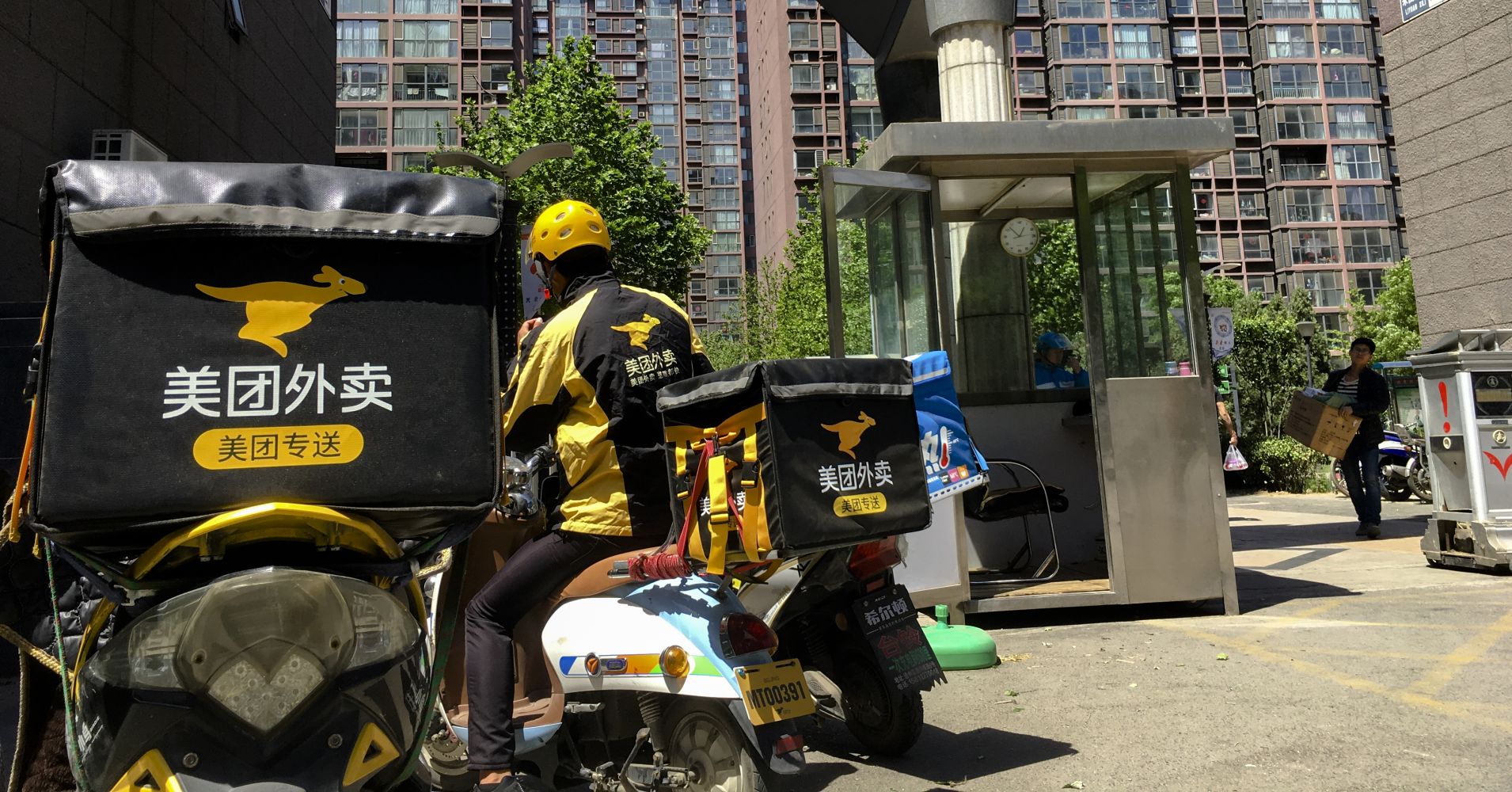
    China’s Meituan Dianping, an online food delivery-to-ticketing services platform, has set an indicative price range of HK$60 to HK$72 ($7.64-$9.17) per share for its initial public offering (IPO) in Hong Kong, valuing itself at up to $55 billion, four people with direct knowledge of the matter said.

    Meituan, already one of China’s most valuable internet firms, could raise as much as $4 billion before the exercise of a “greenshoe” or over-allotment option, whereby additional shares are sold depending on demand.

    The company is discussing a valuation of $46 billion to $55 billion and planning to secure a total of $1.5 billion from five cornerstone investors, including its main backer gaming and social media company Tencent Holdings, and global asset manager OppenheimerFunds, the people said.

    Oppenheimer will commit $500 million and Tencent $400 million, they said.

    Other cornerstone investors include U.K.-based hedge fund Lansdowne Partners ($300 million), U.S. hedge fund Darsana Master Fund ($200 million) and Chinese state-owned conglomerate China Chengtong Holdings ($100 million).

    The five cornerstone investors did not immediately respond to requests for comment. Calls to Darsana went unanswered.

    The Beijing-based firm filed plans for the city’s second multibillion-dollar tech float this year after smartphone maker Xiaomi’s blockbuster IPO of nearly $5 billion.

    It plans to use the process to upgrade its technology, develop new services and products and pursue acquisitions among other things, according to its IPO filing.

    Meituan is also – after Xiaomi – the latest company with a dual-class share structure to file for a Hong Kong listing, under the city’s new rules designed to attract tech companies.

    However, in late July Hong Kong Exchanges and Clearing (HKEX), the operator of Hong Kong exchange, said it would delay changes that would allow companies to hold shares with more voting rights, as more time was needed for investors to become accustomed to recent rule changes.

    Meituan was valued at around $30 billion in a fundraising round late last year.

    Xiaomi started trading in July after a closely watched but disappointing initial public offering that valued it at almost half the $100 billion that industry analysts had initially estimated.

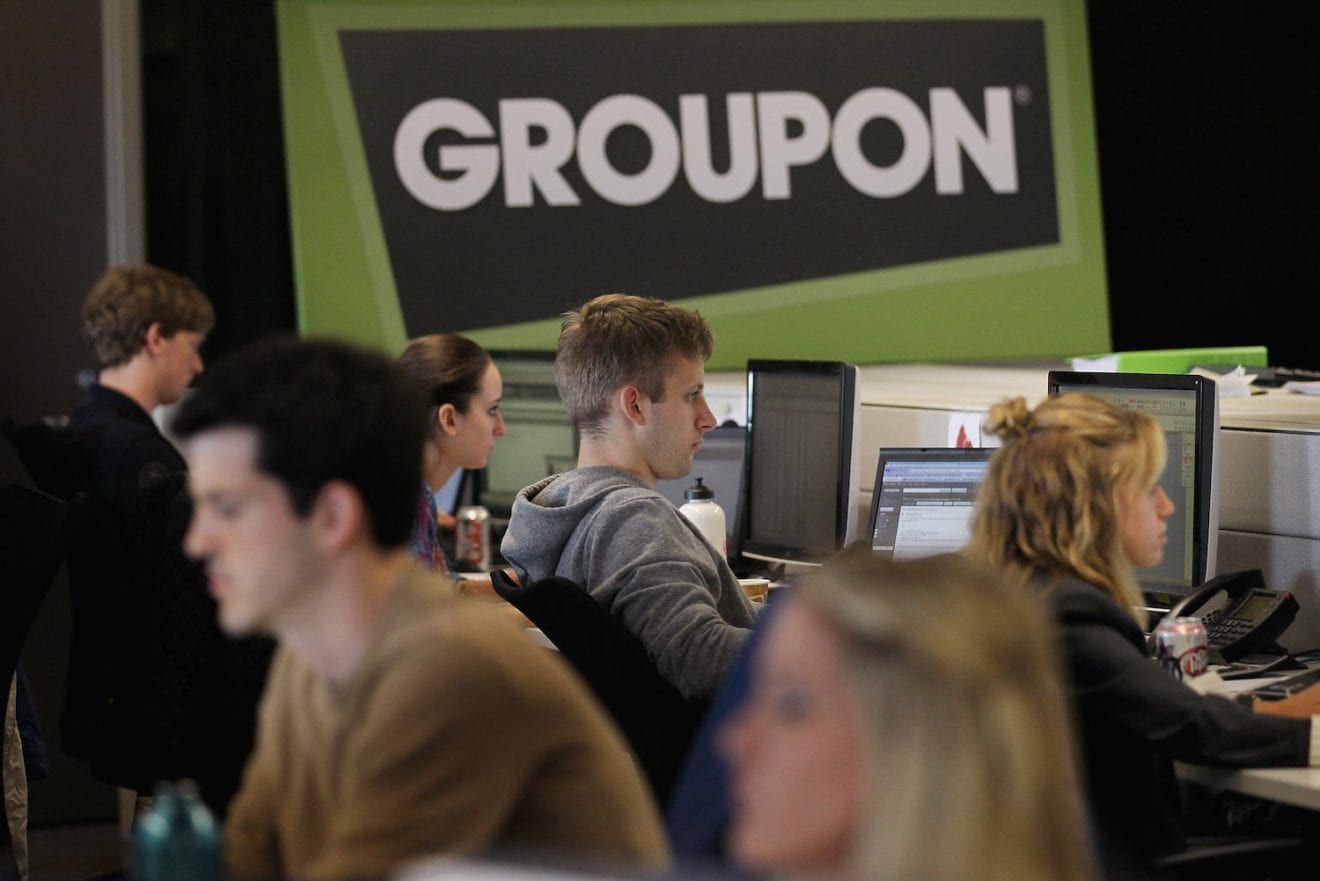
    Meituan has been likened to U.S. discounting platform Groupon.

    Founded in 2010 by serial entrepreneur Wang Xing, it completed a $15 billion merger with Dianping in 2015, akin to U.S. online review firm Yelp Inc. It offers a broad range of services including movie ticketing, food delivery, hotel and travel booking as well as ride-hailing.

    Competitors include food-delivery platform Ele.me, backed by e-commerce firm Alibaba Group Holding, and leading ride-hailing firm Didi Chuxing, backed by Japan’s SoftBank Group.

    Bank of America Merrill Lynch, Goldman Sachs Group and Morgan Stanley are sponsors of Meituan’s IPO.

    China Renaissance is the financial advisor.
  • Groupon Malaysia sold to local startup

    Groupon Malaysia sold to local startup

    Ever-shrinking deal site Groupon has exited another market – this time selling its Malaysia business to KFit Group.

    KFit, in which Groupon is an investor, had already acquired the Groupon Indonesia business.

    “With our Indonesian business achieving nearly double growth since our acquisition, we are confident that the same growth principles will bring an exciting new local commerce offering to Malaysia,” said Joel Neoh, founder of KFit Group, announcing the deal.

    The almost terminally flawed Groupon business model was founded in the US and was floated in late 2011 in one of the dot com industry’s most over-valued business IPOs in history. Since its float, Groupon has reported a loss almost every quarter. Last year, it attempted to streamline its business model across its various international markets, another strategy which failed to recuse the brand tainted by dodgy deals, dissatisfied customers and retail partners who lost small fortunes supplying unsustainable promotions sold online. Last month it was even caught selling counterfeit products in the UK.

    As reported in September last year, the business closed its doors in Thailand, the Philippines and Taiwan. Outside Asia it had already exited Greece, Turkey, Panama, Morocco, Puerto Rico and Uruguay. Indonesia followed.

    Last year, Groupon lost US$27.6 million on revenues which continued to fall.

    In Indonesia, KFit retained the Groupon branding, but in Malaysia it will be rolled into its similar local concept Fave early next year, expanding that service into new categories such as restaurants, beauty, wellness, gyms, studios, hotels, holidays, leisure, entertainment and professional services.

    One of the underlying failures of the Groupon model is to convert consumers buying deals into long-term loyal customers for the retailers which use the platform. Ellia Pikri says Fave seems to have learned from Groupon’s failure.

    “Coded into Fave’s system are loyalty solutions and flexible offer structures utilising the tried-and-true model of offering deals to loyal customers that Groupon seemingly lacked before.

    “Fave is also a mobile-first platform. It aims to provide a seamless experience for customers to find, share and enjoy a wide variety of special offers from local businesses, all while customers are able to easily experience what the app has to offer straight from their handheld devices.”

    Pikri argues the mobile-first approach helps offer a clean and streamlined layout for users to browse on their handhelds. “Plus, reservations are made directly on the app, which cuts out the additional step of having to call a vendor (like via Groupon).”

    Face has more than 3200 businesses on its customer database across three countries.

    “While they do have some stiff competition, the combined expertise of Joel’s experience and Malaysia’s growth of online purchasing might just be the push Fave needs to see success where Groupon didn’t,” says Pikri.

    Michel Piestun, president of APAC for Groupon, said it expected KFit Group would steer Groupon Malaysia “to even greater heights”.

    “With Joel’s experience in leading Groupon Asia Pacific in the past, we are confident that KFit Group will be able to grow the business. As a strategic partner in KFit Group, we look forward to seeing the company take big strides in the coming months,” said Piestun.

  • Vietnam, Indonesia to lead Southeast Asian eCommerce

    Vietnam, Indonesia to lead Southeast Asian eCommerce

    Vietnam and Indonesia are tipped to become the largest Southeast Asian eCommerce markets within the next five years.

    Stunning growth in both markets is predicted in a report by global research company Frost & Sullivan which expects the broader region’s eCommerce market to double within five years.

    By 2020, the total revenue from B2C eCommerce in the six largest Southeast Asian countries, including Viet Nam is expected to grow at nearly 18 per cent, from US$11.2 billion in 2015 to $25.2 billion.

    Growth will be driven by an astounding rate of digital adoption, young and tech-savvy consumers, and increasing disposable incomes.

    Vietnam already has

    There are 127 million SIMs in circulation in Vietnam and nearly 40 million active internet users.

    “eCommerce players are beginning to compete beyond price points and logistics and moving into new areas such as Online-to-Offline (O2O) e-commerce and loyalty programmes,” says Cris Duy Tran, lead consultant in eCommerce and digital transformation at Frost & Sullivan Asia-Pacific.

    But he says eCommerce companies face significant challenges across the markets with many existing players struggling to achieve profitability. He singled out the failure of Foodpanda in VIetnam and Groupon in Thailand and the Philippines. Low levels of credit card ownership and distribution challenges also made it difficult to run online businesses profitably.

  • KFit Holdings moves into Indonesia with Groupon

    KFit Holdings moves into Indonesia with Groupon

    Malaysian health and fitness company KFit Holdings is about to enter the Indonesian market after signing a deal to acquire eCommerce company Groupon Indonesia.

    For an undisclosed amount, the acquisition will see KFit enter Indonesia with Groupon as a wholly owned subsidiary. The transaction is expected to be completed in the third quarter of this year.

    Groupon Indonesia has more than 1 million subscribers and 15,000-plus local merchants.

    “The combination of Groupon Indonesia’s established presence and KFit’s experience in building a mobile-first platform will propel us in a high-growth local commerce market, further accelerated by increasing mobile penetration,” says KFit CEO/founder Joel Neoh.

    “While KFit will continue to focus on health and fitness services, this presents a strategic direction for us to enhance and broaden our offerings. In the long run, this acquisition will provide us with a strong platform for growth in Southeast Asia.”

    KFit is an online subscription platform that provides users access to fitness studios, classes and gyms in various cities across Asia. Since its launch last year, it has extended its offering to include beauty and wellness, and launched its pay-per-use KFitGo. In the past six months, KFit users have reserved more than 400,000 activities. Today, one reservation is made every minute on the KFit platform.

    KFit founder Joel Neoh also founded Groupon Malaysia, in 2011, going on to head Groupon Asia-Pacific.

  • Malaysia’s KFit buys Groupon Indonesia

    Malaysia’s KFit buys Groupon Indonesia

    Groupon Indonesia will become a wholly-owned subsidiary of KFit and Groupon Inc will be a strategic shareholder of KFit. The terms of the deal have not been disclosed.

    A report in the Chicago Tribune said Groupon announced the sale on Monday, the latest step in its ongoing shedding of international markets.

    Chicago-based Groupon, which operates in 26 countries, has exited several international markets since 2015 in favour of building up its North American business.

    KFit founder and Chief Executive Officer Joel Neoh is the founder of Groupon Malaysia. He later headed Groupon’s Asia-Pacific business.

    KFit gained popularity by offering unlimited access to gyms and fitness studios for a fixed monthly fee in Asia. It offers users the chance to book fitness classes at different locations through one app.

    The deal should close in the third quarter of 2016, KFit said in a press release, adding that Groupon Indonesia has more than one million subscribers and more than 15,000 local merchants. Groupon Indonesia will continue to function as usual, the release said.

    A report in Techinasia said, in February, KFit added more categories such as massages and beauty salons to its offering, an indication that the startup needed to add more revenue streams to its core product.

    A month later, KFit also tweaked its model, limiting membership to 10 activities per month, for the same rate.

    Neoh said: “While KFit will continue to focus on health and fitness services, this presents a strategic direction for us to enhance and broaden our offerings. In the long run, this acquisition will provide us with a strong platform for growth in Southeast Asia.”

  • A $5 Billion South Korean Startup Is Beating Amazon At Its Own Game

    A $5 Billion South Korean Startup Is Beating Amazon At Its Own Game

     Jeff Bezos has no interest in bringing Amazon to the 51 million people in South Korea, and Bon Kim is the reason for that. Kim is the CEO of Coupang, the fastest growing e-commerce site of all time in South Korea. The startup, founded in 2010, grossed nearly $300 million in 2014 and is expected to show it quadrupled that amount in 2015, when those numbers are available. Last summer, Coupang raised $1.3 billion in funding. Kim has a 19% stake in the company, which gives him a net worth of $950 million.

    Kim and Coupang have mastered something Jeff Bezos and Amazon are still trying to figure out. Coupang offers on-demand e-commerce with same-day delivery. Amazon is trying to offer this to its bajillion customers, but so far, hasn’t been able to make the margins work. It is either too expensive for the consumer or for Amazon and often for both. Remember, Coupang was founded in 2010, the company has managed to do this in remarkably less time in business than Amazon.

    Bon Kim didn’t set out to become the e-commerce king of South Korea. He was born in Seoul and from the age of seven, he spent much of his life abroad. At 13, he went to boarding school in Massachusetts. He was a varsity athlete in track and wrestling. When it came time for college, Kim stayed local and went to Harvard, where he started a student magazine called the Current. Newsweek took the magazine over in 2001, a year after Kim graduated. He also interned at the New Republic.

    DENIS CHARLET/AFP/Getty Images

    Kim enrolled in Harvard Business School in 2010, but dropped out a year later. He had been bitten by the e-commerce bug and wanted to start a business in Seoul. At the time, Groupon was a hot commodity and Kim set his sights on the daily deal model. Coupang became the 30th Groupon clone in South Korea. Kim registered as a limited liability corporation in the U.S. to make it easier to raise money from American investors. He spent nearly a million on advertising. However, he soon learned that daily deals are a lousy business model. Customer retention is nearly nil.

    By the summer of 2013, Kim had transformed Coupang into an e-Bay style site while experimenting with true e-commerce. Two years later, Coupang had $400 million in capital from Silicon Valley behemoths Sequoia Capital and BlackRock and had made a big commitment to its own inventory. Kim made a more than billion dollar investment in logistics infrastructure.

    Remember, Kim spent many years in the U.S. and Coupang’s structure reflects that. The company’s head of marketing is a former Zappos employee whom Kim convinced to move to Seoul with his family last year. Kim wanted Coupang to have a Western perspective to e-commerce. Coupang has more than 200 non-Koreans on its staff, including former Amazon executives, consultants, and engineers fresh from Silicon Valley. Kim hired a battalion of translators to act as translators for its American employees and as mediators for its Korean employees.

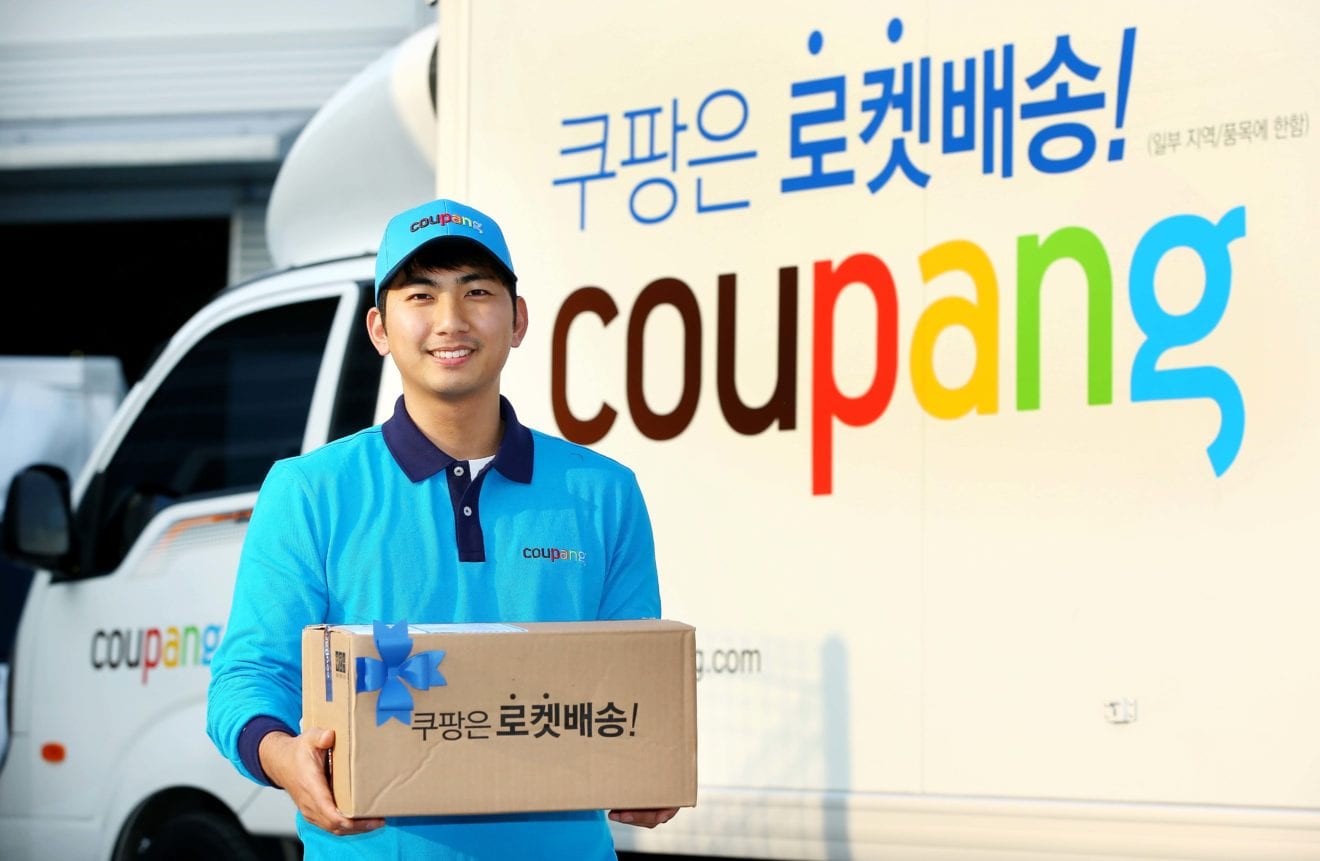
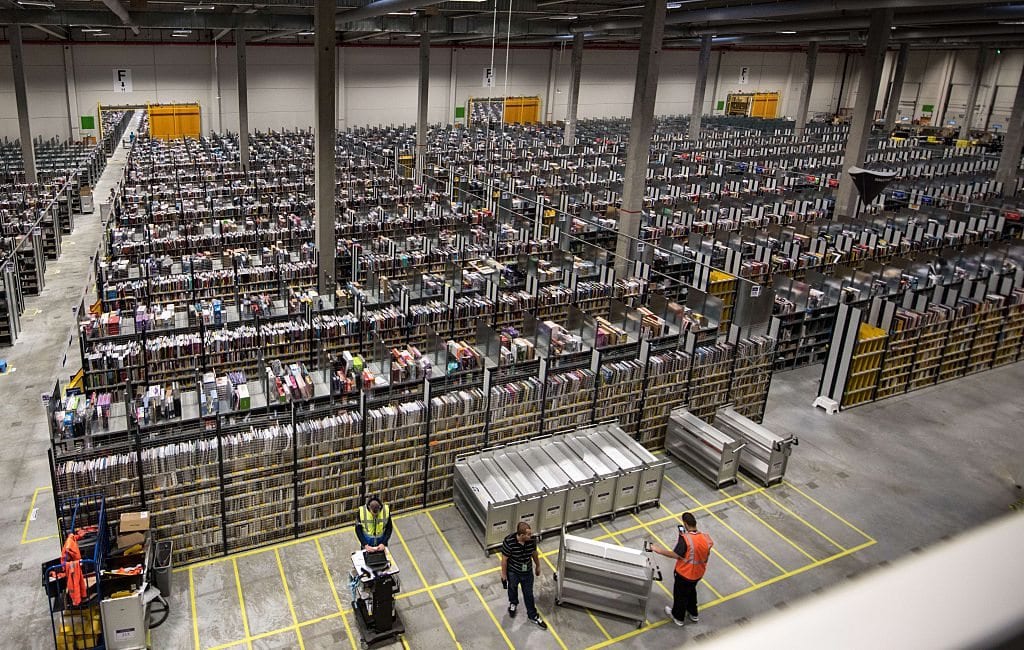
    In just the past two years, Coupang has built a network of customized delivery truck, warehouses controlled by an algorithm that allows it to be the fastest delivery in Korea. The company’s algorithms allow it to inform employees on which stock to move where, so that the most frequently purchased items are closest to the people buying them. Deliveries are made by 3,600 “Coupangmen,” who hand out balloons and candy to kids and text customers pictures of their boxes when delivered, if they are not home to receive them. The average Coupang driver delivers 120 packages each during a 10-hour shift. In South Korea, other retail establishments take two to three days to deliver their goods. Coupang is blowing the competition completely out of the water by delivering in a day or less. Customers can even cancel a shipment already on its way. Oh, and by the way, they don’t charge for delivery.

    South Korea has the second largest GDP in Asia. Almost everyone is on a smartphone and a high-speed network. Half of the country’s population lives in and around Seoul, making it easier for Coupang to deliver on their impressive promise of same day delivery. In South Korea, 15 cents of every retail dollar is spent online. In the U.S. that figure is nine cents.

    Bon Kim has become the e-commerce king of Korea and beaten Jeff Bezos at his own game. Amazon currently operates in 13 countries. Alibaba dominates China and Rakuten is the leader in Japan. Kim is content to keep his business running in Korea alone. At least for now.

  • South Korean retailers eye overseas push

    South Korean retailers eye overseas push

    The largest South Korean retailers, faced with cut-throat competition in the rapidly saturating domestic market, are turning their attention to overseas markets in conjunction with small and mid-sized businesses to secure a new growth driver.

    The country’s three major retail conglomerates – Shinsegae Group, Lotte Group and CJ Group – are targeting to sell more of their ‘private brand’ products or help small and medium-sized enterprises (SMEs) promote their products both in emerging and developed markets, they said.

    Of the three, Shinsegae’s Emart, the nation’s largest discount store chain by sales, appears to be the most aggressive player given its latest moves and announcements.

    On Wednesday, Emart outlined its 2016 plan not only to increase shipments of its products to overseas branches in China and Vietnam but also to supply them to local retail companies in the US, Europe and Oceania.

    “We have set an ambitious target of US$20 million in overseas earnings this year, sharply up from $1.72 million the year before. What we earn outside the country still accounts for a tiny portion of our overall sales. But we expect it to grow over time,” Emart spokeswoman Hur Chae-jeong said.

    For all of 2015, Emart saw its net profit jump 57 per cent to 455.9 billion won ($374 million) from 290 billion won a year earlier. Sales rose 4.1 per cent to 15.3 trillion won from 14.7 trillion won during the same period.

    The dominant discount store company seeks to fill more than 40 per cent of its total products to be exported with price-competitive PB products. In Korea, in partnership with SMEs, big retailers provide ‘less-recognised’ private label products to customers at lower prices compared to existing brand names.

    Moreover, Emart signed an initial agreement with the Korea Trade-Investment Promotion Agency (KOTRA) in November to help SMEs find ways to export their products. The move was in line with the government’s broad efforts to support them amid falling exports.

    Exports have been on a losing streak over the past 14 months, posting a 12 per cent on-year decline in February at $36.4 billion, according to government data.

    Lotte Department Store and CJ O Shopping, the nation’s biggest department store chain and home shopping channel by sales, respectively, have taken similar moves to go overseas.

    Lotte said Thursday it had arranged meetings between Korean SMEs and their Vietnamese and Indonesian counterparts in those countries to help them find bilateral business opportunities there.

    “The Korean SMEs supply their products to our department store chains. If they successfully enhance their brand awareness among overseas customers, it will lead to an increase in sales. So we will jointly conduct a market survey with the SMEs and offer them a variety of support programs,” a Lotte spokesman said.

    Lotte currently operates department store outlets in Vietnam, Indonesia, Russia and China.

    CJ O Shopping said it has partnered with Kotra to help Korean SMEs advance into Latin American markets on top of its current China and Southeast Asian markets.

    “In June last year we set up a joint venture with Mexico’s main broadcasting company Televisa to sell Korean products through a local home shopping channel. We will sign such partnerships with other Latin American countries in coming years,” CJ spokesman Hong Seok-woo said.

    CJ O shopping is in talks with daily deals website operator Groupon  and US retailer Walmart Stores to have Korean products available in their online shopping malls, Hong said.

    CJ has signed with 10 countries, largely in emerging markets, to sell Korean goods through local home shopping channels.

    “We are seeing a burgeoning demand for Korean beauty and fashion products in Latin America helped by the boom of ‘hallyu,’ or the Korean wave, there,” he added.

  • Groupon woes continue

    Groupon woes continue

    Groupon – which has exited three Asian markets this year – continues to struggle globally with ts flawed discounting model.

    Operating on wafer thin margins in the first place, the company has taken a severe hit from currency exchange fluctuations in the third quarter.

    Globally, gross billings grew by six per cent when the exchange rate impact is excluded; similarly, global revenue increased by a more positive seven per cent on a constant currency basis.

    But after taking into effect the strengthened value of the US dollar against foreign currencies this year, Groupon saw its net losses grow by some $6.4 million to $27.6 million.

    As reported by Inside Retail Asia in September, the listed US eCommerce business has closed its doors in Thailand, the Philippines and Taiwan. Outside Asia it has already exited Greece and Turkey and will now close operations in Panama, Morocco, Puerto Rico and Uruguay.

    Neil Saunders, CEO of Conlumino, says the impact of currency fluctuations is worsened by the fact that the company operates off relatively low margins, especially outside of its North American heartland, and as such does not have much of a buffer against their deleterious effect.

    “The margin position is partly down to the multiple systems that Groupon operates across the globe which increase complexity and do not allow for economies of scale. While this is something the company has been remedying by moving to a common platform, we believe that the benefits have, so far, been fairly modest.”

    Saunders says margins are also held back by a further issue, arising from Groupon’s revenue mix.

    “At present, the company divides itself into three main segments: Local, Goods, and Travel. Local is concerned with deals from service providers like restaurants, events and activities. Goods is focused on consumer products like jewellery, electronics and apparel. And Travel is about holiday, flight and accommodation deals.

    “Recent growth in the more mature Local part of Groupon’s business has slowed considerably. Indeed, in Q3 growth was just under eight per cent. Comparatively, Travel and Goods have both seen strong growth, up 20 per cent and 18 per cent, respectively. This rebalancing of the revenue mix has diluted margins, mainly because Goods are far less profitable for the firm.”

    Saunders says gross profit as a percentage of gross billings for Goods is 13 per cent compared to 30 per cent in Local and 18 per cent in Travel.

    “To be fair, the margin performance of Goods has improved over the past year – but not by much. Over future quarters, we see the prospects for margin gains to be slight given that Groupon has to work harder on Goods deals in a market that remains very promotional.”

    Saunders believes there is little comfort ahead for Groupon in the fourth quarter.

    “Groupon is forecasting that revenues will come in at $865 million, at best. This is quite some way below the $883 million generated last year.

    “In our view, such anemic numbers do not paint a rosy picture for future profits. They also bode badly for the start of the new fiscal year – an issue the new CEO, Rich Williams, who is replacing Eric Lefkofsky who’s stepping into the role of chairman, will have to deal with,” Saunders concluded.

  • US PE cos take control of Ticket Monster Korea

    US PE cos take control of Ticket Monster Korea

    Private equity investors Anchor Equity Partners and KKR are to take a controlling stake in South Korean mobile eCommerce company Ticket Monster from Groupon.

    Anchor and KKR, in conjunction with Ticket Monster Korea management, will inject new capital into the company to help fund its future growth opportunities. Anchor and KKR will hold equal stakes in the company.

    Some of the world’s largest pension, sovereign wealth funds and institutional investors, including the Canada Pension Plan Investment Board and Pavilion Capital, will also be participating as investors in this transaction. Groupon, which acquired Ticket Monster Korea in January 2014, will retain a fully diluted 41 per cent minority stake in the business. The investment is based on a $782 million fully diluted valuation of Ticket Monster Korea. KKR and Anchor will work closely with Ticket Monster Korea’s co-founder and CEO Dan Shin and the management team to grow the business.

    “KKR and Anchor not only bring global experience in the retail and technology sectors, but they are also experienced local partners with strong business expertise in South Korea,” said Shin.

    “We are thrilled to be working with distinguished partners who share our vision for growth and offer significant pools of capital in support of Ticket Monster Korea initiatives. With their help and investment, this company will have greater opportunities to attract new customers and expand into new businesses.”

    Groupon CEO Eric Lefkofsky said the partnership strengthens an already powerful local brand.

    “Ticket Monster demonstrates the global appeal and power of a mCommerce marketplace,” said Lefkofsky. “With additional support from KKR and Anchor, Ticket Monster Korea will be even better resourced and positioned in the Korean market.”

    Ticket Monster Korea is a pioneering mobile-first, eCommerce platform that provides a premium online and mobile shopping experience to customers across South Korea. It has already become one of Korea’s largest online retail marketplaces and offers a curated selection of discounted items across three main categories: GGoods, which includes clothing, household and fast-moving consumer goods; Local Services, including restaurant, entertainment and leisure coupons; and Travel, encompassing discounted transportation tickets, hotel stays and vacation packages.

    Ticket Monster Korea’s business leverages key consumption and technology trends in South Korea, a market which is experiencing a rapid shift from offline-to-online and PC-to-mobile retail. South Korea’s eCommerce market has experienced a CAGR of 16 per cent since 2008, stemming from consumers’ increasing focus on convenience, selection and value items, according to South Korea’s National Statistics Office. Mobile commerce, led by application-based technology, is expected to achieve 40 per cent market penetration by 2017, up from two per cent in 2011, according to Mirae Asset research. This complements steady mobile growth in South Korea due to the country’s extensive telecom and logistics infrastructure.

    Ticket Monster Korea’s mobile application had been downloaded more than 9 million times by December 31, 2014. About 70 per cent of Ticket Monster Korea’s customers complete their transactions via mobile.

    “We believe that South Korea represents a sizable and attractive market opportunity given the clear shift by consumers towards mobile commerce, convenience and value goods,” said Stephen Ko, MD of KKR Asia, and Sae Wook Wi, partner of Anchor.

    “We are excited to invest in this fast-growing sector and provide greater financial resources to Ticket Monster. The strong combination of a well-resourced shareholder base and an innovative management team puts Ticket Monster Korea in pole position to lead the market with dynamic, creative services and drive value for consumers. We look forward to working with Dan, his team at Ticket Monster Korea and Groupon during an exceptional time for mobile commerce in Korea,” added Ko and Wi.

    KKR, which is making the investment from Asian Fund II, has a long-established track record of supporting technology companies, having invested more than $13 billion of equity in more than 50 companies across software, internet, media and IT-infrastructure since 2000. Recent investments include GoDaddy, Internet Brands, Trainline and Uxin.

    KKR also intends to leverage its experience investing in world-class consumer goods and retail companies, including Oriental Brewery, Dollar General, Walgreens Boots Alliance and Haier, to help Ticket Monster Korea grow and achieve its goals.

    Established in 2012, Anchor has quickly garnered a reputation for its experience and portfolios in the services, logistics & distribution and consumer & retail sectors in Korea, as well as successful track records in developing its portfolio companies as leaders in their respective industries.

    Key investments include Metanet MCC, Geo-young, CheonJiYang and Kyungnam Energy. Anchor will leverage its experience to create value in Ticket Monster Korea by implementing best practices and instituting sophisticated corporate governance and controls. Anchor invests in Ticket Monster Korea from Anchor Equity Partners Fund I.

    The transaction is expected to close in the second quarter of 2015, subject to regulatory and customary closing conditions.

  • Groupon market value seen as high as USD6b with divestments

    Groupon market value seen as high as USD6b with divestments

    Groupon could divest four businesses in the next two years, netting as much as USD730 million, to raise cash as it expands into an e-commerce marketplace, according to Gene Munster, an analyst at Piper Jaffray Cos.

    Groupon has a market value of about USD5 billion, though it should be closer to USD6 billion because those businesses are undervalued, Mr Munster said. A majority stake in its Ticket Monster business, which offers daily deals and e-commerce services in South Korea, could fetch about USD500 million, while smaller units might yield between USD30 million and USD100 million each, he said.

    “What is safe to say is that Groupon has several stealth assets that are generally underappreciated by investors as far as overall value,” said Mr Munster, who is based in Minneapolis. Private equity firms are the most likely buyers, he said.