Tag: grow

  • Standard Chartered Expands Reach In Singapore: Strategic Partnerships To Boost Global Indian Operations

    Standard Chartered Expands Reach In Singapore: Strategic Partnerships To Boost Global Indian Operations

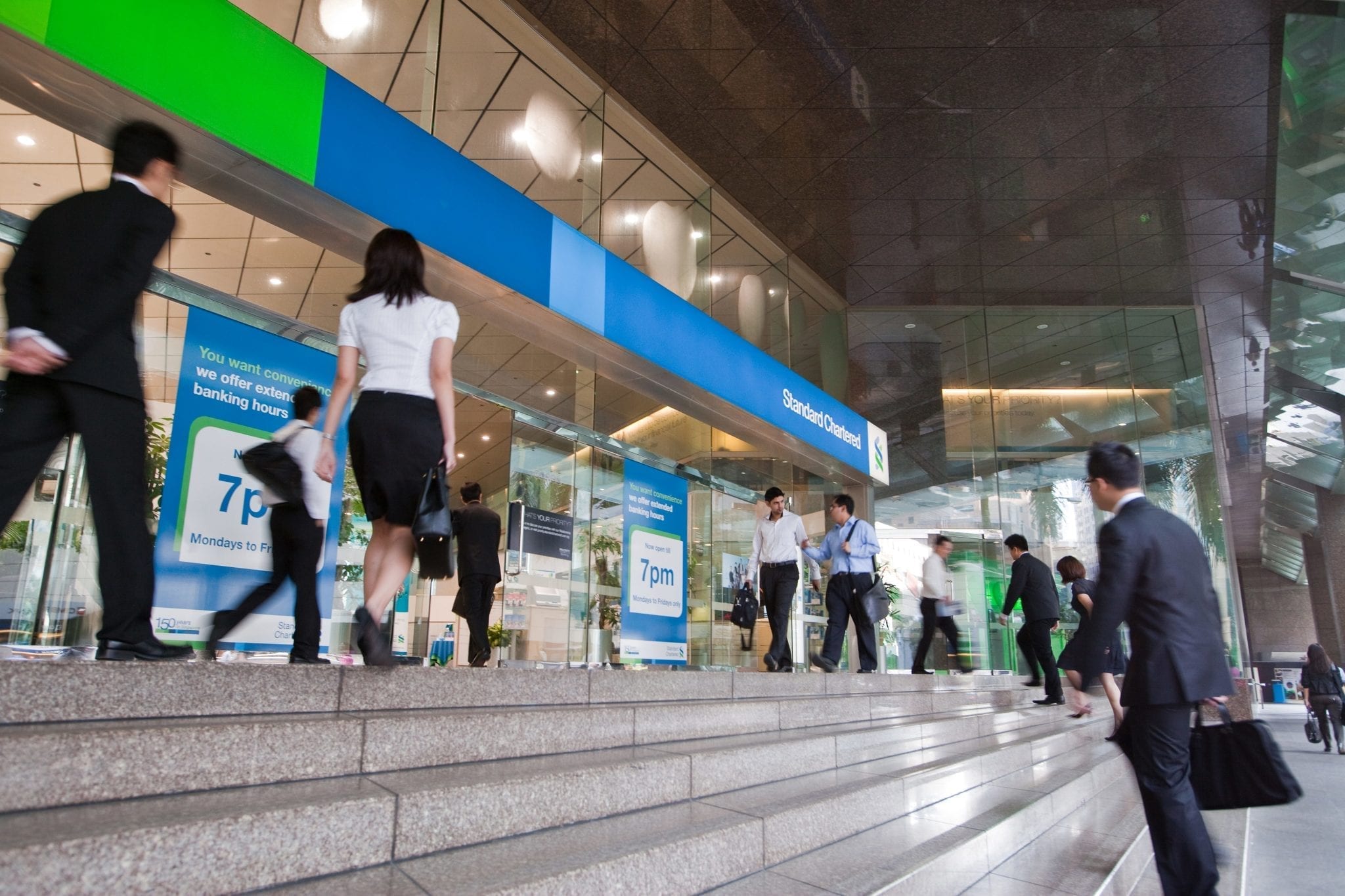
    Standard Chartered, a London-based financial institution, has recently entered into strategic agreements intended to increase its reach within Singapore’s business networks and boost the growth of its global India operations. These partnerships are with the Singapore Indian Chamber of Commerce & Industry as well as with the Institute of Chartered Accountants of India in Singapore.

    Unlocking Indian Networks

    The primary aim of these collaborations is to strengthen Standard Chartered’s global Indian proposition. This will be achieved by expanding its access to Indian business networks in Singapore and increasing its involvement within these communities.

    According to Standard Chartered, the number of high net worth individuals in India has doubled over the past decade. This demographic is projected to expand to 1.6 million individuals by the year 2027.

    James Lye, Standard Chartered’s Global and Singapore International Banking Head, has stated that these local partnerships will bolster the bank’s relevance in critical markets. It will also solidify its unique proposition and place the bank in a position where it can support and grow alongside the significant wealth creation occurring within these communities. He noted an increasing demand within the global Indian community for cross-border banking and wealth management solutions.

    Continuing the 2024 Initiative

    These new agreements are a continuation of broader efforts initiated in 2024 to update Standard Chartered’s global Indian proposition. The initial phase of this initiative involved enhancing connectivity with the bank’s hubs in various locations such as Singapore, Hong Kong, the United Arab Emirates, and the United Kingdom. This also included the development of a comprehensive set of global solutions and the provision of access to a new affluent wealth center in Mumbai, as well as various lifestyle experiences.

    Celebrating Deepavali

    A notable example of these lifestyle experiences was an exclusive Deepavali celebration recently hosted by the bank in Singapore. The event saw more than 200 clients from priority, private, and corporate banking sectors in attendance. This celebration was headlined by acclaimed Hindi playback singer Sonu Nigam and featured a traditional Diya lighting ceremony, as well as a classical sitar and tabla performance.

    Questions & Answers

    What is the aim of Standard Chartered’s recent strategic agreements?
    The aim is to strengthen the bank’s global Indian proposition by expanding its access to Indian business networks in Singapore and increasing its involvement within these communities.

    What demographic trends have been noted by Standard Chartered in India?
    The number of high net worth individuals in India has doubled over the past decade, and it is projected to continue growing, reaching 1.6 million individuals by 2027.

    What was the 2024 initiative by Standard Chartered?
    Initiated in 2024, the project aimed at updating Standard Chartered’s global Indian proposition. This included enhancing connectivity with the bank’s hubs across the globe, developing comprehensive global solutions, and providing access to an affluent wealth center in Mumbai, along with various lifestyle experiences.

  • UOB Taps Digital Innovation to Grow Wealth Franchise

    UOB Taps Digital Innovation to Grow Wealth Franchise

    The bank aims to double its wealth fee income by 2026, which translates to a compound annual growth rate of over 15 percent over the next five years.

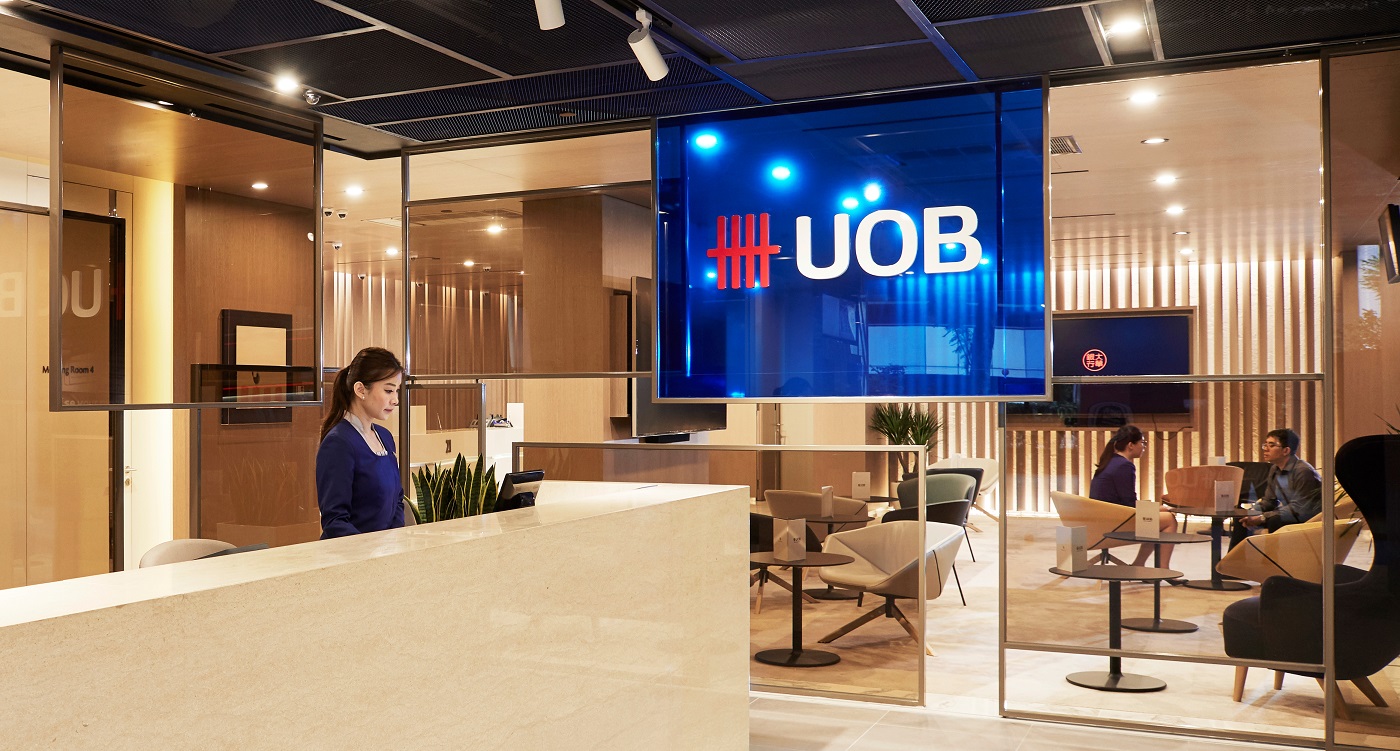
    UOB is hoping get more of its customers to kickstart their investment journey by expanding its digital wealth offerings and investing in digital innovation, particularly as customers in the region are increasingly affluent but still underserved.

    On Thursday, the bank launched «SimpleInvest» on its UOB Mighty app, which aims to help customers grow their wealth via Liquidity, Income or Growth solutions that places their funds in either UOB Asset Management’s United SGD Money Market Fund, or a basket of actively managed funds by renowned international asset managers such as Allianz, Fidelity International, J.P. Morgan Asset Management, Schroders and UBS Asset Management.

    The digital self-serve solution was developed to lower the barriers first-time investors encounter when starting their investment journey, Jacquelyn Tan, UOB’s group head of personal financial services, said at a media launch.

    According to the bank’s, many of its customers who are new to investing think it is difficult and require significant sums, or do not have the knowledge or confidence to do.

    The bank is also hoping that the personalization of wealth management for each customer, such as by providing them information and insights that are relevant to their needs and lifestyle choices, based on their banking patterns, will enable them to have the confidence they need to make wiser financial decisions.

    To reach its wealth management targets, UOB will be investing S$200 million ($148.74 million) in digital innovation over the next three years.

    It will also be progressively rolling out its suite of digital wealth solutions across the region, and targets one in four of its customers across the region to tap on its digital wealth solutions.

  • 7-Eleven Malaysia mulls float

    7-Eleven Malaysia mulls float

    The 7-Eleven Malaysia business may be floated. Malaysian businessman Tan Sri Vincent Tan is considering turning over his shareholding in convenience store operator 7-Eleven to his Berjaya Corp Bhd group. Maintaining that the share price of 7-Eleven is undervalued on Bursa Malaysia, Tan claims that the business, currently valued at RM1.43 billion (US$342 million) should be worth more than US$1 billion.

    The chain has 2250 locations within the territory, and according to Tan aims to open at least another 200 stores next year.

    “We are considering maybe sell all my 46 per cent shareholdings in 7-Eleven to BCorp, then let BCorp launch a General Offer (GO), but nothing is firmed yet,” he said.

    The businessman owns 48.33 per cent of Berjaya Corp, which is valued at around RM1.35 billion (US$323 million).

  • Mobile wallet spending set to grow 32% in 2017

    Mobile wallet spending set to grow 32% in 2017

    Global mobile wallet spending is on track to grow nearly 32% in 2017 to reach $1.35 trillion, a new study from Juniper Research predicts.

    Although at the moment transactions are concentrated in China and East Asia, the research firm predicts that brands such as PayPal and Apple wallets which can be used both instore and online means that wallets will increasingly become the default payment mechanism in other markets.

    The study found that mobile spend is currently concentrated in China and East Asia owing to the success of Alipay and WeChat.

    The report claims that PayPal’s choice to use a HCE (Host Card Emulation) NFC solution to enable POS payments is a key disruptive moment in the wallet wars. It also attributes Paypal’s future mobile wallet success to the on-going success of its social payments subsidiary Venmo.

    Research author Dr. Windsor Holden noted that “Network operators remain wedded to offline payments based on an NFC SIM card, at a time when more agile competitors are deploying integrated HCE wallets that also enable online usage.”

  • 7-Eleven Philippines gross sales soar

    7-Eleven Philippines gross sales soar

    Philippine Seven Company, the native licensee of 7-Eleven Comfort Shops, has reported a 12.9 per cent progress in internet revenue for the primary quarter of 2015.

    The corporate says the rise is the results of improved working margin and its aggressive 7-Eleven Philippines retailer enlargement program throughout the nation.

    The community of firm owned and franchised shops’ gross sales rose by 24.2 per cent from P4.four billion (US$98.9 million) within the first quarter to 2014 P5.5 billion (US$123.6 million) within the newest quarter. First quarter internet revenue reached P112.9 million ($2.5 million).

    On the finish of the quarter, PSC had constructed its community to 1341 shops – a rise of 292 year-on-year.

    The corporate stated the speed of earnings progress was slower than top-line progress because of the elevated spending attributed to increasing the logistics infrastructure of the corporate. PSC has been constructing the capability of its distribution middle to help its enlargement within the totally different elements of the nation, together with the islands within the Visayas and in DavaoCity.

    Jose Victor Paterno, president and CEO, stated PSC has taken steps to guard and broaden its management in mild of elevated competitors, recognising that rewards for market share are particularly robust within the comfort retailer sector.

    “This includes not solely an elevated tempo of enlargement in areas contested by competitors, however strategic entry into new territories. The latter could also be unprofitable for the primary few years because of the excessive fastened prices of logistics, however we consider will later be rewarded with robust first mover benefits,” he stated.

    “Final yr we entered Panay and constructed on our entry into Negros and Cebu the years prior. This yr we will probably be getting into Mindanao by way of Davao and Cagayan de Oro.”

    For 2015, the corporate might be growing its capital expenditures price range by greater than 50 per cent to help its accelerated retailer enlargement technique.

    Philippine Seven Company operates the most important comfort retailer community within the nation. It acquired from Southland Company (now Seven Eleven Inc.) of Dallas, Texas the license to function 7-Eleven Philippines shops in December 1982 and listed on the Philippine Inventory Trade in February, 1998.

  • China’s JD.com posts 62 pct rise in quarterly revenue

    China’s JD.com posts 62 pct rise in quarterly revenue

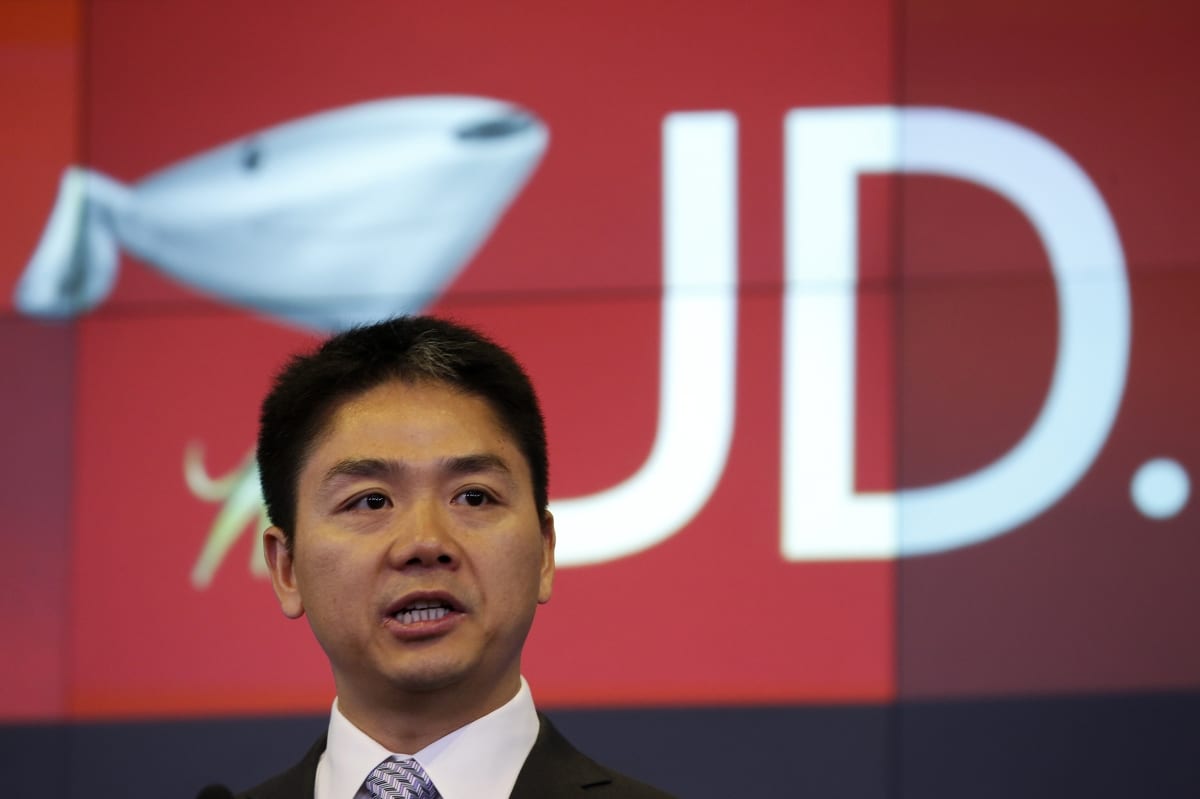
    JD.com Inc, China’s No.2 e-commerce company, reported a 62 percent rise in quarterly revenue, topping analysts’ expectation as the number of active customer accounts across its sites nearly doubled from a year earlier.

    First-quarter revenue of 36.6 billion yuan ($5.90 billion) exceeded analysts’ estimate of 35.65 billion yuan, according to Thomson Reuters I/B/E/S.

    Gross merchandise volume (GMV), or the total value of goods sold on JD.com, nearly doubled to 87.8 billion yuan ($14.14 billion) in the quarter ended March, with roughly 42 percent of all fulfilled orders coming from mobile devices, the company said.

    Excluding certain items, losses widened to 2 cents per American depositary share, from 1 cent, as it spent heavily to broaden its inventory and on marketing.

    The Beijing-based company’s business, like bigger U.S. peer Amazon.com Inc’s, is built on selling products it purchases through its own logistics network. Alibaba Group Holding Ltd, on the other hand, has grown its business quickly by connecting sellers to buyers rather than stocking its own merchandise.

    The difference in business models has allowed JD.com to market itself as a purveyor of authentic goods, while its larger rival has wrestled with occasional, high-profile controversies over fake products.

    When JD.com announced in April that it would sell and warehouse clothes from Japanese giant Uniqlo, the e-tailer touted the deal as an example of its growing ability to offer customers mainstream labels and authentic clothes.

    JD.com last month launched its JD Worldwide cross-border online shopping platform, a challenger to Alibaba’s Tmall Global service.

    It also announced on Friday its participation in a $500 million investment in Tuniu Corp.

    The company’s U.S.-listed shares have risen close to 60 percent since its IPO last May.

    ($1 = 6.2089 Chinese yuan renminbi)