Tag: growth hacking

  • Vietnamese billionaire’s taxi firm to expand to Laos

    Vietnamese billionaire’s taxi firm to expand to Laos

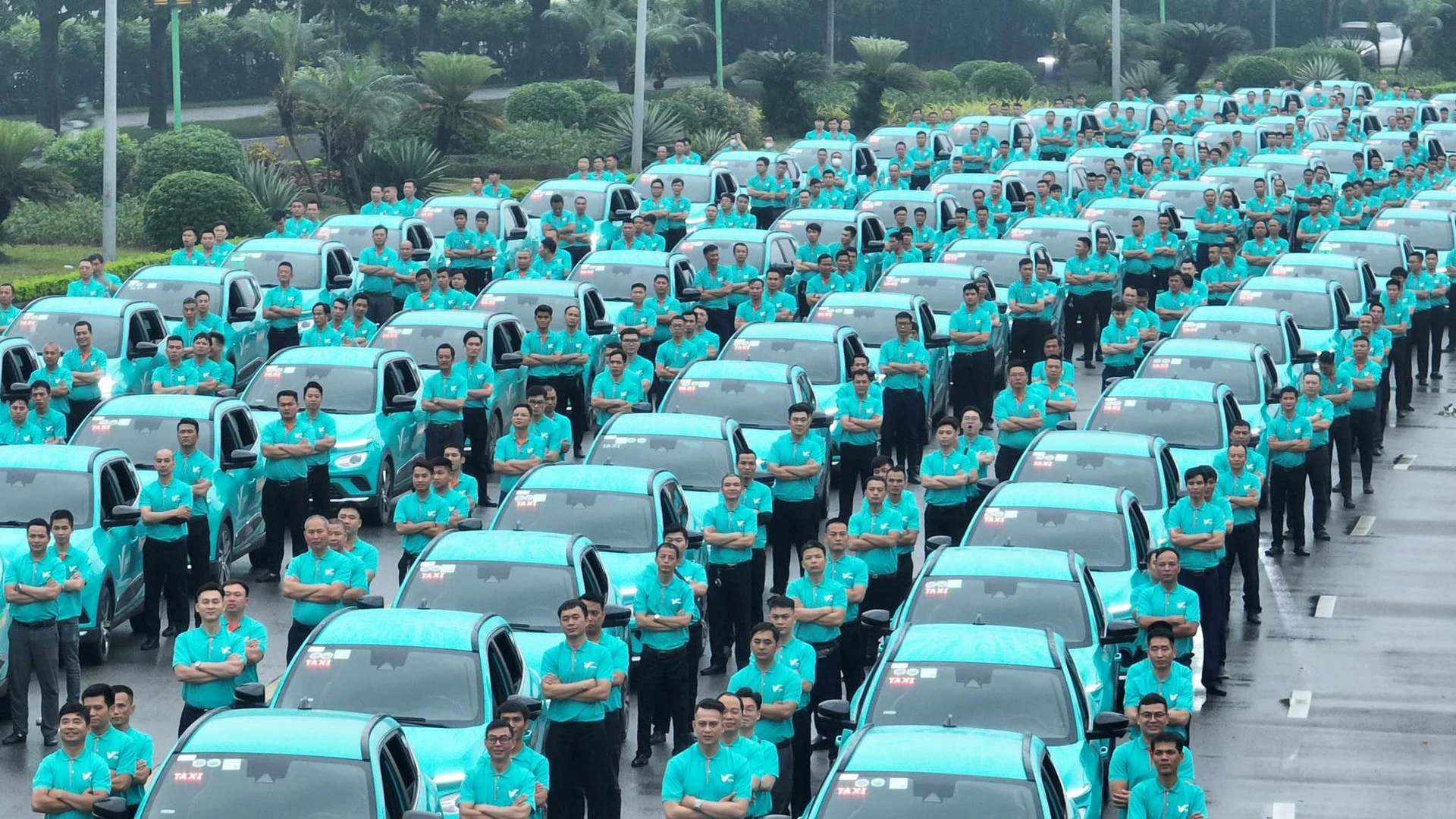
    GSM, an exclusively all-electric taxi company owned by Vietnam’s richest man Pham Nhat Vuong, plans to open services in Laos this year.

    The company, which uses only VinFast electric vehicles, aims to ship 150 electric cars to Laos first, and then increase the number to 1,000 by the end of the year. The cars will be the VF 5 Plus and VF e34 models.

    It will eventually sell and lease VinFast electric cars, similar to its services in Vietnam.

    “This is the first step in GSM’s plan to go overseas, giving it a place in the regional and global markets, is to help introduce electric vehicles to users,” GSM CEO Nguyen Van Thanh wrote on his personal social media page.

    GSM was established in March by Vingroup chairman Pham Nhat Vuong, who owns a 95% stake. It offers taxi and motorbike ride-hailing services.

    The company has partnered with ride-hailing Be Group to incorporate VinFast vehicles in the taxi service.

    GSM is the largest buyer of VinFast cars, according to a report VinFast sent to the U.S. Securities and Exchange Commission in the second quarter.

    GSM had received 7,100 electric cars from VinFast by the end of the second quarter. It had earlier signed a deal with VinFast to buy 200,000 electric bikes and 30,000 electric cars.

  • Gojek shifts gears to introduce car rides in Vietnam

    Gojek shifts gears to introduce car rides in Vietnam

    Indonesia-based ride-hailing company Gojek will start offering car rides service in Vietnam in the next few weeks and allow cashless payments later this year.

    Gojek Vietnam CEO Phung Tuan Duc said Wednesday that the new service will be called GoCar.

    He did not mention a specific date for the launch but said the service will comply with all pandemic prevention measures.

    Duc said that although Gojek is a latecomer for its GoCar service, “the ride-hailing market and on-demand services will continue to flourish, with lots of space for other ride-hailing players to develop. So we have confidence in expanding the business.”

    Administrators of Gojek drivers’ official group on Facebook announced that car drivers introduced to Gojek by transport cooperatives can become the riders for the GoCar service. A total of 17 transport cooperatives have been working with Gojek.

    Gojek entered Vietnam in August 2018 as GoViet. The company became Gojek Vietnam last year. It offers three services at present – motorbike rides (Gojek), delivery of goods (GoSend), and food delivery (GoFood). Other ride-hailing companies like Singapore’s Grab and Vietnam’s Be have all these three services plus car rides.

  • Hong Kong Stock Exchange Website Hit By DoS Attacks

    Hong Kong Stock Exchange Website Hit By DoS Attacks

    The Hong Kong Exchanges and Clearing Limited faced a day of tech hiccups, including the latest denial-of-service attacks on its website.

    According to HKEX CEO, Charles Li Xiaojia, the bourse’s website was subject to distributed denial-of-service attacks (DDoS) – a cyberattack whereby overwhelming traffic is imposed to slow or restrict access from other browsers – and was subsequently unable to display exchange prices and other financial data.

    We will continue to invest more to safeguard and improve” the information and technical infrastructure at the exchange, Li said at a press conference. We hope the public has confidence in the robustness of our system.

    The cyberattack was not the only tech hiccup the HKEX faced just in that single day. Earlier yesterday afternoon, the HKEX had to halt derivatives trading due to a bug in the system before resuming today. According to an update from its website, the issues were caused by software issues in the vendor-supplied trading system.»

  • Large customer base benefits RI start-ups

    Large customer base benefits RI start-ups

    Indonesia’s mushrooming start-up companies have the potential to boost the country’s economy, thanks to their large customer base.

    According to Sillicon Valley-based Fenox Venture Capital, the movement could drive the Indonesian economy to expand faster than its Southeast Asian neighbors.

    “Indonesian start-ups are very powerful, in the sense that Indonesia has a very big consumer base. There are actually a lot of customers who can give feedback,” president and CEO Anis Uzzaman said on Friday.

    He said they had the advantage of endorsement from President Joko “Jokowi” Widodo’s administration, resulting in supportive regulations.

    Indonesia’s current rules are quite liberal in terms of supporting start-ups, compared to several other countries, particularly in the field of financing. For instance, Indonesia allows venture capital firms to invest with convertible notes, which are banned in many countries, said Uzzaman.

    A convertible note is a short-term debt that converts into equity. Under the scheme, investors can lend money to a start-up during the first round of funding and receive shares of preferred stock, rather than getting a payback loan plus interest rates.

    “Regulation issues are a common problem across the world, but the current Indonesian government is willing to make changes. It is a good thing,” he said.

    The Jokowi administration expressed its seriousness in expanding into the digital economy when the President visited Silicon Valley, the world’s center of technological innovation, during a working visit to the US in February.

    Envisioning the birth of 1,000 technopreneurs in the country, the administration allows foreign e-commerce players valued over Rp 100 billion (US$7.62 million) to open businesses and team up with financial authorities to support funding for IT companies and small and medium enterprises (SMEs).

    Several start-ups in Indonesia have gained prominence, such as Go-Jek, a motorcycle taxi service application.

    However, Uzzaman claimed that Indonesia often thwarted the efforts of venture capitalists and investors to reach out to start-ups in regions beyond Java.

    In an effort to provide business opportunities for start-ups across the country, Fenox Venture Capital, a Silicon Valley-based venture capital firm, plans to hold a global contest called the Startup World Cup 2017, in partnership with the government’s Creative Economy Agency (Bekraf).

    The event will comprise a start-up conference and competition with participants coming from 15 countries, including Indonesia.

    The countries will hold their own regional qualifications to select the top 10 participants to present their ideas in front of international judges, as well as world investors and tech company CEOs.

    The regional winners will compete to win a $1 million prize in the grand finale, which will be held in Silicon Valley on March 24 next year. Part of the prize will take the form of investments in the winning start-up.

    Fenox expects to see at least 750 startup entrepreneurs from the ASEAN region apply for the competition.

    In Indonesia, the company is conducting road shows in six cities to ensure that start-ups in the region take part in the event.

    “The start-ups should be a PT and we prefer those that already obtained financing, whether from institutional or individual investors,” said Aldi Adrian Hartanto, an associate member at the firm’s Jakarta branch office.