Retail News CRM

Tag: GS Retail

  • GS Retail to exit beauty market, closing all Lalavla stores

    GS Retail to exit beauty market, closing all Lalavla stores

    CJ Olive Young looks set to solidify its front-runner position in the health and beauty store market, with GS Retail’s announcement that it will shut all of its Lalavla stores.

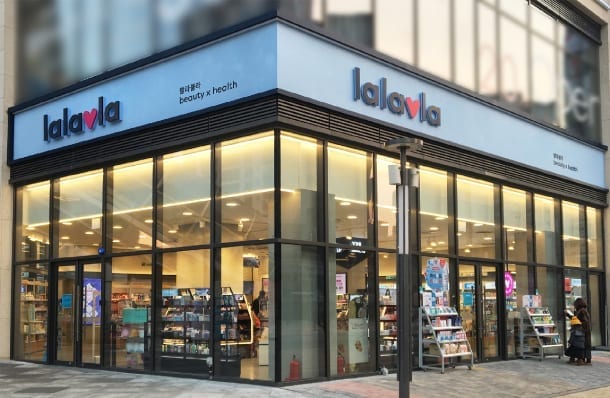
    Lalavla, GS Retail’s health and beauty store brand, will shut down all of its branches by the end of November.

    The brand’s online shopping mall will only take orders until Sept. 1 and will take customer inquiries about refunds or exchanges until Sept. 30.

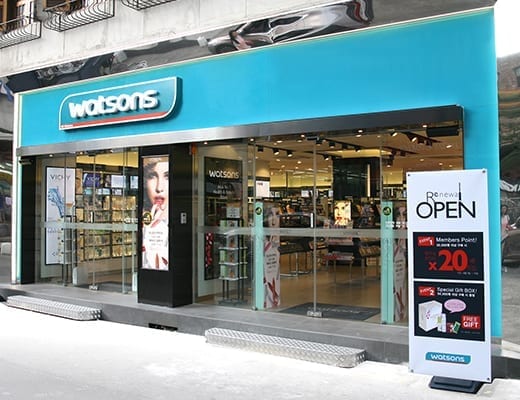
    In 2005, GS Retail formed Watsons Korea — a joint venture with A.S. Watson, a Hong Kong-based health and beauty product retailer — to operate Watsons stores. It acquired the remaining 50 percent stake A.S. Watson held in the joint venture in 2017, becoming the sole owner and changing the health and beauty store’s name to Lalavla.

    Lalavla had as many as 200 branches in 2018, but the number quickly decreased to 34 branches this year as cosmetics sales decreased during the pandemic.

    The brand’s sales fell 37.5 percent on year to 25.1 billion won ($19.2 million) in the second quarter of 2020. Operating loss was 4.8 billion won, compared to a loss of 4.2 billion won the previous year. GS Retail hasn’t been providing sales figures for the brand since the third quarter that year, only reports the combined sales of Lalavla, its e-commerce division and subsidiaries.

    Once GS Retail shuts down all its Lalavla branches, the company said it will focus more on its convenience store and delivery business. It has been offering deliveries from its GS Fresh Mall branches to customers in Seoul, Gangwon and Chungcheong, since May.

    CJ Olive Young is expected to become the clear leader in the local health and beauty store market. The company has 59.1 percent of the market as of the first quarter, with 1,265 branches.

    Lotte Shopping decided to shut down all its individual LOHBs branches, the company’s health and beauty store brand, in November last year. It now only designates a small section at its Lotte Mart branches for cosmetics and health supplies, called LOHBs+.

  • GS Retail recruits local residents to deliver products

    GS Retail recruits local residents to deliver products

    South Korean convenience-store operator GS Retail plans to hire local residents with ample knowledge about their neighborhoods to speed delivery of products in areas where alleyways and addresses may prove confusing.

    GS Retail, which runs the convenience-store chain GS25, will begin testing its new ‘Neighborhood Delivery’ service, which is open to all applicants without limits to time and task.

    Each person will be delivering products within a 1.5km radius of their current location. The products, too, will weigh less than 5kg, allowing retirees, homemakers, and after-work office workers to work without difficulty.

    If a customer orders a product from a nearby GS25 convenience store through the Yogiyo app, the delivery person can respond to an incoming delivery call to bring the product to the customer.

    Each delivery will pay US$2.35-$2.68 in commissions.

    GS Retail plans to test the new delivery program at three convenience stores in Seoul’s Gangnam District starting Monday. On August 17, the program will be expanded to cover all GS25 stores throughout Seoul.

    The company aims to infiltrate the $17 billion delivery market with ‘Neighborhood Delivery’, a short-distance quick-commerce platform based on 15,000 brick-and-mortar stores.

  • Cafe 25 opens 10,000th store

    Cafe 25 opens 10,000th store

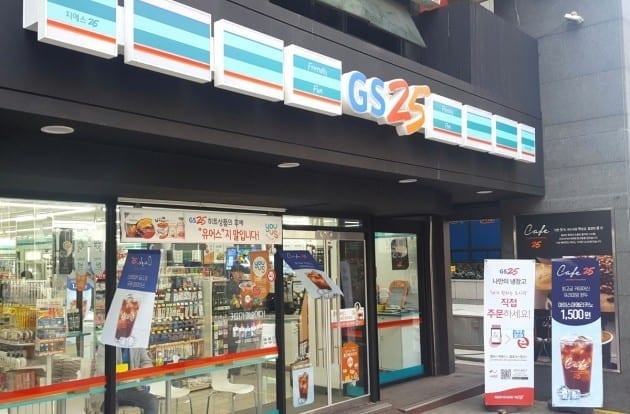
    Convenience-store brand GS25 says 10,000 of its outlets now serve coffee products distributed under its house brand Cafe 25, just 30 months after the brand was launched.

    The figures show how successful South Korea’s convenience stores have been in challenging coffee-focused chains like Lotte’s Angel-in-Us and even Starbucks, by offering discounted alternatives through vast store networks.

    The GS Retail-owned group says it has already surpassed the 100 million-mark for the total number of coffee products sold, with Cafe 25 selling 40 million cups in the first half of this year alone.

    GS25 is putting significant effort into making the coffee products successful by installing top-notch coffee machines that sell for 13 million won (US$11,440) in each of its stores.To commemorate 10,000 GS25 store milestone, the company will be selling 50,000 promotional coupons online via Gmarket and Auction that allow customers to buy iced Americanos and iced lattes for half the usual price.

    An official at GS25 said the success of Cafe 25 products can be explained by the company’s bid to offer high-quality coffee products at affordable prices, while also leveraging the chain’s vast network of stores.

  • GS Retail set footprint in US e-commerce

    GS Retail set footprint in US e-commerce

    South Korean retailer GS Retail has announced a KRW33 billion (US$29 million) equity investment in a US online retailer.

    The company has purchased stock in Thrive Market, in a move intended to secure a foothold in America’s thriving organic food sector. It is GS Retail’s first overseas investment.

    Thrive’s core business is to sell organic products to its subscriber base, posting annual sales growth of 40 per cent since it launched in 2015.

    A spokesman for GS Retail indicated that the firm expects Thrive to post solid growth in future, with expected sales of over KRW200 billion (US$178 million) for the current financial year.

    GS plans to market Thrive products through its existing GS25- and GS-branded retail chains within a year.

  • South Korean convenience stores to sell more own brand

    South Korean convenience stores to sell more own brand

    More South Korean c-stores are set to launch in-house products as local retailers move to attract more consumers with price competitiveness.

    E-Mart24, the convenience-store arm of South Korean retail giant Shinsegae, said it is planning to unveil its own private-label product within this year. Ministop Korea, operator of Ministop, is set to launch its own branded products in September.

    The moves are part of the companies’ broader efforts to find a breakthrough in the saturated South Korean c-store landscape. The size of South Korean convenience stores private-label product market is estimated at around 3.5 trillion won (US$3.15 billion).

    CU, South Korea’s largest convenience-store chain, operated by BGF Retail, released its own brand, Heyroo, in 2015, and GS25, another major convenience-store chain, joined the move with You Us in 2016.

    BGF Retail said sales of its private-label products rose 35.3 per cent year-on-year in 2016. Last year’s revenue was up 19.1 per cent from 2016.

    GS Retail, operator of GS25, said sales of its private-brand items accounted for 36.6 per cent of its total revenue in the first half of this year, excluding revenue generated from cigarettes and services. The company has around 2000 products under private label.

    Another major convenience store chain, 7-Eleven, said sales of its in-house products accounted for 35.9 per cent of this year’s total revenue as of Sunday. It currently has some 1500 products under its private brand.

    “The companies will be able to survive in this saturated market only if they manage to secure consumers who are highly loyal to their private label products,” an industry source said.

    The market size for convenience stores in South Korea surpassed 20 trillion won in 2016, up 18.6 per cent from the previous year, according to industry data.

  • World Cup boosts South Korean convenience stores revenue

    World Cup boosts South Korean convenience stores revenue

    South Korean convenience stores saw their sales more than double in some categories as tens of thousands of South Koreans took to the streets to cheer on their national football team in the first game of its World Cup campaign.

    BGF Retail Co, which operates the country’s largest convenience store chain, CU, said sales of major products at its stores from 6pm Monday to midnight soared as South Korea faced Sweden in their 2018 FIFA World Cup Group F opener.

    Sales of beer surged 124.8 per cent, with revenue from ice cream and water jumping 121.9 per cent and 120.2 per cent, respectively, from the previous week.

    GS Retail Co, which operates GS25, said sales of beer skyrocketed 274.6 per cent on Monday compared with the same day the previous week.

    Police estimated some 17,000 fans joined the mass street cheering in Seoul’s Gwanghwamun Square. Another 6000 fans are estimated to have gathered at Seoul Plaza in front of City Hall.

    South Korea fell to Sweden 1-0. Its next game, against Mexico, will take place in Rostov-on-Don on Saturday.

  • GS Retail to expand Lalavla network

    GS Retail to expand Lalavla network

    South Korean convenience store company GS Retail plans to grow its health and beauty store network by up to 300 this year.

    After running Watsons outlets through a 50-50 JV with AS Watson, GS Retail bought the balance of shares from the Hong Kong-based firm last year and launched its new Lalavla brand in February.

    “We have completed changing the storefront signs,” says a company official. “We will now focus on advertising our new brand and expanding our business.”

    There are now 191 Lalavla stores nationwide.

  • Watsons in Korea has a new name: Lalavla

    Watsons in Korea has a new name: Lalavla

    Watsons personal and beauty care stores across Korea will go through a makeover under a new name “Lalavla,” its operator GS Retail announced on Tuesday in hopes to take on the dominant player Olive Young in the burgeoning street beauty market through localized appeal.

    GS Retail introduced Watsons, the biggest multi-beauty and personal care store brand in Asia, in a 50:50 joint venture with Hong Kong-based A.S. Watson Group in 2005. Last year it bought the remaining 50 percent stake from the retailer’s holding company Hutchison Whampoa Ltd. for 11.9 billion won ($10.8 million) to make Watsons Korea its fully-owned entity. It has since been working on a rebranding initiative.

    The new name – a combination of lalala and blah blah to mean happy chattering – aims to better appeal to young female customers, said a GS Retail official. The shops will be refurbished with the new logo by the end of March.

    There are currently 188 Watsons stores across Korea. GS Retail plans to bolster the number to catch up with CJ Group’s Olive Young, the country’s first and largest health and beauty retailer with 950 shops. Lotte Group runs 96 LOHBS stores and Shinsegae 10 Boots stores.

    Shares of GS Retail closed Tuesday down 1.31 percent at 37,800 won.

  • Net profit slumps 92 per cent for GS Retail, raise questions

    Net profit slumps 92 per cent for GS Retail, raise questions

    GS Retail, which runs South Korea’s GS25 convenience store chain, is facing questions over its profitability after it posted contracted numbers in its earnings last year.

    According to its regulatory filing, GS Retail logged KW30.9 billion (US$28.4 million) in operating profit last year, down 19.3 per cent from 2016. Its net profit also skidded to KW10.7 billion, a  dive of 92.4 per cent.

    It has had slumps in its core business of convenience stores, which account for 70 per cent of its earnings.

    GS Retail last year posted KW1.57 trillion in sales from its convenience stores, up 6 per cent from 2016. The number of GS25 stores also increased from 12,199 to 12,429 last year.

    Despite this growth, the operating profit at its convenient stores declined by 6 per cent to KW37.1 billion during the same period. Per-store sales also shrank by 9 per cent.

    Saturated market

    Analysts say GS25’s weakening profitability is related to the saturation of the domestic convenience store industry.

    There are about 40,000 convenience stores in Korea. Between them, the main players – GS25, CU run by BGF Retail and 7-Eleven run by Lotte affiliate Korea Seven – have more than 30,000 outlets. This means there is one convenience store to every 1250 Koreans.

    Meanwhile, at the start of the year the government hiked the minimum wage rate by 16.4 per cent to KW7530, which is expected to add extra burden on franchise owners.

    Also, GS Retail has seen poor performance for its health and beauty products store chain. It has been the sole operator of Hong Kong-based Watsons in Korea since February last year.

    GS is hoping its earnings deadlock will be broken by its hotel and leasing subsidiary Parnas Hotel. This runs the Grand Intercontinental Seoul Parnas, the Intercontinental Seoul Coex and other hotels and malls in Seoul. It is also in charge of leasing Parnas Tower in Gangnam.

    Parnas Hotel logged KW75.4 billion in sales last year, up 15 per cent. Its operating profit also improved to KW17.1 billion, up 141 per cent as the leasing rate at Parnas Tower rose to 98 per cent.

    As part of its efforts to diversify revenue sources, GS Retail signed a memorandum of understanding with internet company Kakao last month for the development of a chatbot for the retailer.

    The company has also opened its first convenience stores outside Korea – in Vietnam’s commercial capital, Ho Chi Minh City, last month.

  • First GS25 convenience store opens in HCMC

    First GS25 convenience store opens in HCMC

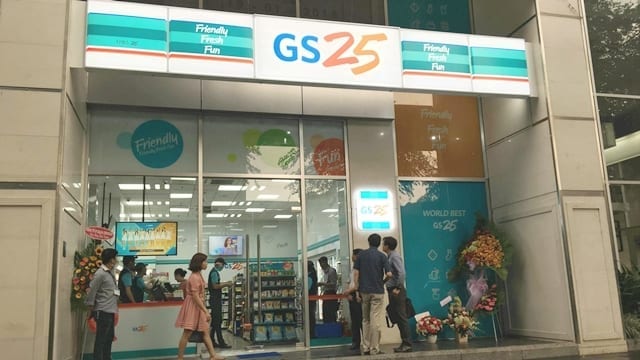
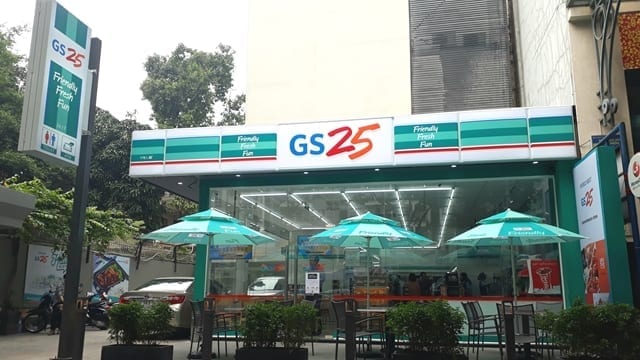
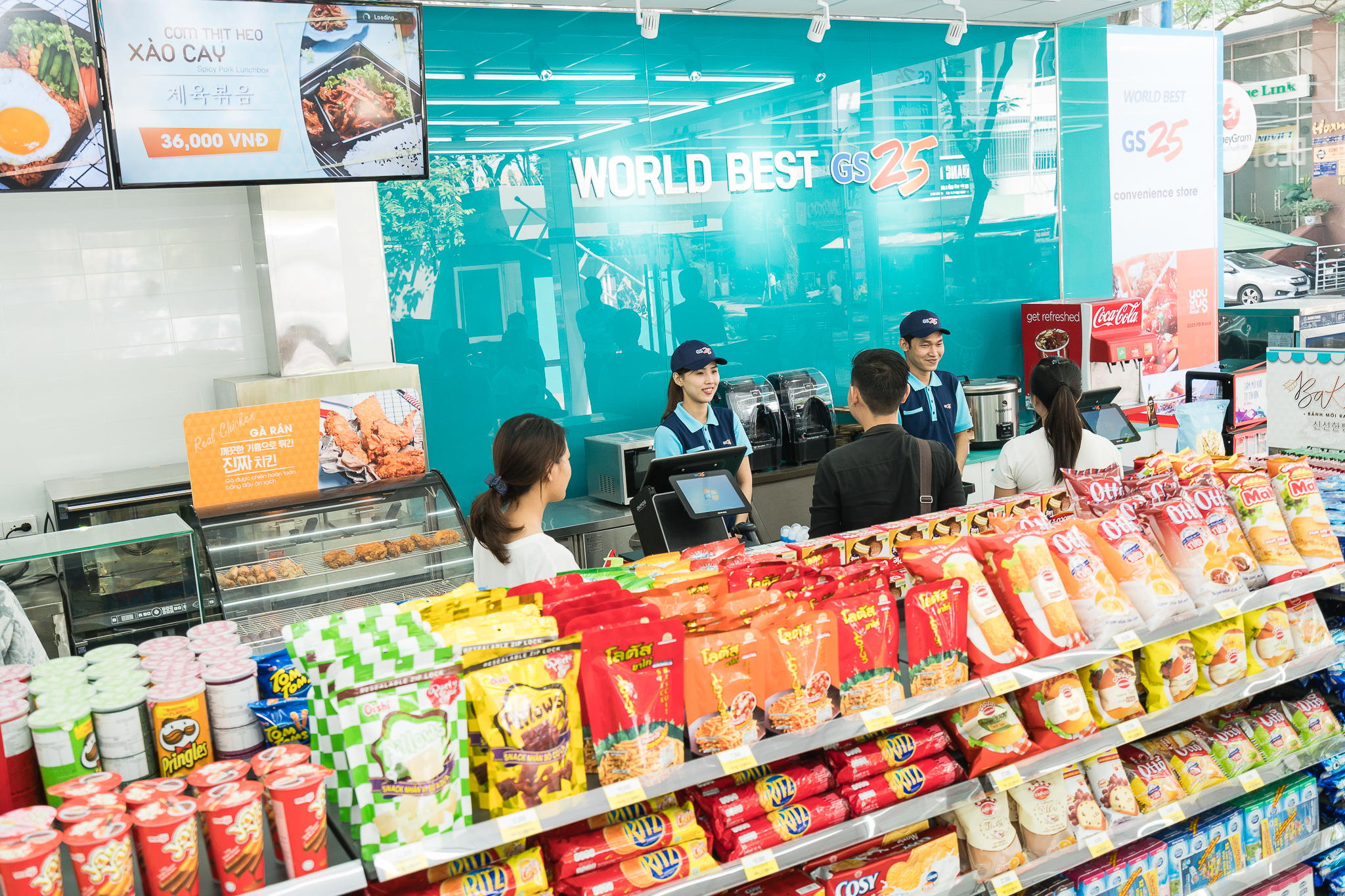
    Convenience store GS25 Vietnam officially opened the doors of its first store in Ho Chi Minh City today.

    Spread over 87sqm, the store is located on the ground floor of Empress Tower on Hai Ba Trung Street in District 3, close to the city’s CBD.

    Three more stores will open this month, including on sites at Truong Dinh Street, inside M Plaza, and Viettel Tower.


    Targeting Vietnamese customers in their 20s and 30s who are familiar with Hallyu, GS25 offers Korean food and products.

    All the stores have cooking and eating stations and sell food including Korean-style fried chicken, dumplings, cup rice, and tteokbokki (spicy rice cakes), as well as boxed lunches.

    Local dishes such as banh mi and sticky rice, and freshly brewed coffee will also be served.

    All dishes are made at a local factory overseen by GS25 standards.

    GS25 CEO Cho Yoon Sung believes Vietnam’s high economic growth rate makes it a good starting point for the company’s overseas expansion.

    The chain also plans to launch in other Asian markets, such as Cambodia and China.

    GS25 Vietnam is a joint venture between Korea’s GS Retail and Vietnam’s Son Kim Group.

  • RoK’s GS25 to open convenience stores in Vietnam

    RoK’s GS25 to open convenience stores in Vietnam

    GS25 Vietnam says it will open its first store in Ho Chi Minh City in mid-January, after a two-month delay.

    Three more stores will open soon afterwards.

    Last July, GS25’s parent company GS Retail signed a JV agreement with Vietnam’s Son Kim group to open 2500 GS25 Vietnam stores during the next 10 years.

    Vietnam will be GS Retail’s first foreign market.

    After its Vietnam launch, GS Retail plans to seek opportunities in other markets.

    Vietnam’s convenience store industry is currently experiencing annual growth of 70 per cent, fuelled by a youthful population.

    Last June, 7-Eleven opened its first Vietnam store, and now operates 11 in Ho Chi Minh City, with plans for 100 within 10 years.

  • Korean retailers shifting to ASEAN from China

    Korean retailers shifting to ASEAN from China

    Lotte, Shinsegae and other retailers in Korea have been shifting their focus to Southeast Asia as it has become difficult to conduct business in China amid deteriorating Korea-Sino ties.

    The increasing number of middle-class consumers in Vietnam and other countries has also encouraged the retailers to establish a larger presence in the rapidly-growing region.

    The exodus from the Chinese mainland has been accelerating as the Chinese government shows no signs of easing economic retaliation against Korean firms and their products because of Seoul’s decision to deploy a Terminal High Altitude Area Defense (THAAD) battery here.

    Of the Korean retailers, Lotte Group has engaged most actively in the Southeast Asian markets, pushing ahead with its plan to carry out multi-complex construction projects in Southeast Asia as the group’s new growth engine.

    Lotte Mart, the hypermarket brand of the nation’s largest retailer, is currently operating 45 stores in Indonesia and 13 in Vietnam, industry sources said. It will also open another store in Lampung Province, Indonesia, in December 2017.

    In September 2014, Lotte built the Lotte Center in Hanoi, Vietnam. The 65-story multi-complex offers the group’s various shopping and accommodation brands, including Lotte Department Store, Lotte Mart and Lotte Hotel.

    Lotte is building a large-size shopping mall with a gross floor area of 200,000 square meters in Hanoi, with completion scheduled for 2020. It is also reviewing its plans to invest about 2 trillion won (US$1.74 billion) to build another 100,000-square meter multi-complex in Ho Chi Minh City.

    Lotte Duty Free, the group’s duty free store affiliate, has also recently entered Vietnam. It partnered with a local retailer to establish the Phu Khanh Duty Free at the Da Nang International Airport, and the company official said it has a similar plan to open business in other major cities in Vietnam.

    Shinsegae Group’s discount chain brand E-Mart is also shifting to Southeast Asian markets.

    It has officially announced its exit from the Chinese market, and chose Vietnam as its new overseas growth engine. E-Mart opened its first store in the Go Bap area of Ho Chi Minh City, in December 2015, and is planning to open its second store in the city soon.

    The E-Mart Go Bap store recorded 41.9 billion sales the previous year to exceed its sales target by 20 percent. Its sales performance also marked 25.8 billion won during the first half of this year, up 27.5 percent from the same period the previous year.

    It signed an MOU deal with Ho Chi Minh City last year to invest $200 million in September, and an E-Mart official said it will enter Laos, Indonesia and Cambodia soon.

    GS Retail, the nation’s convenience store brand is also entering Southeast Asian markets.

    GS Retail, which operates the GS25 convenience store chain, has recently established a joint venture with Vietnamese SonKim Group. Taking 30 percent in shares, GS Retail plans to open its first store in Ho Chi Minh City.

    GS Retail opened its first GS Supermarket in Indonesia in October 2017.

  • South Korea’s GS Retail to fully own Watsons Korea

    South Korea’s GS Retail to fully own Watsons Korea

    GS Retail Co., a retail unit of South Korean conglomerate GS Group, will take over additional 50 percent stake in the Korean unit of drug store franchise label Watsons from Hong Kong-based A.S. Watson Group to make it its fully-owned entity, the company said Thursday.

    The Korean retailer in December 2004 launched Watsons Korea on a 50:50 partnership investment with A.S Watsons. It will fully own it by taking over the remaining 50 percent stake at 11.9 billion won ($10.4 million) from Watsons Holdings, Korean unit of the Hong Kong retail company.

    The company decided to make Watsons Korea as a wholly owned subsidiary to create a synergy effect with other retail businesses, said an unnamed GS Retail official.

    GS Retail has been operating the drug store chain in Korea under the brand name GS Watsons since it opened the first branch in Seoul in March 2005. It opened 54 GS Watsons stores across the country by 2011 and the number of stores jumped to 128 by end of last year.

    Shares of GS Retail closed Friday at 52,000 won, up 4.21 percent from the previous session in Seoul trading.

  • C-Store Private-Label Brands Thrive in South Korea

    C-Store Private-Label Brands Thrive in South Korea

    South Korean convenience stores have long been a part of the country’s quick, fast-changing lifestyle, and are going a step further by producing their own private brands, as reported.

    “The private brand business here will continue to grow across all industries, centered on firms with strong distribution channels. South Korea has a relatively low private brand penetration rate compared to other OECD (Organization for Economic Cooperation and Development) countries,” Suh Yong-gu, a professor of marketing at Sookmyung Women’s University, told the new source.

    Private-label brands also benefit from a lower price tag, Suh added. 7-Eleven Korea’s introduction of private coffee brand Seven Café is an example of an affordable product that competes with existing brands. The news source notes that Seven Cafe ranked No. 1 in terms of the number of products sold at the chain’s locations this year between July 1 and November 16, which marks the first time a private brand product outperformed established brands sold at 7-Eleven stores. Seven Café began with just 20 vendors in January 2015 and has expanded to more than 4,000 vendors as of November.

    Convenience stores are also collaborating with consumer goods manufacturers for added value, notes the news source. For example, South Korean c-store chain CU this year worked with dairy company Seoul Milk to release CU Big Yogurt. Since launching in April, more than 1 million bottles have been sold every month, and the product topped the list of yogurt beverages sold at CU locations, according to the company. CU has about 1,000 different private brand goods on display, which account for about 25% of all products sold at CU stores.

    C-store chain GS 25, operated by GS Retail, and instant noodle maker Paldo recently rolled out Omori Kimchi stew ramen, reports the news source, noting that about 9 million units of the Omori Kimchi stew ramen were sold within a year of its release, surpassing sales of Nongshim’s Shin Ramyun.

    In South Korea, c-store chains aren’t shy about experimenting with private brand products, even when they’re not food or beverage related. For example, in October 2015, CU teamed with local toy maker Oxford Block to introduce three limited edition toys. At 26,000 won ($22), the toys were sold out within five days of release.

    “The rise of private brand products suggests a rosy outlook for convenience retail brands. On the downside, it has cast a cloud over manufacturers of products such as beverages which have to allocate more budget for advertisements and promotions next year,” Kim Tae-hyun, an analyst at IBK Securities, told the news source.

    Industry experts look no further than Japan to gauge the future private brands in convenience stores.

    “Over the past 10 years, Japan has seen a power shift from manufacturing companies to convenience retail businesses on the back of the latter’s distribution channels. For example, Seven & I Holdings, the operator of 7-Eleven Japan, gains 50% of its net sales from private brand products,” said Han Kook-hee, an analyst at NH Investment and Securities, in a report. “Most leading Japanese manufacturing firms are keen to produce private brand products for convenience store brands.”

  • South Korea’s Largest Retailer Joins Hands With Sinar Mas Land in Indonesia

    South Korea’s Largest Retailer Joins Hands With Sinar Mas Land in Indonesia

    South Korea’s largest retailer, GS Retail, opened its first supermarket in Cibubur, East Jakarta, on Friday (07/10) in partnership with Indonesian property developer Sinar Mas Land, to target the country’s upper-middle class.

    “We decided to choose Legenda Wisata for GS Retail’s first supermarket because Cibubur is home to middle- and high-income families,” GS Retail  senior executive Won Yong Kim said in a statement.

    The supermarket offers a wide range of food, household, electronic, beauty and hygiene products, as well as the popular South Korean bakery shop Tous le Jours and Indonesian café Bengawan Solo Coffee.

    The 2,913 square-meter supermarket, which is located inside the Legenda Wisata housing estate, was constructed by Sinar Mas Land.

    In October 2014, Sinar Mas Land was assigned to build a megastore for one of the Southeast Asia’s largest retailers, Courts Asia Limited, in Kota Harapan Indah residential estate in Bekasi, West Java, and in January 2015, to build another in BSD City in Tangerang, Banten.

    Established in 1971, GS Retail has 11,000 convenience stores and 290 supermarkets in South Korea. It booked $5.7 billion in revenue last year.

    The company has had a presence in Indonesia since March 2014.