Retail News CRM

Tag: GSMA

  • Turbocharging Indonesia’s Digital Journey: GSMA Calls for Heightened Investment in 5G and AI Technologies

    Turbocharging Indonesia’s Digital Journey: GSMA Calls for Heightened Investment in 5G and AI Technologies

    The GSMA has highlighted the need for a more robust, investment-focused strategy to expedite Indonesia’s digital transformation and stimulate innovation, according to its recent findings published in the reports GSMA Digital Nations 2025 and ASEAN Consumer Scam 2025.

    Moving Towards a Digital Future

    The GSMA has proposed a feasible strategy to facilitate the unlocking of private capital and hasten the roll-out of 5G spectrum, fiber backhaul, and AI-optimized data centers. This strategy is underpinned by policy consistency and cooperation across sectors. There is a strong inclination among Indonesian businesses towards digital transformation.

    Indications of such enthusiasm were evident in a recent GSMA Intelligence survey where over 580 firms spanning across ASEAN were surveyed. The results revealed that Indonesian companies intend to dedicate an average of 10% of their revenues to digital transformation between 2025 and 2030, exceeding both the ASEAN (10.4%) and global (9.8%) averages. Two-thirds of the participants prioritized AI in their top three expenditure areas, with over half deeming 5G-powered Internet of Things (IoT) vital for future growth. This underscores Indonesia’s ambition to capitalize on cutting-edge technologies to fortify its competitive edge and security.

    Economic Impact of 5G

    GSMA Intelligence anticipates that the ensuing wave of 5G investments in Indonesia could inject an extra USD 41 billion into the country’s GDP between 2024 and 2030, underlining the transformative economic potential of digital connectivity. Since 2015, mobile operators have pumped nearly USD 29 billion into Indonesia’s network infrastructure and services. Given the right investment conditions, the sector, including operators and ecosystem partners, is projected to inject an additional USD 16 billion from 2024 to 2030, primarily targeting 5G proliferation.

    Julian Gorman, Head of Asia Pacific at the GSMA, expressed his thoughts on the matter, highlighting the unique opportunities presented by Indonesia’s significant scale, entrepreneurial vigor, and youthful, tech-savvy population. The focus now should be on targeted investment in areas such as affordable, dependable spectrum; robust backhaul; and AI-compatible, sustainable data centers, coupled with clear consumer protections.

    Assessing Progress and Challenges

    The GSMA’s Digital Nations report evaluated the advancement of Asia Pacific nations in five key areas: infrastructure, innovation, data governance, security, and people. It provided insights into where investment could yield the highest returns.

    Indonesia ranked midway among the 21 nations assessed. The report underscored Indonesia’s advantages in terms of its population, digital skills, and cybersecurity, while also pointing out areas in need of enhancement, particularly in innovation and investment. Potential obstacles to progress include delays in mid-band spectrum allocation, inconsistent rural coverage, and limited AI-ready capability. Consumer trust is also a matter of concern.

    Findings from the ASEAN Consumer Scam Report 2025 indicate that Indonesia mirrors the wider ASEAN trend, with 45% of adults admitting to having been scammed at some point, and 68% of victims losing money. In Indonesia, scam contacts are predominantly mobile-oriented, with over-the-top (OTT) messaging (50%) and voice calls (44%), both exceeding the ASEAN average.

    Preventing Fraud and Enhancing Security

    On a brighter note, 81% of Indonesians endorse operators sharing minimal, purpose-specific network signals such as SIM-change and number-verification during high-risk instances to prevent fraud, thus setting the stage for a broader application of GSMA Open Gateway anti-fraud APIs. Indonesia’s three primary mobile operators, Telkomsel, Indosat, and XL Axiata, have teamed up to shield customers from scams and other cybersecurity threats by collectively adopting Open Gateway APIs, such as SIM swap, number verification, and device location, to secure payments and logins.

    Questions & Answers

    What approach does the GSMA recommend to accelerate Indonesia’s digital transformation?
    The GSMA suggests a more robust, investment-focused strategy to expedite Indonesia’s digital transformation. This includes unlocking private capital and hastening the roll-out of 5G spectrum, fiber backhaul, and AI-optimized data centers.

    What potential economic impact could the next wave of 5G investment have on Indonesia?
    GSMA Intelligence anticipates that the ensuing wave of 5G investments in Indonesia could inject an additional USD 41 billion into the country’s GDP between 2024 and 2030.

    How are Indonesia’s major mobile operators responding to cybersecurity threats?
    Indonesia’s three major mobile operators, Telkomsel, Indosat, and XL Axiata, have formed an alliance to protect customers from scams and other cybersecurity threats by jointly adopting GSMA Open Gateway anti-fraud APIs, such as SIM swap, number verification, and device location, to secure payments and logins.

  • Malaysian Telcos Unite to Launch Federated API, Boosting Digital Security for Consumers

    Malaysian Telcos Unite to Launch Federated API, Boosting Digital Security for Consumers

    In a significant move to enhance online security and combat the rampant issue of digital identity theft, Malaysia’s telecommunication giants have united under the GSMA Open Gateway initiative. During the recent Digital Nation Summit in Kuala Lumpur, key players including CelcomDigi, Maxis, U Mobile, Telekom Malaysia, and YTL Communications unveiled their federated network service, setting a new standard for security in the digital landscape.

    A Smart Solution for Verification

    This collaborative initiative aims to empower enterprise developers, such as banks and online retailers, by providing them with federated access to the Number Verification API. This API, one of the GSMA Open Gateway offerings and built upon the international Camara standard, revolutionizes identity verification processes. It enables businesses to authenticate mobile users by matching their phone numbers with real-time network data, presenting a far more secure alternative to traditional SMS one-time passwords. It’s like swapping your old lock for a biometric safe—only better.

    Voices of Leadership

    CelcomDigi’s Acting CEO, Albern Murty, champions this collaboration as a pivotal leap for Malaysia’s digital ecosystem. “This collaboration is a technological milestone that represents how Malaysia’s operators can collectively lead in shaping a trusted and inclusive digital future,” he stated. Murty emphasized the importance of creating a seamless environment that not only protects consumers from scams but also fosters innovation throughout the ASEAN region.

    Maxis CEO Goh Seow Eng echoed this sentiment, highlighting their experience with the Number Verification API in combatting digital fraud, through initiatives like their Mobile Identity solution for Malaysian enterprises. “We are committed to this industry-wide collaboration to accelerate API-driven innovation, creating a more seamless mobile experience and building a more secure digital Malaysia for everyone,” he affirmed.

    U Mobile’s Chief Information Officer, Neil Tomkinson, pointed out that the multi-party engagement in this initiative is key to enhancing online safety: “Information sharing, along with strategic policy enforcement, will definitely enhance customer experience and safety online,” he asserted.

    Developers Rejoice: A Unified Approach

    The federated model introduced by this initiative allows developers to create digital services that operate across all participating telecom operators while each retains control over its own data and revenue streams. This is a welcome change from the current need for developers to integrate independently with each operator’s APIs, simplifying the development process significantly.

    Endorsing a Secure Future

    Amar Huzaimi Md Deris, TM Group CEO, remarked on the initiative as a vital step towards safeguarding businesses and consumers from digital fraud while propelling growth in the digital economy. He described the collaboration as essential for providing trusted and sovereign digital solutions.

    YTL Communications CEO Wing K. Lee added that their commitment to building a trusted digital economy will be bolstered through the GSMA Open Gateway programme. He highlighted their investment in AI Cloud infrastructure and innovative technologies as crucial for fostering an inclusive and secure digital ecosystem.

    Regional Impact and Challenges Ahead

    Julian Gorman, GSMA Head for Asia-Pacific, praised the Malaysian initiative, noting that standardized access to mobile network capabilities is vital for combating online crime. His remarks come on the heels of a similar collaboration in Indonesia, where key operators have also adopted a unified API protocol.

    This announcement coincided with new GSMA research outlining a rising consumer apprehension towards scams and fraud in Southeast Asia. Gorman cautioned that unless action is taken to address these issues, trust in digital services could be severely compromised. He called for a unified front consisting of governments, banks, and technology stakeholders to align on security protocols and enhance public awareness.

    Questions & Answers

    What is the purpose of the GSMA Open Gateway initiative in Malaysia?
    The GSMA Open Gateway initiative aims to strengthen online security by providing a federated network service that helps businesses identify mobile users, enhancing protection against digital fraud and identity theft.

    How does the Number Verification API work?
    The Number Verification API allows businesses to verify the identity of mobile users by matching their phone numbers with real-time data from the network, offering a more secure alternative to SMS one-time passwords.

    What benefits does the federated model offer developers?
    The federated model enables developers to create digital services that work seamlessly across participating operators without having to integrate separately with each operator’s APIs, making the development process more efficient.

  • GSMA Leader Calls on Telcos to Prioritize 5G Completion Before Advancing to 6G

    GSMA Leader Calls on Telcos to Prioritize 5G Completion Before Advancing to 6G

    The Global System for Mobile Communications Association (GSMA) is pushing the telecom industry to prioritize the completion of 5G standalone (SA) networks before diving headfirst into the era of 6G. At the recent MWC Shanghai 2025, GSMA Director General Vivek Badrinath emphasized that 5G SA is the golden key to unlocking a myriad of growth opportunities that operators have yet to fully explore.

    Focusing on the Potential of 5G

    As we continue to unravel the transformative capabilities of 5G, Badrinath posed a vital question that hangs in the air: “How can we drive growth?” He insisted that before looking too far into the future, it’s essential to concentrate on the vast potential that 5G brings today. “The potential of 5G is right in front of us,” he asserted, calling for a collective commitment to harnessing the full power of this technology.

    The Future is Configurable

    Badrinath highlighted the remarkable features of 5G SA, including faster data speeds, ultra-low latency, and advanced network slicing, which allow for a more adaptable and programmable network ecosystem. Such flexibility is critical for supporting the technologies of tomorrow, paving the way for innovations that could reshape industries.

    China Leading the Way

    When addressing global progress, Badrinath cited China as a notable example. In 2024, China Mobile marked a significant milestone by launching the world’s first commercial 5G-Advanced network, which is now operational in over 300 cities. “We must take this proven capability and make it accessible everywhere,” he urged, calling for worldwide efforts to replicate this success.

    AI and 5G: An Unbreakable Bond

    The director general also drew a compelling link between the surge of artificial intelligence (AI) and the pressing need for robust 5G infrastructure. “More AI creates more demand on networks,” he pointed out, emphasizing that our networks aren’t merely utilizing AI; they are the engines powering it. Without advanced connectivity, the AI revolution may stall. In China, this interplay is already being harnessed, with China Unicom’s smart connection platform enhancing efficiency by 18% at a Hebei steel plant through AI-driven failure predictions. China Telecom is also on the forefront, deploying private 5G networks tailored for specific industries—a move that may well set the standard for future applications.

    Unlocking New Markets

    Badrinath also spotlighted the GSMA Open Gateway API initiative, which aims to catalyze growth by opening up network capabilities to developers across various sectors. This collaborative approach is expected to uncover new market opportunities and drive innovation. Currently, an impressive 73 mobile operator groups, accounting for nearly 80% of global connections, are on board, including all major Chinese carriers—a clear indication of the momentum behind this initiative.

    Questions & Answers

    What is the main focus of GSMA Director General Vivek Badrinath’s speech at MWC Shanghai 2025?
    Badrinath urged the telecom industry to complete the rollout of 5G standalone networks before shifting attention to the development of 6G, highlighting the untapped potential of 5G as crucial for future growth.

    Why is 5G SA considered essential for the future of technology?
    5G SA offers transformative capabilities like faster data speeds and ultra-low latency, making the network more configurable and programmable, which is vital for supporting future technologies, including AI.

    How is China positioning itself in the global telecom space?
    China is leading with the launch of the world’s first commercial 5G-Advanced network and is also replicating its success in AI, as evidenced by innovations from companies like China Unicom and China Telecom.

  • Spectrum cash grabs could hinder 5G’s potential

    Spectrum cash grabs could hinder 5G’s potential

    Poorly designed 5G spectrum auctions could seriously hamper the potential of the 5G era before it even begins in earnest, the GSMA has warned.

    A new Auction Best Practice by the industry body highlights some key concerns from recent 4G and 5G spectrum allocations, including a trend towards governments artificially inflating spectrum prices.

    This could have the effect of limiting subsequent network investment, thus harming consumers and delaying the potential of 5G from materializing.

    The GSMA has also outlined policy recommendations for governments including ensuring that the top priority for spectrum auctions is supporting affordable, quality mobile services for consumers.

    According to the regulator, spectrum auctions are not always suitable and should not be the only award process considered.

    Where an auction model is used, the auction design should not create unnecessary risk and uncertainty for bidders and should include adequate lot sizes with flexible packages of the spectrum.

    GSMA Intelligence estimates that the socio-economic impact of 5G will be $2.2 trillion over the next 15 years. But these benefits will depend on a favorable regulatory and policy environment for 5G.

    “Auctions can and do fail when poorly designed. We’re seeing a worrying trend of badly run spectrum awards that could seriously impact the potential of 5G before we get started. It’s time for policymakers to work more closely with stakeholders to enable more timely, fair and effective awards,” GSMA head of spectrum Brett Tarnutzer said.

    “This is a crucial time in the development of 5G. Spectrum is an essential to fuel for mobile networks and its ineffective use will only lead to bad consequences for consumers. The most important objective of awarding frequencies should not be about making the most money, but rather about ensuring consumers benefit from the best mobile connectivity.”

  • Mobility driving China’s economic growth

    Mobility driving China’s economic growth

    China’s mobile ecosystem added 5.2 trillion yuan ($750 billion) in value to the country’s economy in 2018, according to a new GSMA report.

    Mats Granryd, director general of the GSMA says the report confirms how China’s mobile industry has been a key driver of economic growth, inclusion and modernization – creating a new generation of digital consumers and transforming industry and society.

    Grandryd says China’s mobile operators will invest a further 401 million yuan with the rollout of 5G.

    Numbers speak volumes

    • China is the largest mobile market in the world with 1.2 billion unique mobile subscribers at the end of 2018, about 82% of the country’s population;
    • 69% of mobile connections in China are smartphones, with smartphone adoption expected to reach 88% by 2025;
    • 4G networks cover 77% of China’s connections peaking in the coming years before falling as consumers migrate to 5G services;
    • By 2025, there will be 460 million 5G connections – this will, however, only account for 28% of China’s total network connection;
    • By 2023, mobile connection will contribute 6 trillion yuan to the economy, up from 5.2 trillion yuan in 2018;
    • China’s mobile ecosystem directly and indirectly supported 8.5 million jobs in 2018 and contributed 583 yuan in tax revenue;
    • The number of licensed cellular IoT connections in China stood at 672 million at the end of 2018, supporting various industrial and smart cities applications.


  • 5 countries driving 50% of mobile internet subscribers growth

    5 countries driving 50% of mobile internet subscribers growth

    Just five countries – including China, India, Indonesia and Pakistan – are expected to drive 50% of all new mobile internet subscriber growth between now and 2025, according to GSMA Intelligence.

    The research body’s latest Mobile Trends Report, [PDF] published yesterday, forecasts that the four Asian countries and Nigeria will together account for around 700 million of the 1.6 billion new internet users over the period.

    China and India will be by far the biggest growth markets, adding 321 million and 308 million new mobile internet users respectively by 2025. Indonesia is expected to add 75 million new users, while Pakistan and Nigeria will add 53 million each.

    The next generation will not just be mobile first in terms of mobile internet use, but mobile only, with GSMA Intelligence forecasting that there will be a total of 3.7 billion mobile only internet users by 2025.

    Meanwhile the report forecasts that the revenue growth outlook for mobile operators will be conservative until proven revenue streams emerge for the IoT and 5G. The GSMA expects there to be around 400 million connections by 2022, and over 1.3 billion 5G connections by 2025, representing a global average penetration of 15%.

    But growth will be driven by a small number of countries, with China being the single largest market. But South Korea is expected to see the greatest take-up in terms of the percentage of the market’s mobile subscriber base by 2025 at 60%, followed by Japan and the US at nearly 50% each.

    Globally, LTE will continue to drive the majority of revenue for the next 10 years, with GSMA Intelligence forecasting that the technology will grow to account for 57% of total connections in 2025. Even if 5G’s total share exceeds 15% it is expected to complement rather than replace LTE.

  • GSMA halts development of eSIM standard

    GSMA halts development of eSIM standard

    The GSMA has confirmed it has put development of a universal standard for eSIMs on hold pending the outcome of an investigation by the US Department of Justice.

    The eSIM standard would contain a range of features, including an option for the eSIM to be locked to a specific carrier.

    But the Department of Justice has now opened an antitrust investigation into the GMSA, as well as US operators AT&T and Verizon which are helping lead the development of the standard.

    The report, which cites six unnamed sources, states that the department is investigating allegations that AT&T, Verizon and the GSMA have been colluding to prevent customers from easily switching to another provider by allowing them to lock a device to their network.

    The investigation was reportedly opened in response to complaints from at least one device maker – Apple – and one rival wireless operator, the report adds.

    In a statement, the GSMA said that the development of the latest version of the eSIM specification is on hold pending the completion of the investigation, and that it is cooperating fully with the department.

    The industry body also noted that under the proposed standard, in the US, consumers would have to explicitly consent to being locked to a provider when signing up to specific contracts, such as when purchasing a subsidized device.

  • GSMA launches mobile money certification scheme

    GSMA launches mobile money certification scheme

    The GSM Association (GSMA) has launched a new global certification scheme for mobile money services.

    The certification will involve an independent assessment of a mobile money provider’s ability to provide secure and reliable services, protect customer privacy and combat money laundering and terrorism financing.

    The new scheme has been developed based on three years’ feedback from the GSMA’s consultations with providers in Asia, Africa and Latin American. It will be open to all mobile money providers, including mobile operators, banks and digital service providers.

    Easypaisa Pakistan – provided by Telenor Microfinance Group – is among the five initial recipients of certification under the scheme.

    Independent scheme operator Alliances Management will assume responsibility for training and overseeing independent assessors under the scheme.

    Recipients will need a 100% pass mark on criteria covering eight principles – safeguarding funds against the risk of cyber loss, combating crime and fraud, managing staff and agents, operating the service reliably, ensuring the security of systems supporting the service, ensuring transparency in fees and terms, providing effective customer service and protecting data privacy.

    “The GSMA Mobile Money Certification is a consumer-focused initiative, aimed at giving customers confidence that a provider has taken steps to ensure their funds are in safe hands, their rights are protected and they can expect a high level of customer service,” GSMA chief regulatory officer John Giusti said.

    “With over 690 million accounts globally, the mobile money industry is having a clear impact on the global effort to expand financial inclusion, providing access to life-enhancing financial services and serving as a gateway to the digital economy.”

  • Viu OTT service users hit over 6m in 14 markets

    Viu OTT service users hit over 6m in 14 markets

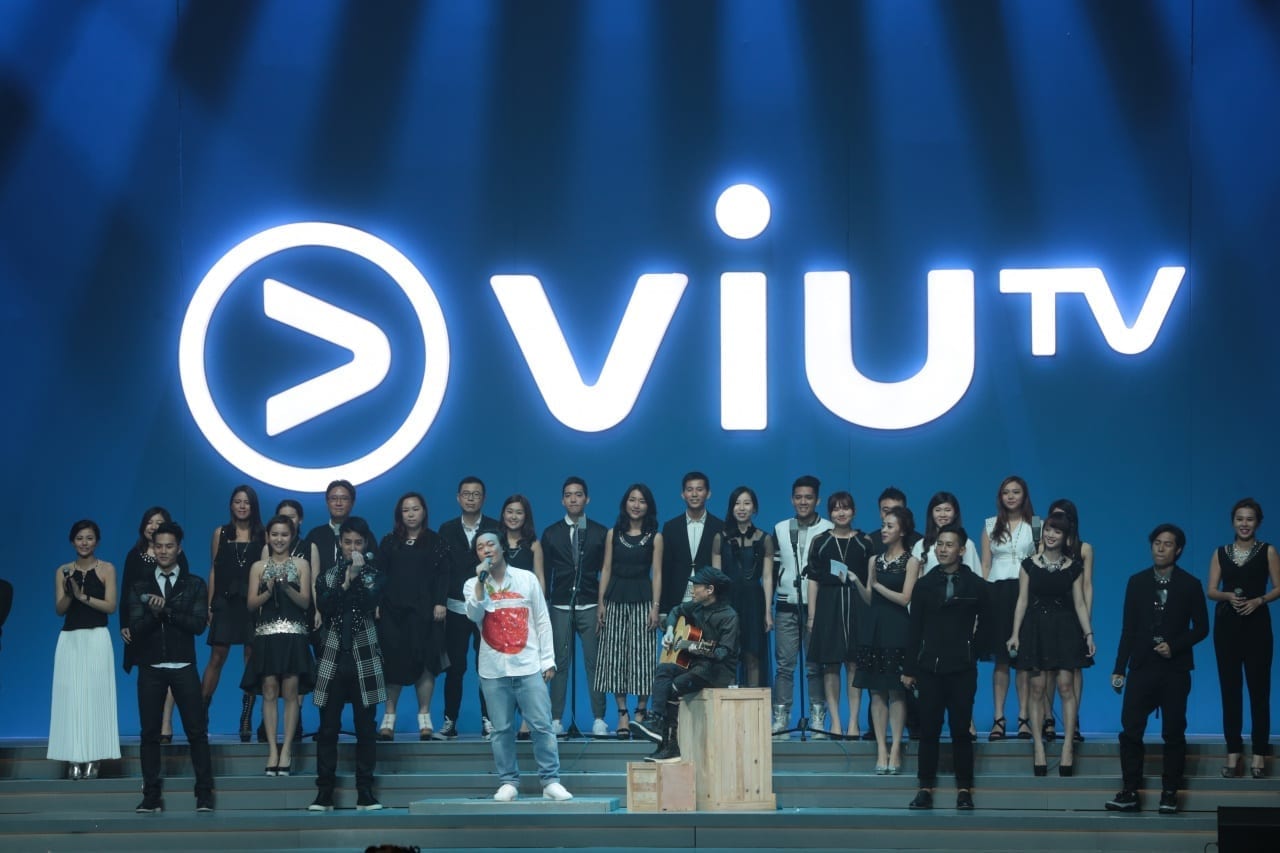
    PCCW Media said its Viu OTT video service has reached over 6 million active users in one and half year after launch and is driving 3G/4G acquisition and mobile data consumption for its telco partners in the region.

    Speaking at Broadband Forum Asia in Hong Kong Tuesday, Helen Sou, senior vice president and digital media head of OTT at PCCW Media, said Viu is now available in 14 markets in Southeast Asia, Middle East and India and the company is expected to continue to see strong growth in its user base.

    As of February, Viu had 6 million monthly active users, 80% of which were Generation-X with high disposal income and millennials who were receptive to digital ads. These users, Sou said, are highly engaging and valuable viewers, consuming an average of 1.8 hours of content per day or 12 videos per week.

    “These 6 million users are very sticky and consistent. They are not just coming in and leave in two months, they view video quite often and consume quite a long while,” she said.

    “They are valuable users for us, our advertisers and telco partners, because they are willing to spend money, consume data, pay for content and be responsive to digital advertisements.”

    Sou said Viu service has also created quantifiable value for its telcos partners in the region, driving up mobile data usage and 3G/4G customer acquisition in the markets where the service is available.

    “We’ve heard a lot of good things from partners, especial telco partners…In some markets, there are users afraid of buying data plans or either buy low-end data plan, but because of Viu they upgrade their data plans or their smartphones, and in some cases, some extend their Wi-Fi plans from hourly to weekly or migrate to the mobile network,” the executive said.

    Citing statistics from telco partners from one unidentified country, she said the Viu service has helped telcos achieve 3.5GB average monthly mobile data consumption per user and 25% incremental data revenue and APRU growth in three months.

    Launched in October 2015, Viu targets emerging markets with strong potential growth for 4G, where there are expected to have 600 million 4G users in 2020, according to the GSMA.

    The company is currently working with 20 telco partners in the region, including U Mobile, Maxis, TM, Indosat, AIS, Vodafone, Airtel, Digi, Idea Cellular and Singtel.

    According to Sou, OTT video revenue, including subscription revenue and advertising revenue, is expected to grow tremendously in these emerging markets next four years, with Middle East growing at CAGR 33%, India CAGR 62.8% and South East Asia CAGR 27.3%.

    There is also strong potential for OTT video, which is expected to account for around 75% of mobile data traffic, generating 69 exabytes in 2020, compared to 8.5 exabytes of mobile data traffic in 2016, she added.

    Sou said Viu is now a dominant OTT player in the region, attributing its success to good product, localization and good content for the success.

    Instead of Hollywood content, the company started with premium Asian video content – Korean, Bollywood, Japanese and Chinese dramas – and variety shows from over 200 content partners. The company also differentiates with fast local subtitling by promising viewers to deliver popular content as fast as 8 hours after local telecast.

  • China Mobile, GSMA, Huawei to address NFV reliability

    China Mobile, GSMA, Huawei to address NFV reliability

    China Mobile, the GSMA and Huawei have agreed during Mobile World Congress 2017 to jointly build an assessment framework for achieving carrier-grade NFV reliability.

    The project aims to combine industry efforts to construct a scalable framework for NFV in telecoms networks enabling proactive, flexible and intelligent network maintenance.

    Because of the difficulties surrounding locating network faults when using complex network technologies such as NFV, operators are looking to move towards a proactive network maintenance model to eliminate potential issues before user services are affected, the partners said.

    GSMA technical director Michele Zarri commented that carrier-grade NFV-reliability is a critical aspect of the virtualization of mobile networks, and is in-line with the industry body’s 5G Network Virtualization project.

    “There will be numerous business opportunities and challenges in the 5G era. However, Five-9s reliability is required for virtualized networks,” he said.

    “The GSMA will work to define network requirements and formalize the assessment framework including metrics and measurements for achieving carrier-grade NFV reliability.”

    Huawei GM for global customer support services Zhao Yongjun added that through the collaboration, the vendor aims “to consolidate industry efforts to explore new digital technologies and carry out joint-innovation to create tomorrow’s proactive intelligent network maintenance system.”

    He said the system will support “real-time, intelligent perception and preventative measures to meet increasing ultra-reliable network requirements.”

  • GSMA launches IoT, big data directory

    GSMA launches IoT, big data directory

    The GSMA has launched the IoT Big Data API Directory, which will make harmonized data sets from multiple sources worldwide available to developers and third parties, enabling them to create innovative new Internet of Things (IoT) services.

    The directory, which is the first of its kind, is designed to encourage a common approach to data sharing that will help the IoT to realize its full potential and encourage the development of new projects across transport, the environment and smart cities.

    Global mobile operators China Mobile, China Unicom, KT Corporation, Orange and Telefónica have already implemented solutions enabling them to share harmonized IoT data.

    “The IoT generates a huge amount of data that is currently retained in vertical silos. However, in order for the IoT to reach its full potential this data needs to be released and made available to developers and third parties,” said Alex Sinclair, CTO of GSMA.

    “A common, collaborative and interoperable approach to big data will remove the commercial and technical barriers to capitalizing on the IoT opportunity and usher in a new era of IoT solutions that will help the market to scale,” said Sinclair. “We encourage mobile operators to collaborate with the wider industry to benefit from the big data opportunity.”

    The IoT Big Data API Directory provides details of IoT and context data sets covering machines, devices, automotive, roads, environment, smart home and agriculture.

    All of the data sets are harmonized and can be viewed on github. A common approach to data sharing lowers costs and creates opportunities for IoT developers, data brokers and data providers.

    The IoT Big Data Framework defines how mobile operators can approach the delivery of IoT big data services. It is designed to enable industry participants to work together collaboratively to deliver big data services and support an ecosystem of third-party application developers.

    Mobile operators are seen as key participants in the delivery of an IoT big data ecosystem, although much of the IoT data that is collected will come from a range of data provider partners.

    The document provides a framework for the delivery of IoT big data services that recognizes the many different approaches towards the services that are offered and the technology choices that are made. The proposed architecture promises a degree of flexibility which allows IoT big data services to be offered in multiple ways.

  • Mobile contributed 6.2% to Bangladesh GDP in 2015

    Mobile contributed 6.2% to Bangladesh GDP in 2015

    Mobile technologies and services generated 6.2% of the GDP of Bangladesh in 2015, a contribution that amounted to around $13 billion of economic value, according to GSMA Intelligence.

    In the same year, mobile operators and the ecosystem provided employment to more than 760,000 people across Bangladesh, the report further stated. One-third of this was created directly in the ecosystem, while the rest is generated indirectly in other sectors as a result of the demand for production inputs generated by the mobile sector.

    “GSMA Intelligence findings clearly demonstrate the substantial contribution that mobile makes to the Bangladeshi economy,” GSMA head of spectrum Brett Tarnutzer said.

    “By systematically pursuing a policy framework that increases certainty, acknowledges market realities and removes regulatory barriers to investment and innovation, the Bangladeshi government and its citizens stand to achieve so much in the coming years.”

    In terms of public contribution, the mobile ecosystem generated about 10% of the government’s revenue in 2015, valued at $2.42 billion through general taxation, mobile-specific taxes, and spectrum licenses.

    Mobile’s overall impact includes the direct impact of the mobile ecosystem as well as the indirect impact and the increase in productivity brought about by the use of mobile technologies.

    GSMA added that Bangladesh performs close to the regional averages across metrics of mobile market development, despite a lower income than neighboring countries. Bangladesh is above the Asian average in terms of unique subscriber market penetration at 53%, while only slightly below with regard to mobile internet penetration at 33% and 3G at 20% of all mobile connections.

    Thus, it sees the potential for further growth if a supportive policy environment is put in place.

    GSMA Intelligence expects that the economic contribution of the mobile industry in Bangladesh will continue to increase. In value-added terms, it is estimated that the ecosystem will generate $17 billion by 2020. This forecast relies on a favorable macroeconomic environment and on a moderate expansion in demand and supply in the mobile market, as the number of mobile internet users and mobile coverage both increase.

    Employment opportunities are also set to expand from 780,000 jobs in 2016 to 850,000 jobs in 2020, an increase of around nine percent during that period.

    The amount of spectrum, and the terms on which it is made available, fundamentally drive the cost, range, and availability of mobile services. To ensure that this mobile vision becomes a reality, it is imperative that the spectrum is allocated in a way that encourages the rapid deployment of mobile broadband infrastructure, resulting in high quality, affordable mobile services for consumers across Bangladesh,” added Tarnutzer.

  • Singapore’s cellcos to adopt Mobile Connect

    Singapore’s cellcos to adopt Mobile Connect

    Singapore’s mobile operators M1, Singtel and StarHub have agreed to adopt the GSMA’s Mobile Connect authentication standard for universal secure mobile-based authentication.

    The three operators are building a unified platform to enable integration with online service providers using a common API.

    Once implemented, the functionality will allow Singapore consumers to create a universal trusted digital identity for access to compatible telecoms, banking, e-commerce, entertainment and travel services.

    For online transactions that require greater levels of security, consumers will also be provided with a unique personal code.

    GSMA research indicates that 87% of consumers leave a website when asked to register, and many face difficulties remembering a growing list of usernames and passwords, with 40% using a forgot password feature monthly.

    Implementing the single sign-on functionality therefore also benefits online service providers, which the research suggests stand to improve page views by 67% and likelihood to purchase by 48%.

    The first online services that support the operators’ new authentication function are expected to launch in the second half of next year.

    The GSMA’s Mobile Connect is currently available in 22 countries, including China, Indonesia, Malaysia, Bangladesh and Sri Lanka.

  • Sunil Bharti Mittal named GSMA chairman

    Sunil Bharti Mittal named GSMA chairman

    Sunil Bharti Mittal (pictured), founder and chairman of India’s Bharti Enterprises, has been named as GSMA chairman from January 2017 to December 2018.

    Mittal, the first Indian to be elected as chair of GSMA, will oversee the strategic direction of the organization, which represents nearly 800 of the world’s mobile operators, as well as more than 300 companies in the broader mobile ecosystem.

    Mittal will succeed Jon Fredrik Baksaas, who will step down from the board at the end of 2016, after holding this position for the past three years. He was elected as a member of the GSMA board in 2008.

    “I am delighted to be elected as chairman of the GSMA, and look forward to working closely with the rest of the board, the GSMA leadership team and our entire membership to address the critical issues facing our industry and our customers,” said Mittal.

    “I am excited about what the next chapter holds for us, as we work to connect everyone and everything to a better future. In my new global role, I am also excited to support the ongoing mobile broadband revolution in India to boost the Government’s Digital India Program and its vision of broadband access for all.”

    The GSMA has also elected the new members of the board and re-elected Mari-Noëlle Jego-Laveissiere, executive vice president, Innovation, Orange Group as a deputy chair for a two-year period.


  • GSMA details industry’s impact on UN SDGs

    GSMA details industry’s impact on UN SDGs

    The GSMA has published the first research into the global mobile industry’s contribution towards helping the UN achieve its sustainable development goals (SDGs).

    Prepared by Deloitte, the report also details several industry commitments and explores ways the industry can strengthen its impact on the goals.

    According to GSMA director general Mats Grannyd, the report will establish a benchmark for the industry’s progress in contributing to the goals and can serve as a blueprint for other industries to follow.

    The UN last year established a set of 17 goals for countries to achieve by 2030. These include eliminating poverty and hunger, achieving gender equality, building sustainable cities and communities and transitioning to affordable and clean energy.

    The report finds that the mobile industry impacts all 17 goals to varying degrees, with the greatest effects being felt in the goals covering industry, innovation and infrastructure, as well as no poverty, quality education and climate action.

    For example, the mobile industry has given more than 400 million people access to financial services through their phones in 90 countries. The industry has committed to developing new mobile money products for unbanked consumers in developing markets.

    On gender equality, 18 operators with a combined 90 million customers have so far joined the Connected Women Commitment Initiative, which aims to close the gender gap in the use of mobile internet and mobile money services.

    Another UN SDG involves promoting decent work and economic growth. The GSMA noted that the mobile industry added $3.1 trillion in economic value to the global economy last year, representing 4.2% of global GDP, and directly or indirectly supported 32 million jobs.

    New industry commitments include elevating the mobile industry’s focus on humanitarian assistance, partnering with the UN Secretary-Gernal’s Special Adviser to create a roadmap for ongoing engagement with the goals and advocating sustainability principles linked to the goals.

    “As an industry, we are focused on connecting everyone and everything to a better future,” Grannyd said.

    “In February, the mobile industry was the first to unite in supporting the UN Sustainable Development Goals, and this report reiterates our commitment to ensuring that connectivity plays a key role in helping achieve the 17 goals by 2030.”