Retail News CRM

Tag: GU

  • Order now, deliver later by GU fashion

    Order now, deliver later by GU fashion

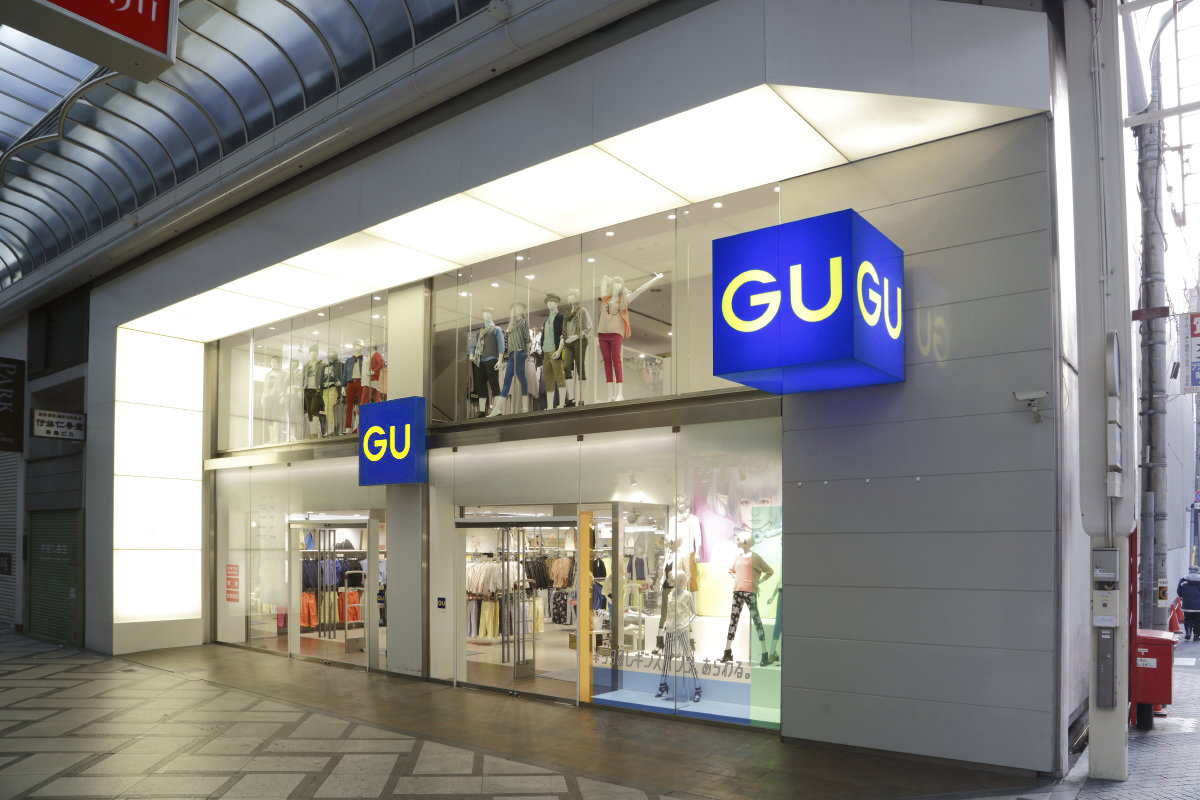
    A brand-new store opened last week in Tokyo’s Harajuku fashion district but it has a twist: shoppers are meant to walk away empty-handed. The GU Style Studio store, opened by Asia’s largest clothier and Uniqlo operator Fast Retailing Co., is for customers to try apparel and place orders online for later delivery.

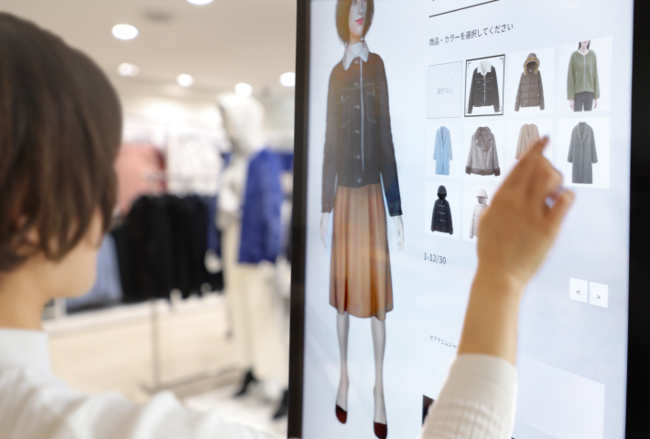
    They can also try out extra services, such as playing with clothing combinations on a virtual mannequin and creating a digital avatar.

    Although the notion of showcase shopping has been around for a while, and remains somewhat popular in Europe, such stores have usually been reserved for electronics, household items and knick-knacks.

    Seldom has the idea been ported over to the clothing sector. But, as the rise of e-commercethreatens to upend the global retail industry, apparel makers are experimenting with new ways of selling clothes.

    “Among large specialty chain retailers, Fast Retailing has one of the most developed digital strategies,” said Dairo Murata, an analyst at JP Morgan Securities. “They are doing it all in-house, and it allows them to be more competitive.”

    The line separating online and offline storefronts is becoming blurrier as e-commerce moves into physical locations and brick-and-mortar retailers shift online.

    That’s resulted in new shopping experiences such as Amazon’s Prime Wardrobe, which sends boxes of clothing to customers to try on, letting them send back what they don’t like.
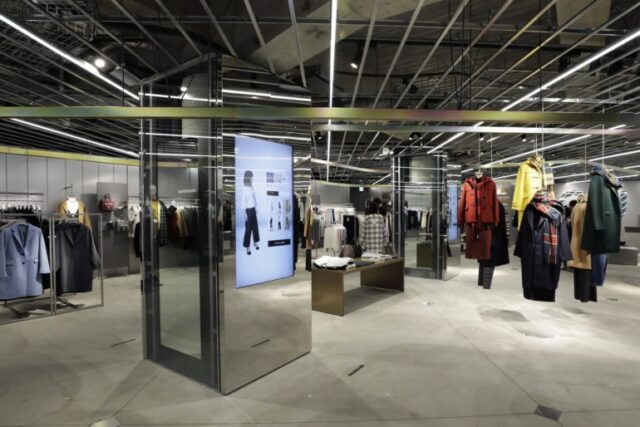
    GU isn’t the first to open a try-on store; Inditex SA’s Zara also temporarily opened a look-and-buy outlet in Tokyo’s Roppongi district this year.

    GU has steadily grown into a key pillar of Fast Retailing’s business, accounting for about 10 percent of revenue in the latest fiscal year. It has almost 400 stores across Asia, mainly in Japan, Taiwan and mainland China, and is known for being more affordable and more fashion forward than its bigger sibling, Uniqlo.

    The GU brand has also historically been more experimental with technology, being the first in Fast Retailing’s portfolio to introduce RFID tags and self-checkout.

    In 2017, a futuristic digital store popped up in the city of Yokohama with screens on shopping carts recommending various clothing combinations as people walked through the store.

    JP Morgan’s Murata said GU’s new Harajuku outlet could be a template for rolling out smaller shops in cities that don’t have space to store inventory. He said it could be applied to Uniqlo as well. But Osamu Yunoki, GU’s chief executive officer, said the company hasn’t decided whether to adopt the concept for Fast Retailing’s other brands, or other conventional GU stores carrying inventory.
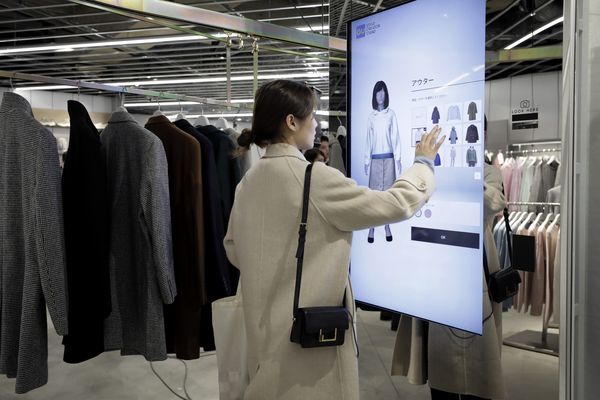
    Shoppers at the new GU store can scan QR codes attached to clothes to bring up purchase links on their phones, and are also encouraged to test clothing combinations on a virtual mannequin on a separate app. Cameras placed in the store capture can also be used to create a virtual avatar of shoppers, although the resemblance was unconvincing.

    The store is able to collect and use data on how customers are shopping, such as what items customers are scanning into their phone, which clothing they try on and whether they purchase it or not. That could serve an important function for Fast Retailing’s efforts to automate its entire supply chain.

    “That kind of data from customers can be connected immediately to product development and manufacturing plans,” Yunoki said.

    At the same time, he said, the company is trying to offer something new for shoppers.

    “We’re fusing the in-store experience and e-commerce to offer a fun and convenient experience,” Yunoki said. “Harajuku isn’t just for shopping, it’s also a place where fashion is created. We’d like to use our customer’s creations as a stimulus for developing new types of fashion.”
  • GU to Open Next-Generation Store “GU STYLE STUDIO”

    GU to Open Next-Generation Store “GU STYLE STUDIO”

    Japanese casualwear retailer GU will open a “next-generation” Style Studio in Harajuku this month, merging physical retail and advanced technologies. The studio will feature digital signage and a style creator app in the high-end retail district of Tokyo for the Fast Retailing-owned fashion brand.

    A spokesperson for the brand indicated the store will bridge online and in-store shopping and “will offer a new type of personalised fashion experience, enabling customers to discover outfits that perfectly match their individual style, using the innovative technology of the GU Style Creator Stand” and the accompanying app.

    Customers can check out the suitability of garments by having them digitally fitted on a personalised avatar of themselves based on a photo taken in the store. The avatar can be used as a basis to try and develop new styles.

    The store will open on November 30.

  • G.U has its button on the trends

    G.U has its button on the trends

    G.U, a casual clothing retailer owned by the parent company of Uniqlo, opened its first Korea store in the Lotte World Mall in southern Seoul on September 14 with the promise of bolder patterns and slightly lower prices that can’t be found at its better-known sister brand.

    The 1,390-square-meter (14,960-square-foot) store in the mall’s basement comprises 11 sections divided by gender, age and apparel, from sportswear and pajamas to suits and business casual clothing. GU’s parent company is Japan’s Fast Retailing, best known for Uniqlo.

    “Part of our strategy is to divide sections not only by demographics but style,” said Koh Ah-ra, head of GU’s Korea operation, “and suggest style examples for each section and update products every week to offer consumers an idea of the global fashion trend.”

    At a press event on September 13, Koh noted that half of the store’s floor space had been dedicated to mannequins showing different style options using GU products. Trendiness, she said, is the core identity that separates it from Uniqlo’s focus on good-quality but basic items like white shirts and trousers. For that reason, GU has established research centers in the fashion capitals of Tokyo and London.

    GU is not new to fashion enthusiasts, thanks to its association with Uniqlo. On opening day, there was already a queue outside when the doors opened at 10 a.m.

    The store’s interior does not look drastically different from Uniqlo, with apparel hung in neat lines on clean white shelves. The noticeable difference is the colors and patterns – bright oranges and red checkered patterns that might not be found among Uniqlo’s more earthy tones.

    The Jamsil store has 40 “fashion advisers” on hand to help customers find the right items for their style and offer advice if they want to step outside of the box to try something new. The advisers, according to GU, are tested on their basic knowledge of fashion and are not required to wear uniforms. They pick their own clothes, often in opposition to each other. One employee might be wearing street fashion while another has on business casual, a rare practice in Korean fast fashion.

    GU’s first store in Korea is also a testing ground for retail tech. One is the GU Fashion Stand, a kiosk that shows photos and Instagram posts of models wearing GU items. Customers can tap specific items on the screen to look up product information and put them in a wish list that can be sent to their smartphone.

    The prices, however, are not drastically different from those at Uniqlo, despite GU promoting lower cost as one of its advantages. The discount largely ranged from several thousand won to around 10,000 won (a couple of dollars to US$10) compared to similar items at Uniqlo.

    Several items at the Jamsil store are currently exclusive to Korea, including long padded coats and skinny ankle jeans.

  • Uniqlo Asia helps the parent’s sales power record quarter

    Uniqlo Asia helps the parent’s sales power record quarter

    Solid overseas growth helped Japanese apparel retailer Fast Retailing post a record quarterly profit.

    Uniqlo Asia sales proved the star of the business.

    For the three months to May, Fast Retailing’s operating profit was 68.4 billion yen (US$608 million), 37 per cent ahead of a year ago. Overseas sales exceeded domestic sales for the third consecutive quarter.

    For the first nine months trading, overseas sales rose 28 per cent year on year and overseas operating profit lept 65 per cent, driven largely by Asian sales of its largest retail brand, Uniqlo.

    In Japan, sales rose 8 per cent for the first nine months of the year, despite a static store count of just over 800. Online sales there rose 33 per cent and now account for 7.8 per cent of domestic sales.

    Fast Retailing’s relatively new value chain GU increased sales by 6 per cent in the nine months, but discounting saw operating profit fall by 20 per cent in the latest quarter.

  • Fast Retailing’s Gu to enter South Korea

    Fast Retailing’s Gu to enter South Korea

    Fast Retailing Group brand Gu plans to launch in South Korea this year with a store in Lotte World Mall in Jamsil, Seoul.

    With the brand message “Your freedom”, the Japanese clothing store will have a sales floor area of 1400sqm and offer items for women, men and children.

    “Launching in such a fashion-conscious country as Korea is a big step,” says Gu CEO Yunoki Osam.”

  • Fast Retailing rolling out GU shops overseas

    Fast Retailing rolling out GU shops overseas

    Japanese retail holding company Fast Retailing intends to have 1000 shops for its low-cost GU brand overseas in 10 years, up from about 10 foreign stores now.

    GU sells clothing often priced at about half that of stablemate Uniqlo.

    Fast Retailing will expand GU first in Asia, where Uniqlo has been successful, says chairman/president Tadashi Yanai.

    After increasing its GU outlets in Taiwan and China, Fast Retailing will turn its attention to South Korea, Hong Kong, Thailand and Singapore for growth in the next five years.

    GU’s first overseas store opened in 2013. In Japan, the brand’s low prices and sensitivity to fashion trends have helped store numbers grow to around 350.

    Meanwhile, Uniqlo now has more stores overseas than in Japan, with plans to set up around 100 shops a year in China.

    Other brands under Fast Retailing’s wing include Comptoir des Cotonniers, J Brand and Princesse Tam-Tam.

  • Revenue up but profit down for Fast Retailing Group

    Revenue up but profit down for Fast Retailing Group

    Revenue rose but profit fell for Uniqlo parent The Fast Retailing Group for the first nine months of its latest fiscal year, from September 1 last year to May 31.

    Consolidated revenue for the group reached ¥1.4346 trillion (US$215 billion), a rise of 6.4 per cent year-on-year.

    For its three business segments, Global Brands saw both revenue and profit rise, while both Uniqlo Japan and Uniqlo International had more revenue but less profit.

    Foreign-exchange losses were down ¥43.4 billion to ¥23.4 billion, resulting in consolidated profit before income taxes dropping by a considerable 41.9 per cent.

    However, consolidated revenue rose 6.2 per cent and consolidated operating profit grew by 18.6 per cent, thanks to a recovery in performance at both Uniqlo Japan and Uniqlo International.

    The group continued to boost Uniqlo store numbers, opened global flagship stores and large-format stores in major cities, and also expanded its low-priced GU casual fashion brand.

    On the product side, Fast Retailing sought to boost awareness and visibility of the Uniqlo brand through collaborations with designers and artistic directors from other brands.

    In April, the company launched a next-generation distribution centre in Tokyo, and is pressing ahead with plans to open distribution centres elsewhere in Japan as well as internationally, starting in China and the US.

    There are also plans to accelerate GU store openings outside Japan.

    In Japan, the eCommerce segment continued to grow strongly, with online sales rising 40.6 per cent to 5.5 per cent of total sales. On-ground stores increased by two to 846 at the end of May, including 39 franchise stores.

    Recovery

    Uniqlo International’s revenue for the nine months reached ¥532.8 billion (up 10.6 per cent) while its operating profit of ¥42.2 billion was an 18.7 per cent fall. However, both revenue and profit grew in the third quarter (March to May) by 5.3 and 41.1 per cent respectively.

    Profits recovered for Uniqlo Greater China (including Hong Kong and Taiwan) while Uniqlo Southeast Asia and Oceania (Australia, Indonesia, Malaysia, Singapore, Thailand and the Philippines) continued both revenue and profit growth.

    Uniqlo South Korea continued to struggle, losing profits in the face of a sluggish economy and increasingly fierce competition.

    The total number of Uniqlo international outlets grew by 161 to 928 stores.

    Under its CSR policy, Uniqlo joined the Nippon Foundation opening the Tsurumi Children’s Hospice in Osaka in April. This is for children with life-threatening illnesses and is the first community children’s hospice in Japan.

    Following the Kumamoto earthquake this year, Fast Retailing provided emergency clothing for victims, donating 13,600 items such as underwear, socks and loungewear.

    WIth its global partnership with the United Nations High Commissioner for Refugees (UNHCR), helped collect clothing for refugees and displaced persons on World Refugee Day. A special project exceeded its goal of collecting 10 million articles of clothing with a total of 12.81 million items. This involved 112 affiliated companies in 846 locations, 238 educational institutions, 28 student organisations, and communities in 16 countries and regions in which Uniqlo has business.

  • Uniqlo profit drops

    Uniqlo profit drops

    Uniqlo profit has plummeted in the Japanese fast fashion chain’s first half year.

    Parent Fast Retailing has revealed a 33.8 per cent decline in year-on-year surplus, despite a 6.5 per cent increase in sales from September 2015 to February 2016.

    Consolidated revenue reached JP¥1.0116 trillion (US$9.385 billion) and profit ¥99.3 billion (US$1.535 billion).

    While Global Brands reported a rise in both revenue and profit, Uniqlo Japan reported declines in both revenue and profit, and Uniqlo International reported a rise in revenue but a decline in profit.

    The company blamed the Japanese decline on poor sales of winter ranges and lower gross margin, with same-store sales down 1.9 per cent.

    “Subsequent stronger discounting in January and February contributed to a 3.5 per cent fall in the first-half gross margin.

    Uniqlo profit was down on weaker sales in Greater China, South Korea and the US in the company’s international division. However sales and profit rose in Southeast Asia, Oceania and Europe.

    In the Global Brands division, revenue and profit both rose on strong sales of GU ranges. “GU’s widely advertised campaign items such as knitwear and trendy bottoms such as wide pants and jogger pants all generated strong sales, fueling double-digit growth in same-store sales,” Fast Retailing reported.

    The company is predicting a better second half but has revised its earnings forecast to a 7 per cent rise in revenue and a 27 per cent decline in operating profit.

  • Uniqlo struggles with currency and weather

    Uniqlo struggles with currency and weather

    Uniqlo, Asia’s largest apparel retailer, has delivered a disappointing set of results for the quarter to November 30.

    While revenue rose 8.5 per cent year on year to ¥520.3 billion (US$4.44 billion), profit fell 16.9 per cent to ¥75.9 billion ($647.1 million). Considerable depreciation of the Japanese yen was the main factor in a ¥29.0 billion fall in pre-tax profits, the company said.

    Uniqlo International sales also fell short of target in the first quarter, reporting a rise in revenue but a decline in profit (revenue: ¥196.9 billion (+17.2 per cent year on year), operating profit: ¥20.8 billion (-14.2 per cent)).

    “Unseasonal warm winter weather around the globe adversely impacted same-store sales at Uniqlo Greater China (encompassing operations in mainland China, Hong Kong and Taiwan), Uniqlo South Korea and Uniqlo US in particular, resulting in a lower than expected first-quarter performance and declining profits in all three of these areas.

    Meanwhile, Uniqlo Europe reported higher than forecast gains in both revenue and profit, and Uniqlo Southeast Asia and Oceania reported a steady operating profit, as expected.

    New store openings proceeded as planned, with a net 66 stores opened during the first quarter, mainly in Greater China and Southeast Asia. As a result, the total number of Uniqlo International stores had expanded by 169 year on year to 864 stores as at November 30.

    Uniqlo Japan fell short of expectations in the first quarter, declining in both revenue and profit Revenue was ¥230.9 billion (-0.7 per cent), operating profit ¥44.8 billion (-12.4 per cent).

    “While online sales expanded 23.2 per cent year on year, same-store sales declined 2.3 per cent, resulting the fall in revenue,” the company said.

    “In September and October, fall winter items such as cashmere sweaters, merino sweaters, gaucho pants and wide pants got off to a great start and sales proved strong, pushing same-stores sales higher as a result. However, the unexpected heatwave in November stifled demand for winter items, and led to a sharp drop in revenue.

    “On the profit side, hefty discounting of winter items in November squeezed the first-quarter gross profit margin, while lower than-expected first-quarter sales inflated the selling, general and administrative expenses to revenue ratio.”

    The number of directly run Uniqlo Japan stores, excluding 38 franchise outlets, totaled 806 stores at the end of November 2015. While that represents a net decrease of 18 stores year-on-year, 10 of these stores were converted from directly-run stores to new employee-franchise outlets.

    The group reiterated its goal of becoming the globe’s largest apparel retailer.

    “To this aim, we have focused our efforts on expanding Uniqlo’s global operations, boosting store numbers in each country where we operate, opening global flagship stores and large-format stores in major cities around the world, and offering exciting joint collections with well-known designers from around the world, such as Ines de la Fressange. This strategy is designed to both boost awareness and visibility of the Uniqlo brand and strengthen our global operational base. We are also actively promoting our GU brand by accelerating the opening of new stores in Japan and launching the label in the Chinese market.

    “We believe the GU operation has reached a key turning point in its growth and development as a second pillar brand for the group,” the company concluded.

    Uniqlo’s Global Brands division exceeded expectations in the first quarter by reporting a 17.4 per cent year on year gain in revenue to ¥91.8 billion, and a 29.7 per cent year on year gain in operating profit to ¥12.4 billion.

    “Within the Global Brands segment, our low-priced GU fashion casualwear label reported significant rises in both revenue and profit that surpassed our initial forecasts. GU reported double-digit growth in same-store sales on the back of strong sales of heavily advertised campaign items such wide pants, baggy sweaters and knitted bottoms.

    “Meanwhile, our Theory fashion brand and J Brand premium denim label both fell slightly short of target when they reported a decline in profits.”

    The company’s France-based Comptoir des Cotonniers and Princesse tam.tam labels reported lower-than-expected sales and a decline in profit, after the November terrorist attacks in Paris forced some stores to close temporarily.

  • Fast Retailing launches refugee initiative

    Fast Retailing launches refugee initiative

    Japanese retail company Fast Retailing has launched HELP, a global initiative to help clothe refugees.

    The project – dubbed 10 Million Ways to HELP will be run in conjunction with the UNHCR.

    Collection starts at Uniqlo and GU on October 2 at stores around Japan and from mid-October in other markets.

    According to a Uniqlo statement, UNHCR estimates the number of women, men, and children forcibly displaced owing to armed conflict and other causes reached 59.5 million by the end of 2014 – the highest since the end of World War II – prompting Fast Retailing to respond.

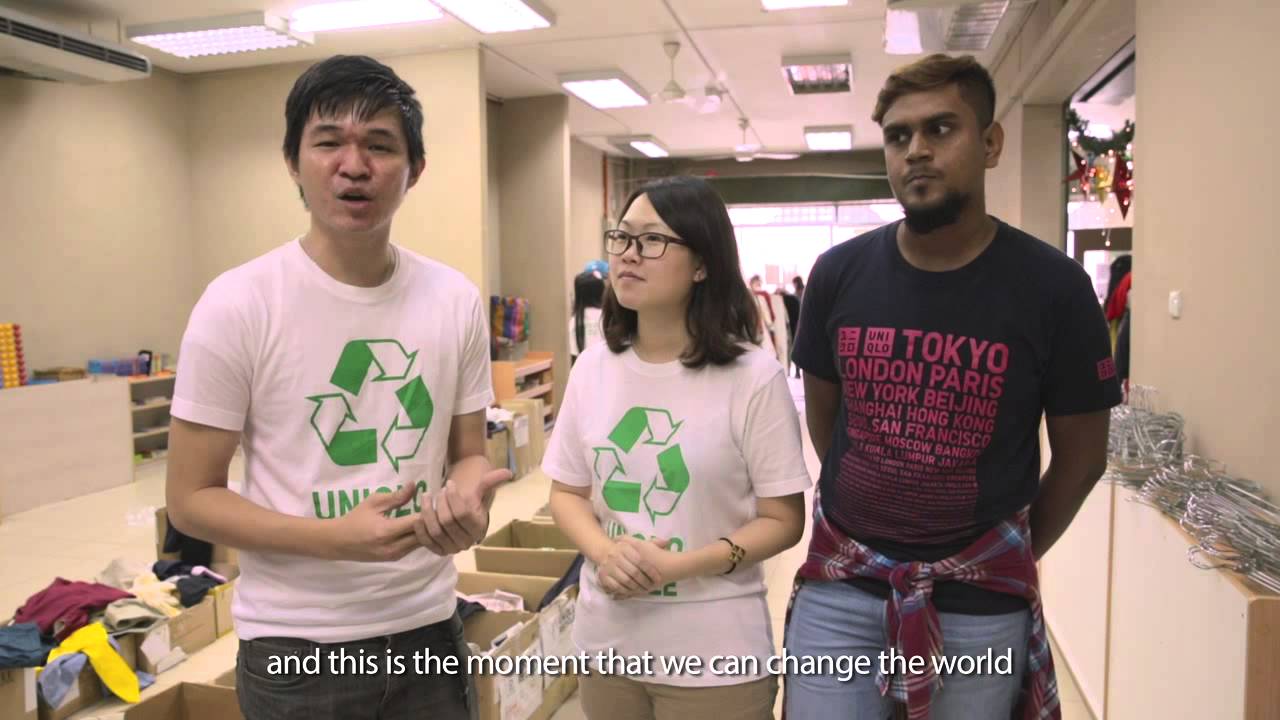
    Fast Retailing has been implementing an All-Product Recycling Initiative to provide clothing to refugees since 2006, and in 2011 became the first company headquartered in Asia to establish a global partnership with UNHCR. As part of the initiative, Fast Retailing has also launched a drive to collect clothing from employees.

    Around 90 per cent of the clothing that Fast Retailing has collected to date through its All-Product Recycling Initiative has been in wearable condition. As of the end of April 2015, more than 10 million items from the company had been delivered to refugees in 37 countries by UNHCR, including those in Jordan, Syria, Thailand and Nepal.

    As another contribution to alleviate the plight of displaced people, from 2011 Fast Retailing has operated an internship program at Uniqlo stores in Japan for refugees and their family members, offering invaluable work experience to promote their self-reliance.