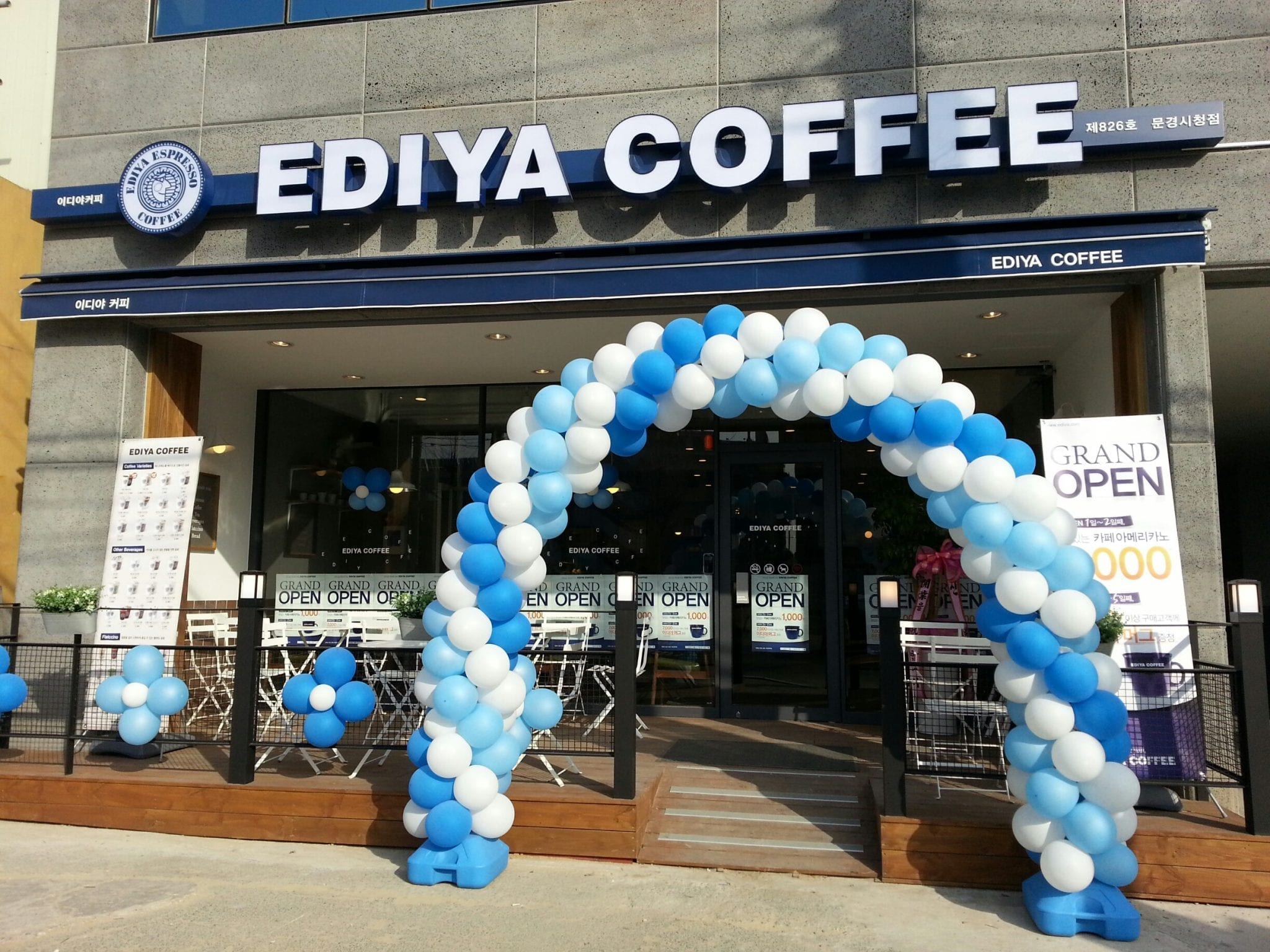
“Ediya Coffee will open an Ediya Coffee store in Guam, the U.S. autonomous territory, in December this year,” said Chairman Moon Chang-ki on Aug. 23. This is the company’s first overseas store. Ediya currently operates about 3,000 coffee shops in Korea.
Chairman Moon said, “We will make it possible to taste Ediya Coffee anywhere in the world through Dream Factory, its own production base established in Pyeongtaek, Gyeonggi Province 2020.
Chairman Moon Chang-ki of Ediya Coffee speaks at a press briefing held at the Ediya Dream Factory in Pyeongtaek, Gyeonggi Province, on Aug. 23, 2022.
Meeting with reporters at Ediya Dream Factory, he said, “The Guam store has not been able to confirm the opening date due to a lack of electricity and other facilities, but it will open within December. The interior of the store is finished.”
Introducing the Dream Factory as “the cradle of Ediya’s dream,” Chairman Moon said, “We built a production facility on a 4,000 pyeong (13,223㎡) site for the dream of allowing people to taste Ediya coffee wherever they go around the world.”
He also said that the company purchased an additional 4,000 pyeong of land near the plant and now has a production base of 8,000 pyeong (26,446 square meters).
Chairman Moon said, “The Taegeukgi (the Korean national flag) is hung in front of the Dream Factory. I will try until the day comes when everyone in the world can enjoy our Korean coffee.”
Dream Factory, which Ediya Coffee first unveiled on the same day, is a production base established in 2020 at a cost of about 40 billion won.
Pan Pacific plans to open the world’s largest Don Don Donki in Guam next year.
Construction of the 270,000sqft store has already commenced with a ground-breaking ceremony in the suburb of Tamuning.
Don Don Donki founder Takao Yasuda said that after three years of studying the market he believes Guam is an ideal location for Don Don Donki’s first store in Micronesia. The new store will be located on the corner of Marine Corps Drive and Airport Road.
“It’s a very ideal place for a local store as it is very close to the airport and very close to the main (villages) of Guam,” he said.
The project’s retail space will be 160,000sqft, featuring a wide selection of grocery items and in-house restaurants and eating areas. Sumitomo Mitsui Construction Co is the project’s main contractor.
“I’m confident that Guam will go far as a huge commercial domain in the future,” Yasuda said.
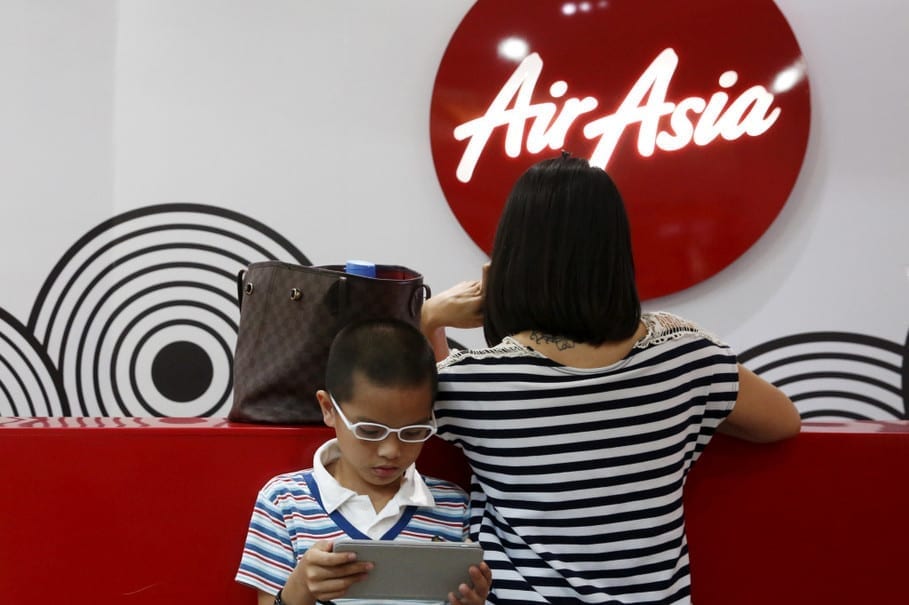
AirAsia Philippines is planning flights to Guam by 2020 as rival budget airline Cebu Pacific pulls out.
AirAsia Philippines’ newly appointed CEO Ricardo Islas said the airline would seek a permit to fly to the United States territory once it had secured regulatory approval to be designated an official carrier to the United States.
“Upon receipt of designation, AirAsia will be ready to apply for an operating permit to operate flights specifically to Guam,” Isla said in a text message.
“With a fleet of 24 Airbus A320 aircraft, AirAsia is capable of launching flights as soon as permits are ready,” he added.
AirAsia Philippines earlier filed a petition before the Civil Aeronautics Board (CAB) for designation and allocation of entitlements to the United States currently held by Air Philippines, an affiliate of Philippine Airlines. A CAB hearing on the matter has been set on Sept. 10 this year.
“We are hopeful the Civil Aeronautics Board will grant our petition,” Isla said.
Guam, about three and a half hours away from the Philippines, has a population of more than 160,000 people—a quarter of which are Filipinos. This made it attractive for Cebu Pacific, which launched flights between Manila and Guam on March 2016.
“It was a good market but it’s more of us concentrating efforts on North Asia and Southeast Asia,” Cebu Pacific vice president Alexander Lao said in a recent interview. Lao said the carrier would end Manila-to-Guam flights by Dec. 8 this year.
AirAsia Philippines earlier announced plans to aggressively expand its fleet and add more destinations. Cebu Pacific, the country’s biggest budget airline, is also on expansion mode.
Cebu Pacific expects to receive more than 60 aircraft in the next eight years. This will include new orders from the Paris Air Show in June for 31 new planes, comprised of 16 Airbus A330neos, 10 A321XLRs, and five A320neos. The new aircraft has a list price of $6.8 billion.
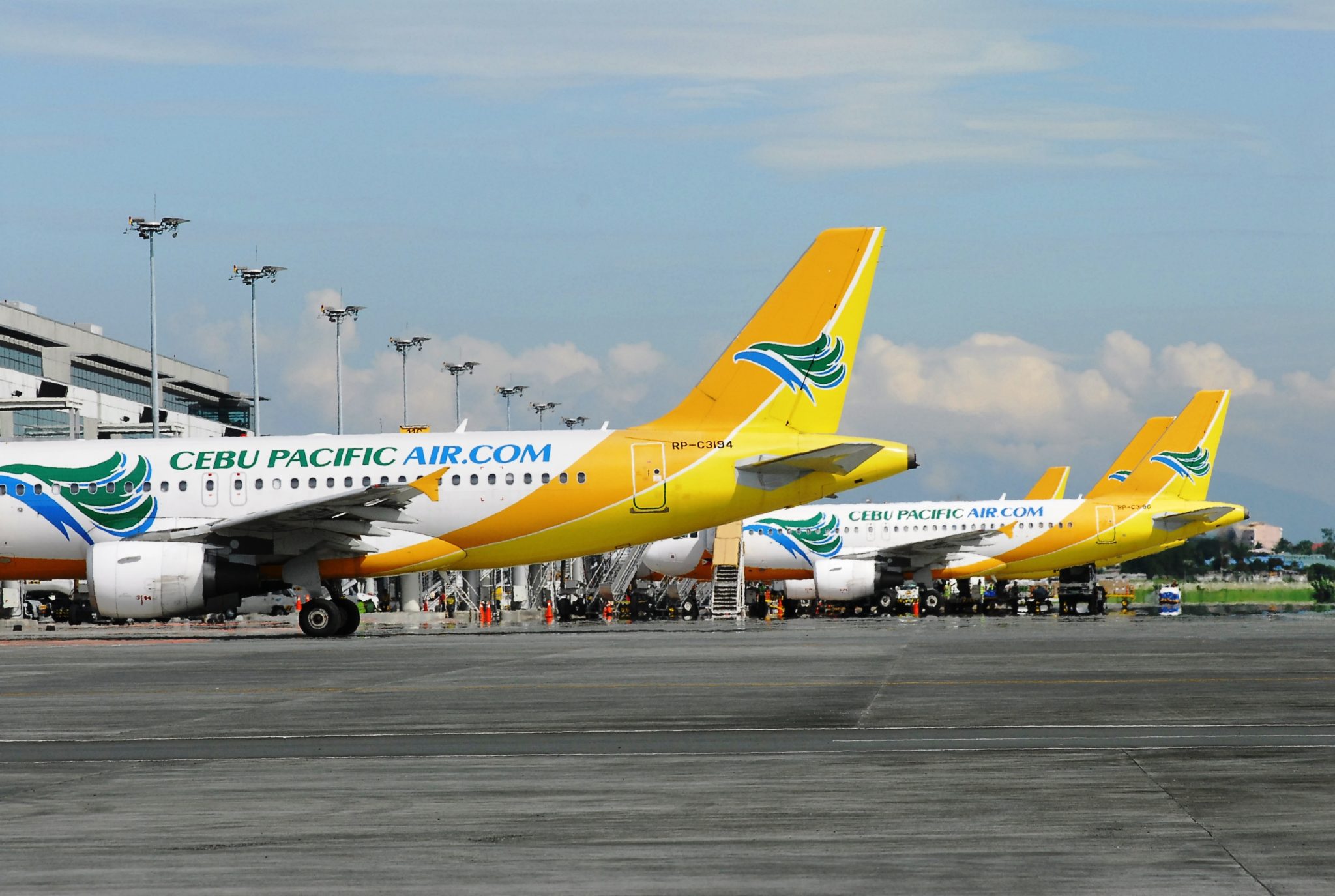
Philippine-based low-cost airline Cebu Pacific will suspend its service to and from Guam in December, saying the Guam route “is no longer viable.”
The last round-trip flights between Manila and Guam will be on Dec. 7, 2019, more than three years since Cebu Pacific’s March 2016 inaugural flight to the island. Cebu Pacific’s entry into the Guam market in 2016 was its first U.S. destination.
With Cebu Pacific suspending its Manila-Guam service, travelers on the route will be down to two airlines to choose from: United Airlines; and Philippine Airlines.
“The entry of Cebu Pacific into the market gave the traveling public more choices and a more affordable alternative to fly between these two destinations. However, despite all efforts, the Guam route is no longer viable,” Cebu Pacific said in a July 18 statement.
Passengers affected by the suspension of the services to Guam are being notified, the airline said.
To minimize the changes, affected passengers can:
re-book on earlier travel dates with Cebu Pacific;
get a full refund; or
place the full value of the ticket in a travel fund for future use.
“With limited slots in Manila, Cebu Pacific will reallocate these slots and re-deploy the aircraft to routes where these can serve higher passenger demand,” Cebu Pacific said.
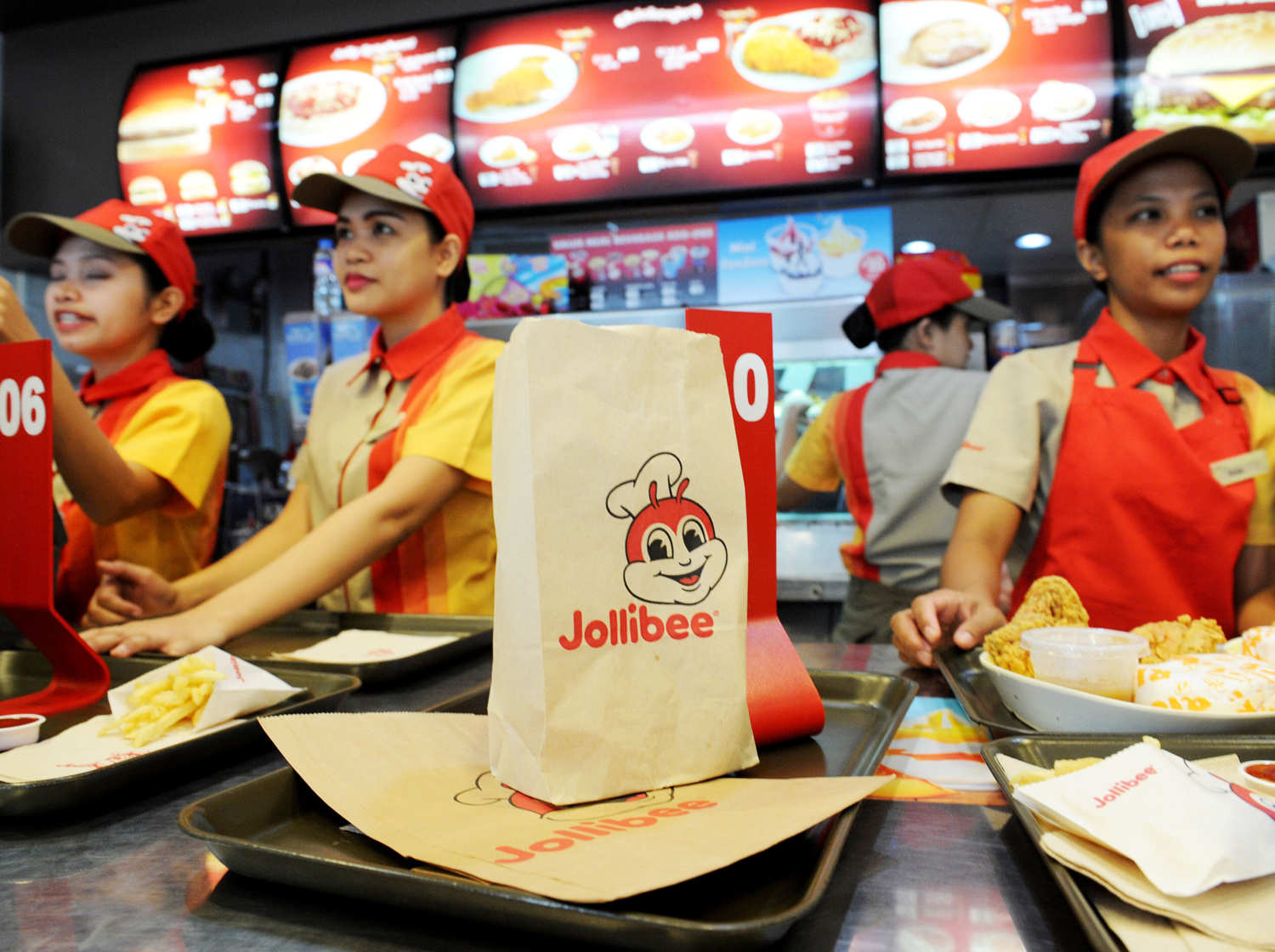
Filipino fast food chain Jollibee, the largest and fastest-growing Asian restaurant company in the world, is soon to open its flagship brand in Guam.
The first Jollibee Guam outlet will launch at Micronesia Mall on Saturday, April 6.
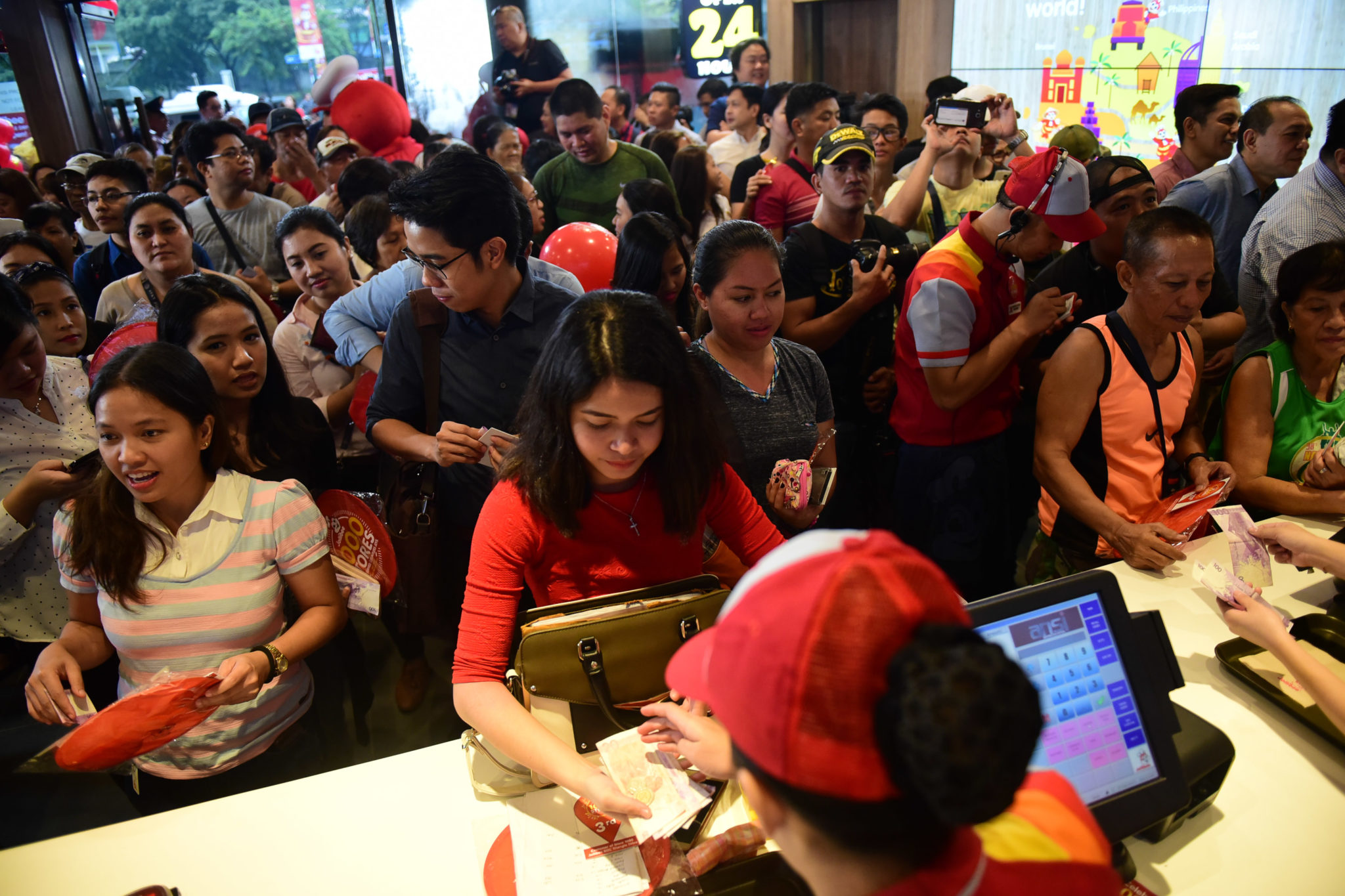
“We’ve seen people queue even in extreme weather to enjoy our unique and tasty food,” said Jollibee Foods Corporation’s president and head of international business Dennis Flores. “We invite everyone – Chamorus, Micronesians, mainland Americans in Guam; everyone here in Guam – to come taste and see for themselves why people are willing to wait and line up for our food.”
With Jollibee operating in Guam – where America’s day begins – the company says it can claim that it is serving food to more diners on American soil at any given moment of the day or night. Jollibee has 37 stores in the US.
Jollibee, from its humble beginnings as an ice cream house in 1975, quickly grew into a fast-food giant with more than 1300 stores worldwide. Its openings have drawn queues with people lining up to 20 hours for a taste of their Jollibee favourites.
South Korean mobile carrier SK Telecom announced that it is in discussion with Citadel and IT&E to deploy a 5G network in Guam and Saipan. In a statement, SKT and IT&E will work together to commercialize the 5G network with fixed wireless access (FWA) offering in Guam and Saipan in the second half of 2019.
SKT said IT&E has already secured 1150MHz bandwidth in the 28-GHz frequency band for 5G communications and aims to become the first operator to launch commercial service in the region.
The 5G network will initially cover dense central areas of cities, local business customers, and areas that lacked fixed broadband infrastructure. This will be expanded gradually to wider areas.
According to SKT, the decision to deploy 5G FWA initially came as a result of an analysis of the region’s fixed broadband infrastructure, topographic features and the needs of residential and enterprise customers. FWA provides IT&E with a more cost-effective and efficient alternative to offer broadband services in areas with limited access to fixed broadband infrastructure.
As part of the collaboration, SKT will help IT&E design a 5G network optimized for the local environment, support network deployment and perform field trials and network optimization.
SKT said the pair have also discussed cooperation in other areas, such as deploying SK Telecom’s security solutions to IT&E’s 5G network, and adopting mobile edge computing and quantum cryptography technologies to enable faster and safer 5G services.
Jollibee, the largest and most popular fast food chain in the Philippines, is re-entering the Guam market with the ongoing $2 million construction of a restaurant within the Micronesia Mall compound in Dededo. The restaurant is expected to open by early 2019.
The restaurant is being built within the parking area of Micronesia Mall, by the corner of Marine Corps Drive and Army Corps Drive. Construction began in March.
Construction cost is $2 million and the permit fee is $12,820, based on copies of the Department of Public Works building permit posted on a barrier wall at the construction site.
Construction of a Guam branch of Jollibee, the most popular fast food chain in the Philippines, is ongoing within the vicinity of Micronesia Mall in Dededo.
Haidee Eugenio/PDN
Isagani Baluyut, owner of Isagani Baluyut Construction, on Monday said his company has a one-year contract to build the Jollibee restaurant. Baluyut said he is not privy to the restaurant’s actual opening date but his company’s construction contract ends in April 2019.
Jollibee started as an ice cream parlor
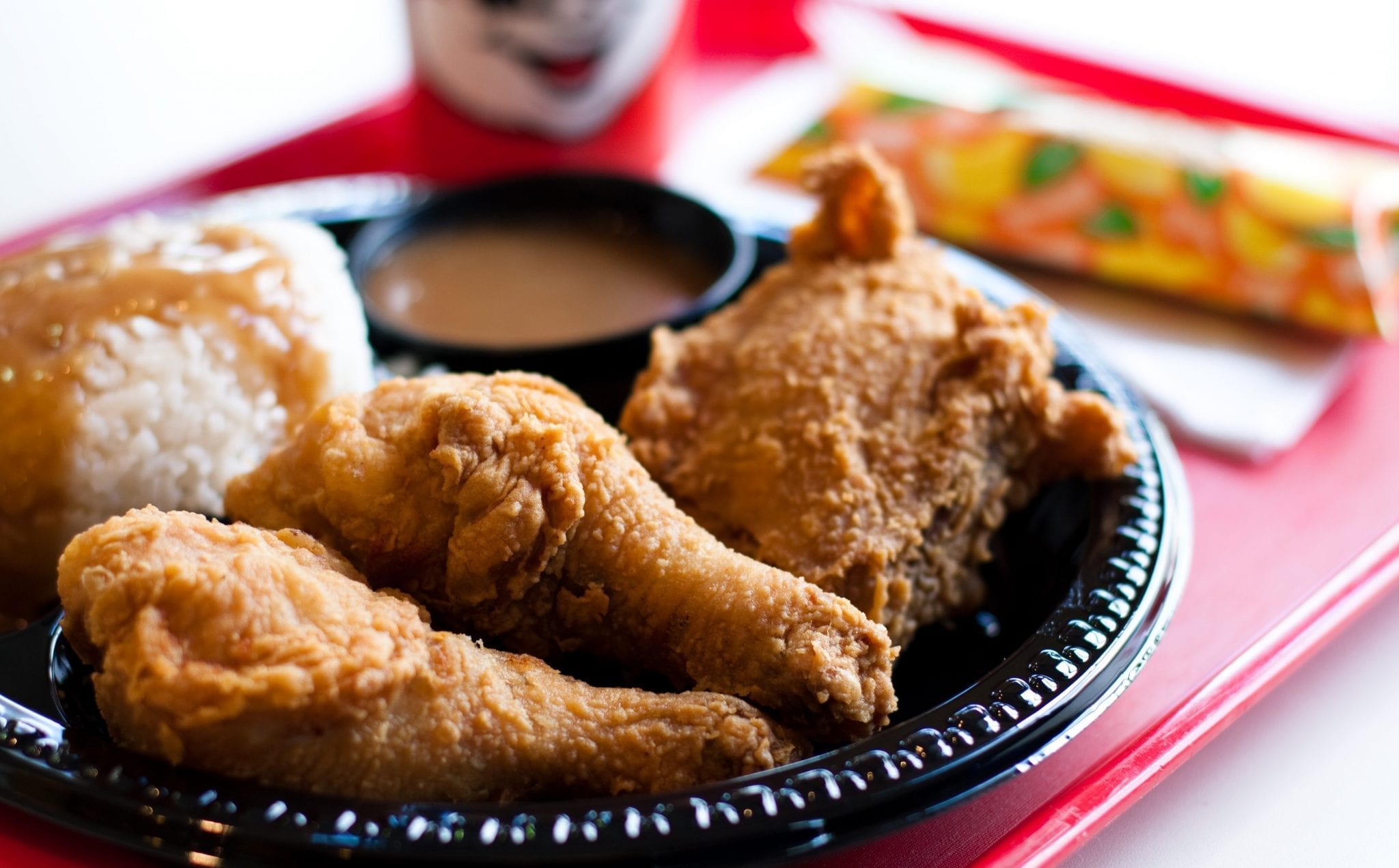
Jollibee, known for its Chickenjoy, hamburgers and sweet-tasting spaghetti and its iconic red bumble bee mascot, used to have restaurants on Guam and Saipan but declining sales forced the branches to close.
An international Jollibee franchise applicant is required to have a minimum net worth of $5 million, according to Jollibee’s corporate website.
Jollibee started in 1975 as an ice cream parlor that evolved into a burger chain, and has become the largest fast food chain in the Philippines. It has also embarked on an aggressive international expansion plan in the United States, Vietnam, Hong Kong, Saudi Arabia, Qatar and Brunei.
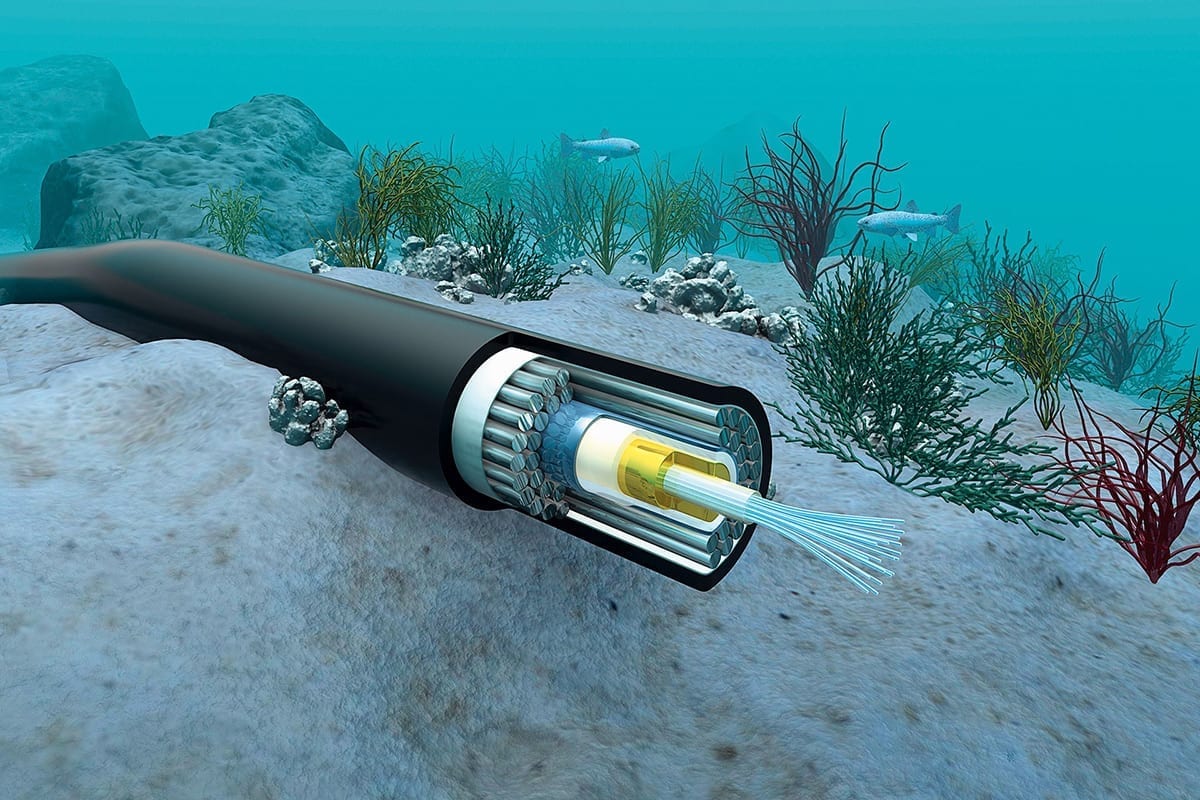
A consortium led by RTI Connectivity has commenced construction of a new subsea cable linking Japan, Australia and the US territory of Guam.
The Japan-Guam-Australia Cable System (JGA) is being built by a consortium consisting of RTI Connectivity, Australia’s Academic and Research Network (AARNet) and Google. It is being supplied by Alcatel Submarine Networks and NEC.
The 9,500km subsea cable system will have a design capacity of over 36Tbps. It is expected to be ready for service in the fourth quarter of next year.
At Guam, the JGA will interconnect to the SEA-US cable, which is operated by a consortium that includes RTI Connectivity, as well as the upcoming HK-G Hong Kong-Guam.
The JGA will contribute to the expansion of communications networks from Japan and Australia to Asia and the US and expand onboard connectivity options in Guam.
The cable is being built in two sections also linking in Guam, with JGA South being funded by AARNet, Google and RTI Connectivity, while JGA North will be wholly-owned by RTI Connectivity.
“Hyperscale cloud providers and enterprise companies are fuelling exponential data-growth between Asia, Australia, and the United States. These customers require alternative paths, enhanced quality of service, and cost-effective bandwidth solutions,” RTI Connectivity CEO Russ Matulich said.
“By adding JGA to our existing cable investments, RTI is well positioned to serve these massive data-growth needs. JGA’s unique design will also improve latency between Tokyo-Sydney, while greatly reducing provisioning timeframes.”
Philippine fast-food giant Jollibee’s planned re-entry into the Guam market has taken another step forward. The $2 million construction project to build a standalone Jollibee in the Micronesia Mall parking lot has begun. The construction site was in the process of being cordoned off Monday, and construction equipment has started digging up the ground for the proposed concrete building.
The Jollibee corporate office in the Philippines has previously confirmed its Guam restaurant will open in the fourth quarter of this year.
Maxi D. Peralta Jr., assistant vice president and head of international franchising at Jollibee Foods Corp., spoke on behalf of the company.
Known for its crispy fried chicken, sweet spaghetti and other Filipino twists on patties, hot dogs, egg rolls and noodles, Jollibee’s Guam re-entry was announced as part of its overseas expansion plans.
Jollibee had two franchise-run restaurants on Guam and two on Saipan, but its Marianas presence ended more than a decade ago as the islands went through an economic downturn. Jollibee also had trouble competing with Guam players that offered larger portions.
The company builds, runs and franchises quick-service restaurants. A Jollibee international franchise applicant must have a minimum net worth of $5 million, according to the company’s website.
Internationally, Jollibee had 139 stores with 32 in the United States, 72 in Vietnam, 13 in Brunei, one in Hong Kong, two in Singapore and 19 in the Middle East, according to the company’s profile for investors.
The Jollibee corporate office in the Philippines has confirmed that the Filipino fast-food giant will once again open a branch on Guam later this year.
The target opening is the fourth quarter of 2018, according to a statement from the corporate office.
Maxi D. Peralta Jr., assistant vice president and head of international franchising at Jollibee Foods, spoke on behalf of the company. Peralta stated Jollibee’s first store on Guam will be located in the vicinity of Marine Corps Drive and Route 16/Army Drive in Dededo.
“We have carefully chosen a location that is strategic and within Guam’s main retail circulation,” Peralta told.
Micronesia Mall location?
According to reports received, the new Jollibee will be built within the Micronesia Mall compound, although mall management has yet to confirm the reports.
Peralta said the company cannot disclose the franchisee’s name yet.
“As a preferred strategy for expansion and similar to our approach in other markets, we have already awarded a territory franchise for Guam,” Peralta told. “Our franchise partner has successful business interests in Guam and the Philippines.”
Overseas expansion plans
Known for its crispy fried chicken, sweet spaghetti and other Filipino twists on patties, hot dogs, egg rolls and noodles, Jollibee’s Guam re-entry was announced as part of its overseas expansion plans.
Jollibee Chairman Tony Tancaktiong spoke to Manila media about Jollibee’s overseas plans after the company’s latest annual stockholders meeting in July 2017. Guam was mentioned in the list of planned franchise locations.
Jollibee had two franchise-run restaurants on Guam and two on Saipan, but its Marianas presence ended more than a decade ago as the islands went through an economic downturn. Jollibee also had trouble competing with Guam players that offered larger portions.
The company builds, runs and franchises quick-service restaurants. A Jollibee international franchise applicant must have a minimum net worth of $5 million, according to the company’s website.
Internationally, Jollibee had 139 stores with 32 in the United States, 72 in Vietnam, 13 in Brunei, one in Hong Kong, two in Singapore and 19 in the Middle East, according to the company’s profile for investors.
Filipino fast-food giant Jollibee Foods plans to re-enter Guam this year after pulling out more than a decade ago as the islands went through an economic downturn.
Jollibee Foods assistant VP/head of international franchising Maxi Peralata Jr says it will open a restaurant in a strategic location in the fourth quarter, near Marine Corps Drive and Route 16/Army Drive in Dededo.
The outlet will be built within the Micronesia Mall compound, but this has not been confirmed by the mall’s management.
Peralta says a franchisee has been appointed. He has not disclosed the franchisee’s identity but says their partner has business interests in Guam and the Philippines.
Jollibee had two franchised restaurants on Guam and two on Saipan, but its Marianas presence ended with the economic downturn.Jollibee also had trouble competing with Guam players offering larger portions.
Internationally, Jollibee has 139 stores – 72 in Vietnam, 32 in the US, 19 in the Middle East, 13 in Brunei, two in SIngapore and one in Hong Kong.
South Korean authorities raided the headquarters and other offices of Lotte Duty Free Guam’s parent company in Seoul earlier this month.
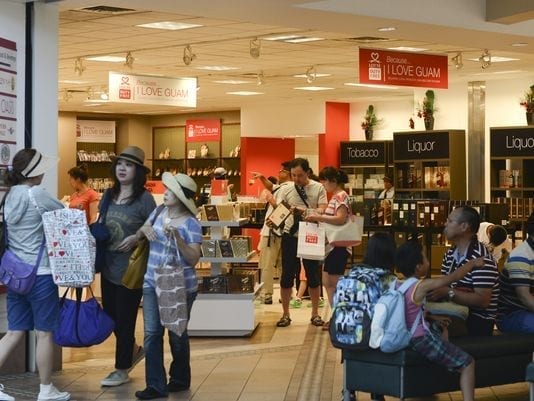
The duty-free retailer sells an array of high-end products, from eyewear to liquor, to passengers who’ve passed through the airport’s security check.
“The airport is not concerned at this time with the news coming out of Korea about Lotte,” Airport Executive Manager Chuck Ada’s office said in a statement. “It has nothing to do with Lotte Duty Free Guam’s obligations under its specialty retail concession contract with (the A.B. Won Pat Guam International Airport Authority).”
Lotte Duty Free Guam is a wholly owned subsidiary of Hotel Lotte Co. Ltd., which is based in South Korea. Hotel Lotte and other companies under the Lotte Group have been the subject of a widening investigation by South Korean authorities, according to media reports.
The news about the raids came after an audit, released in February, indicated Lotte Guam was facing financial problems.
The most recent audit of the retailer’s financial statements showed Lotte Guam posted $14.3 million net loss at the end of last year. Lotte Guam also recorded a $14 million loss at the end of 2014, and an $8.9 million loss in 2013.
In January 2015, Lotte Guam asked the airport for a temporary reduction in rent. Ada denied the request, saying it would affect the agency’s ability to pay its debts, according to letters between the airport and Lotte.
An email and phone calls to Lotte legal counsel Cesar Cabot were not returned.
Ada was unable to comment on whether Lotte had made a subsequent request for reduced rent.
In 2013, Lotte Guam signed a contract to pay the Guam airport agency $15 million a year for 10 years, and the airport used these future payments to enhance its ability to borrow more money from bond investors.
In light of the reports of the investigation into Lotte’s parent company, the airport “has to do their own due diligence,” said Guam’s Public Auditor Doris Flores Brooks.
However, Brooks said it’s too soon for her to comment whether there’s reason to be concerned about the airport’s future finances.
The Wall Street Journal reported that according to South Korean media, the raids were triggered by an investigation into whether a local cosmetics company paid bribes in exchange for floor space at Lotte’s duty-free retail outlets in that country.
Lotte’s South Korean office confirmed the raids occurred, but the company declined to comment regarding the specifics of the investigation, according to the Wall Street Journal.
Lotte Guam is part of the worldwide Lotte Group’s duty-free enterprise, which reported more than $4 billion in annual sales in 2015, according to the statement from Ada’s office.
“The airport has confidence that with Lotte’s experience and vast financial resources that it will abide by and meet the terms of our 10-year agreement,” the statement said.
If Lotte Guam fails to make a payment, the airport agency said it’s protected by a letter of credit of more than $15 million. A letter of credit is issued by a bank as a backup source of payment.
When asking for the rent to be reduced, Jung Min Lee, chief executive officer of Lotte Guam, wrote that sales “have not met projections, and are not even near the estimated levels based upon available economic data.”
“Lotte respectfully requests GIAA’s kind consideration in order to survive this temporary rough patch of adversity and market events that are beyond Lotte’s control,” Lee wrote. The request cited the weakened value of the yen and the ruble against the U.S. dollar as a reason for the dismal sales.
Guam’s tourism industry has seen a dip in Japanese visitor arrivals and steep plunge in tourist arrivals from Russia, and those challenges continued this year.
Lotte Guam’s net sales of $15 million weren’t enough to cover all of the duty-free retailer’s bills last year, including: $15 million in rent to the airport; almost $4 million in payroll and employee benefits; and $3.3 million in professional fees, the 2015 audit report showed.
The airport agency doesn’t want to increase airline fees to cover losses from duty-free concession revenues, Ada wrote in his letter denying the rent reduction. When the airport raises airline fees, airlines could pass on the cost to the traveling public.
Lotte’s $15 million rent payment to the airport in fiscal 2015 made up nearly 25 cents for every $1 of the airport agency’s operating revenue that year, a separate government audit report shows.
Lotte Guam and the airport agency continue to fight luxury goods retailer DFS Guam in Superior Court over the duty-free shop spaces at the airport.
DFS was the duty-free concessionaire for 30 years until the airport awarded a 10-year concession agreement with Lotte in 2013.
Lotte has paid $20 million for projects to improve the look of the duty-free concession areas at the Guam airport terminal, according to the airport agency.
“There is no question that the Lotte concession has been of tremendous benefit to the airport and the people of Guam,” the agency said in a statement.