Retail News CRM

Tag: Guess

  • Europe and Asia give Guess strong quarter

    Europe and Asia give Guess strong quarter

    American fashion brand Guess’ third quarter turnover grew more than 3 %, mainly thanks to excellent sales in Asia and Europe. It did post a net profit loss however.

    Drop in America

    Guess’ total third quarter turnover reached 554.1 million dollars (470 million euro), which represents a 3.3 % turnover growth. European and Asian sales grew 19 and 17 % respectively, thanks to new stores and a good wholesale performance. North and South American sales did not fare as well: retail turnover dropped 13.4 % and wholesale turnover even dropped 16.8 %.

    “Looking at our company’s future, I can see more opportunities in Europe and Asia and we should achieve strong growth there next year as well”, CEO Victor Herrero said

    Despite that higher turnover, Guess did not manage a profit in the third quarter: it published a 2.9 million dollars (2.5 million euro) net loss, compared to a 9.1 million dollars (7.7 million euro) net profit the year before.

  • Guess Asia sales rise in second quarter

    Guess Asia sales rise in second quarter

    Guess Asia sales rose 17.5 per cent in the second quarter – and its operating margin improved in the region as well.

    Reporting its results for the three months to July 29, CEO Victor Herrero said global revenues rose 5.3 per cent to US$573.7 million and operating profit by 49 per cent year-on-year, both figures at the high end of the company’s expectations.

    “We continue to see the results of our efforts in Europe and Asia… mainly driven by new store openings, wholesale growth and positive comp sales. We are also encouraged by the trends in operating margins for these two regions, as they expanded in the quarter relative to last year.”

    Operating margin for in Asia increased 870 basis points to 2.4 per cent in the second quarter of fiscal 2018, compared to negative 6.3 per cent in the prior-year quarter, as the US-based fashion retailer reduced expenses.

    Herrero described the quarter as a “truly exciting time” for Guess.

    “We have now increased revenues for four consecutive quarters and we expect consolidated revenues to continue to increase despite store closures in North America. In Europe and Asia we have seen not only strong double digits growth for several consecutive quarters but also continuing margin expansion. We have achieved meaningful cost reductions, especially in our supply chain.”

    In the US, Guess is speeding up the culling of its store network, that market now representing less than 36 per cent of Guess’ global sales.

    For the second quarter, Guess reported net earnings of $15.2 million, a 52.8 per cent decrease from $32.3 million for the same time last year, but those results included a one-off gain of $22.3 million, related to the sale of an investment.

    Adjusted net earnings of $16.1 million, represented a 30.4 per cent increase on the $12.3 million of the same quarter last year.

  • Offshore investor shows interest in FJ Benjamin

    Offshore investor shows interest in FJ Benjamin

    An international group is seeking to invest in Singapore brand-management company FJ Benjamin, which has such brands as Bell & Ross, Givenchy, Guess and Tom Ford in its portfolio.

    FJ Benjamin says it has entered into a non-binding term sheet, a document that sets out the terms and conditions under which an investment will be made, with an offshore third party.

    This term sheet would be “in relation to a potential transaction which may enhance or unlock shareholder value”, the company said in a release to the Singapore Exchange.

    With mall vacancies in Singapore for the three months to June 30 rising to 7.8 per cent from 7.3 per cent the previous quarter, FJ Benjamin saw its net loss for the fiscal year ended the same date balloon by 35 per cent to about S$23.5 million (US$16.6 million) while revenue fell by 14 per cent to S$253.6 million – its third consecutive year of losses.

    Managing more than 20 brands, FJ Benjamin has 226 stores in eight cities. One of its international labels, Raoul, closed its last store in Singapore, in Paragon mall, in February.

  • Penang outlet mall Design Village about to launch

    Penang outlet mall Design Village about to launch

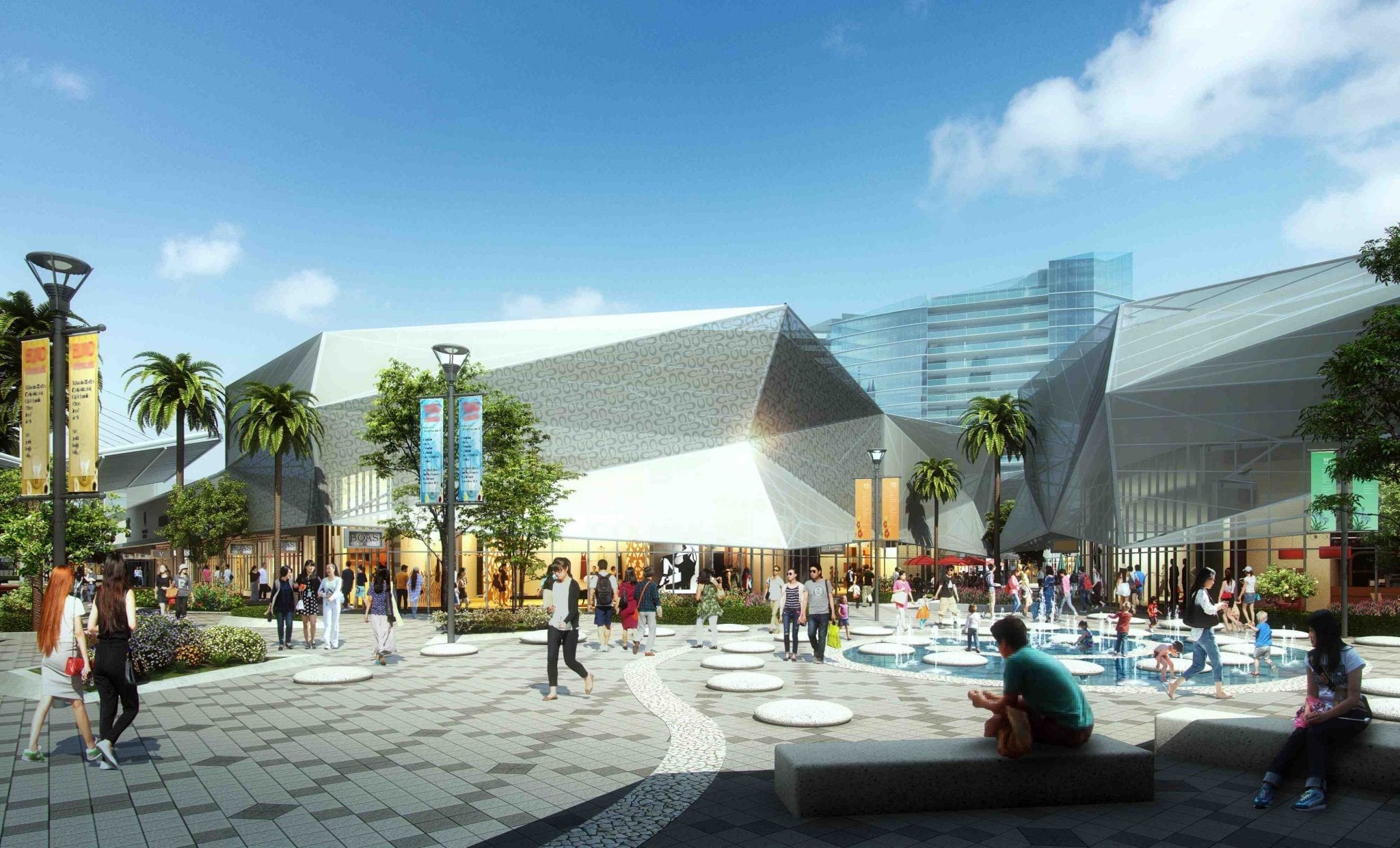
    Penang will gain its first premium outlet mall, Design Village, next month.

    In Batu Kawan in mainland Penang, it will be the biggest outlet mall in Malaysia. It was developed by PE Land, which owns and runs The Spring shopping mall in Kuching.

    The outlet mall is on a mixed-use site that will include a hotel and high-end condominiums. The single-storey mall has a net leasable space of 400,000 sqft (37,161 sqm) for 150 stores.

    There are more than 80 brands already committed to the mall, which is aiming for up to 100, says Savills Malaysia MD Allan Soo. The company is the international leasing and retail development adviser for Design Village.

    Design Village Malaysia 1

    The mall’s retail mix will be 20 per cent large-format stores, 15 per cent F&B, 7 per cent sports outlets and 5 per cent children’s stores, with 25 per cent new tenants and 28 per cent others.

    It will include the biggest Adidas outlet in Malaysia, plus the first outlet stores for Aldo and Bata. Other retailers include Banana Republic, Guess, Padini Concept Store, Sacoor Brothers, Samsonite and Starbucks.

    The mall will provide daily shuttle services to and from hotels and the airport.

    Design Village GM Aileen Tay says the mall is also working with tour companies to bring in tourists who will be offered rebates through tax-free shopping network Global Blue.

    PE Land is the retail and property development arm of Borneo-based conglomerate Pan Sarawak Holdings.

  • Guess Malaysia goes white in KL

    Guess Malaysia goes white in KL

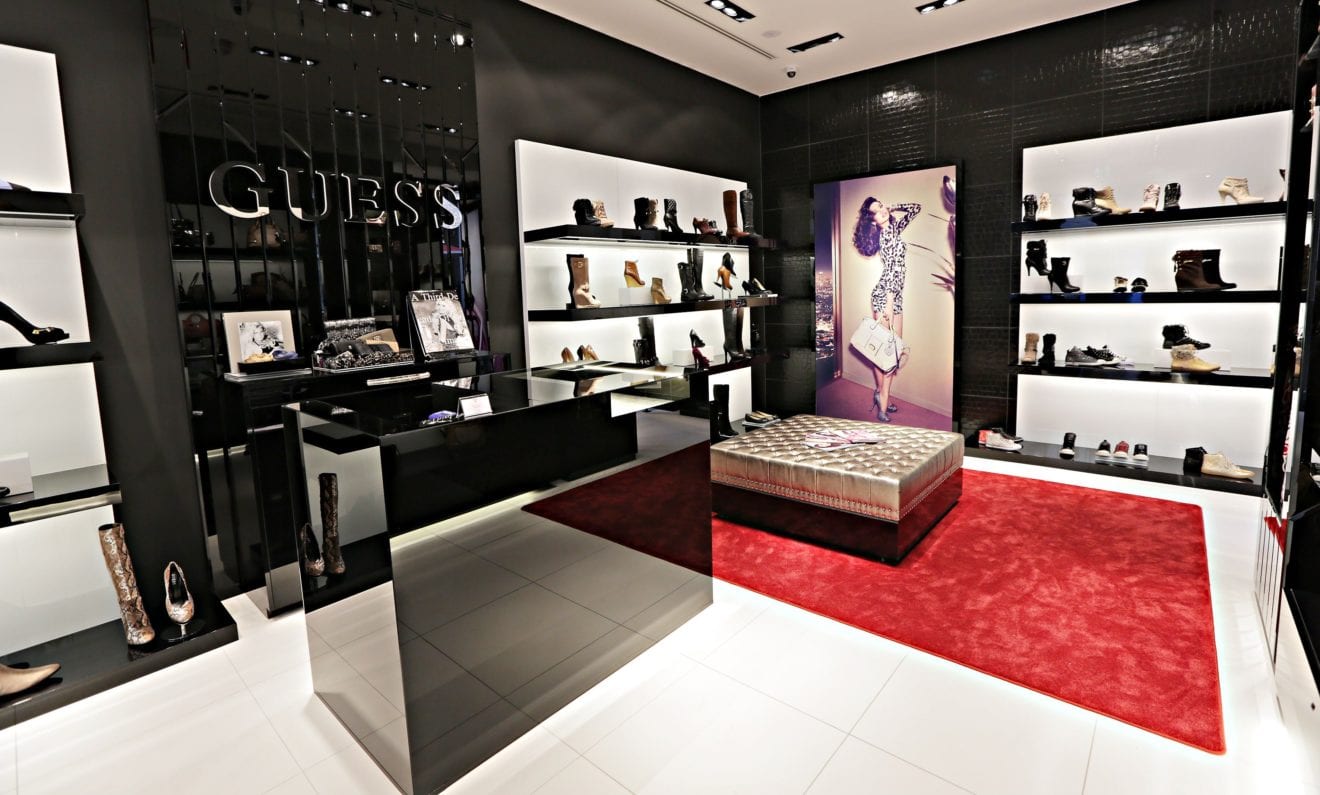
    Fashion brand Guess Malaysia has revamped its Suria KLCC branch to incorporate its contemporary white store concept.

    US-headquartered Guess, launched in Malaysia in 1992, now has 33 stores in the market – 20 Guess, seven Guess Accessories and six Guess Kids.

    Its its new minimalist 2300 sqft (214 sqm) space, Guess KLCC carries ready-to-wear styles for men and women, accessories and jewellery, and its more exclusive apparel (the Guess Pavilion KL flagship is the only other outlet in Malaysia carrying the exclusive collections).

    Denim is still a big focus for the brand, and the new store features a “denim menu” arranged according to the wash of the jeans.

  • Guess? Inc. Beats the Retail Slump With Solid Results

    Guess? Inc. Beats the Retail Slump With Solid Results

    The retail industry has been a minefield lately, with many companies reporting tough results. Jeans specialist Guess? hasn’t been immune from the problems facing retail peers like Gap , and coming into its fiscal third-quarter financial report, Guess? investors were bracing for substantial declines in earnings and revenue. In the end, the company didn’t do nearly as badly as many had feared, and that helped to send the stock higher in relief. Let’s take a closer look at how Guess? fared and what its latest results mean for the industry going forward.

    Guess? remains under pressure but still held up well
    Fiscal third-quarter results for Guess? still had plenty of ugly numbers. Revenue fell 12% to $521 million, which was almost exactly in line with what most investors had expected to see from the jeans maker. On the bottom line, net income fell 40% to $12.4 million, but even though earnings of $0.15 per share were down substantially from year-ago levels, they were still $0.04 per share ahead of the consensus forecast among investors.

    As we’ve seen several times in recent quarters, Guess? took a hit from weak foreign currencies. The strong dollar cost the company $0.13 per share in earnings and pulled down overall revenue by about eight percentage points. Retail comparable sales including e-commerce fell 6% in dollar terms but only 2% on a constant-currency basis.

    Guess? saw considerable weakness throughout its business. The Americas retail segment suffered a 7% drop in sales, with Europe taking a 15% hit and Asia seeing sales fall 17%. Wholesale revenues in the Americas fell 12%. Even with the strong dollar, all four areas suffered declines in constant-currency terms. On the margin front, results were mixed, with operating margins improving in the Americas retail and Asia segments but falling in Europe and in the Americas wholesale business. The company continued its strategy of boosting initial mark-ups in its retail segments, but fixed costs offset some of the resulting margin gains.

    CEO Victor Herrero emphasized the positives, noting that overall results exceeded expectations and that comps in the European business were especially strong. “I am laser focused on driving the organization to raise the level of execution,” Herrero said, “as this will be a critical enabler of successful achievement of our strategies.” The CEO pointed to initiatives to boost sales and merchandising quality, build its business in Asia, and reinforce purpose and accountability within the company as having shown signs of success during the quarter.

    Can the jeans maker keep moving forward?
    Investors were also pleased with Guess?’s guidance. For the fiscal fourth quarter, the company expects revenue to fall 4% to 7%, with currency accounting for about 5.5 percentage points of the decline. Earnings of $0.53 to $0.62 per share would also be in line with what investors already expect from Guess? next quarter.

    For the full year, Guess? was more optimistic. The company narrowed its earnings guidance to the upper end of its previous range, now expecting $0.93 to $1.02 per share. Sales declines of 8.5% to 9.5% will look ugly, but they’re not inconsistent with the expectations that investors have for the company.

    What Guess? needs to execute on is its longer-term strategic plan. Investors want to see real progress for fiscal 2017, including stable revenue and rising earnings. That could prove difficult, especially in light of what rival Gap said in its recent report. Gap disappointed investors with its future guidance, including a 15% decline in earnings per share for its holiday quarter. Gap investors also expect it to have trouble rebounding in the coming fiscal year, calling for minimal sales growth and only about a 6% rise in earnings per share.

    Investors nevertheless remain optimistic about Guess?, sending the stock up more than 3% in the first hour of after-market trading following the announcement. As with most companies in the retail industry, Guess? will rely on solid holiday results in order to drive future growth in the months and years to come. If sales climb to finish the year, then Guess? could build further on its share-price gains.


  • Sports fashion demand drives Stella sales

    Sports fashion demand drives Stella sales

    Shoe marketer Stella International has reported increased sales in the second quarter on the back of growing demand for sports fashion footwear.

    In the three months to September 30, consolidated revenue from its China retail business and its manufacturing operations amounted to US$569 million, up 4.3 per cent year on year. For the nine months to September 30, revenues totalled US$1.366 billion, an increase of 7.9 per cent.

    “Looking forward, the group expects orders for the group’s footwear products will pick up further towards the end of this year and the beginning of 2016, as its customers continue to expand their global presence and as demand for sports fashion footwear continues to grow,” the company said in a stock exchange filing.

    “Order levels will also be supported by greater efficiency and improved utilisation at the group’s production facilities in inland China and Southeast Asia.

    “The group cautiously expects shipment volumes to reach 58 million pairs by the end of 2015.”

    Stella produces shoes for brands including Clarks, Deckers, Ecco, Rockport, Timberland, Wolverine, Cole Haan, Guess, Jones Group, Kenneth Cole and Michael Kors. It also designs, develops and manufactures footwear for high-fashion brands including Alejandro Ingelmo, Alexander Wang, Armani, Bally, Balmain, Brian Atwood, Givenchy, Kenzo, Marc by Marc Jacobs, Marciano, Miu Miu, Paul Smith, Prada, Sigerson Morrison, Via Spiga and Y3.

    And taking advantage of its manufacturing expertise, the wide acceptance of Stella’s products by brand customers, the company has successfully expanded into the Chinese and global footwear retail market through its own brands Stella Luna, What For, JKJY by Stella and joint-venture brand, Pierre Balmain.

    Stella says it will continue to implement strict cost controls and efficiency improvement measures to preserve its profitability. This includes placing a renewed focus on leveraging its competitive strengths to pursue new promising product segments, such as sports fashion footwear.

    “The group also remains committed to building the long-term competitiveness of its retail business with the opening of new standalone stores and shops-in-shops in quality locations. It will also continue to boost its branding efforts in Europe to further grow the value of its brands among Chinese consumers.”