Tag: Guinness

  • Guinness Launches Zero Alcohol Stout in Singapore Across Retail and on Trade Channels

    Guinness Launches Zero Alcohol Stout in Singapore Across Retail and on Trade Channels

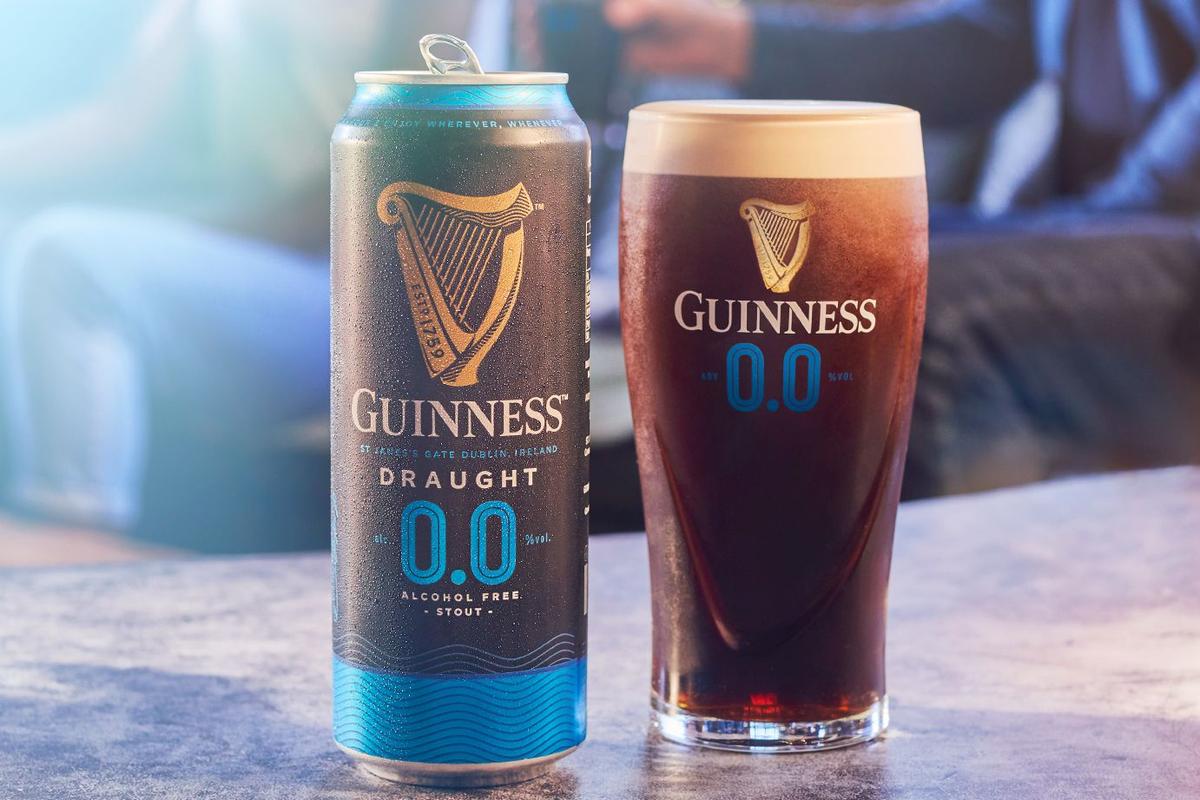
    Diageo will roll out Guinness 0.0 across Singapore on October 26, 2026. The debut introduces the non-alcoholic stout to Southeast Asia for the first time.

    Distribution covers on-trade venues, grocery chains and online merchants across the island. The rollout expands an alcohol-free lineup that previously reached 12 international markets.

    Shelf space and supply lines

    Supermarket distribution covers selected outlets of FairPrice Finest, Cold Storage and Sheng Siong. Online shoppers can order through RedMart, PandaMart and Shopee. Kegs and cans will also pour at participating pubs, bars and restaurants.

    Guinness spent four years developing the zero-alcohol stout at its St James’s Gate brewery in Dublin. Brewers make standard stout first. They then extract the alcohol through cold filtration without heat, preserving the roasted barley profile and creamy head.

    Promotion ties directly into Diageo’s sponsorship as the official beer and non-alcoholic beer of the English Premier League. Guinness also partnered with Singaporean illustrator Tobyato on retail merchandise. Shoppers who spend at least S$55 (US$43) on participating items receive a limited-edition football jersey.

    Shifting beer economics

    On local shelves, Guinness 0.0 joins existing lines including Guinness Draught, Nitrosurge and Foreign Extra Stout. Alcohol-free extensions give grocers and bar operators standard retail margins without alcohol excise duties. That makes shelf space far more profitable.

    Global data from IWSR shows no-alcohol beer volumes across 21 major markets grew 8 percent in 2025. Total beer consumption contracted 1 percent during the same period. Pricing power is shifting upward too, with premium-and-above tiers taking 29 percent of non-alcoholic volumes in 2025, compared to 20 percent in 2019.

    Singapore gives Diageo a dense, high-income test market. If operators sell non-alcoholic draught near standard pint prices, the format generates higher gross margins. It also helps fill slow weekday shifts when alcohol sales dry up.

    Regional track record

    Earlier iterations of non-alcoholic dark beer have tested Southeast Asia before, under different distribution models. Diageo introduced a coffee-formulated Guinness Zero in Indonesia in 2014 to navigate local retail bans on standard beer sales.

    Recent corporate filings show Diageo now sells non-alcoholic brands across 17 countries, as noted in its 2026 annual report. Rival international brewers already run non-alcoholic lager taps across Singapore. Stout remains one of the few open premium categories.

    What to watch next

    Activations and roadshows will run through November to test repeat grocery purchases after the initial merchandise push. Sell-through rates at FairPrice and Cold Storage during late 2026 will determine whether Diageo expands Guinness 0.0 to Malaysia and Thailand in 2027.
  • Guinness drops a weather-sensitive promo

    Guinness drops a weather-sensitive promo

    Winter and Guinness go hand in hand, which is why the brand is celebrating Australia’s coldest month of the year with a unique, weather-moderated giveaway.

    To encourage drinkers into the pub to enjoy a stout at its prime, GUINNESS has launched GUINNESS WEATHER, allowing punters to redeem a free pint of Guinness Draught as soon as the temperature drops to ideal consumption conditions.

    Winter is the best season for enjoying a Guinness, however a lesser known fact is the optimum temperature to pour a pint of the black stuff is between five and seven degrees, so when the temperature drops to five and seven degrees outside, the promotion activates.

    “Everyone thinks about Guinness on St Patrick’s Day but the campaign aims to remind drinkers that winter is the best time to enjoy a Guinness, and a great time to get people together enjoying a pint in their local pubs,” said connections director Ed Stening.

    “We wanted to give people a reason to look forward to a cold snap, with a chance to enjoy a Guinness at its best,” said Paul Swann, Thinkerbell executive creative tinker.

    Guinness lovers can check out the website housing an official Guinness Digital Thermometer which gauges the temperature on the border of NSW and Victoria. A free Guinness is not far with the promotion’s Pub Finder tool, which locates the closest participating venue. The promotion is now live and will run throughout July or until keg stocks last.

    The promotion is supported by a multi-channel campaign running across outdoor, radio, PR, digital channels, and media partnerships.

  • Guinness goes alcohol-free in Indonesia

    Guinness goes alcohol-free in Indonesia

    Diageo is still selling its regular brew in large supermarkets and restaurants where sales have not been curbed, but has invested around $1m thus far to launch Guinness Zero and is planning a new facility to produce the drink locally.

    “We already had plans to enter the zero-alcohol beer market,” said Graeme Harlow, managing director of Diageo. “After the ban came in, essentially it made it even more important.”

    UK-based Diageo has around 15 per cent of the Indonesian beer market, which until last year was the world’s fifth-biggest market for Guinness with annual sales of around 400,000 hectolitres.

    Since the ban, sales of Guinness and Diageo’s other alcoholic beverages have fallen 40 per cent year-on-year, said Mr Harlow, as the number of outlets across the archipelago carrying the beer has shrunk from around 70,000 to just 40,000.

    The company blamed the new Indonesia restrictions as it reported a 28 per cent decline in net sales in Southeast Asia for the year that ended in June, even as Asia Pacific sales rose 64 per cent year on year to £2.2bn.

    Guinness Zero, marketed with the tagline, “bold taste, zero alcohol”, is aimed at much the same consumers as the regular Guinness brew — for instance, men looking for a “masculine” drink while avoiding alcohol in a society where drinking is often taboo, said Mr Harlow.

    Diageo has introduced alcohol-free drinks under other names elsewhere, as Kaliber in the UK and Malta in Nigeria, but its aim in Indonesia is to keep the Guinness label prominent in popular minimarkets.

    “We wanted it to be Guinness-branded and we wanted the product to be distinctively Guinness,” Mr Harlow said. He said there are no plans to roll out Guinness Zero beyond Indonesia.

    Diageo’s shift brings it into line with Indonesia’s other major beer producer, Multi Bintang — majority-owned by Dutch brewer Heineken — which already sells two popular alcohol-free drinks.

    The UK group is aiming to capture 10 per cent of Indonesia’s 150,000 hectolitre non-alcoholic beer market within two years, from around 7 per cent now, said Mr Harlow.

    The most immediate hurdle for the world’s largest distiller is the high production cost of the zero-alcohol alternative, which sells for half the price of a can of regular Guinness at Rp9,000 ($0.65).

    Diageo is importing Guinness Zero from Ireland, paying around 10 per cent in duties as well as expensive transportation costs, until it has its new production facility on the island of Bali up and running in a few months.

    But it also faces a hard sell countering Multi Bintang’s Bintang Zero, which with its light and lemony flavour is the country’s favoured zero-alcohol beer.

    Local consumers like Abi Dwi Natadipura, 20, say the distinctive bitter Guinness flavour of hops, malt and barley remain an acquired taste for Indonesians.

    “I have seen Guinness Zero in cans but I’ve never tried it,” he said, while shopping at the Circle K minimart in central Jakarta. “I guess the taste would be more or less the same as regular Guinness — and I’m not interested.”