Tag: gurugram

  • Deepinder Goyal Defends 30 Million Dollar Wearable Brand Temple

    Deepinder Goyal Defends 30 Million Dollar Wearable Brand Temple

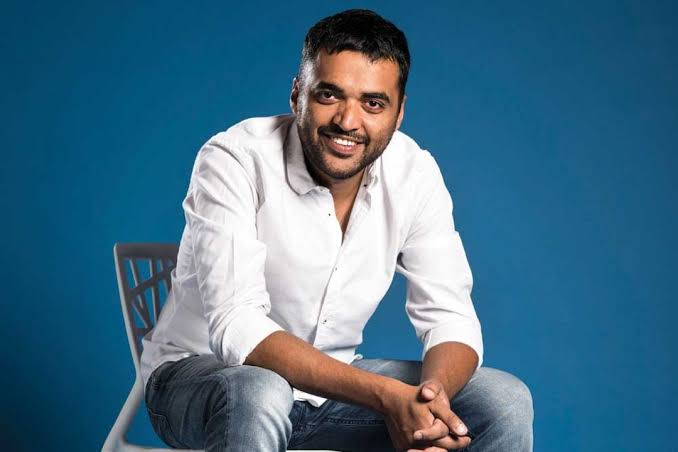
    Zomato founder Deepinder Goyal has poured $20 million of his own capital into Temple, an Indian consumer tech hardware venture that has absorbed $30 million in total development costs.

    Goyal, who stepped away from his role as Eternal chief executive to focus on the business, defended the wearable brand after medical practitioners and online reviewers questioned its scientific backing.

    Unacademy co-founder Gaurav Munjal gave the product high-profile backing this week, reporting that he wore the head-mounted monitor for roughly 30 to 40 nights. Munjal found the hardware stayed secure during workouts and sleep, while outperforming rival fitness bands such as Whoop in comfort and automatic chewing detection.

    Hardware design and jaw tracking

    Temple tracks sleep stages, mental strain through an entropy metric, and jaw motion to record food consumption. The hardware monitors chewing patterns directly, sending prompt notifications after meals to log nutrition without requiring manual initial entries from the wearer.

    Hardware comfort remains the central pitch for the headpiece. Munjal noted the unit is light enough that users forget they are wearing it, though he cautioned that the current companion software lags behind competitors on interface design. The industrial design also draws attention in public settings, frequently forcing users to explain the headpiece during business meetings.

    Return windows against scientific doubts

    Goyal countered public scepticism by offering a 14-day return policy without conditions, contrasting the retail guarantee directly against stricter hardware sales policies in India. The refund term gives consumers immediate recourse while the venture readies its initial research findings for wider release.

    Early stage hardware development carries steep cash-burn risks for Asian tech executives stepping away from established software platforms. Building a proprietary consumer electronics business out of India requires sustained testing and clinical validation that fast-moving e-commerce businesses rarely face. Goyal maintains that the business model depends entirely on immediate utility, stating the company would collapse before clawing back a tenth of its research investment if users discover the hardware fails to deliver on its tracking claims.

    Wearable competition and retail positioning

    Consumer health hardware across Asia remains dominated by wristbands and smart rings from international players like Apple and Whoop. Convincing shoppers to adopt a noticeable forehead sensor presents a heavy retail hurdle, regardless of how accurate its chewing sensors prove to be.

    Retail buyers and consumer technology investors will judge Temple on whether it can convert tech founders into ordinary retail buyers across Asian cities. Most wellness devices struggle to retain users past the first three months once the novelty of biometric readouts wears off, making app updates and software clarity critical to customer retention.

    Backing from domestic founders

    Munjal framed the venture as a necessary push to build international hardware brands out of India rather than relying solely on packaged food exporters. The domestic tech sector has historically excelled in platform software and logistics networks, while advanced sensor engineering and biometric manufacturing remained concentrated in East Asian supply hubs.

    Temple plans to publish academic preprints detailing its sensor mechanics ahead of peer-reviewed journals, alongside unreleased software modules still under development.

  • Indian AI Fashion Discovery App Slayd Raises $156,400 in Pre-Seed Funding

    Indian AI Fashion Discovery App Slayd Raises $156,400 in Pre-Seed Funding

    Gurugram-based fashion tech startup Slayd raised $156,400 in a pre-seed funding round with venture investor AJVC to expand its team and private-label apparel business. The capital deployment backs a platform that aggregates and catalogues inventory from more than 300 apparel brands and marketplaces into algorithmic discovery feeds for young shoppers across India.

    The company reports a user base of more than 200,000 shoppers who browse themed collections generated through automated multi-site indexing. Capital from the round will fund recruitment across engineering and product teams while providing inventory financing for its proprietary clothing line, Slayd Originals.

    Algorithmic Aggregation Across Marketplaces

    Founded in 2025, the platform relies on proprietary software to track consumer interest across digital retail channels, sorting individual garments into curated feeds that allow cross-platform purchasing. By pulling listings from hundreds of merchants into a single browsing interface, the startup acts as an intelligence and discovery layer above fragmented apparel marketplaces.

    Consumer behaviour among India’s Gen Z demographic increasingly fragments across fast-fashion direct-to-consumer portals, vertical marketplaces, and social commerce apps. Consolidating thousands of stock keeping units by style archetype and visual theme addresses product discovery friction, though converting browsing volume into sustained direct commerce remains challenging.

    Building Out Private Labels

    Proceeds will accelerate Slayd Originals, the startup’s in-house apparel brand created to capture higher product margins from the demand patterns revealed on its discovery app. AJVC, whose portfolio includes Midcase, Bubble Me, and Trufides, provided the funding to support both the technical infrastructure and the brand launch.

    Running an in-house label alongside a third-party discovery engine shifts a technology business into inventory exposure, logistics operations, and supply chain management. Pure discovery platforms in South Asia historically struggle with thin affiliate take rates, prompting operators to monetize through private-label manufacturing where gross margins can offset digital acquisition expenses.

    Market Pressures in Indian E-Commerce

    Competition across India’s digital fashion sector remains fierce. Incumbents command extensive warehouse networks, deep vendor discounting terms, and express logistics links that small venture-backed startups cannot easily match on fulfilment speed.

    Platform differentiation for Slayd rests entirely on the speed of trend identification and software curation. Building an audience of 200,000 accounts provides early data on search patterns, but operating a hybrid discovery and retail model requires managing working capital carefully against fast product turnover cycles.

    Expansion of the Slayd Originals catalogue will test whether the platform’s predictive analytics can translate style interest into recurring retail transactions across tier-one and tier-two Indian cities. The company has not set a formal date for its next institutional fundraising cycle as it begins deploying its initial pre-seed capital.