Tag: Haidilao

  • Asia-Pacific Foodservice Outpaces Global Peers with 4% Real Growth

    Asia-Pacific Foodservice Outpaces Global Peers with 4% Real Growth

    The Asia-Pacific restaurant sector expanded 4% in real terms through 2026, outpacing 1% growth across North America and Europe to lead global foodservice performance, according to Technomic Ignite data presented in November 2026 at the Global Restaurant Leadership Conference in Cannes, France.

    Worldwide industry turnover is tracking toward approximately 5.2% nominal growth, or 1.9% adjusted for inflation, even as supply-side shocks, geopolitical disruption, and accumulated food inflation between 25% and 40% curb discretionary purchasing.

    Dining frequency remains heavily weighted toward Asian markets: 92% of consumers in China, 85% in Thailand, and 80% in Singapore eat at restaurants at least once weekly, contrasting sharply with a global average that slipped from 74% before Covid-19 to 66% today.

    Chinese Chains Scale Footprints at Record Speed

    Top international chains based outside the United States are now dominated by Asian headquarters, taking seven of the top ten positions. Five of those seven operators are Chinese concepts: Luckin Coffee with 7 billion dollars in 2025 sales, hotpot operator Haidilao at 6 billion dollars, beverage chain Gu Ming at 4.9 billion dollars, Chagee at 4.7 billion dollars, and Mixue Ice Cream & Tea generating 3.5 billion dollars.

    Expansion figures across the sector show Chinese operators widening the footprint gap against Western legacy peers. Luckin lifted sales 48.9 per cent in 2025 while adding a net 8,708 stores. Gu Ming added a net 3,640 outlets on a 46.1 per cent sales rise. Value-focused chain Mixue posted 33 per cent sales growth while opening 10,996 net locations in a single calendar year.

    Overall sales for the world’s top 150 restaurant brands reached 637.4 billion dollars in 2025 across 596,561 units, up 5.7 per cent in sales and 8.8 per cent by store count. Chinese chains generated an aggregate sales lift of 19.1 per cent, while Japanese operators grew 10.8 per cent. Philippine brands expanded sales by 8.8 per cent, Thai groups registered 7.4 per cent, and South Korean companies posted 7.2 per cent, all exceeding the 4.6 per cent recorded by US-based chains.

    Beverage Formats Take Global Market Share

    Specialised tea chains have emerged as the fastest-growing foodservice category worldwide, posting a 20.9 per cent sales jump to 17.7 billion dollars. Chinese beverage groups accounted for all six of the world’s leading restaurant systems ranked by net store openings in 2025.

    Technomic noted that modern tea concepts were unclassified as a distinct cuisine category in its reporting just one year prior. Rapid rollouts by players like Chagee have formalised the segment across domestic and overseas retail real estate. Coffee shops placed third in worldwide category performance, gaining 7.3 per cent in sales to hit roughly 100 billion dollars.

    Asian and noodle dining concepts took second place among fast-growing menu types, climbing 9.4 per cent. Japan-based udon operator Marugame expanded its footprint beyond domestic sites into Indonesia, China, and the United States, illustrating the export viability of focused single-item models.

    Margin Pressures and Commercial Read-Across

    For landlords, franchisees, and commercial suppliers across Asia, this volume growth masks intensifying margin competition. Foot traffic remains stable across Asian capitals, yet global ingredient costs sit 25 to 40 per cent higher than levels recorded five years ago. Western groups operating in the region are turning to international franchise master agreements to sustain unit growth, as domestic Asian competitors capture mall leases through smaller, tech-enabled store formats with lower fit-out costs.

    The rapid network buildout of discount beverage chains creates direct operational challenges for traditional coffee and quick-service operators. Mixue and Luckin rely on tightly integrated supply chains and app-based ordering that depress average ticket sizes, forcing competing food courts and high-street retailers to rethink rental structures tied to turnover.

    Projections for Regional Foodservice Volumes

    Global consumer demand remains restrained by accumulated food price inflation, keeping discretionary budgets tight across mature and developing territories. Technomic senior principal David Henkes outlined the regional divide during the conference presentation:

    “The Asia-Pacific region is growing like crazy … [with] 4% growth, and again, this is real [growth], so this does not include any type of price increase or inflation,” Henkes said. “There’s no question that, like for a lot of the global economies, Asia Pacific is really driving restaurants and broader food service.”

    Technomic forecasts Asia-Pacific real foodservice growth will moderate slightly to 3.4 per cent in 2027. That projection leaves the region ahead of expected real growth of 1.3 per cent in North America, 0.8 per cent in Latin America, and 0.6 per cent across Europe.
  • Haidilao Dives into Burger Biz Again, Boosts Sushi Venture Amid Cooling Hotpot Demand

    Haidilao Dives into Burger Biz Again, Boosts Sushi Venture Amid Cooling Hotpot Demand

    Chinese hotpot giant Haidilao is making another attempt to break into the burger industry with its new venture, Fresh Burger, while simultaneously growing its budding sushi brand, Nyoisushi. This diversification comes as the company’s main business experiences a slowdown.

    Fresh Burger, Haidilao’s latest venture, was launched in Wuhan last month. The restaurant prides itself on its fresh grilled burgers, a departure from the frozen pre-made patties that many other fast-food chains utilize. Prices at Fresh Burger range from 18.9 yuan (approximately $2.80) to 41.9 yuan, and the menu also includes a variety of other options such as pizza, pasta, coffee, and ice cream.

    Alongside its expansion into the burger market, Haidilao has also been concentrating on growing its sushi brand, Nyoisushi. Following the success of its inaugural store in Hangzhou, the company has opened two additional outlets in Wuhan.

    Financial Situation and Future Plans

    Despite these ambitious expansions, Haidilao recently reported a 14% decrease in net profit for the fiscal year 2025, resulting in a sum of 4.05 billion yuan (about $600 million). Despite the drop, revenues still saw a slight increase of 1.1%, totaling 43.23 billion yuan.

    In light of these financial results, Haidilao announced plans to grow its multi-brand portfolio while focusing on enhancing the customer experience. The company aims to leverage digitalization and strategic acquisitions to achieve this goal. Beyond burgers and sushi, Haidilao also operates several other ventures, including seafood restaurants and Chinese fast-food chains.

    Haidilao’s previous attempt to break into the burger market was with Hiburger, launched in 2024. Despite initial hopes, Hiburger ended operations just a year later in 2025.

    This renewed effort to establish a foothold in the burger market comes as American fast-food chains bolster their presence in China. Notably, Burger chain Five Guys is slated to open its first store in Beijing in August, following its debut in Shanghai in 2021. Other U.S. chains such as Wendy’s and Texas Chicken have also announced their plans to enter the Chinese market, while Popeyes made a comeback in April after a two-decade-long absence since 2003.

    Questions & Answers

    What is the new venture of the Haidilao?
    Haidilao has launched a new burger chain called Fresh Burger and is expanding its sushi brand, Nyoisushi.

    What is the price range of food items at Fresh Burger?
    The prices at Fresh Burger range from 18.9 yuan (approximately $2.80) to 41.9 yuan.

    What are Haidilao’s future plans following its recent financial results?
    Haidilao plans to expand its multi-brand portfolio, improve the customer experience, increase digitalization, and pursue strategic acquisitions.

  • Haidilao’s Pig Blood Curd Now Available Island-Wide as Singapore Lifts 27-Year Ban

    Haidilao’s Pig Blood Curd Now Available Island-Wide as Singapore Lifts 27-Year Ban

    Haidilao, the renowned hotpot chain, has recently begun offering pig blood curd across all its Singapore locations, marking the end of a 27-year prohibition. In an announcement made on social media last Tuesday, Haidilao Singapore revealed that the dish would be available from May 28.

    The specialty will retail at S$8 per serving at its outlet in Marina Bay Sands, while all other locations will offer the dish at S$6 per serving. Moreover, Haidilao has launched a promotional offer valid until June 30, which slashes the prices to S$4 and S$3 per serving respectively, subject to stock availability.

    Previously, Singapore had implemented a ban on animal blood food products, including pig blood and duck blood, following the 1999 Nipah virus outbreak. However, the tide turned in April when the Singapore Food Agency authorised the importation of heat-treated pig blood products from Bangkhla Pig Slaughterhouse, a recognised supplier based in Thailand.

    Questions & Answers

    Why has Haidilao started serving pig blood curd in Singapore?
    Haidilao has introduced pig blood curd to its Singapore menu following the city-state’s decision to lift a 27-year ban on animal blood food products.

    What is the price for a serving of pig blood curd at Haidilao?
    At Haidilao’s Marina Bay Sands outlet, pig blood curd is priced at S$8 per serving. However, all other locations serve it at S$6 per serving.

    Why was there a ban on animal blood food products in Singapore?
    The ban was put in place following the Nipah virus outbreak in 1999, which led to the prohibition of animal blood food products, including pig and duck blood, in order to protect public health.

  • Chinese Hotpot Giant Haidilao Sees Sizzling $93.9M Revenues in Vietnam, Solidifying Asian Market Dominance

    Chinese Hotpot Giant Haidilao Sees Sizzling $93.9M Revenues in Vietnam, Solidifying Asian Market Dominance

    The renowned Chinese hotpot restaurant chain, Haidilao, announced that it generated over US$93.9 million in revenue from its operations in Vietnam in 2025, marking a 7% increase from the previous year. This solid performance propelled Vietnam to become Haidilao’s fourth-largest international market in terms of sales, following Singapore, the U.S., and Malaysia.

    Global Performance

    In 2025, Haidilao’s total revenue from all its overseas markets was reported at $840 million, representing an 8% boost compared to the year before. Additionally, the restaurant chain’s pre-tax profits experienced a significant surge, nearly 50%, amounting to $49.5 million.

    Presence in Vietnam

    Haidilao made its debut in Vietnam in 2019, with its inaugural restaurant located in the Bitexco Tower in Ho Chi Minh City (HCMC). To date, Haidilao’s presence in Vietnam has grown to 17 outlets scattered across the country. Ten of these can be found in HCMC, six in Hanoi, and one in the central coastal city of Nha Trang.

    Company Background

    The story of Haidilao began in 1994 when Zhang Yong and his partners established the brand. Emerging from humble beginnings with only a four-table restaurant in a small town in China’s Sichuan province, the chain has transformed into a globally recognized brand within the Chinese restaurant industry. This success has also catapulted the co-founders into the league of billionaires.

    Questions & Answers

    What are Haidilao’s top overseas markets?
    Vietnam is Haidilao’s fourth-largest overseas market in terms of sales, following Singapore, the U.S., and Malaysia.

    How many outlets does Haidilao have in Vietnam?
    As of 2025, Haidilao has 17 outlets in Vietnam, with 10 in Ho Chi Minh City, six in Hanoi, and one in the central coastal city of Nha Trang.

    When did Haidilao first establish a presence in Vietnam?
    Haidilao entered the Vietnamese market in 2019 with its first restaurant located in the Bitexco Tower in Ho Chi Minh City.

  • Haidilao Heats Up: Chinese Hotpot Giant Crowned World’s Strongest Restaurant Brand Two Years Running

    Haidilao Heats Up: Chinese Hotpot Giant Crowned World’s Strongest Restaurant Brand Two Years Running

    For the second consecutive year, Chinese hotpot chain Haidilao has earned the title of “the world’s strongest restaurant brand” after experiencing a robust double-digit increase in value. The brand’s worth rose by 16% to reach $3.6 billion, propelling its strength index score to an impressive 94.1 out of 100.

    Factors Behind the Success

    Haidilao’s resounding success can be attributed to a variety of elements, including an expanded restaurant network, elevated brand influence and customer experience, as well as a more diverse product range. Despite the market’s competitive nature, the company was able to maintain its premium AAA+ brand strength rating.

    Other Emerging Brands

    Luckin Coffee, another brand originating from China, has also seen substantial growth. Its value has surged by 17% to reach $1.7 billion, which has allowed it to climb two places and achieve 19th place in the global rankings. Its score increased to 89.7 out of 100, making evident the growing allure of competing brands within China’s coffee market. Despite the escalating competition, Luckin Coffee achieved an AAA+ brand strength rating for the first time.

    Scott Chen, Managing Director of Brand Finance China, commented on the performance of these brands. He suggested that Haidilao’s sustained dominance as the world’s strongest restaurant brand, along with Luckin Coffee’s resilience amidst stiff competition, underline the dynamic character of the Chinese market. Chen also pointed to the innovation driving these brands to new heights.

    Brand Strength

    Brand strength refers to the effectiveness of a brand’s performance when compared to its competitors. Brand Finance, for instance, assesses the strength of a brand on the basis of several factors. These include marketing investment, stakeholder equity, and the effects of these on overall business performance.

    American Brands Domination

    Despite the success of Chinese brands, American brands remain dominant in terms of value. The five most valuable brands globally all hail from the United States. McDonald’s, in particular, has emerged as the world’s most valuable restaurant brand, with its value growing 7% to $40.5 billion. However, Starbucks, which used to hold the second spot, saw its brand value plummet by 36% to $38.8 billion.

    Chick-fil-A recorded the fastest growth in value within the sector, with its brand value soaring by 43% to $5.7 billion. This surge has resulted in the company now holding the eighth spot among the world’s leading restaurant brands.

    Questions & Answers

    What factors contributed to Haidilao’s success as the world’s strongest restaurant brand?
    Haidilao’s success was largely due to its expanded restaurant network, increased brand influence and customer experience, and a more diversified product range.

    How is brand strength measured?
    Brand strength is assessed based on the effectiveness of a brand’s performance in comparison to its competitors. Factors such as marketing investment, stakeholder equity, and their impact on business performance are taken into consideration.

    Which is the world’s most valuable restaurant brand?
    As of the latest rankings, McDonald’s is the world’s most valuable restaurant brand, with its value increasing 7% to $40.5 billion.

  • Haidilao to Close Its Beloved Singapore Outlet After 13 Years of Hotpot Delight

    Haidilao to Close Its Beloved Singapore Outlet After 13 Years of Hotpot Delight

    The widely loved Chinese hotpot chain Haidilao will bid farewell to its flagship Singapore outlet in Clarke Quay on August 31 as its lease comes to an end. In a notice sent to patrons via text message, the closure marks a significant chapter for the restaurant, which first opened in 2012 as Haidilao’s inaugural venture beyond Chinese borders.

    “This was our very first outlet in Singapore and served as an introduction to Chinese hotpot for many local diners,” remarked a Haidilao Singapore spokesperson, adding that the location has been a treasure trove of memories for both staff and guests.

    The decision comes on the heels of Haidilao closing three other suburban restaurants across Singapore’s Bedok, Pasir Ris, and Punggol, part of a broader strategic reassessment following a phase of rapid expansion.

    Key considerations influencing this closure, according to a spokesperson, include rising labor costs, the suitability of outlet locations, and increasing rental expenses, all of which reflect the industry’s challenges.

    Representatives from CQ @ Clarke Quay, a vibrant hub favoured by locals and tourists alike, expressed gratitude for the longstanding partnership with Haidilao, which has adorned the area for 13 years. “Given Haidilao’s strong presence across the island, we have mutually agreed to refresh the #1 Store unit with a new tenant at the conclusion of its lease,” they stated.

    In a generous farewell gesture, Haidilao will distribute dining vouchers valued at over SGD800,000 (approximately US$625,000) to members eligible for the program. These vouchers can be utilized without a minimum spend at any of their locations throughout Singapore.

    Despite the impending closure of its flagship store, Haidilao’s footprint remains substantial, boasting over 16 restaurants in Singapore and more than 110 establishments globally, including in the U.S., Canada, and Australia.

    Questions & Answers

    What prompted Haidilao to close its Clarke Quay location?
    The closure is primarily due to the expiration of the lease, alongside mounting labor costs, rental expenses, and the need to reassess outlet locations.

    Will Haidilao continue to operate in Singapore after this closure?
    Yes, Haidilao still has over 16 outlets throughout Singapore, ensuring that fans of the hotpot chain can continue to enjoy their favourite dishes in other locations.

    What benefits are being offered to customers following the closure announcement?
    Haidilao is providing dining vouchers worth more than SGD800,000 (around US$625,000) to eligible members, which can be used without a minimum spend at any of their Singapore outlets.

  • Chinese hot pot chain Haidilao to launch in the Philippines

    Chinese hot pot chain Haidilao to launch in the Philippines

    Haidilao, the largest hot pot restaurant chain in China, will open its first store in the Philippines next month, the Department of Trade and Industry (DTI) said Friday.

    The DTI said Haidilao International Holding Ltd. would continue to open more restaurants within the year, creating at least 400 jobs. The DTI has yet to divulge further details, such as the number of stores and locations of Haidilao.

    According to the agency, the expansion plans of Haidilao in the Philippines took two years.

    The Philippine Trade and Investment Center in Hong Kong (PTIC-HK) and the restaurant chain owner started discussions on the latter’s plan in the first half of 2020.

    PTIC in Hong Kong and Guangzhou both assisted Haidilao to open its first branch in the country.

    In a virtual meeting with the Board of Investments (BOI) last month, Haidilao executives discussed the details of their operations here.

    “The intention of Haidilao is to present a superior dining experience and offer quality food for Filipinos at a reasonable price. In addition, Haidilao intends to fuse the Filipino taste into its menu and integrate Filipino core values in its service,” the DTI said in a statement.

    Haidilao was founded in 1994 in Sichuan, which is known for its extremely spicy food, particularly hot pot.

    The company now has over 1,000 restaurants in China, Hong Kong, Macau, Singapore, Malaysia, Taiwan, Australia, United States, United Kingdom, Canada, Thailand, Indonesia, South Korea, and Japan among others.

  • Haidilao to close 300 restaurants as Covid curbs eating out

    Haidilao to close 300 restaurants as Covid curbs eating out

    China’s biggest hot pot chain Haidilao is slowing its rollout of new restaurants and increasing diversification of its fare, tempering its rapid expansion during the coronavirus pandemic to cope with a subsequent slump in consumer spending.

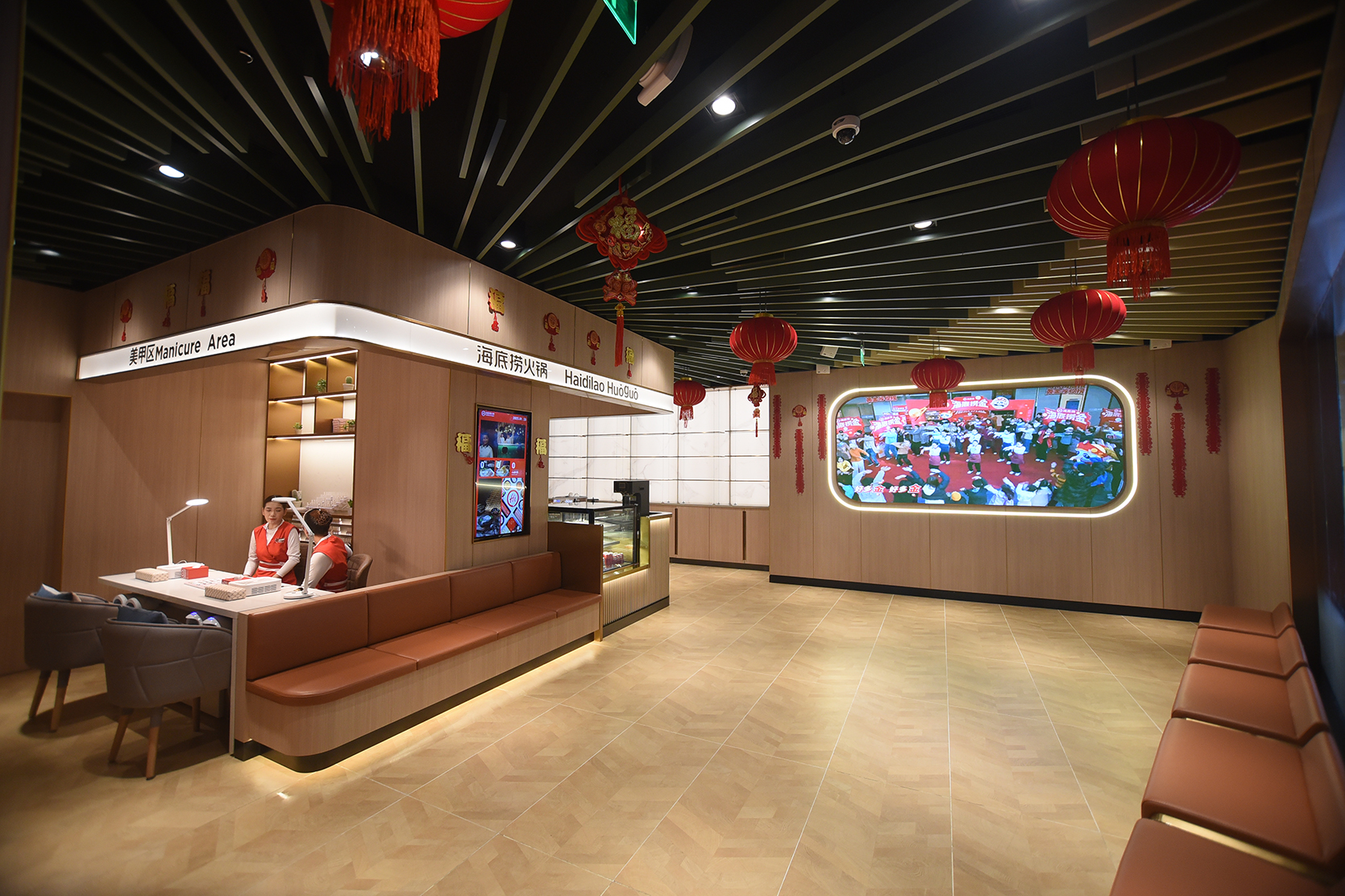
    Haidilao, which became so popular in recent years that it appeased customers in hours-long queues for its soups by providing free manicures, snacks and shoe shines, is at the forefront of reckoning in China’s restaurant industry post-pandemic.

    The chain has seen falling table turnover rates and profits as consumers dine out less and new stores cannibalize business at older locations.

    “We will open stores based on market demand, and compared to before, will appropriately slow down our opening pace,” the company said in a written response to Reuters’ questions about its strategy.

    China’s catering industry shrank 4.5% in August, before recovering for growth of 3.1% last month. Analysts said it will likely remain volatile for some time amid the country’s broader patchy economic recovery.

    “This year, fresh waves of the epidemic happened repeatedly, and passenger flow in commercial areas is volatile, affecting the recovery of core business indicators,” Tianfeng Securities wrote in a research note last month.

    Haidilao was initially undeterred by the pandemic, embarking on an expansion drive in early 2020 that has doubled its outlets since then to almost 1,600 currently. It did so by snapping up sites left behind by vacating weaker players, often helped by deep discounts offered by landlords.

    But that expansion pushed Haidilao’s table turnover rate down to 3.0 – or three sets of customers per day on average – in the first half of this year, from 4.8 in 2019.

    Xiabu Xiabu, another Hong Kong-listed Chinese hot pot chain, has said it plans to shut 200 of its 1,010 stores after losing 50 million yuan ($7.76 million) in the first half of 2021.

    Haidilao’s share price has fallen to around HK$30 from a record high of HK$86 in February.

    “The company will need to create demand going forward, which is more challenging than fulfilling demand,” China Renaissance analysts wrote in an August note.

    to turn its fortunes around, Haidilao has opened more than 10 outlets specialising in fast food such as noodles and dumplings, moving beyond the hot pot, the signature dish of southwestern Sichuan province where the company was founded 27 years ago.

    However, with a maximum of just five stores each and an average spending per guest of 10 to 20 yuan – versus 107.3 yuan for the Haidilao restaurants – the sub-brands contributed just 0.5% to first-half revenue.

    Haidilao last month closed a potato noodle restaurant less than a year after opening it in the central city of Zhengzhou, without publicly citing a reason.

    In other diversification attempts, the company has opened bars in three of its Beijing restaurants and is promoting its delivery service, a unit where revenue initially rose during the pandemic.

    However, delivery revenue dropped from 409.6 million yuan, or 4.2% of total revenue, in the first half of 2020 to 345.7 yuan, or 1.7% of total revenue, in the first half of 2021.

    “(Eating) hot pot has a strong social feature so people are less likely to order hot pot at home,” said Zhu Danpeng, an independent food industry analyst.

    Haidilao opened a store on Alibaba’s marketplace Tmall several months ago to sell items including lipsticks inspired by its soup bases with names such as “capsicum rouge” and “summer tomato”.

    Zhu said Haidilao’s multi-brands strategy was the right move but the company did not have a lot of room for growth: “Haidilao has reached a certain phase with its development, as a man has reached his middle age.”

  • Haidilao slows rollout as Covid-19 curbs consumer appetite

    Haidilao slows rollout as Covid-19 curbs consumer appetite

    China’s biggest hot pot chain Haidilao is slowing its rollout of new restaurants and increasing diversification of its fare, tempering its rapid expansion during the coronavirus pandemic to cope with a subsequent slump in consumer spending.

    Haidilao, which became so popular in recent years that it appeased customers in hours-long queues for its soups by providing free manicures, snacks and shoe shines, is at the forefront of reckoning in China’s restaurant industry post-pandemic.

    The chain has seen falling table turnover rates and profits as consumers dine out less and new stores cannibalize business at older locations.

    “We will open stores based on market demand, and compared to before, will appropriately slow down our opening pace,” the company said in a written response’ questions about its strategy.

    China’s catering industry shrank 4.5% in August, before recovering for growth of 3.1% last month. Analysts said it will likely remain volatile for some time amid the country’s broader patchy economic recovery.

    “This year, fresh waves of the epidemic happened repeatedly, and passenger flow in commercial areas is volatile, affecting the recovery of core business indicators,” Tianfeng Securities wrote in a research note last month.

    Haidilao was initially undeterred by the pandemic, embarking on an expansion drive in early 2020 that has doubled its outlets since then to almost 1,600 currently. It did so by snapping up sites left behind by vacating weaker players, often helped by deep discounts offered by landlords.

    But that expansion pushed Haidilao’s table turnover rate down to 3.0 – or three sets of customers per day on average – in the first half of this year, from 4.8 in 2019.

    Xiabu Xiabu, another Hong Kong-listed Chinese hot pot chain, has said it plans to shut 200 of its 1,010 stores after losing 50 million yuan ($7.76 million) in the first half of 2021.

    Haidilao’s share price has fallen to around HK$30 from a record high of HK$86 in February.

    “The company will need to create demand going forward, which is more challenging than fulfilling demand,” China Renaissance analysts wrote in an August note.

    DELIVERY AND DRINKS

    To turn its fortunes around, Haidilao has opened more than 10 outlets specializing in fast food such as noodles and dumplings, moving beyond the hot pot, the signature dish of southwestern Sichuan province where the company was founded 27 years ago.

    However, with a maximum of just five stores each and an average spending per guest of 10 to 20 yuan – versus 107.3 yuan for the Haidilao restaurants – the sub-brands contributed just 0.5% to the first-half revenue.

    Haidilao last month closed a potato noodle restaurant less than a year after opening it in the central city of Zhengzhou, without publicly citing a reason.

    In other diversification attempts, the company has opened bars in three of its Beijing restaurants and is promoting its delivery service, a unit where revenue initially rose during the pandemic.

    However, delivery revenue dropped from 409.6 million yuan, or 4.2% of total revenue, in the first half of 2020 to 345.7 yuan, or 1.7% of total revenue, in the first half of 2021.

    “(Eating) hot pot has a strong social feature so people are less likely to order hot pot at home,” said Zhu Danpeng, an independent food industry analyst.

    Haidilao opened a store on Alibaba’s marketplace Tmall several months ago to sell items including lipsticks inspired by its soup bases with names such as “capsicum rouge” and “summer tomato”.

    Zhu said Haidilao’s multi-brands strategy was the right move but the company did not have a lot of room for growth: “Haidilao has reached a certain phase with its development, as a man has reached his middle age.”

  • Hotpot-restaurant Haidilao plans to open 130 new outlets

    Hotpot-restaurant Haidilao plans to open 130 new outlets

    sales by 59.3 percent to RMB 11.7 billion (US$1.66 billion).

    The staggering expansion program saw the company’s global network grow from 466 restaurants as of December 31 to 593 at the end of June. Of those, 550 are located in 116 cities across Mainland China, the balance in Taiwan, Hong Kong and overseas locations including Singapore, South Korea, Japan, the US, Canada, the UK, Vietnam, Malaysia and Australia.

    Besides expanding its network, the company has been testing new technology including robotics and new generation machinery in its kitchens and robot waiters in 179 restaurants.

    Chairman Zhang Yong said the company was working to optimize the operational management of the business as well as enhance the dining experience of customers.

    In the first half of this year, Haidilao served more than 109 million customers with an average table turnover rate of 4.8 times per day.

    In the first half of the year, the company introduced 187 dishes across regional markets and started selling its own-brand milk tea and soft drinks.

    On the back of store openings, group revenue soared 59.3 percent. Same-store sales rose by 4.7 percent.

    Profit attributable to shareholders rose from RMB646 million to RMB911 million. (US$91,000 to $129,000).

  • Haidilao hot pot debuts in Vietnam

    Haidilao hot pot debuts in Vietnam

    Chinese hot-pot chain Haidilao is to open its first outlet in Vietnam. The outlet is located on the second floor of the 68-story Bitexco building in Ho Chi Minh City. Without revealing the opening date, the company has been recruiting office staff and restaurant crews for its Vietnam debut. Hai Di Lao Viet Nam Holdings Company was established in August, headquartered in Hanoi.

    Founded in 1994, Haidilao serves Sichuan-style hot pot integrating features from all over China. Until now, the chain has opened 29 restaurants overseas, including in Japan, Singapore, South Korea, and the US.

  • Chinese hotpot giant Haidilao preparing for Hong Kong IPO

    Chinese hotpot giant Haidilao preparing for Hong Kong IPO

    The Beijing-based firm, known for serving Sichuan-style spicy hotpot, is in the process of the pre-deal investor education (PDIE), during which analysts discuss the company’s valuation with potential investors.

    It will take orders from institutional investors today, according to people familiar with the matter. The IPO will be opened to retail investors on Wednesday.

    The hotpot company generated a first-half revenue of 7.3 billion yuan (US$1 billion) this year, up 54.4 per cent year on year, its listing prospectus showed. Net profit increased 17 per cent to 647 million yuan during the six month period.

    Funds raised from the IPO would be used to finance the company’s next three years of expansion, develop new technology and projects to enhance food safety and customer experience, as well as repay debt, it said.

    Haidilao, which owns 362 restaurants, has expanded its operations rapidly to cater to a growing middle class population whose consumption is considered an integral part of the country’s new economy sector.

    Recent volatility in the Hong Kong stock market, no thanks to the US-China trade war, currency turmoils in emerging markets and fear of further interest rate hikes, have dampened interest for new listings. This compared with the boom in the first eight months in which funds raised from IPOs totalled HK$187.6 billion (US$23.9 billion), representing a 161 per cent surge from the year-earlier period, according to data from the city’s stock exchange.

    By Friday’s market close, the 10 biggest IPOs in the past year – including China Tower, Xiaomi, ZhongAn Online P&C Insurance – all traded below their offer prices. The Hang Seng Index fell on Friday, posting a weekly loss of 3.3 per cent as a new round of US tariffs that could hit US$200 billion of Chinese goods looms.

    Other upcoming IPOs include investment bank China Renaissance, which aims to raise as much as US$400 million. It will begin its PDIE next week.

    Meituan Dianping, China’s largest on-demand online service platform, launched its offering this week in an attempt to raise US$4.4 billion. The stock is expected to start trading on September 20 on Hong Kong’s main board.

  • Hotpot giant Haidilao set to enter Hong Kong soon

    Hotpot giant Haidilao set to enter Hong Kong soon

    Hotpot chain Sichuan Haidilao Catering is said to be making inroads into Hong Kong, joining a cluster of mainland counterparts whose business in Hong Kong has been chequered.

    Edwin Leong Siu-hung, founder of Tai Hung Fai Enterprise and one of Hong Kong’s largest retail landlords, confirmed that one of his company’s properties in Mong Kok had been leased to Haidilao and could be decorated within two months at the soonest.

    The Beijing-based restaurant operator also confirmed the news. It said that if everything goes according to plan, the company’s first restaurant in Hong Kong will open three months later.

    Reports of Haidilao’s expansion and initial public offering have been circulating since the end of 2015. Yihai International Holding Ltd, a hotspot seasonings producer and Haidilao’s exclusive supplier, was already a few steps ahead of it, having raised HK$861 million ($110 million) on the Hong Kong Stock Exchange in July.

    Haidilao would follow in the footsteps of rival hotpot chains such as Little Sheep, Simmer Huang and Xiao Yu Hotpot Restaurant in Hong Kong, a market the company said it bets big on.

    Those early comers, however, failed to get very far in the Hong Kong market. Inner Mongolia-based Little Sheep, which has operated in Hong Kong for more than a decade, only has one of the six restaurants it initially opened.

    Likewise, having entered Hong Kong no more than two years ago, Simmer Huang shut its one and only restaurant in Hong Kong at the end of last year.

    “As for Haidilao, this may be a good timing to enter the Hong Kong market, where the commercial rental market has been under sustained downward pressure for quite a time and is showing signs of hitting bottom,” said Hannah Li Wai-han, a strategist at UOB Kay Hian (Hong Kong).

    The hotspot chain will pay a monthly rent of HK$550,000 for the three-storey store.

    Founded in 1994, Haidilao is known for its spicy Sichuan-style food and impressive customer services, which include free manicure, shoe polishing and shoulder massage services, as well as noodle-pulling shows and dance performances.

    The restaurant chain now operates 168 outlets across 51 cities in Chinese mainland and has set up nine branches in Singapore, Los Angeles, Seoul and Tokyo.