Retail News CRM

Tag: Hallyu

  • First GS25 convenience store opens in HCMC

    First GS25 convenience store opens in HCMC

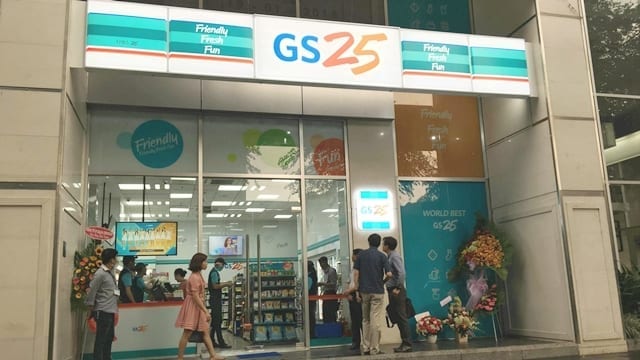
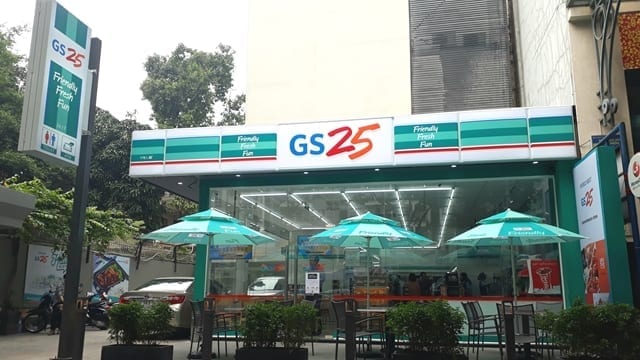
    Convenience store GS25 Vietnam officially opened the doors of its first store in Ho Chi Minh City today.

    Spread over 87sqm, the store is located on the ground floor of Empress Tower on Hai Ba Trung Street in District 3, close to the city’s CBD.

    Three more stores will open this month, including on sites at Truong Dinh Street, inside M Plaza, and Viettel Tower.


    Targeting Vietnamese customers in their 20s and 30s who are familiar with Hallyu, GS25 offers Korean food and products.

    All the stores have cooking and eating stations and sell food including Korean-style fried chicken, dumplings, cup rice, and tteokbokki (spicy rice cakes), as well as boxed lunches.

    Local dishes such as banh mi and sticky rice, and freshly brewed coffee will also be served.

    All dishes are made at a local factory overseen by GS25 standards.

    GS25 CEO Cho Yoon Sung believes Vietnam’s high economic growth rate makes it a good starting point for the company’s overseas expansion.

    The chain also plans to launch in other Asian markets, such as Cambodia and China.

    GS25 Vietnam is a joint venture between Korea’s GS Retail and Vietnam’s Son Kim Group.

  • Cosmetics dominate Korean duty-free sector in 2016

    Cosmetics dominate Korean duty-free sector in 2016

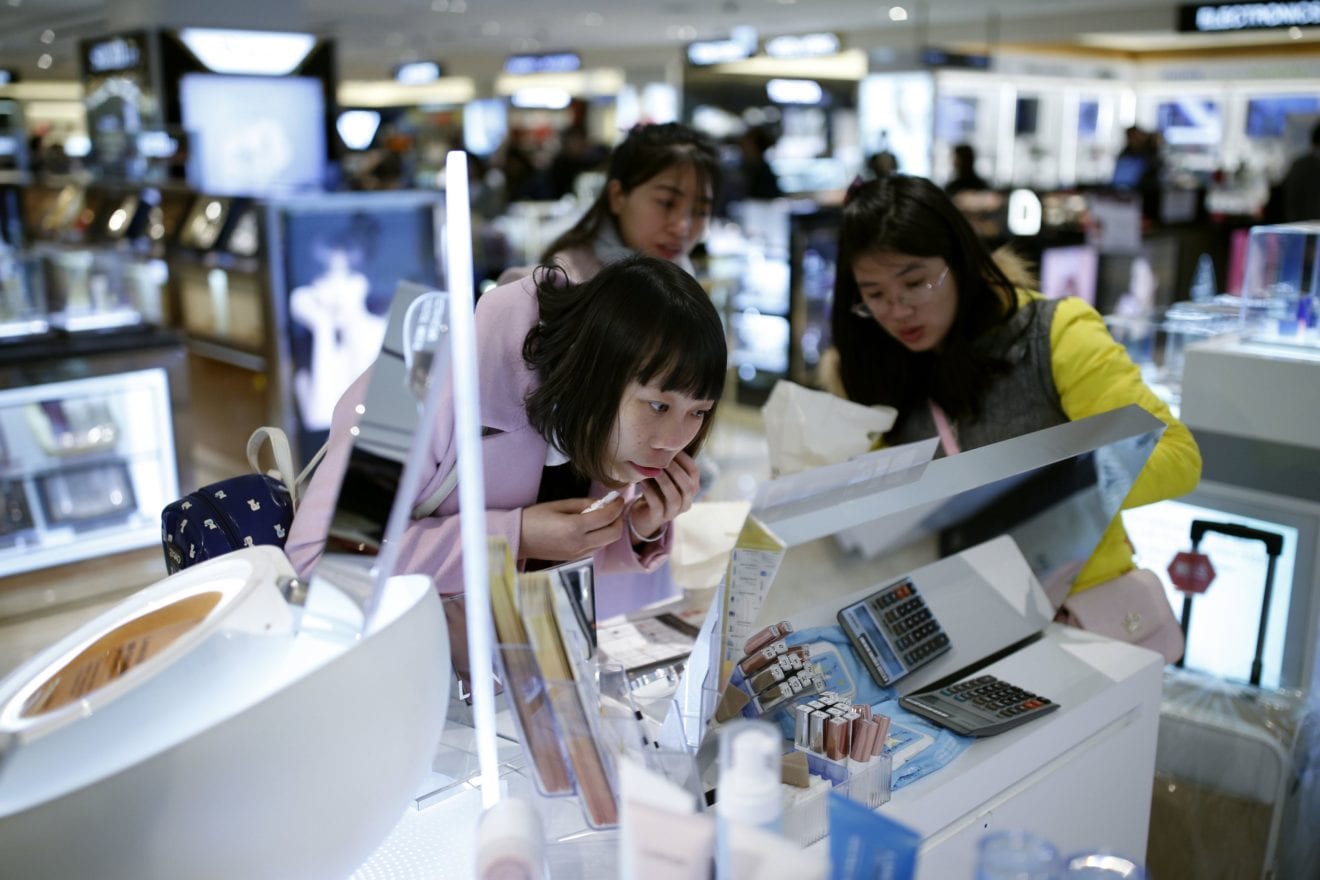
    Make-up products accounted for more than half of the annual sales at duty-free shops in South Korea last year, fueled by brisk demand from foreign tourists immersed in Korean entertainment culture.

    Fresh data from the Korea Customs Service and companies reveals the combined cosmetics revenue from duty-free chains, including top players Lotte Duty Free and Shilla Duty Free, stood at 6.28 trillion won (US$5.48 billion) at the end of 2016, up 51.7 per cent from a year earlier.

    The sales of such beauty products took up 51.2 per cent of all sales, jumping from 45.1 per cent in 2015.

    Their proportion far outstripped those of other products, such as handbags or watches, whose sales grew 14 per cent and 7.6 per cent on-year in 2016, respectively.

    The upbeat figure came as Korean-made cosmetics have become very popular among Asian tourists who come here to shop, fascinated by Korean pop culture and TV drama series, a phenomenon commonly referred to as the Korean Wave or Hallyu.

    Local cosmetics companies have rushed to boost their marketing targeting these Hallyu fans, making advertisement clips using the celebrities who have gained popularity through movies and dramas exported to those countries.

    Thanks to such efforts, the revenue portion of domestic cosmetics brands at duty-free stores also made a big leap, accounting for nearly 40 per cent of the overall sales, the data showed.

    “The portion of Korean brands being sold at duty-free shops is growing rapidly unlike in the past when most of the top-selling items were imported products,” Ahn Ji-young, a market analyst at IBK Securities Co.

    Industry watchers said the cosmetics firms should plan ahead in developing products in line with a fast-changing beauty trends and discriminate their strategy by country or region.

    “Younger Chinese tourists these days are showing a tendency to fall for color make-up so the companies need to closely track such trend,” an industry source said.

  • H:Connect brings Korean style to Singapore

    H:Connect brings Korean style to Singapore

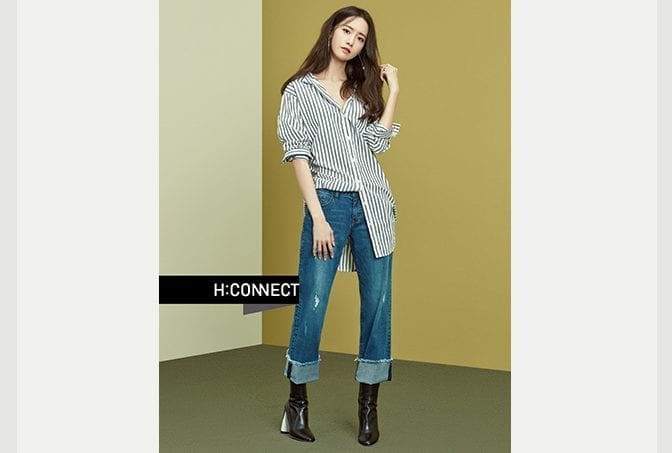
    Contemporary South Korean fashion brand H:Connect, fronted by Korean celebrity Yoona of Girls’ Generation, has officially opened its first Southeast Asian store at Bugis Junction in Singapore.

    The brand plans to make the most of the rising appeal of hallyu, or the Korean Wave, across Southeast Asia, which is driving Korean exports of fashion, entertainment and cosmetics in particular.

    It joins more than 300 H:Connect stores across South Korea, China and Taiwan, including a flagship store in the Gangnam district of Seoul.

    In its new Singapore store, the 10-year-old brand features it latest collection for men and women, separated into three themes: City Dweller (understated designs), Nostalgic Insta (combining vintage denim with floral prints and embellishments) and Athleisure (statement sweaters, pullovers and denim with a Korean street-style vibe).

    Prices range from S$19 (US$13.64) for basic tops to $129 for jackets and overcoats.

  • Korean wave exports boom

    Korean wave exports boom

    Outbound shipments of Korean food, beauty, fashion and personal care products soared in the first half of the year on the back of the growing popularity of the Korean Wave, or hallyu.

    Official data released today by the Korea International Trade Association (KITA), shows exports of such goods amounted to US$6.79 billion in the January-June period, up 15.2 per cent from a year earlier.

    Industry watchers said the growth is attributable to the cultural wave of “hallyu” in China and other Asian countries, which refers to the boom of South Korea-made entertainment goods, including pop music, movies and TV dramas. The popularity of hallyu helped turn its fans into consumers of South Korean products.

    The growth was driven by cosmetics-related goods with their exports rising 38.5 per cent to reach $1.81 billion during the first half of the year.

    Exports of foods also rose 3.5 per cent year-on-year to reach $2.43 billion, the data showed.

    The association said South Korea’s diversified product portfolio helped meet demand from customers in overseas markets.

    Last year, exports of such products amounted to $12.21 billion won, the data showed.

    Earlier data also showed that exports of South Korea-made cosmetics more than tripled over the past five years.

    Outbound shipments of makeup products reached $2.45 billion in 2015, surging 53.1 per cent from $1.56 billion a year earlier, according to the data by Korea Customs Service (KCS).

    The 2015 figure soared more than threefold from $698 million in 2011, with an annual average growth of 36.9 per cent over the 2011-2015 period.

    The total volume of cosmetics exports stood at 90,491 tons in 2015, compared to 31,606 tons tallied in 2011.

    China is the biggest buyer of South Korean beauty products, importing $999.5 million last year, or 40.6 per cent of the country’s entire cosmetics exports.

  • Naughty Cat Vietnam makes Saigon debut

    Naughty Cat Vietnam makes Saigon debut

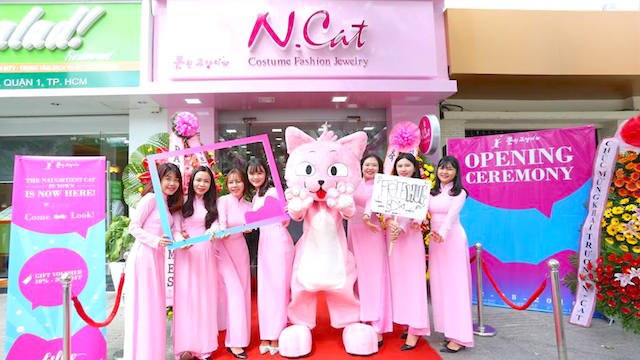
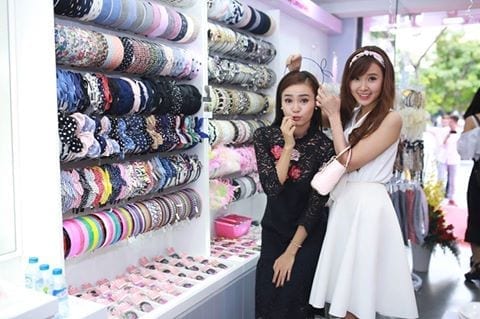
    Leading Korean accessories chain Naughty Cat has opened its first Vietnam store on Nguyen Hue St in the city centre.

    Naughty Cat Vietnam is located at 47 Nguyen Hue street, D1. The store hopes to cash in on the crowded ‘walking street’ as well as the growing influence of the Hallyu wave in Vietnam.

    To mark the launch, the brand invited Vietnamese models and actresses to the store to demonstrate how fashionable girls will be when wearing these accessories.

    naughty cat

    Customers might be overwhelmed by thousands of items from headbands, hair clips, wigs, gloves and socks to earrings, necklaces, bracelets and even cell phone plugs. Naughty Cat – or N.Cat for short – has collections for men as well.

    After 23 years in the industry, N.Cat knows how to vary its collections to serve different fashion styles, and maintain quality and affordable prices. Globally, it introduces more than 5000 items every month to maintain customer interest and encourage repeat store visits.

    Founded in 1991, N. Cat Accessories had 110 franchised stores in Korea, Europe, America and Asia at the end of 2015.

  • South Korean retailers eye overseas push

    South Korean retailers eye overseas push

    The largest South Korean retailers, faced with cut-throat competition in the rapidly saturating domestic market, are turning their attention to overseas markets in conjunction with small and mid-sized businesses to secure a new growth driver.

    The country’s three major retail conglomerates – Shinsegae Group, Lotte Group and CJ Group – are targeting to sell more of their ‘private brand’ products or help small and medium-sized enterprises (SMEs) promote their products both in emerging and developed markets, they said.

    Of the three, Shinsegae’s Emart, the nation’s largest discount store chain by sales, appears to be the most aggressive player given its latest moves and announcements.

    On Wednesday, Emart outlined its 2016 plan not only to increase shipments of its products to overseas branches in China and Vietnam but also to supply them to local retail companies in the US, Europe and Oceania.

    “We have set an ambitious target of US$20 million in overseas earnings this year, sharply up from $1.72 million the year before. What we earn outside the country still accounts for a tiny portion of our overall sales. But we expect it to grow over time,” Emart spokeswoman Hur Chae-jeong said.

    For all of 2015, Emart saw its net profit jump 57 per cent to 455.9 billion won ($374 million) from 290 billion won a year earlier. Sales rose 4.1 per cent to 15.3 trillion won from 14.7 trillion won during the same period.

    The dominant discount store company seeks to fill more than 40 per cent of its total products to be exported with price-competitive PB products. In Korea, in partnership with SMEs, big retailers provide ‘less-recognised’ private label products to customers at lower prices compared to existing brand names.

    Moreover, Emart signed an initial agreement with the Korea Trade-Investment Promotion Agency (KOTRA) in November to help SMEs find ways to export their products. The move was in line with the government’s broad efforts to support them amid falling exports.

    Exports have been on a losing streak over the past 14 months, posting a 12 per cent on-year decline in February at $36.4 billion, according to government data.

    Lotte Department Store and CJ O Shopping, the nation’s biggest department store chain and home shopping channel by sales, respectively, have taken similar moves to go overseas.

    Lotte said Thursday it had arranged meetings between Korean SMEs and their Vietnamese and Indonesian counterparts in those countries to help them find bilateral business opportunities there.

    “The Korean SMEs supply their products to our department store chains. If they successfully enhance their brand awareness among overseas customers, it will lead to an increase in sales. So we will jointly conduct a market survey with the SMEs and offer them a variety of support programs,” a Lotte spokesman said.

    Lotte currently operates department store outlets in Vietnam, Indonesia, Russia and China.

    CJ O Shopping said it has partnered with Kotra to help Korean SMEs advance into Latin American markets on top of its current China and Southeast Asian markets.

    “In June last year we set up a joint venture with Mexico’s main broadcasting company Televisa to sell Korean products through a local home shopping channel. We will sign such partnerships with other Latin American countries in coming years,” CJ spokesman Hong Seok-woo said.

    CJ O shopping is in talks with daily deals website operator Groupon  and US retailer Walmart Stores to have Korean products available in their online shopping malls, Hong said.

    CJ has signed with 10 countries, largely in emerging markets, to sell Korean goods through local home shopping channels.

    “We are seeing a burgeoning demand for Korean beauty and fashion products in Latin America helped by the boom of ‘hallyu,’ or the Korean wave, there,” he added.
  • Lotte launches smartphone app for Chinese tourists

    Lotte launches smartphone app for Chinese tourists

    Lotte Group has launched a smartphone app for Chinese tourists visiting Korea.

    The application is called ‘TianTianLeTian’, and provides visitors with information on shopping, tourism, and other services offered by Lotte companies.

    Department stores and large discount stores have already launched mobile solutions for Chinese tourists, but Lotte Group’s new software marks the first time an app was developed by an entire group.

    In addition to tourism information, TianTianLeTian also provides users with mobile coupons for Lotte Members, Lotte Duty Free Store, Lotte Department Store, and Lotte World.

    The app also provides suggestions for places to dine, popular tourist spots, the latest travel information and content from Hallyu stars. Maps are provided in Chinese, and translation services are also provided.

    In collaboration with Zai Seoul, a startup company specialising in travel information targeting Chinese tourists, the location and information of 1800 small shops are listed.

    Lotte will provide small businesses who subscribe to its service with big data related to keywords frequently used in searches by Chinese tourists, human traffic, and shopping habits, helping companies develop marketing strategies to attract Chinese tourists.

    Lotte’s decision to develop a new app was the result of a change in travel habits for Chinese tourists, and a move towards independent travel instead of group packages.

    According to data from the Korea Tourism Organization, the number of Chinese tourists visiting Korea individually nearly doubled in 2015 to 3.5 million compared to the 1.64 million visitors in 2013. The organisation expects 5.5 million individual Chinese tourists to visit this year.

    To target individual travelers who get most of their information through mobile devices while traveling, Lotte started development of the application in April 2015. The beta version was released on January 6, and the number of downloads has already reached 40,000.

  • Korea’s Hotping fashion mall goes global

    Korea’s Hotping fashion mall goes global

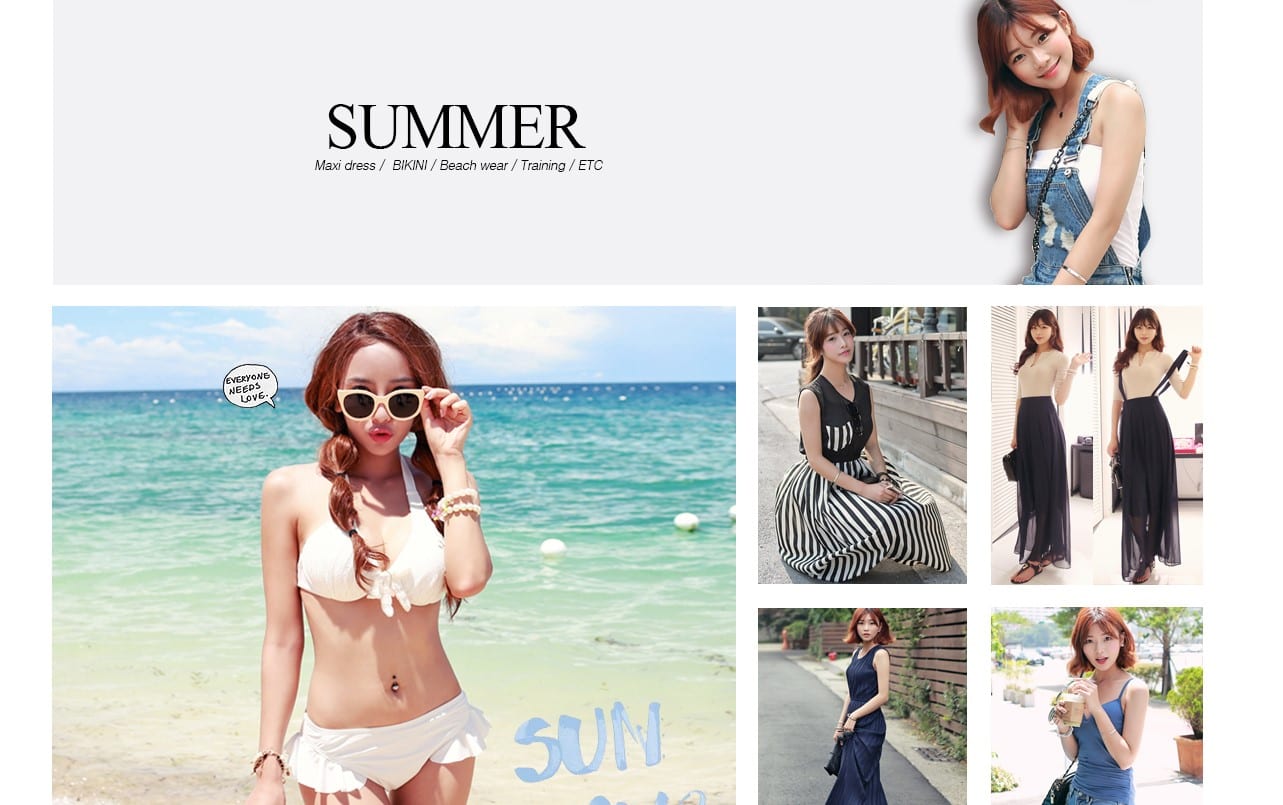
    Korean women’s clothing mall Hotping entered the global market just six months ago – and already cross-border sales account for 10 per cent of its turnover.

    Monthly sales to customers outside Korea have now surpassed the 100 million won (US$84,000) mark.

    “We believed that winning new markets quickly would secure future competitiveness after we started up in 2014 and we launched the English, Chinese, and Japanese versions of our online mall through the global eCommerce platform of cafe24,” explained CEO Kim Yeo-jin.

    “We received orders from international customers even when we had the Korean site only, which also quickened our entry into the global market.”

    Established in 2014, Hotping is a Korean women’s clothing specialty mall that carries trendy products popular in the world of fashion. Like its name suggests, Hotping is a ‘portmanteau’ word mixing hot trend and lovely pink. Another notable characteristic is that Hotping satisfies customers of various body types since it carries sizes from 44 (equivalent to XS in the US) to 105 (equivalent to XXL) for most of its products.

    As a result of the company’s continued sponsorship of the wardrobes used by Korean costume dramas, Hotping has been enjoying great brand awareness, particularly in countries swept by the Hallyu, or ‘Korean Wave’, notably the US, China, and Japan. In addition, as it carries a number of elegant and exclusive clothing lines, news anchors have also been inquiring about sponsorship.

    Hotping is also winning immense popularity with its line of highly elastic Magic Pants, whcih are proving popular globally thanks to a fun marketing campaign that sees dancers posing in a number of positions that highlight their extreme elasticity.

    Kim adds: “We will continue to make efforts to win new markets and will also continue offering beautiful clothes to our customers at reasonable prices like we do now.”