Tag: Hamburg

  • Germany Blocks COSCO Buy as Chinese Logistics Firms Face EU Scrutiny

    Germany Blocks COSCO Buy as Chinese Logistics Firms Face EU Scrutiny

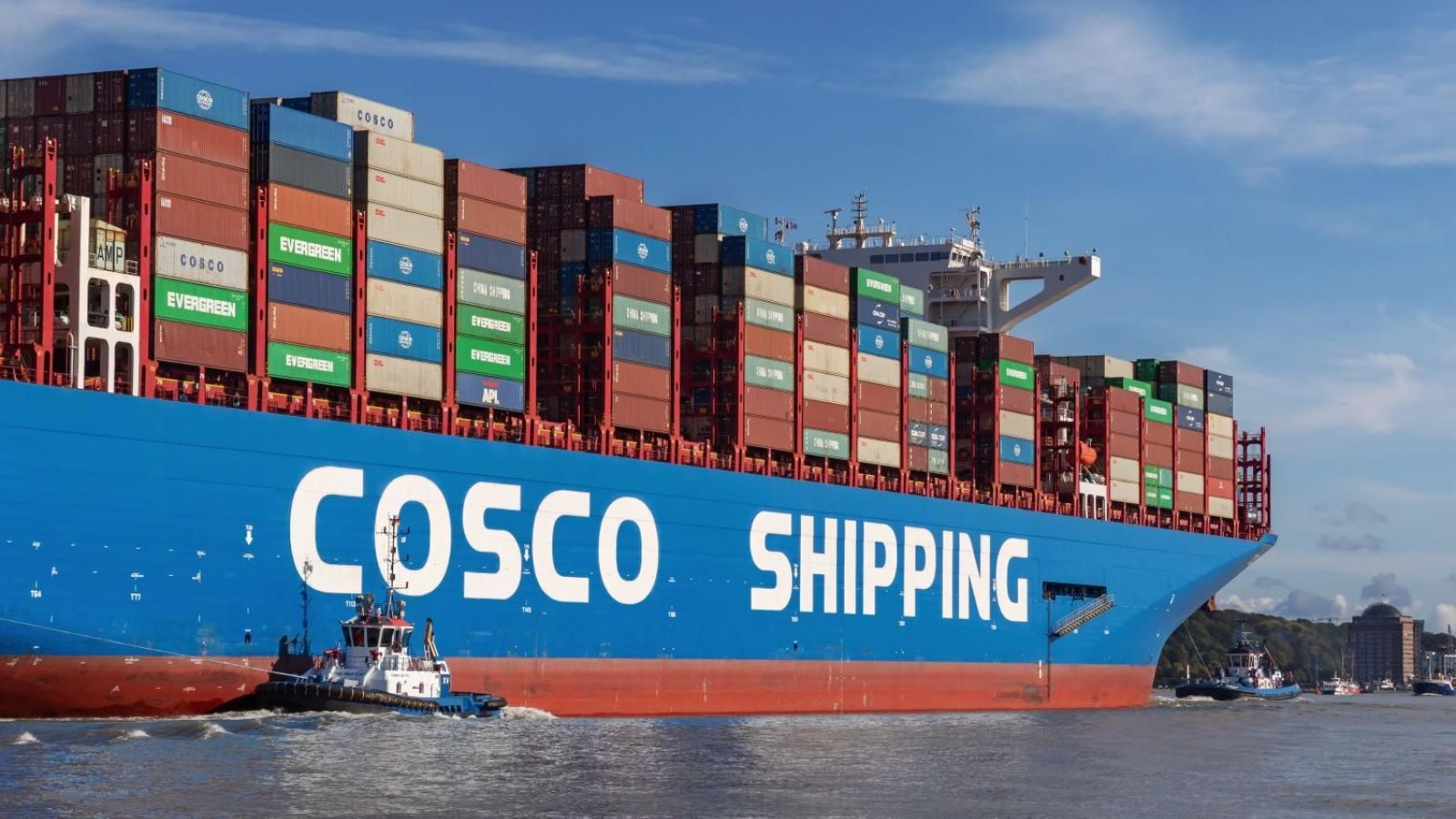
    Germany this week blocked Chinese state-owned shipping giant COSCO from acquiring one local business over national security concerns. The regulatory veto arrives as European authorities tighten oversight across transport networks and critical infrastructure assets connected to mainland firms.

    The decision immediately complicates European expansion plans for other Chinese logistics providers, including startup Speedaf. That company is working to establish a delivery hub in Switzerland and expand services into Ireland.

    Security reviews across European freight hubs

    European Union authorities have intensified investment screening across transport corridors and data-heavy distribution networks. Berlin’s intervention against COSCO sets a stricter regulatory precedent for cross-border logistics deals involving Chinese capital. Emerging operators seeking European footholds now face heightened compliance hurdles before securing warehouse assets or operational permits.

    Speedaf built its initial delivery model across developing trade lanes before targeting European distribution nodes. Establishing transport links through Switzerland and Ireland requires local clearance, which European regulators increasingly assess through the lens of strategic asset protection.

    Shifting trade dynamics between Brussels and Beijing

    Logistics operators from Asia now face higher regulatory friction when deploying direct capital into European domestic supply chains. For e-commerce platforms and Asian cross-border merchants relying on Chinese logistics operators, tighter European scrutiny raises the cost of building dedicated last-mile capacity across the bloc. Investors in cross-border logistics will need to weigh the likelihood of extended regulatory reviews or forced restructuring of planned European acquisitions.

    Trade friction between the European Union and China extends beyond freight infrastructure into high-value manufacturing. European trade officials recently held talks in Beijing addressing electric vehicle tariffs and a widening bilateral trade deficit, signaling broader economic disputes.

    Scrutiny turns to private logistics networks

    Chinese state-backed port operators have spent years purchasing stakes in European maritime terminals, drawing steady pushback from national security regulators. Berlin previously reviewed COSCO’s investment in Hamburg port infrastructure, setting the stage for wider screening across logistics assets.

    Speedaf’s planned expansion in Ireland and delivery network rollout in Switzerland now face review under these expanded European screening frameworks.
  • Uniqlo opens massive store in Hamburg

    Uniqlo opens massive store in Hamburg

    Japan’s Fast Retailing Co. Ltd. opened Friday (October 9, 2020) its first Uniqlo store in Hamburg on Alter Wall adjacent to City Hall during festivities attended by Japanese Consul General Kikuko Kato and Astrid Nissen-Schmidt, Vice President of Hamburg’s Chamber of Commerce, and other guests. The new 1,750 square metre-store is spread out over four floors.

    The opening of the huge store in downtown Hamburg is an expression of the “belief in retail”, the daily Hamburger Abendblatt quoted Michelle Kronbergs, Head of Marketing and PR Germany at Uniqlo, as saying. Taku Morikawa, Chief Executive Officer of Uniqlo in Europe, stressed: “Hamburg is an impressive city known worldwide for its tolerance, culture and economic importance as a main European trading centre with its port. We are delighted to have found such an exceptional location for our first store in the heart of this great city.”

    The new fashion store, Uniqlo’s tenth in Germany, is located in the former premises of the Bucerius Kunst Forum. The brand highlights Japanese values of “simplicity, quality and durability”.  Since moving to Germany in 2014, Uniqlo has opened six stores in Berlin and one each in Stuttgart, Düsseldorf and Cologne. The company operates more than 2,200 stores in 25 countries.

    Uniqlo is a wholly owned subsidiary of Fast Retailing Co. Ltd, a leading international Japanese apparel retail group that designs, manufactures and sells eight major fashion labels. Fast Retailing achieved global turnover of more than USD 21.5 billion in 2019 making it one of the world’s largest clothing companies and Japan’s biggest fashion brand.

  • The Port of Hamburg has launched a Chinese-language version of its website

    The Port of Hamburg has launched a Chinese-language version of its website

    “China is by a wide margin the Port of Hamburg’s most important trading partner,” said Axel Mattern, joint CEO of Port of Hamburg Marketing. “We aim to do justice to this by now offering our internet presence, not just in German and English as the language of shipping, but also in Chinese. On our travels in China we have found that language still frequently forms a barrier to communication. We aim to reduce this and to facilitate immediate access to comprehensive data on the Port of Hamburg for our Chinese partners and customers through our Chinese internet presence. The new language version of the Port of Hamburg website is a logical extension of our already very comprehensive range of information.

    The website provides information such as liner services, agencies and handling facilities, as well as an integrated database on intermodal services, according to the port.