Retail News CRM

Tag: handling

  • Two new ride-hailing platforms set to launch in Singapore in 2025

    Two new ride-hailing platforms set to launch in Singapore in 2025

    Two ride-hailing platforms, namely Geolah and Trans-cab Services, will begin operations in Singapore next year.

    They have received one-year provisional licenses that allow them to provide ride-hailing services, the city-state’s Land Transport Authority said on Monday.

    The new brands will join the five other ride-hailing platforms currently on the market, namely Grab, Ryde, TADA, Gojek and CDG Zig.

    Trans-cab Services, established in 2003 in Singapore, is the city-state’s third-largest taxi operator with a fleet of 2,079 taxis as of October, trailing Comfort (6,388) and CityCab (2,136).

    A Trans-cab spokesperson informed The Business Times that the company is preparing to launch its ride-hailing platform, which is “nearing completion,” without announcing a specific launch date.

    Geolah, founded in 2020, is a Singapore-based mobility platform powered by artificial intelligence. Its smartphone application of the same name will offer ride-hailing services in addition to its current limousine bookings and parcel delivery services.

    Its smartphone app, also named Geolah, will expand to include ride-hailing services alongside its existing limousine booking and parcel delivery options.

    The company stated that it operated in a “beta phase” for two weeks last February and now has 900 registered drivers.

  • Philippines probes Grab over alleged sexual assault of Vietnamese passenger

    Philippines probes Grab over alleged sexual assault of Vietnamese passenger

    Philippine regulators have launched an investigation into the alleged robbery and sexual assault of a Vietnamese woman who booked a ride using the Grab ride-hailing app.

    The Philippines’ Land Transportation Franchising and Regulatory Board has requested the firm to explain the incident and given it five days to comply, quoting the agency’s chair Teofilo Guadiz III as saying on Wednesday. If found to be negligent, the firm could be suspended for at least 30 days and face fines.

    The robbery and sexual assault allegedly occurred on Sept. 5 when a Vietnamese woman booked a ride in Parañaque City.

    During the ride, the driver reportedly allowed another passenger to board the car.

    This passenger then reportedly took the woman’s phone and cash, which amounted to 35,000 Philippine pesos (US$623), before raping her inside the vehicle. The driver was arrested by the police on Sept. 7.

    Grab’s Philippine unit said on Thursday that the driver involved in the case has been permanently banned from the platform.

    It has reached out to the victim to offer assistance and will fully cooperate with the Philippine police in the investigation.

  • Singapore’s ride-hailing platform Tada sets sight on Hong Kong

    Singapore’s ride-hailing platform Tada sets sight on Hong Kong

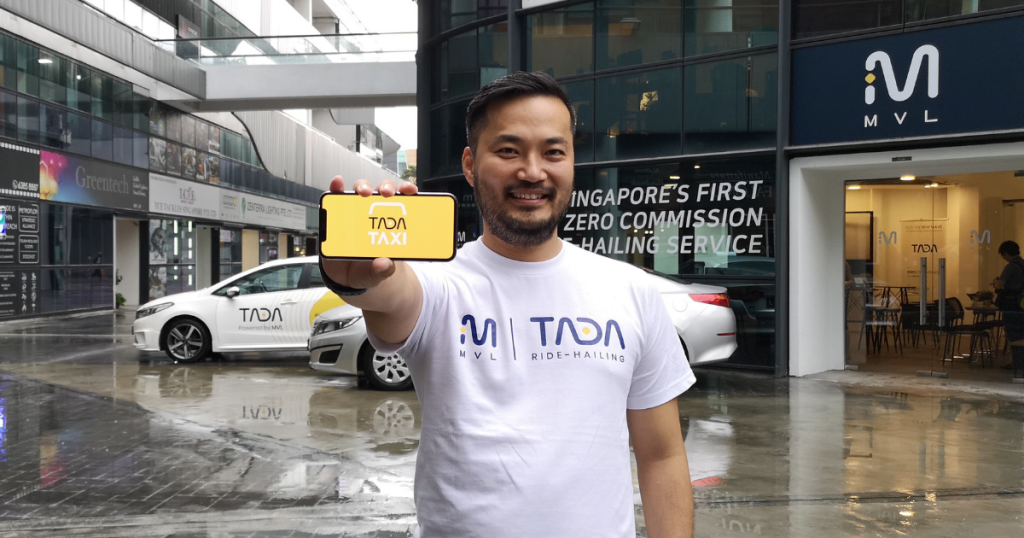
    Singapore-based ride-hailing company Tada will expand to Hong Kong in November with up to 4,000 vehicles as part of a collaboration with local taxi firms.

    “Singapore and Hong Kong share many similarities, which allows us to bring what we have learnt from our success in Singapore over to Hong Kong,” Tada’s chief executive officer Sean Kim said.

    As Hong Kong does not allow drivers to operate transport services without a taxi or car-hire permit, ride-hailing firms such as Uber have been focusing on partnering with taxi drivers.

    Tada charges a fixed platform fee per ride instead of a flexible commission as other ride-hailing apps.

    This policy appeals to drivers as it allows them to keep more of their earnings and will result in better service, Kim said.

    Tada was established in 2018 and is one of five ride-hailing platforms licensed in Singapore.

    Hong Kong has three services currently operating in the city, including U.S.-based Uber, Beijing-based Didi.

  • Air China extends cargo handling contracts with WFS in France and the UK by 3 more years

    Air China extends cargo handling contracts with WFS in France and the UK by 3 more years

    Air China has extended its longstanding cargo handling contracts with Worldwide Flight Services (WFS), a member of the SATS Group, in France and the United Kingdom, by a further three years.

    The airline has been a major customer of WFS at Paris Charles de Gaulle Airport since the early 1990s. This latest contract extension in Paris sees WFS handling cargo carried onboard 12 to 14 passenger flights per week connecting the French capital with Beijing, Chengdu, and Shanghai as well as 10 weekly freighter services linking Paris with Chengdu and Hangzhou.

    Additionally, the contract in Paris, which also includes ramp handling, enables Air China and its cargo customers to benefit from WFS’ national trucking network in France and offline handling services at more than 10 regional French airports.

    In the United Kingdom, Air China has awarded contract extensions to WFS at London’s Heathrow and Gatwick Airports.

    At Heathrow, Air China operates 24 passenger flights per week carrying cargo to and from Beijing, Chengdu, and Shanghai. WFS is also contracted to provide cargo handling services for the airline’s 14 flights which connect London Gatwick with Beijing and Shanghai each week.

    WFS is also providing countrywide road transport services and offline handling at other major regional airports for Air China in the UK.

    “Air China is a major customer of WFS across our international network. Our strong global partnership continues to grow, based on our ability to meet all the airline’s service and growth expectations,” said John Batten, WFS’ Chief Executive Officer, Europe, Middle East, Africa, and Asia (EMEAA).

  • Russian ride-hailing app makes Vietnam debut

    Russian ride-hailing app makes Vietnam debut

    Russia’s InDriver has become the latest entrant in Vietnam’s growing but fiercely competitive ride-hailing market, joining several foreign and domestic firms in the fray.

    Starting this month, the company is offering car and motorbike ride-hailing services in the central province of Thua Thien Hue, the southern city of Can Tho, and the northern city of Hai Phong.

    It now has 260 car and 300 motorbike driver-partners. The company currently does not charge any fee from drivers, allowing them to receive in full the amount that customers pay.

    The biggest difference between InDriver and other ride-hailing apps is its real-time deal feature, which allows customers to offer an initial fare for the ride and send it to nearby drivers, who have the option to either accept the fares or propose a higher one.

    While other companies automatically select drivers, InDriver allows customers to manually choose one based on their proximity, reviews and price offers.

    A company spokesperson said this feature goes against popular algorithms which automatically increase fares during peak and high-demand hours.

    InDriver has over 50 million users worldwide. Its main competitors in Vietnam are currently Singapore’s Grab, domestic player Be, and Indonesia’s Gojek.

    U.S.’s ABI Research estimates Grab dominates the Vietnamese market with a 73 percent share, followed by Be with 16 percent and Gojek with 10.3 percent.

    In July, domestic player GV Taxi became a new player in the ride-hailing market, aiming to have 8,000 partner drivers in six months.

    Vietnam’s ride-hailing market was the fourth largest in Southeast Asia last year behind Indonesia, Singapore, and Thailand, according to a report by Google.

  • 7-Eleven Malaysia buys into ride-hailing service

    7-Eleven Malaysia buys into ride-hailing service

    7-Eleven Malaysia Holding has acquired a 46.45-per-cent equity stake in local delivery firm Myinteractivelab (MSB) for US$1.8 million.

    According to a SEM’s spokesperson, the company entered into an agreement to accquire 490,030 shares of MSB with founder Nabil Fiesal Bamadhaj, who is the owner of Dego Rides, which launched on January 1.

    “The subscription represents an opportunity for the SEM Group to acquire a substantial equity stake in MSB, which will be undertaking the e-hailing bike services and to provide convenient delivery services for its 7-Eleven outlets,” SEM said in a stock-exchange filing.

    MSB, which operates Dego App, Dego Partners, and Dego Orders, is currently in the process of securing the licence and approval to run electronic hailing motorcycle-taxi services.

    The government had recently announced it would embark on a proof of concept trial for e-hailing bike services in the Klang Valley for the first six months this year.

    “The government’s initiative in undertaking the program is a positive step and augurs well with the proposed subscription as Dego Ride is the only company in Malaysia, besides Singapore’s GrabBike and Indonesia’s Gojek, which has indicated its interest in the program,” said SEM’s spokesperson.

    With 1500 riders and more than 60,000 users in three months before it was banned by the government in 2017, Dego Ride aims to increase its rider number to more than 4000.

  • Uber Stripped Of London Operating Licence

    Uber Stripped Of London Operating Licence

    Uber was stripped of its London operating license on Monday for the second time in just over two years as the city’s regulator said the taxi app was not “fit and proper”, having put passenger safety at risk.

    A change to Uber’s systems allowed unauthorized drivers to upload their photos to other drivers’ accounts, meaning they could pick up passengers as if they were the booked driver, which happened in at least 14,000 trips, Transport for London (TfL) said.

    “It is unacceptable that Uber has allowed passengers to get into minicabs with drivers who are potentially unlicensed and uninsured,” Director of Licensing, Regulation and Charging at TfL, Helen Chapman said on Monday, the day the firm’s license expires.

    The Silicon Valley-based company has 21 days to appeal the decision and can continue to operate throughout the process, which is likely to include court action.

  • Uber now uses smartphones to detect possible car crashes in the US

    Uber now uses smartphones to detect possible car crashes in the US

    Uber started testing an interesting safety feature last year that would allow its team to detect unexpected long stops or possible crashes using a smartphone’s GPS and other sensors like gyroscope and accelerometer.

    One year after it debuted the beta test, Uber announced RideCheck is now live in the United States. The new feature is available for all Uber riders and drivers in the US, but the company has plans to expand it to more countries in the future.

    Since every trip is on the map, Uber knows where and when you’re riding and who’s driving you to your destination. Using this particular data and other sensors in drivers’ smartphones, Uber’s technology can detect possible crashes or if a trip goes unusually off course.

    Also, when a RideCheck is initiated, both a rider and driver will receive a notification asking if everything is alright. Through the app, either of the two can inform Uber that all is well, or take other actions like using the emergency button or reporting the issue to the Safety Line.

    Uber says that in the event of a crash, it can also help expedite the insurance claims process. Also, the company promises improvements to the current technology through additional scenarios to RideCheck.

  • Ride-Hailing Firm Grab Plans Major Investment In Vietnam

    Ride-Hailing Firm Grab Plans Major Investment In Vietnam

    Singapore-based ride-hailing firm Grab is set to invest “several hundred million dollars” in Vietnam where the company sees its next major growth market, just weeks after it unveiled a $2 billion plan in Indonesia.

    The proposed investment is the latest example of a top-notch regional brand deepening its commitment to Vietnam, one of Asia’s fastest growing economies. It also shows the eagerness of Grab, which has raised billions of dollars from investors, to put its cash to work.

    “We’re very excited about Vietnam. We see very similar characteristics to Indonesia,” Grab President Ming Maa told Reuters in an interview.

    Grab and rival Indonesia-based Go-Jek are evolving from ride-hailing app operators to become one-stop shops for services as varied as payments, food delivery, logistics and hotel bookings in Southeast Asia.

    Grab, with its app on more than 160 million mobile devices across eight countries, has said its Indonesia investment aims to build a next-generation transport network and transform how critical services such as healthcare are delivered.

    Like Indonesia, many middle class and young consumers in Vietnam are using apps and websites to access services, Maa said.

    “I would expect us to invest over several hundred million dollars into growing our Vietnam business,” he said without giving specific details on the investment.

    Vietnam ranks third or fourth among Grab’s top markets, said Maa, who joined the company three years ago from its major investor, Japan’s Softbank Group Corp, and a previous decade-long stint at investment bank Goldman Sachs.

  • Lyft is vastly improving rider safety with in-app emergency assistance

    Lyft is vastly improving rider safety with in-app emergency assistance

    Ridesharing apps like Uber and Lyft can be incredibly convenient in this day and age, but unfortunately, using these services is not always 100 percent safe, as proven by multiple reports of sexual abuse in the past few years committed by improperly vetted drivers and even the shocking recent murder of a college student who got into the wrong car.

    Fortunately, both Uber and Lyft are ramping up their efforts to improve rider safety and peace of mind, at least when they’re not busy making it easy for people to tell drivers to keep their mouth shut. Lyft’s latest “investment in safety” includes several new features and programs designed to educate all members of this ridesharing “community”, as well as prevent vehicle mix-ups, and most importantly, help users in danger get quick emergency assistance.

    The latter goal will be achieved (hopefully) with an in-app option providing direct 911 access without actually having to type the numbers or exit Lyft. This emergency assistance, or panic, button should have long been a thing for riders, rolling out to the drivers app first last year. Uber has had the safety-enhancing feature for about a year too, so Lyft is a little late to the party with today’s announcement of a public launch in the “coming weeks.”

    Meanwhile, license plate visibility has already been increased in the Lyft app for “many riders”, with availability set to expand in the “coming months” to ensure that gruesome recent incident that indirectly brought Uber loads of negative publicity will not repeat itself on the rival platform.

    Aside from paying more attention to the license plate of your Lyft, you should really provide additional information and context for your bad driver ratings. To make sure that will be the case going forward, the company is implementing mandatory secondary feedback. In other words, you will no longer be allowed to rate your ride under 4 stars without also leaving a comment explaining your grade.

    Lastly, Lyft is planning to make sexual harassment prevention education available to all users sometime “this year” with an aim of ensuring a “welcoming, inclusive, comfortable, and safe” environment for everyone. That’s certainly a noble goal… unlikely to be achieved anytime soon.

  • Grab may be categorized as e-charter transport operator

    Grab may be categorized as e-charter transport operator

    The Ministry of Transport organized the meeting with other ministries, transport operators and associations to collect feedback for the eighth version of the draft decree before presenting it to the prime minister prior to April 15 as scheduled. Many participants at the meeting proposed Grab be listed as an e-charter transport operator.

    A representative from the Ministry of Public Security (MPS) noted that Grab was a new transport service provider that applies technology to its operations. Its services are widely used by the local people thanks to its convenient features.

    The MPS representative suggested the relevant agencies clarify Grab’s business structure and categorize it in accordance with prevailing regulations while imposing stringent management policies on the firm in terms of safety requirements for vehicles and drivers, service costs and tax and financial obligations to the State.

    Representing Grab Vietnam, Nguyen Ngoc Trang asserted that Grab functions as an e-commerce trading floor as it was previously registered with the Ministry of Industry and Trade. He also pointed out that some terms stipulated on the draft decree were redundant and illogical.

    Meanwhile, some participants at the meeting voiced their opposition to the suggestion to list Grab as an e-charter transport service provider.

    Nguyen Cong Hung, chairman of the Hanoi Taxi Association, was quoted by Nguoi Lao Dong Online as saying that the application of electronic features to operations is merely a transport connection method. It is illogical to name a new transport service type based on the connection method, Hung said.

    Also, Khuat Viet Hung, vice chairman of the National Traffic Safety Committee, stated that the five types of transport services regulated in the Law on Road Traffic were enough and creating a new service type was not needed.

    Wrapping up the meeting, Deputy Minister of Transport Le Dinh Tho remarked that the unit compiling the draft decree will take the feedback into consideration. He suggested the relevant parties continue to work on the draft decree before sending it to the prime minister.

  • FastGo announces Vietnam’s first helicopter ride-sharing service

    FastGo announces Vietnam’s first helicopter ride-sharing service

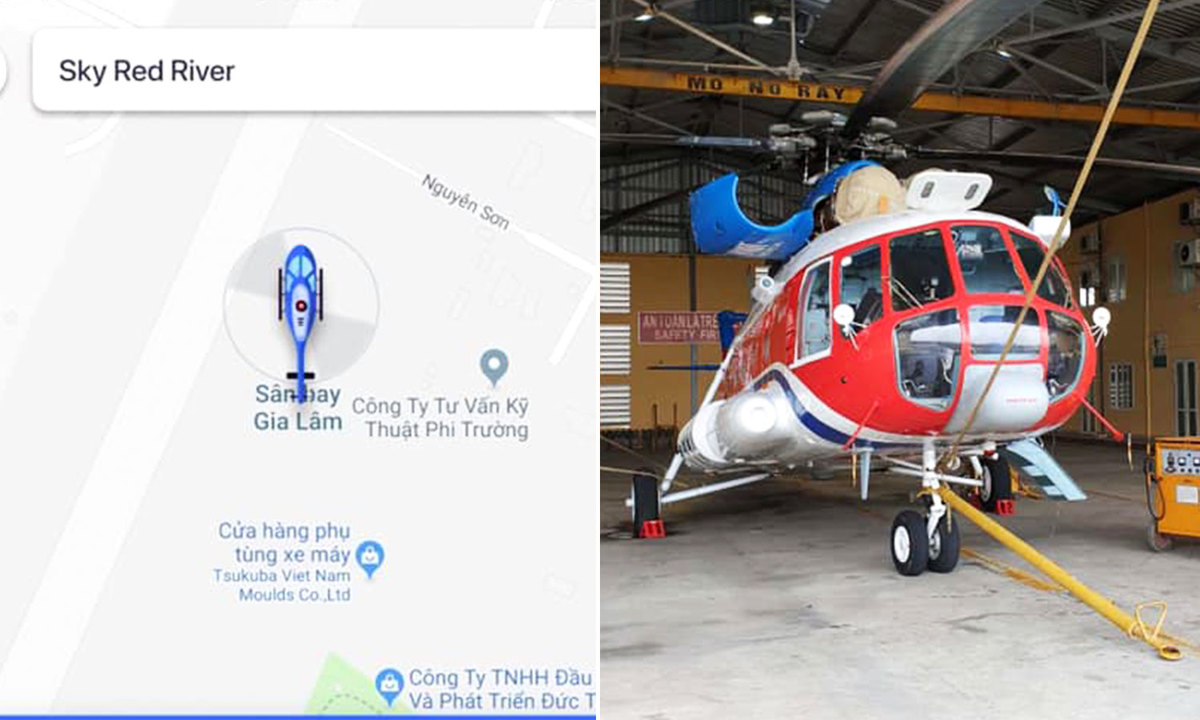
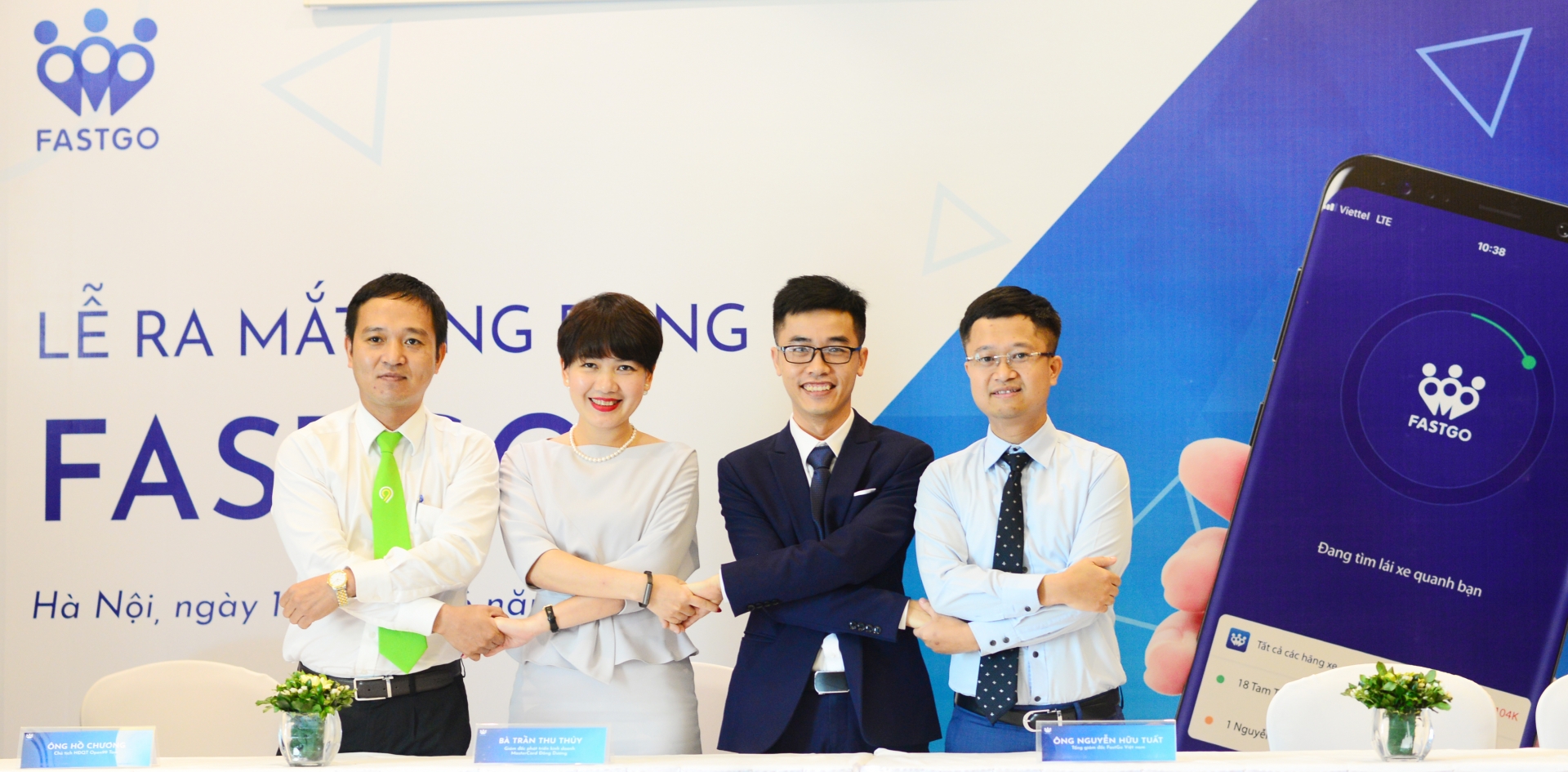
    Vietnamese ride-hailing firm FastGo plans to launch the country’s first helicopter ride-sharing service in Hanoi this month, focusing on tourism in northern provinces.

    CEO Nguyen Huu Tuat told that FastSky’s first flight will take off on April 25.

    With 12 passengers to a helicopter, FastSky will operate tours from Hanoi to northern tourist destinations such as the Red River and Ha Long Bay.

    “Apart from SkyTour, we’ll also operate SkyWedding services for wedding photography and SkySOS for emergencies in which helicopters will land on Hanoi skyscrapers to pick up patients,” Tuat said.

    Prices vary for each service. A tour will cost a minimum of $125 per person, which can be paid in installments over a period of 12 months.

    Tuat said: “We offer premium services for business people but also want everyone to have a chance to fly. FastSky will be a game-changer in the transport industry.”

    FastGo only provides technology solutions while helicopters and pilots are provided by a partner who is permitted to fly in Vietnam, he said, but declined to reveal the company’s name.

    FastGo began operations last June, a few months after Uber announced its exit from Southeast Asia.

    The company, part of Vietnamese technology start-up NextTech Group, expanded to Myanmar last December.

    It plans to launch operations in Singapore this month and in five other countries in the region, including Indonesia and the Philippines, by the end of the year.

    With almost 60,000 drivers on board, the company claims to be the second most popular ride-hailing firm in Vietnam after Grab.

  • Grab now has more rivals than ever before in Vietnam

    Grab now has more rivals than ever before in Vietnam

    From an e-hailing app, Grab has made great steps forward, providing many different services. Most recently, it started the payment service GrabPay and lending service Grab Financial.

    The consumer lending market in South East Asia is very large. As estimated by the World Bank, about 2 billion people in the world cannot access bank services, and most of them are in Asia Pacific.

    The non-cash payment market, according to Grab, is worth $500 billion in South East Asia.

    An analyst commented that Grab is wise taking a ‘roundabout’ approach to consumer lending (it conquered the transport market first before aiming for the consumer credit market).

    Consumer lending is a fertile business field for Chinese e-commerce firms. The firms offer online payment apps to users to ‘learn’ about their financial capability.

    Grab, as an app, quickly attracted users, especially investors. Just within six years, Grab became an unicorn company, i.e. an unlisted technology firm with valuation of $1 billion and higher, in South East Asia. Analysts estimate that Grab is valued at $6 billion.

    The total number of Grab downloads has reached 95 million all over South East Asia. This could serve as the launch pad for it to conquer the consumer lending market.

    The challenges 

    “GrabPay e-wallet will be used for both transport and food delivery services, two of the most used services in South East Asia,” said Jerry Lim, director of Grab Vietnam.

    However, the analyst said, by expanding its business, Grab would have to compete with more rivals who are ‘powers’ in their fields. In online payment, for example, it will have to compete not only with AirPay (Sea) and Alipay (Alibaba Group), but also with local firms such as ZaloPay (VNG) and MoMo.

    In Indonesia, Grab bought an e-commerce platform, Kudo, in April 2017. Grab believes that this is the factor which can help expand GrabPay. However, in Vietnam, Grab’s two big rivals – Sea and Alibaba — both have strong support from two popular e-commerce floors – Shopee Vietnam and Lazada Vietnam.

    Similarly, GrabFood has rivals in the food delivery sector, where Sea’s Now, which inherited the large custom from Foody, is the leader.

  • Aber ride-hailing service hits the road in Hanoi

    Aber ride-hailing service hits the road in Hanoi

    The ride-hailing market has seen new entrants after Uber’s departure, including Vietnamese firm FastGo, GoViet – a subsidiary of Indonesia’s Go-Jek, and the latest Aber. Aber estimates it will attract 5,000 taxi drivers and 5,000-10,000 motorbike drivers in Hanoi this year. In HCMC, the company is working with 7,000 drivers serving  more than 60,000 customers. Aber general director Huynh Le Phu Phong said the company was not afraid of major competitors such as Grab because it offers a wide variety of transport services.

    The firm will offer similar rates as other competitors, but give better benefits to its drivers, he said.

    “We do not force drivers to only work for Aber. They can also work for other companies to increase their income and improve their lives,” Phong said.

    In its latest update, Aber has added new features including a navigation system and accurate positioning to each alley, village, district and province in Vietnam.

    Vietnamese engineers designed the software.

    Next year, the company will focus on expanding its services, including Aber Express for delivery services, Aber Track for freight services, Aber Business for companies and Aber Travel for travel services, Phong said.

    Aber focuses on serving individual customers to help them save money, as well as drivers, when their vehicles are vacant, he added

    Instead of having to drop off items at the post office or delivery centers, drivers will come and pick things up right at the customer’s house.

    Current market dominator Grab has expanded its service to include GrabFood and GrabCar Business, the latter targeting the corporate sector. These moves pose further challenges for local long-standing taxi firms like Mai Linh, Taxi Group and Vinasun.

  • Vietnam’s first car-hailing app FastGo heads overseas

    Vietnam’s first car-hailing app FastGo heads overseas

    FastGo, a Vietnamese ride-hailing app, plans to launch its service in Indonesia and Myanmar in December as it hopes to become one of the top companies in the field in Southeast Asia.

    This move abroad comes just five months after it launched in Vietnam, positioning itself as the company’s answer to Singapore-based Grab, the biggest player in Southeast Asia, and Indonesia’s Go-Jek, which launched its first overseas operation in Vietnam last month, GoViet.

    FastGo offers a private car and taxi service in Hanoi, Danang and Ho Chi Minh City. As of early October, it claimed to have reached 20% of the local market with some 30,000 drivers registered on its system. The app was developed by MPOS Vietnam Technology, a tech startup created by FastGo’s co-founder and chief executive Nguyen Huu Tuat. MPOS set up Vietnam’s first mobile payment solution in 2013 and has links with many local partners including banks and insurers.

    “Although the Southeast Asian ride-hailing sector is dominated by Grab and Go-Jek, FastGo has strategic partners, networks and relevant strategies for the Indonesia and Myanmar markets in place,” Tuat told in an interview on Thursday.

    Tuat said this background would allow FastGo to expand in both domestic and regional markets and balance the ride-hailing market. This is currently dominated by the two big names who are busy expanding their ecosystems. FastGo is aiming to reach 30% market share in Malaysia and Myanmar after six months, Tuat said.

    MPOS has some experience in the ride-hailing business, providing the technology and platforms used by two taxi companies — Mailinh in Vietnam and Blue Bird in Indonesia — since 2016.

    “FastGo is not a competitor of taxi companies but a partner. We provide technical solutions and the platform to both taxi companies and private car owners, while giving more options for consumers,” Tuat explained.

    FastGo does not collect commission from its drivers, but charges them 30,000 dong ($1.30) each if they earn more than 400,000 dong per day.

    FastGo is committed to keeping passenger tariffs unchanged, but suggests they offer tips (ranging from 10,000 dong to 100,000 dong) to drivers to help secure a ride during peak hours. FastGo’s target passengers are white-collar workers and young people who are willing to use credit cards or mobile payment, but it also accepts cash.

    Tuat said the company’s main revenue and profit would not come from ride-hailing but from planned services including deliveries and finance lending.

    Hanoi-based FastGo is a member of NextTech Group, formerly known as PeaceSoft, with sister companies pioneers in financial technologies, e-commerce, e-logistics and investment across Southeast Asia. The group operates in eight countries and serves more than 12 million customers and 40,000 enterprise partners.

    The 35-year-old founder of FastGo has more than 15 years’ experience working in the Vietnam technology industry and has co-founded three startups, including PeaceSoft. Tuat led these companies through fundraising rounds from investors such as data group IDG, Japanese tech company SoftBank, online retailer eBay, Malaysia-based MOL AccessPortal and U.K. fund ACTIS.

    NextTech is also behind one of Vietnam’s first e-marketplaces, ChoDienTu, e-payment platform NganLuong and mobile wallet Vimo. It is also involved with two cryptocurrency trading platforms.

    FastGo will focus on working with existing partners and clients in each of NextTech’s current markets.

    “Unlike Grab or Go-Jek, the two biggest players in the region which built ecosystems from their ride-hailing services, the FastGo app is a value-added service to NextTech’s existing ecosystem and we will optimize all the advantages of that system,” Tuat added.

    FastGo secured at least $3 million from the tech-focused venture arm of private equity group VinaCapital in its first round of fundraising in August. The company is hoping to raise $50 million in the next round — scheduled for the first quarter of 2019 — to help accelerate regional expansion. FastGo plans to raise funds every six months.

    It hopes to make its service available in 20 cities in Vietnam and five other Southeast Asian markets, including the Philippines, Cambodia and Thailand, by the end of next year.