The largest mobile operator in Indonesia, PT Telekomunikasi Selular (Telkomsel), unit of state-run telecom operator PT Telkom Indonesia Tbk (TLKM), has joined hands with gadget store operator PT Trikomsel Oke Tbk (TRIO) to launch a device bundling program to drive the growth in smartphone users, the company said in a statement.
The device bundling program includes, Lenovo Vibe X2, Xiaomi Redmi 2 and Xiaomi Mi 4i with cash back and data package promotion. In addition. Telkomsel also launched device bundling program for BlackBerry Classic, Samsung Galaxy S6 edge and LG G4 to attract high value customers.
Since December 2014, Telkomsel has successfully rolled-out 4G LTE services to support the data services in Jakarta, Bali, Bandung, Surabaya and Medan using the 900Mhz spectrum. The operators are in the midst of rearranging their 1800Mhz spectrum and expected to be completed by the end of the year.
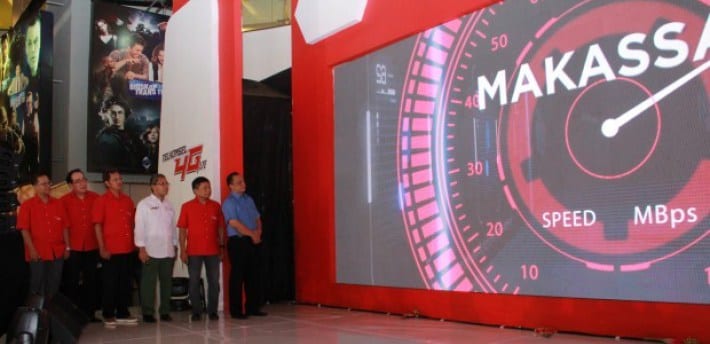
To signify the completion of spectrum rearrangement in areas outside Java, Telkomsel launched 4G LTE services using 1800Mhz spectrum in Makassar and Lombok in July 2015. To date, the operator has more than 1,000 4G LTE BTS serving the seven key cities.
In the first half of 2015, Telkom as a group has spent Rp11.9 trillion ($888.06 million) in capital expenditure (capex), of which Rp5.8 trillion was for Telkomsel and the remaining Rp6.1 trillion was for Telkom and other subsidiaries.
Telkom’s capex was mainly utilised for deploying access and backbone infrastructure to support the broadband services, while Telkomsel’s capex was mainly utilized for radio access network. Other subsidiaries’ capex was utilised for towera, property, data center, and project international cable systems.
In first half of the year, Telkomsel reported that net profit rose 14.7 per cent from previous year (Rp8.81 trillion to Rp10.11 trillion). While the company revenues rose 13 per cent from Rp31.33 trillion to Rp35.40 trillion in first semester of 2015.
Revenue from prepaid customers accounted for 84.9 per cent with Rp30.04 trillion of Telkomsel’s total revenue mainly driven by prepaid subscriber base, high increase in data usage and data revenue as well as continued growth in voice and SMS revenues.
Postpaid revenue increased by 13.5 per cent to Rp2.78 trillion mainly driven by the increase in the postpaid customer base which grew by 16.6 per cent to 3 million subscribers. Revenue from postpaid customers contributed 7.9 per cent to the total revenue.
Telkomsel continued aggressive network deployment with 11,495 new BTS installed in an effort to maintain leading network supply to strengthen mobile broadband experience. Around 90 per cent of new BTSs were 3G/4G BTS.