Tag: Hang Lung

  • Hang Lung Properties overcomes challenges

    Hang Lung Properties overcomes challenges

    Hong Kong-headquartered mall operator Hang Lung Properties has overcome the regional economic headwinds to report a solid increase in revenue from its core leasing business.

    Hang Lung, which owns eight Mainland China shopping centers carrying the 66 brand, along with The Peak Galleria, Fashion Walk and Amoy Plaza in Hong Kong, achieved a 2 percent rise in rental revenues during the first half year, despite a 6 percent period-on-period Renminbi (RMB) depreciation

    “We have sustained solid growth in our core leasing business in the first half of 2019 despite the uncertainties in the global economy,” said Ronnie C Chan, chairman of Hang Lung Group and Hang Lung Properties.

    “The growth momentum of our leasing portfolio, especially at our mainland properties reflected effective measures taken to improve our tenant mix and enhance facilities and customer services.

    “Our properties outside of Shanghai have achieved remarkable revenue growth of 14 percent, while our investments in asset enhancement in Shanghai are paying off handsomely, as evident from the strong performance of Plaza 66.”

    He said the progressive completion of the major renovation at the Grand Gateway 66 mall in Shanghai this year is expected to deliver a similar boost in revenue and a number of new properties will commence business in the second half of this year.

    Revenue from the eight mainland malls rose by 8 percent to RMB 1.479 billion (US$214.8 million) for both Hang Lung Properties and Hang Lung Group. The asset enhancement initiatives at Grand Gateway 66 caused a short term disruption of rental income, while the properties outside of Shanghai achieved 14 percent revenue growth.

    In Hong Kong, the company said the performance of its core leasing properties was stable.

    Combined revenue at Hang Lung Properties and Hang Lung Group both recorded growth of 3 percent, to HK$2.014 billion and HK$2.096 billion, respectively.

    The company said that while the US China trade dispute shows no sign of abating, the group remains cautiously optimistic its business will deliver sustainable growth in both Hong Kong and the mainland.
  • Hang Lung profits hit by falling rents

    Hang Lung profits hit by falling rents

    Falling rents have hit profits for Hang Lung Properties, which has posted a 4 per cent decline in underlying net profit to HK$3 billion (US$383.9 million) in its first half.

    Asset-enhancement initiatives in Hong Kong and Shanghai also caused disruption of rental income, but this was for a short term and had been expected.

    However, total operating profit rose 5 per cent to $4.541 billion and $4.743 billion year on year for Hang Lung Properties and Hang Lung Group respectively.

    Chairman Ronnie Chan Chi-chung says the group achieved a solid performance on its core leasing business against a backdrop of challenging business conditions, and a yuan depreciation of 5 per cent.

    Rental income from its eight mainland shopping malls rose 2 per cent to RMB1.338 billion (HK$1.55 billion), with the rental revenue of Shanghai Plaza jumping 23 per cent.

    Total revenues of the six malls outside Shanghai fell 3 per cent, however, with some having to downwardly adjust rents to optimise tenant mix and occupancy, says the group.

    For instance, rental income at its Shenyang mall dropped 28 per cent, as it had to replace non- performing tenants, but the retail sales had mild growth despite lower occupancy.

    In Hong Kong, commercial portfolio revenues slipped 1 per cent to $1.118 billion, but Chan says the group’s main business focus is on the mainland where it has 250 million sqft of land reserves awaiting development.

    However, the group may also consider undertaking more redevelopment projects in the old districts of Hong Kong.

  • Hang Lung Properties China woes hit developer’s 2015 earnings

    Hang Lung Properties China woes hit developer’s 2015 earnings

    China’s slowing economy has claimed another victim, as Hang Lung Properties reported on Thursday a 56% fall in 2015 net profit from a year ago.

    The property developer said its net income declined to 5.09 billion Hong Kong dollars ($653 million) for the financial year ended on Dec. 31. Total revenue shrank by 47% to HK$8.94 billion from a year ago. Property sales in Hong Kong fell 88% to HK$1.2 billion.

    Over the year, only 63 apartments and a few car parks were sold — a dramatic downturn from 2014’s sales of 412 residential units that generated a turnover of HK$9.81 billion.

    Although the company’s rental income from commercial properties in both Hong Kong and the mainland rose by 7%, total operating profit of its mainland China portfolio — comprising eight shopping malls and three office towers — dipped 3% year-on-year to HK$2.72 billion. Overall rental margin fell by 7 percentage points to 65%.

    “The [property] market in mainland China is in the doldrums, if not deteriorating,” said Hang Lung Chairman Ronnie Chan. He said that turnover in the second half of the year typically outperformed the first half, but that was not the case in 2015. “I can’t see how it is going to improve in the short run,” said Chan.

    Such distress was most palpably felt in cities outside of Shanghai. Occupancy rates in Hang Lung’s malls in Shenyang and Wuxi fell 87% and 72% respectively, while retail sales, excluding autos, dropped 3%.

    “If the market is not there, we may have no choice but to lower rent,” said Chan, adding that negative rent reversion is a pressure.

    Hang Lung’s commercial and office complexes are built for the high-end, premium market. But China’s slowing economic growth is eroding sentiment and demand for luxury goods in Hong Kong. International brands are worried about opening in China and Hong Kong.

    Hang Lung said the weakness in retail supply, rental growth and high-end spending will continue in 2016. But Chan said the company had no plans to refashion its establishments for the mid-market, or to suspend construction projects in China, given their still bullish outlook for China in the long run.

    “It is the only country that can maintain a higher-than-6% GDP growth in the next few years,” said Chan.

    In line with its lackluster annual results, dividend payout for the year will be slightly trimmed to HK$0.75 per share. “The cut is less about maintaining cashflow, but a reflection of our bearish outlook on the [property] market strained by China’s slowing economy. I don’t have a clue when spring will return,” said Chan, adding that the company is still holding plenty of cash at around HK$31.3 billion.

    Hang Lung’s shares have shed 17.8% to HK$21.25 year-to-date. Citibank analysts see no upside for the stock.

  • Hang Lung posts strong result

    Hang Lung posts strong result

    Hong Kong listed Chinese mall owner Hang Lung Group has reported a three per cent rise in turnover in the first half of 2015.

    The group said revenue reached HK$4.893 billion, with rental turnover up eight per cent to HK$4.148 billion. Property sales income decreased 17 per cent to HK$745 million due to the sale of fewer residential units.

    Overall operating profit of the group increased by three per cent to HK$3.725 billion.

    In Mainland China the group says it has benefited from increased investment in the Chinese market by luxury brands.

    “Our seven shopping malls in mainland China collectively posted an 11 per cent rental income growth to HK$1.684 billion,” the company said in its stock exchange filing.

    That portfolio comprises two malls each in Shanghai and Shenyang, and one each in Jinan, Wuxi and Tianjin. The two malls in Shanghai, Plaza 66 and Grand Gateway 66, contributed nine per cent more in rents to HK$1.059 billion and were almost fully let.

    “The young malls outside Shanghai cumulatively contributed 16 per cent more in rents year-on-year mainly attributable to contribution from the Riverside 66 shopping mall in Tianjin which commenced operation last September. All the young malls are going through different stages of gestation period with ongoing tenants or trade adjustments. Their occupancy rates ranged from 80 per cent to 90 per cent.”

    In Hong Kong, rental turnover of our diversified Hong Kong leasing portfolio rose seven per cent to HK$1.816 billion against the backdrop of declining overall retail sales in the local market.

    “All business segments of our portfolio recorded growth with total profit rose seven per cent to HK$1.556 billion. The resulting leasing margin was 86 per cent.”

    Positive rental reversions of Hang Lung’s Hong Kong commercial portfolio generated six per cent more in rents to HK$1.040 billion.

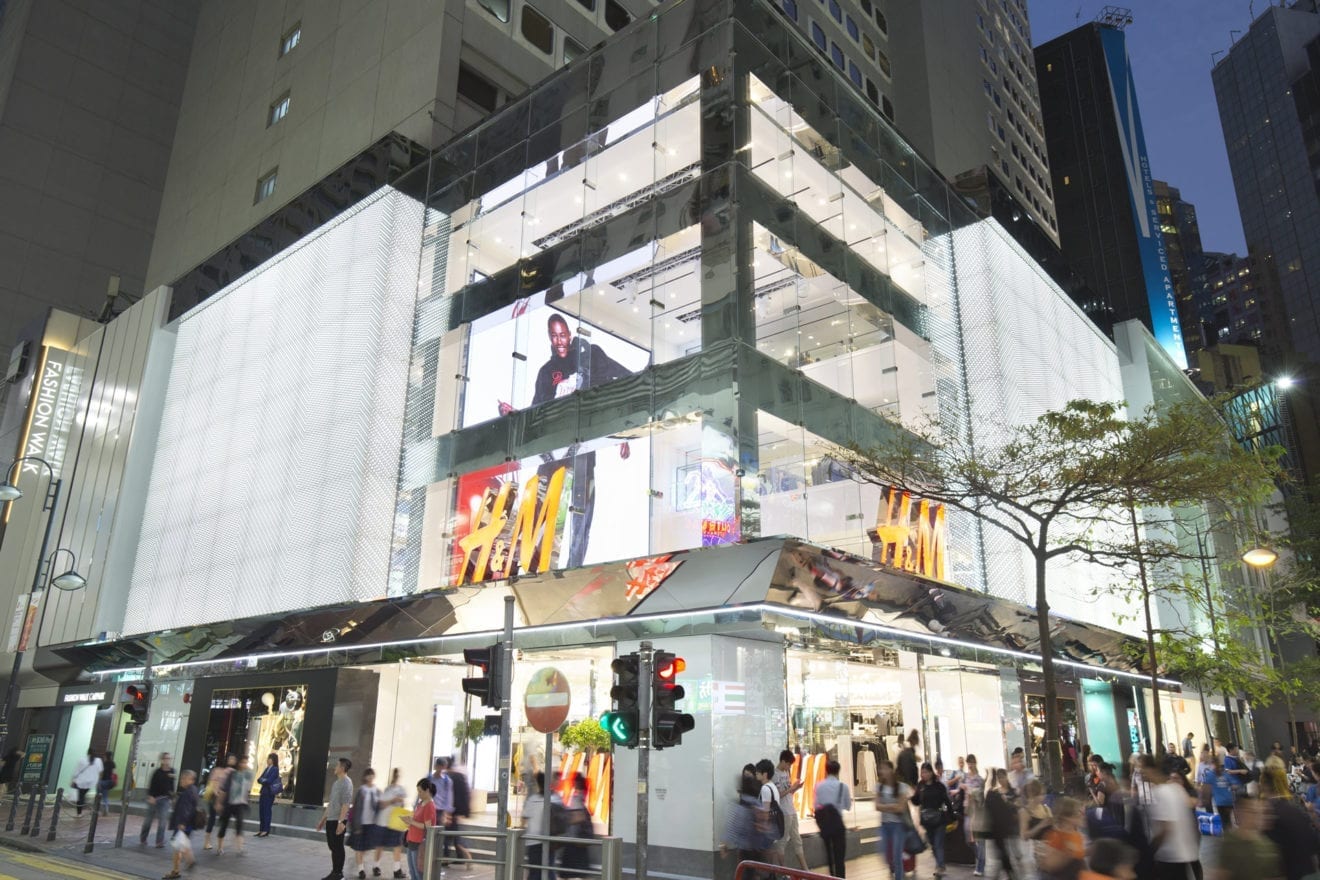
    “All the malls, which are situated in prime locations of Hong Kong, were virtually fully let. Grand Plaza in Mongkok and Amoy Plaza in Kowloon East both enjoyed a 13 per cent rental growth. The Causeway Bay commercial portfolio posted a five per cent rental income growth, despite Hang Lung Centre has been closed for renovation by H&M since January 2015.

    “The properties in Central collected seven per cent more in rents. The Peak Galleria at the

    Peak contributed extra five per cent leasing income to the Group. Kornhill Plaza, our regional mall in Hong Kong East, posted a stable rental growth of four per cent during the period.”

    Hang Lung said final preparations are underway for the opening of its shopping mall at Olympia 66 in Dalian towards the end of the year. This new mall comprises almost 222,000 sqm of retail area and 1200 car parks.