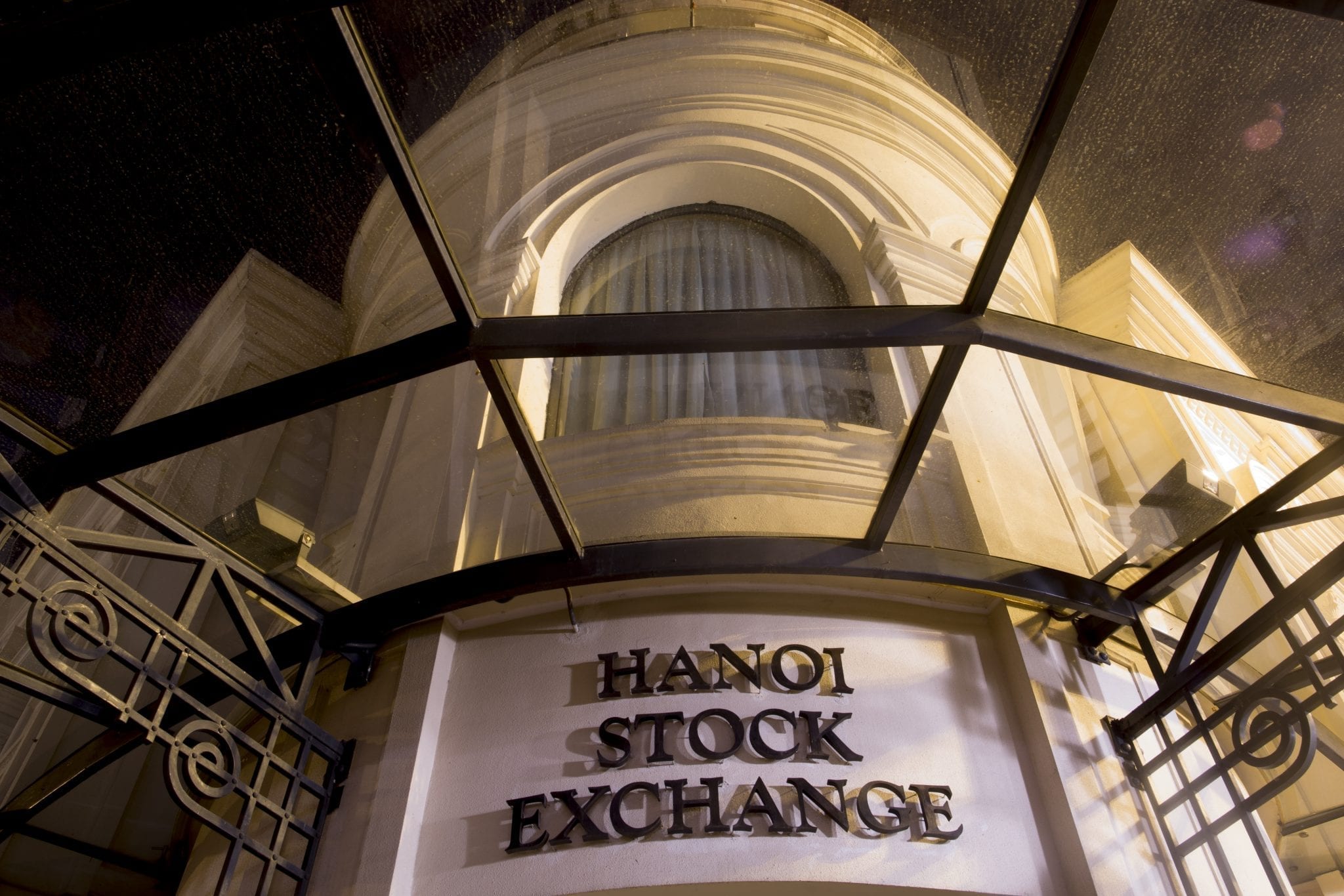
Tag: hanoi stock exchange

  • Vietnam scraps plan to merge stock exchanges

    Vietnam scraps plan to merge stock exchanges

    The nation’s two bourses in Ho Chi Minh City and Hanoi will continue to operate independently under a new state-owned company. Ho Chi Minh City Stock Exchange (HoSE) and Hanoi Stock Exchange (HNX) will operate independently under the Vietnam Stock Exchange, which will be set up by the Ministry of Finance by 2020. The new company, to be headquartered in Hanoi, will have a charter capital VND3 trillion ($129 million), on the basis of combining the charter capital of both exchanges.

    The Vietnam Stock Exchange will issue regulations on stock listings and trading, monitor the stock market and supervise the two bourses. This new plan indicates that Vietnam has given up on an earlier plan to merge the two exchanges, owing to disagreement over where the combined one would be located.

    HoSE accounts for 93 percent of the two main exchanges’ total market capitalization of about $131 billion as of December. It is the main market, where blue chips such as Vietnam’s biggest private conglomerate Vingroup, dairy company Vinamilk and budget carrier Vietjet Air are listed.

    HNX, on the other hand, is home to smaller and mid-sized enterprises, bonds and derivatives.

  • Experts express cautious optimism for Vietnam stock market

    Experts express cautious optimism for Vietnam stock market

    Last year’s uncertainties and unclear future scenarios are reflected in more cautious assessments than number crunching for 2019. Nguyen Duy Hung, chairman of SSI, a leading Saigon broker, said that with a drop of over 20 percent from its peak, when the VN-Index climbed to 1,204 points on April 9, 2018, Vietnam’s stock exchanges have entered a bear market.

    The benchmark VN-Index on the Ho Chi Minh Stock Exchange lost 1.52 per cent to end Thursday at 878.22 points. On Friday afternoon, it rose to 880.9 points.

    Perhaps it will take between 8 to 11 months for the market to recover, Hung said. “Historical data suggests that it would take 21 months for a bear market to recover its old peak after hitting bottom.”

    But the SSI chairman said the main challenges facing the stock market in 2019 include worries posed by the escalation of the U.S.-China trade war, and increasing geopolitical risks.

    “At this point, no one can say how this war will unfold or predict how widespread the impact will be. Along with the decline in oil prices signaling difficulties of the world economy, the rise in geopolitical risks paint a picture of uncertainties for 2019,” Hung said.

    Also mentioning key challenges for 2019, Securities Commission chairman Vu Bang named the slowdown of Chinese and global economies, the escalating trade war and risks from expanding global debt.

    However, these challenges come with opportunities to be seized. The trade war, according to the SSI chairman, is a chance for Vietnam to increase its exports. This does not mean market share growth will happen immediately, he said, explaining that it was an opportunity to build a medium to long term strategy, innovating the country’s economic growth model based on production and commercial activities.

    Vu Bang also emphasized the advantages of macro factors, saying the continuous high growth rate in recent years was a factor that would increase the attractiveness of Vietnam’s market in the region.

    Vietnam’s GDP growth of 7.08 percent in 2018 retained its status as one of the best performing economies in the world. It was the highest growth the country has experienced since 2008 and compared with the median estimate of 6.9 percent in a Bloomberg survey of 12 economists.

    Offering a more optimistic view, Tran Le Minh, deputy general director of VietFund Management, said that the market in 2019 still holds several favorable factors, including the fact that the decline in VN-Index was relatively slower than in other parts of the world.

    “Why is the market declining more slowly? The reality must be seen in macro factors, growth and the fact that foreign institutional investors continue to invest in the market. Cash flow from foreign investors will continue to be a highlight this year,” said Minh, who predicted that the VN-Index will not fall below its current level by the end of 2019.

    Foreign direct investment disbursement in Vietnam reached a record $19.1 billion in 2018, a year-on-year increase of 9.1 percent, according to the Ministry of Planning and Investment.

    For the market players’ perspective, 2019 is not going to be an easy year, experts say.

    “With many unpredictable factors caused by geopolitical and commercial tensions, most analysts agree that the global economy is entering the end of a growth cycle and 2019 will be a difficult year for the stock market,” said an analyst team with Rong Viet Securities (VDSC).

    It will be difficult for Vietnam to buck the global trend, they felt.

    Bernard Lapointe, head of research of Rong Viet Securities said recently that he was optimistic but not too optimistic about the market this year. He expects the VN-Index to stay within the 900-1,000 points range until the end of 2019.

    Meanwhile, Michel Tosto, head of Institutional Sales and Brokerage of Viet Capital Securities, predicted that the VN-Index could reach 1,060 points at the end of 2019.
  • Vietnam’s blue chips fall faster than stock market plunge

    Vietnam’s blue chips fall faster than stock market plunge

    As business results fall short of targets, Vietnamese blue chips are falling faster than the stock market’s continued plunge. Vietnam’s benchmark VN-Index dropped 23.5 percent to 917.97 points on Friday from its April peak over 1,200 points. In corresponding comparison, the fall in value of blue chips stocks has been more than twice as high. A share of Vietnam’s leading stone manufacturer Vicostone (VCS) on Friday was worth VND75,000 ($3.2), down 47 percent from its peak on April 4 at VND141,600 ($6.06).

    Analysts at that time called the stock a “phenomenon,” as its value surged 50 times from VND3,000 (13 cents) in mid-2014 on the Hanoi Stock Exchange (HNX).

    Vicostone’s profits also rose over 50 percent a year from 2014 to 2017, while its revenue increased from VND2 trillion ($85.64 million) to VND4.35 trillion ($186.27 million) in the same period.

    But this year, maintaining double-digit growth seems to be a challenge for the company as its revenue has stayed the same year-on-year at VND3.2 trillion ($137 million), while net profit fell 7 percent to VND790 billion ($33.82 million) in the first nine months of this year.

    Although the company has reassured shareholders that business is normal and that Vicostone plans to buy its own shares to stop the falling momentum, investors have been selling their holdings at increasing speeds.

    A similar situation can be seen at the Vietnam Prosperity Joint-Stock Commercial Bank (VPBank). Its stocks on Friday morning closed at VND21,950 (94 cents), dropping 48.7 percent from its peak on April 9 at VND42,826 ($1.83).

    Last year, as it focused specifically on consumer finance, the bank’s stocks was one of the most sought-after when it was listed on the Ho Chi Minh City Stock Exchange (HOSE) in August.

    But its stocks value has been dropping this year because business results are not as expected, analysts say.

    The company gained a consolidated net profit of VND4.9 trillion ($209.82 million) in the first nine months, up nearly 9 percent year-on-year, but only 60 percent of the year’s target.

    Securities firm Viet Capital Securities (VCSC) said in its recent report that the bank is not likely to meet targets set earlier this year. It said its own forecast on VPBank’s profit and stock prices for the year could be revised downwards 15-20 percent.

    Major plastic stocks are also falling in value.

    Binh Minh Plastic (BMP) and Tien Phong Plastic (NTP), the country’s two leading plastic producers, had their stock values plunge 50 percent from their peak last year.

    The two companies recorded high growth from 2010-2016. Binh Minh Plastic’s revenues went up from VND1.4 trillion ($59.95 million) to almost VND3.7 trillion ($158.43 million), with gross margin going up to nearly 30 percent.

    In the same period, Tien Phong Plastics also doubled their revenue and had its gross margin rise to almost 36 percent.

    Both companies were able to achieve this growth thanks to cheap materials and continual expansion.

    But as investors started to lose faith in the potential of the plastic industry and the entrance of foreign companies along with higher material costs, the plastic manufacturers had to reduce their profit margins.

    Last year, Binh Minh Plastic’s gross margin dropped to below 23 percent, while that of Tien Phong Plastic fell to 33 percent.

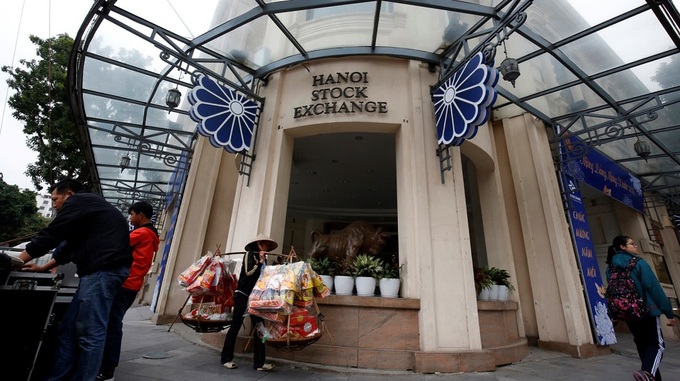
    Other stocks in the country have also fallen. The HNX-Index on the Hanoi Stock Exchange on Friday closed at 104.271 points, down 24.4 percent from its peak in April.

    The UPCoM-Index for unlisted companies on Friday closed at 51.872 points, 16 percent lower from its peak in March.

  • Most SE Asia stocks fall in line with broader Asia; Indonesia climbs 1 pct

    Most SE Asia stocks fall in line with broader Asia; Indonesia climbs 1 pct

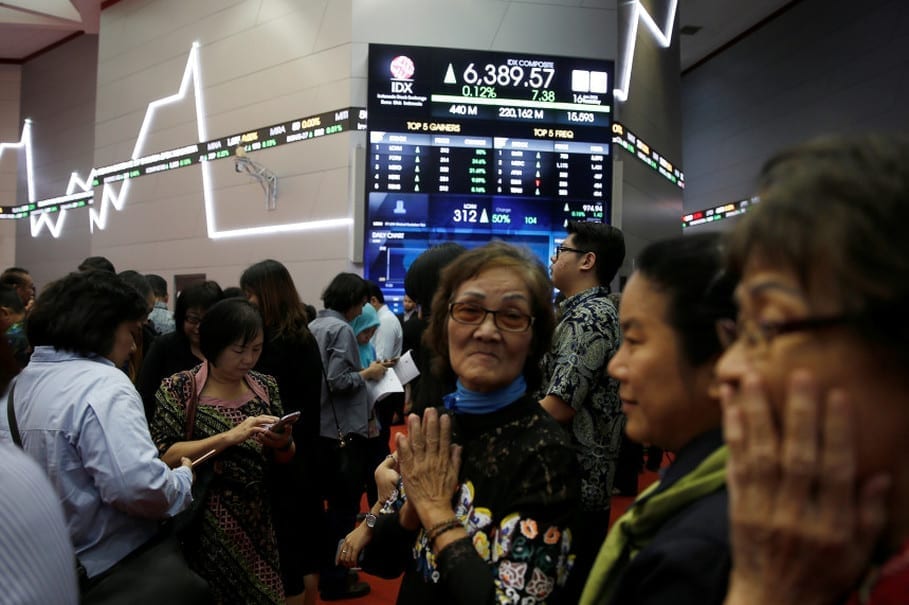
    Most Southeast Asian stock markets fell on Tuesday, tracking broader Asia after a selloff on Wall Street overnight. As reported, citing sources from both sides, that China’s top trade negotiator Liu He may visit Washington to prepare for the talks between U.S. President Donald Trump and his Chinese counterpart Xi Jinping on the sidelines of the G20 summit in Argentina later this month.

    Philippine shares declined 1.2 percent, extending falls into a third session, dragged by industrial and real estate stocks. SM Prime Holdings declined 2.3 percent, while JG Summit Holdings fell 6.9 percent.

    Singapore shares declined for a third consecutive session, dragged by financials. DBS Group Holdings, the city-state’s largest lender, slipped 0.9 percent, while rival United Overseas Bank Ltd fell 1.2 percent.

    Malaysian shares extended falls into a third session, with IOI Corp Bhd shedding 3.1 percent to a near 11-month closing low and IHH Healthcare Bhd declining 2.8 percent to its lowest close since July 2014.

    Trade tensions between the United States and China will create a “domino effect” and prompt other countries to turn protectionist, said Malaysian Prime Minister Mahathir Mohamad.

    Vietnam shares declined 1.4 percent, dragged by financial and real estate stocks. Joint Stock Commercial Bank for Investment and Development of Vietnam (BIDV) fell 3.7 percent, while real estate investor Vingroup JSC ended 2.7 percent lower.

    Indonesian shares were the top gainers in Southeast Asia with a rise of 1 percent. Consumer staples and financials led the gains with United Tractors Tbk PT and Bank Central Asia Tbk PT rising 5.5 percent and 1.6 percent respectively.

    Thai shares climbed 0.3 percent, helped by consumer staples.

    Glass container manufacturer Berli Jucker PCL rose 1.4 percent, while convenience stores operator CP All PCL climbed 2.6 percent to a more than one-month closing high.

    “Stocks are rising on internal factors like government improving infrastructure and linking of our three airports,” said Teerada Charnyingyong, an analyst with Phillip Capital Thailand.”The government also announced measures to stimulate spending by promoting the tourism sector.”

  • Vietnam’s stock capitalization rockets to $132 billion

    Vietnam’s stock capitalization rockets to $132 billion

    Vietnam’s total stock market capitalization in the first 10 months reached $132 billion, up 83 percent from the end of last year and equal to 61 percent of Vietnam’s gross domestic product, the National Financial Supervisory Commission reported on Wednesday.

    During the first 10 months, the benchmark VN-Index on the Ho Chi Minh Stock Exchange increased by 20 percent from the last day of trading last year.

    Notably, on Wednesday, the VN-Index closed at 859.7 points, marking a 10-year high.

    On the bond market, funding raised from government bonds also witnessed an improvement. In October, the State Treasury of Vietnam issued $307 million worth of government bonds, an on-month increase of 41 percent.

    According to the commission, demand for short-term government bonds (five-year and seven-year terms) increased, but demand for long-term bonds (more than 10-year terms) declined.

    As of October, the State Treasury had completed 85 percent of its bond issuance target for 2017, which has been set at $8.03 billion.