Tag: Hanwha

  • Hermes Unveils Expanded Boutique In Seoul: A Fusion Of French Luxury And Korean Tradition

    Hermes Unveils Expanded Boutique In Seoul: A Fusion Of French Luxury And Korean Tradition

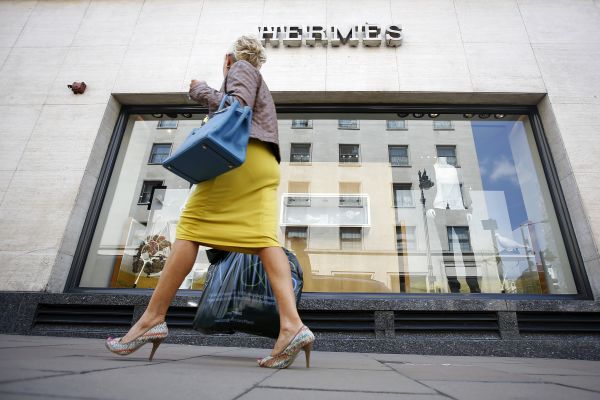
    The renowned brand, Hermes, has recently reopened its enlarged boutique in the high-end shopping zone, Apgujeong Rodeo, within Seoul’s Galleria department store. This area is famously known as a luxury buying hub in the Gangnam district.

    Design and Aesthetics

    The storefront, crafted by the Parisian architecture agency RDAI, is beautifully wrapped in oxidizing metal stripes. This design is an homage to the traditional Korean decorative painting known as Dancheong, creating a perfect blend of modern and traditional. Hermes, the French luxury powerhouse, refers to this as a lively interaction between culture and modernity.

    Upon entering, visitors are greeted with the emblematic ex-libris of the house, embedded into the signature terrazzo Faubourg pattern. The boutique layout accentuates different merchandise categories, with silk items occupying the central space. On the right side, there are men’s shoes and ready-to-wear sections, while home and equestrian collections are located toward the back.

    Showcasing Products

    The goods on display include leather items, jewellery, and watches, which are showcased in dedicated intimate spaces. Women’s ready-to-wear and shoe collections are exhibited against a backdrop of pastel blue terrazzo and silk partitions.

    The interior design incorporates local custom craftsmanship, such as pleated paper lighting created by Jungmo Kwon. This is in addition to pieces from the Emile Hermes collection and contemporary photography.

    The statement from the company further elucidates, “As the store moves to a new location, the two window scenes also lead the viewer on a poetic journey. This narrative transforms the mundane details of daily life into thought-provoking reflections on our collective imagination.”

    The luxury brand extends an invitation to its loyal clientele and prospective customers to explore their timeless creations in a vibrant environment that mirrors the unique culture of Seoul and the impeccable craftsmanship of the house.

    Questions & Answers

    What does the new design of the Hermes store symbolize?

    The new design brings together the elements of traditional Korean decorative painting with modern aesthetics, symbolizing a playful dialogue between heritage and modernity.

    What kind of products are highlighted in the store layout?

    The store layout emphasizes different categories including silk at the center, men’s shoes and ready-to-wear to the right, and home and equestrian collections toward the rear. Leather goods, jewellery, watches, and women’s ready-to-wear and shoes are also showcased.

    What local elements are incorporated in the interior design of the store?

    The interior design incorporates local custom craftsmanship, such as pleated paper lighting by Jungmo Kwon, displayed alongside pieces from the Emile Hermes collection and contemporary photography.

  • Hanwha Group Mulls Sale Of Fg Korea, Operator Of Five Guys Franchise In South Korea

    Hanwha Group Mulls Sale Of Fg Korea, Operator Of Five Guys Franchise In South Korea

    The South Korea-based conglomerate, Hanwha Group, is reported to be contemplating the sale of FG Korea, the operator of the American burger franchise Five Guys in South Korea.

    FG Korea and Hanwha Group

    FG Korea functions as a fully-owned subsidiary of Hanwha Galleria, which is the retail division of Hanwha Group. The company recently disseminated documents to private equity firms via a local accounting firm, Samil PwC. This action is seen as an indicator of a possible sale. It is anticipated that if a sale does occur, it would likely result in the complete transfer of ownership of the company.

    FG Korea’s Expansion

    FG Korea was instrumental in introducing Five Guys to the South Korean market in 2023, with the inaugural restaurant opening in the Gangnam district of Seoul. Since then, the chain has grown to include seven branches, with plans for an eighth location to open later this month in Yongsan, central Seoul.

    In the previous year, FG Korea had entered into an agreement with Five Guys International to spearhead the brand’s expansion into Japan, with an ambitious goal of establishing more than 20 outlets within the span of seven years.

    FG Korea’s Financial Performance

    In the past fiscal year, FG Korea reported significant sales of 46.5 billion won (approximately US$33.4 million) and a net income of 2 billion won.

    This potential sale is understood to be part of Hanwha Galleria’s attempts to optimize its portfolio and reduce expenses.

    Questions & Answers

    What is the relationship between FG Korea and Hanwha Group?
    FG Korea is a wholly-owned subsidiary of Hanwha Galleria, which is the retail branch of Hanwha Group.

    What has been FG Korea’s role in the expansion of Five Guys?
    FG Korea brought Five Guys to South Korea in 2023 and has since helped the brand grow to seven locations. Furthermore, they have also signed a memorandum of understanding with Five Guys International to lead the brand’s expansion into Japan.

    What is the financial performance of FG Korea in the past fiscal year?
    FG Korea reported 46.5 billion won (approximately US$33.4 million) in sales and a net income of 2 billion won in the last fiscal year.

  • Hanwha gets smart about solar cell production

    Hanwha gets smart about solar cell production

    Hanwha Group has been striving to make the solar business its future growth engine since it first entered the industry in 2010, and that hard work is starting to pay off. Hanwha Q Cells, the group’s solar cell producer, is now one of the largest manufacturers in the industry, but competition is getting much tougher. Even some of the more established companies in Europe and the United States are struggling due to fast-growing Chinese manufacturers, according to Hanwha. As a result, the United States imposed tariffs on solar cell and module imports earlier this year.

    In a bid to tackle fierce competition and fortify its leadership, the group invested in making its new solar cell plant smarter using wearable gadgets, big data and robots.

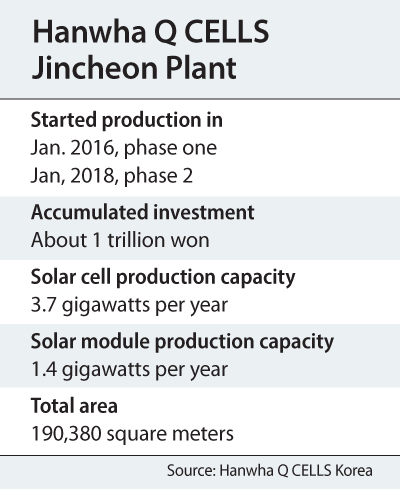
    The Jincheon 2 plant, which started mass production of solar cells and modules in January, is an addition to the original complex built in 2016. With the first and second plant combined, the Jincheon facility is the largest single solar cell production site in the world, according to Hanwha, with 3.7 gigawatt production capacity.

    When we visited the solar cell production line on the third and fourth floor of the newly-built plant on Tuesday, some workers were moving busily from machine to machine wearing what looked like a smart watch.

    “It looks like a smart watch because we took the hardware from electronics companies like Samsung,” a spokesperson from Hanwha said. “But we applied our own software so that workers receive alarms when there are problems with the machines.”

    According to the solar cell maker, the watch does not provide a detailed cause or explanation of the problems, but it makes workers respond immediately to issues by alarming them with notices categorized into four stages – S, A, B and C – depending on the severity and complexity of the problem.

    The system means that just 40 workers are required to manage 220 machines lined-up horizontally in five production lines in the 330-meter-long (1082 feet) solar cell production room, according to Hanwha.

    Another unusual scene inside the plant was a huge stack of 200 solar cells moving around over workers’ heads.

    “We call it a cassette,” said Yang Byung-ki, a manager of cell production at Hanwha Q Cells Korea, the company in charge of cell production in Korea. “This automated overhead logistics system delivers solar cells quickly and safely to the next destination.”

    The automated delivery system moves cells through the 10 stages of production.


  • Korean firms team up on insurance

    Korean firms team up on insurance

    SK Telecom, Korea’s top mobile carrier, and Hyundai Motor will jointly enter the insurance business, partnering with Hanwha General Insurance to bring their technology expertise to the industry. The Financial Services Commission (FSC), the country’s top financial regulator, said Wednesday it has given preliminary permission for SK Telecom, Hyundai Motor and Hanwha General Insurance to build an online insurance company that primarily deals with miscellaneous non-life insurance on digital platforms.

    “If the process goes smoothly, it can open in the fourth quarter of this year,” said a spokesperson at SK Telecom.

    In six months, the investing units are required to raise the promised capital, complete recruiting and have the physical operation in place, after which it will file for final approval.

    The companies said the unit will focus on cars, pets and travel.

    Hyundai Motor said the insurer will develop a product that differentiates insurance fees depending on a policy holders’ mileage and other driving behavior. Also on the cards is a system that discounts fees when subscribers are found to drive in a safe manner by adopting a real-time analytical technique to monitor driving habits.

    The insurance firm aims to carve out its own niche with lower fees and relatively short contracts.

    “We want to offer attractive alternatives for consumers who found existing insurance products expensive and requiring long-term commitment,” said Jang Yoo-seong, head of the artificial intelligence (AI) and mobility division at SK Telecom.

    The idea is based on InsurTech, a combination of insurance and technology that has quickly risen to prominence in the global financial industry.

    According to a study by the Korea Insurance Research Institute, the market has been rapidly growing in recently years. Investment in InsurTech start-ups, which amounted to $2.6 million in 2013, surged to $11.9 billion in 2017.

    The global InsurTech market revenue is valued at $532.7 million in 2018 and is expected to reach $1,119.8 million by 2023, according to Research and Markets, a U.S. market tracker.

    Hanwha General Insurance will raise 75.1 percent of the capital while SK Telecom puts in 9.9 percent. Hyundai Motor invested 5.1 percent and Altos Ventures Korea, an investment firm, 9.9 percent.

    In total, the companies will funnel in a total of 85 billion won.

    If passed, the new insurer will be the country’s second internet-only insurance company after Kyobo Life Planet.

  • Faure Le Page ready to debut in Seoul

    Faure Le Page ready to debut in Seoul

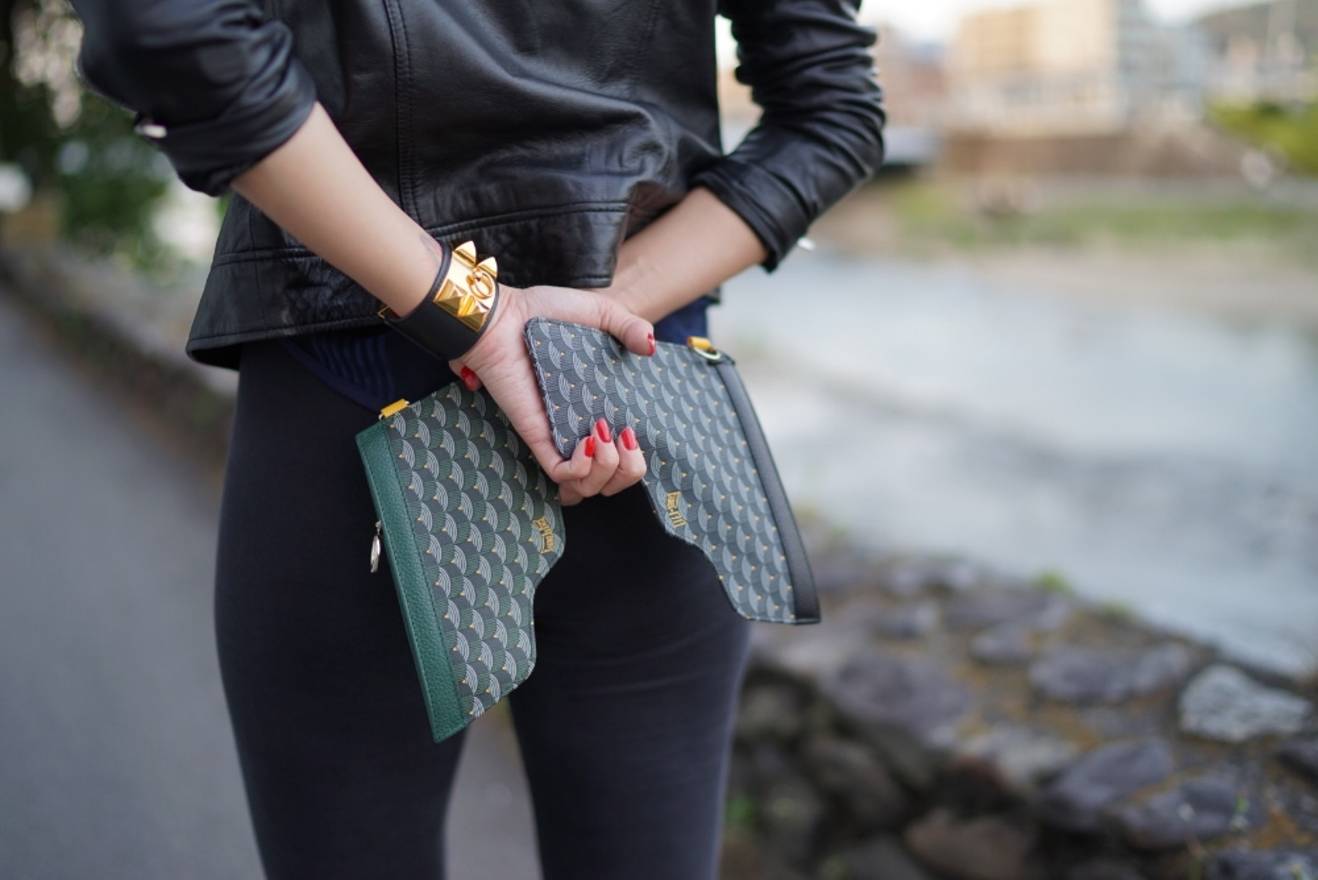
    The Parisian luxury accessories retailer Faure Le Page will open its first store in South Korea next month.

    The Faure Le Page store will be the fashion house’s eighth brick-and-mortar store globally when it opens at Hanwha’s Galleria Department Store in Seoul.

    The French company, which specialises in leather bags and other leather goods, dates back to 1717 and already has Asian stores in Japan and Taiwan.

    “Seoul, one of the most dynamic cities in the world, will open a new chapter for our brand,” said Faure Le Page’s creative director Augustin de Buffevent.

    “After comparing other competitive fashion companies, we decided to partner with Hanwha Galleria [due to] their best department stores for luxury goods.”

  • Korean duty-free stores suffer losses

    Korean duty-free stores suffer losses

    Korean duty-free stores newly opened in Seoul are losing money as heavy marketing costs erode profits.

    A review of financial documents from the major players show heavy competition is taking its toll on all players.

    Five duty-frees stores opened new shops in the capital city after winning licenses in two bids — one in July and the other in November 2015 — in hopes of courting deep-pocketed Chinese customers, but none of them has reached the break-even point since opening.

    Shinsegae Duty Free, which opened in mid-May, posted 121.2 billion won (US$103.8 million) in sales over the past four months, but it accumulated 37.2 billion won of operating losses, its regulatory briefing showed.

    Galleria Duty Free 63, a duty-free store run by Hanwha Galleria, said it booked 193.4 billion won of sales between December 28 and September 30, but the operating deficit reached 30.5 billion won over the period.

    HDC Shilla Duty Free, a joint venture between Shilla Hotel and Hyundai Development, said it posted 228.7 billion won and 16.7 billion won in sales and operating deficit, respectively, in the January-September period.

    SM Duty Free, a unit by leading tour agency Hana Tour, said it logged 71.1 billion won in sales and 20.8 billion in operating losses from its opening on February 15 to September 30.

    Doota Duty Free, a unit by power equipment and construction conglomerate Doosan Group, logged 10.4 billion won in sales and 16 billion won in operating losses in the first half of this year. It has not yet disclosed the third quarterly report.

    Business prospects remain grim for the fledgling operators as the government is set to give out four new operating licenses in Seoul as a way to promote tourism.

    The Korea Customs Service earlier said it will pick the winners next month, but it remains unclear as a snowballing influence-peddling scandal involving the business community has prompted investigation into the companies that donated funds to two sports foundations, involving those vying for duty-free shop licenses.

  • Hanwha Galleria to open in Seoul on Dec

    Hanwha Galleria to open in Seoul on Dec

    Hanwha Galleria, the retail unit of South Korean conglomerate Hanwha, says it will partially open its first duty-free store in downtown Seoul next week.

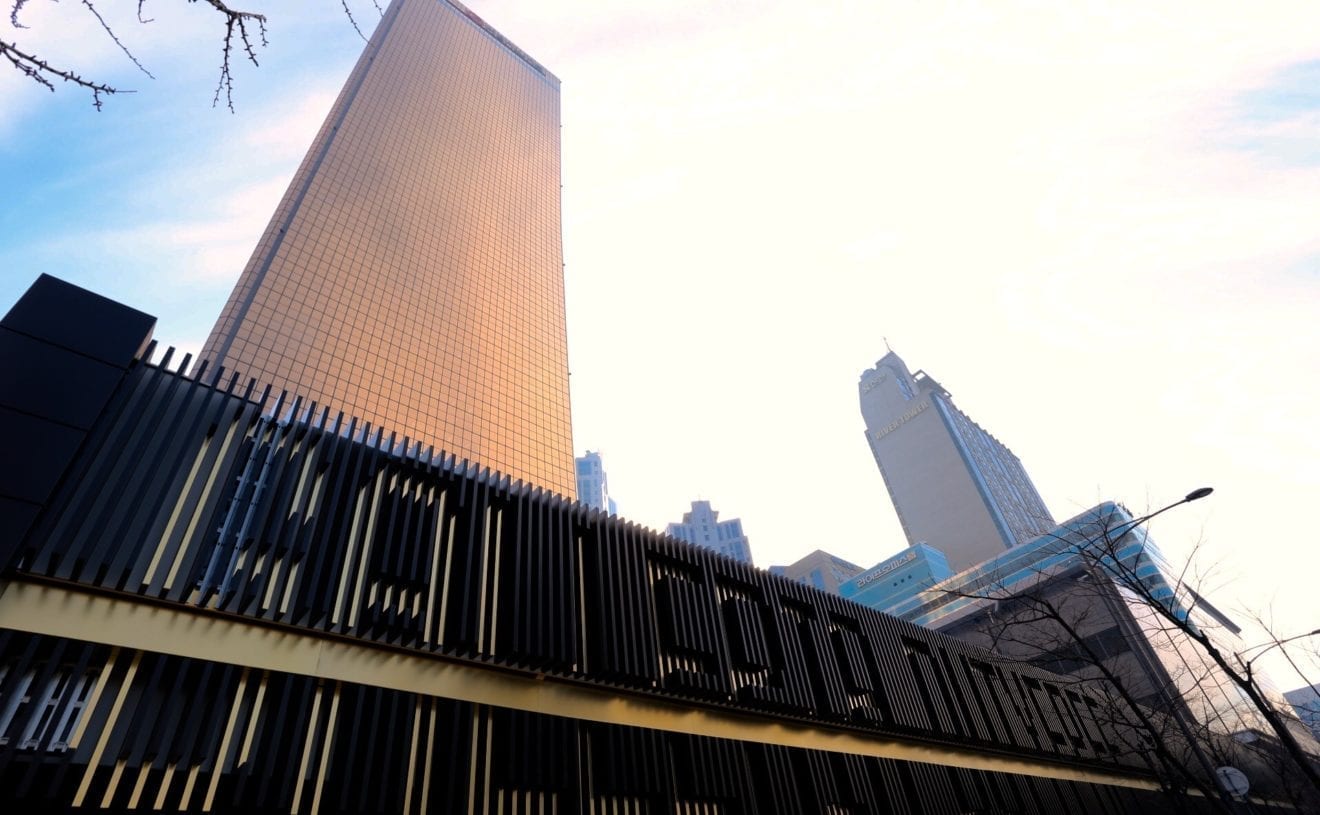
    About 60 per cent of the trading floor of the new store, located at the base of the gold-tinted 63 City Building in Yeouido will open for business on December 28.

    The target customers: cashed up Chinese tourists now flocking to Korea in increasing numbers.

    The rest of the store will open in June.

    The pre-opening will showcase 369 brands, including cosmetics, watches and jewellery, on four floors, with nearly half of them being Korean brands.

    Although Hanwha said it has been working on attracting global luxury brands to the store, it has made little progress.

    “Although we want to have (luxury brands) in the stores, they are not yet considering opening new shops, thinking they have enough shops (in South Korea),” Hwang Yong-deuk, CEO of Hanwha Galleria, said during a briefing.

    The company said it will continue negotiations to house global brands when Lotte World Tower, a duty-free store by retail giant Lotte, closes its outlet this month after losing its operating license in a recent bid.

    Hanwha vowed to step up its bid to expand its duty-free business down the road, adding it is targeting 504 billion won (US$429.6 million) in sales at the new store next year.