
Tag: HAPS

  • SoftBank Completes Japan Airborne Base Station Trial for 2027 Rollout

    SoftBank Completes Japan Airborne Base Station Trial for 2027 Rollout

    SoftBank Corp. Completed Japan’s first stratospheric mobile base trial over Kochi Prefecture. The platform transmitted voice, video and drone control signals from an altitude of 20 kilometres.

    The uncrewed, airship-like craft can hover for up to six months. It acts as an airborne cell tower when earthquakes or typhoons knock out ground networks.

    Stratospheric Flight Over Kochi

    Crews launched the High Altitude Platform Station craft from New Mexico. They ran communication tests above western Japan’s Muroto region on August 23 and August 24. Engineers confirmed stable two-way voice, video and emergency channels during the two-day window.

    Flight trials also maintained continuous control links with inspection drones. SoftBank plans to deploy those links during natural disasters to check damaged roads and assess collapsed buildings without risking ground survey crews.

    Rival Operators Test Disaster Links

    Japan’s three dominant carriers are competing to secure non-terrestrial coverage across an archipelago exposed to frequent seismic activity. SoftBank, NTT DOCOMO and KDDI Corp. Already sell direct-to-satellite messaging for smartphones. Satellite bandwidth, however, struggles to support video feeds and autonomous drone flights during emergencies.

    High-altitude stations solve that bottleneck by operating closer to Earth than low-orbit satellites. NTT DOCOMO is preparing trials in Ishikawa Prefecture’s Noto peninsula using a balloon-shaped craft. That project targets damage assessments and labor monitoring for forestry and agriculture.

    Commercial Service Targets 2027

    Demand for stratospheric networks intensified after a magnitude 7.6 earthquake struck the Noto region on January 1, 2024. The disaster cut road access and severed terrestrial fiber links across dozens of coastal communities.

    SoftBank plans to widen flight zones and extend mission durations ahead of a commercial rollout in 2027. That service will target enterprise clients and municipal governments seeking backup connectivity during regular operations.
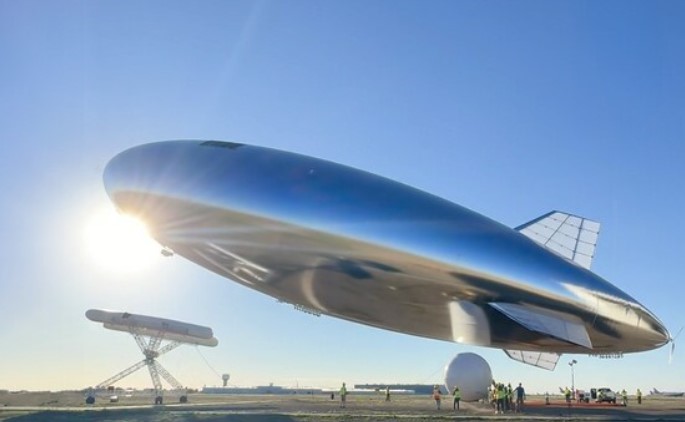
  • Sceye’s Solar Drones Set to Revolutionize Connectivity with Promising 6G Internet Innovation

    Sceye’s Solar Drones Set to Revolutionize Connectivity with Promising 6G Internet Innovation

    In a bold leap towards the future of telecommunications, U.S.-based startup Sceye is pioneering solar-powered, helium-filled drones that will soon take to the skies at an altitude of approximately 60,000 feet, or about 18 kilometers. These high-altitude platform systems (HAPS) are designed to float serenely above weather patterns and commercial air traffic, harnessing the power of advanced solar arrays and cutting-edge lithium-sulfur batteries to maintain consistent operations, even throughout the night.

    Revolutionizing Connectivity and Monitoring

    With the ability to stay in position amid strong winds and carry substantial payloads, these innovative drones are positioned to provide stable, long-range internet services, environmental monitoring, and robust wildfire detection capabilities. What’s remarkable? Their actual design enables them to remain airborne for months, even extending up to a year! Sceye’s prototypes have already demonstrated this potential through over 20 successful test flights.

    SoftBank’s Vision for 6G Networks

    In an exciting development for the telecommunications landscape in Asia, SoftBank has secured a pre-commercial HAPS mission set for 2026 in Japan. This initiative is part of SoftBank’s broader strategy to propel the advent of next-generation 6G networks. The vision of integrating these airborne platforms with satellites and terrestrial networks aims to deliver rapid, low-latency broadband, especially in remote regions or areas struck by disaster where traditional infrastructure is severely compromised.

    A Glimpse into the Future of Technology

    Equipped with durable, UV- and ozone-resistant envelopes that are 1,500 times more gas-tight than previous models, these drones are not just technological marvels; they are harbingers of a more connected world. Through the collaboration between Sceye and SoftBank, the stage is being set for the deployment of 6G technology, promising to revolutionize how we connect and communicate, paving the way for advancements we are only beginning to imagine.

    Questions & Answers

    What are Sceye’s drones designed to do?
    Sceye’s drones are developed to provide high-altitude solutions for long-range internet connectivity, environmental monitoring, and wildfire detection.

    What is SoftBank’s role in this initiative?
    SoftBank has secured a pre-commercial HAPS mission in Japan for 2026, aligning with its goal to develop next-generation 6G networks that integrate these drones with other communication infrastructures.

    How long can Sceye’s drones potentially stay in the air?
    The drones can remain airborne for months, with the potential to stay aloft for up to a year, thanks to their innovative, gas-tight envelope design.