Tag: Harley-Davidson

  • Harley-Davidson Creates Chief Digital Officer Role

    Harley-Davidson Creates Chief Digital Officer Role

    Harley-Davidson has announced that former Bose executive Jagdish Krishnan will take over the newly created role of Chief Digital Officer. Krishnan will be responsible for the development of a new digital strategy intended to improve the customer retail experience with direct-to-consumer technology for e-commerce and dealer digitization. This includes building seamless digital interfaces with products, services, commerce, and Harley-Davidson’s global dealer network. To enable this strategy, Krishnan will also lead the modernization of the company’s global information systems to make them more customer-centric.

    The creation of the new Chief Digital Officer role is part of The Rewire strategy, unveiled by Harley-Davidson’s new CEO. The Rewire is aimed at overhauling the company’s operating model and provide a better starting point for the future. The Chief Digital Officer is one of several roles and functions created or elevated to report directly to the Chairman, President, and CEO, Jochen Zeitz to build desirability for the Harley-Davidson brand and products.

    “Harley-Davidson is all about experiences, and an enhanced digital experience is absolutely critical for us to make our GIS and digital capabilities more customer-centric. We will take a completely different approach to apply digital technology across the company to fundamentally change how we operate and create value. To deliver on our objectives, we must have an innovative and high-performance IT function,” said Jochen Zeitz, chairman, president, and CEO of Harley-Davidson. “We need to be a high-performing team with cutting edge leadership to move us forward. Jagdish is exactly the right leader and he will ensure we connect with our customers at all touch-points.”

    Krishnan has over two decades of experience leading digital transformation and delivers solutions to position organizations for advanced growth. Prior to joining Harley-Davidson, Krishnan served as Vice President and Chief Digital Officer at Bose Corporation. Before Bose, he was with Deloitte & Touche and Patni Computer Systems, where he had a broad mix of experiences including Profit & Loss responsibility, information security, enterprise software deployment, programming, and IT operations. Krishnan has a Bachelor of Science with Honours in Computer Engineering from Pune University and a Master’s Degree in Data Communication and Distributed Systems from Oxford University.
  • Harley-Davidson To Cut Hundreds Of Jobs As Part Of Turnaround Strategy

    Harley-Davidson To Cut Hundreds Of Jobs As Part Of Turnaround Strategy

    Harley-Davidson Inc on Thursday said it will lay off 500 employees this year as part of new Chief Executive Jochen Zeitz’s efforts to revive the struggling motorcycle maker.

    As part of the overhaul, Chief Financial Officer John Olin will leave the company effective immediately. Darrell Thomas, treasurer, will become interim chief financial officer, it said.

    Harley-Davidson’s sales have been declining for the past five years in the United States, its largest market, as its baby-boomer customer base ages. The economic pain caused by the coronavirus pandemic has further dented retail demand.

    Jochen Zeitz was appointed as CEO of Harley-Davidson in February 2020, and he’s hailed for turning around the Puma brand’s near-bankrupt business

    In response to weak sales, the Milwaukee-based company has cut production, leading to 140 job cuts last month at its factories in Pennsylvania and Wisconsin.

    The latest cuts are in addition to those layoffs, a company spokeswoman said.

    Zeitz, who took over in February, is hailed for turning around the Puma brand’s near-bankrupt business.

    His restructuring strategy, dubbed The Rewire, is aimed at making Harley a leaner and more nimble organization. It seeks to reset product lines, focus on the company’s core strengths and prioritize profitable markets.

    “Significant changes are necessary, and we must move in new directions,” Zeitz said.

  • Harley-Davidson To Cut 140 Jobs In The US

    Harley-Davidson To Cut 140 Jobs In The US

    Harley-Davidson has decided to cut as many as 140 jobs in the US as a result of reduced production volume after assembly plants and dealerships were shut in the face of the Covid-19 pandemic. The layoffs are expected across two Harley-Davidson facilities and will affect 90 production workers at Harley’s York facility in Pennsylvania and 50 other workers at its Tomahawk facility in Wisconsin. The decision comes after Harley-Davidson was forced to shut down its factories in March as part of the efforts to stop the spread of the coronavirus pandemic kept non-essential workers at home.

    In April 2020, Harley-Davidson announced that the company had temporarily laid off most of its global production employees and implemented salary cuts to lower costs, as the coronavirus pandemic hurt the iconic American motorcycle brand’s business. In April, the company announced that the CEO and Board of Directors will forego their salaries, without specifying for how long. Salaries of executive leadership were cut by 30 percent, while most other employees’ salaries were cut by 10-20 percent. Hiring has been frozen and the company also announced that salary reductions will be reassessed at the end of the second quarter.

    While Harley-Davidson re-opened its factories in May 2020 at lower production rates, the company also said that fewer models will be shipped in 2020 to dealers in the US. Production will be limited this year to bestselling models and palette of colors, and without customizable features for the rest of the year. Harley also announced that any additional new motorcycles will not be shipped to about 70 percent of its 698 dealers across the US.

    Harley-Davidson has been struggling with slow sales for several years now, particularly in the brand’s home market of the United States

    Harley-Davidson has been battling slowing sales for several years, particularly in its top market of the United States, which accounts for more than half of the brand’s motorcycle sales. To make matters worse, the coronavirus pandemic has further dented demand for motorcycles as more Americans continue to stay at home. In May 2020, Harley-Davidson also replaced former CEO Matt Levatich with Jochen Zeitz, who is also the chairman of the Harley-Davidson board and former CEO of sporting goods manufacturer Puma. Jochen and his team have been working on a new five-year strategic plan to revive sales, which Harley-Davidson plans to reveal in the second-quarter earnings update.

  • Harley-Davidson Sacks Dealer In USA Over Black Lives Matter Post

    Harley-Davidson Sacks Dealer In USA Over Black Lives Matter Post

    Harley-Davidson has announced that it will cut ties with a Tennessee motorcycle and ATV dealership after a racist post was made on the owner’s Facebook page. The post was apparently made on the Facebook page of Russel Abernathy, the owner of Abernathy’s Cycle of Union City Tennessee. Abernathy also owns a Polaris dealership, and a week ago, Polaris, which also owns the Indian Motorcycle brand, has also asked him to step down. The posts were on the Facebook page of Abernathy, owner of Polaris, Harley-Davidson and Honda Powersports stores in Union City.

    In a statement, Harley-Davidson said: “Racism, hate or intolerance have no place in our world including within the Harley-Davidson community, employees, dealers or riders. We recently became aware of racist comments posted on one of our dealer owner’s Facebook page and immediately started a review process. We will not tolerate this type of behavior in our network, and today we are announcing that the dealer owner in question will no longer be part of our dealer network. Harley-Davidson is committed to diversity and inclusion. We strive to create a welcoming environment for everyone.”

    The post on Russel Abernathy’s Facebook page has since been deleted and stated that he “was sick of this black lives matter,” before calling for black people to go “back to Africa and stay.” On his part, Abernathy is claiming that his social media account was hacked. Screenshots of the now-deleted post were shared by angry observers and local commentators.

    Abernathy also owns a Honda Powersports store in Union City. Honda has released a statement saying that the brand “unequivocally condemns racist statements and actions of every kind” and has launched its own investigation into the matter, and will take “swift and aggressive action” if warranted by the investigation.

    The stand by both Harley-Davidson and Polaris are the latest indication that corporate America is taking a harder line against racism in the business world. Polaris has its headquarters in a suburb of Minneapolis near where George Floyd, an unarmed black man, died last month after a city police officer knelt on his neck for almost nine minutes.

  • Harley-Davidson India Introduces Home Delivery Of Motorcycles

    Harley-Davidson India Introduces Home Delivery Of Motorcycles

    Harley-Davidson India has introduced home delivery of motorcycles during the months of April and May, along with extended service warranties and a completely online version of what the brand calls, the Harley-Davidson Passport To Freedom, the experience of riding a new Harley-Davidson motorcycle. Members of the Harley Owners Group (H.O.G.) from across India have also shot and made a film, which has been published online to share the spirit of camaraderie and stand strong with the extended Harley-Davidson family. Bikes whose product warranties are expiring during the lockdown will also get extended.

    “For an experiential brand like ours, it is critical to stay engaged with customers and enthusiasts continuously, keeping them hooked to the brand. We have introduced a number of initiatives to keep them motivated and look forward to riding,” said Sajeev Rajasekharan, Managing Director – Asia Emerging Markets and India, Harley-Davidson.

    Harley-Davidson India is also offering an extension of warranty on its motorcycles

    The Harley-Davidson Home Delivery Program will help customers explore the range of Harley-Davidson models on the Harley-Davidson website, and then directly contact a dealer expert via the dealer locator to discuss the purchase and payment opportunities. Home deliveries of the motorcycles are free for a distance of up to 40 km from the dealership and chargeable for every extra kilometer.

    Harley owners whose product warranties are expiring during the lockdown period will get a 30-day extension. The brand will also provide a 60-day extension to customers who fall under the HDFS (Harley-Davidson Financial Services) planned maintenance program. The H-D contact center and Road-Side Assistance will continue to provide support services to all customers. Harley-Davidson India has also rolled out a completely online avatar of its popular program- ‘Passport to Freedom Online series’ in partnership with some notable names in motorcycling to talk about motorcycling at large and some of their Harley experiences. Harley-Davidson India has also pledged its support to PM Cares fund for fight against COVID-19.

  • Harley-Davidson Files For Cafe Racer

    Harley-Davidson Files For Cafe Racer

    Harley-Davidson has filed two new designs with the European Union Intellectual Property Office, using the same liquid-cooled Revolution Max engine powering the upcoming Harley-Davidson Pan America and Harley-Davidson Bronx models. The two new designs will be built on the same Revolution Max platform, and one of them will be a cafe racer styled model, and the other a flat track-inspired model. While the design drawings clearly indicate that the engine to be used on both models will be the Revolution Max v-twin, there’s still no indication of what the engine displacement will be.

    Harley-Davidson’s first adventure tourer, the Pan America uses a 1,250 cc version of the Revolution Max v-twin, while the Bronx streetfighter uses a 975 cc version. The Revolution Max v-twin is expected to get four different engine displacements, ranging from 500 cc to 1,250 cc. Prototype photos of both these new designs also surfaced, apparently from a Harley-Davidson dealer conference from September 2019.

    The photos of the prototypes look quite similar to the design drawings, but final production models may be slightly different. From earlier experience, Harley-Davidson design drawings, like the one of the Pan America and Bronx streetfighter, have gone on to be finalized for production. So, we won’t be surprised if the latest drawings also make it to the future model line-up, as Harley-Davidson looks to shake off the “heavyweight cruiser” tag and explore different segments of motorcycles.

    Designs of the flat track-inspired model show a design similar to something that could rival the Indian FTR 1200, with a similar tubular swingarm, as well as flat-track inspired high-mounted twin exhausts. The bike has a similar headlight like the Harley-Davidson Fat Bob, and like the FTR 1200, has a similar-looking rear tire-hugging number plate bracket attached to the swingarm. The bike looks like a single-seater, but Harley-Davidson could offer an aftermarket pillion-friendly seat as well once the bike gets closer to production.

    The second design is a cafe racer styled model, with a short windscreen and cafe racer-styled headlight. The exhaust is a two-into-one design, with the end can coming out on the right side of the bike, The design of the cafe racer shares the dual disc brakes and inverted fork with the flat track design, but the rear has a more traditional swingarm, and twin shock suspension set-up. The H-D Pan America, and the Bronx are yet to go into production, followed by the Custom 1250 cruiser, possibly sometime in 2021. But from these latest designs, it’s apparent that Harley-Davidson, despite the problems the brand is facing, is looking ahead to the future with several new models in the pipeline.

  • Harley-Davidson Suspends US Production Over Coronavirus Crisis

    Harley-Davidson Suspends US Production Over Coronavirus Crisis

    “We recognize the unprecedented nature of this global crisis. In order to best support our employees and following the social distancing guidance issued by public health authorities, we are temporarily suspending the majority of production at our US manufacturing facilities,” said Jochen Zeitz, acting CEO and President, Harley-Davidson. “We will continue to monitor the situation and take necessary steps to prioritize employee health and safety.

    Non-critical employees at Harley-Davidson’s headquarters and Production Development Centre in Milwaukee have also been asked to work remotely till the end of March. The company is also working with dealers to assess individual impacts and is encouraging dealers to follow the public health guidelines in their communities for the safety of its consumers.

    Harley-Davidson has become the latest motorcycle manufacturer to shut down at least some production facilities. In Europe, KTM and Ducati have also extended shutdowns at the two motorcycle brands’ manufacturing facilities, over the coronavirus pandemic. For Harley-Davidson though, the decision to shut down production comes at an already difficult time. Harley-Davidson sales are down, more so, in the US domestic market, and in late February, Harley-Davidson announced the departure of the brand’s CEO, Matt Levatich, who spent more than two decades at Harley-Davidson.

  • Harley-Davidson Softail Standard Unveiled

    Harley-Davidson Softail Standard Unveiled

    The 1,750 cc v-twin is blacked out, with chrome accents, and dual shotgun exhausts. It’s a single-seat Bobber-styled motorcycle, with steel spoked rims with a 19-inch front and 16-inch rear combination, and a single seat with an exposed rear fender.

    The high ‘ape-hanger’ type handlebar is complemented by a single round headlight, which is an LED unit. The H-D Softail Standard is only offered in black and tips the scales with a 291 kg dry weight. At the front is the teardrop-shaped 13.2-liter fuel tank, which reveals the frame and big Milwaukee-Eight engine.

    The suspension is handled by Harley-Davidson’s dual bending valve cartridge-type front fork, covered with clear-coated fork sliders, and at the rear is a mono-shock. Priced at $ 13,500 the Harley-Davidson Softail Standard will offer an entry-level machine and a perfect platform for customizing the bike further according to individual tastes and choices. Harley-Davidson also offers four dedicated accessory packages for those looking to customize the bike with genuine accessory packages right at the showroom.

    As of now, we’re not sure if the new Softail Standard will be offered on sale in India. But it could very well be introduced, as a new 2020 model in the coming months.

  • Harley-Davidson Global Annual Sales Fall In 2019

    Harley-Davidson Global Annual Sales Fall In 2019

    Harley-Davidson has announced annual results, and the sales numbers for 2019 aren’t very encouraging. The American motorcycle brand’s worldwide sales declined 4.3 percent with a total of 2,18,273 units sold worldwide. Even more worrying is the sales slowdown in Harley-Davidson’s home market, the US. The Bar & Shield brand’s sales in the USA fell by 5.2 percent to 1,25,960 units in 2019, from 1,32,868 units in 2018, while international sales fell 3 percent to 92,313 units in 2019, from 95,183 units a year ago. Harley-Davidson’s 2019 sales in almost all global geographies are in the red, with the Asia Pacific region showing a slight glimmer of hope with 2.7 percent growth.

    With 29,513 units sold in 2019 in the Asia-Pacific region, this is now Harley-Davidson’s third most important geography in terms of sales, after the US market, as well as Europe, Middle East and Africa (EMEA). Sales in EMEA fell 5.4 percent in 2019, down from 46,602 units in 2018 to 44,086 units in 2019. The Latin American geography also ended the year in the red, declining 3.9 percent from 10,167 units in 2018 to 9,768 units in 2019. Harley-Davidson’s sales declined the most in Canada, falling 7.7 percent from 9,690 units in 2018 to 8,946 units in 2019.

    On the financial side of things, Harley-Davidson reported annual revenue growth of 5.5 percent in 2019, up from $ 7,48,229 in 2018 to $ 7,89,111 in 2019. As part of the company’s More Roads To Harley-Davidson program, the American brand intends to introduce a whole new range of motorcycles over the next few years, to generate a new generation of customers, both in US, and more importantly, in newer markets abroad, like the Asia-Pacific.

    Later in 2020, Harley-Davidson is expected to introduce the Bronx Street Fighter, in a completely new segment, which is a departure from the company’s traditional cruiser-styled motorcycles. The Harley-Davidson Pan America will be the brand’s first adventure touring bike, and will be the brand’s first foray into the segment. More important though, will be a new small motorcycle, developed with Chinese partner Qianjiang Motorcycle. The 338 cc Harley-Davidson will be based on the Benelli 302 platform and will be manufactured in China, to be targeted at Asian markets.

  • Harley-Davidson 338 cc Cruiser Cleared For Production

    Harley-Davidson 338 cc Cruiser Cleared For Production

    Harley-Davidson and Chinese motorcycle giant Qianjiang (also the owner of the Benelli brand) have reportedly gotten together recently for a Design Freeze Signing Ceremony to create the most affordable Harley-Davidson motorcycle. So far, we don’t have any actual images, other than design sketches released earlier of the bike, but what is clear now is that Harley-Davidson is going ahead with the production of the ‘baby Harley’. The new motorcycle will be powered by a 338 cc engine, but instead of being a v-twin, it is expected to be a parallel-twin engine.

    The Harley-Davidson 338 cc motorcycle will be made specifically for Asian markets and will be the most affordable Harley-Davidson motorcycle

    The new bike is being cleared for production at a time when Harley-Davidson is looking to expand its customer base with its ‘More Roads to Harley-Davidson’ outreach, with a series of new models planned over the next few years, including the LiveWire electric bike, the Bareknuckle, the Bronx, as well as the Pan America. While we still don’t have any actual images of the bike, the design sketches do reveal a very similar silhouette to that of the Benelli 302S. In fact, the platform could very well be of the 302S, including the chassis and most of the bodywork, aside from a new seat unit and fuel tank.

    Harley-Davidson is likely to use the new 350 cc model (actually with a 338 cc powerplant), as its mainstay as the American brand gets ready to get into new markets and more volumes, particularly in South East Asia, India and China. It’s still not known whether Harley-Davidson will use the HD350 name, or come up with a new moniker as it has for the new models the brand is developing for the future. More details are expected in the next few months.

  • Harley-Davidson LiveWire Production Begins After Charging Issue

    Harley-Davidson LiveWire Production Begins After Charging Issue

    Harley-Davidson has resumed the production of the all-electric LiveWire motorcycle after determining that an issue with charging was limited to a single motorcycle. The company has now said that Harley-Davidson LiveWire owners can now resume charging their motorcycles at home. Harley-Davidson had previously advised customers to the only charge at dealerships until the charging issue was resolved. The issue has still not been specified, but Harley-Davidson claims that the issue was found only on one motorcycle after “rigorous analysis”. The first all-electric Harley-Davidson received a serious setback last week when production was halted due to a problem with the bike’s charging system

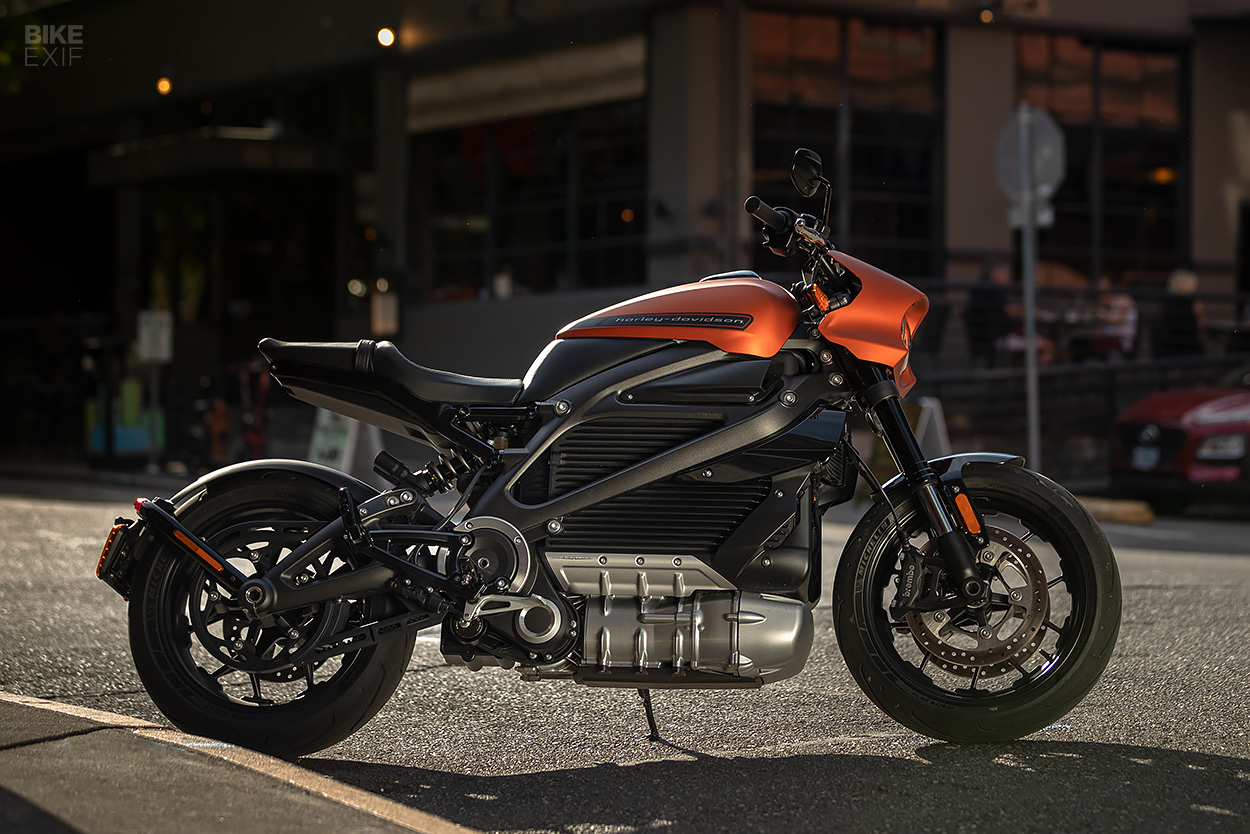
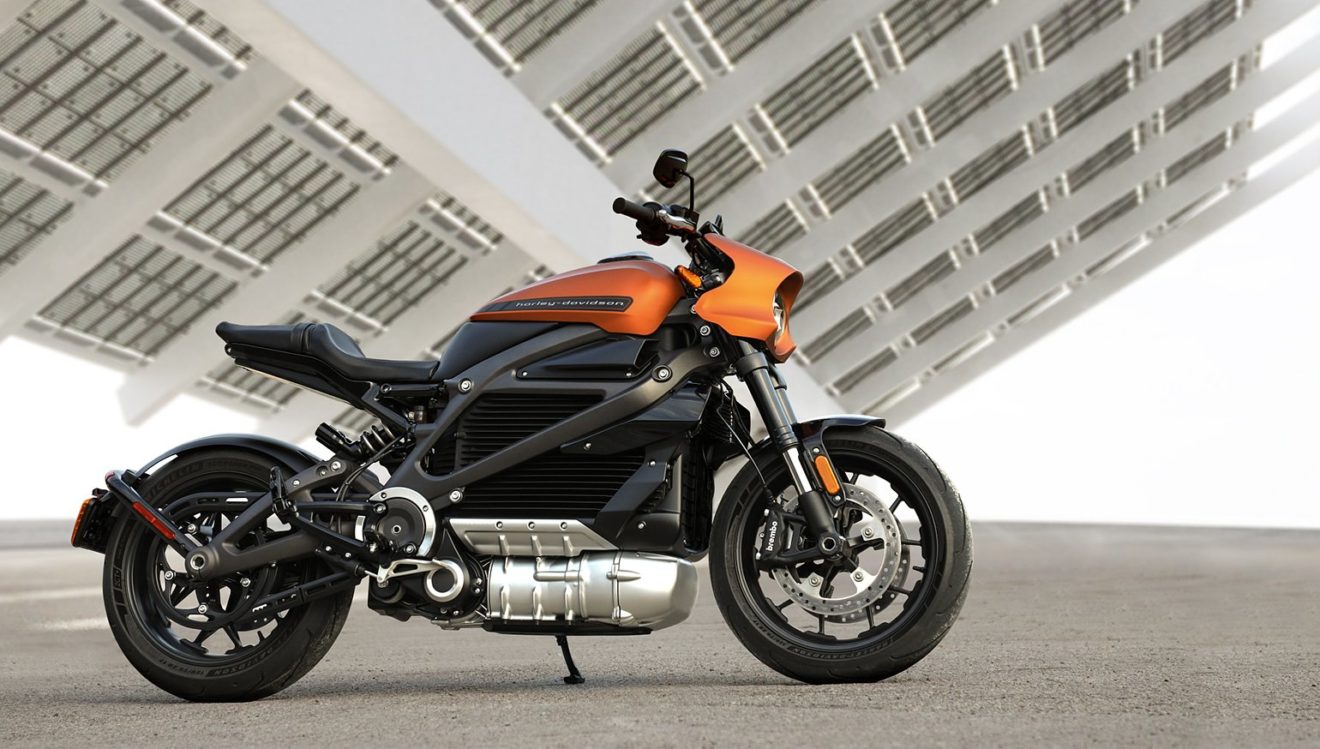
    The LiveWire has a cast aluminum frame and Showa suspension with the Revelation electric powertrain mounted low on the bike

    After the issue was reported, Harley-Davidson did not recall any of the LiveWire motorcycles already on the road, but the company did stop production and deliveries and also began simultaneous testing and analysis. Nevertheless, the issue will be a speed breaker to Harley-Davidson’s plans to garner some positive publicity for its electric motorcycle program. The company has now released a statement, which, while not going into the specifics of the problem, mentions that it was actually limited to just one motorcycle.

    “Temporarily stopping LiveWire production allowed us to confirm that the non-standard condition identified on one motorcycle was a singular occurrence,” the statement said, adding, “after completing rigorous analysis this week, we have resumed LiveWire production and deliveries.”

    The issue did, however, affect Harley-Davidson’s image after the company’s first foray into electrification just weeks after deliveries of the LiveWire began. The LiveWire is meant to complement Harley-Davidson’s traditional v-twin internal combustion engines, and not replace them, and went into production in 2019. Deliveries to dealers in Europe and the US began in September 2019. The LiveWire has also been showcased in India, but so far, there have been no definitive plans of launching the electric Harley commercially in India.

  • Harley-Davidson Working On New Pushrod Engine

    Harley-Davidson Working On New Pushrod Engine

    Harley-Davidson’s latest powertrain, after the eight-valve Milwaukee-Eight engine, will be yet another pushrod engine. The American motorcycle brand’s future line-up of motorcycles, including the Harley-Davidson Pan America, and new Streetfighter, may be powered by double-overhead-cam (DOHC), liquid-cooled engines, but Harley-Davidson may not have decided to do away with pushrod technology, at least for now. A new patent reveals Harley-Davidson’s plans for a new v-twin engine with an overhead valve system that claims higher engine speeds than the current Milwaukee-Eight.

    The primary difference is that the pushrods have been positioned on either side of the cylinders instead of together on one side on Harley’s existing engines. Current Harley engines use the pushrods to move a pair of rocket arm shafts, one to open the two intake valves and the other opening the two exhaust valves. The engine in the patent images also has four valves per cylinder, but instead of rocker arm shafts, the pushrods each open a single rocker arm. The single rocker arms will press down on a valve bridge when actuated by the pushrod. For the valve bridges to operate properly, they must remain in alignment. To keep the valve bridges from rotating out of line, Harley plans to stabilize the mechanism with a fastener, allowing the valves to move in unison at higher engine speeds.

    According to the patent, bridge-type valve trains allow engine speeds of maximum 4,000 rpm, but Harley-Davidson claims the new design allows for a maximum engine speed of between 6,800 to 7,000 rpm. Harley-Davidson’s Milwaukee-Eight engine redlines at around 5,500 rpm. While the American brand is getting ready to introduce the liquid-cooled DOHC platform, some future models will possibly have the high-revving pushrod engine, and will likely appease a lot of Harley-Davidson purists, offering better performance, but yet sticking to signature pushrod architecture.

  • Harley-Davidson Street 750 10th Anniversary Edition Launched In India

    Harley-Davidson Street 750 10th Anniversary Edition Launched In India

    American motorcycle manufacturer Harley-Davidson completes ten years in India this year, and to commemorate the occasion, the company has introduced a limited edition version of its entry-level offering. The Harley-Davidson Street 750 10th Anniversary Edition is priced at ₹ 5.47 lakh (ex-showroom, India) and becomes the first motorcycle in the bike maker’s line-up to meet the upcoming BS6 emission norms. The special model is about ₹ 13,000 more expensive than the standard version, and production is restricted to just 300 units in order to maintain the exclusivity on the model.

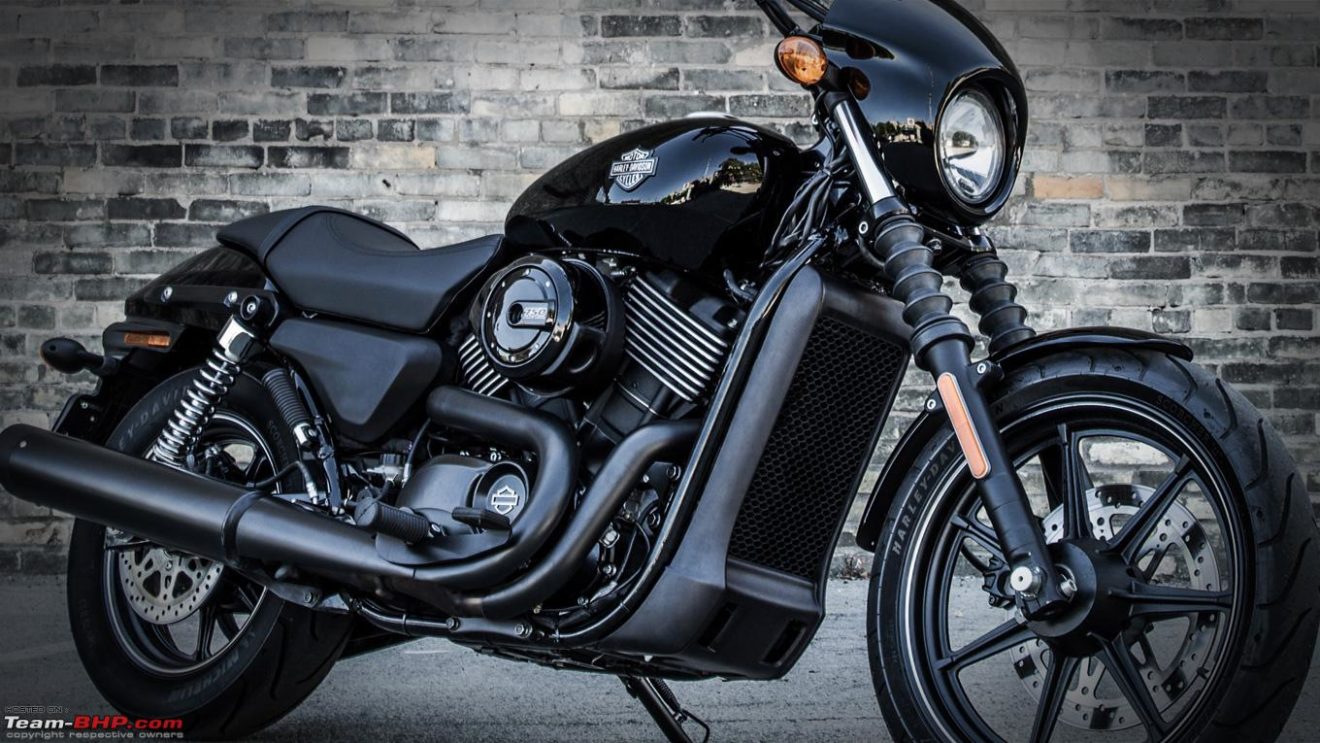
    The Harley-Davidson Street 750 10th Anniversary Edition remains largely identical to the standard model, but you do get the new Indian motif on the fuel tank and on the tail section just above the taillight. The bike continues to sport black finished alloy wheels, along with fork gaiters on the front forks. The short seat remains the same too on the 2020 Street 750.

    Mechanically, the Harley Street 750 anniversary edition the same components. The bike draws power from the same 749 cc liquid-cooled, V-Twin Revolution X engine that has been upgraded for the new and stringent emission norms, and churns out 60 Nm of peak torque at 3750 rpm, while paired with a 6-speed gearbox. The bike uses telescopic forks up front and twin shocks at the rear for suspension duties, while braking performance comes from disc brakes with dual-channel ABS.

    Apart from announcing the new Street 750, Harley-Davidson India also unveiled the LiveWire in the country. The production-spec version of the much-awaited motorcycle remains only an unveil for now and there has been no announcement on the launch of the motorcycle.

  • Harley-Davidson LiveWire Unveiled In India

    Harley-Davidson LiveWire Unveiled In India

    Harley-Davidson has launched the American motorcycle manufacturer’s first electric motorcycle, the Harley-Davidson LiveWire in India. The LiveWire is the first model in a broad portfolio of electric motorcycles from Harley-Davidson and is priced at US$ 29,799 and will be available on sale at Harley-Davidson dealerships in the US, Canada and European countries. For now, Harley-Davidson India has just showcased the LiveWire in India, but it could well be launched in India, in a few years from now. If at all it’s launched, we expect the LiveWire to be priced at around ₹ 40-50 lakh in India.

    The LiveWire is powered by the all-electric Harley-Davidson Revelation powertrain which puts out 103.5 bhp of power and 116 Nm of instant torque. The LiveWire has claimed acceleration from 0 to 100 kmph in just 3 seconds and roll-on acceleration from 100 kmph to 129 kmph in 1.9 seconds. The electric powertrain requires no clutch and no gear shifting, so just a twist of the throttle is all that is required. There is regenerative braking as well, and the LiveWire produces a unique futuristic sound complementing the smooth electric power.

    The LiveWire is loaded with electronics, including cornering anti-lock braking system (ABS), cornering enhanced traction control system, rear wheel lift mitigation, as well as a drag-torque slip control system which manages rear wheel slip and prevent rear-wheel lock due to the regenerative braking. A 4.3-inch full-colour TFT touchscreen panel offers the rider controls to seven riding modes, including four pre-programmed modes – Road, Rain, Sport and Range. Additionally, there are three more fully customisable modes, where the power (maximum rate of acceleration), regeneration (braking effect when off-throttle), throttle response and traction control settings can be fully customised.

    The LiveWire has a cast aluminium rigid frame which is said to offer precise and responsive handling, and front and rear Showa suspension, with Showa Separate Function Front Fork Big Piston and a Showa balanced free rear cushion-lite monoshock rear is said to offer a comfortable ride and precise handling. Braking is handled by Brembo Monobloc front brake calipers gripping dual 300 mm diameter rotors on the front wheel. The LiveWire runs on 17-inch wheels shod with Michelin Scorcher Sport tyres with a 180 mm rear tyre width and 120 mm front tyre width. Riders can also use the H-D Connect service, together with the H-D App which will offer bike vitals, including battery charge, bike location, and a security system as well.

    The permanent magnet electric motor is located low on the LiveWire to lower the centre of gravity and aid in the motorcycle’s handling, despite its 249 kg kerb weight. The high-voltage 15.5 kWh lithium-ion battery has a claimed range of 225 km while ridden in the city, with 142 km of claimed range on the highway. Additionally, a small 12-volt lithium ion battery provides power for start-up and key fob recognition. Full charging time of the battery with a Level 1 on-board charger is 12 hours from a standard household power outlet, while a DC Fast Charger will fully charge the LiveWire in just 60 minutes. So far, there’s no word on if and when, the LiveWire will be commercially available in India. As things stand today, the fast charger cannot be used in India, and can only be used in European and other international markets.

  • Harley-Davidson LiveWire Electric Motorcycle Unveiled

    Harley-Davidson LiveWire Electric Motorcycle Unveiled

    Harley-Davidson has unveiled the production version of its first electric cruiser and it is expected to go on sale in 2020. The Harley-Davidson LiveWire made its debut as a concept at the EICMA 2018 motorcycle show and at the Consumer Electronic Show (CES) 2019, the American motorcycle maker had announced that it will take pre-orders for its first electric model. Harley-Davidson intends to work on a complete range of electric motorcycles and the LiveWire will kick things off for the company in the electric mobility space. The bike maker has also revealed the pricing on the Livewire that costs $30,000 in the US (around ₹ 20.56 lakh).

    The LiveWire is powered by a new electric motor which Harley-Davidson calls the “Revelation” drivetrain. The new drivetrain uses a belt drive to power the motorcycle forward. The electric bike also comes with a number of advanced features like a telematics system called H-D Connect which gives data about the motorcycle’s battery charge and service reminders to the owner via Harley’s connected app. Harley-Davidson aims to make LiveWire the first cellular-connected electric motorcycle.

    The company has already revealed the specifications and details about the performance of the LiveWire and claims that it can clock triple digit speed in just 3.5 seconds along with a top speed of 177 km on a single charge. The manufacturer claims a range of 235 km on a single charge. Ride assist features on the LiveWire include traction control and anti-lock braking system (ABS) which will be assisted by an inertial measurement unit (IMU). Moreover, it also features a signature Harley-Davidson sound as it accelerates.’ Additionally, the LiveWire gets rear-set pegs, Brembo calipers and a steel trellis frame with inverted Showa forks and a monoshock at the rear. It is also packed with equipment like multiple rider modes, Bluetooth connectivity and a full-colour TFT instrument console.