Tag: harmonyos

  • HarmonyOS Hits 24 per Cent Share in China as Global Smartphone Sales Fall

    HarmonyOS Hits 24 per Cent Share in China as Global Smartphone Sales Fall

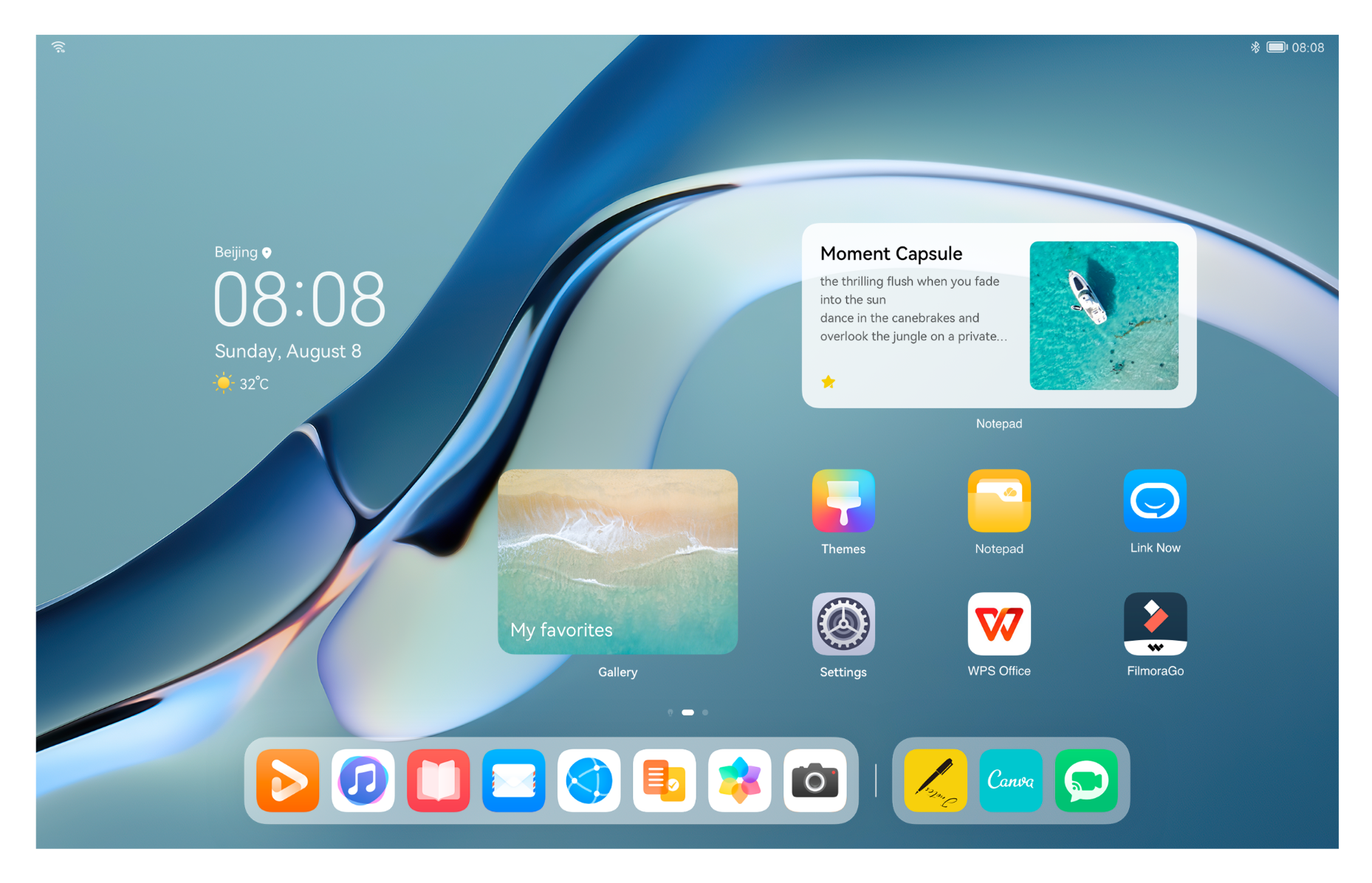
    Huawei’s HarmonyOS captured 24 per cent of China’s smartphone sales in the second quarter of 2026, squeezing Android down to 58 per cent. The domestic operating system expanded its footprint as overall worldwide smartphone shipments dropped 11 per cent year on year.

    Global handset demand contracted faster than the 4 per cent drop recorded in the first quarter, with the sharpest drops hitting budget and mid-tier devices across developing markets. Android felt the brunt of that pullback. Its worldwide sales share dropped four percentage points to 75 per cent, even with stronger sales from Samsung’s Galaxy S26 lineup.

    Shifts in Component Sourcing and Pricing

    Huawei insulated its handset business from rising component prices by sourcing more parts from domestic suppliers in mainland China. High demand for the Enjoy 90 Pro Max alongside steady sales of legacy models helped HarmonyOS reach a 5 per cent global volume share.

    Chinese Android manufacturers took a different path. Pinched by memory chip shortages and higher bill-of-materials expenses, brands scaled down their low-cost phone lineups to focus on higher-margin premium devices. That pivot opened room for Apple at the top end of the market.

    Apple Takes Record June Quarter Share

    Apple captured 20 per cent of worldwide sales during the three months ending June, its highest second-quarter share on record. Deliveries were anchored by the iPhone 17 family and the entry of the iPhone 17e, supported by trade-in programs and retail installment plans.

    In India, Android maintained a dominant 91 per cent volume share, leaving iOS with 9 per cent. In the United States, Apple took 51 per cent of sales against Android’s 49 per cent.

    For retailers and hardware distributors across Asia, the product mix is shifting upmarket as low-end volumes shrink. Brands are preparing their product allocations for the fourth-quarter holiday cycle, where component pricing will dictate whether entry-tier production rebounds or stays constrained.
  • Huawei is expected to make some noise in Barcelona

    Huawei is expected to make some noise in Barcelona

    It’s like old times in Barcelona where the MWC exhibition means something again. Manufacturers are showing off prototypes of future handsets, some with amazing form factors. Other firms are unveiling new phones at the event just like in the good old days. One company expected to announce its new flagship phone in Barcelona is Huawei as the P60 series is rumored to see the light of day very soon.
    According to MyDrivers, the Austrian Gax blog wrote that the Huawei P60 series could be unveiled at MWC 2023. Huawei’s P-series phones are focused on photography (don’t mind the pun since it won’t bite) and the P60 models will feature Huawei’s own XMAGE photography platform (as did last year’s Mate 50 line).
    The P60 Pro will be the first smartphone to carry the 50MP Sony IMX888 sensor (for the primary camera), and a 50MP Sony IMX858 sensor will be employed for the ultra-wide-angle camera.  We expect Huawei to use Omnivision’s 64MP OV64B sensor for the telephoto camera that delivers 3.5x optical zoom.
    The non-Pro P60 could sport the 48MP Sony IMX789 sensor for its primary camera. Both the P60 Pro and P60 should feature the 10-speed adjustable variable aperture feature that debuted on last year’s Mate 50 Pro and allows the aperture to change between f/1.4 and f/4.
    The Huawei P60 Pro could be powered by the Snapdragon 8 Gen 2 chipset modified to work with 4G signals only. The P60 might be equipped with the Snapdragon 8+ Gen 1 SoC which also would be tweaked not to support 5G signals. All things considered, these are not a bad pair of chips to employ.
    Huawei launched its emergency satellite communication service last year on the Mate 50 series. The firm’s second-gen satellite system will be featured on the P60 line and reportedly Huawei has added voice text capabilities and support for short-term voice calls to the ability to send and receive two-way text messages via satellite. Huawei beat out Apple last year by one day to become the first smartphone manufacturer to announce emergency satellite connectivity for its smartphones.
    The P60 line will have HarmonyOS 3.1 pre-installed. This could be a minor upgrade from HarmonyOS 3.0 that will focus on exterminating bugs, and improving the stability of the software.
    Keep your eyes peeled. MWC 2023 ends on March 2nd so we could see the Huawei P60 series introduced sometime soon. Huawei, returning to two flagship series a year, is expected to unveil the Mate 60 line in September. The Mate series usually comes out late in the year and focuses on innovative new technology and features. In 2021 and 2022, Huawei released only one flagship model each year with the P50 series launched in 2021 and the Mate 50 line released late last year.
  • Samsung dominates global Android market this month

    Samsung dominates global Android market this month

    Worldwide, most people have an Android phone in their hands. According to Statcounter, Android has a 71.3% global share of the smartphone pie this month compared to 71.1% for the same month a year ago. And while more than one billion Android phones were shipped last year, there are a total of 2.8 billion active Android users. Based on a report from SportsLens.com, 7.4% of those handsets are Samsung Galaxy models.
    It probably doesn’t come as a surprise that the Galaxy brand is the world’s most popular line of Android phones. After all, Samsung ships the largest number of smartphones each and every year. Samsung’s Android market dominance was probably one reason why LG dropped out of the business. What about HTC? Let’s say that its problems were from choices that the company made itself along with Samsung’s popularity.
    AppBrain data shows Samsung is responsible for a 34.6% market share of the global Android market this month. Behind the South Korean manufacturer is Xiaomi with a respectable 14.3% followed by Oppo’s 10.3% share. Vivo (9.8%) and Huawei (6.7%) round out the top five. As recently as 2019, Huawei was the second largest smartphone company in the world with a 17.6% share of the global market trailing only Samsung’s 21.8%.

    But in both 2019 and 2020, the U.S. made life difficult for the company by blocking it from obtaining supplies from its U.S. supply chain and preventing the company from obtaining chips produced by foundries using American technology. The company ended up selling off its Honor sub-unit, developing its own HarmonyOS to replace the Google Mobile Services version of Android, and is using Snapdragon 8+ Gen 1 chips designed to work with 4G LTE only.

    So what is the most popular Android device worldwide for the first half of the current month? That would be the mid-range Samsung Galaxy A12 with a 2.1% slice of the Android pie so far this month. The Samsung A21s follow that model with a 1% share, and the Galaxy A10s also with a 1% share. These phones all are part of the mid-range Galaxy A line which includes large screens, viable cameras, and large batteries.
    For example, the Galaxy A12 features a 6.5-inch LCD display with an HD+ resolution of 720 x 1600. It is powered by the 12nm MediaTek Helio P35 and includes 4GB of memory with 64GB of storage (48.2GB available to the user). There is a 1TB capacity microSD slot for additional storage and on the back is a quad-camera setup consisting of a primary 48MP snapper (f/2.0), a 5MP ultra-wide camera, a 2MP Macro camera for close-ups, and a 2MP depth sensor. There is an 8MP front-facing camera for selfies and video chats.
    And it is not surprising, considering it’s a Galaxy A device, that the Galaxy A12 sports a 5000mAh battery that charges up to 15W. Considering that the display is HD+, the battery life on this device should be tremendous.
    Samsung is the leader when it comes to the foldable phone market. Last year, the Galaxy Z Flip 3 was the most popular handset in this category. Earlier this year, the company released the Galaxy Z Fold 4 (which opens to reveal a 7.6-inch tablet-sized display), and the Galaxy Z Flip 4 (a clamshell that flips open to produce a 6.7-inch display).
    It should be noted that while worldwide Android’s market share is about 71%, in countries such as Brazil, India, Indonesia, Turkey, and Vietnam, Android enjoys 85% of the market. As for iOS, its global market share is around 28% leaving it flat on an annual basis. But the longer-term trend seems to favor Apple. Over the last five years, Android’s share of the global market slipped by 1.8 percentage points while iOS has seen an improvement of 8 percentage points over the same time span.


  • Huawei says that it will release a HarmonyOS phone next year

    Huawei says that it will release a HarmonyOS phone next year

    Last year, after the U.S. Commerce Department banned Huawei from its U.S. supply chain, the Chinese phone and networking equipment manufacturer scrambled to find new sources. The one stateside supplier that it missed the most was Google since the ban prevented the latter from delivering the Google Mobile Services version of Android to Huawei. While it didn’t matter in China where most of Google’s Android apps are banned, not being able to equip its international models with the Google ecosystem might have cost the manufacturer some sales.

    In August of 2019, Huawei announced that it had developed a new operating system called Harmony. Many assumed that this new operating system would be immediately used by Huawei to replace Android. This turned out not to be the case. Richard Yu, CEO of Huawei’s consumer group, pointed out that Harmony is based on a microkernel allowing it to be used on a wide range of devices such as smart speakers, tablets, smartwatches, computers, autos, and smartphones. Huawei also noted that HarmonyOS will work on devices equipped with a small amount of RAM and those requiring hundreds of gigabytes of memory. Thus far, Harmony OS has been available for consumers only on television sets.

    Mr. Yu said today that in 2021, Huawei will ship its first handset powered by HarmonyOS. What set off this announcement by the long-time Huawei executive was the word that the company plans on introducing a second version of Harmony OS this coming Thursday, September 10th, during the 2020 HDC Developers Conference. Several new devices powered by the operating system will soon be announced and this year Huawei says that its new smartwatches will be driven by HarmonyOS.

    Yu did admit that Huawei has been sitting on a phone running HarmonyOS, but the company has had to wait because of an agreement it has with Google. But that doesn’t mean that the company doesn’t have high hopes for the platform in the future. The executive says that HarmonyOS will eventually become a worldwide platform.

    In a previous speech, Yu said that the upcoming Huawei Mate 40 series will be powered by a new series of 5nm Kirin chips, the Kirin 9000. Not only will these components be produced using the new 5nm process, but they will also have more powerful 5G and AI capabilities, CPUs, and GPUs. But a new export rule put into place by the U.S. prevents foundries from shipping chips to Huawei that were made using U.S. technology. Yu notes, “Unfortunately, under the sanctions of the United States, TSMC only accepted orders before September 15th. By September 15th, it will not be able to produce chips for Huawei. So Kirin 9000 may be our last generation of Huawei Kirin high-end chips.”

    Huawei was TSMC’s second-largest customer after Apple last year but the world’s largest individual foundry will not be allowed to ship to the Chinese manufacturer after September 14th. Until that date, TSMC is reportedly running its assembly line 24 hours a day to produce as many as chips that it can until it isn’t allowed to ship to Huawei. China’s largest foundry, SMIC, is not a viable replacement since it is several process nodes behind TSMC. Chip designer Mediatek has reportedly been seeking permission to develop cutting-edge chips for Huawei. It would seem unlikely for the company to get that permission from the U.S., especially considering that Mediatek relies on TSMC to produce its chips. Additionally, administration officials in the U.S. have complained about Huawei’s ability to skirt the Entity List ban.

    Assuming that Huawei has been able to stock up on 5nm chips, the company has a little time-not much mind you-to find a new source of 5nm SoCs.