Tag: Harvey Norman

  • Harvey Norman sales suffer in Asia

    Harvey Norman sales suffer in Asia

    Australian electronics and furniture retailer Harvey Norman suffered an 18-per-cent decline in sales in its Singapore store network last year.

    While sales dropped 26.1 percent in local currency during the second half-year due to the Covid-19-related lockdown, first-half sales – described by the company as “poor” – were down as well, by 11.9 percent. In Australian dollars, sales benefited from a 5.8 percent appreciation in the Singaporean dollar in the period.

    Harvey Norman’s 12 company-operated stores in Singapore closed on April 7 and still remain closed by government decree. The retailer has continued to trade online during the store closures, and anticipates being able to reopen offline later this month.

    Meanwhile, in Malaysia the company closed its 23 stores from March 18 to April 17, in line with government requirements, and gradually reopened individual stores, starting with just the electrical and computer categories, and eventually furniture and bedding, between April 18 and May 12. Online trade resumed from April 18 for the electrical and computer categories only.

    Sales were down 4.2 percent year on year in constant local currencies for the six months to May 31, and up 6.5 percent for the full year, thanks to a strong 15-per-cent uptick during the first half.

    In Australian dollars, sales were positively affected by a 5.2-per-cent appreciation in the Malaysian Ringgit during the year.

    In New Zealand, Northern Ireland, Slovenia and Croatia, where the retailer operates wholly-owned company stores, sales were down across the board.

    The only outlier was Ireland, where Harvey Norman operates wholly-owned company stores and saw a significant sales increase in the second half, despite only being allowed to fully reopen stores on June 8.

  • Harvey Norman Asia sales suffer during Corona outbreak

    Harvey Norman Asia sales suffer during Corona outbreak

    Australian electronics and furniture retailer Harvey Norman suffered an 18-per-cent decline in sales in its Singapore store network last year.

    While sales dropped 26.1 percent in local currency during the second half-year due to the Covid-19-related lockdown, first-half sales – described by the company as “poor” – were down as well, by 11.9 percent. In Australian dollars, sales benefited from a 5.8 percent appreciation in the Singaporean dollar in the period.

    Harvey Norman’s 12 company-operated stores in Singapore closed on April 7 and still remain closed by government decree. The retailer has continued to trade online during the store closures, and anticipates being able to reopen offline later this month.

    Meanwhile, in Malaysia the company closed its 23 stores from March 18 to April 17, in line with government requirements, and gradually reopened individual stores, starting with just the electrical and computer categories, and eventually furniture and bedding, between April 18 and May 12. Online trade resumed from April 18 for the electrical and computer categories only.

    Sales were down 4.2 percent year on year in constant local currencies for the six months to May 31, and up 6.5 percent for the full year, thanks to a strong 15-per-cent uptick during the first half.

    In Australian dollars, sales were positively affected by a 5.2-per-cent appreciation in the Malaysian Ringgit during the year.

    In New Zealand, Northern Ireland, Slovenia and Croatia, where the retailer operates wholly-owned company stores, sales were down across the board.

    The only outlier was Ireland, where Harvey Norman operates wholly-owned company stores and saw a significant sales increase in the second half, despite only being allowed to fully reopen stores on June 8.

    Throughout the Covid-19 crisis, Harvey Norman’s Australian franchisees were allowed to keep stores open as long as they complied with social-distancing requirements. Sales were up 17.5 per cent in the second half.

  • Harvey Norman executives take pay cut as crisis worsens

    Harvey Norman executives take pay cut as crisis worsens

    Harvey Norman has told shareholders the business will not pay an interim dividend and that its executive team and non-directors will forgo 20 percent of their salaries and director’s fees for three months.

    “In the present environment, the board believes that preserving cash is the most prudent course of action to protect shareholder value,” company secretary Chris Mentis wrote in a letter to shareholders.

    Australian-based Harvey Norman operates stores in Singapore and Malaysia, selling electronic and electrical goods and furniture.

    The decision will keep A$149.5 million of cash in the business and comes two weeks after Harvey Norman revealed a 9.4-per-cent increase in comparable sales in its Australian stores for the period of March 1 to 17.

    At the time, chairman Gerry Harvey told television program 60 Minutes that coronavirus could be an ‘opportunity’ for retailers in certain categories, noting that sales of freezers had quadrupled and air purifiers had doubled.

    Public backlash was swift, and two days later Harvey admitted he was “mortified” that he had come off as a “heartless, greedy old bastard”.

    “Now everyone thinks I’m this callous old bastard out making a profit on other people’s misery… but believe me, that was not my intention,” Harvey said.

    “I was trying to give a positive view of the Covid-19 crisis.”

    Harvey Norman was contacted but had not provided comment by publication.

    The Harvey Norman board’s decision is made in the context of dozens of retailers entering a hibernation state amid a collapsed bricks-and-mortar retail sector, with customer confidence hitting an almost-50-year low.

    ANZ head of Australian economics David Plank said confidence on current economic conditions had fallen almost 50 percent over the last two weeks to its lowest ever level.

    “And many other aspects of the survey are exceptionally weak. The announcement of the largest fiscal package yet may stabilize confidence, but much will depend on how the pandemic evolves,” Plank said.

  • Harvey Norman first to launch Microsoft Synchronized Shopping software

    Harvey Norman first to launch Microsoft Synchronized Shopping software

    Harvey Norman has become the world’s first retailer to launch a new AI-powered retail software concept the Microsoft Synchronized Shopping solution.

    Microsoft says its system, accessible via the retailer’s website, “empowers consumers to make informed purchase decisions amidst the myriad of options available online and offline”.

    Visitors to the Harvey Nomran website can use a customized, conversational AI-driven product advisor that asks a series of questions to identify the shopper’s needs, then recommends devices that best suits them. That might feature such as long battery life or storage capacity.

    Microsoft says product advisor results reflect devices that are on display in Harvey Norman, where customers can go to try them out.

    “The immersive and engaging experience starts when the shortlisted device(s) on the website creates a shopper pass on the mobile device with embedded geo-location services. When shoppers are in proximity of the store where the specific PCs are available, they get a phone notification, and once they enter the store are guided to the exact PCs that were recommended by the online advisor,” says Microsoft in a statement.

    “This simplifies the in-store experience, eliminating the need for shoppers to spend time navigating through all the choices in the PC aisle. In addition, it provides a seamless online-offline purchase journey tailored to their needs which is highly secure (and with no footprint of the user on any of the interacting devices).”

    Harvey Norman CEO Katie Page says she believes customers must be able to make decisions holistically, especially in a digitally connected world.

    “This has always guided how we curate our assortment of offerings, and it now shapes how we look at connecting online and offline channels seamlessly for our customers. Microsoft Synchronized Shopping is a major step in the right direction to help all of us live this ‘connected life’.”

    Microsoft says it created the solution to address the challenge faced by consumers of an online proliferation of options and the anywhere/anytime nature of shopping via mobile devices.

    Its research showed that 80 percent of consumers now begin their shopping journey online, and many end up delaying a purchase because they are overwhelmed by the number of choices.

    “Second, they find it difficult to choose the product that best meets their needs, without conducting extensive research, and often ends up buying a less-than-satisfactory device. This ‘choice paralysis’ inspired the design of Microsoft Synchronized Shopping.”

    Microsoft says its Synchronized Shopping solution is part of a broader “retail-reimagined strategy aimed at simplifying the consumer journey” by using intelligent cloud technology.

    It was developed in partnership with Microsoft Gold partner Popcornapps and is built on Azure cloud services, progressive web-apps and geo-location-based services.

  • Offshore boost for Harvey Norman sales

    Offshore boost for Harvey Norman sales

    Harvey Norman has lifted full-year profit by 7.2 percent to $402.3 million with its overseas ventures again outshining local franchisees, which struggled amid tough retail conditions.

    The homeware, whitegoods and electronics retailer lifted total sales by 12.1 percent to $2.23 billion in the 12 months to June 30, largely thanks to its 90 company-operated offshore stores breaking through the $2 billion sales barrier for the first time.

    An 11.7 percent rise in Harvey Norman’s overseas profitability to $129.70 million – including a 9.7 percent lift in offshore revenue to $2.05 billion – offset a 2.3 percent decline in revenue received from the company’s 195 franchised Australian complexes.

    Revenue from local franchisees was $944 million for the year, with total franchisee sales down by 1.8 percent to $5.66 billion amid a housing market downturn and broader economic jitters.

    Harvey Norman announced a $173.49 million capital raising to manage debt, but still increased its final dividend by 3.0 cents to a fully franked 21.0 cents.

    Shares in the company dropped by 1.82 percent to $4.585 by 1223 AEST, still 25 percent higher than $3.66 a year ago.

    Harvey Norman said it had been a particularly tough second half in Australia, with fourth-quarter aggregate comparable sales for franchisees dropping by 1.6 percent, for a full-year comparable sales decline of 0.9 percent.

    The company said local franchisees had nonetheless continued to invest in their operations in anticipation of federal government tax cuts, stabilizing house prices and an increase in lending by banks for mortgages and small business loans.

    Chairman Gerry Harvey said the company has begun replicating its successful overseas premium store format in Australia and New Zealand.

    A premium refit is currently underway at the company’s Cairns franchised complex, while franchised complexes at Campbelltown, Balgowlah, Preston, and Aspley will commence post-Christmas.

    The company said it intends to grow its international footprint with up to 21 new stores overseas within the next two years, including 17 alone in Singapore and Malaysia.

    “We intend to grow our international retail footprint and are on track with our expansion opportunities,” Mr Harvey said on Friday.

    Harvey Norman’s Singapore and Malaysia segment increased profit by 48.1 percent to $37.1 million for the year, while profit in Slovenia and Croatia ticked 0.8 percent higher to $7.46 million.

    In Ireland and Northern Ireland, profit nearly quadrupled to $6.39 million on double-digit growth across all key product categories.

    Challenging economic conditions weighed on the company’s New Zealand stores, with profit from across the ditch dropping by 6.0 percent to $77.39 million despite sales revenue increasing by $25.57 million.

    Overseas revenue has now increased by 48 percent over the last five years and profitability has nearly quadrupled.

  • Harvey Norman plans More Expansion in Malaysia

    Harvey Norman plans More Expansion in Malaysia

    Harvey Norman Malaysia is planning to open nine stores by the end of next year, taking its network there to more than 50 by the end of 2023. The retailer has expanded into Sarawak with an outlet in Miri Times Square.

    The 40,000sqft store covers a range of products spanning electrical and electronics, as well as furniture and bedding.

    “Harvey Norman has one price point, so regardless of where you buy it in Malaysia, the price is the same and Miri customers will get these benefits,” said Kenneth Aruldoss, Harvey Norman Asia MD.

    “We also cater to Bruneian customers. They can come to Miri and shop at our store, and we’ll give them the same support and quality service including after-sales service.”

    Four other stores – in Tebrau and Southkey (Johor), Ipoh and Kota Baru – will open in the second half of the year.

    Harvey Norman Malaysia sales reached S$152.33mil last financial year, up 10.5 percent year on year.

    “Malaysia is the best-performing country, with Singapore coming in second, in terms of growth and profits (among other indicators),” Aruldoss said.

    After launching in 2003, Harvey Norman Malaysia now has more than 17 stores across the country.

  • Harvey Norman to open 50 more stores in Malaysia

    Harvey Norman to open 50 more stores in Malaysia

    Australian furniture and appliance retailer Harvey Norman plans to open 34 stores in Malaysia, taking its network there to 50.

    In a commentary accompanying the company’s recent Australian results filing, Harvey Norman said it was planning substantial investment outside Australia where markets offered greater growth potential.

    The company indicated it would open as many as 18 of its own stores overseas by 2020, taking its offshore network to 107. More stores would likely open on a franchised model.

    Malaysia is a primary target given the country’s population has been growing at a rate of 400,000 people per year since 2010 and currently totals about 32 million. It believes the market can sustain 50 Harvey Norman stores by 2023.

    Asia stores accounted for about AUD$500 million (US$362 million) in sales in the latest financial year.

  • Harvey Norman open door in Johor Malaysia

    Harvey Norman open door in Johor Malaysia

    Australian furniture retailer Harvey Norman Malaysia has opened its first store in Johor, at Paradigm Mall.

    Harvey Norman Asia MD Kenneth Aruldoss said the opening was timely as Johor has an impressive market thanks to rapid economic growth.

    The store also offers the retailer’s “Shop with Confidence” campaign which offers price guarantee.

    “This means that when customers buy a product from Harvey Norman and later find the same item at a lower price at another store, we will match the lower price and top up 10 per cent of the price difference within 10 days,” Aruldoss said.

    Another Johor store will be opened in SouthKey Mid Valley Megamall within the next three months while the third store is expected to open its doors in Tebrau, site of the Ikea-anchored Toppen shopping centre, early next year.

    Harvey Norman Malaysia has opened 17 stores so far, and plans to increase the network to 43 within 10 years.

  • Microsoft Surface Family unveiled in Singapore

    Microsoft Surface Family unveiled in Singapore

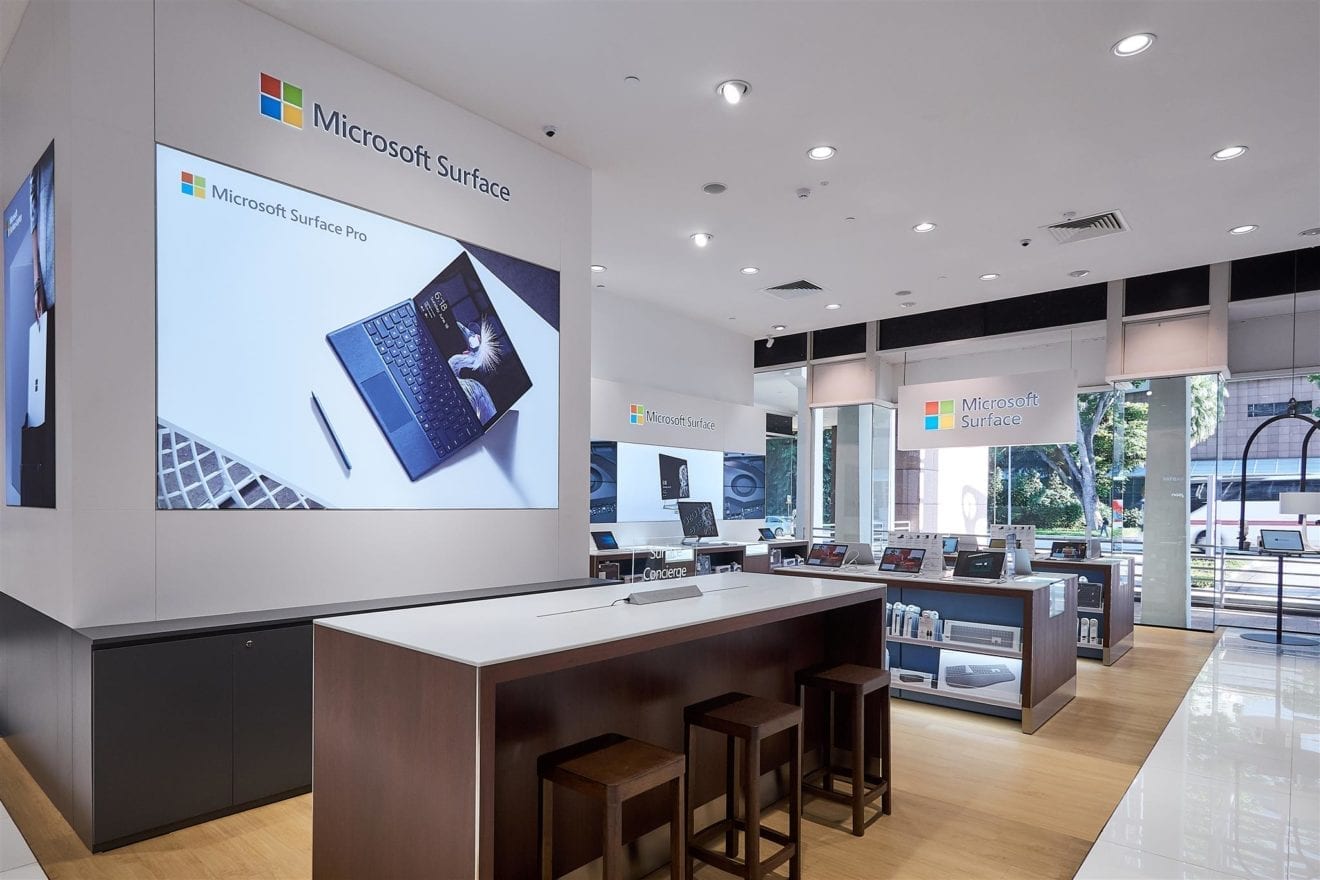
    Microsoft Singapore has opened a Surface Store at the Harvey Norman Millenia Walk Flagship Superstore, featuring the full range of the technology.

    New devices include Surface Book 2, Surface Laptop and Surface Studio, which will join Surface Pro already available.

    The line-up will be available for commercial customers via Authorised Device Resellers including AsiaPac Distribution, JK Technology and UIC Asian Computer Services.

    “The new Surface Store is a commitment to deliver a one-stop experience for customers to experience the ultimate Windows devices,” says Microsoft Singapore Windows and devices business group lead Veronica Chiu.

    Shipping with Windows 10S, Surface Laptop starts up and runs faster with InstantOn and an OS optimised for sustained performance.

    A feature of the store is its Surface Concierge service which offers customer support regardless or where or when they bought their Surface device. Microsoft plans to add extra concierge services over time.

  • Harvey Norman officially launches Kuching outlet

    Harvey Norman officially launches Kuching outlet

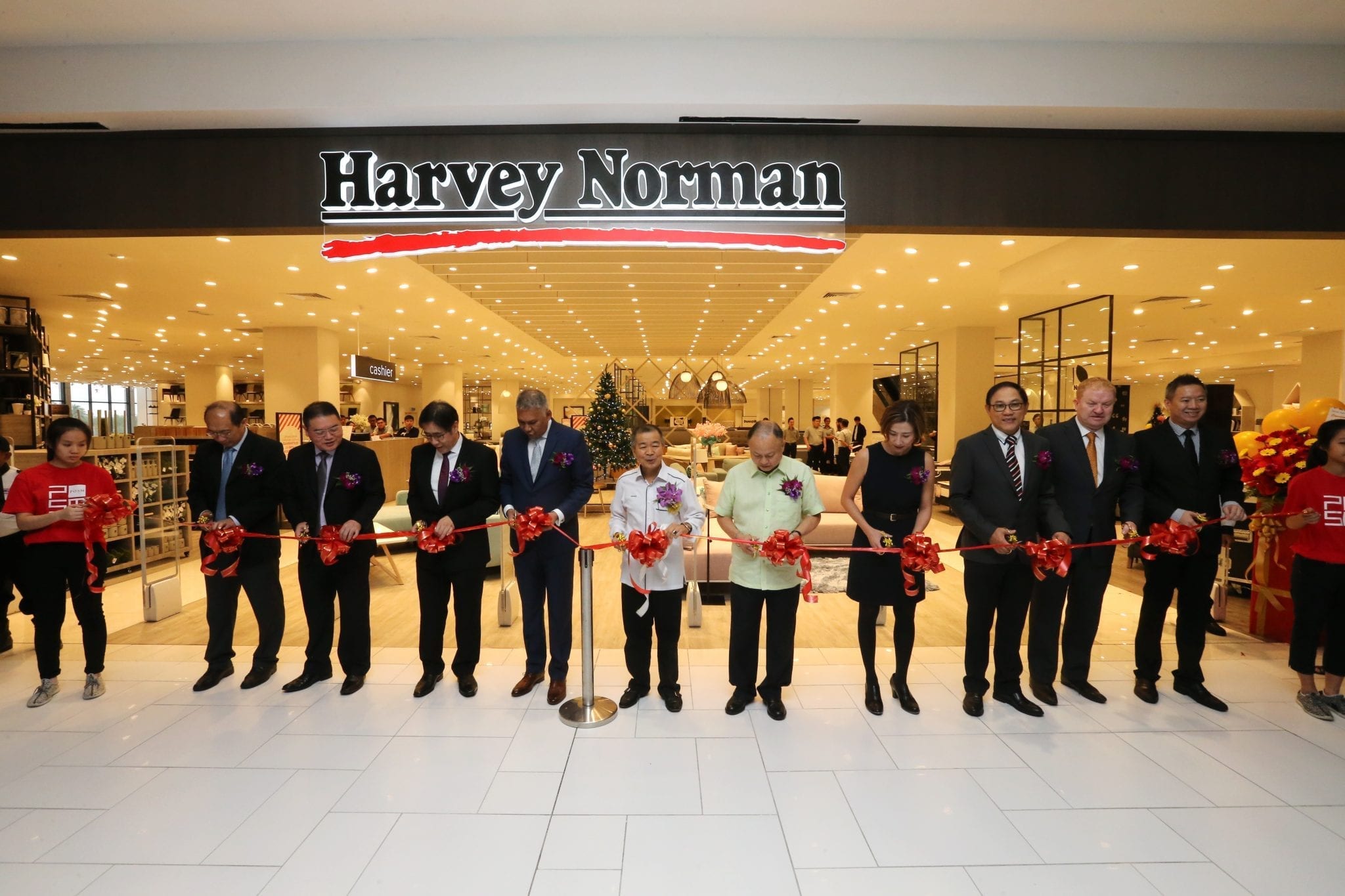
    Australian brand Harvey Norman marked a new milestone with the official launch of its first superstore in East Malaysia today at Vivacity Megamall.

    Established since 1982 in Australia with over 280 stores worldwide, the superstore here occupies a retail space of 46,806 square feet across two floors, featuring a unique retail experience in the country.

    According to Harvey Norman’s managing director for Singapore and Malaysia, Kenneth Aruldoss, the group is creating a revolution in the way customers connect with products and brands.

    “Consumers of today are changing — and therefore we have to change the way we do retail as well.

    “It is a first-of-its-kind shopping experience with a huge range of merchandises spread over two levels of retail space. The range is current and of the latest,” he said in his speech during the official launch today.

    Also present during the launch were Assistant Minister of E-Commerce Datuk Mohd Naroden Majais, Kuching South City mayor (MBKS) Datuk James Chan, Vivacity Megamall executive director Sim Yaw Hang and Vivacity Megamall director Alan Sim, as well as other officials from Harvey Norman.

    The store is set to inspire in terms of layout and how the products are being  merchandised. It boasts some of the biggest range of electrical, computers and communications, furniture and bedding products in Kuching.


    The first level features a whole floor of Furniture & Bedding products ranging from sofas, coffee tables, dining sets, home wares, outdoor furniture, home office, TV cabinets, recliners, rugs, as well as mattresses, bed frames, bedroom sets, kids bed frames and bedding accessories.

    Its second floor features home and kitchen appliances, audio visual, cameras, photocentre, computers, games hub, connected health and fitness products.

  • Retail veteran bent on creating top go-to brand

    Retail veteran bent on creating top go-to brand

    The Australian department store giant – a household name here in electronics, computers, furniture and bedding – has steadily expanded its footprint in Singapore, even as the retail sector continues to grapple with headwinds.

    Over the weekend, Harvey Norman unveiled a new, two-storey, 38,500 sq ft factory outlet in Chai Chee Road that stocks items at up to 90 per cent off usual prices.

    The retail chain has also added to its space at the Parkway Parade store, an expansion that has yet to be officially launched.

    “If you take a look at Harvey Norman’s vision – which is to provide the ultimate customer experience – and put it at the centre of everything we do, we have to change our shops to cater to what consumers want today,” Mr Aruldoss explained the operations head.

    He said Harvey Norman has had to evolve alongside consumer habits and tastes, which have changed significantly in recent years.

    Offering that ultimate experience means stores must be supported by a solid range of products, which is why Harvey Norman plans to refurbish its other outlets here and roll out new ones.

    The physical stores continue to account for over half of its sales here, compared with its online platform.

    Still, moves to transform Harvey Norman and make sure it stays on top of its game go beyond just changing the look and feel of its bricks-and-mortar stores.

    The firm is ramping up efforts for its digital platform “in a big way”, to create a more seamless online and offline experience for customers, said Mr Aruldoss.

    “We always knew, for many years already, that e-commerce was going to change things. So we’ve got to gear up our online platform to support our stores, and gear up our stores to support our online platform. We have put a lot of things in place for our people to change, and also for consumers to know that we are changing.” he noted.

  • Sunway Velocity Mall opens doors

    Sunway Velocity Mall opens doors

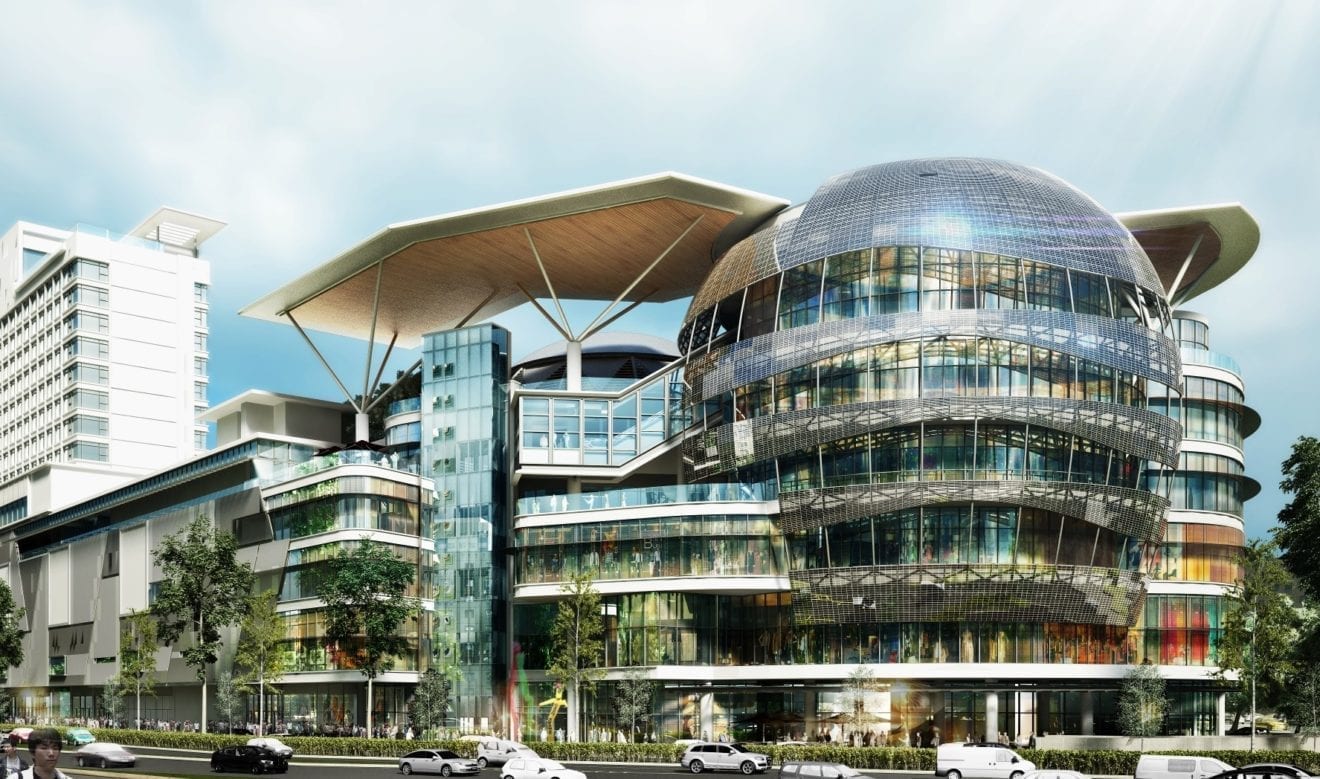
    Sunway Velocity Mall has opened in Cheras, with a catchment of 1.72 million residents including the nearby areas of Ampang and Kuala Lumpur.

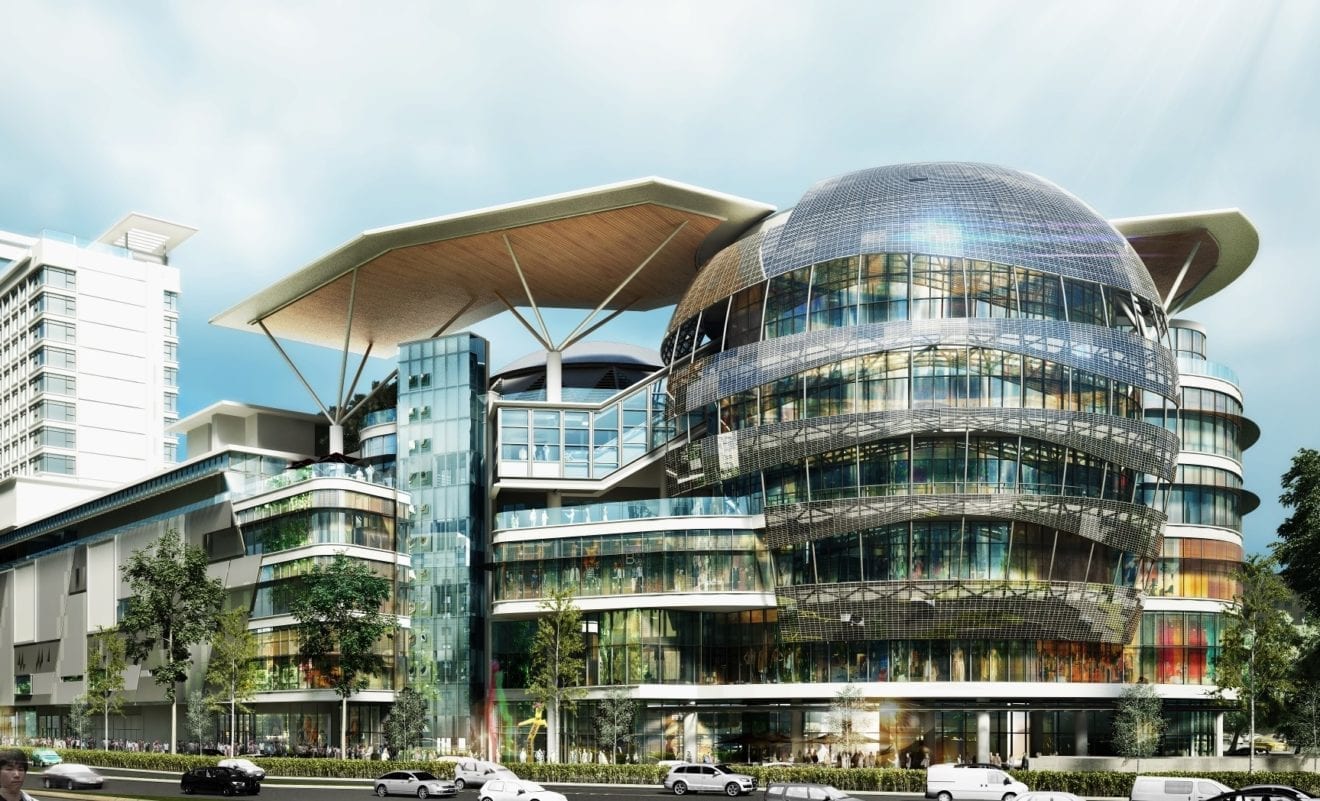
    With a neo-futuristic appearance, the sphere-shaped shopping centre, known as the “KL Orb”, is set to be a landmark on the city’s skyline, especially with its LED light display.

    Its opening is also a milestone for the Sunway Group’s retail division. The group’s fifth mall, it integrates shopping, entertainment and gastronomy in an integrated development.

    “Sunway Velocity Mall was built and designed with one key purpose – to enrich the life experiences of its surrounding community,” says Sunway Shopping Malls & Theme Parks CEO HC Chan.

    The centre has four precincts: Vanity Hall, Marketplace, Food Street, and Commune @ Sunway Velocity. The seven-storey mall offers the first-ever Aeon MaxValu Prime in Malaysia – the third such outlet in the world following Japan and Hong Kong.

    The other two main anchors are Parkson and TGV Cinemas, which has the largest Imax screen in Malaysia. Other tenants include Chi Fitness, Grand Imperial, Harvey Norman, JD Sports, Padini Concept Store, Popular Bookstore, Toys‘R’Us and Uniqlo.

    Chan says the mall is part of the “golden triangle of retail spaces” comprising the new Ikea Cheras, Aeon Maluri Shopping Centre, MyTown Shopping Centre and the Tun Razak Exchange (TRX) Lifestyle Quarter development.

    Sunway Velocity Mall has been “dressed” for the festive season with decorations including a 30ft (9m) Christmas tree surrounded by giant presents in the main atrium. There is also a Christmas spend-and-win campaign, Santa City, which runs until February 12. Prizes include a Volvo V40 car, a Celistar diamond ring by SK Jewellery, a Hero bed frame, and a Nature’s Finest Himalaya mattress from Harvey Norman.

    There are also free weekend Christmas workshops for children.

  • Jurong Point put on market with over S$2b price tag

    Jurong Point put on market with over S$2b price tag

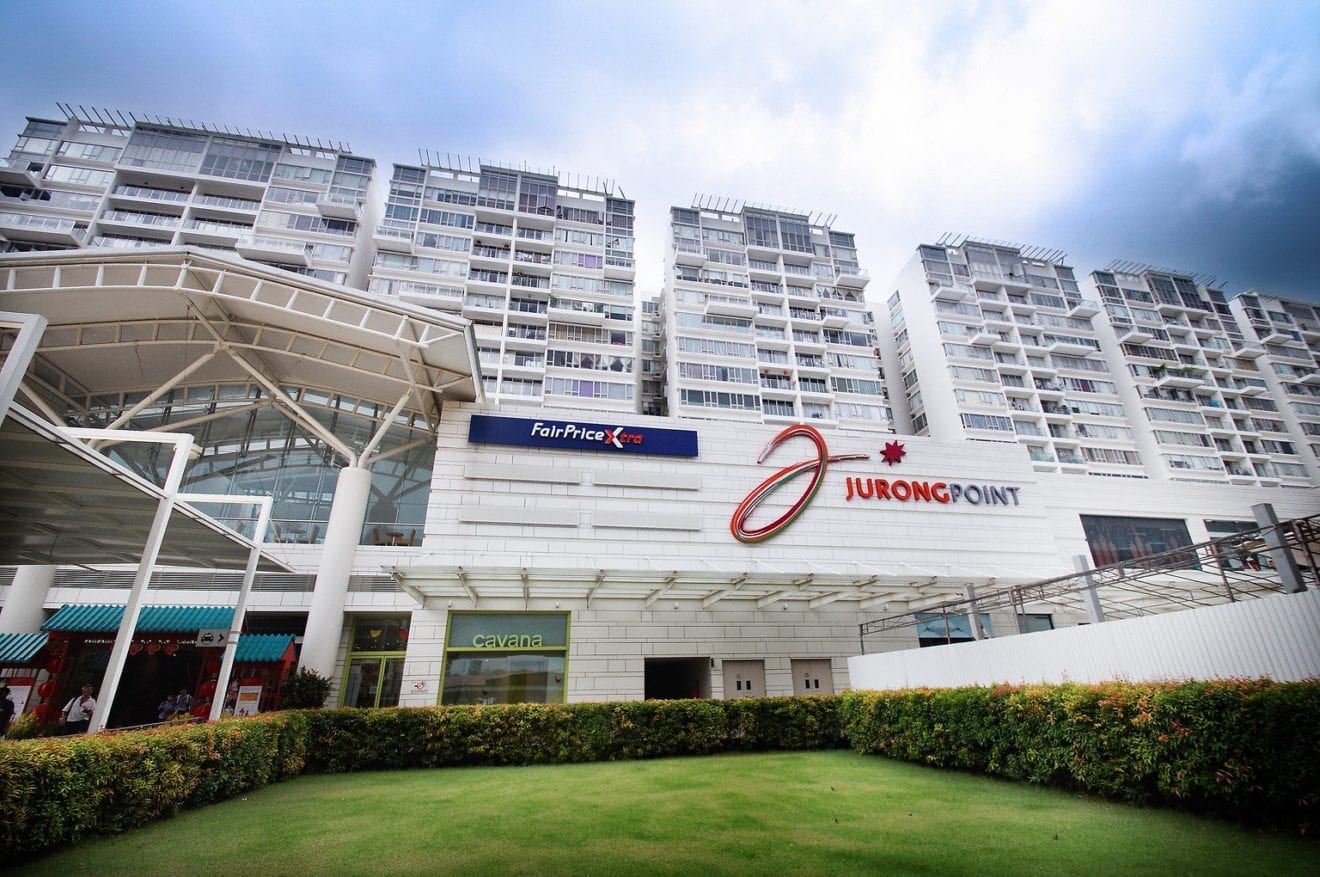
    biggest suburban shopping centre, Jurong Point, has been put up for sale with a price tag exceeding S$2 billion.

    This works out to more than S$3,000 per square foot based on the commercial net lettable area of about 658,000 sq ft that is being offered for sale by an equal joint venture between Guthrie GTS and Lee Kim Tah Holdings, both of which have been delisted.

    At over S$2 billion, the price tag translates to a sub-4 per cent net yield, Michael Leong, director of sole marketing agent Array Realty said.

    Array in turn is working exclusively with JLL to conduct an expressions of interest exercise that will close on Nov 18.

    Guthrie and Lee Kim Tah are divesting a total net lettable area of 702,000 sq ft – including 44,000 sq ft of space under the government’s Community/Sports Facilities Scheme (CSFS) which is currently being used by occupiers such as NTUC First Campus Co-operative’s My First Skool and voluntary welfare organisations.

    There is a further space of about 59,000 sq ft under three strata retail units divested by Lee Kim Tah and Guthrie about two decades ago to Golden Village, NTUC FairPrice and POSB – taking the total net lettable area in Jurong Point to 761,000 sq ft.

    Guthrie and Lee Kim Tah are offering their 702,000 sq ft in the mall through the sale of shares in companies that own this space. “The two partners have owned the property for many years and want to look at pursuing new interests and opportunities,” said Mr Leong. Lee Kim Tah was delisted in early 2015 and Guthrie in November 2013.

    Most stockmarket analysts would think that a net yield of 3-plus per cent based on Guthrie and Lee Kim Tah’s asking price is too low to make for a yield-accretive acquisition by Singapore mall Reits (real estate investment trusts).

    However, JLL regional director of Singapore capital markets Anthony Barr expects Jurong Point to appeal to a broad range of other institutional investors including sovereign wealth funds, pension funds and insurance groups.

    “Rarely do stabilised assets of this scale become available. There have been no comparable sales of a suburban retail property of this size on the open market for more than a decade in Singapore’s tightly held retail sector; other large sales have been either related party transactions involving listed Reits or sales of partial interests.”

    A high-performing mall, Jurong Point is regarded as “fortress retail”, he added. “This, combined with the dynamic growth planned for the Jurong district, will ensure a broad range of interest at the indicated pricing.”

    Jurong Point is seamlessly linked to the Boon Lay MRT Station and Bus Interchange. It currently draws an average monthly visitorship of six million and has a catchment of 150,000 households within a five-km radius, with potential for growth as the new town planned in Tengah is progressively developed.

    Major tenants for the space at Jurong Point owned by Guthrie and Lee Kim Tah include FairPrice Xtra, Courts, Harvey Norman, Uniqlo and Kiddy Palace in addition to three foodcourts. Joining their ranks soon will be BHG, which will open a nearly 50,000 sq ft department store on three levels in December; part of this space was previously occupied by John Little.

    The mall is nearly fully let.

    Jurong Point stands on two sites; one has a balance lease term of about 76 years and the other, 89 years. Their combined land area is 557,288 sq ft.

    The original Jurong Point was completed in 1995 and spans four levels of retail space (Basement 1 to Level three). The CSFS space is on Levels 4, 5 and 6.

    The extension, which was completed in 2008, has three retail floors – Basement 1 and Levels 1 and 3.

    About 1,000 carpark lots in Jurong Point are available for use by shoppers.

    The mall’s total gross floor area (GFA) is 1.07 million sq ft; there is no unutilised GFA.

  • Two more Kuala Lumpur malls opening

    Two more Kuala Lumpur malls opening

    Two Kuala Lumpur malls, collectively offering more than 2 million sqft (185,806 sqm) in net lettable area, will open in Cheras, Klang Valley, by the end of the year.

    Moreover, the MyTown Shopping Centre (below picture) and Sunway Velocity Mall (above picture) will be just 800m away from each other.

    Cheras already has the Aeon Maluri shopping centre and Cheras Leisure Mall, with The Tun Razak Exchange also on the horizon, reports The Star.

    MyTown is being developed by Boustead Ikano while Sunway Velocity Mall is a Sunway Groupproperty. MyTown will be structurally linked to Ikea Cheras, the largest outlet mall in Malaysia.
    With a population of 800,000 people, Cheras is an “ample market”, says Sunway Shopping Malls & Theme Parks CEO HC Chan.

    myTown mall Malaysia

    “Fundamentally, the real issue is the absence of lifestyle and experiential malls in Cheras – Sunway Velocity Mall fills this void. I am looking from a quality rather than a quantity perspective… we are addressing this from multiple angles.”

    Boustead Ikano GM Jo Hogsander agrees there is demand for more retail space, especially in Cheras. He says that when the MRT line opens it will ease traffic congestion and boost accessibility to the mall.

    “Game changer”

    Chan also sees the MRT as a “game changer”. “Two out of six MRT stations in Cheras will serve Sunway Velocity, which translates to a capacity of about 400,000 passengers a day.”
    He says Sunway Velocity Mall would not only compete, but also complement the MyTown Shopping Centre.

    “Competition is healthy, but in the longer term we will complement each other. Just look at the Bukit Bintang area and the number of malls there. It’s thriving because it gives consumers a choice.”
    Despite the number of malls in the Klang Valley, Hogsander says they are still crowded, even on a weekday afternoon.

    “I went to our competitors on a Thursday afternoon and couldn’t find a parking space. I then went to another competitor and had to do laps to find parking – and these are big shopping centres with more than 6000 parking bays.”

    Sunway Velocity Mall and MyTown Shopping Centre will open on October 28 and November 15 respectively, 18 days apart. Both malls boast 6500 parking bays.

    Sunway will have a NLA of 1 million sqft and accommodate 500 shops, while MyTown will have 460 stores on 1.1 million sqft of space.

    Sunway Velocity Mall’s anchor tenants include Harvey Norman, Parkson, TGV Cinemas and Toys’R’Us, while MyTown has secured such brands as Golden Screen Cinema, Mango, Uniqlo and Village Grocer.

  • Which is the best Home & Electronics retailer in Singapore?

    Which is the best Home & Electronics retailer in Singapore?

    Furniture, home appliances and electronics. These are just some must-haves in every home but where’s the best place in Singapore to get them? AsiaOne wants you to tell us where is the best to go.

    AsiaOne People’s Choice Awards 2016 is constantly seeking to honour the best brands, services and products in Singapore. This year, five new categories including Best Home & Electronics Retailer were added to reflect changing consumer trends in Singapore.

    Members of the public have helped to shortlist a number of companies and nominees Best Denki, Challenger Singapore, Courts, Crate and Barrel, Gain City, Harvey Norman, IKEA Singapore and Mustafa Centre are seeking for your votes to be named the winner in the first Best Home & Electronics Retailer category.

    Top retail players from overseas

    High-end lifestyle brand Crate and Barrel is a retail chain offering a variety of stylish furniture, kitchenware and other home essentials.

    Started in Chicago by Gordon and Carole Segal in 1962, the company grew into an international brand with outlets in the United States and Canada, a far cry from its humble beginnings with just one employee and not even having a cash register, according to its website.

    The brand opened its five-storey flagship store at Orchard Gateway in April 2014, drawing customers in with its exquisite furniture and quirky kitchen gadgets. Their first Singapore outlet opened the previous year at ION Orchard.

    With a focus on furniture and home interior design, IKEA is another tough international competitor to beat under this category.

    The Swedish store has two massive outlets in Singapore and is a popular place for families to go to on weekends, thanks to its array of delicious and affordable food selection.

    The one-stop furniture shop aims to fulfil all your housing needs from sofas, work tables, mattresses, bed frames, decorative mirrors to even kitchen wares and plants. Even if you’re not looking for anything in particular, you just might end up with a useful kitchen tool, a set of new bedsheets and a basket full of Swedish biscuits and candies.

    IKEA is an establishment that also excites shoppers with their annual catalogues which are filled with colour photographs and home decor ideas.

    Local brands stake a claim on home ground

    Not to be beat, home-grown brands Challenger Singapore, Gain City and Mustafa Centre with their affordable pricing, friendly services and wide selection of goods, can seduce readers for their votes.

    If you need anything IT-related, Challenger may probably be the first place you will think of.

    At its outlets in town and in the heartlands, you can talk to store consultants and figure out which product best suits your needs at your own pace.

    Other than selling hardware, the shops also have an inventory of products you might not expect to find like lamps, cameras, mobile phones, audio speakers and toys.

    You might be familiar with Gain City, as advertisements featuring their latest promotions are regularly carried in newspapers .

    Starting out as a company for commercial and residential air-conditioning needs in 1981, the business grew to become a retail giant incorporating electronics products and lifestyle goods.

    If you’re looking furnish a new home, a visit to their Sungei Kadut outlet might be a good place to start . But take heed, this new outlet is a whopping 11 storeys high and can be daunting for the uninitiated.

    Cheap and good is what comes to mind when we talk about home-grown Mustafa Centre. Started in 1973, the company began as a humble 900 sq ft shop and expanded to what it is today – a 150,000 sq ft space offering shoppers 24 hours of retail therapy.

    Unbeknownst to many, Mustafa at one point even sold cars which were parallel-imported, according to its website. Today, the company which is housed in a multi-storey building with its own supermarket, also offers foreign exchange and travel services.

    Which is your favourite place for all your home and electronics shopping needs? Let us know through your votes in the AsiaOne People’s Choice Awards!

    Cast your votes here and stand a chance to win $200 vouchers, an Apple Watch, a Dyson Pure Cool Purifier or a Microsoft Surface Pro 4 in one of our weekly lucky draws.

    Winners will be announced at an awards ceremony to be held in April 2016.