Tag: HCM City

  • HCM City tax department to monitor social media businesses

    HCM City tax department to monitor social media businesses

    The Ho Chi Minh City Department of Taxation has said recently that its data center is checking Facebook accounts used for conducting business, with a view to determining any tax obligations.

    Not all individual Facebook accounts, however, have to pay tax on their business. Those that are conducting “non-professional” business on an irregular basis and with low turnover will not have to pay tax.

    Only those with large sales and unpaid taxes are targeted, according to the head of the city’s tax department.

    Upon completing the checks, the department will submit plans to the city’s People’s Committee to coordinate with other departments to collect e-commerce business management taxes, including business Facebook accounts.

    At a meeting between city leaders and the department in February, the Department of Industry and Trade proposed collecting taxes from Facebook businesses.

    The Department of Tax Policy under the General Department of Taxation (GDT) is also studying the management of taxes on business activities conducted via social networks such as Facebook, YouTube, and Zalo.

    According to experts, collecting sales tax from Facebook business is not an easy task. Every organization and individual can now own multiple accounts on social networks for their business.

    Sales are mainly made in cash, so it is difficult to monitor. In addition, some people only do business via Facebook as a seasonal job or to earn more income, which also challenges tax management.

    The department’s current solution is to require people doing business on social networks to provide information such as their name, address, telephone number, and personal tax code, in order to control their business activities more strictly.

    In 2015, revenue from e-commerce in Vietnam reached $4.1 billion, an increase of five-fold compared to 2012, according to the latest data from the GDT. It is expected to reach $10 billion by 2020, accounting for 5 per cent of total retail sales in the country. E-commerce will therefore play a significant role in Vietnam’s retail sector in the future.

  • Vietnam Motorcycle Show 2017 opens in HCM City

    Vietnam Motorcycle Show 2017 opens in HCM City

    The exhibition, the second edition, is being held with numerous challenges facing domestic manufacturers and importers.

    A wide range of models from commercial and sport bikes to motors were showcased at the exhibition.

    A number of activities were also held during the event, including driving games and a freestyle motorcross performance by Japanese athletes, funded by Yamaha.

    The event also gathered 55 trademarks of support industries and spare part providers as well as relevant industries, including foreign brands including Motul, Michelin, Caltex, Total, Nissin and Quik Fix.

    The exhibition is open until May 7.

    According to the Vietnam Association of Motorcycle Manufacturers, last year, automatic motorcycles accounted for 45 percent of total sales.

    Vietnam’s motorcycle market is expected to continue growing in 2017, the association added.

  • HCM City start-up launches power management software

    HCM City start-up launches power management software

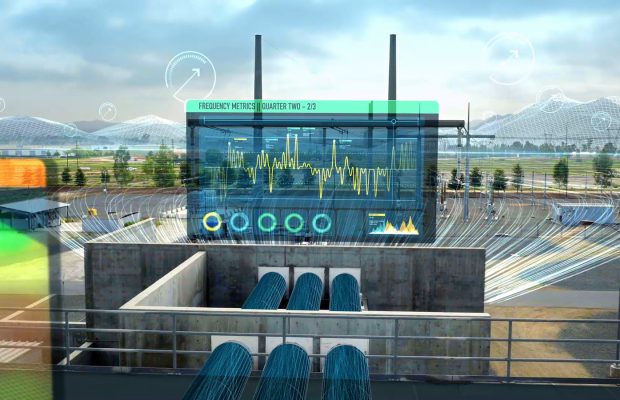
    The Vietnam High Efficiency Software Corporation (VHES) on Thursday launched its Head End System (HES) software to be used to manage the city’s smart electricity grid.

    The software, which uses Vietnamese-made chips, is intermediate software that VHES developed based on the Integrated Circuit Design Research and Education Center’s research project.

    VHES is the first high-tech start-up developed under the HCM City Integrated Circuit Development Programme.

    Speaking at the launch ceremony, Nguyễn Văn Lý, deputy general director of the HCM City Power Corporation, said the corporation would modernise the city’s grid from now to 2020, including building a smart grid, an automated electrically operating system, and an electrical measurement system with remote data collection.

    Trần Vĩnh Tuyến, deputy chairman of the city’s People’s Committee and head of the steering board of the Integrated Circuit Development Programme, said that smart management would create a safe and stable power supply.

  • Retail property sales climb in two main cities, but not rents

    Retail property sales climb in two main cities, but not rents

    The retail property segment in the two major cities of Ha Noi and HCM City saw recovery in occupancy but not in rent, Savills Viet Nam said.

    In its quarterly report on the two cities, the consulting firm said in Ha Noi, the occupancy was 84 per cent, stable quarter-on-quarter (q-o-q) and up 7.2 percentage points year-on-year (y-o-y). Meanwhile, the average rent was VND841,000 (US$38.7) per sq.m per month, decreasing 0.9 per cent q-o-q and 10 per cent y-o-y.

    Department store occupancy increased by one percentage point q-o-q, while shopping centre occupancy remained stable q-o-q. In the first half of 2015, Ha Noi’s retail sales were approximately VND210 trillion ($9.63 billion), increasing 10.3 per cent y-o-y.

    Without inflation, the real growth rate was 9.6 per cent y-o-y. With free-trade agreement participation and the expected signing of the Trans-Pacific Partnership in 2015, the competition between domestic and foreign retailers would continue, Savills Viet Nam said.

    In the second quarter, Ha Noi’s retail supply was approximately 950,000sq.m, increasing by 3 per cent y-o-y.

    In the second half of this year, approximately 353,000sq.m from 16 projects will enter the market. Two notable projects are Vincom Nguyen Chi Thanh and Aeon Mall Long Bien, which will provide more than 165,000sq.m. Meanwhile, the retail property segment in HCM City showed positive signs in the year’s second quarter, with average occupancy rising by seven percentage points to reach 92 per cent, Savills Viet Nam said.

    The average rent decreased by one per cent q-o-q to touch VND1.3 million ($59) per square metre per month. Shopping malls and department stores’ occupancy rates have been stable since the previous quarter at 92 per cent and 97 per cent, respectively.

    Department stores

    Retail podium occupancy was at 82 per cent, down two percentage points q-o-q, but this decrease had no impact on the overall occupancy.

    The average rent for department stores increased by one per cent to reach more than VND1.3 million, while it fell by two per cent to touch VND1.33 million in shopping malls.

    The rent for department stores increased by three per cent year-on-year, but decreased by two per cent in shopping centres and retail podiums.

    In the first half of the year, HCM City retail sales increased by 11.8 per cent y-o-y to touch VND256 trillion ($11.75 billion), significantly higher than the 7.7 per cent rate a year earlier and higher than the national figure of 10.2 per cent.

    The growing population and middle class in HCM City are driving the growth in retail demand.

    In Q2, two new shopping malls and one new supermarket entered the market, increasing the total retail stock by five per cent q-o-q to reach 940,000sq.m.

    The retail market is expected to expand faster in secondary and suburban areas than in the central business district due to upgrades in infrastructure and new residential projects.

    According to the second report in the series, Asia Pacific Consumer Survey – How We Like to Shop Online, released last week by CBRE, online shopping has overtaken bricks-and-mortar retail as the most popular method of purchase in certain Asian markets.

    Consumers in the 18-24 age group — known as ‘Generation Z’ — are also set to play an influential role in the regional retail market in the coming years. As a result of factors such as these, landlords and retailers would need to be proactive in order to remain competitive, the survey reported.

    “For emerging markets, given the lack of quality retail space — particularly in lower-tier cities — advances in technology and logistics networks mean that online retail is often the most efficient way for retailers to reach their customers,” Jonathan Hsu, head of Occupier Markets Research, CBRE Asia Pacific, said.

    The ability to compare products without having to physically visit individual stores is another key factor for the region’s consumers when shopping online. This trend is more prominent in emerging markets such as Viet Nam, China and India, where quality shopping centres or shops are often located far from each other.