Retail News CRM

Tag: HCM

  • Logistics association to assist in national plan on competitiveness

    Logistics association to assist in national plan on competitiveness

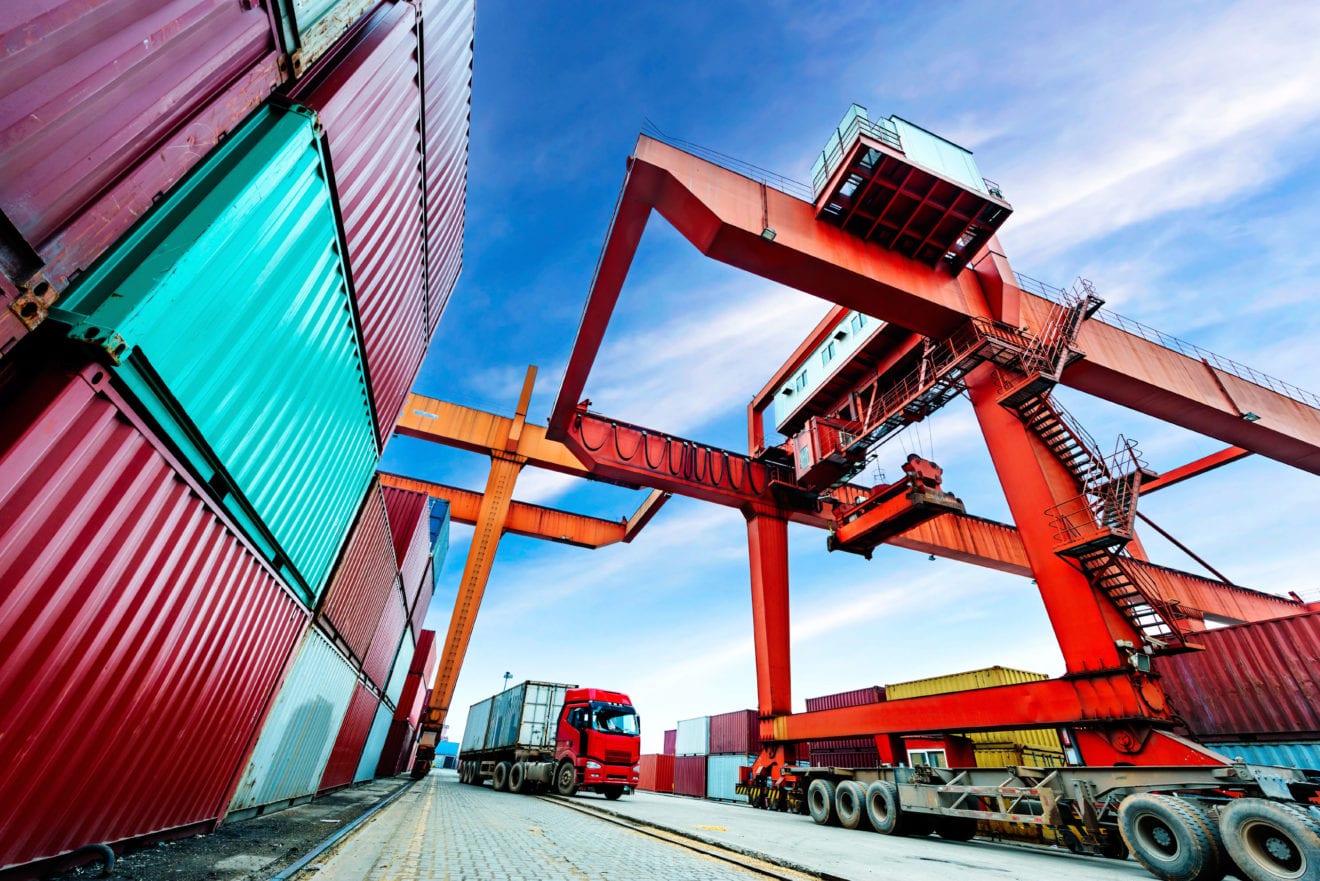
    The Vietnam Logistics Association (VLA) on Wednesday launched a ceremony to implement the Government’s first national action plan to improve the country’s competitiveness and its logistics sector by 2025.

    Lê Duy Hiệp, VLA chairman, said that VLA had been assigned to complete several tasks of the plan.

    In February, Prime Minister Nguyễn Xuân Phúc approved the action plan, which aims to have the logistics sector contribute 8 to10 per cent to the country’s GDP, with annual growth of 15-20 per cent by 2025.

    The plan also calls for Việt Nam to become one of the world’s 50 leading logistics services providers.

    The plan recommends new policies, more investment in infrastructure development, and better co-operation between local and foreign logistics companies.

    The aim is to have logistics companies that can be competitive in both domestic and international markets.

    Under the plan, Việt Nam will enhance connectivity with neighbouring countries and develop regional and international hubs.

    The plan calls for building level-1 logistics hubs (the highest level) in Hà Nội and HCM City, and level-2 logistic centres in Lạng Sơn, Lào Cai, Hải Phòng, Đà Nẵng, Quy Nhơn, and Cần Thơ.

    Trần Thanh Hải, deputy director of the Ministry of Industry and Trade’s Import-Export Department, said the country’s logistics development has been modest, as there are only 1,300-1,500 firms in the sector.

    More than 70 per cent of the businesses are small- and medium-sized with average capital of about VNĐ7 billion (US$320,000).

    “The country’s logistics effectiveness has been low, while available resources have not been fully exploited,” Hải said.

    The action plan would provide short- and mid-term solutions to improve the logistics sector in the next seven or eight years, he added.

    The initiatives taken by the Government to strengthen the logistics industry and increase efficiency have been supported by industry insiders.

    Christoph Matthes, managing director of logistics firm DB Schenker in Vietnam, said, “We strongly support the plan as the logistics has become more important than ever before.”

    In addition, increasing consumer demand requires a faster and more reliable way of delivery of goods.

    For many customers, logistics is no longer a matter of moving boxes from one location to another, but creating a highly efficient and reliable supply chain which enables them to be competitive in a fast-changing world.

    International trade is growing rapidly as well, and thus, a need to connect to other markets via air, ocean and road freight.

    Some of the largest export markets for Vietnam include the ASEAN region and Europe, where Việt Nam competes with other countries and where logistics costs play a vital role.

    Trade with Europe is expected to increase with the EU-Việt Nam Free Trade Agreement (EVFTA) coming into force next year.

    Experts said more steps were needed for smooth implementation of the agreement and to make sure businesses can fully benefit as soon as the treaty takes effect.

    The commitment of the Vietnamese Government to strengthen the logistics sector is an important step towards making this possible.

    Nestor Scherbey, general director of logistics firm Customs, Trade and Risk Management Services Ltd Việt Nam, said the national action plan would play a critical role in raising competitiveness.

    Logistics costs in Việt Nam are among the world’s highest, at 25 per cent of GDP, which hinders the cost competitiveness of Vietnamese firms, according to Logistics Insight Asia.

    Logistics costs in the US, Europe and the rest of the world are around 9, 13, and 15 per cent, respectively.

    “The efforts necessary to achieve a national action plan for logistics must be undertaken in co-ordination with diligent efforts by Việt Nam to implement the commitments of the World Trade Organisation Trade Facilitation Agreement (WTO TFA),” Scherbey said.

    Many of the major commitments of the WTO TFA were contained in the Trans-Pacific Partnership (TPP) and EVFTA.

    Full implementation of trade facilitation by Việt Nam would reduce the country’s international trade transaction costs by 20 per cent.

    “It is the combination of the benefits of trade facilitation, with the benefit of reducing domestic logistics costs, that will allow Vietnamese products to become fully competitive in global markets,” he said.

  • HCM City metro projects short on capital

    HCM City metro projects short on capital

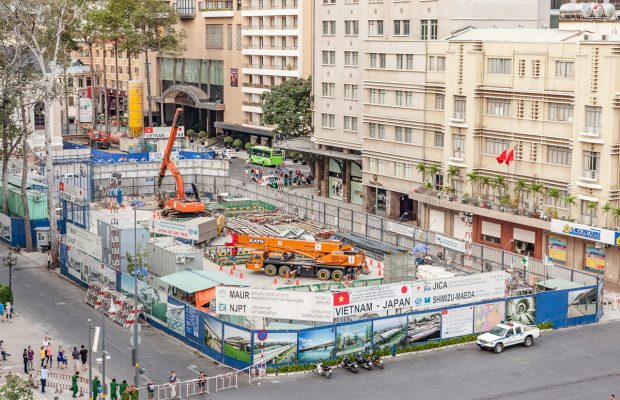
    A shortage of capital is the key problem of both Line 1 (Ben Thanh – Suoi Tien) and Line 2 (Ben Thanh – Tham Luong) urban railway projects.  The Ho Chi Minh City People’s Committee is the developer responsible for the two projects. At the Metro Ben Thanh-Suoi Tien project, the developer has been slow to pay contractors and may have to pay interest on late payment.

    According to a report submitted to the Ministry of Transport at the beginning of March 2017 by Le Van Khoa, deputy chairman of the Ho Chi Minh City People’s Committee, the payments for four construction packages have been delayed since September 2016.

    The reason is that the ODA capital provided for Ho Chi Minh City was only VND592.693 trillion ($26 million), a much lower amount compared to the VND1.95 trillion ($85.17 million) payable for the contractors.

    To deal with the current shortage, Ho Chi Minh City had to withdraw VND600 billion ($26.3 million) from the city budget to pay in advance for the consulting companies and contractors.

    With the current progress, although package No. 1a was started in November 17, 2016, the authority cannot pay the contractors as promised.

    Accordingly, by February 15, 2017, Ho Chi Minh City’s Urban Railway Management Boardwould have to pay in advance the amount of VND571 billion ($25 million).

    In case the developer fails to pay, the contract will be extended, which will result in numerous incurred additional expenses.

    Khoa said that the estimated ODA capital for Metro Line 1 is VND2.119 trillion ($93 million) in 2017.

    However, the project’s capital has not been added to the country’s plan on using ODA, which significantly affected the construction progress.

    By the end of February 2017, package No. 1b, used for the constructions of the stations between Saigon Opera House and Ben Thanh, was 41 per cent completed, while package No. 2 toconstruct the 17.1-kilometre stretch plus depots between Ba Son and Binh Duong was 65 per cent completed.

    Package No. 3 for the purchase of electromechanical equipment, locomotives, carriages, and railway tracks was 12 per cent completed.

    In general, the total disbursement of the project is VND10.9 trillion ($477 million), of which VND9.712 trillion ($425 million) is sourced from ODA.

    If the Japanese and Vietnamese contractors progress as scheduled, the total value of the completed parts in 2017 may reach VND5.320 trillion ($233 million).

    “The project should receive more ODA. It is essential to ensure the project’s progress as committed, as well as to avoid other incurred expenses, late payment penalties, and lawsuits from foreign contractors,” said the report.

    The 19.7-kilometre Ben Thanh-Suoi Tien Line goes through District 1 (Binh Thanh), District 2 (Thu Duc), District 9, and ends in Binh Duong Province (Di An District).

    Of the total, the underground parts are 2.6 kilometres, and the overhead parts are 17.1 kilometres long.

    The total investment after three adjustments has increased from VND14.415 trillion ($631 million) to VND47.325 trillion ($2.07 billion).

    The construction of the overhead part has been on-going since August 2012.

    The maximum speed along the line will be 80 kilometres per hour on the underground sections and 110 kilometres per hour on the bridge. It is forecasted to begin test runs in 2019 and be officially put into operation in 2020.

    Metro Line 2 in a worse spot

    Although Metro Line 1 is in slow progress, at least it has a forecasted launching period, while Line 2, which is also managed by Ho Chi Minh City’s Urban Railway Management Board, is struggling with investment adjustments and updating bid documents.

    Accordingly, the total investment of Metro Ben Thanh-Tham Luong is proposed to be VND47.605 trillion ($2.152,36 million), an increase of 56.6 per cent compared to the initial planned investment in 2010.

    The three biggest increases derive from land clearance, which rose from $119.38 million to $197.88 million; installation and purchase, which went from VND748.11 billion ($33 million) to VND1.198 trillion ($52 million); and reserves, which increased from $263 million to $368 million.

    By the end of February 2017, after six years of construction works, the disbursement was only VND700 billion ($31 million), including VND572 billion ($25 million) of ODA capital, which is equivalent to three per cent of the expected sum total.

    A representative of the Ho Chi Minh City Urban Railway Management Board admitted that implementation was slow compared to the promised schedule because the design has been adjusted.

    Additionally, the different instructions issued by the sponsors and the Vietnamese government on picking contractors and the elongated time for collecting feedback from sponsors also contributed to the slow going.

    As the most important Metro line in Ho Chi Minh City, the Ben Thanh-Tham Luong line will go from the new urban area Thu Thiem (District 2) and end in An Suong (District 12). It is forecasted that by 2025, it will handle 481,700 passengers a day.

    Besides the sharp increase in capitalisation, the launch will be delayed to 2024, despite initial promises to complete works by the end of 2016, as specified in Decision No 4474/QD – UBND approved by the Ho Chi Minh City People’s Committee.

    “The Ho Chi Minh City People’s Committee should review the implementation progress of each package used in these projects and have appropriate solutions to avoid the extension of process, which may lead to an increase in total investment, administration, and interest expenses, exchange rate risks, and fluctuations in construction material prices,” an expert said.

  • Problems with City pork plan

    Problems with City pork plan

    HCM City’s technology-based programme to control and trace the origin of pork that began recently is encountering difficulties, according to the Department of Industry and Trade.

    Speaking at a regular department press briefing, Nguyễn Phương Đông, its deputy director, said 713 pig farms have registered to participate in the programme, but only 99 put rings with an electronic stamp on their pigs’ legs to aid in individual identification of the animals.

    Even the number that agreed to join the programme had not met the expectations of its managers, he said.

    The reason for this is that the main source of supply for the city is farms and household breeders in neighbouring provinces, who need time to change their farming and trading habits.

    But to ensure the safety of consumers, the department is working with those provinces to organise training programmes for the farmers, he said.

    The city provides small-scale breeders with a 50 per cent subsidy of the cost of the electronic rings for the first month, he said.

    Almost all wholesalers at the city’s Bình Điền and Hóc Môn wholesale markets are taking part in the programme.

    They meet 70-80 per cent of the city’s pork demand.

    Consumers can currently check the origin of pork they buy at nearly 385 modern outlets (supermarkets, convenience stores and food shops) and 140 booths at 23 retail markets.

    The project management board is now working with poultry producers and distributors in the city and neighbouring localities to implement a similar programme in June.

  • Vingroup to invest in HCM City sports complex

    Vingroup to invest in HCM City sports complex

    HCM City’s People’s Committee had given Vingroup Joint Stock Company (Vingroup JSC) the go-ahead to invest in a sports and entertainment complex in District 2’s new Thủ Thiêm urban area.

    The complex would be located on 31.39 hectares, and the People’s Committee has approved a district planning scale of 1/2,000, the city’s department of planning and architecture (DPA) said on Monday.

    The project would require an estimated total capital of VNĐ6.77 trillion (US$305.1 million), excluding compensation for site clearance.

    So far, 99 per cent of the land in Thủ Thiêm urban area had been cleared, with 382 hectares set aside for residential purpose and another 334 hectares for commercial purpose. Once Thủ Thiêm had been developed, it would be able to house 150,000 residents and attract 220,000 workers.

    Vingroup JSC had acquired approval to build the complex as part of the second functional area in Thủ Thiêm and An Lợi Đông wards, Disctrict 2. The total construction is expected to take 36 months; the project utility period would be 50 years.

    Vingroup JSC’s sports complex would have infrastructure so it could be used as a multifunctional sporting halt and an amusement park. It is considered to be one of the key high-value projects in the planning of Thủ Thiêm urban area.

    Recently, many domestic and foreign investors had expressed interest in putting money into housing, commercial and office projects in Thủ Thiêm.

  • Price of land on the rise in HCM City

    Price of land on the rise in HCM City

    Land prices in HCM City and neigbouring provinces are increasing, with real estate industry insiders attributing it to high liquidity.

    Nguyễn Quốc Anh, deputy director of Đại Việt Group, said prices have been rising in all districts in the city since the end of last year.

    He quoted real estate website batdongsan.com.vn as saying that land prices surged 51 per cent last September.

    They are up 34 per cent in Thủ Đức District, 54 per cent in Hóc Môn, 37 per cent in Bình Tân and 13 per cent in District 7.

    Anh said that since the end of last year demand has been strong, with both speculators and people with actual housing needs buying.

    Nguyễn Thanh Trang of District 7 said she bought land in Bình Tân and made a profit of over 30 per cent within half a year.

    Brokers said areas where prices have increased are ones where residential projects are mushrooming or infrastructure would be improved in future.

    Explaining further, they said when an apartment or housing project is announced, land prices jump in the vicinity.

    A year ago a 60sq.m piece of land in District 9, 15km from downtown, cost VNĐ600 million (US$28,000). Now the same land costs VNĐ800-900 million ($40 million).

    Prices in more central parts have risen even more.

    For instance, in Linh Đông Ward of Thủ Đức District, 8km from downtown, now costs VNĐ18-25 million ($810-1,100) per square metre. A year ago it was only VNĐ14-16 million ($636-720).

    The rise is attributed to the new Phạm Văn Đồng Street which runs to the Gò Dưa traffic intersection.

    Furthermore, three apartment projects are being developed on this road.

    Districts 7 and Nhà Bè too have seen prices jump after authorities indicated several bridges would be built there and many streets expanded together with flyovers and tunnels.

    Neighbouring provinces like Đồng Nai, Bình Dương, and Long An where tourism is developing are also seeing land prices go up sharply.

    Brokers said liquidity is very good in these markets, with buyers coming from HCM City and elsewhere and acquiring lands without haggling much.

    But as prices go up, some are reminded of the property bubble that burst in 2008-10.

    Lê Hoàng Châu, chairman of the HCM City Real Estate Association, admitted that the risk of a bubble exists and said buyers should exercise caution when investing.


  • Tourism a driving force behind Vietnam’s economic growth

    Tourism a driving force behind Vietnam’s economic growth

    The country is on track to welcome more than 10 million visitors this year.Driving economic growth in Vietnam, the country’s government portal reported yesterday.The country’s economic growth prospects are strongly driven by its travel and tourism sector, the EIU said.

    Foreign arrivals reached more than 9 million from January – November this year, a staggering 25 percent increase from a year ago, the EIU noted, citing official data from the National Tourism Administration.

    The country is on track to welcome more than 10 million visitors by the end of this year, the administration forecast, which would exceed the target by 17.6 percent and last year’s arrivals by 26 percent.

    The EIU said that tourism continues to make a significant contribution to Vietnam’s economy. The tourism sector has not only created job growth in the wider economy, but also supported the development of other sectors such as retail.

    The study attributed the tourism industry’s growth prospects partly to Vietnam’s efforts to relax its visa policy to pave the way for a bigger inflow of international tourists.

    It has already offered visa exemptions for tourists from South Korea, Japan and those from Southeast Asian countries, as well as extended its visa-free policy through to June next year for travelers from the United Kingdom, France, Germany, Spain and Italy.

    With the aim of giving the tourism industry an even bigger push, the Vietnamese government has approved much-touted online visas for travelers on short holidays or casual business visits. The new visa rule, which is expected to come into effect from February next year, but it will be limited to those arriving from Vietnam’s top tourist markets.

    Vietnam’s top 10 tourist markets include China, South Korea, Japan and the United States.

    According to the World Tourism and Travel Council, tourism revenue directly contributed 6.6 percent of Vietnam’s gross domestic product last year. If you take into account that tourism drives other areas like spa and wellness services, dining and retail, the sector contributed around 13.9 percent of GDP.

    EIU experts suggested the Vietnamese government should improve the quality of transport infrastructure, which will in turn further boost growth in the tourism sector.