Tag: he xiaopeng

  • Xpeng Schedules Third-Quarter Results After Delivering Record 118,390 EVs

    Xpeng Schedules Third-Quarter Results After Delivering Record 118,390 EVs

    Xpeng will report its unaudited third-quarter financial results on November 16, following record quarterly deliveries of 118,390 electric vehicles across China.

    Volume rose 2.05 percent from the same period last year and climbed 14.61 percent sequentially from the second quarter, edging past the midpoint of the company’s August target.

    The carmaker plans to host its earnings call at 8:00 pm Beijing time on November 16, prior to regular trading hours in New York. Delivery volume for the quarter sat comfortably inside the projected band of 115,000 to 121,000 units. For the three months ended September 30, Xpeng had forecast revenue between 21.7 billion yuan ($3.23 billion) and 23.4 billion yuan, representing top-line expansion of 6.47 percent to 14.81 percent.

    Margin Pressure Behind Rising Volume

    Expanding assembly lines have yet to eliminate bottom-line losses. During the second quarter, Xpeng booked revenue of 19.74 billion yuan, up 8.0 percent year on year, while its net loss widened 179 percent to 1.34 billion yuan. Overall gross margin climbed to 20.7 percent during that period, but profitability specifically on car manufacturing retreated to 12.1 percent from 14.3 percent twelve months earlier.

    Management linked that automotive margin erosion to production line switchovers and model transitions. For automotive retailers and dealership networks across tier-two and tier-three Chinese cities, those shifting economics matter. Showroom floors face aggressive discounting pressure from domestic competitors, which forces brand operators to balance higher footfall against compressed dealership commissions.

    The Fourth-Quarter Delivery Pipeline

    Operational momentum picked up as the final quarter opened. The company delivered 50,237 vehicles in October, exceeding the 50,000 threshold in a single month for the first time. That tally marked a 19.57 percent increase compared to October 2025 and a 21.77 percent jump over September 2026.

    To sustain that momentum, the automaker began nationwide handovers of the Mona L05 on November 1, following its domestic debut on October 29. Fast handovers will test distribution logistics and regional charging hubs as order backlogs translate into active road registrations.

    Pricing Battles Across Chinese Showrooms

    The earlier part of the year had laid out a choppy trajectory for the business. First-quarter deliveries reached 62,682 units before rebounding to 103,295 in the second quarter. The second-quarter earnings release on August 24 demonstrated that while total vehicle receipts grew, product changeovers continued to drag on net earnings.

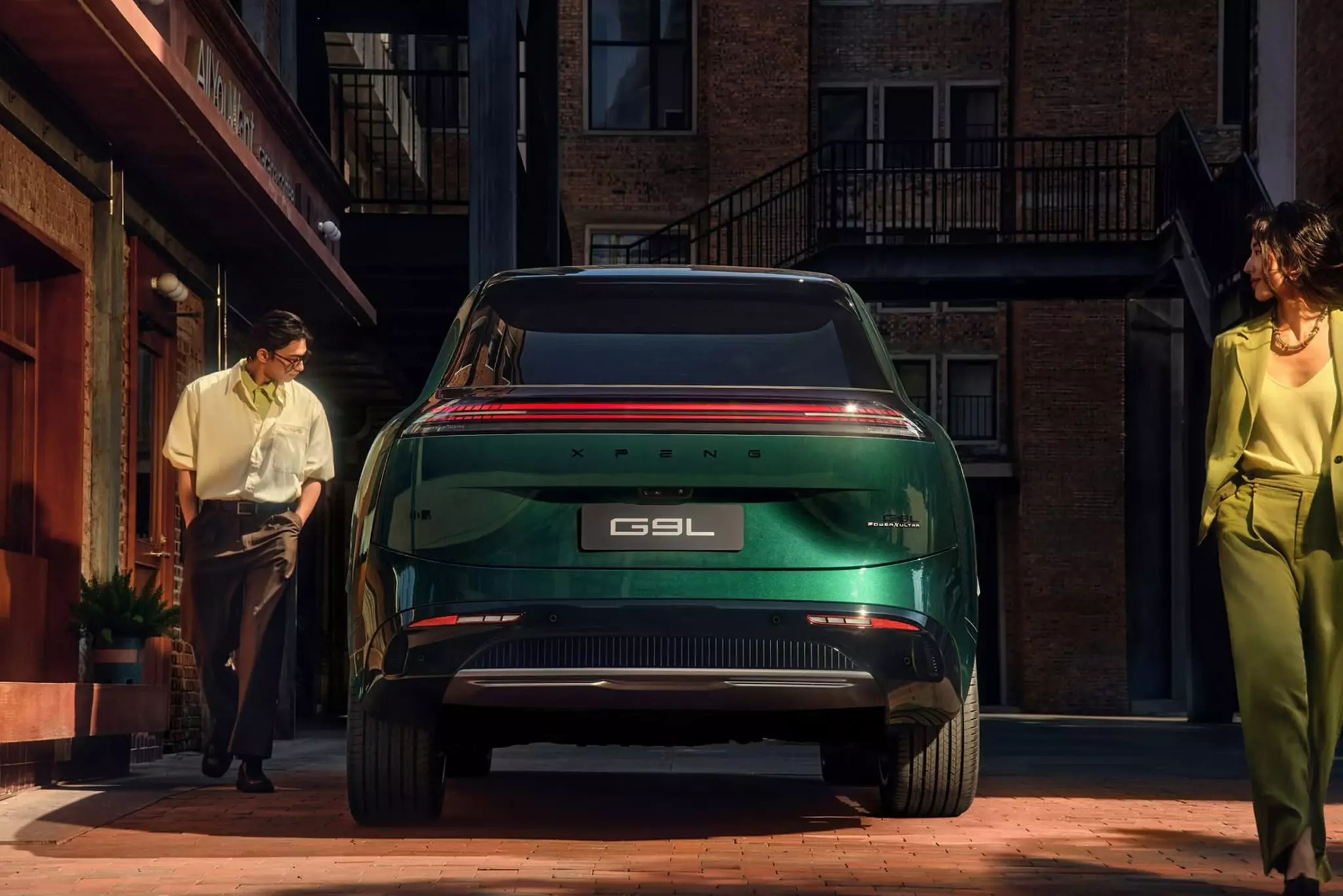
    Investors and regional dealership groups will focus on fourth-quarter delivery guidance when the numbers arrive on November 16. Chairman and Chief Executive Officer He Xiaopeng had previously set an operational target to surpass 60,000 monthly deliveries before the close of the year, relying on mass shipments of the Mona L05 alongside the G9L.

  • Xpeng Secures Approval for L4 Robotaxi Trials in Guangzhou

    Xpeng Secures Approval for L4 Robotaxi Trials in Guangzhou

    Xpeng secured municipal approval on Monday to launch Level 4 robotaxi trial operations across its home city of Guangzhou, marking a key step toward commercializing its autonomous transit services.

    Announced by robotaxi unit head Candice Yuan, the qualification for intelligent connected vehicle demonstration operations allows Xpeng Yoyo to begin phased public trials across the metropolis using invitation codes.

    The green light follows more than 2,000 internal test rides completed by August in Guangzhou, shifting the business from factory engineering toward live commercial validation.

    Invitation Codes and Phased Rollout

    Riders cannot book cars freely off the street yet. Candice Yuan, head of the robotaxi business, stated on Weibo that the unit will control early volume through invitation tokens while the operations team validates vehicle dispatch and road safety across urban districts.

    Trial runs shift the project out of closed engineering evaluation into real passenger transit. Yuan noted the daily service routines will test operating economics and fleet software before the company offers standardized mobility packages to third-party fleet managers.

    Hardware Stack Without Maps or Lidar

    The robotaxi runs on Xpeng’s flagship GX sport utility vehicle platform, adapted directly on the factory assembly line rather than retrofitted by third-party shops. The vehicle dispenses with lidar sensors and pre-mapped high-definition survey data, relying entirely on optical cameras coupled with machine learning vision networks.

    Compute hardware inside each vehicle runs on four proprietary Turing artificial intelligence processors delivering 3,000 TOPS of processing power. Path planning and dynamic driving actions operate through the company’s second-generation Vision-Language-Action artificial intelligence model, known as VLA 2.0.

    Fleet Platforms and Commercial Distribution

    Rather than building a proprietary retail ride-hailing network to take on incumbents directly, Xpeng intends to act as a hardware supplier and software partner. The business model targets third-party ride-hailing aggregators across domestic and international cities, charging for physical vehicle builds, recurring autonomy software fees, and fleet revenue-sharing cuts.

    That platform strategy shifts the capital burden of purchasing and housing thousands of battery-powered taxis onto existing fleet operators. Operating without expensive lidar rigs lowers unit manufacturing overhead, but putting camera-only Level 4 systems into dense southern Chinese street traffic transfers operational pressure directly onto onboard computing chips and remote management centers.

    Timeline Toward Driverless Services

    Guangzhou authorities awarded road testing rights for intelligent connected vehicles to the manufacturer in January, prompting the formal creation of a standalone robotaxi division two months later. Factory technicians completed the first production-line unit in May, followed by an initial internal run in July with chairman and chief executive He Xiaopeng booking and riding the car.

    Engineers have since built out a centralized cloud platform capable of taking remote control of stalled vehicles in traffic. Commercial deployment plans call for integration with major ride platforms in 2027, when the company aims to pull human safety supervisors out of the driver seat entirely.

  • Xpeng Begins Mona L03 European Deliveries with First Handover in France

    Xpeng Begins Mona L03 European Deliveries with First Handover in France

    Xpeng handed over its first Mona L03 in Paris, opening European customer deliveries for an electric crossover priced at 35,600 euros. Chairman and chief executive He Xiaopeng presented the keys personally on October 13 before meeting with local dealer partners.

    The Paris handover tests whether European drivers will pay 35,600 euros, or roughly 40,030 dollars, for a Chinese electric vehicle whose base version sells in China for 123,800 yuan, or about 18,420 dollars. European specifications include battery-electric power and the integration of Google Maps Auto SDK for real-time traffic and route planning, whereas domestic buyers also have access to an extended-range electric powertrain option.

    Pricing and the dealer network

    Local dealership partners will manage customer distribution in France, though Xpeng did not reveal how many orders the Mona L03 has accumulated across the country. European dealer groups have embraced Chinese brands to offset slowing consumer demand for domestic European electric models, yet retailer margins remain tightly squeezed by distribution costs and regional tariffs.

    He discussed long-term supply schedules with French dealership executives following the handover. The unnamed first French customer selected the vehicle primarily for its proprietary driver-assistance software suite, according to company statements that omitted the specific trim level delivered.

    Export volumes and showroom strategy

    Chinese electric vehicle makers are accelerating overseas rollouts to escape brutal price discounting across their home market. BYD and Geely have flooded continental showrooms with compact sport-utility vehicles, while Xpeng is betting that driver-assist software and competitive sticker prices will win over mid-tier buyers. The Mona L03 represents Xpeng’s bid to transition from premium niche exporter to high-volume player across 64 planned overseas territories.

    Selling a mass-market badge in Western Europe carries real channel risks. Distributors face established Japanese and European competitors with dense servicing operations, while buyers remain cautious about the resale values of newer Chinese automotive imports. Establishing local fleet and retail networks across France requires steady component shipments and heavy showroom subsidies that will test the Guangzhou-based manufacturer’s operating balance sheet.

    Expanding the overseas footprint

    Munich served as the launchpad for the Mona L03 on July 16, when the crossover became Xpeng’s first product to debut simultaneously in Europe and China. On October 11, the company introduced the model to Australia and New Zealand, making it the third vehicle in those markets alongside the G6 crossover and X9 multi-purpose vehicle.

    Global demand helped push Xpeng’s monthly export deliveries past 10,000 units for the first time in September. That overseas surge reflects wider territory gains, including the Middle East where recent GX shipments passed 3,000 units, alongside the European introduction of the larger G9L sport-utility vehicle on October 12.

    The long-term sales targets

    Senior management has set a public target of selling 1 million vehicles annually by 2030, expecting European showrooms to supply half of that total volume. Delivering 500,000 cars a year in Europe requires vast scale across right-hand and left-hand drive territories, backed by dependable service logistics.

    Showroom momentum now shifts to the newer Mona L05, which opened customer pre-sales on October 15 to reinforce fourth-quarter deliveries. The carmaker’s next operational test will be the release of full European delivery figures for the final quarter, showing whether the Paris handover was an isolated photo opportunity or the start of sustained volume.

  • Xpeng Consolidates 4 Product Lines into 2 to Cut R&D Costs

    Xpeng Consolidates 4 Product Lines into 2 to Cut R&D Costs

    Xpeng has consolidated its four product lines into two to focus research and development resources and reduce costs, media outlet 36Kr reported on Monday.

    The Chinese electric vehicle maker merged its I and F product lines into the G line, leaving only the G and D lines in place.

    Following the restructuring, the Mona series remains under the D line, while large SUVs including the GX and G9L and P-series sedans fall under the G line. The former head of the F line now oversees product definition for the G line, while the former head of the I line shifted to overseeing overseas affairs.

    Reining in Development Overlap

    Engineering teams previously built vehicles across separate tracks that competed for the same laboratory testing slots, supplier contracts, and software integration cycles. Merging the lines eliminates duplicate vehicle architectures and limits internal pricing clashes between sedans and crossovers that share identical wheelbases.

    For automotive component suppliers across the Pearl River Delta, fewer product lines mean consolidated purchase orders and standardized component tooling. Investors have pushed for tighter capital controls as Chinese electric vehicle makers face aggressive domestic price cutting and slowing volume gains across the mid-market bracket.

    R&D Outpaces Delivery Growth

    Development costs rose 32.1 per cent year on year to 2.91 billion yuan ($431.8 million) in the second quarter, driven by autonomous driving software, foundation AI models, and platform engineering. Vehicle deliveries in the same quarter stood at 103,295 units, up 0.1 per cent from the previous year.

    Second-quarter net loss widened to 1.34 billion yuan from 480 million yuan a year earlier, though it improved from the 1.78 billion yuan loss recorded in the first quarter. Vehicle gross margin reached 12.1 per cent, down from 14.3 per cent a year earlier due to production changeovers, while overall company gross margin stood at 20.7 per cent with support from technical service revenue.

    Model Cadence Across Two Tracks

    The restructuring aligns vehicle programs ahead of several fourth-quarter rollouts designed to lift monthly volumes. Xpeng introduced its G9L five-seat SUV on September 17 to complement its six-seat GX, targeting family buyers who previously looked at rival offerings from Li Auto and Nio.

    Volume pressure now rests heavily on the Mona product unit. Deliveries of the Mona M03 sedan began in July, while the Mona L05 crossover enters the Chinese market before the end of the year.

    Factory Commitments and Fourth-Quarter Targets

    Management is targeting monthly deliveries above 60,000 units in the fourth quarter, a 53 per cent jump from the 39,107 vehicles handed over to customers in August. Reaching that pace requires the Guangzhou and Zhaoqing assembly plants to operate near full capacity through December.

    Parallel investments in non-automotive hardware remain active. Xpeng commissioned its Iron humanoid robot manufacturing line earlier in September, targeting commercial deployment across its retail showrooms by the end of 2026 before starting customer deliveries in 2027.