Tag: heatwave

  • South Korea’s ‘mallcations’ Trend: Unprecedented Weather Boosts Indoor Retail Sales

    South Korea’s ‘mallcations’ Trend: Unprecedented Weather Boosts Indoor Retail Sales

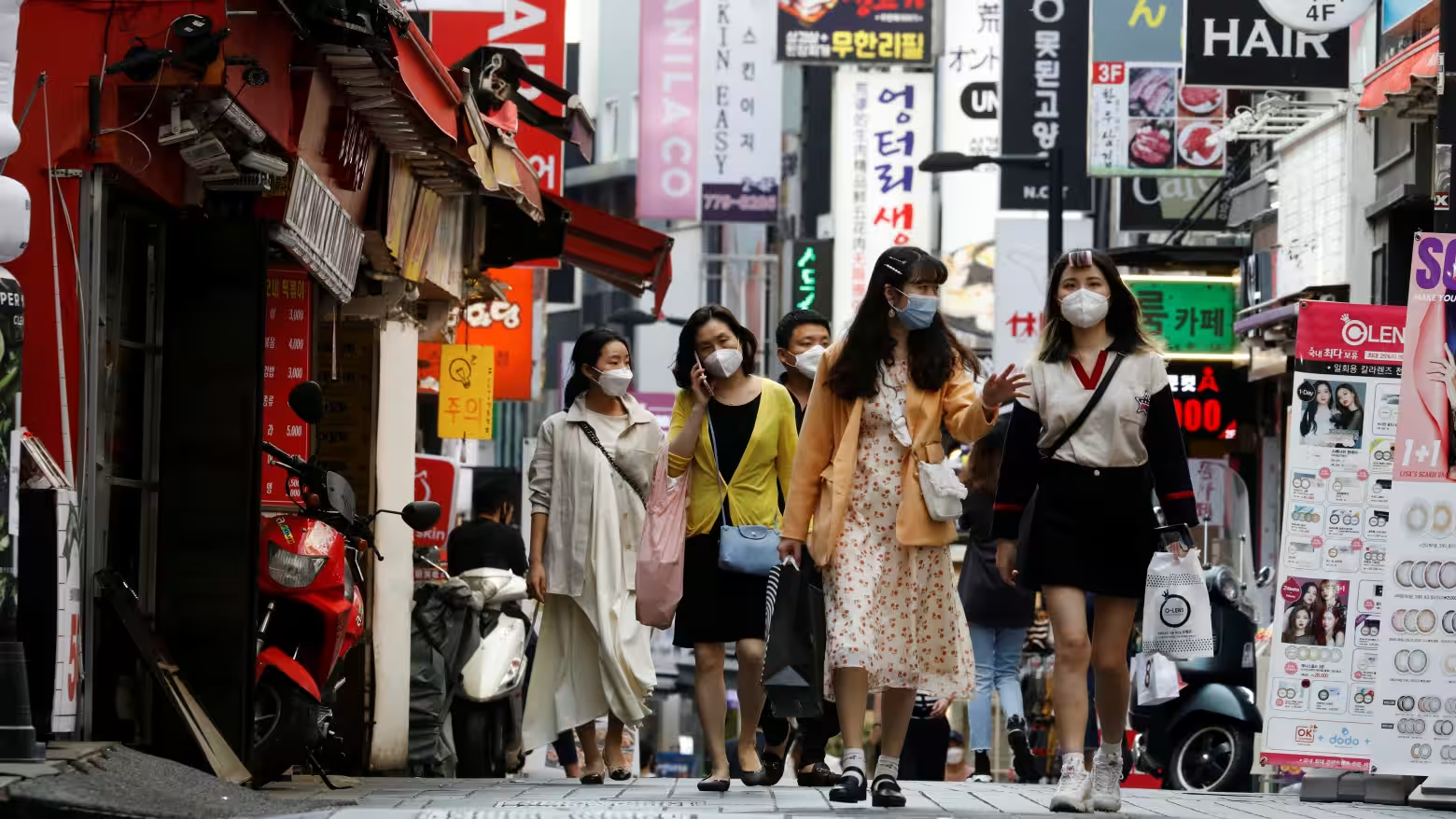
    As South Korea experiences an intense summer marked by unprecedented heatwaves and monsoon downpours, there’s been a noticeable uptick in customers choosing to spend their leisure time indoors. This trend, known as “mallcations,” is resulting in a significant surge in sales for department stores and outlet malls.

    Increased Footfall and Sales

    Major retailers have reported a sharp increase in foot traffic from July 1 to 17, compared to the same time frame last year. Lotte Department Store noted a 10% surge in visitor numbers, while Shinsegae and Hyundai Department Store registered increases of 14% and 13% respectively, translating into sales growth of 11.1% and 10.7%. Meanwhile, Hyundai Premium Outlet, which boasts an underground parking feature, saw its sales skyrocket by 21.2%.

    This changing consumer behavior is largely attributed to the unpredictable weather conditions, making air-conditioned indoor spaces far more appealing than outdoor venues. Notably, families are driving an increase in food and beverage (F&B) sales: Lotte observed a 10% rise, while Shinsegae and Hyundai reported increases of 15.8% and 12.4% in F&B revenue respectively.

    Seasonal Products and Experiences

    As the summer vacation season looms, seasonal product categories have also shown strong sales performance. Sales of swimwear at Lotte have jumped by 15%, supported by a government tax incentive for cultural activities. Appliance sales have increased by 10% under an energy efficiency rebate program.

    Cooling bedding has emerged as another hot-selling item. Shinsegae saw a 33.7% surge in its bedding category, while Hyundai recorded growth of 23.9% in sportswear and 18.8% in home living products.

    In addition to the increase in sales, retailers are also rolling out immersive, summer-themed experiences to capitalize on the increased footfall. Lotte is set to launch a “Summer Gourmet Week” across all its locations, complete with sweepstakes for F&B customers. The retail chain will also host a “Summer Wine Festa”, offering discounts on spirits, and pop-up jewelry boutiques catering to seasonal accessory shoppers.

    Shinsegae, on the other hand, has introduced pop-ups featuring surfing gear and is hosting art exhibitions. Hyundai Department Store is revamping its spaces with a Hawaiian resort theme under the “Hu’i Hu’i Maui” campaign which will run through August 21.

    Reinventing Retail

    With the Korean climate becoming increasingly erratic, retailers are adopting climate-proof leisure strategies. They are redefining malls as not just shopping centers, but as cool and curated summer destinations.

    Questions & Answers

    What is a “mallcation”?
    A “mallcation” refers to the trend of consumers spending their leisure time indoors at malls due to unfavorable weather conditions.

    What factors have contributed to the growth in foot traffic and sales for retailers?
    Unpredictable weather conditions, the appeal of air-conditioned indoor spaces, and the introduction of immersive, summer-themed experiences by retailers have contributed to the increase.

    How are retailers capitalizing on the rising trend of “mallcations”?
    Retailers are rolling out immersive, summer-themed experiences and pop-up shops, hosting art exhibitions, and transforming their spaces to provide a more engaging and enjoyable shopping experience for consumers.
  • Thailand heatwave gives Vietnam edge in durian exports to China

    Thailand heatwave gives Vietnam edge in durian exports to China

    Thai industry insiders say the ongoing heatwave in Thailand might reduce durian production, allowing Vietnam to increase its supply to China.

    A heatwave in April and May reduced Thailand’s harvest, which normally commands higher prices than its Vietnamese peers.

    In April the country recorded a temperature of 44.2 degrees Celsius, compared to the all-time record of 44.6 degrees last year. So far this year Thailand has recorded 61 people dying over heatstroke, higher than the total number in 2023.

    High heat causes the skin to crack or the fibers to dry out in some durians, Sam Sin, development director at S&F Produce Group, a Thai firm that exports durian to China said.

    In China’s Zhejiang province, fruit importer Huang Dapeng mentioned in a WeChat forum that some durians were becoming “overheated,” leading to their sale at prices below the market rate.

    Farmers reported that the heat is causing durians to ripen more quickly, preventing them from reaching their full size and reducing their market value.

    According to China’s General Administration of Customs, in April, China’s import price for Thai durians was US$5.80 per kilogram, marginally higher than the overall average of US$5.38 per kilogram. In contrast, Vietnamese durians were priced at US$4.22 per kilogram.

    Thai durians exported to China in the first four months of 2024 had lost 49% of their value over the same period last year.

    Another concern for Thai durian growers is drought, which could reduce the yields.

    The serve weather condition may reduce Thailand’s durian production this year by 42%, or around 540,000 tons, the Nation quoted Aat Pisanwanich, an expert on international economics and adviser to Intelligent Research Consultancy as saying.

    Vietnam gains on Thailand

    Drought and heatwaves increase durian production costs in Thailand, as farmers face additional expenses to transport water to their farms to sustain their durian trees.

    Conversely, Vietnamese exporters, who gained permission to sell fresh durians in China about three years ago, benefit from cost savings by shipping the fruit across a single land border.

    This logistical advantage results in lower prices for Vietnamese durians. In April, China’s import price for Vietnamese durians was 27% lower than that of Thai durians, at $4.22 per kilogram, according to data from China’s General Administration of Custom

    In the first quarter of this year, Vietnam exported 36,800 tonnes of durian to China, compared to just 17,900 tonnes from Thailand, official data show.

    Thailand maintained a 66% market share in China during the first four months of this year. However, according to Chinese customs data, Vietnam’s share by value rose by 82% in the period.

    Dang Phuc Nguyen, general secretary of Vietnam Fruits & Vegetables Association, said that farmers in the southern region have successfully applied new techniques in growing durian.

    “Durian is a strong advantage for Vietnam in competing for the China market. There are times when Vietnamese sellers are the only ones with supply”, he said.

    Last year China bought $2.1 billion worth of durian from Vietnam, but the figure can reach as high as $3 billion this year, he added.