Tag: Heineken malaysia

  • SPARK Foundation Rolls Out RM120,000 Youth Water Grant in Malaysia

    SPARK Foundation Rolls Out RM120,000 Youth Water Grant in Malaysia

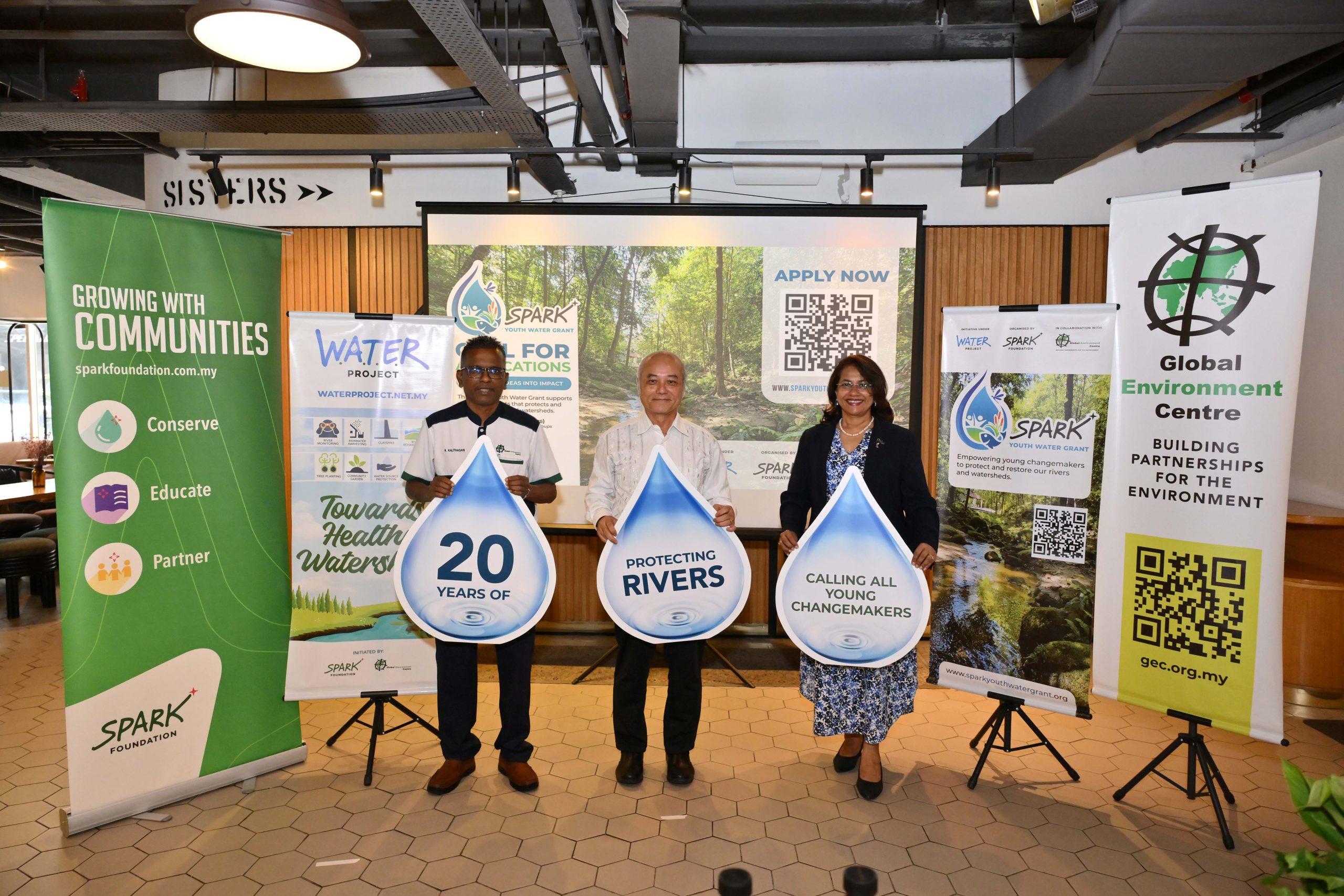
    SPARK Foundation has launched a RM120,000 youth water fund in Malaysia. The money will finance river rehabilitation, watershed conservation, and community access projects led by students and local startups.

    Seed capital is split across two tiers, offering between RM3,000 and RM15,000 per team for working prototypes and local conservation programmes.

    How the funding breaks down

    Run alongside the Global Environment Centre, the grant targets Malaysian citizens between 18 and 35 years of age. Applications close 30 November 2026 across four tracks: water quality, water quantity, water accessibility, and river biodiversity.

    Tier 1 allocates RM3,000 to RM5,000 per project for undergraduate and postgraduate student teams enrolled in Malaysian universities. Tier 2 provides RM5,000 to RM15,000 for registered, youth-led startups and social enterprises operating nationally.

    Shortlisted teams will pitch proposals in January 2027, with final funding decisions due in March 2027. Winners receive direct funding alongside technical mentoring from environmental specialists in nature-based solutions, science, and community outreach.

    Corporate water stewardship in consumer supply chains

    Secure freshwater basins are an operational necessity for Southeast Asian food and beverage makers. Breweries and bottlers depend on municipal water lines. Watershed degradation creates an immediate balance-sheet risk in industrial corridors like Selangor.

    Funding grassroots monitoring helps corporate foundations build external surveillance around the catchments feeding their plants. The outlay is modest. It shifts early groundwork to university researchers and agile operators who test solutions faster than corporate teams.

    Two decades of watershed rehabilitation

    The grant expands the broader W.A.T.E.R Project, which approaches its 20th anniversary after launching in 2007. SPARK Foundation, tied to Heineken Malaysia, has directed more than RM16 million into freshwater preservation over that span.

    “What began with the revival of Sungai Way from a polluted river into a living waterway has evolved into a broader effort to safeguarding the Sungai Selangor watershed,” said Renuka Indrarajah, trustee of SPARK Foundation.

    Past work along the Sungai Selangor basin included building a 305-metre clay dyke and reforesting three hectares of degraded peatland. Crews also installed rainwater harvesting infrastructure in adjacent residential areas.

    Selection schedule for applicants

    Dr Kalithasan Kailasam, deputy director of Global Environment Centre, confirmed that vetting will favour measurable field results over theory. Projects must demonstrate direct community benefits, pollution reduction, or verifiable biodiversity recovery in local waterways.

    Assessors will review submissions through December 2026 ahead of the January pitch sessions. Funded projects must begin execution across designated Malaysian river basins during the second quarter of 2027.
  • Heineken Malaysia Cuts Brewery Emissions 45 Percent and Replaces Secondary Plastic

    Heineken Malaysia Cuts Brewery Emissions 45 Percent and Replaces Secondary Plastic

    Heineken Malaysia cut production emissions by 45 percent at its Sungei Way brewery against a 2022 baseline. On-site solar generation and renewable grid procurement drove the reduction.

    The brewer took top honours in two categories at the ESG Positive Impact Awards 2025. It recycled all 35,637 tonnes of its production waste and eliminated 195 tonnes of single-use packaging plastic.

    Sungei Way Brewery Energy and Water Overhauls

    Power for the Petaling Jaya facility now comes entirely from renewable sources via Tenaga Nasional Berhad’s Green Electricity Tariff programme. An array of 3,500 rooftop solar panels adds roughly 2,600 megawatt-hours annually. For heat, the site relies partly on an upgraded wastewater treatment plant. That RM7 million facility captures biogas during effluent processing to supply approximately 4 percent of thermal requirements.

    Water management forms the other major capital focus at the site. Using flow meters, equipment overhauls and recycling loops, the brewer improved water efficiency by 36 percent compared with 2014 levels. Independent auditor LimnoTech verified the results. In 2025, the company hit 221 percent of its targeted water balancing volume, returning more treated water to the watershed than its operations consumed.

    Value Chain Pressures for Regional Brewers

    Breweries across Southeast Asia face tougher scrutiny from institutional investors and retail off-trade buyers over Scope 3 supply chain footprints. Malaysian beverage makers must balance high excise duties against the capital expenditure needed to electrify thermal brewing. Decarbonising industrial heat remains difficult. To cut upstream emissions, Heineken brought 40 tier-one suppliers into the UN Global Compact’s ESG Start programme, pushing compliance down to local packaging and logistics vendors that lack dedicated sustainability budgets.

    Competitors like Carlsberg Malaysia and Thai Beverage are deploying similar resource reduction programmes to protect operating margins against rising industrial water tariffs and volatile power costs. Packaging penalties loom for laggards. Grocery chains now demand certified recycled content and paperboard alternatives. The steepest financial risk sits in thermal energy replacement: replacing remaining fossil fuel boilers requires heavy capital that cannot be offset by rooftop solar alone.

    Tracking Circularity and Watershed Protection

    At the Sungei Way site, operational adjustments build on long-term capital investments. Heineken Malaysia has routed zero production waste to landfill since 2017. The site sends organic outputs like spent brewing grains into animal feed and agricultural upcycling streams. For packaging, the company switched secondary can wraps from shrink plastic to paperboard, cutting single-use plastic across retail channels.

    Community watershed investments run alongside the plant works. The SPARK Foundation, the brewer’s corporate responsibility arm, has spent more than RM16 million since 2007 on peatland restoration, rainwater harvesting installations and river rehabilitation projects around Selangor’s river basins.

    Managing Director Martijn van Keulen and his supply chain team are aligning the Petaling Jaya plant with the group’s Brew a Better World 2030 roadmap. That plan sets binding deadlines for net-zero carbon production and complete water circularity across all Asian operations.

  • Heineken Malaysia 2018 net profit up 4.6%

    Heineken Malaysia 2018 net profit up 4.6%

    Heineken Malaysia Bhd, which posted a 4.6% jump in its net profit for the financial year ended Dec 31, 2018 (FY18), remains cautious about its outlook given the challenging environment due to intense competition, implementation of the sales & service tax (SST), and the continued presence of contraband beer in the market. In line with rising global commodity prices, the group also expects an increase in cost of operations including raw materials and packaging.

    Finance director Szilard Voros said how the group will perform in FY19 also depend on the market, adding that it will benefit if consumers remain optimistic and if efforts to curb illicit trade are stepped up.

    “But we remain cautious because SST was just introduced in September so that also comes with a lag… we also need to see how things settle down after Chinese New Year and see what is the normalised performance and if there’s a growth continuation,” he told reporters at a media and analyst briefing today after announcing the group’s financial results.

    Managing director Roland Bala (pix) said the external environment remains challenging. Amidst slowing global growth rates, currency volatility and uncertainty in the commodity markets, he said the group will need to adopt a cautious approach in cost management.

    “Moving forward, we will continue to invest in our core brands and leverage on our portfolio. As consumer taste profile changes, we will make bets on brands that we believe will have scale,” he added.

    Heineken’s net profit for the fourth quarter ended Dec 31, 2018 grew 6.8% to RM100 million compared with RM93.64 million in the same quarter last year due to higher revenue as well as efficient and effective management of commercial spend and overheads.

    Group revenue grew 12.3% to RM662.28 million as compared to RM589.96 million in the same quarter in 2017 mainly due to increase in sales volume driven by the flagship Tiger brand.

    For the full year period, net profit grew 4.6% to RM282.2 million from RM270.06 million a year ago, while revenue rose 8.3% to RM2.03 billion from RM1.87 billion.

    It has proposed a final dividend of 54 sen per share for the quarter under review, bringing the full-year dividend payout to 94 sen.