Tag: Hema Fresh

  • Hema Fresh eyes 2000 stores by 2022

    Hema Fresh eyes 2000 stores by 2022

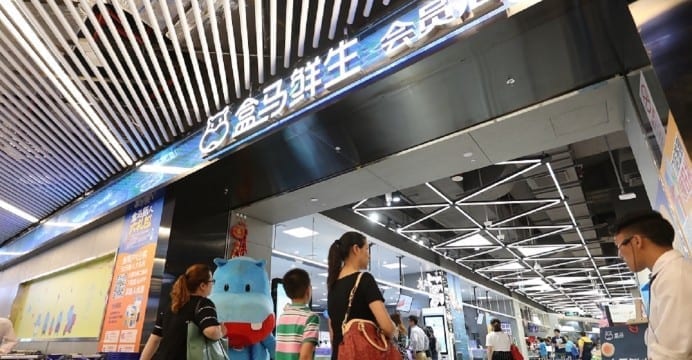
    Alibaba’s grocery-store network Hema Fresh (Hema Xiansheng) is targeting at least 2000 stores across China by 2022.

    With the current network at 160, expansion of the two-year-old chain is now being ramped up after Alibaba worked to refine the format. According to senior executives of Alibaba, quoted in Chinese news media reports, Hema Fresh will have stores in 200 cities by 2030. It is currently in 21, including Shenzhen, Shanghai and Beijing.

    Hou Yi, Hema Fresh’s CEO and VP of Alibaba, says the company will be targeting cities with populations in excess of 1 million as it achieves critical mass.

    As Pascal Martin and Jack Chuang, partners at OC&C Strategy Consultants, described in a deep dive into the Hema format published early this year, the Hema concept was developed from scratch by Hou Yi, a logistics expert hired from rival Jing Dong.

    The Hema store’s value proposition is built on three pillars:

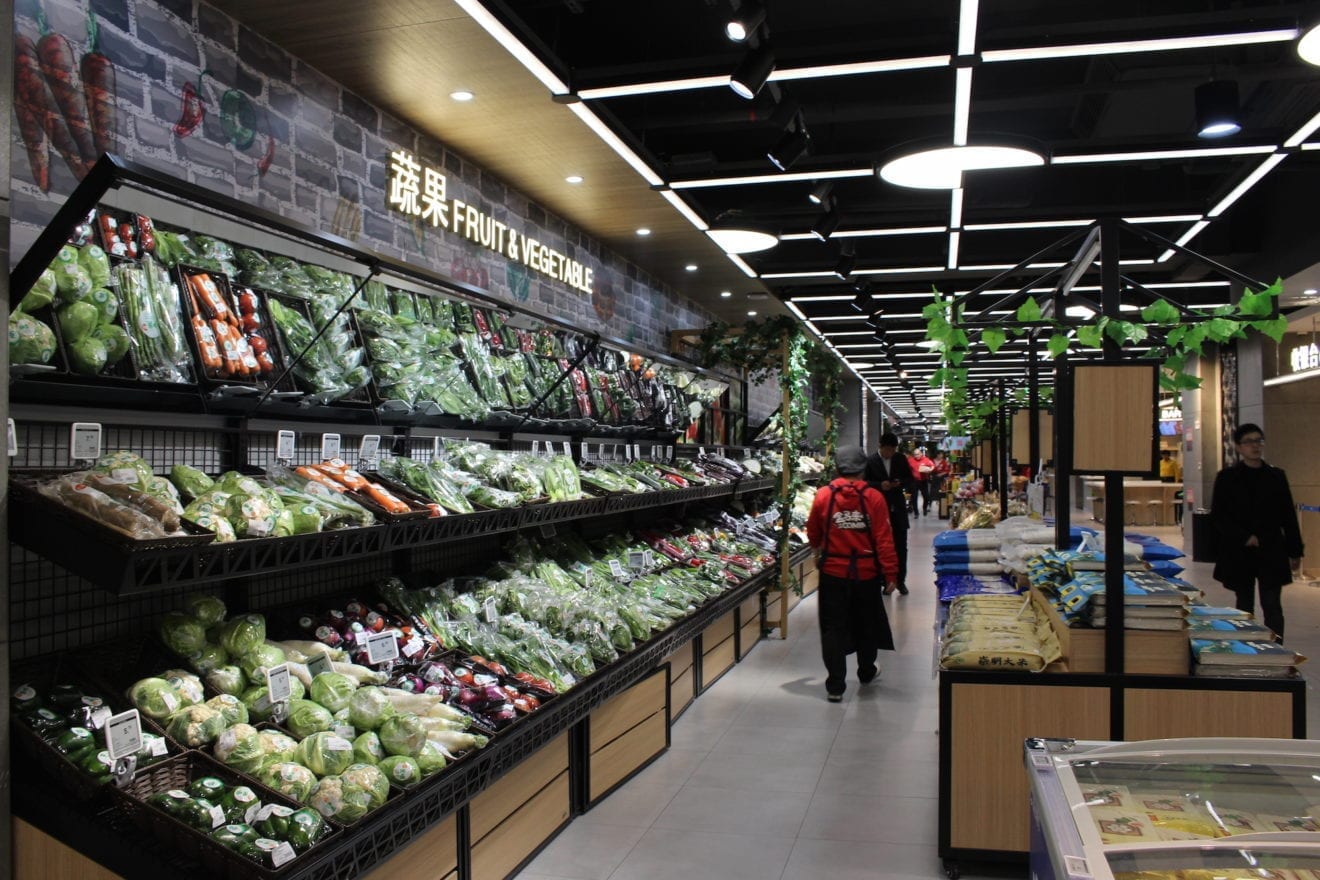
    * Superb quality fresh food – particularly seafood – at an attractive price, that you can pick and have cooked to dine in the store or to go.

    * A completely integrated smartphone-centric experience, from product information (by scanning QR codes on product labels) to automated check-out enabled by RFID tags, to payment through Alipay (although Alibaba was recently forced by regulators to accept other payment platforms and cash).

    * An extended shopping experience with the download of an application that allows online ordering and free home delivery within 30 minutes within a 3km radius of each store.

  • Fonterra launches new milk product with Hema Fresh

    Fonterra launches new milk product with Hema Fresh

    Hema Fresh is Alibaba’s new retail concept, which combines traditional shopping with a digital experience.

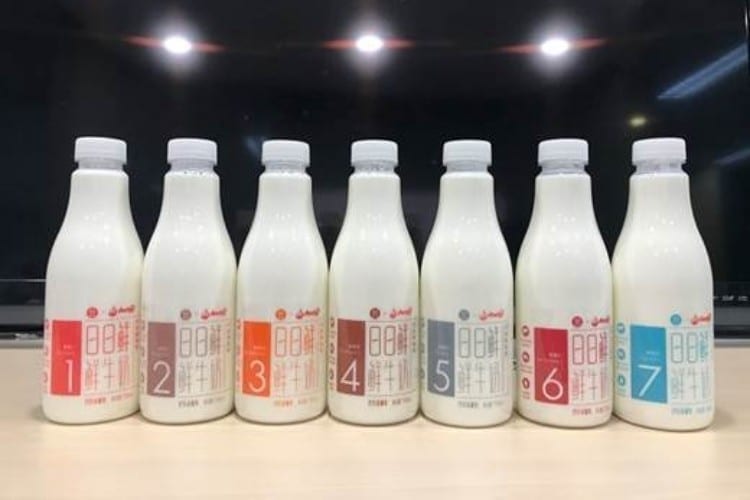
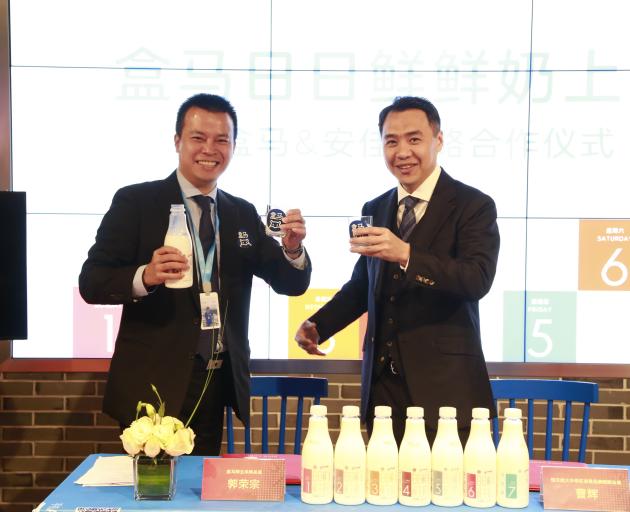
    The new ‘Daily Fresh’ milk range is now available in Hema’s 14 stores in Shanghai and Suzhou in 750ml bottles, sourced from Fonterra’s farm hub in Hebei province.

    The product has product labels to match each day of the week, which it says highlights and emphasizes freshness, with stock being replenished every night.

    Initial volumes are currently around three metric tonnes daily, with plans to scale-up over time and expand with the retailer as it grows its footprint of stores across China.

    Increased income

    President of Fonterra Greater China Christina Zhu said shoppers in China are becoming increasingly sophisticated in terms of their tastes and preferences, which are being driven by rising household incomes.

    “More than ever before, consumers are consciously seeking products that are fresh, nutritious and safe, and our new product for Hema caters to this,”​ Zhu said.

    According to figures from global management consulting company McKinsey, it is expected that more than 75% of China’s urban consumers will earn RMB 60,000 to 229,000 annually ($9,450 to $35,620) by 2022.

    This is up from just 4% in 2000, prompting a shift in consumer behavior and purchasing power.

    The Hema model

    Linked to this trend is the rise of Hema, which emerged in early 2016.

    The shopping experience at Hema is driven by a downloadable app, through which customers can scan barcodes to get information on the product.  Food can also be picked, cooked by staff, and eaten in store.

    The stores are also ‘fulfilment centers’ where customers can order online through the app, workers collect the items and they are delivered within 30 minutes within a 3km radius.

    Hema is also linked to payment options, and is a membership club: the app personalizes shopping for the consumer based on previous purchases.

    Other products

    In addition to the new fresh milk range, Anchor UHT milk products and the Anchor Dairy Foods range of butter, cream and cheese items are sold through Hema.

    The retailer is also a foodservice customer, using Fonterra’s Anchor Food Professionals products in its in-store bakery.

    Hema Fresh CEO and founder Hou Yi said the co-operation between the two companies is set to redefine the concept of fresh milk in the new retail era.

    Zhu says the new product highlights how Fonterra’s business in China is leveraging its local milk pool, spread across three farming hubs.

    “No other multinational dairy company in China has a local milk pool to draw from, so we are in an advantageous position,”​ said Zhu.

    “This milestone with Hema is a sign of things to come and indicates that our push to shift more of our local milk into higher-yielding consumer and foodservice products is well-and-truly under way.”​

    Reducing waste

    While replenishing stock on a daily basis has the potential to lead to waste as it is replaced daily, a Fonterra spokesperson told DairyReporter the volumes are initially quite small, and the whole model of Hema is that everything is fresh, so the company would rather run out than have stock left over.

    The spokesperson said, however, that sales have been going well, with the vast majority of bottles selling out each day.

    “For any that are left over, that’s where the uniqueness of the Hema model comes into play to keep waste at an absolute minimum​.

    “As well as being styled like a grocery store, Hema also has a range of bakderies and restaurants in-store which can utilize surplus product that doesn’t sell on the day.”​

  • Alibaba opening more fresh food stores

    Alibaba opening more fresh food stores

    Alibaba Group Holding Ltd announced on Wednesday the opening of another 30 Hema Xiansheng fresh food supermarkets throughout Beijing this year, as internet giants focus increasingly on the lucrative fresh-food retail sector.

    The announcement came right before JD’s first fresh food supermarket 7Fresh started its official operation on Thursday, an indication of the increasingly intense competition and rapid expansion of the two e-commerce giants.

    With Hema opening in major commercial districts across Beijing including Xizhimen, Guang’anmen and Shuangjing, consumers in major urban areas of Beijing can have their groceries delivered to a location within a radius of three kilometers from the store in 30 minutes.

  • Another Alibaba major step in China retail

    Another Alibaba major step in China retail

    This week’s Alibaba-Sun Art deal is a major step in the development of a new retail landscape in China, write Wai-chan Chan and Jacques Penhirin of Oliver Wyman.

    This is not a “real estate play” with Alibaba buying 446 grocery stores, but shows how serious Alibaba are in developing the “new retail” model combining the strengths of online and offline retail.

    The first winners from this alliance are likely to be consumers.  Alibaba will use its investment in Sun Art to improve its price, service levels and the range of products available. In addition, expect to see Alibaba add the ability to deliver a wide range of goods from these stores to consumers’ homes in super quick times. Today delivery time is the new battlefield but performance is still highly dependent on physical networks.

    In the context of retail this alliance is more important than Amazon’s acquisition of Whole Foods in the US.  Sun Art is the largest, and one of the most respected grocery players in China, while Alibaba already has a large grocery business, making it an alliance between two leading players in retail.

    Unlocking fresh

    Despite the huge advances in e-commerce in China, fresh food has been one of the areas that has been most difficult to convert to e-commerce.  Freshness is the key driver for consumers in grocery shopping. According to a survey of 1500 consumers Oliver Wyman conducted in August, consumers purchase fresh products 4.9 times per week on average, and ‘fresh’ is the number one criterion in grocery retailer selection regarding range, product quality, and value for money. However, 81 per cent of respondents do not think e-commerce provides good quality fresh products compared with offline hypermarkets.

    As one of the top two hypermarkets receiving the highest rating from consumers on their fresh offering, Sun Art has strong expertise in operating fresh categories, which will greatly unlock Alibaba’s capabilities.

    Ally or die

    It is becoming clearer that the endgame of two eco-systems being established by Alibaba and JD.com is inevitable in the retail landscape of China, which poses pressure on those ‘unallied’ retailers such as China Resources, Carrefour, WuMart, etc. For retailers, capturing traffic through their own e-commerce platform will become even more challenging. Traditional retailers must understand that they are competing with giants with unlimited abilities to invest and the ambition of integrating online and offline retail. O2O orders already contribute 30 per cent of sales of Alibaba’s Hema Fresh Supermarket – it is indeed transforming the economics of the offline shopping cart, which is challenged by the declining like-for-like growth over the past 12 successive quarters.

    Traditional retailers need to choose their battlefield very quickly, but expect compromise on bargaining power and decision-making in the long term.

    Bad news for second-tier brands

    The two ecosystems are not pure retailers anymore but integrated media and branding platforms. It does not leave Consumer Packaged Goods brands much of a choice but to closely coordinate with Alibaba and JD.com and learn their rules. Niche brands which understand both the ecosystem and consumers will take this opportunity to grow, and top-tier brands will continue to flourish if they learn how to effectively partner with Alibaba or JD, to have both parties learn from each other. By comparison, weak brands will suffer because the traditional retail stores they rely on are losing ground. Furthermore, as O2O develops, the terms and conditions will become more transparent within the two ecosystems. Promotional pressure will likely increase, requiring more diligence on the return on investment.

    Despite the prospects for this alliance, Alibaba and Sun Art need to start thinking how to effectively realise its potential. Operationally, there is huge complexity in integrating the two businesses and overcome barriers of management and culture. After all, it is more difficult to manage shoppers than to manage mobile devices.

  • Hema supermarket offers new retail experience

    Hema supermarket offers new retail experience

    Hema supermarket is what you get when you imagine a seamless blend of the online and offline shopping experience, Alibaba Group CEO Daniel Zhang said Monday.

    Zhang toured one of the 10 neighborhood stores in Shanghai with Executive Chairman Jack Ma last week and held up the fresh-food focused Hema as an example of the “New Retail” model, which Alibaba has successfully incubated for the past two years. “New Retail” uses technology and data to merge online and offline shopping, offering consumers a more-efficient and more-flexible shopping experience.

    The Hema experience starts with a download of the mobile app. That links right up to a customer’s Taobao or Alipay account. Customers who don’t have accounts yet can easily sign up. And then the shopping begins, wherever the customer is.

    “Hema leverages data and smart logistics technology to seamlessly integrate online-offline systems, built to provide the unparalleled service of fresh food deliveries in 30 minutes,”  Zhang said.

    Since 2015, Alibaba has opened 13 Hema markets. Apart from the 10 in Shanghai, there are two in Beijing and one in Ningbo. Each aims to serve a customer base within a three-kilometer radius to ensure fast, high-level service. Hema stores are fully mobile-powered and allow customers to use Alipay. The stores’ sales per unit area are three-to-five times those of other supermarkets. They’ve also cracked a key problem of how to scale local deliveries, with each store able to fulfill thousands of orders a day.

    The hyper-local business allows customers to shop from the comfort of their homes, using a mobile app. They can order fresh food to cook it at home or have it prepared by the Hema chefs and delivered within 30 minutes. Customers who prefer the in-instore experience, can visit the supermarket to hand-select their fresh food, such as seafood, and can choose to have it cooked for carry-out, delivered to their nearby home or office, or they can eat it on the spot the store’s dining area.

    Hema’s game-changer, as far as Chinese consumers are concerned, is the fresh seafood section. Shoppers can pick out their own lobster or other shellfish, but it right away and have it cooked up and ready for them to eat in the restaurant area when they complete the rest of their shopping.

    The stores, themselves, look like normal neighborhood supermarkets, with a selection of packaged foods, produce, beverages and other goods. Every item has a scannable bar code, which yields price and product information, including origin and any backstory on the item, if there is one. Customers scan the code and complete their electronic purchase through Alipay at a checkout register before leaving the store.

    User experience is enhanced through big data. Because customers shop through the Hema mobile app, every purchase is logged, and preferences are saved. On the customer side, analytics offer up a personalized product page, and on the delivery side, machine algorithms plan delivery routes. The bar codes not only let customers trace product origin and track delivery, but are also a means for Hema to employ a smart supply-chain management system.

    Hema’s innovative fulfillment model is what allows it to deliver orders within a half-hour. The store doubles as warehouse, and order-fulfillment specialists can be seen moving up and down the aisles with a scanner, reusable shopping bag and a special bar code for each order. They scan and pack up goods, putting the bags on a conveyor belt that carries orders to a delivery center adjacent to the store. Hema aims to be a zero-waste company, recycling containers used for delivery.

    Zhang noted that Alibaba doesn’t intend to operate a large grocery chain. As with Alibaba’s investments in the Intime department store chain, the aim is to create showcases that demonstrate the benefits of “New Retail” to customers and other businesses that want to digitally transform themselves. E-commerce currently accounts for around 15% of total retail in China. Alibaba has said its goal is not to make incremental progress on that 15%, but to digitally transform the 85%.

    “We believe the future of New Retail will be a harmonious integration of online and offline, and Hema is a prime example of this evolution that’s taking place,” Zhang said. “Hema is a showcase of the new business opportunities that emerges from online-offline integration.”

    While it’s still early days for Hema, the first two years of store operations have yielded some promising results. Customers each make 4.5 purchases a month on average and 50 times a year.  Among users who open the Hema app, the conversion rate for making a purchase is as high as 35%. On average, online orders account for more than 50% of total orders. For mature stores like the one in Shanghai Jinqiao, online orders are as high as 70% of total orders.

    Hema is a membership-based shop, with customers registered the first time they pay for an order through the mobile app.